: PAS Cymru

Sêl-fodrwyau

Rhianydd Biebrach, 8 Mai 2017

Sêl-fodrwyau masnachwr o Hwlffordd

Sêl-fodrwyau masnachwr o Hwlffordd

Sêl-fodrwyau o Sili

Sêl-fodrwyau o Sili

Roedd arwyddocâd hefyd i’r lluniau ar sêl-fodrwyau, a oedd yn aml yn cael eu gwisgo ar y bawd. Mae’r modrwyau hyn yn dal i gael eu gwisgo heddiw, ond nid at y diben gwreiddiol gan amlaf. Mewn oes pan nad oedd hyd yn oed bobl gyfoethog a grymus bob amser yn llythrennog, roedd sêl bersonol ar sêl-fodrwy. Roeddent yn defnyddio’r fodrwy yn lle llofnod i ddilysu dogfennau ac roedd hefyd yn arwydd o statws cymdeithasol uchel. Roedd dyfeisiau herodrol yn ymddangos ar fodrwyau pobl oedd ag arfbeisiau ac roedd symbolau, lluniau neu lythrennau i’w gweld ar fodrwyau pobl o statws cymdeithasol is.

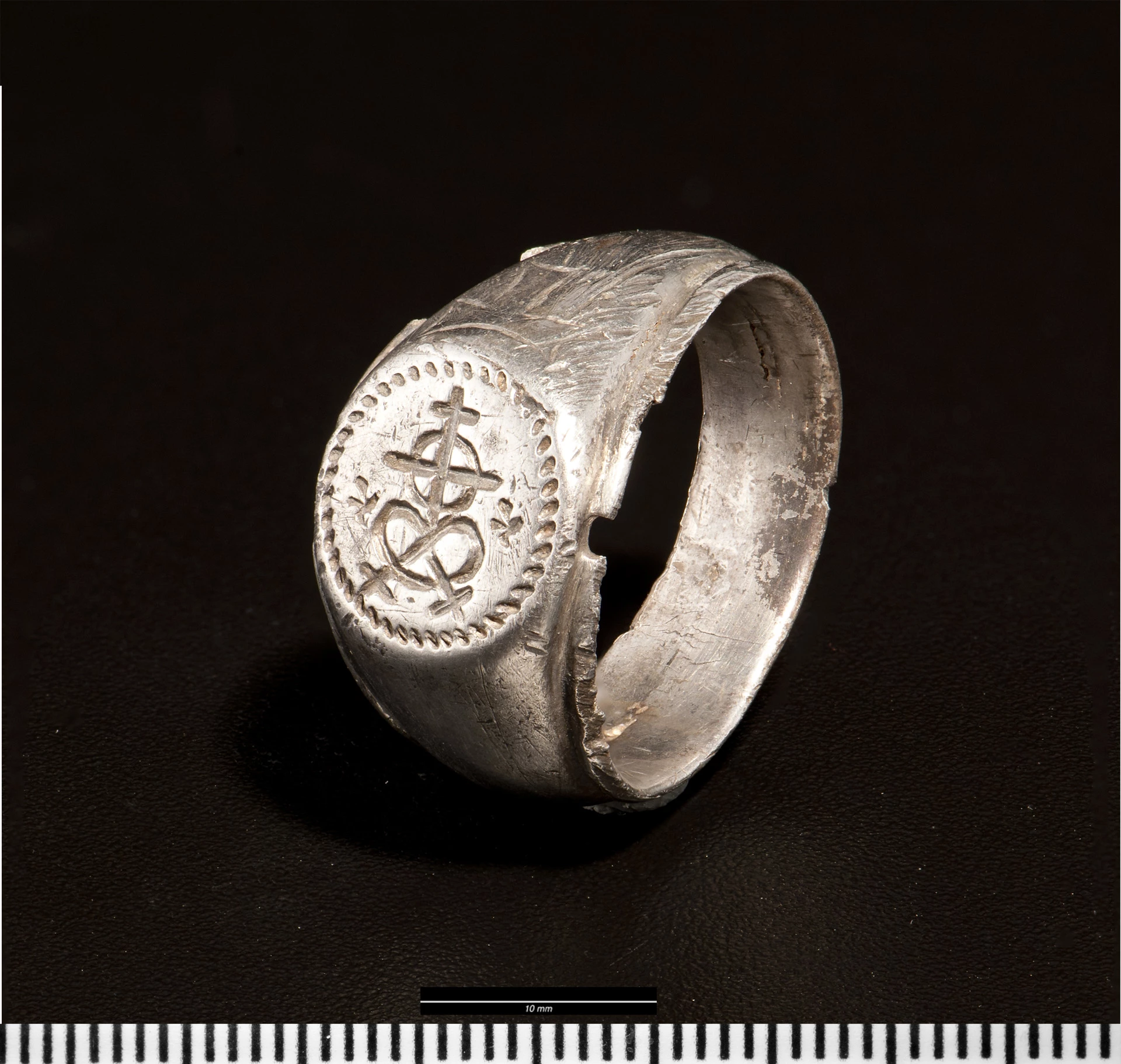
Roedd nodau masnachwyr yn cael eu defnyddio ar sêl-fodrwyau masnachwyr. Yn 2014, cafodd Mr John Rees hyd i sêl-fodrwy arian o’r bymthegfed ganrif neu ddechrau’r unfed ganrif ar bymtheg ac arni nod masnachwr yn Hwlffordd. Erbyn hyn mae’r prosiect Hel Trysor; Hel Straeon wedi’i chaffael ar gyfer Amgueddfa Tref Hwlffordd. Mae’r nod yn cynnwys croesau crwm, plethedig a chroes heb ben. Roedd croesau fel hyn yn gysylltiedig â Sant Antwn ac roedd cred y gallent drin tân Iddwf, neu ergotiaeth, sef clefyd a achoswyd trwy fwyta grawn drwg. Roedd nod y masnachwr yn ddyfais bersonol y gellid adnabod y perchennog wrthi, ond mae cynnwys y groes heb ben yn rhoi naws crefyddol i’r fodrwy a byddai’r perchennog wedi’i dewis yn benodol. Nid oedd Sant Antwn yn sant arbennig o boblogaidd yng Nghymru’r Canol Oesoedd ond, gan fod masnachwyr yn teithio, gallai'r perchennog fod wedi’i chael yn rhywle arall; roedd masnachwyr o orllewin Cymru'n masnachu ar hyd Môr Hafren ac yn teithio i Iwerddon, Sbaen a Phortiwgal, neu gallai fod yn eiddo i fasnachwr tramor.

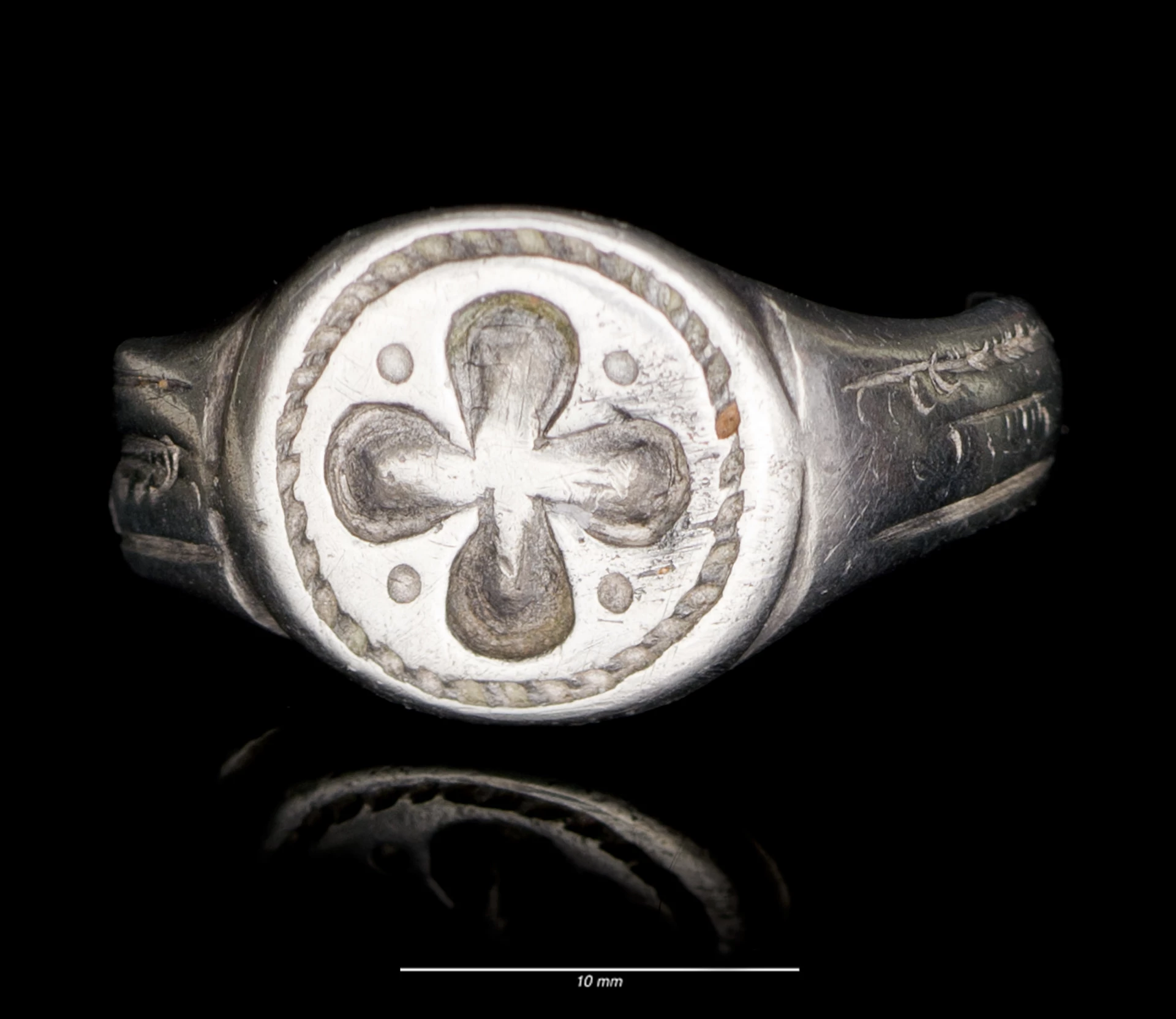
Canfuwyd sêl-fodrwy symlach o lawer yn Sili ym Mro Morgannwg yn 2013 gan Mr Michael Gerry. Fe’i gwnaed o arian, a’i haddurno â blodyn plaen, pedwar petal, a chredir ei bod yn perthyn i ddiwedd y 15fed ganrif neu ddechrau’r 16eg. Mae’n enghraifft fwy enigmatig o lawer, sy’n datgelu bron ddim am y perchennog – pwy ydoedd, ei waith na’i statws cymdeithasol.

Mae’n ymddangos bod gan rai modrwyau fwy nag un diben neu arwyddocâd. Daeth Mr Leighton Jones o hyd i enghraifft arbennig o ddiddorol yng Nghwm Darran, Caerffili, ym mis Mawrth 2010. Modrwy arian Rufeinig yw hon o’r ganrif 1af neu’r ail ganrif. Ar un adeg, roedd yn dal intaglio neu geugerfiad hirgrwn, gem werthfawr neu led-werthfawr efallai, a fyddai ag addurn wedi endorri arno er gyfer selio dogfennau. Felly, ar un olwg, mae hon yn sêl-fodrwy fel y rhai a ddisgrifir uchod, a byddai modd adnabod ei pherchennog wrthi, ond roedd cynnwys gem werthfawr neu led-werthfawr yn ychwanegu haen arall o ystyr iddi. Roedd y garreg yn ddeniadol ac yn addurnol ynddi ei hunan, gan awgrymu rhywbeth am statws a chyfoeth y sawl a allai ei fforddio. Ond byddai pobl y cyfnod yn credu bod ganddi bwerau i iacháu neu warchod y perchennog, ac roedd y gwahanol emau’n cael eu cysylltu â gwahanol bwerau meddyginiaethol, gwrthfelltithiol neu oruwchnaturiol.
Modrwyau Addurnol

Rhianydd Biebrach, 8 Mai 2017

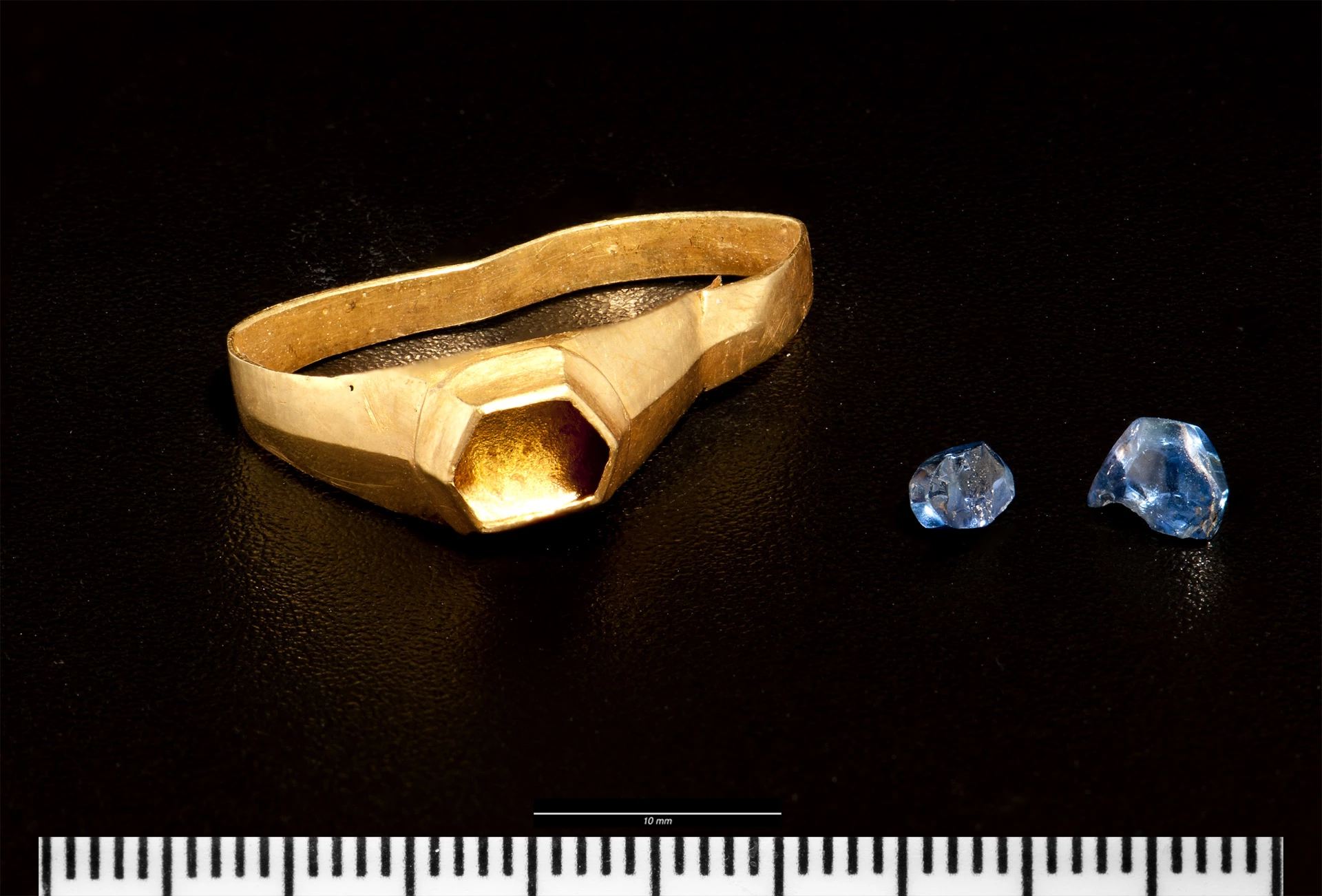
Modrwyau aur a saffir o Penfro

Modrwyau saffir ac aur o Penfro

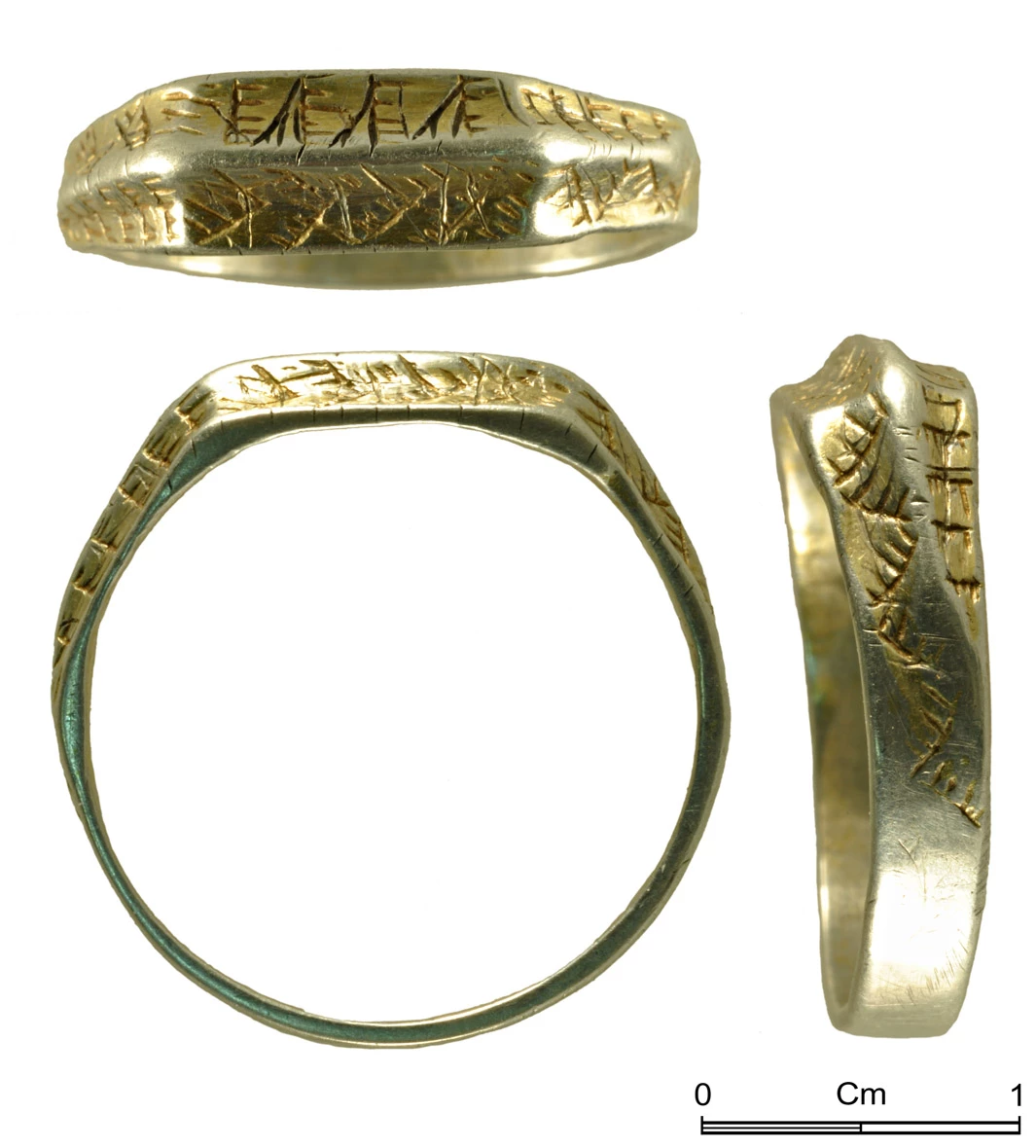
Modrwyau Addurnol o Silstwn

Modrwyau Addurnol o Silstwn

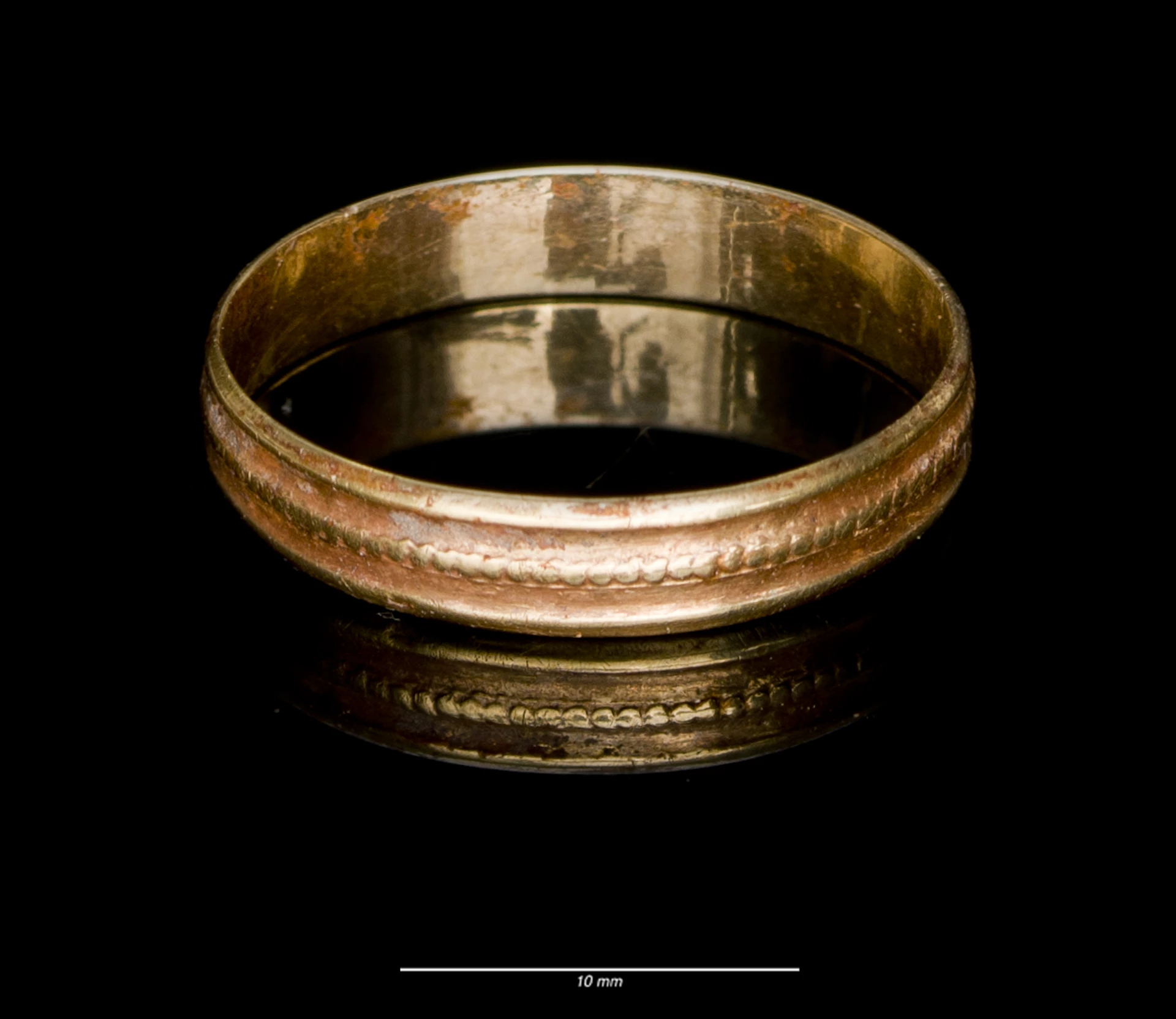
Modrwyau Addurnol o Holt

Modrwyau Addurnol o Holt

Mae’r grŵp olaf o fodrwyau yn yr adroddiad hwn yn llawer mwy cyndyn o ddatgelu eu cyfrinachau. Maent yn addurnol, heb arwyddeiriau na symbolau, ac er ei bod yn eithaf posib bod iddynt arwyddocâd personol i’w perchnogion, nid oes modd i ni ganfod beth oedd hynny, gwaetha’r modd.

Daeth Mr Kevin Higgs o hyd i enghraifft ardderchog o fodrwy aur a saffir ym Mhenfro ym mis Chwefror 2014. Mae’r saffir wedi'i gaboli (cabosión oedd yr enw am hyn) yn hytrach na’i thorri, fel oedd yn boblogaidd yn y Canol Oesoedd, a’i roi ar osodiad chweochrog. Gwaetha’r modd, mae’r saffir wedi torri’n ddau ac wedi dod allan o’r gosodiad, ond mae ei harddwch yn dal yn amlwg. Câi saffirau eu mewnforio o Sri Lanka ac roedd pobl yn credu eu bod yn gallu gwella cur pen ac afiechydon eraill a gwarchod rhag dewiniaeth, ac felly mae’n bosib bod i’r fodrwy hon ddiben arall heblaw bod yn addurn.

Mae’n rhaid bod eitem mor gostus, wedi’i mewnforio o ben draw’r byd, yn eiddo i rywun cyfoethog iawn ac mae’n demtasiwn dyfalu y gallai’r perchennog fod yn byw yng Nghastell Penfro neu’r priordy gerllaw. Nid oes gemau yn y rhan fwyaf o'r modrwyau eraill yn y dosbarth hwn. Dim ond patrymau sydd yn eu haddurno, yn amrywio o’r croeslinellu amrwd, afreolaidd ar fodrwy o arian wedi’i oreuro o’r 15fed ganrif a ganfuwyd yn Silstwn, Bro Morgannwg gan Mr Mark Watson yn 2011, i’r band llyfn, cynnil o belenni a borderi uchel ar fodrwy aur o’r cyfnod Tuduraidd cynnar a ganfuwyd yn Holt yn 2013 gan Mr A. E. Jenkins.

Top 20 Treasure Competition

Stacey Owen, 3 Mai 2017

Over the last few months you may have seen the Saving Treasures; Telling Stories team on social media using the hashtag ‘Finds Friday’, where we’ve been showcasing some of our wonderful treasure and non-treasure items recorded by the Portable Antiquities Scheme Cymru.

This month we’d like to focus on two special finds from Wales: The Abergavenny Coin Hoard and a prehistoric feasting site in Llanmaes.

Why these two finds?

Both have been nominated in a nationwide competition, held by the British Museum and The Daily Telegraph, to search for the nation’s favourite treasure item from the ‘Top 20’ list.

2017 marks the 20th anniversary since the passing of the 1996 Treasure Act and items on the ‘Top 20’ list highlight some of the most important treasure discoveries since the Treasure Act.

We might be a tad biased towards which ones we’ll be voting for, but we want to share the history behind these finds as they really do have a story to tell, or in the case of Llanmaes, an enigmatic mystery as to what was actually happening at the site. You can read about the 20 items by clicking this link, and don't forget to vote!

Llanmaes

Our first nomination on the ‘Top 20’ treasure list is a site, rather than a single group of objects. The discovery is a prehistoric feasting place and settlement, uncovered in Llanmaes, in the Vale of Glamorgan.

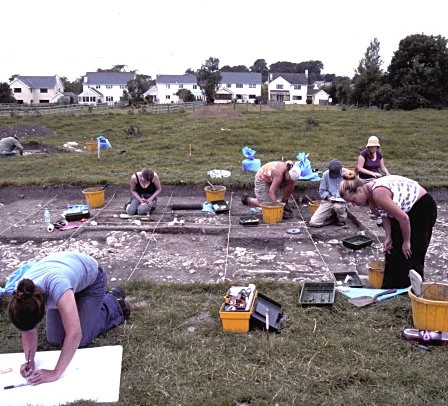
This important site was discovered following the reporting of a potential treasure find by two metal detectorists in 2003, and excavation continued for the next seven years by archaeologists from the National Museum of Wales, assisted by students from Cardiff University and local volunteers.

The story behind Llanmaes

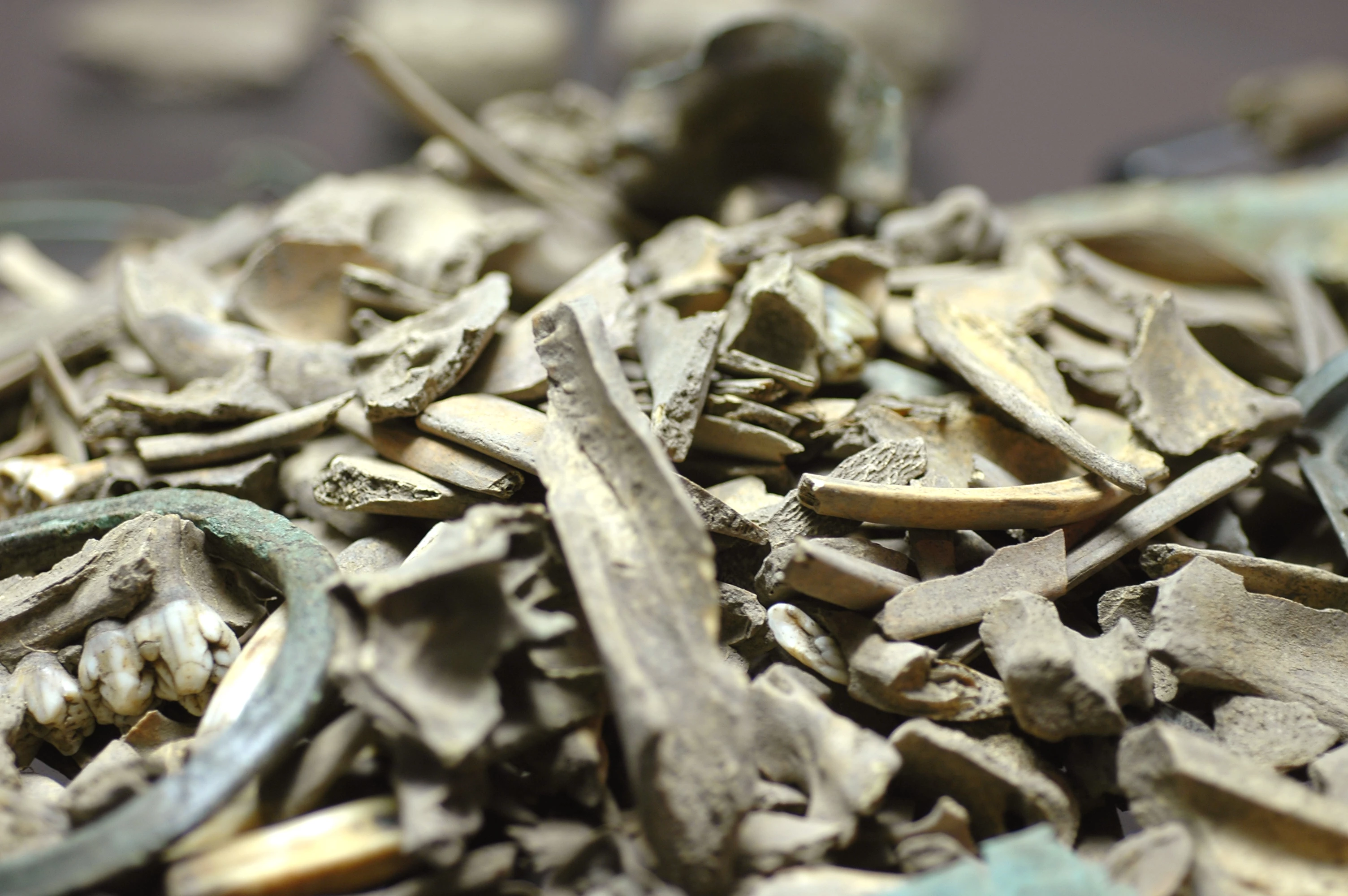
The earliest remains on the site, dating to about 2150-1950 BC, are the cremated remains of an adult male, which were buried in an urn. It seems that this burial provided the focus for later settlement, which yielded treasure objects such as a gold bead. One mystery object in the shape of a great white shark’s tooth has left archaeologists puzzled. We’re not too sure where it came from or why it was left there!

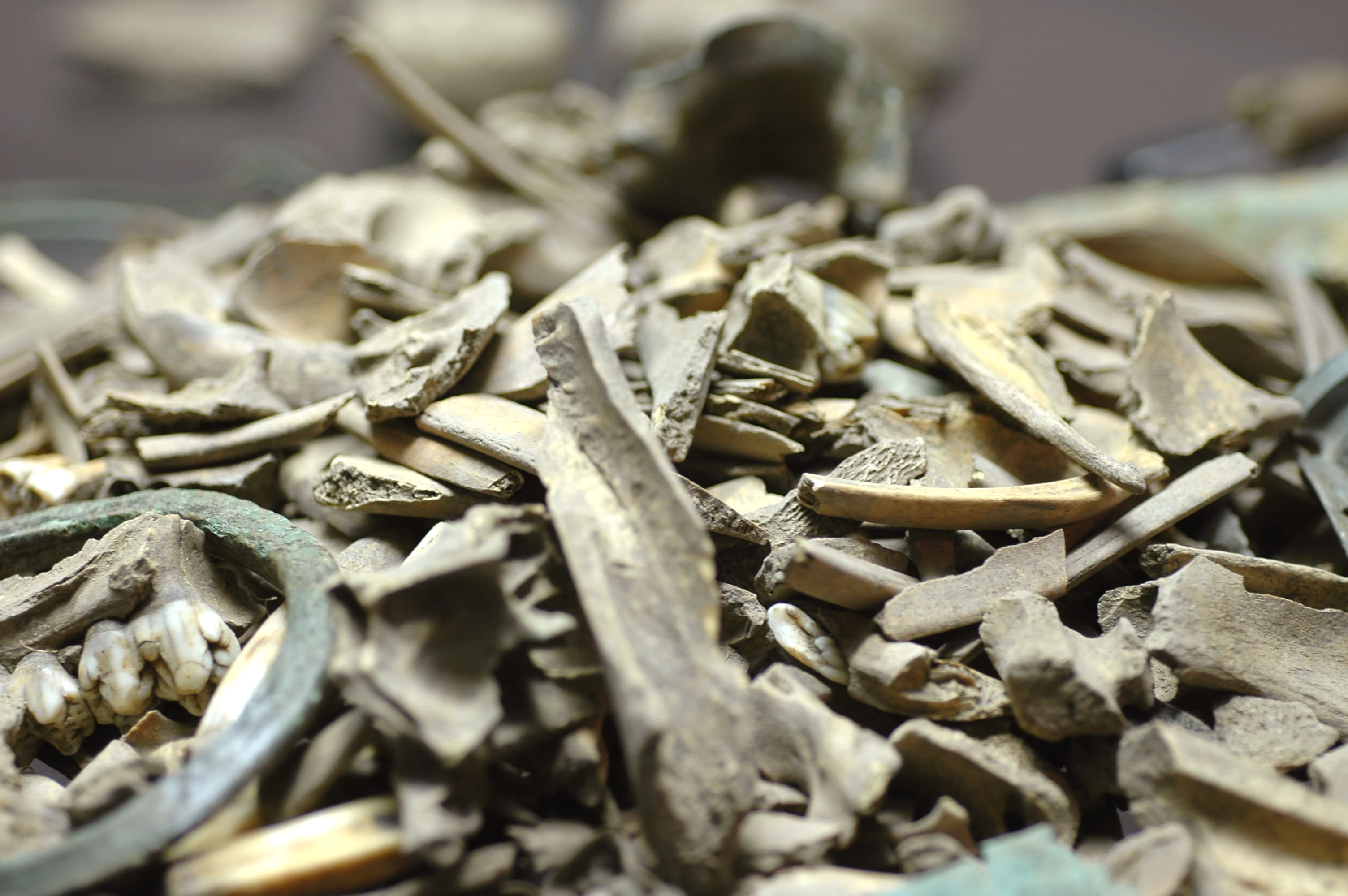
By the beginning of the Iron Age (about 675 BC) this settlement had been abandoned, but the site continued to be the focus of human activity in the form of feasting, which left behind an extensive midden deposit. This is the first known example from Wales, of a class of middens representing remarkable accumulations of cultural material gathered by communities at the beginning of the Iron Age. This has revealed an extraordinary prehistoric feasting mound, containing thousands of pig bones, further feasting vessels, bronze cauldrons, pottery and axes.

Unexpectedly, nearly three-quarters of the animal bones were from pigs – a far higher proportion than is usual for such deposits, and, even more remarkable is the discovery that the majority of the pigs’ bones were from the right fore-quarter of the animal. Similarly, some of the axe-heads are of a type associated with parts of northern France, so it seems as though people were converging on Llanmaes during the Early Iron Age from a wide area to engage in cultural activities which had clear rules and accepted practices.

Feasting seems to have come to an end at the site during the Roman period, when changing cultural practices made the earlier rituals less appropriate, but evidence of continued Roman occupation suggests that it still held meaning for local people into the 4th century AD.

The community at Llanmaes were closely involved with the excavations over the years, and the National Museum’s Archaeology department brought in a number of school groups to work with artists on creative responses, such as performances, inspired by the site.

Abergavenny hoard

In April 2002 three metal-detectorists had the find of their lives in a field near Abergavenny, Monmouthshire where they found a scattered hoard of 199 silver pennies.

The Abergavenny hoard is the earliest Norman hoard from Wales and provides a vivid picture of monetary circulation in the Welsh March in the 1080s CE. It includes 130 coins of the Anglo-Saxon king Edward the Confessor (1042-66) and 69 coins of the Norman king William the Conqueror (1066-87).

Where did they come from?

Norman incursions into Gwent (present-day Monmouthshire) had followed hard on the heels of the conquest of England by Duke William in 1066 and they brought with them the habit of using coins.

The 199 silver pennies provide a rich mixture of issues of Edward the Confessor (1042-66) and William the Conqueror (1066-87); there are coins of 104 moneyers from 36 mints, with Hereford prominent.

The coins had been lost or hidden in a cloth bag, after about 1080 CE and for most people living in that time they would have represented several months’ pay. However, the lack of positive archaeological context makes it impossible to judge whether the coins had been concealed deliberately or were simply lost. We shall probably never know quite why these coins ended up in the corner of a field in Monmouthshire but, as well as expanding our knowledge of the coinage itself, they will cast new light on monetary conditions in the area after the Norman Conquest.

And there we have it, our two treasure finds on the ‘Top 20’ treasures list.

The online voting continues until May 15th, and you can vote for LLanmaes or the Abergavenny Hoard by following this link:

http://www.telegraph.co.uk/wellbeing/mood-and-mind/treasure-20-vote-favourite/.

Beachcomb take 2

Stacey Owen, 27 Ebrill 2017

Looking across Swansea Bay on a chilly spring morning and seeing that the tide was out came with a sigh of relief as this meant we didn’t have to wait an hour or so to get started with our beachcomb.

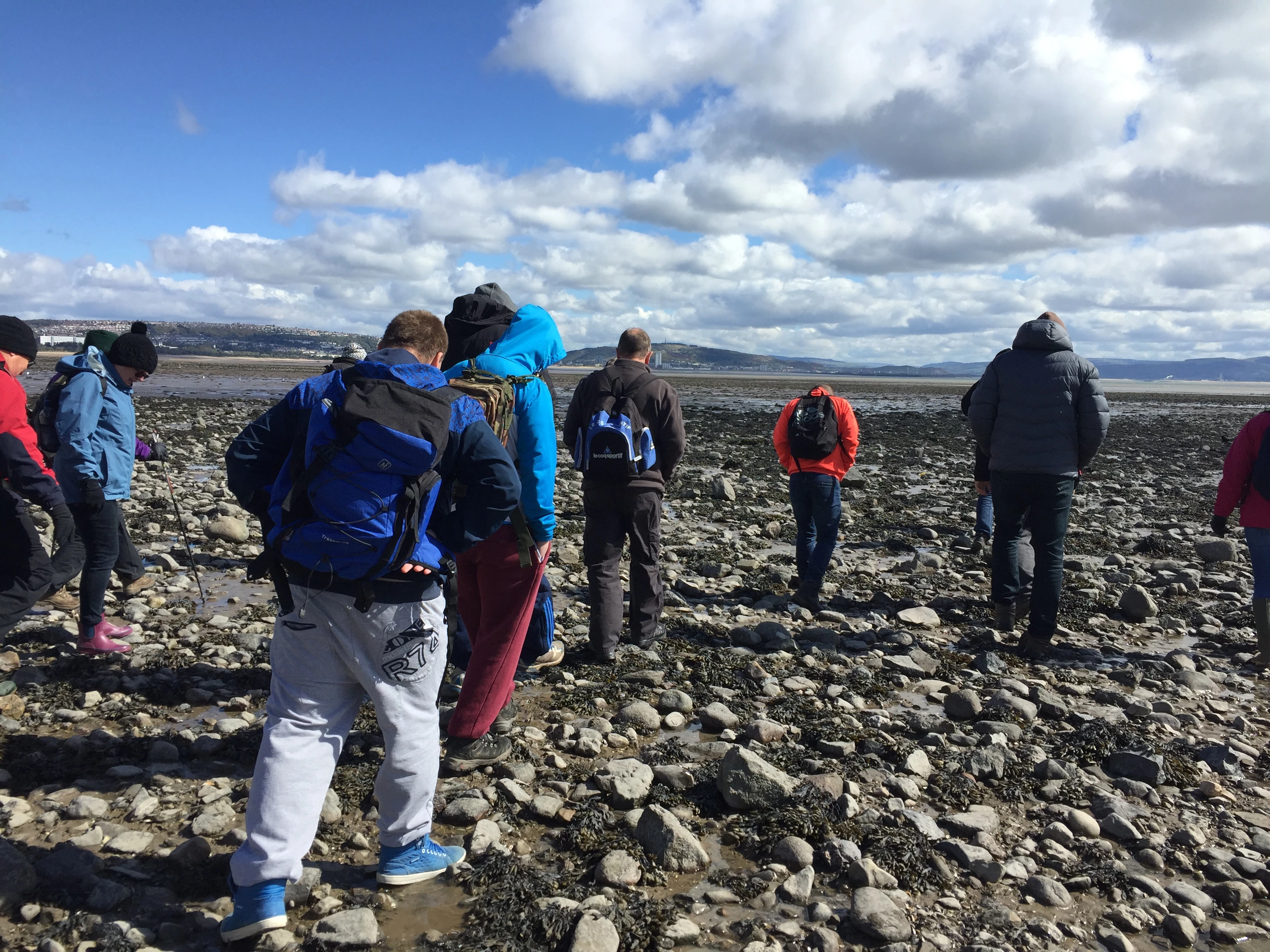
I joined Swansea Museum on The Mumbles side of the Bay to take part in one of their community projects that aims to engage local communities with their pasts. On this occasion the museum teamed up with the Llanrhidian Women’s Institute and the Gurnos Men’s Community First group to take part in a beachcomb led by archaeologist Paul Huckfield, from the Glamorgan Gwent Archaeological Trust.

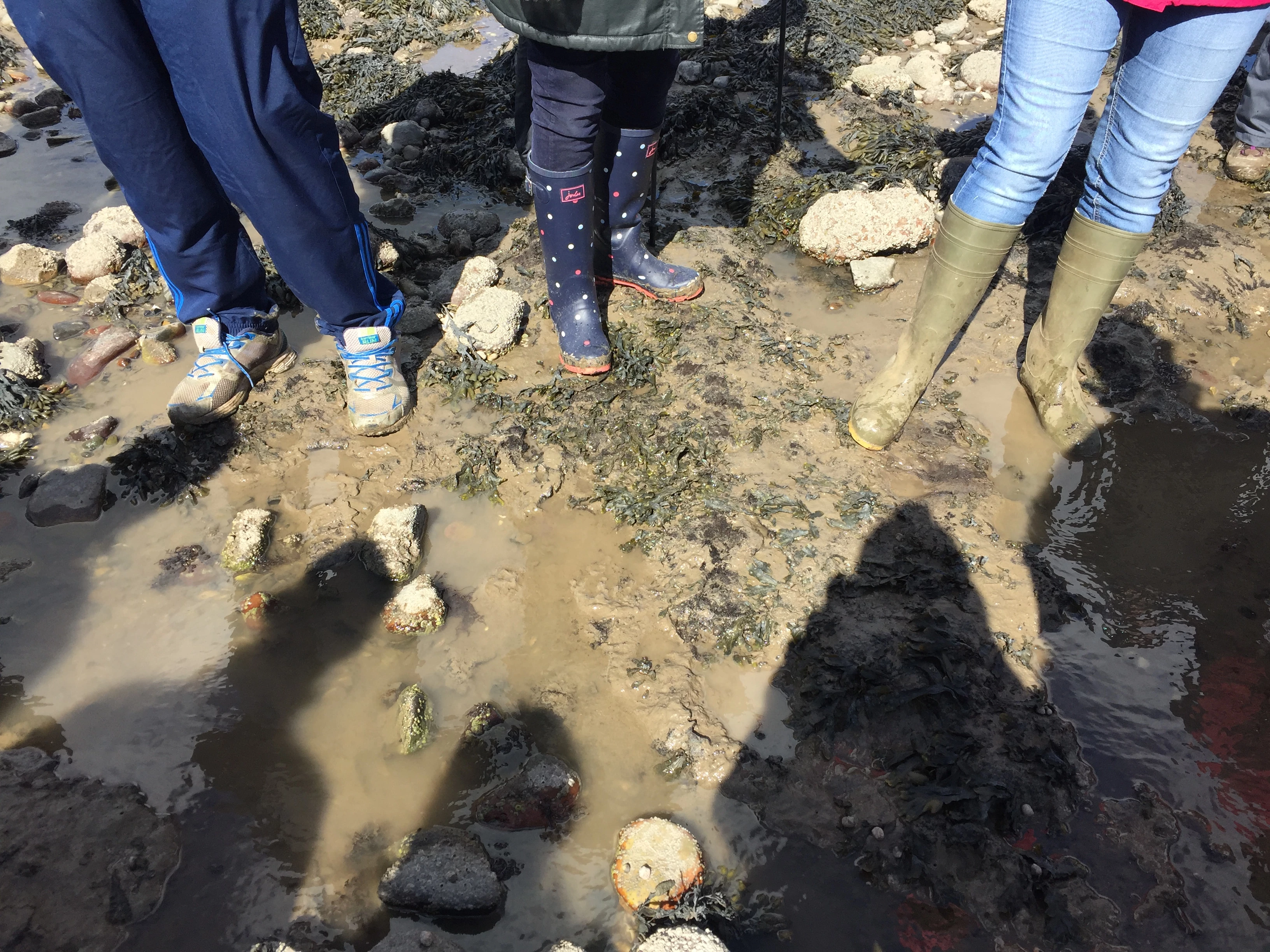
All wrapped up in extra layers we were ready to begin our trek across the swamp-like beach, luckily most of us received the wellies memo and they were definitely needed.

Paul wanted to create a sense of what the landscape would have been like during the Bronze Age and took us to areas on the beach where some of the landscape remained fairly similar and unchanged.

We’re standing on the actual ground surface as it would have been in the Bronze Age. You can see the peat levels just here show what would have been around in the Bronze Age; you can see that this is black in colour from the trees and bits of foliage. So you’re actually standing in the past at around 4,000 years ago.”

Travelling through time across the bay allowed us to think of what life would have been like 4,000 years ago, what is now a beach would have been a woodland and shrubbery area surrounded with fresh water pools.

Paul talks about some of the reason why the landscape changed and during what periods. You can watch the clip HERE:

Bringing us through time to the 19th and 20th century we were then led to some of the remaining shipwrecks found on Swansea Bay. On the Mumbles side of the bay alone we could spot around 14 shipwrecks and vessels. Vessel remains are still on the bay and these would have been used to protect the area from submarine attacks during the Second World War.

Paul said: “The whole beach is covered in metal uprights and wire to stop enemy gliders coming onto the beach.”

Another shipwreck was part of an oyster fleet. We learnt that the bay was a natural resource for oysters and they were a major food source, some dating back to Roman times, however this source was destroyed during the industrial period.

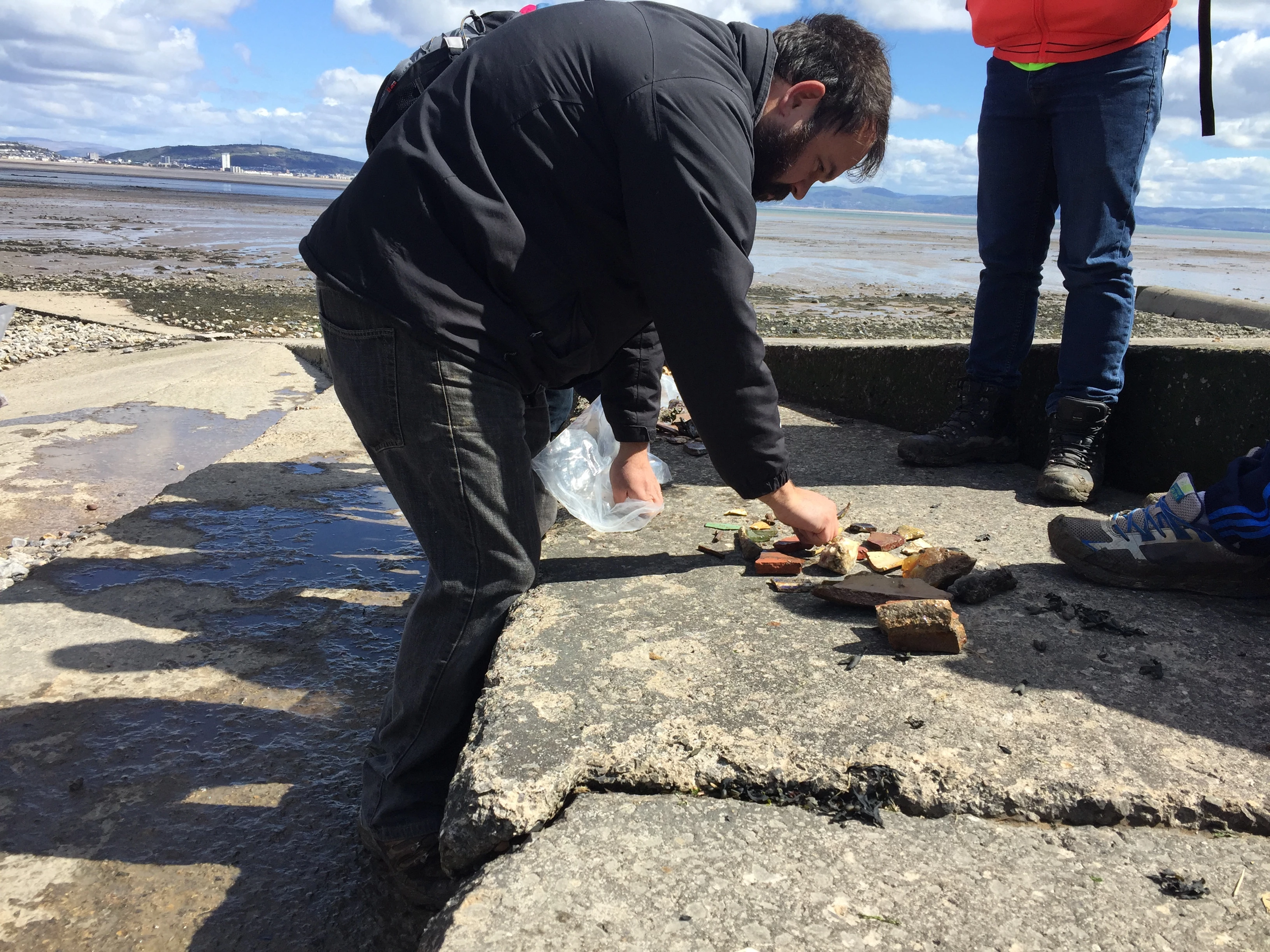
After having a look around the beach and learning how it has changed through time with different inhabitants we were then given clear bags and told to try and find our own items.

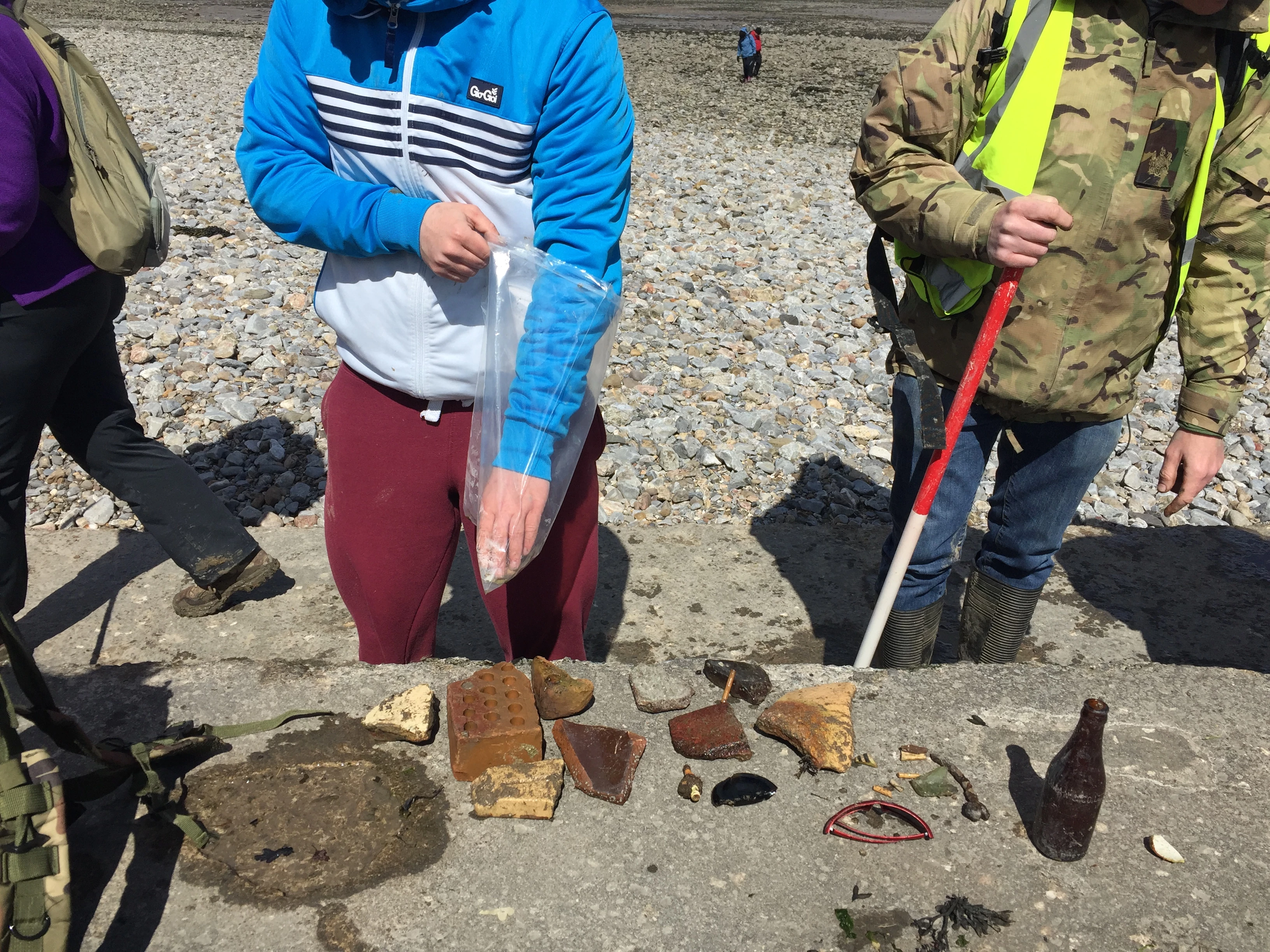
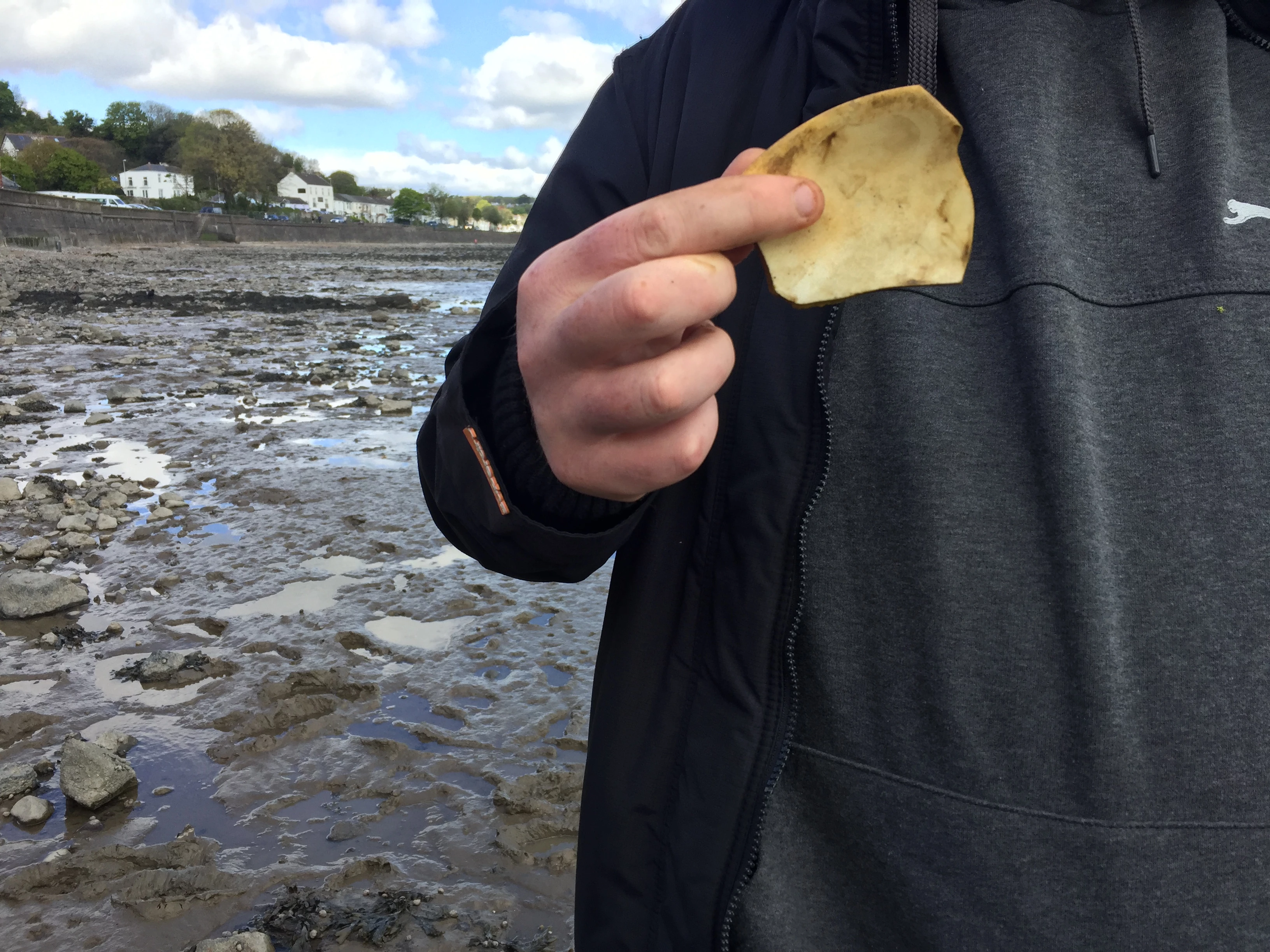
We found a variety of items during the beachcomb from ceramics, beer bottles from London, fossils and different types of slate and stone. The items found today along with others from previous beachcombs with Swansea Museum will be kept and made into a mosaic for public viewing in the future.


Swansea Museum are currently working on a project called ‘The Lost Treasures of Swansea Bay’, which is funded by the help of the ‘Saving Treasures; Telling Stories’ project and you can read about the last walk I attended with them HERE. Saving Treasures is funded by the Heritage Lottery Fund which is acquiring archaeological objects for local and national collections and providing training for heritage professionals and volunteers.

Work experience with the Saving Treasures; Telling Stories Project (April 17)

Stacey Owen, 26 Ebrill 2017

By Rebecca Ling

I took part in a two week work placement at The National Museum Cardiff to work on a project called Saving Treasures; Telling Stories. I wasn’t too sure what to expect as a journalism student or how working at a museum could help enhance my journalistic skills, but I was ready to explore new ways of researching and writing stories and was pleasantly surprised with just how hands-on the placement was.

Saving Treasures; Telling Stories made me realise how I can help bring history to life through researching around archaeological finds and discovering that every item has a past and story to tell.

The first day was an introduction to the department and a chance for us to find out more about the project itself as well as the role of The Portable Antiquities Scheme in Wales to find out how that fits into the Saving Treasures; Telling Stories Project. I was fortunate enough to have a look around, almost a behind the scenes tour, to see some of the interesting finds that weren’t currently on display. I also got to get a close up view as to what was going on the conservation laboratory as I watched the conservators in action!

So where does journalism come into it all?

During my two weeks I conducted phone interviews with curators, archaeologists and metal detectorists before having to transcribe these and write up blogs and articles. We also had the opportunity to film on location at Pontypool Museum and talk to someone whose recent treasure find is now going to be displayed at the museum for the first time. I wrote press releases covering upcoming events and even was invited to attend an oral history interview training course to learn different interview techniques and skills.  

From camera work to interviewing there was never a dull moment and I found myself busy each day.

The placement has inspired me to be more creative with my journalistic skills and to think outside the box, I didn’t know from my first day how I would be able to bring archaeology to life and create current and relevant stories in the public interest.

Overall this experience has made me aware that archaeology evokes important questions that hadn’t crossed my mind before. Items and stories I have worked on during my time at Saving Treasures; Telling Stories make me wonder- Where did this come from? What importance does that piece of history hold? But more interestingly it makes you imagine what life was like during that time period, it's almost as if you are time travelling.