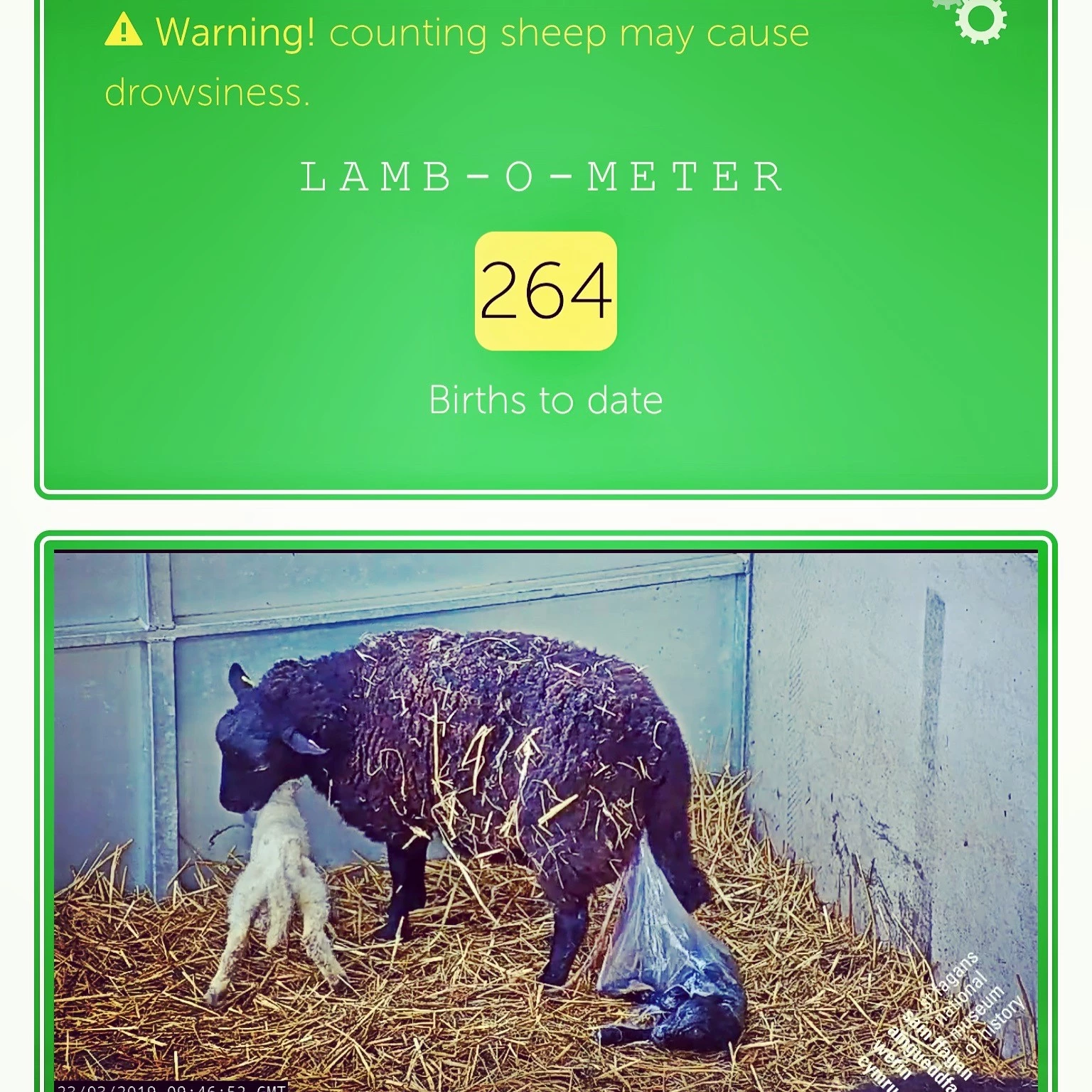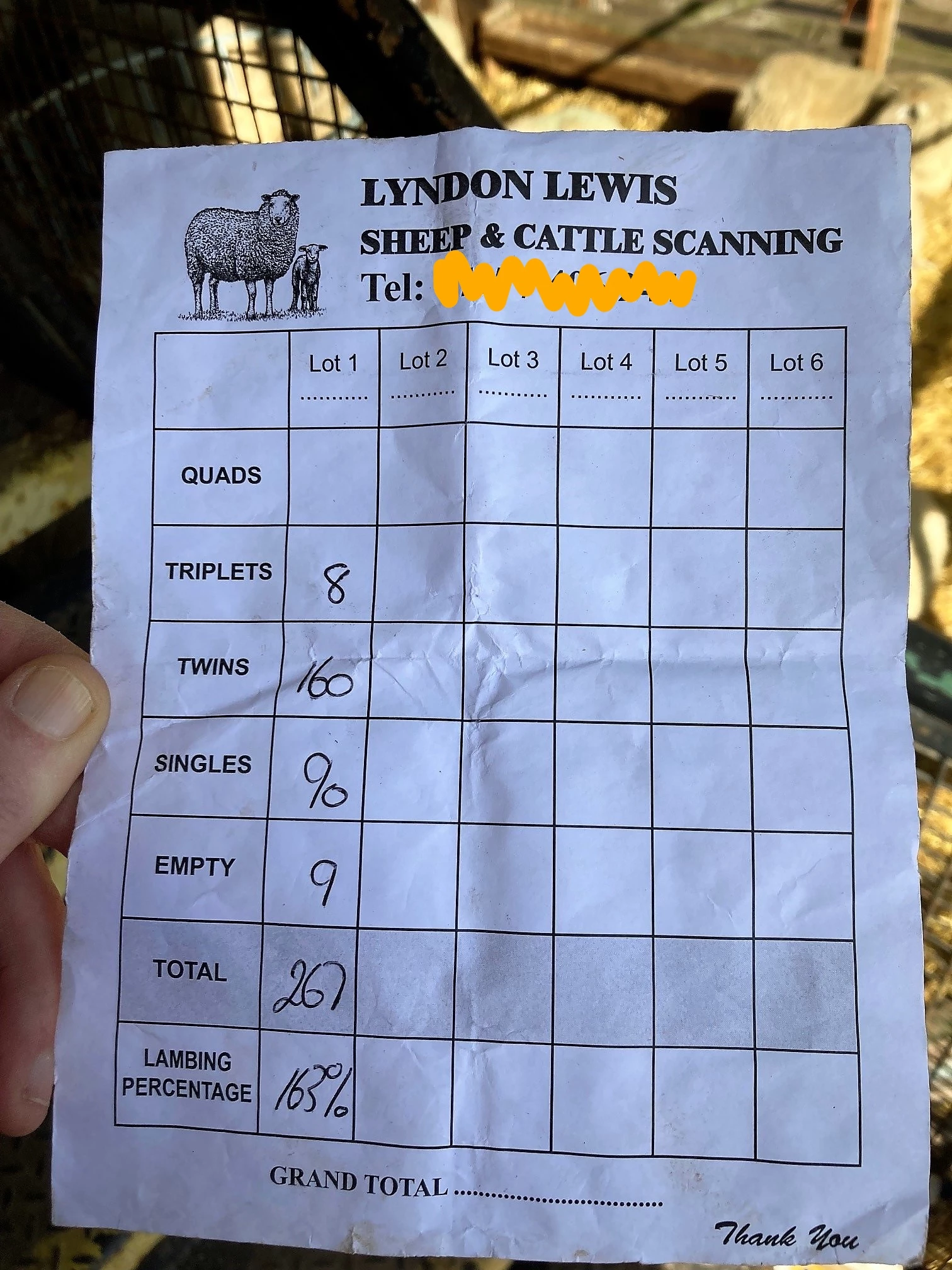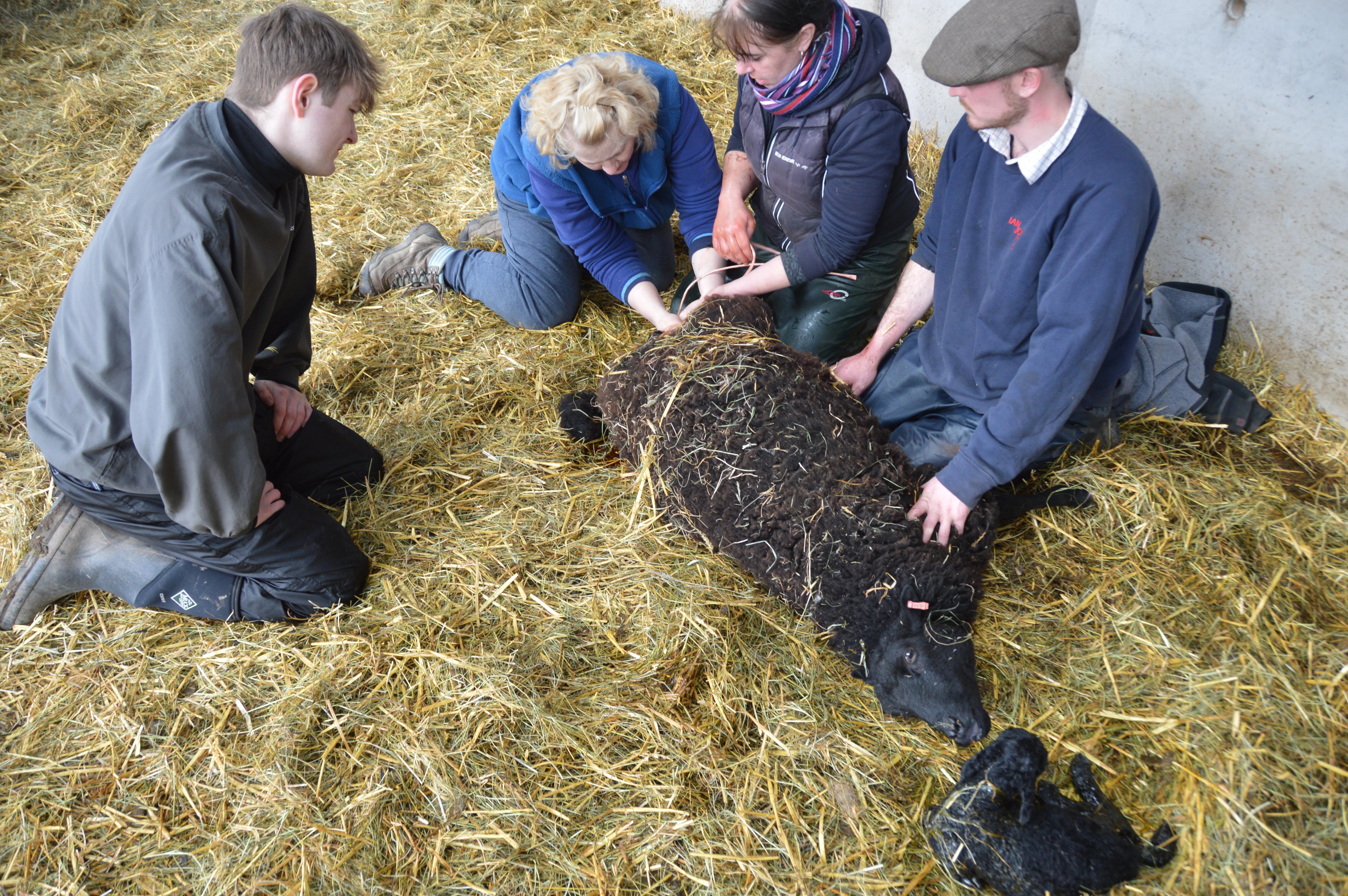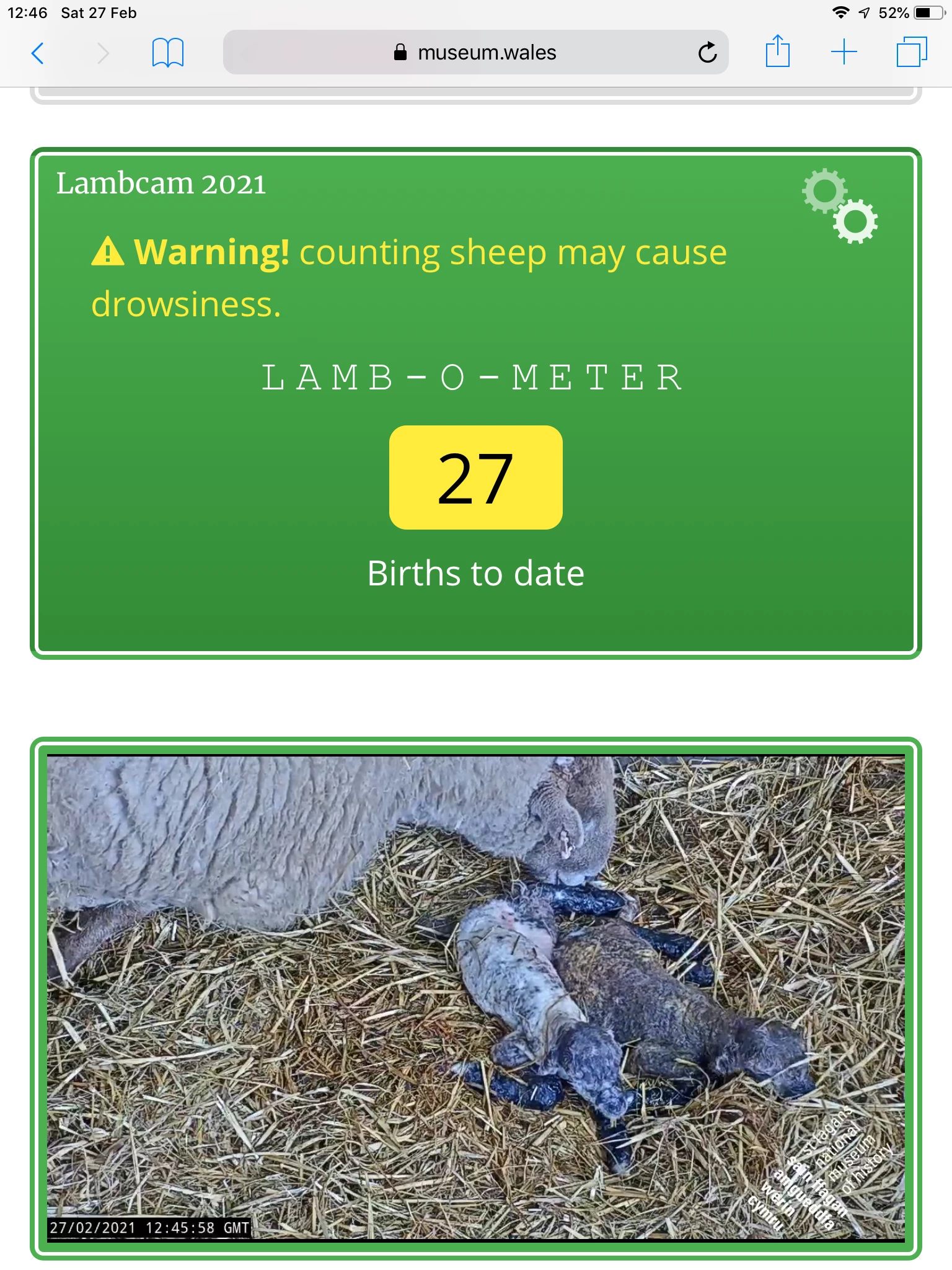
Croeso i Sgrinwyna 2022 Bernice Parker, 11 Mawrth 2022 Mae gennym tua 250 o ddefaid magu yn y praidd eleni, felly rydyn ni’n disgwyl dros 350 o ŵyn – mae'n amser prysur iawn i'r tîm sy'n gofalu amdanynt. Pan fydd pethau'n prysuro yn y sied ŵyna bydd staff profiadol wrth law ddydd a nos. Felly, sut beth yw genedigaeth arferol? Mae ŵyna yn fusnes anwadal tu hwnt felly gall amrywio dipyn, ond dyma rai o'r pethau allwch chi ddisgwyl eu gweld: Esgor: Bag dŵr (yn gyflawn neu wedi byrstio) a llysnafedd yn hongian o gefn y ddafad cyn yr enedigaeth. Pâr o draed yn dod allan o ben ôl y ddafad. Ar ddechrau'r esgor, bydd y ddafad yn codi ac yn eistedd yn ddi-baid ac yn pawennu'r llawr. Wrth i'r esgoriad ddatblygu, bydd hi fel arfer yn eistedd er mwyn gwthio'r oen allan ac yna'n aros ar y llawr. Bydd ei chyfyngiadau yn dod yn gryfach a bydd yn amlwg ei bod yn gweithio'n galed. Mae'n bosibl y bydd hi'n taflu ei phen yn ôl, bydd ei llygaid ar agor led y pen a bydd yn dangos ei gweflau. Mae hyn i gyd yn arferol ac yn golygu, gobeithio, ei bod hi ar fin geni'r oen. Gall esgoriad arferol gymryd unrhyw beth rhwng 30 munud a sawl awr. Mae tîm y fferm yn ceisio cadw'r sied yn dawel ac yn heddychlon er mwyn i'r defaid allu geni'n naturiol ble bynnag posibl. Fydd y tîm ond yn ymyrryd er mwyn diogelu lles y ddafad a'i hwyn. Genedigaeth: Os yw'r ddafad wedi geni'r oen yn naturiol, mae'n bosibl y byddant yn gorwedd yn llonydd am gyfnod wedi'r geni. Mae wedi bod yn waith caled i'r ddau, a'r cyfan sydd angen i'r oen wneud ar hyn o bryd yw anadlu. Yn ddelfrydol, heb y bag (y sach amnotig) dros ei ben. Yn rhan o'r enedigaeth, bydd y bag fel arfer yn torri ac yn cael ei dynnu yn ôl oddi ar ffroenau'r oen. Weithiau bydd y ffermwr yn neidio mewn yn gyflym i helpu'r broses hon. Pan fydd oen yn cael ei eni, bydd llysnafedd drosto, darnau o'r bag a weithiau bydd ychydig o waed hefyd. Mae hyn i gyd yn arferol – bydd y ddafad yn llyfu'r oen yn lân, a bydd hyn yn cynhesu'r oen ac yn ei annog i anadlu. Weithiau mae stwff melyn neu wyrdd ar yr oen. 'Meconiwm' yw hwn, sef pwpw cyntaf yr oen, sydd wedi digwydd cyn neu yn ystod y geni. Oen sydd newydd ei eni: Mae oen sydd newydd ei eni yn aml yn symud yn afreolus neu'n crynu. Mae hyn yn arferol, ac yn ffordd dda o ddal sylw'r ddafad. Mae hefyd yn ei helpu i baratoi i sefyll i fyny a cherdded o fewn munudau o gael ei eni. Os ydych chi'n darged i anifail ysglyfaethus, rhaid i chi gael eich geni yn barod i redeg (neu guddio mewn den/nyth). Bydd oen hefyd yn symud yn afreolus/tisian droeon wrth iddo glirio'r hylifau geni o'i drwyn a'i lwnc. Weithiau bydd y bugail yn gwthio gwelltyn i drwyn yr oen i'w helpu i beswch neu disian. Bydd hefyd yn mwytho'r oen neu'n plygu un o'i goesau blaen fel pe bai'n reidio beic er mwyn gwneud iddo beswch/anadlu. Os na fydd hyn yn gweithio, weithiau bydd yn siglo'r oen gerfydd ei goesau ôl. Mae hyn yn defnyddio grym allgyrchol i helpu i glirio llwnc yr oen er mwyn iddo ddechrau anadlu. Rydym yn chwistrellu diheintydd ar fotwm bol oen sydd newydd ei eni. Mae hyn yn helpu atal yr oen rhag dal haint o lawr y sied trwy'r llinyn bogail sydd newydd gael ei dorri. Symud o'r sied ŵyna i'r gorlan ofal: Wedi bwrw, bydd y ddafad a’i hŵyn yn cael eu symud allan o'r sied ŵyna. Bydd y ffermwyr yn cario'r ŵyn gerfydd eu coesau: Achos mae ganddyn nhw goesau sydd lawer cryfach na choesau babis, ac maen nhw'n ysgafnach hefyd. Mae'n osgoi rhoi arogl person dros yr oen – mae hyn yn bwysig am ei fod yn ceisio creu perthynas â'i fam. Y ffordd fwyaf caredig o symud dafad sydd newydd eni oen yw ei chael i ddilyn yr oen o'r sied. Greddf dafad yw rhedeg i ffwrdd wrth bobl, nid eu dilyn. Ond bydd fel arfer yn dilyn ei hoen newydd pan fydd y ffermwr yn ei ddal fel hyn. Mae pob teulu newydd yn cael mynd i gorlan fach i ddod i nabod ei gilydd a bod yn ddiogel rhag prysurdeb y sied ŵyna. Y defaid sydd fel arfer yn llai parod i ddilyn eu hŵyn (neu'r rhai sy'n rhedeg i ffwrdd ar ôl geni oen) yw'r defaid blwydd oed sydd fel arfer yn ŵyna am y tro cyntaf. Mae'r defaid blwydd oed hefyd dipyn yn fwy gwyllt, gan nad ydynt wedi arfer â bod yn rhan o'r praidd. Mae'n bosibl y gwelwch chi'r ffermwyr yn defnyddio techneg wahanol iawn i symud y defaid yma a'u hwyn: Byddan nhw'n symud yr ŵyn gyntaf, er mwyn gwneud yn siŵr na fyddan nhw'n cael eu dal dan draed y defaid. Yna byddan nhw'n dal y ddafad – sydd dal yn gallu rhedeg yn gyflym er ei bod hi newydd eni oen! Byddan nhw'n cerdded y defaid hyn allan gyda'r coesau dros ysgwyddau'r ddafad. Dyma'r ffordd orau o reoli'r ddafad a'i stopio rhag rhedeg i ffwrdd. (Dydyn nhw DDIM yn eistedd ar eu pennau). Yna bydd y teulu'n dod 'nôl at ei gilydd yn y gorlan fach lle bydd pawb yn setlo'n gyflym wrth i'r ddafad ddod i arfer â bod yn fam. Mae llawer o wybodaeth am ein defaid a chyfnod ŵyna yn ein blogiau blaenorol: Cwestiynau Cyffredin Sgrinwyna Ydych chi’n gorwedd yn gyfforddus?
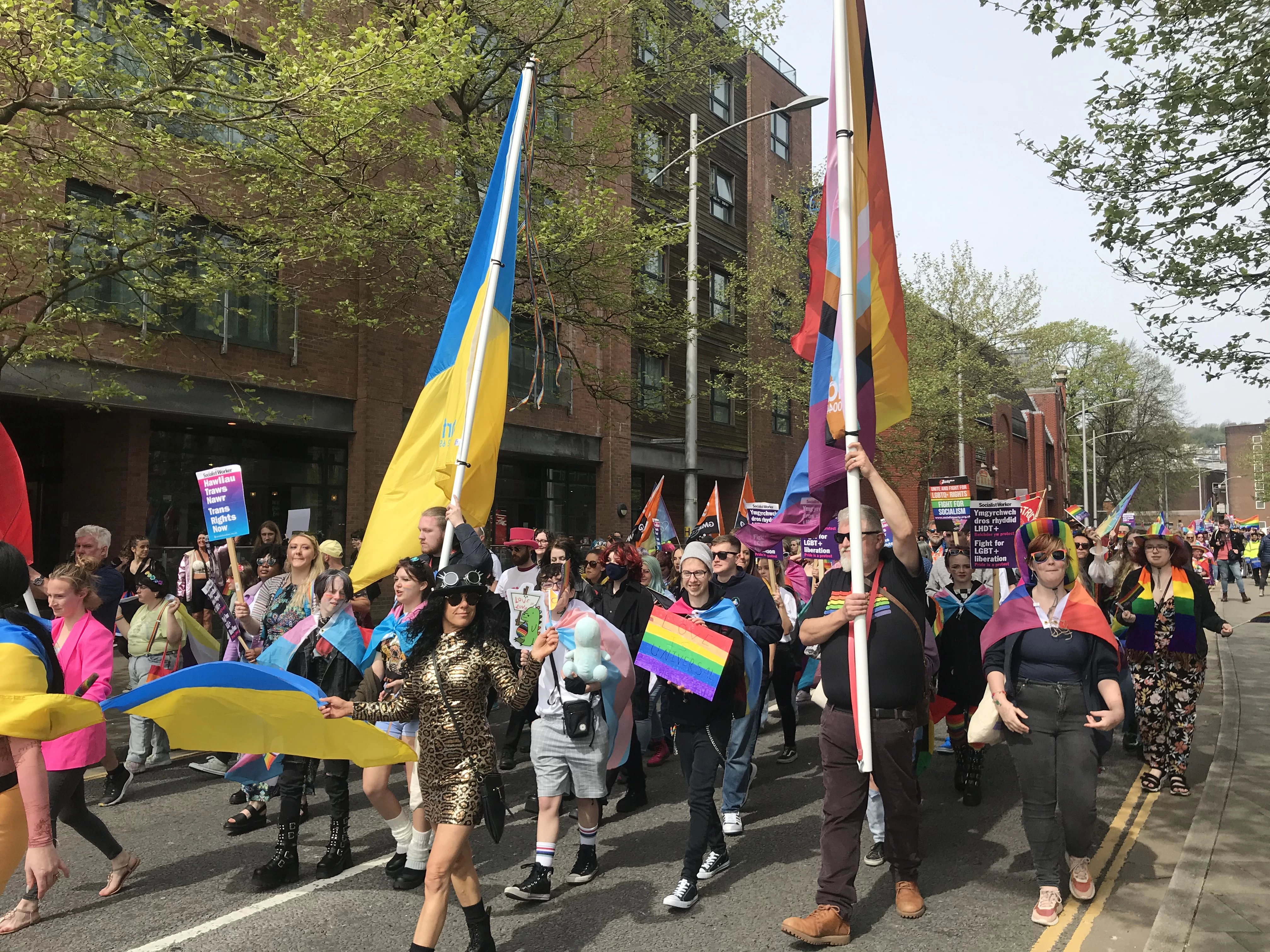
Mae Trawsnewid yma! Oska von Ruhland, 10 Mawrth 2022 Mae’r arddangosfa rad ac am ddim i’w gweld yn Amgueddfa Genedlaethol y Glannau, Abertawe, rhwng 12 Mawrth a 17 Gorffennaf 2022.Mae Trawsnewid yn datgelu ac yn dathlu hanes queer Cymru a newid cymdeithasol. Daw'r gwrthrychau yn yr arddangosfa o gasgliad LHDTQ+ Amgueddfa Cymru yn Sain Ffagan Amgueddfa Werin Cymru, a'u cyflwyno gyda naratif newydd sbon ochr yn ochr â gweithiau celf queer Cymreig. Gall ymwelwyr gamu i'n gorffennol – gorffennol sy'n aml yn cael ei anghofio – a gweld sut mae'r frwydr dros newid cymdeithasol yn parhau hyd heddiw. Gyda gwrthrychau queer hanesyddol, o ddiwedd y 1700au hyd y pandemig presennol, mae amrywiaeth eang o gymunedau, hunaniaethau a mudiadau yn cael eu cynrychioli yn yr arddangosfa.Dewiswyd y gwrthrychau sy'n cael llwyfan yn yr arddangosfa gan gyfranogwyr project Trawsnewid. Pobl ifanc yw'r rhain sy'n cynnal ac yn mynychu gweithdai sy'n trafod hanes a diwylliant pobl LHDTQ+ Cymru, ac maen nhw wedi cydweithio i ddatblygu thema'r arddangosfa, sy'n canolbwyntio'n bennaf ar gelf a chreu queer. Dros sawl wythnos mae'r bobl ifanc wedi mynd drwy'r casgliad a dewis y darnau sy'n sefyll allan fel conglfeini pwysig hanes queer Cymru.Yn rhan o'r arddangosfa mae casgliad o weithiau newydd gan rai o'r gwirfoddolwyr. Mae pob gwaith wedi'i ysbrydoli gan agwedd ar hanes queer Cymru, boed yn eitem o'r casgliadau LHDTQ+ neu'n gymuned o'u cwmpas. Drwy gyfuno myrdd o gyfryngau artistig mae nhw'n taflu goleuni heddiw ar yr hanes anghofiedig hwn.Bydd cyfle hefyd yn yr arddangosfa i weld Cabaret Queer – cyfres o ffilmiau byr gan gyfranogwyr Trawsnewid yn trafod eu profiadau, eu cysylltiad â Chymru, a'u hunaniaeth queer. Mae'r Cabaret i gyd i'w weld ar YouTube, ond yn yr arddangosfa gallwch chi ei fwynhau wrth ymgolli yn yr hanes a'r diwylliant sydd wedi'i gasglu a'i guradu gan bawb ym mhroject Trawsnewid a'r casgliad LHDTQ+.
The Exhibition of Hope at the National Wool Museum Alyson Cole - Volunteer Ambassador, 1 Rhagfyr 2021 The National Wool Museum Exhibition of Hope was launched in April 2020. This was of course during the beginning of the national lockdown and I think it is safe to presume that no one could have predicted how successful it would be! With support from the Ashley Family Foundation and Community Foundation Wales, the aim was to collect enough 20cm or 8inch rainbow coloured squares in order to weave together a substantial rainbow blanket to be displayed in the National Wool Museum, and then eventually at the National Waterfront Museum in Swansea.The idea of the rainbow colours was of course in accordance with the rainbow image, which during the national lockdown had became an important emblem. The rainbow symbolised light at the end of the tunnel after a dark and uncertain time. The blanket would therefore hopefully become a symbol of peace, hope, community and spirit.The project surpassed all expectations and collected in the range of 2,000 rainbow square pieces from all over the country. These squares were knitted, felted, woven or crocheted not only from wool, but from cotton, silk and other wonderful fibres that people had to hand. Due to the overwhelming response and the restrictions placed on volunteers in meeting and creating one single blanket, a decision was made to make many blankets instead. As a result, museum staff and volunteers began joining the squares from home!With now many blankets in the making, the project took off to a new level and purpose! Not only were these blankets going to become works of art, they would also be donated to charities, such as the homeless charity 'Crisis'. The project grew further when the South Wales branch of the 'Crisis' Charity shared the exhibition on their Facebook pages and even going as far as providing people with physical packs of wool and instructions.The project further snowballed when it was featured in Adult Learners Week 2020, when two videos were released of National Wool Museum Craftsperson Non Mitchell showing how to create a felted and woven square. Finally, maybe the biggest influence was when the Connect to Kindness Art Project, working alongside the Connect to Kindness Campaign and Carmarthenshire Association of Voluntary Services showcased the project in a collage of photos. When I visited the exhibition recently, what I found fascinating is how, from humble beginnings, the project took on a life of its own and became more than simply helping create a blanket. Along with being beautiful pieces of art that could be enjoyed on their own merit, the blankets would now also help people in a physical and practical way! In my opinion, what was lovely was how the exhibition has captured the array of positive feelings it had stirred in the volunteers and museum staff who took part in the project. I’m sure this was a somewhat unexpected or underestimated result of the project!It was clear from the messages and notes received with the blanket squares, that it had brought many a sense of joy, achievement, comfort and a feeling of purpose. The blanket had brought people a sense of belonging and highlighted the feeling of community and what can be achieved when people "pull together" This is perhaps the most interesting factor of the project for me - the stories of those creating the squares. I am delighted that the exhibition is reflecting this by showing "stories of the squares" in a video to go along with the exhibition, which will also be available online.I had the pleasure of watching the video when I visited the exhibition in Drefach Felindre, and it was amazing to hear of the different stories of those behind the squares. There were stories of the project uniting family and friends along with chapels and schools. The exhibition includes an image of rainbow hands by the children of Ysgol Penyboyr. The effort which some had gone to was also amazing. A big shout out to Elwyna who knitted 350 squares! One lady had even naturally dyed her wool in different rainbow colours. One of the stories I found touching was of a lady who had recently lost her mother and who had left her a stash of yarn, mostly from America. Her mother had taught her to crochet and she felt the project was an amazing way to honour her mother's memory. Crocheting also helped her deal with the grief during this time as she found it therapeutic and relaxing. Others also spoke of the art of crocheting and making the squares as being a therapeutic and relaxing process.Another heart warming story was of how someone struggled with her memory and was overjoyed to discover that she remembered how to crochet. These stories and indeed the whole exhibition being so visually bright and beautiful was very uplifting in what is still a fairly uncertain time. The words of one volunteer perfectly summed up the meaning of the project for me - although we couldn’t "be together, we could work together".The exhibition can be seen in the National Wool Museum of Wales until mid January 2022. A walk around the exhibition will also be available online. The Exhibition will move to Swansea’s Waterfront Museum in July 2022 - October 2022.
Arddangosfa Gobaith Amgueddfa Wlân Cymru 4 Awst 2021 Arddangosfa Gobaith Amgueddfa Wlân Cymru – Dyddiad Lansio! Pleser yw cyhoeddi y bydd Arddangosfa Gobaith yn agor i'r cyhoedd yn Amgueddfa Wlân Cymru ar 2 Hydref 2021 ac ar agor tan ganol Ionawr 2022. Bydd yr agoriad yn rhan o Ddigwyddiad Dathlu Gwlân digidol Amgueddfa Cymru a gynhelir ar 2-3 Hydref. Mae rhagor o wybodaeth am y digwyddiad cliciwch yma Dathlu Gwlân | National Museum Wales (amgueddfa.cymru) Bydd yr arddangosfa hefyd i'w gweld yn Amgueddfa Genedlaethol y Glannau yn Abertawe rhwng Gorffennaf a Hydref 2022. Diolch i bawb a gyfrannodd at greu'r sgwariau lliw enfys. Diwedd mis Mawrth 2021 oedd y dyddiad cau ar gyfer derbyn cyfraniadau. Ers yr alwad gyntaf am sgwariau ym mis Ebrill 2020 ar ddechrau'r cyfnod clo cenedlaethol cyntaf, rydym wedi derbyn bron i 2,000 o sgwariau! Roedd cyfranwyr yn defnyddio’r deunyddiau oedd ar gael iddyn nhw ar y pryd, megis gwlân neu edau acrylig i greu sgwariau wedi’u gwau neu grosio, ac mae'r ymateb wedi bod yn anhygoel! Rhannodd elusen Crisis (De Cymru), sy'n cefnogi pobl ddigartref, wybodaeth am yr Arddangosfa Gobaith ar eu tudalen Facebook, a chreu pecynnau o wlân a chyfarwyddiadau ar gyfer defnyddwyr eu gwasanaethau i’w hannog i gyfrannu. Roedd Arddangosfa Gobaith yn elfen bwysig o Wythnos Addysg Oedolion 2020, a chyhoeddwyd dau fideo o Non Mitchell, Crefftwraig yn Amgueddfa Wlân Cymru yn dangos sut i ffeltio a gwehyddu sgwâr. Crëwyd collage o ffotograffau yn cofnodi’r arddangosfa yn rhan o Broject Celf Cysylltu â Charedigrwydd, a gynhelir mewn partneriaeth ag Ymgyrch Cysylltu â Charedigrwydd a Chymdeithas Gwasanaethau Gwirfoddol Sir Gâr i gofnodi caredigrwydd a chefnogaeth cymunedol yn ystod y pandemig. Ni ellid fod wedi rhagweld unrhyw agwedd o'r flwyddyn ddiwethaf ac mae pob un ohonom ni wedi gorfod addasu i newidiadau enfawr. Er mai creu un blanced enfys enfawr o’r sgwariau oedd ein cynllun gwreiddiol, rydym wedi penderfynu creu sawl blanced yn lle hynny. Roedden ni wedi derbyn nifer anhygoel o sgwariau ac yn sgil cyfyngiadau Covid-19 doedd dim modd i wirfoddolwyr gwrdd yn Amgueddfa Wlân Cymru. Bu Gwirfoddolwyr Amgueddfa Wlân Cymru a staff Amgueddfa Cymru felly yn uno'r sgwariau gartref i greu blancedi unigryw hardd. Wedi'r Arddangosfa, y bwriad o hyd yw rhoi'r blancedi i elusennau i'w defnyddio fel y maen nhw eisiau, boed fel blancedi neu fel darnau o waith celf. Mae mwy o flancedi yn golygu mwy o hyblygrwydd wrth arddangos, ac mae gennym gynlluniau cyffrous ar y gweill! Tra bod ein gwirfoddolwyr a'n staff gwych yn brysur yn gweithio ar greu'r blancedi, rydym wedi bod yn gweithio ar ran arall o'r project hefyd. Dros y flwyddyn ddiwethaf, rydym wedi derbyn cymaint o sgwariau hardd ac amrywiol o bob cwr o’r wlad ac mae wedi bod yn hyfryd clywed gan sawl person bod creu’r sgwariau wedi eu helpu yn ystod y cyfnod digynsail a heriol hwn. Oherwydd hyn, rydym wedi penderfynu cofnodi profiadau rhai cyfranwyr o gymryd rhan yn y project. Bydd y fideo ‘Straeon y Sgwariau’ yn fideo dehongli byr yn yr arddangosfa ac ar-lein, yn cofnodi teimladau'r bobl a gyfrannodd at y project. Diolch i ddisgyblion Ysgol Penboyr yn Dre-fach Felindre sydd wedi creu gwaith celf ôl llaw enfys prydferth a gaiff ei arddangos yn yr arddangosfa hefyd. Mae’r enfys yn cael ei defnyddio'n aml fel symbol o heddwch a gobaith, ac yn aml yn ymddangos pan fo'r haul yn tywynnu yn dilyn glaw trwm. Maen nhw'n ein hatgoffa ni y daw eto haul ar fryn wedi cyfnodau anodd. Nod yr arddangosfa yw adlewyrchu ysbryd, gobaith a chymuned yn ystod y cyfnod heriol hwn. Bydd yr arddangosfa yn brofiad i ymgolli ynddo, yn gwtsh symbolaidd o’r caredigrwydd a'r cariad sydd ym mhob pwyth, i ymgorffori ein gobaith ni oll. Bydd tudalen ar wefan Amgueddfa Cymru yn rhan o'r arddangosfa fydd yn cynnwys, ymysg pethau eraill, fideo ‘Straeon tu ôl i’r Sgwariau’ Arddangosfa Gobaith a thaith o gwmpas yr arddangosfa ei hun hefyd. Edrychwn ymlaen at eich croesawu i’r arddangosfa yn fuan iawn. Yn y cyfamser, dyma fideo byr am Arddangosfa Gobaith, yn cofnodi rhai o'r ffotograffau sydd wedi'u tynnu ers i'r project lansio. Cadwch lygad ar ein tudalennau ar y cyfryngau cymdeithasol am yr wybodaeth ddiweddaraf. Diolch i The Ashley Family Foundation a Sefydliad Cymunedol Cymru am gefnogi'r project hwn.
Pitch Black: a recap and review Sarah Younan, 21 Mehefin 2021 Pitch Black: a recap and reviewPitch Black was a weekly festival that occurred over a month in association with the National Museum Wales. It was a showcase and celebration of Black artists and their work. I attended these sessions, and this blog post is a recap and personal review.Education is a cornerstone of life with aspects of this coming not only from schools but also museums and other institutes which play a very important role. Heritage is a part of the education in which museums teach and Pitch Black aimed to showcase this in a more unusual and interactive way.How ‘great’ is Britain?Our education system fails us all. Schools do not clearly explain the atrocities that led to the UK we know today – one built off the back of slavery and colonisation. Built in prejudice which stems from colonialism perpetuates myths of Britain’s ‘greatness’, to the expense of hearing the histories and experiences of Black and non-Black people of colour. Many white people experience some degree of discomfort when Black people challenge this status quo, are these two experiences connected?Pitch Black, in my opinion, was a platform to allow Black artists to express themselves and force the audience to question certain aspects of our collective past. It is meant to make us see the Black narratives and experiences in what we perceive as mostly white history. Most people want to ignore and hide away from the past, but this festival is taking place to showcase to everyone that Black artists are taking a stand and will not be silenced.A range of beautifully dynamic and thought-provoking pieces were completed over the four weeks of the Pitch Black showcase, ranging from a cine-poem to dance and visual arts pieces. Each piece had a distinctive voice and message that the artists was trying to purvey, and this came across clearly and very visibly. The artists Q and As also allowed the audience to be further involved with the process and history of the performances.The Black art and artefacts tours that investigated the museum’s collections, highlighting previously neglected stories, was also highly eye opening as it showed just how two dimensional complex museum collections have been curated and viewed. Even though I feel I had quite a good education about Black History, the slave trade and issues of colonialism. I had very little knowledge of to the deeper meanings behind the paintings and artefacts that were explained and described in the tours. Education in the United Kingdom does not prepare you for the harrowing sides of British history and culture. From David Hockney to Henri Gaudier- Brzeska the art world has many Black influences which are never discussed and are basically hidden from public consumption. Is this simply the United Kingdom’s way of systematically ignoring the country's past? Education is key and through art, education is what the viewer receives.This education needs to be delivered in the right way - representing the viewpoints of those it affects the most. Not watered down, not worrying about people's reactions, but true, raw and honest. The artists, their families and ancestors had to go through so much to be where they are today and yet many of the workshops and pieces still had one central message: Hope.Pitch Black showcased that while colonialism and slavery are essentially white heritage – a legacy of what Britain and other colonial forces did, the heritage and legacy of Black communities is resilience; the will to keep fighting, to celebrate their strength and beauty and retain Hope. Pitch Black did not dwell on the negatives. Yes, these artists could have focused on this aspect of their journeys, but the beauty was more prevalent. Of course, discrimination and racism was presented to the viewers but also ideas of home and family, which all came across as a beacon of positivity.The platform of Pitch Black has allowed Black artists to showcase their stories and work. Having many voices from many differing backgrounds allows for a richer life experience. Every aspect of everyone’s lives can benefit from a multicultural input and art, heritage and culture are no different. The UK is a melting pot for different nationalities and races, this comes with difficult historical legacies and everyday challenges that we need to work together to acknowledge, challenge and overcome. We need to recognise how uneducated many of us really are on Black history and experiences, we need to challenge our own prejudices and deepen our insight and capacity for empathy – art and in particular the Pitch Black showcase can provide new experiences and insights, help us to broaden our horizons.As for the individual pieces I took something different away from each one. June Campbell – Davies’ piece made me very emotional. The story that was told was so honest and heartbreaking. It was very contemporary, and the message was subtle but so much history was packed into the short performance. With the camera panning to some of the portraits surrounding the room I got a real sense that this performance in this room was reclaiming space that had for too long been denied to Black people and their stories. This piece being called ‘Sometimes we are Invisible’ was a very apt name as when the performance was over the materials and chairs which were used were all that was left. The complete removal of June from the scene made the set even more atmospheric. There was also a voice over to the piece which had snippets about Britain from the past. The whole performance was a little unnerving as you never knew what exactly was going to happen next. It was so well presented and really resonated with me and made me think of so much, not just whilst watching but also after. This piece really left you asking questions and rethinking everything.Gabin Kongolo had his work focused on in week two. His cine poem entitled ‘Ndáko’ which means ‘Home’ in Lingala focused on the journey of refugees from the Democratic Republic of Congo to Wales. Even though the start was more down beaten as the piece went on it became more and more hopeful. The issues were shared it in such a personal way. Also, the mix of Lingala and English tied the piece to the artist's roots, and I felt like this gave a better insight to the culture and made the piece even more hard hitting. Even the music throughout mirrors the happiness of the family. What I loved about this piece is the joy you can see on the families faces and the stories that Kongolo told in the artists Q and A, they were so lovely, and I am sure made the whole audience think of home.‘The ocean is always looking for a way into your boat’ by Omikemi puts you on edge from the minute it starts. The sounds of waves and percussion made you worried for the characters involved. This spoken poem highlights the idea of loss and the struggles in life, but also how you are able to dream beyond this and find yourself and others. I personally felt that the whole piece was quite organic and natural. I went away from watching the video feeling slightly saddened but understanding that the artist was looking for an improved future. I love the root of this piece as it is an interesting starting point, looking from a care background but I feel that this adds to the effect of the piece on the viewer but also with links to the LGBTQIA+ and disabled communities there are many accessible aspects for many different groups of people.For the final week Yvonne Connikie was in the spotlight with her piece entitled ‘A time for new dreams’ which focused on the Windrush generation in South Wales. The inclusion of actors of multiple ages and genders gave this piece a unique twist as it tried to give some insight to a whole community and made the piece interesting to watch. From the little child to the elder individuals I felt many different emotions as you reacted differently to every person included in the piece. The idea of dreams is so open, and it really allows the viewers to see the people better and dreams are so personal and sharing them feels almost like you are now holding a secret with these people. The changing of season and backgrounds which can be seen in the video gave you a real sense of time. Dreams are not granted overnight but rather dreams are the future. I think the biggest take away with Connikie’s work for me was the sense of peace.Overall, Pitch Black was an eye-opening experience for me. It perfectly highlighted the duality of being Black in Wales and was a highly accessible way of learning more about Black lives and art. For more information on the showcase please go to: https://museum.wales/whatson/digital/11289/Lates-PITCH-BLACK/ This blog was written by one of our Amgueddfa Cymru Producers. Youthled projects across the museum are part of the Hands on Heritage initiative, made possible by the National Lottery Heritage Fund's Kick the Dust Grant.To see more of Pitch Black and other projects we run, follow us on Instagram @bloedd_ac https://www.instagram.com/bloedd_ac/ and check out our website to find out more about how young people can get involved Young people | National Museum Wales Thanks to The Fund and all our National Lottery Players - keeping our fingers crossed for you!