Cyffredinol

Gwneud Tro a Thrwsio

Hywel Couch, 5 Ebrill 2012

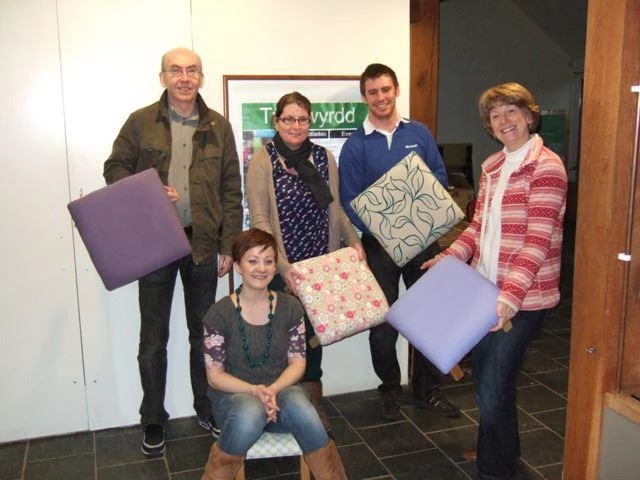
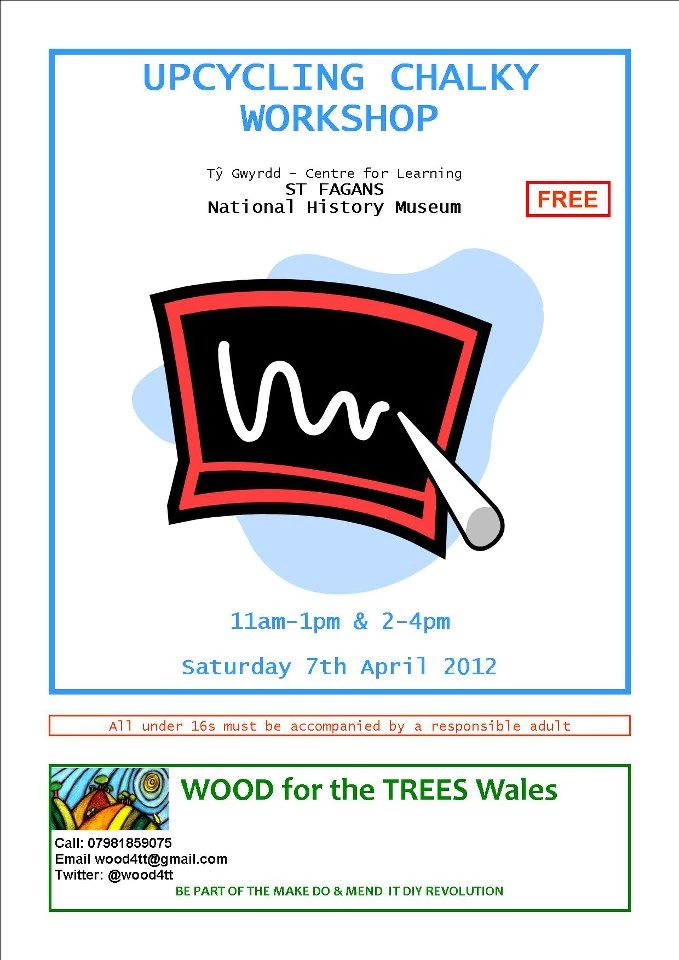
Mae Wood for the Trees yn dychwelyd i'r T? Gwyrdd ar Ddydd Sadwrn, 7 Ebrill. Yn gynharach eleni, cynhaliwyd gweithdy gwneud stôl droed, a oedd yn llwyddiant mawr fel y gwelir o'r llun. Gwnaeth ymwelwyr gwneud stôl droed eu hunain o'r dechrau i'r diwedd, o’r gwaith saer i'r gwaith clustogwaith ar y diwedd. 

Roedd y gweithdy stôl draed ar gyfer pobl oedd wedi archebu ymlaen llaw, ond y tro yma, bydd drysau’r T? Gwyrdd yn agored i bawb am Upcycling Chalky Workshop! Bydd cyfle i wneud bwrdd du eich hun i fynd adref gyda chi a hefyd cyfle i addurno rhai dodrefn!

Bydd y T? Gwyrdd ar agor rhwng 11 ac 1 yn y bore ac eto o 2 tan 4 ar ôl cinio, felly beth am alw draw i weld beth sydd ar gael!

Cliciwch yma am fwy o wybodaeth.

Mapiau Gwanwyn & eirth gwyn

Danielle Cowell, 22 Mawrth 2012

Hwn yw'r swyddogol cyntaf y gwanwyn. Mae'n cael ei alw 'equinox', sy'n golygu bod y dydd a'r nos bron yr un hyd.

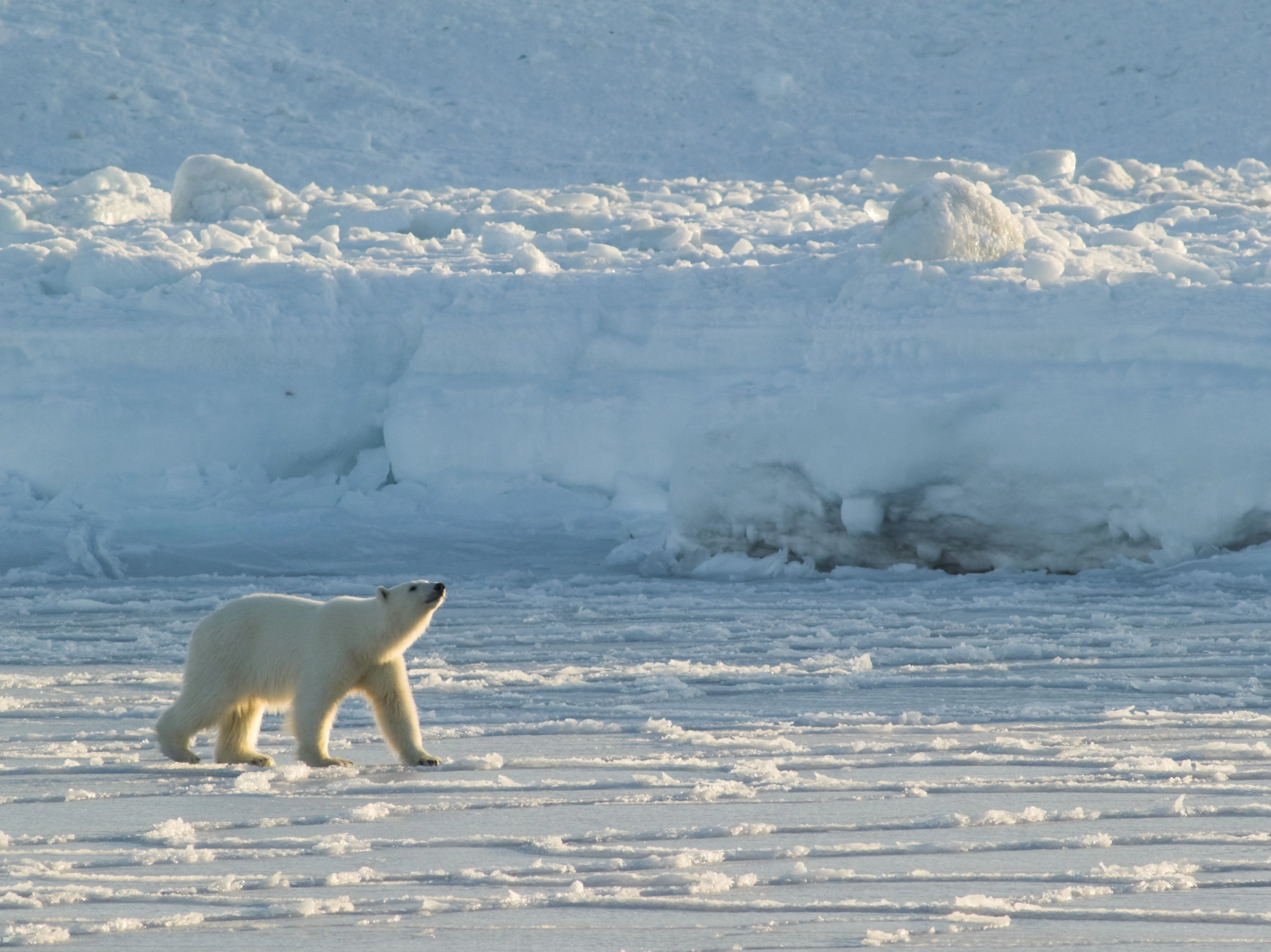
Ym Mhegwn y Gogledd, yr eirth gwyn yn dathlu ymddangosiad cyntaf yr haul mewn chwe mis, ond ym Mhegwn y De'r pengwiniaid yn cael eu paratoi ar gyfer chwe mis o dywyllwch. Dysgais hwn o blog 'Derek the Weatherman - diddorol iawn!

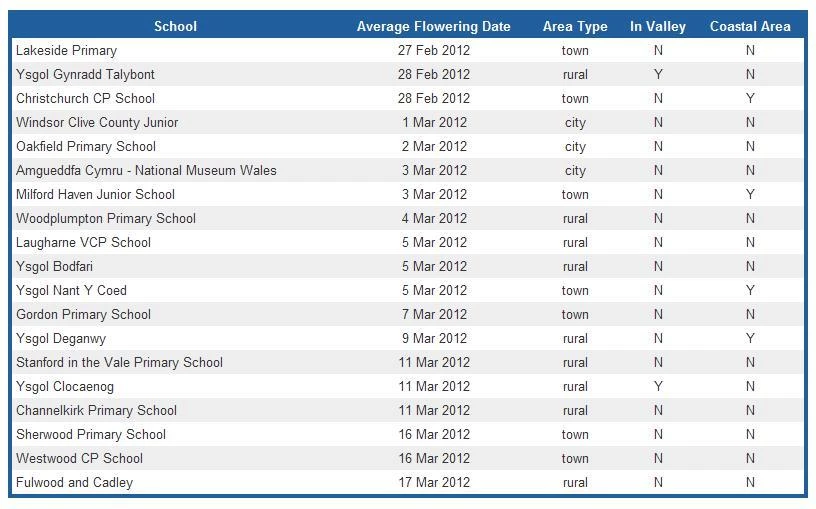
Yn y DU, mae gwyddonwyr ysgol yn mapio'r gwanwyn trwy bostio ganlyniadau i ddangos pan fo blodau gwanwyn ar agor - fel rhan o astudiaeth tymor hir mewn i newid yn yr hinsawdd. Er y dechrau cynnar i'r gwanwyn rwy'n credu y bydd ein canlyniadau yn dangos bod ein blodau wedi dod yn hwyr eleni, oherwydd y rhew hwyr. Mae'r canlyniadau yn hedfan i mewn wythnos yma - 203 hyd yn hyn! Mae llawer o ysgolion yn dal i aros am flodau - gobeithio y byddant yn dod cyn bo hir.

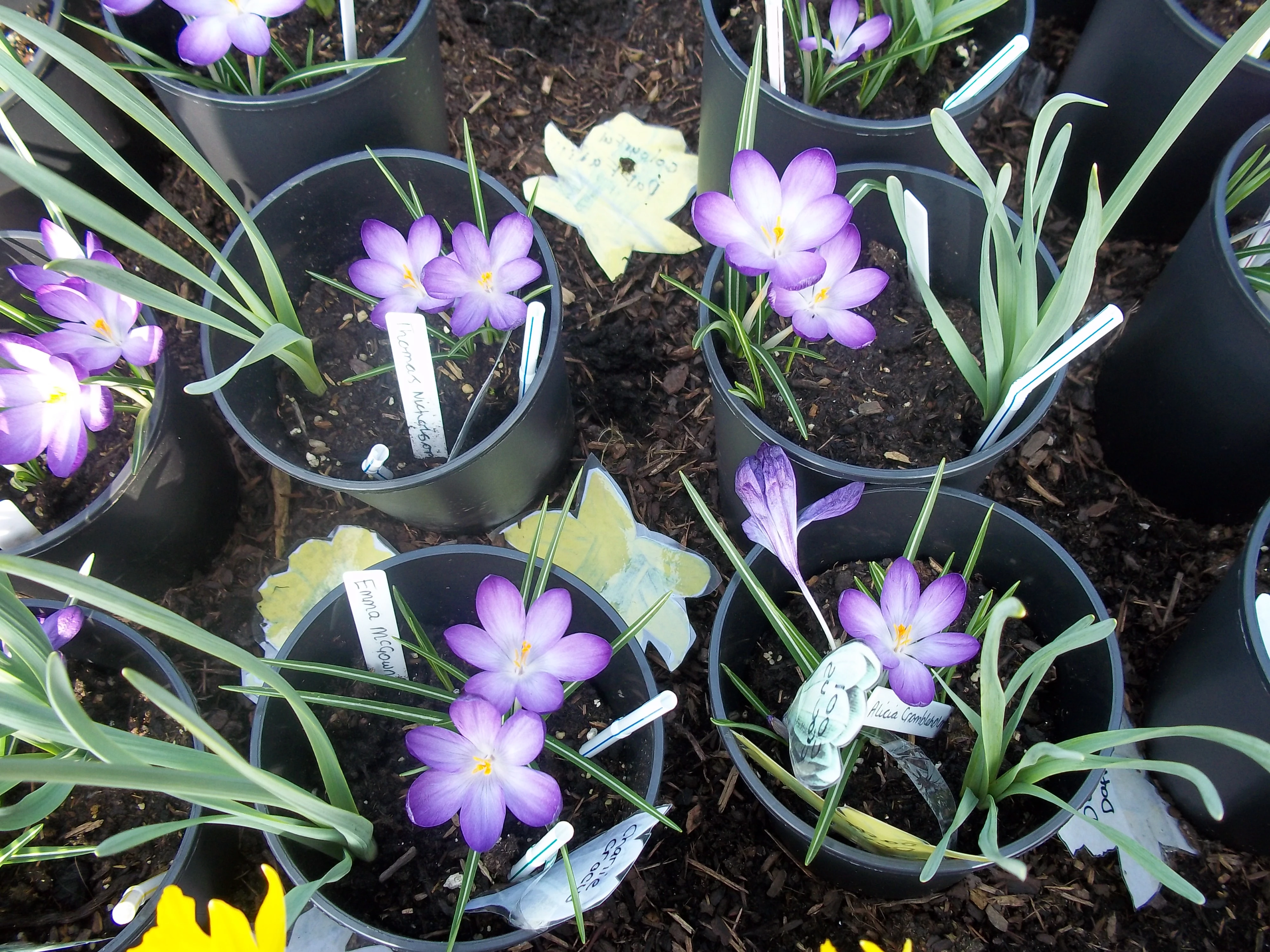
Edrychwch ar y lluniau hardd a anfonwyd i mewn gan Ysgol Fulwood a Cadley Ysgol a Iau Brynhyfryd.

Beth yw'r bwlb dirgel?

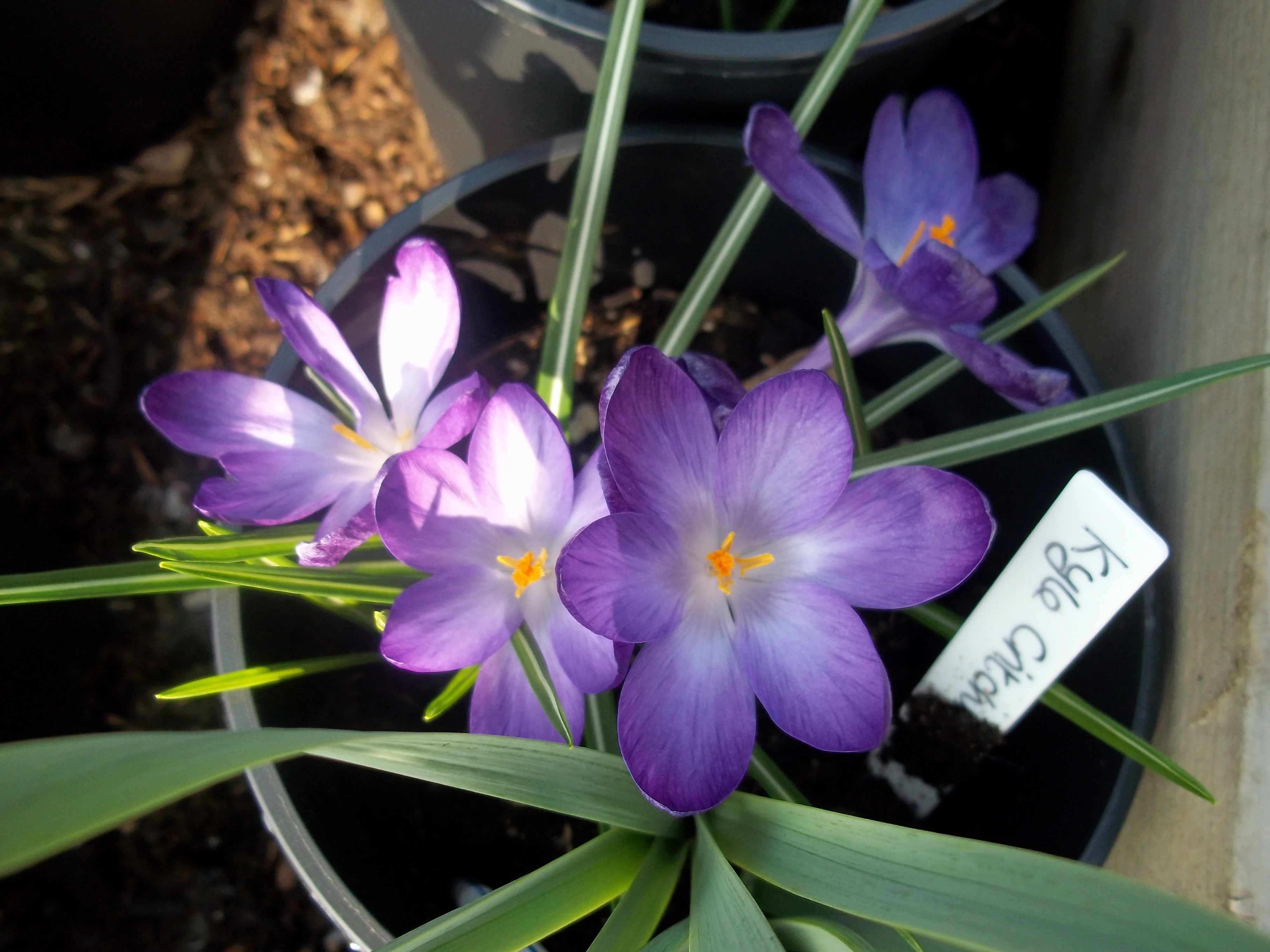
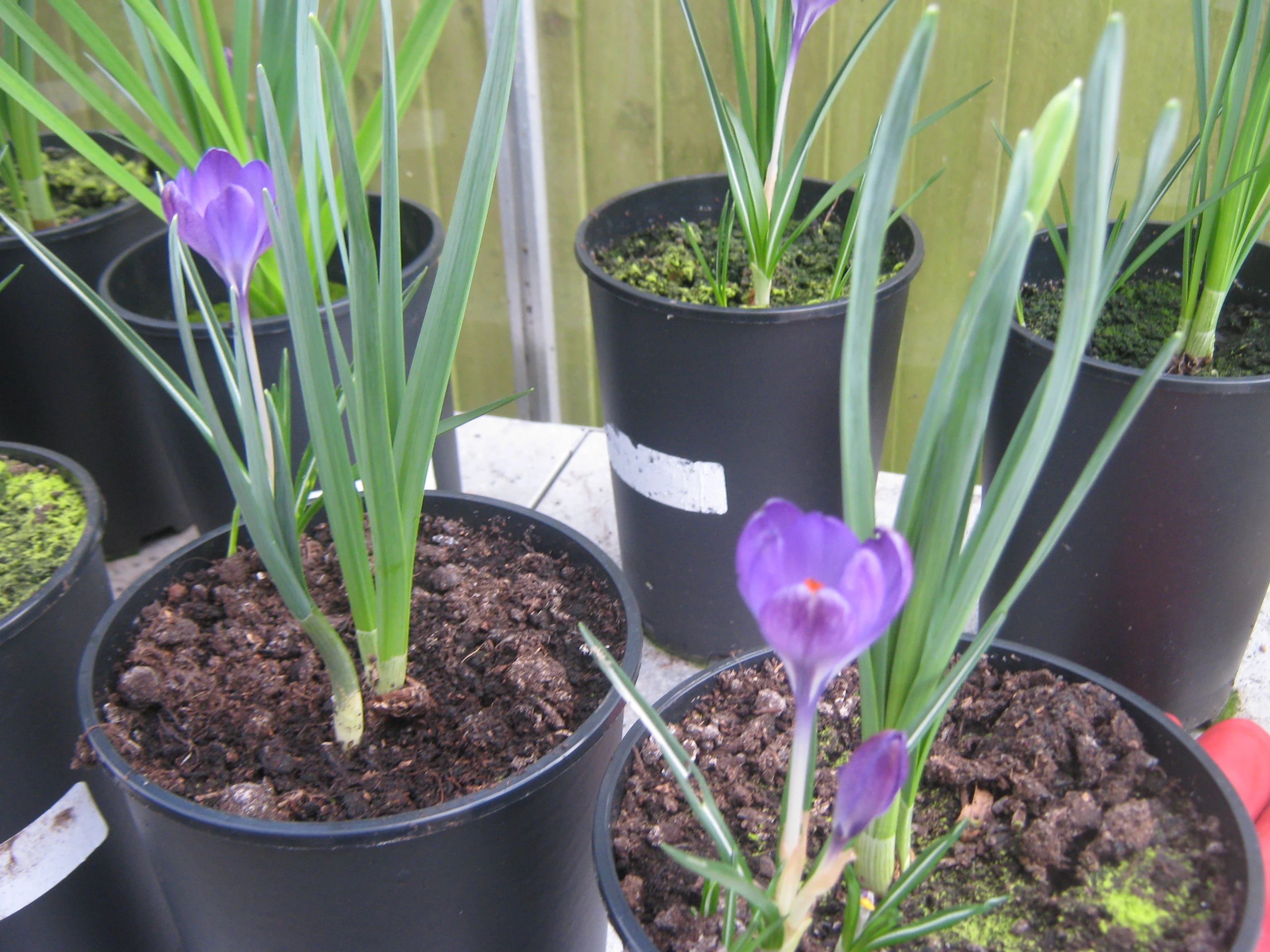
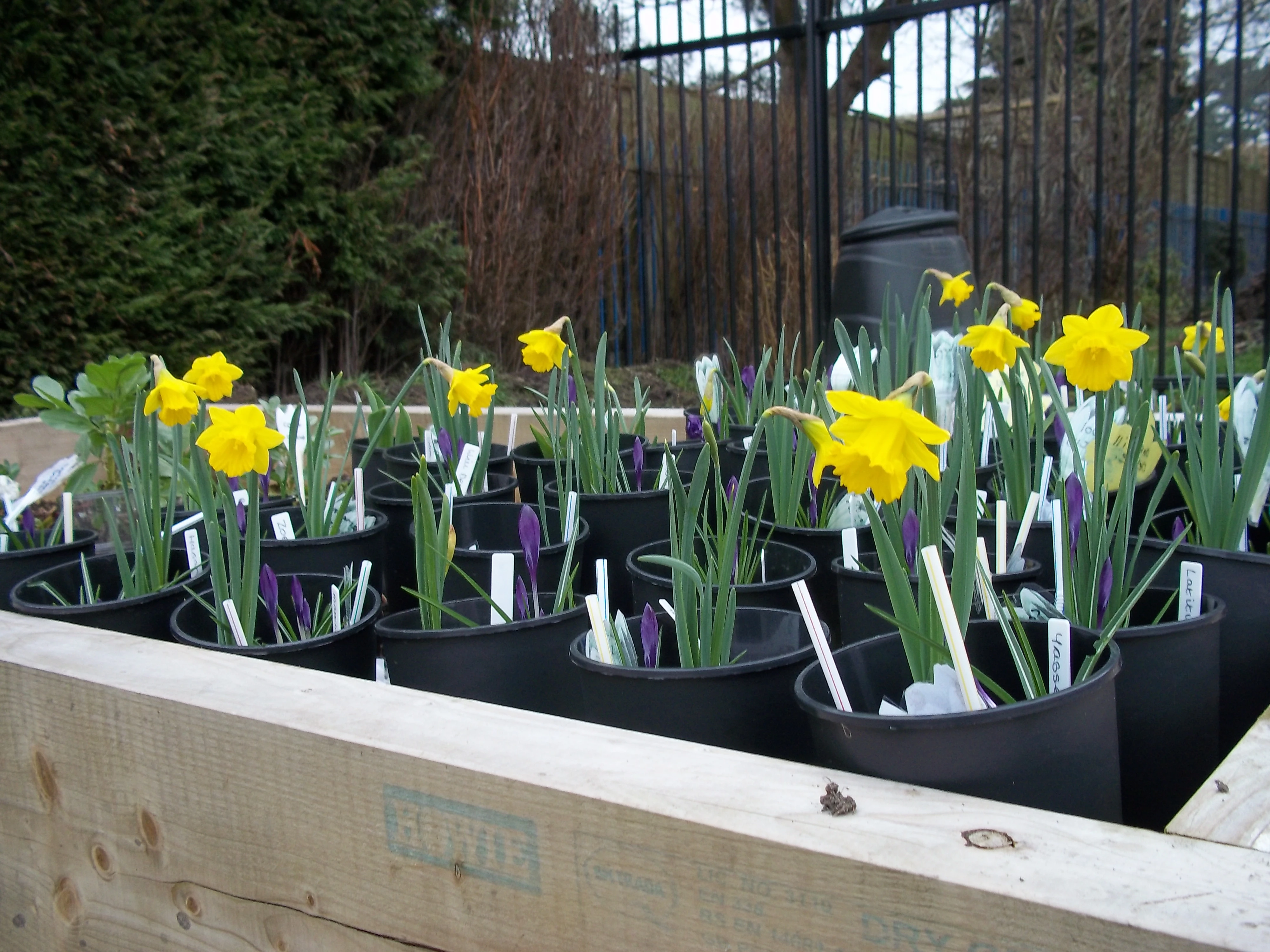
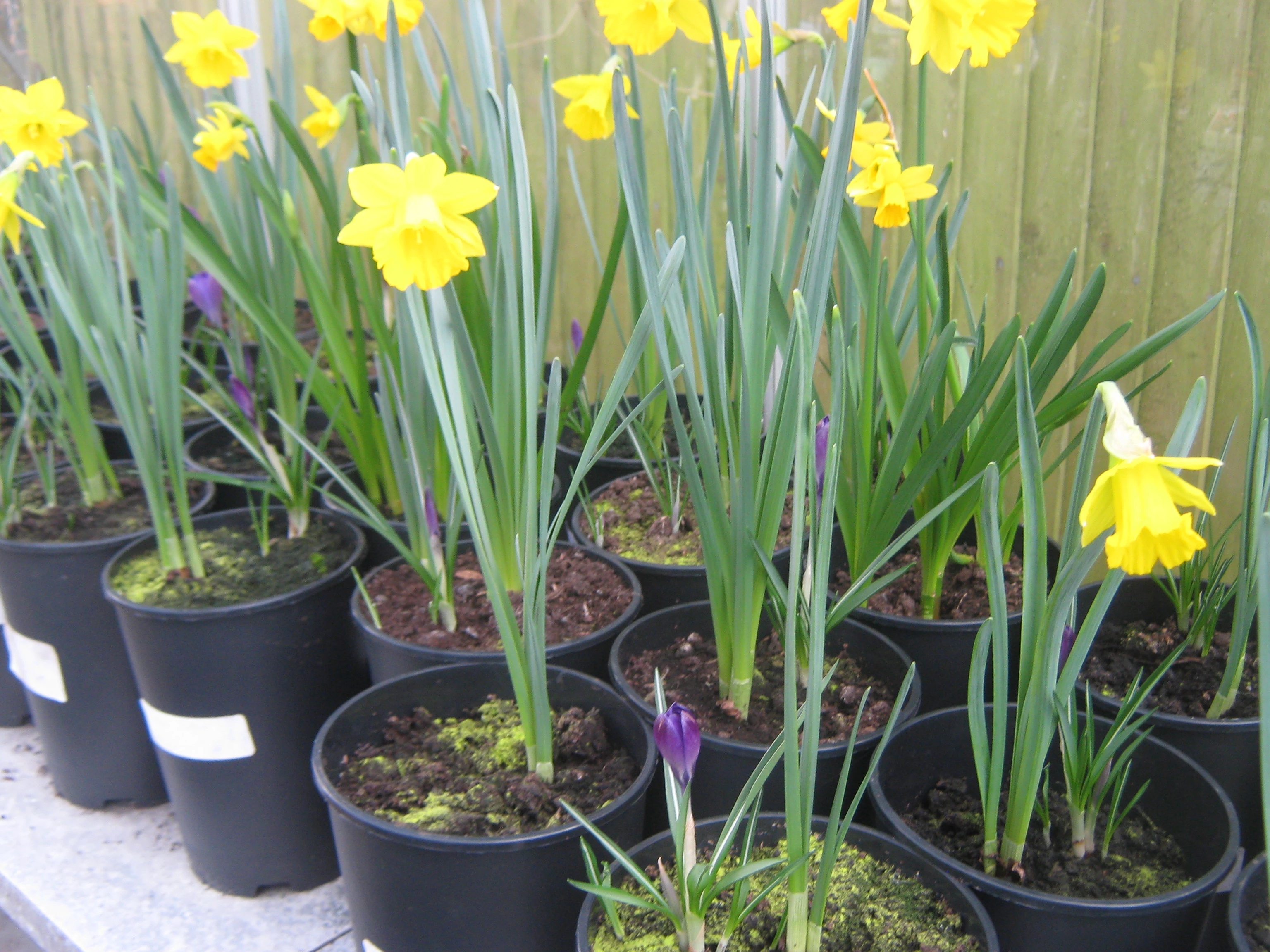
Ysgol Porth Y Felin: Ar ddydd Llun roedd yn glawog ac rydym yn credu bod y bwlb dirgelwch yn tiwlip. Ysgol Gynradd Glyncollen: Rydym wedi darganfod mai un o'n bylbiau dirgelwch yw tiwlip. Mae ein cennin Pedr a crocws edrych hyfryd yn yr heulwen y gwanwyn. Ans: Mae'r ddwy ysgol yn gywir - Da iawn chi!
 

Eich sylwadau:

Fulwod and Cadley reported: All our crocuses have flowered now but 15 of our daffodil plants have no buds at all. We think, that they are unlikely to produce any buds now, we would be grateful if you would let us know what you think?

Ans: I agree, if there are no buds by now, sadly it is unlikey that they will flower. This has happenend to a few of mine too. The reason this has happened is unclear. When a daffodil doesn't make a flower gardeners say that the plant has gone 'blind' - as it has no flower head. This normally happens if the bulb has been flowering for a few years or if there is too much nitrogen in the soil - but this doesn't normally happen with a new bulb. This seems to have happened to my bulbs that started to grow really early - end of Decemeber early Jan. They grew tall then we had the frost and they seemed to stop growing taller - until much later. The hours of sunshine is a big factor with dafs - so we will have to look at all the records to see if there are any trends before we can make any conclusions.

Channelkirk Primary School asked: We measured the height of our plants in cm, but the site has it as mm. Should we measure the flower only? Ans: No, please measure the height in mm if possible or simply convert to mm. Thanks Prof.P

Ysgol Bro Cinmeirch: Tyfodd ccenin pedr mae o yn 215mm a dyfodd y grocws 35mm. Tyfodd cenin pedr arall 85mm a tyfodd y crocws 120 mm. Ateb: Sylwadau gwych!

Ysgol Nant Y Coed: I think that it's great to learn about rainfall and how it works their magic with flowers It's fun experementing on this and it's a experience for children to learn to measure. Ans: Glad you enjoyed - thanks for helping me. Prof. P

Ysgol Nant Y Coed: It was a very good experiment! Ysgol Nant Y Coed. I like the experiment!!!!!!!!!!! Ans: Glad you enjoyed the experiment! Thanks so much for helping me with this. Prof. P

www.amgueddfacymru.ac.uk/scan/bylbiau

Twitter http://twitter.com/Professor_Plant

Facebook Professor Plant


Virtually cleaning an eighteenth-century painting

Graham Davies, 7 Medi 2011

Graham Davies, Online Curator, Amgeddfa Cymru  National Museum Wales

When a member of the Art department approached me to ask if I could feature two views of the same painting online  one version covered in dirt and yellowed varnish (as the painting was when it came into the Museum), and the other version showing hidden detail and crisp colours (after being cleaned by Museum conservators)  I realised it would make a perfect interactive if you could use your mouse to virtually 'clean' the dirty canvas to reveal the clean version underneath.

Guardi's view of the Grand Canal, Venice

The painting in question is Francsesco Guardi's View of the Palazzo Loredan dell'Ambasciatore on the Grand Canal, Venice, painted around 1775-85.

Acquired by Amgueddfa Cymru in 2011, this painting is an important acquisition as Guardi's Venetian views are regarded as highly significant in the history of landscape painting.

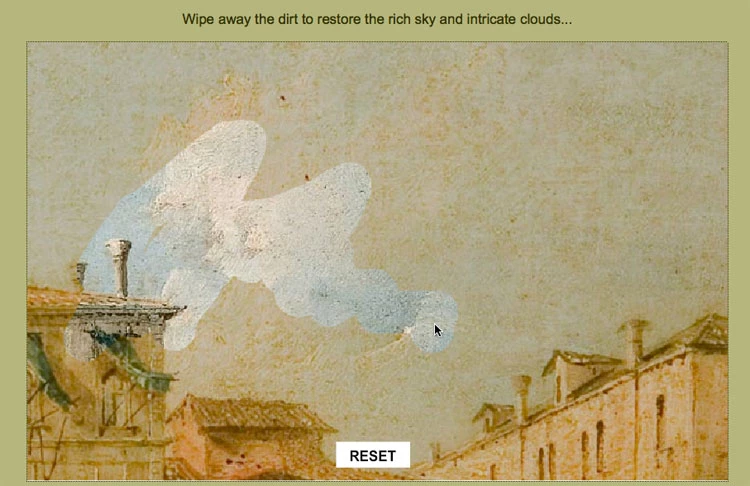
You clean the painting

To make the most out of this dramatic before-and-after view, I needed to work out a way of 'virtually' cleaning the painting online by dragging a mouse over the dirty image to reveal the original details and colours previously hidden underneath the dirt and old varnish.

Reinvent the wheel?

I wanted something that allowed the mouse to act as an eraser, allowing one image to be rubbed out to reveal a secondary image underneath. A hunt around the internet brought up the required functionality already created by by Jonathan Nicol (www.f6design.com/journal).

The next step was to acquire high-resolution copies of both dirty (before) and cleaned (after) digital images of the artwork from the Photography department.

Precisely aligning two slightly differently angled photographs of the same picture

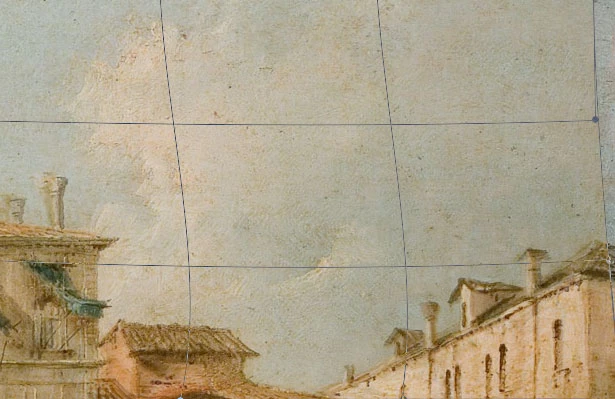
When I opened these digital images in Photoshop it became apparent that variations in the perspective, and distance of the photographic captures, resulted in two images that did not precisely match up once overlaid on top of one another.

After an hour of miniscule adjustments using the image warp feature on Photoshop, using the images as separate layers within Photoshop (one set at 50% opacity), I eventually achieved a precise overlaid match.

I abandoned trying to do this at 100% view as the image was so large and the time lag in processing too great to view the results (even for my G5 at 2.44Gz and 8GB RAM). I had to settle for a 25% view that filled my Apple 32" screen)

Once I had a satisfactory matched up and aligned the 'dirty' layer on top of the 'clean' layer, I could create the two corresponding TIFF images to incorporate into the Flash file as a basis for the interactive.

After a bit of tweaking, fiddling, and constant testing, I managed to create a simple interactive, allowing you to use your mouse to erase the dirt and grime, revealing the clean painting underneath.

Exploring the detail

I then decided to repeat this process to create several versions, all using crops of the high-resolution images to show close up details of the painting.

Areas of particular interest I chose to separate out were people rowing a gondola, the architectural detail of the buildings, and the detail of the sky and clouds where much original detail had been almost totally obscured by years of grime, dirt and previous 'touch-ups' to the painting. The clean version revealed original intricate details and brushwork.

Future applications for Museum archives and collections

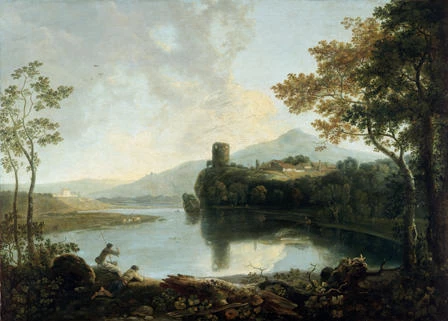
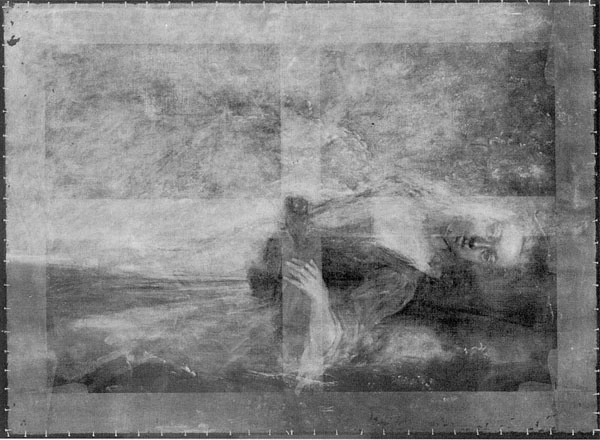
I am hoping this functionality can be utilised for other online images of the collections in the future. Ideas I have at the moment are to reveal hidden under-drawings only visible under x-ray light — as in the example of Richard Wilson's Dolbadarn Castle (NMW A 72), which has been painted over a portrait of a woman, and Landscape with Banditti around a Tent (NMW A 69) which he painted over a Venetian-style reclining nude.

Additional ideas include viewing a landscape or post-industrial townscape that can be erased to reveal a historical image underneath...
Lots of talk, for some very small numbers

Mari Gordon, 8 Awst 2011

Ok, so we had the iPad moment. What’s changed? Lots. The iPad itself was, in truth, disappointing for publishers. Beautiful, sure, but not very helpful. It wasn’t multifunctional and it wasn’t backward compatable with much stuff either (I can’t be the only person still using OS 10.4?) But, like Apple’s previous offers, it was a gamechanger. It established the tablet as a device, despite many people, myself included, wondering if anyone really wanted Job's 'third device'. Apple then let other manufacturers come up with their own versions, the best of which is probably Samsung’s Galaxy, and quietly went home to improve their own model. Having established the tablet, and just in time to catch the secondary wave of adopters, out comes iPad 2. With improved functionality and more features (camera – two, actually), it still passes itself off as the most desirable tablet, even if it’s not necessarily the best. With iPad 2 and the iPhone, Apple has now firmly entered the mainstream consumer market. In losing the geek factor, what has it gained? Well, turnover, and profit, obviously. While Apple’s top-quality combined hardware/software model of Macs retains its market-leading position in the creative industries, the iPods, Ipads and iPhones are now thoroughly high-street, even with their top-end price tags.

However, part of this trajectory has been the strategic downplaying of the iPad’s e-reader function, which is what publishers were most  excited about. Instead, the iPad focuses on portable, sleek, seamless acces to the web and email – truly, a big iPhone, but also ready and waiting for Web 3.0.

In terms of e-readers the iPad moment just didn’t happen. This has left Amazon’s Kindle as market leader, even though it only reads Amazon’s own e-book file format (although there are rumours Amazon will soon be allowing US publishers to submit e-books in the industry-standard e-Pub format). Amazon introduced the Kindle in 2007, by 2010 in the US Amazon were selling more Kindle books than hardbacks; today Amazon sells more Kindle books than hardback and paperback put together. At the moment it’s selling 105 Kindle books for every 100 print books, and three times more Kindle books than this time last year. In the UK, where the Kindle store has only been open a year or so,  Amazon are selling twice as many Kindle books as hardbacks.

What can we learn from this? Remember, the Amazon figures only apply to their own sales, of Kindle books, which can only currently be read on a Kindle device. What’s happening across the rest of the bookselling industry? The true picture for the UK is that sales of e-books are currently 2.5% of all book purchases; interestingly, they peaked at 3% over Christmas (did you get an e-book in your stocking?!) Adult fiction is still the most popular category, at 5.4% of all purchases; men and women are buying e-books equally, and the age group 55-64 makes up over a quarter of e-book buyers.

This 2.5% seems like a tiny figure for us all to be worrying so much about, especially as the value of the sales is low – about 1.6%. I still can't wait to have a go though.

Revealing historic sketches online

Graham Davies, 7 Mawrth 2011

Revealing the historic sketches of Francis Place for the very first time…

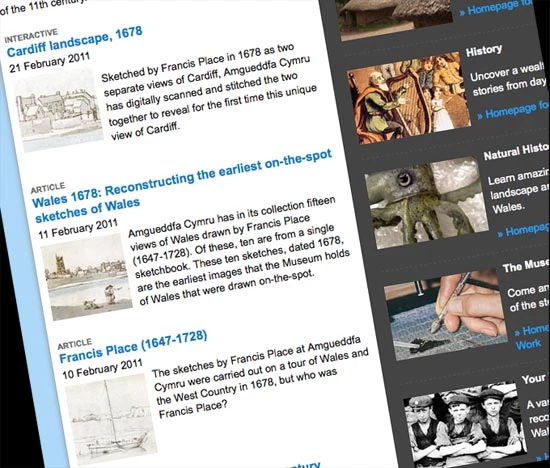
After Museum conservators in the Art department had completed their conservation work on the Francis Place sketchbooks – containing some of the earliest on-the-spot- sketches of Wales in the Museums collections – I was given the task of figuring out the best way in which to present these sketches online.

Secret sketches hidden for 200 years

Places' sketchbooks had been taken apart 200 years ago and their pages stuck on a woven paper backing. Recent conservation work has since revealed further sketches on the reverse – sketches that have been hidden for over 200 years.

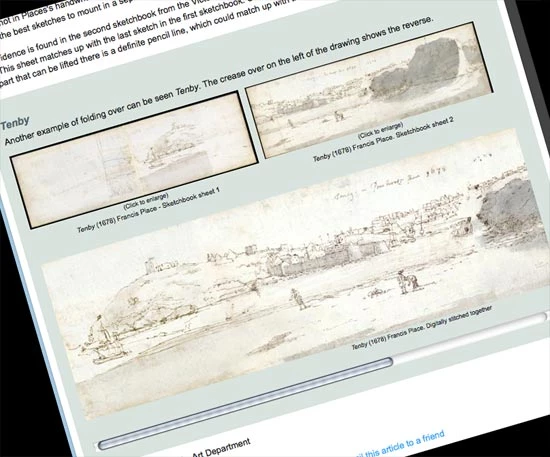
What's more, these hidden sketches were a continuation of the panoramic view from the previous page – so by digitally stitching two double page panoramas together, new complete views could been created that would never have been possible to see before – even by the artist himself!

Now, how could we display these new super long panoramas online whilst still allowing the detail to be seen?

The default width for our webpages is set at just under 1000 pixels across, this was just not enough to be able to show off these panoramas in any detail, so I decided that the easiest solution was to add scroll bars direct to the image, allowing them to be displayed across the page whilst at the same time allowing the complete panoramas to be studied in detail.

Cardiff 1678:

One of these newly generated images is of a panoramic view of Cardiff, containing an unique view of the medieval town as it was back in 1678.

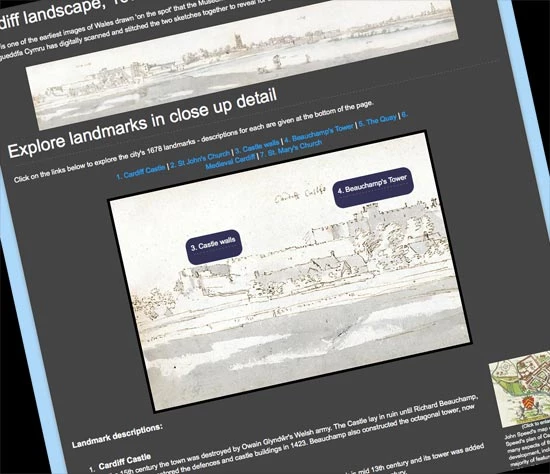
To show this detailed sketch off in the best possible way, I decided to repurpose our interactive image navigator tool, which allows the user to pan around a high resolution image viewing details close up.

By using texts from a previously published article on medieval Cardiff, I was also able to pinpoint and highlight certain aspects of the panorama that were noteworthy – be it places that have remained unchanged since medieval times, or places that have long since vanished.

Francis Place goes global

To promote this work, the marketing team at the Museum distributed several Tweets and Facebook mentions. As well as being picked up by the BBC Wales news website and local media, we also published images onto the photo sharing website Flickr and added the extra information as notes embedded within the image. To make it a bit more user focused, I posted a comment asking users to guess where the artist was postitioned as he sketched… The foreground area of the sketch has altered so dramatically since 1678, it's not as easy as it seems….