About the Author - Lowri is one of the Freelance Young people Programme makers, working with Amgueddfa Cymru on the Winter of Wellbeing project.
The Situation
I’m standing at the Supermarket checkout bagging up copious amounts of nibbles, cakes and booze. The checkout lady says ‘ Ooh are you having a party! You lucky thing!’
Here’s what I should have said:
‘Actually my Dad just died and all of this is for my family and me (mainly me) to drown our sorrows after the funeral. I don’t need to be doing this but I need something to keep me busy or else I would have to deal with my feelings.’ And then I would make a scene by ugly crying while swigging from one of the wine bottles.
And what I actually said:
‘Yes, I’m having a party.’ And then I went back to my car and cried.
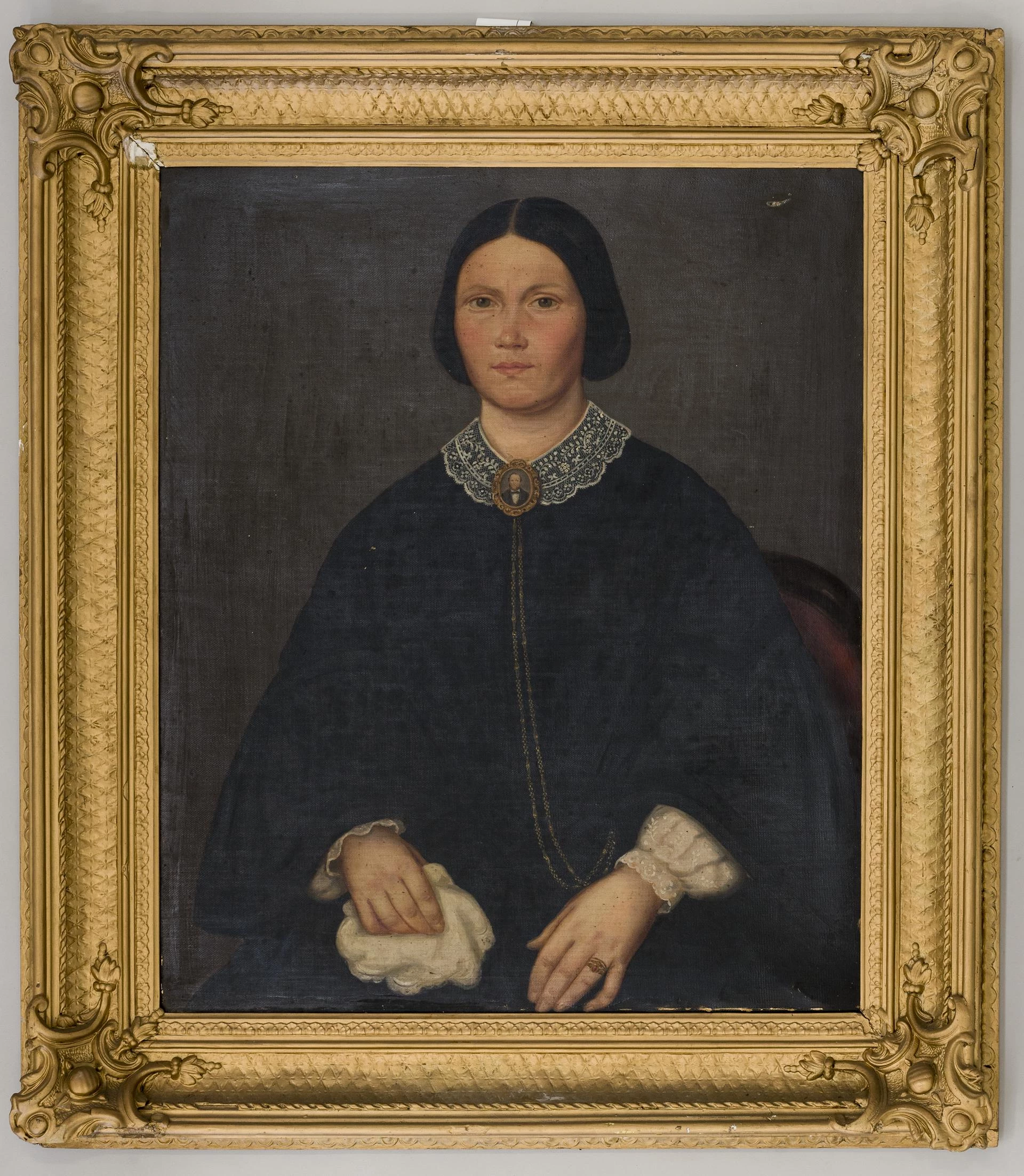
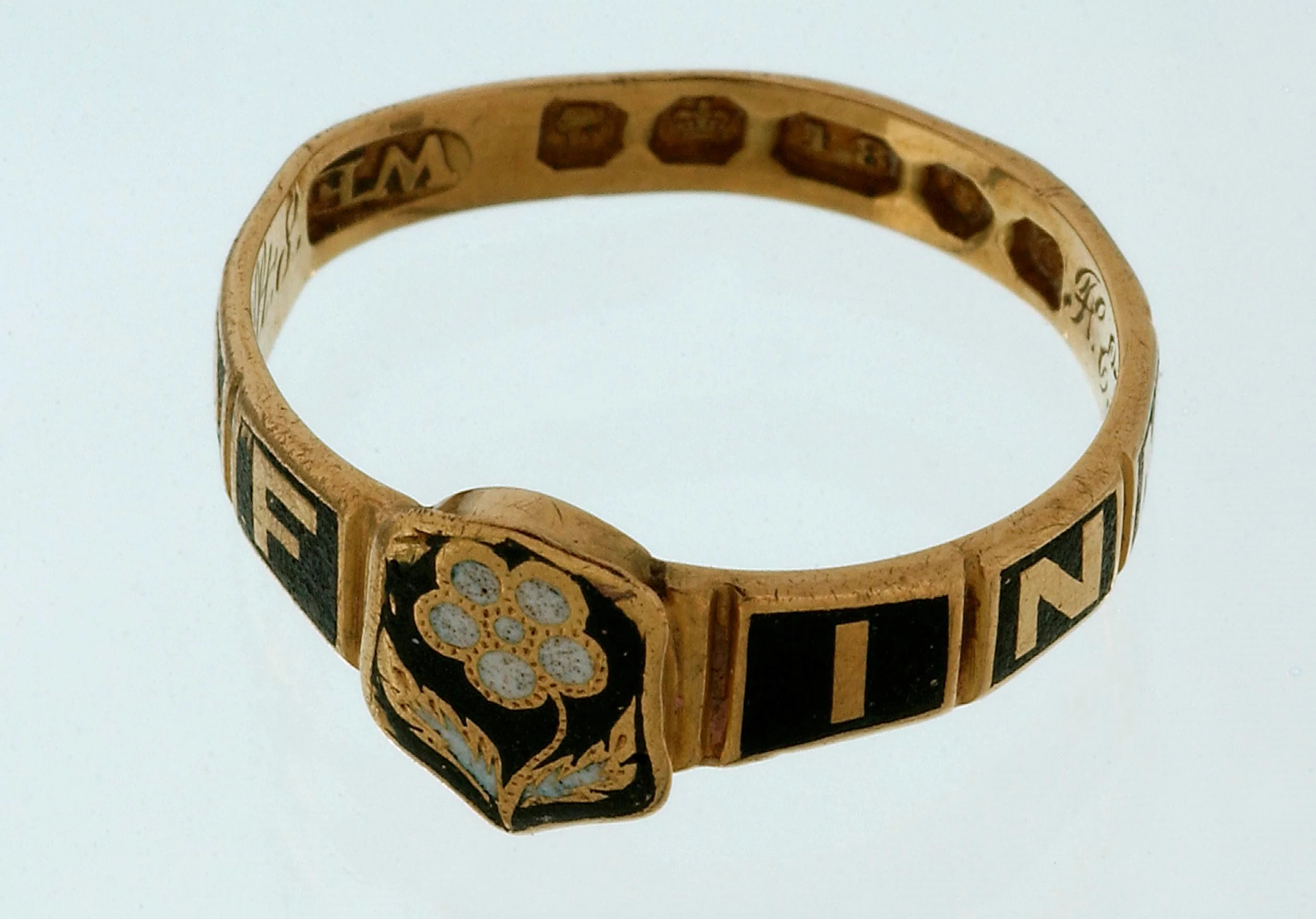
This exchange would never have happened if Mourning dress was still a social convention. Of course, I could wear all black but that wouldn't necessarily convey that I had recently suffered a loss, it would just convey that I am chic… or a vampire… or a chic vampire. There aren’t too many old school social conventions that I would want to revive; however, certain parts of formal mourning are, in my opinion, due a revamp.
So, what is traditional Mourning?
After the death of a close family member or friend it has been a tradition for centuries in many parts of the western world to wear black for varying periods of time, to communicate that they have suffered a loss. However, during the Victorian period, Mourning and all the social conventions that went with it, were at their peak. This was for several reasons but the high death rate, rise of the middle classes and the wider availability of reliable Black clothing dyes contributed heavily to its popularity. Queen Victoria herself, was the poster girl for Mourning, famously remaining in mourning and seclusion for many years after her husband, Prince Albert's death.
Mourning conventions varied and were dependent on class, location, religion and relationship to the deceased. For example, an upper class widow could stay in Mourning clothing for several years whereas a working class widow who had not the means for Mourning wear may show no outward grieving at all. The Mourning period also limited which social occasions the Mourner could attend. Dancing and other frivolities were a no go. Those who disregarded the expected conventions could become social outcasts.
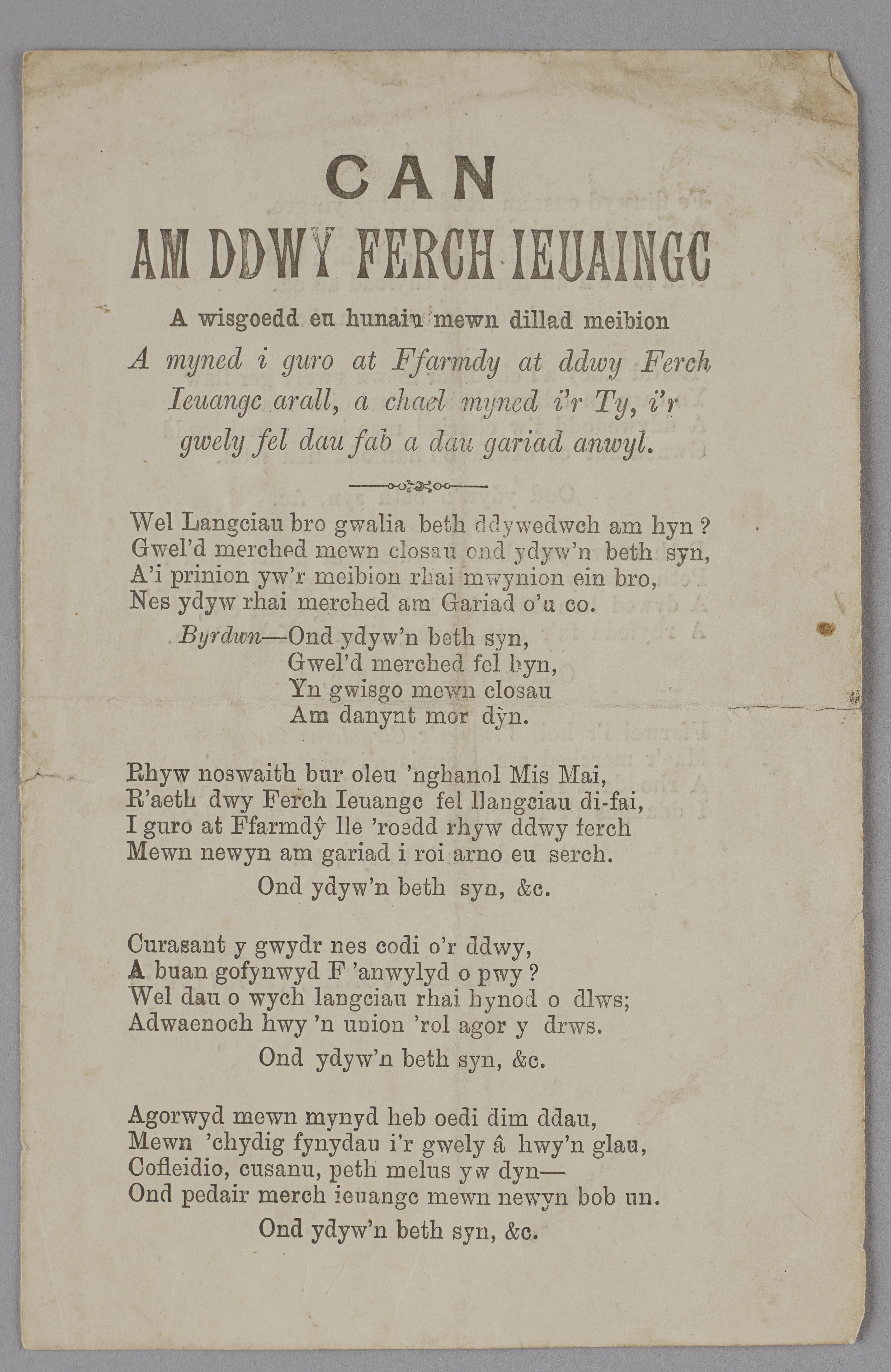
Yn hydref 2021, yn dilyn sgwrs ar drawswisgo mewn hanes gan Norena Shopland, daeth baled Cymraeg, ‘Can Newydd,’ i’r amlwg yn Yr Archif Gerddorol, yn y Llyfrgell Genedlaethol Cymraeg. Gellir darllen mwy am honno ar ‘Balad Cwiyr Anweddus’. Yr hyn sy’n drawiadol yw natur rywiol amlwg y faled, sy’n darlunion merched yn trawswisgo a’n cael perthynas rywiol â merched eraill.
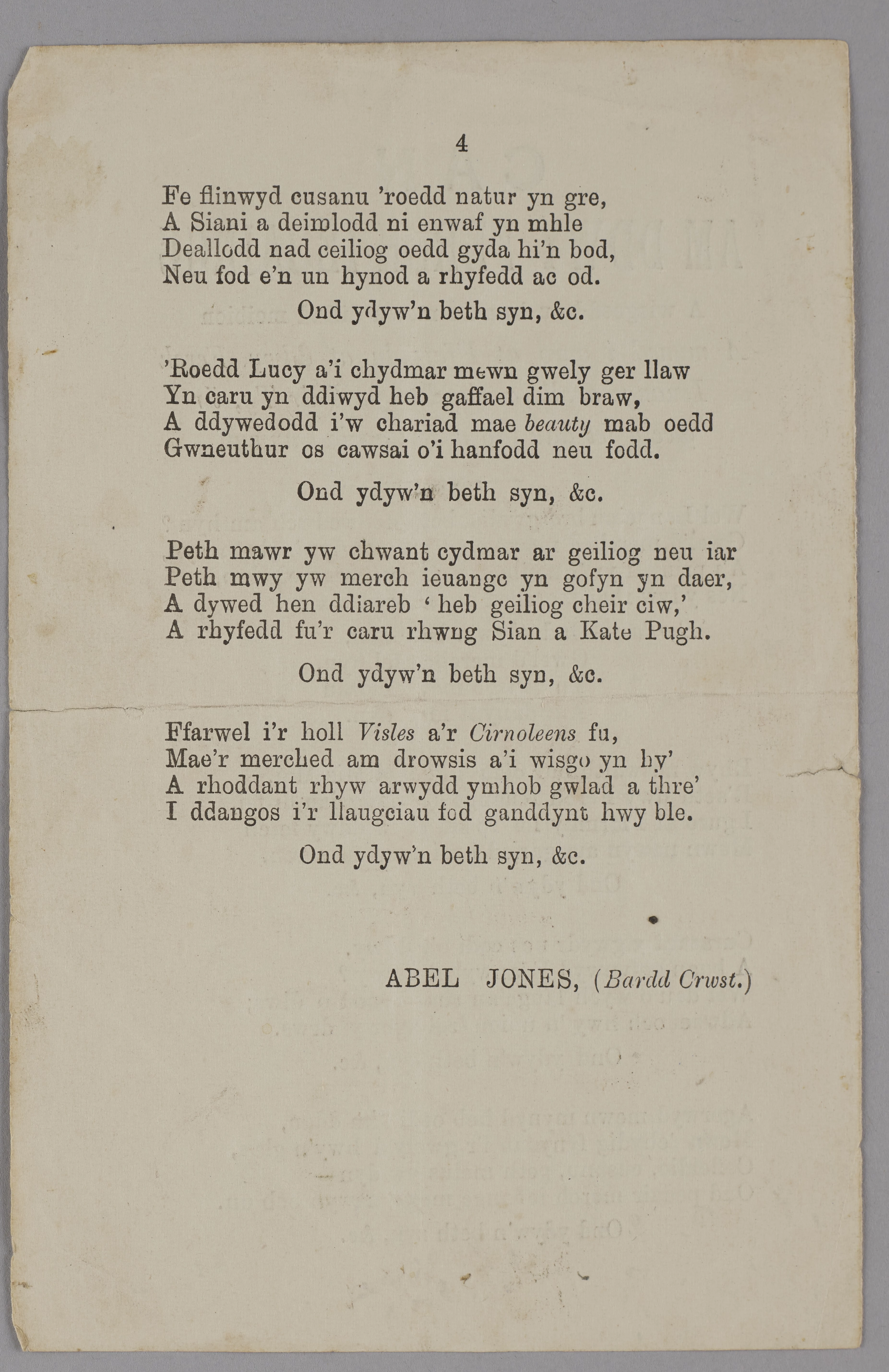
Mae Archifdy Ceredigion ac Archifau a Chasgliadau Arbennig, Prifysgol Bangor, gyda gopïau yn eu casgliadau, ond ym mis Chwefror 2022 lleolwyd trydydd copi yn Amgueddfa Cymru, fodd bynnag teitl y fersiwn hon yn syml yw ‘Can’ a mae ganddo ychydig o wahaniaethau. Mair Jones, a wnaeth y cyfieithiad cyntaf o ‘Can Newydd,’ hefyd a wnaeth y cyfieithiad ar gyfer ‘Can’.
Ysgrifennwyd geiriau’r ddwy fersiwn gan faledwr unllygeidiog, a throseddwr rhan amser braidd yn ecsentrig, Abel Jones, ‘yr olaf o’r baledwyr “mawr,” ond a adweinid yn aml wrth ei enw barddol Bardd Crwst ar ôl ei fro enedigol, Llanrwst. Roedd Jones yn faledwr a deithiodd a pherfformio mewn ffeiriau ledled Cymru, gan werthu ei faledi fel ‘Can Newydd’ ar bynciau penodol, fel marwolaeth Ymerawdwr Rwsia, damweiniau a thrychinebau diwydiannol, Rhyfel y Degwm a llofruddiaethau – er ddim bob amser yn hanesyddol gywir, oherwydd gwerthu ei faledi oedd ei brif nod. Weithiau byddai'n eu gwerthu gyda'i fab, ac fel arfer i bobl fel y gymuned amaethyddol dosbarth-gweithiol. Roedd baledwr mwyaf adnabyddus a phoblogaidd ei oes, er iddo farw yn Nhloty Llanrwst.
Mae’n anodd dyddio’r faled, er bod dyddiadau rhwng 1865-1872 wedi’u hawgrymu (gweler ‘Balad Cwiyr Anweddus’ am ragor o fanylion) ac nid oes dim yn ‘Can’ i awgrymu a yw’n dod cyn neu ar ôl ‘Can Newydd’. Fodd bynnag, mae pob un o'r tair fersiwn o Can Newydd wedi'u harwyddo ‘Bardd Crwst’ tra bod fersiwn Amgueddfa Cymru wedi'i harwyddo ‘Abel Jones, (Bardd Crwst)’ ac efallai bod rheswm am hyn.
Ysgrifennodd Jones nifer o faledi ddigrif, gan ddefnyddio’r dôn ‘Robin yn Swil’ yn aml, yr un fath ag ar gyfer ‘Can Newydd’, alaw ‘fwy addas i’r dafarn nag i’w chanu mewn cyngherddau ac eisteddfodau parchus.’ Un o’i faledi a restrir fel cerdd am ‘garwriaeth’, un arall am Dic Sion Dafydd, ac un arall am wraig feddw, tra’r oedd ei gerddi ‘carwriaeth’ eraill yn gyngor i beidio â phriodi a’n gwynion gŵr am ei wraig.
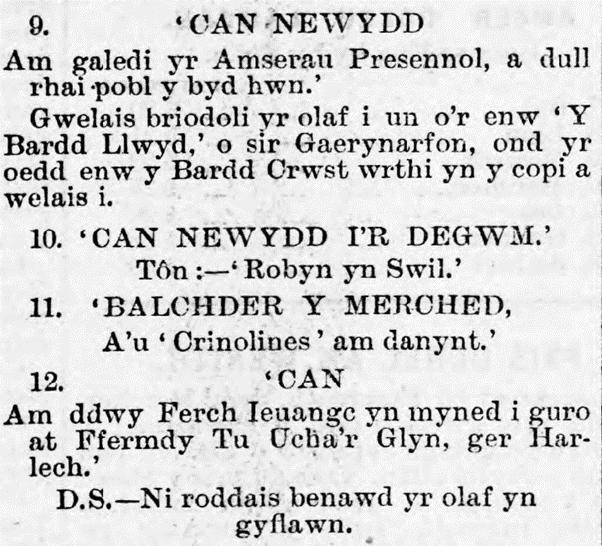
Mae un sôn am ‘Can Newydd’ ym mhapur newydd 1915, wrth drafod gweithiau Bardd Crwst, sef ‘Cân am ddwy Ferch Ieuangc yn myned i guro at Ffermdy Tu Ucha’r Glyn, ger Harlech’, â nodyn ychwanegol gan y casglwr, 'Ni roddais benawd yr olaf yn gyflawn,' sy'n dangos y byddai hyn wedi bod yn rhy amharchus hyd yn oed i'r papur newydd, gan gynnwys gadael allan yr agwedd groeswisgo.
Mae'n bosibl bod natur risqué, nid yn unig y geiriau ond y dôn yr oedd yn gysylltiedig â hi, wedi achosi i Jones dynnu ei enw llawn o fersiwn ‘Can Newydd’. Nid oes unrhyw dôn yn gysylltiedig â fersiwn Amgueddfa Cymru felly mae'n bosibl daeth ‘Can’ yn gyntaf, a Jones wedi ei gwneud yn fwy swnllyd yn yr ail fersiwn ond wedi penderfynu hepgor ei enw llawn. Mae ‘Can’ hefyd yn defnyddio rhai geiriau Sasneg, fel ‘beauty,’ ‘Kate Pugh,’ ‘Visles’ a ‘Cirnoleens,’ [sp] tra bod ‘Can Newydd’ yn defnyddio sillafu Cymraeg fel ‘biwti,’ ‘Cit Pugh,’ ‘busle’ ac wedi cywiro’r sillafu o ‘crinoline’.
Gwahaniaeth arall yw'r lleoliad. Y rhagymadrodd i ‘Can’ yw “Can am ddwy ferch ieuaingc a wisgoedd eu hunain mewn dillad meibion a myned i guro at Ffarmdy at ddwy Ferch Ieuangc arall, a chael myned i’r Ty, i’r gwely fel dau fab a dau gariad anwyl.” Tra yn ‘Can Newydd’ y mae “Hanes dwy Ferch ieuanc o’r fro hon a wisgodd eu hunain mewn dillad meibion, a myned i balasdy i garu at ddwy ferch ieuanc, rhai dyeithr iddynt.”
Mae’r ffermdy wedi diflannu ac yn ei lle mae ‘Plas uchaf a Glyn’. Mae Plas Uchaf (Neuadd Uchaf) 1.5 milltir (2.4 km) o Gorwen, Sir Ddinbych, a Phlas Glyn o bosib yn fyr am Blas Glynllifon 56 milltir (90km) o Gorwen. Ymddengys fod Jones wedi symud y lleoliad o amaethdy dosbarth gweithiol aneglur i dai boneddigaidd a enwyd, er na ddaethpwyd o hyd i unrhyw gyfeiriad trawswisgo mewn cysylltiad â'r ddau eiddo hyn. Er hynny, mae’n trop(e) a ddefnyddir hyd yn oed heddiw, sef gosod straeon gwefreiddiol ymhlith y cyfoethogion, sy’n llai eu nifer ac sydd â mwy o amser ar eu dwylo, na phobl y dosbarth gweithiol, ac efallai nad oedd Jones eisiau sarhau ei brif gynulleidfa.
Beth bynnag oedd pwrpas y faled, penderfynwyd ei hadfywio ar gyfer cyflwyniad ym Mis Hanes LHDCT+ 2022 gan Aberration a recordiwyd gan Cerys Hafana gyda lleisiau cefndir gan y gymuned.
Trwy rannu’r faled cwiyr heddiw fel rhan o’n hanes Cymreig, mae’n cael ei hadennill gan y gymuned LHDTC+, yn cael ei hail-ddychmygu’n greadigol ac yn helpu i adeiladu ein cymuned cwiyr Gymreig heddiw.
Model yw Arthur o’r infertebrat mwyaf i fyw ar y tir erioed, creadur tebyg i filtroed o’r enw Arthropleura.
O ble y daeth Arthur yr Arthropleura?
Arddangoswyd y model yn wreiddiol yn Nhŷ Esblygiad Gerddi Kew ond pan gafodd y gofod ei glirio i baratoi ar gyfer adfer y Tŷ Tymherus, dan nawdd Cronfa Dreftadaeth y Loteri, nid oedd ei angen mwyach ac, yn garedig iawn, cafodd ei roi gan Kew i Amgueddfa Cymru.
Roedd angen gwaith cadwraeth sylweddol ar y model Arthropleura pan gyrhaeddodd Amgueddfa Cymru. Yn dilyn blynyddoedd lawer mewn arddangosfa agored mewn tŷ gwydr, ochr yn ochr â phlanhigion byw, roedd wedi dioddef difrod a rhwd. Roedd lleithder y gofod arddangos wedi peri i’r paent arwynebol blicio, ac roedd sawl corryn a malwen wedi ymgartrefu ar ochr isaf y model!
Arthur yr Arthropleura cyn cwblhau'r gwaith cadwraeth
Arthur yr Arthropleura yn cael bath
-->
Y dasg gyntaf oedd golchi’r model yn dda gyda dŵr poeth a sebon i gael gwared ar y baw a’r gwe corryn! Yna cafodd yr holl baent rhydd ei sgwrio, defnyddiwyd pwti epocsi i ailffurfio’r rhannau a oedd wedi’u difrodi ar y coesau a’r pen, ac atgynhyrchwyd y gweadau arwynebol. Roedd y nytiau a’r bolltau a oedd yn cysylltu’r teimlyddion wedi rhydu, felly gosodwyd ffyn dur di-staen newydd yn lle’r hen rannau metel.
Arthur yr Arthropleura ar ôl y gwaith atgyweirio
Arthur yr Arthropleura yn ymweld a galeri Celf Argraffidaol
-->
Wedi cwblhau’r gwaith atgyweirio, cafodd y model ei baentio’n ofalus gyda phaent acrylig ac yna’i orchuddio mewn farnais gwydn, nes ei fod yn addas i’w arddangos yn gyhoeddus unwaith eto.
Arthur yr Arthropleura wrth ymyl Llwynog er mwyn cymharu maint
ffosil o greadur cyntefig tebyg i gorryn (Maiocercus celticus)
-->
Pwy roddodd yr enw Arthur i’r Arthropleura?
Roedd rhai o staff yn adran y Gwyddorau Naturiol wedi closio at y model trawiadol 1.5m o hyd wrth i’r gwaith cadwraeth fynd rhagddo yn y labordy, ac wedi’i enwi’n Arthur yr Arthropleura! Rydyn ni hefyd wedi cael hwyl gydag Arthur; mae wedi “dianc” ac wedi bod yn byw yn rhydd o amgylch orielau’r amgueddfa! Dangoswyd lluniau o’i anturiaethau ar @CardiffCurator, cyfrif Twitter adran y Gwyddorau Naturiol ac roedd yr ymateb gan ddilynwyr y cyfrif yn wych. Mae Arthur yr Arthropleura bellach yn seren ar y cyfryngau cymdeithasol ac mae’n ychwanegiad gwych iawn i’n casgliadau!
Arthur yn un o’i gynefinoedd naturiol, y gors lo yn ein horiel Esblygiad Cymru
Sut olwg oedd ar Arthropleura?
Roedd Arthropleura yn edrych yn debyg iawn i filtroediaid heddiw. Roedd ganddo gorff hir, cul yn cynnwys llawer o gylchrannau, gyda phlatiau caled yn gorchuddio’i gefn. O dan y corff, roedd llawer o barau o goesau cymalog, tua 8 pâr ar gyfer pob chwe chylchran, sy’n debyg i nifer y coesau sydd gan filtroediaid modern. Yn ddiweddar, mae palaeontolegwyr wedi sylweddoli mai cylchran flaen y corff, mewn gwirionedd, yw’r hyn roedden nhw’n meddwl oedd pen yr Arthropleura. Roedd y pen go iawn yn celu o dan y gylchran hon, fel sy’n digwydd gyda miltroediaid cyfoes hefyd. Felly mae ein model ni o Arthur wedi dyddio ychydig, ac ni ddylai fod yn edrych yn syth ymlaen cymaint ag y mae.
Pa mor fawr oedd Arthropleura?
Mae dau fath o dystiolaeth sy’n awgrymu pa mor fawr oedd Arthropleura. Canfuwyd ffosiliau o gorff y creadur, neu rannau ohono, yn yr Almaen, Gwlad Belg, Ffrainc, y Weriniaeth Tsiec, a’r DU, ond maen nhw’n gymharol brin. Yn fwy cyffredin, mae ffosiliau o’r olion troed hir a adawyd gan Arthropleura wrth iddo sgrialu dros dir llaith. Mae ffosiliau o’i olion traed wedi’u canfod yn yr Unol Daleithiau, Canada, yr Almaen, Ffrainc a’r Alban. Mae mesur yr olion yn awgrymu lled y creaduriaid a’u gwnaeth, ac mae modd i ni ddefnyddio hynny i amcangyfrif pa mor hir oedden nhw’n debygol o fod. Mae olion niferus o faint gwahanol mewn rhai lleoedd, sy’n dangos bod Arthropleura o faint gwahanol (ac o oed gwahanol, yn ôl pob tebyg) yn symud o gwmpas yn yr ardal honno. Mae’r olion lletaf sydd wedi dod i’r fei yn 50cm o led, felly amcangyfrifir bod yr Arthropleura mwyafwedi bod dros 2 fetr o hyd.
Ble roedd Arthropleura yn hoffibyw?
Mae ffosiliau ac olion troed Arthropleura wedi’u canfod mewn gwahanol leoliadau a fyddai wedi bod yn weddol agos at y cyhydedd 300 miliwn o flynyddoedd yn ôl, gan gynnwys Gogledd America a’r DU heddiw. Canfuwyd llawer o’r ffosiliau cyntaf mewn siâl to sy’n gorwedd ar wythiennau glo, felly tybiwyd am hir bod y creaduriaid enfawr yn byw mewn corsydd glo llaith. Ers hynny, canfuwyd tystiolaeth o Arthropleura mewn nifer o amgylcheddau gwahanol, gan gynnwys olion traed ar hyd glannau afonydd sych. Mae’n ymddangos eu bod nhw’n teimlo’n gartrefol mewn amrywiaeth o dirweddau gyda rhywfaint o orchudd llystyfiant.
Arthur yr Arthropleura wrth ymyl Llwynog er mwyn cymharu maint
A fyddai Arthopleura wedi fy mwyta?
Dydyn ni ddim yn gallu bod yn siŵr beth oedd Arthropleura yn hoffi ei fwyta, oherwydd does dim olion o’r geg wedi’u canfod mewn unrhyw ffosiliau. Fodd bynnag, pe bai ganddo enau caled a chryf ar gyfer brathu ysglyfaeth, mae’n debyg y byddai’r olion wedi goroesi ac wedi cael eu ffosileiddio. Efallai mai rhesymu cylchol yw hynny, ond mae rhesymau eraill pam ein bod ni’n tybio ei fod yn bwyta planhigion yn hytrach na chig. Canfuwyd ffosil Arthropleura yn yr Alban ym 1967, a oedd ag olion planhigion o’r enw cnwp-fwsoglau mawr yn agos i’r fan lle byddai ei berfedd wedi bod. Mae’n bosib bod y ffosiliau yng nghyffiniau ei gilydd drwy ddamwain, felly dydyn ni ddim yn gallu bod yn hollol siŵr mai’r planhigion oedd pryd olaf yr Arthropleura. Fodd bynnag, os oedd ei ddeiet yn debyg i ddeiet miltroediaid cyfoes, mae’n debygol y byddai wedi byw ar olion planhigion, hadau a sborau.
Gyda pha greaduriaid eraill oedd Arthropleura yn rhannu ei gartref?
Pe baech chi’n edrych ar y creaduriaid a oedd yn rhannu byd Arthropleura, byddech wedi gweld bywyd gwyllt pur wahanol i fywyd gwyllt heddiw. Doedd dim adar na mamaliaid, oherwydd nad oedden nhw wedi esblygu eto. Chwiliwch o gwmpas am y berthynas agosaf i ni, a byddech yn y pen draw yn sylwi ar amffibiad mawr, byrdew o’r enw Eryops yn cuddio yn y dŵr. Doedd anifeiliaid ag asgwrn cefn ddim wedi dechrau tra-arglwyddiaethu ar dir sych eto. Yn hytrach, pryfetach fyddai’r rhelyw o’r bywyd gwyllt o gwmpas y lle. Roedd chwilod du mawr (hyd at 9cm o hyd) yn crwydro ar hyd y lle, a chreaduriaid tebyg i gorynod a fyddai’n llenwi cledr eich llaw. Doedd y rhain ddim yn union fel corynod cyfoes – rhannwyd eu cyrff tew yn gylchrannau yn hytrach nag un darn crwn, a doedden nhw ddim eto wedi esblygu’r gallu i nyddu gwe – ond roedden nhw ar eu ffordd i fod yr arachnidau sy’n gyfarwydd i ni heddiw. Byddai’r awyrgylch yn drwm o hymian eglur rhai o’r creaduriaid mwyaf anhygoel o gwmpas – pryfed enfawr tebyg i was y neidr o’r enw pryfed griffon, gyda lled esgyll o fwy na 70cm. Roedd pryfed griffon ymhlith ysglyfaethwyr pennaf yr oes, ac ymhlith y creaduriaid cyntaf erioed ar y Ddaear erioed i hedfan, tua 150 miliwn o flynyddoedd cyn i’r adar cyntaf wneud hynny. Bu’n rhaid i’n perthynas pell, yr amffibiad Eryops, rannu ei gartref gydag arthropodau hyd yn oed; marchgrancod a oedd hefyd yn hoffi rhannu eu hamser rhwng tir sych a dŵr.
ffosil o greadur cyntefig tebyg i gorryn (Maiocercus celticus)
Pam nad oes infertebratau mor enfawr i’w gweld ar y tir heddiw?
Heb unrhyw amheuaeth, y Cyfnod Carbonifferaidd, tua 300 miliwn o flynyddoedd yn ôl, oedd oes aur yr infertebratau enfawr. Bryd hynny, roedd chwilod du mawr, arachnidau a phryfed tebyg i was y neidr yn rhannu’r byd gyda’r Arthopleura enfawr, y pryfyn mwyaf i fyw ar y tir erioed. Sut oedd hynny’n bosibl, a pham nad ydyn ni’n gweld infertebratau mor fawr ag Arthur heddiw?
Mae’r atmosffer heddiw’n cynnwys tua 21% o ocsigen. Mae’r dystiolaeth yn awgrymu bod lefelau ocsigen tua 300 miliwn o flynyddoedd yn ôl yn agos at 35%. Byddai hynny wedi gwneud gwahaniaeth enfawr i faint o ynni y gallai pryfed ac arthropodau eraill ei gynhyrchu. Yn wahanol i ni, does gan bryfed a miltroediaid ddim ysgyfaint i anadlu aer. Yn hytrach, mae tiwbiau bychan o’r enw sbiraglau yn gwau drwy eu sgerbydau allanol. Mae ocsigen yn ymledu drwy’r tiwbiau o’r tu allan i geudod llawn gwaed, ac o’r fan honno’n cael ei ddosbarthu o amgylch corff y creadur, gan roi’r egni iddo wneud popeth y mae’n ei wneud. Byddai mwy o ocsigen ar gael yn golygu ffynhonnell fwy o egni, gan alluogi pryfetach i dyfu’n fwy – a hynny yn ei dro yn hynod o bwysig o ran cynhyrchu digon o ynni i bryfed hedegog mawr allu codi i’r awyr. Fyddai’r fath gewri byth yn gallu hedfan o dan amodau atmosfferig heddiw.
Arthur yn un o’i gynefinoedd naturiol, y gors lo yn ein horiel Esblygiad Cymru
Tu hwnt i lefelau ocsigen, mae cyfyngiadau mecanyddol ynghlwm wrth sgerbwd allanol hefyd, sy’n ei gwneud yn annhebygol y gallai infertebratau mor fawr fodoli heddiw. Er mwyn tyfu, mae angen i bob arthropod waredu’r hen sgerbwd allanol a thyfu un newydd mwy o faint. Ar ôl gwaredu’r hen sgerbwd allanol, mae’r un newydd yn feddal am gyfnod, ac mae’n rhaid i’r arthropod aros iddo galedu cyn parhau â’i fywyd arferol. Mae hwn yn gyfnod peryglus o ran bygythiad gan ysglyfaethwyr, ond mae hefyd yn gosod terfyn ar faint y creadur – os yw’r sgerbwd allanol yn mynd yn rhy fawr a thrwm, mae’n creu perygl y bydd yn cwympo o dan ei bwysau ei hun. Dyna un rheswm pam mae’r arthropodau mwyaf heddiw yn byw yn y cefnfor, lle mae’r dŵr yn helpu i gynnal eu pwysau. Mae terfyn hefyd ar ba mor fawr y gall pryfetach dyfu. Po fwyaf y byddan nhw’n tyfu, y mwyaf trwchus fydd y bilen o’u hamgylch. Pan mae’r bilen yn cyrraedd rhyw drwch penodol, does dim lle’r tu mewn iddi i’r cyhyrau sydd eu hangen i’r coesau allu gweithio.
Ffactor arall a fyddai wedi caniatáu i Arthur a’i debyg dyfu mor enfawr oedd diffyg fertebratiaid ysglyfaethus mawr. Am resymau amrywiol felly, dydy hi ddim yn bosib i bryfetach mor fawr fodoli heddiw.
Lucy McCobb, Caroline Buttler ac Annette Townsend
Geirfa:
Arthropod – anifail di-asgwrn-cefn gyda sgerbwd allanol a choesau cymalog.
Infertebrat – anifail di-asgwrn-cefn.
Sgerbwd allanol – croen allanol caled, sy’n rhoi cymorth ac amddiffyniad i greaduriaid heb sgerbwd mewnol.
Castell Rhaglan yw un o adeiladau canoloesol diweddar gorau Ynysoedd Prydain ac, er ei fod yn adfail bellach, mae’n nodwedd drawiadol yn nhirwedd de-ddwyrain Cymru.
Lle mae Castell Rhaglan?
Mae Castell Rhaglen i’r gogledd o bentref Rhaglan yn Sir Fynwy, oddi ar yr A40 rhwng Trefynwy a’r Fenni. Am fanylion ymweld ewch i wefan Cadw.
Cafodd y castell fel y mae heddiw ei godi mewn tri chyfnod. Yn y cyfnod cyntaf, yn y 15fed ganrif, adeiladwyd y Tŵr Mawr chweochrog, pum llawr, wedi’i amgylchynu gan ffos. Yn wreiddiol, pont godi o’r castell oedd yr unig ffordd i fynd i’r tŵr. Yn yr ail gyfnod, ychwanegodd Syr William Herbert, Iarll cyntaf Penfro, ystafelloedd moethus. Yn olaf, cafodd y castell ei droi’n blasty gan Ieirll Caerwrangon yn y 16eg ganrif.
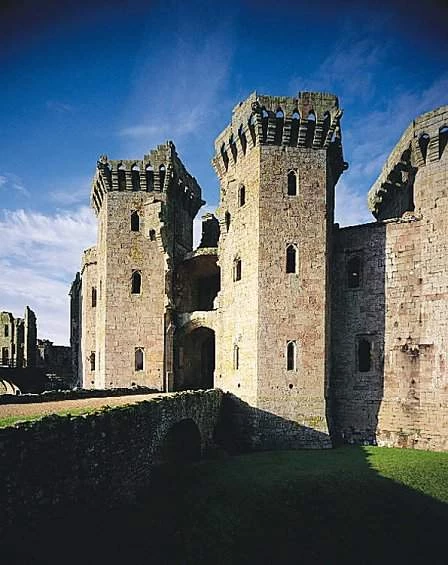
Y Porthdy Mawr, Rhaglan. Codwyd y porthdy rhwng 1460 a 1469 ac fe'i cynlluniwyd i wneud argraff ar ymwelwyr ac i'w dychryn drwy gynnwys rhesi o gloerdyllau, tyllau arllwys, porthcwlisau a drysau. Llun: Cadw (Hawlfraint y Goron).
Pwy adeiladodd Castell Rhaglan?
Mae rhywfaint o ddadlau ynghylch pwy adeiladodd ran gyntaf y castell. Fe’i codwyd naill ai gan William Herbert, Iarll cyntaf Penfro, neu ei dad, William ap Thomas, a brynodd Rhaglan ym 1432.
Roedd William Herbert yn ŵr allweddol yng ngwleidyddiaeth diwedd y 15fed ganrif. Yn ystod Rhyfeloedd y Rhosynnau rhoddodd ei gefnogaeth i Edward IV. Yn wobr am ei deyrngarwch cafodd deitl Iarll Penfro a digon o adnoddau ariannol i droi Rhaglan yn gaer-blasty.
Byrhoedlog, fodd bynnag, oedd llwyddiant yr Iarll. Ym 1469 cafodd ei gipio gan gefnogwyr y Lancastriaid ym Mrwydr Edgecote a chafodd ei ladd.
Cadwodd teulu Herbert eu rheolaeth ar Gastell Rhaglan tan 1492, pan gafodd ei drosglwyddo i deulu Somerset. William Somerset, trydydd Iarll Caerwrangon (1526–1589), oedd yr aelod cyntaf o’i deulu i newid adeiladau’r castell yn sylweddol.
Adluniad o Gastell Rhaglan, tua 1620, yn dangos y gerddi ffurfiol yn ystod dyddiau gorau'r castell. Llun: Cadw (Hawlfraint y Goron).
Canolbwyntiodd yr Iarll William ar wella ansawdd y neuadd a’r ceginau er mwyn bodloni disgwyliadau cymdeithasol ei gyfnod. Yn ogystal, sefydlodd y gerddi, oedd yn cynnwys cyfres o derasau, llyn artiffisial, ffownten, gwelyau blodau a gerddi perlysiau.
Adluniad o fywyd yng Nghastell Rhaglan yn yr unfed ganrif ar bymtheg, yn ystod cyfnod Trydydd Iarll Caerwrangon. Llun: Cadw (Hawlfraint y Goron).
Beth ddigwyddodd i Gastell Rhaglan?
Erbyn canol y 17eg ganrif, roedd Rhaglan ym mlodau ei ddyddiau. Cyrhaeddodd lefel o soffistigedigrwydd ac ysblander tebyg i blastai gorau’r wlad. Fodd bynnag, daeth Rhyfel Cartref Lloegr i darfu ar bopeth.
Ym 1642, cyhoeddodd pumed Iarll Caerwrangon ei gefnogaeth i achos y Brenhinwyr, gan gynnig cymorth ariannol sylweddol i’r Brenin Siarl I. O ganlyniad, roedd Rhaglan yn darged i luoedd y Seneddwyr, a roddodd y castell dan warchae ym Mehefin 1646. Llwyddodd ei amddiffynwyr i ddal eu gafael arno yn ystod yr haf ond erbyn canol Awst roedd y Seneddwyr o fewn 60 llath i’r castell. Ildiodd ei amddiffynwyr ar 19 Awst.
Ar ôl cael ei gipio, cafodd y castell ei ddifrodi’n fwriadol er mwyn sicrhau na ellid ei amddiffyn eto. Dyma pryd y cafodd y twll anferth ei greu yn y Tŵr Mawr.
Gadawyd Castell Rhaglan yn wag a dirywiodd; yna, daeth yn ffynhonnell gyfleus ar gyfer cerrig adeiladu ac yn atyniad pictiwrésg i dwristiaid. Bellach, diolch i waith Cadw a’i ragflaenwyr, mae’r adeilad yn cael ei warchod.
Pwy sydd biau Castell Rhaglan?
Mae Castell Rhaglan yn dal yn eiddo i deulu Somerset, a ddaeth yn Ddugiaid Beaufort ym 1682. Ym 1938 cafodd ei roi yng ngofal y Weinyddiaeth Waith, ac erbyn hyn mae yn nwylo Cadw.
Pa ffilmiau sydd wedi defnyddio Castell Rhaglan?
Ymddangosodd Castell Rhaglan yn ffilm Terry Gilliam, Time Bandits (1981), lle cafodd ei ffilmio fel castell Eidalaidd dan warchae yn ystod Rhyfeloedd Napoleon.
Darllen cefndir
Raglan Castle gan J. R. Kenyon. Cyhoeddwyd gan Cadw (2003).
Meredith Hood - PhD student Zooarchaeology, 22 Mawrth 2022
What is my project about?
Hello! I’m Meredith, a PhD student working at Cardiff University and Amgueddfa Cymru. I am a zooarchaeologist, which means I study animal remains from archaeological sites to find out more about the relationship between humans and animals in the past. So, Lambcam seemed like a great opportunity to share a little bit about my project, and how we can learn about sheep farming in the past!
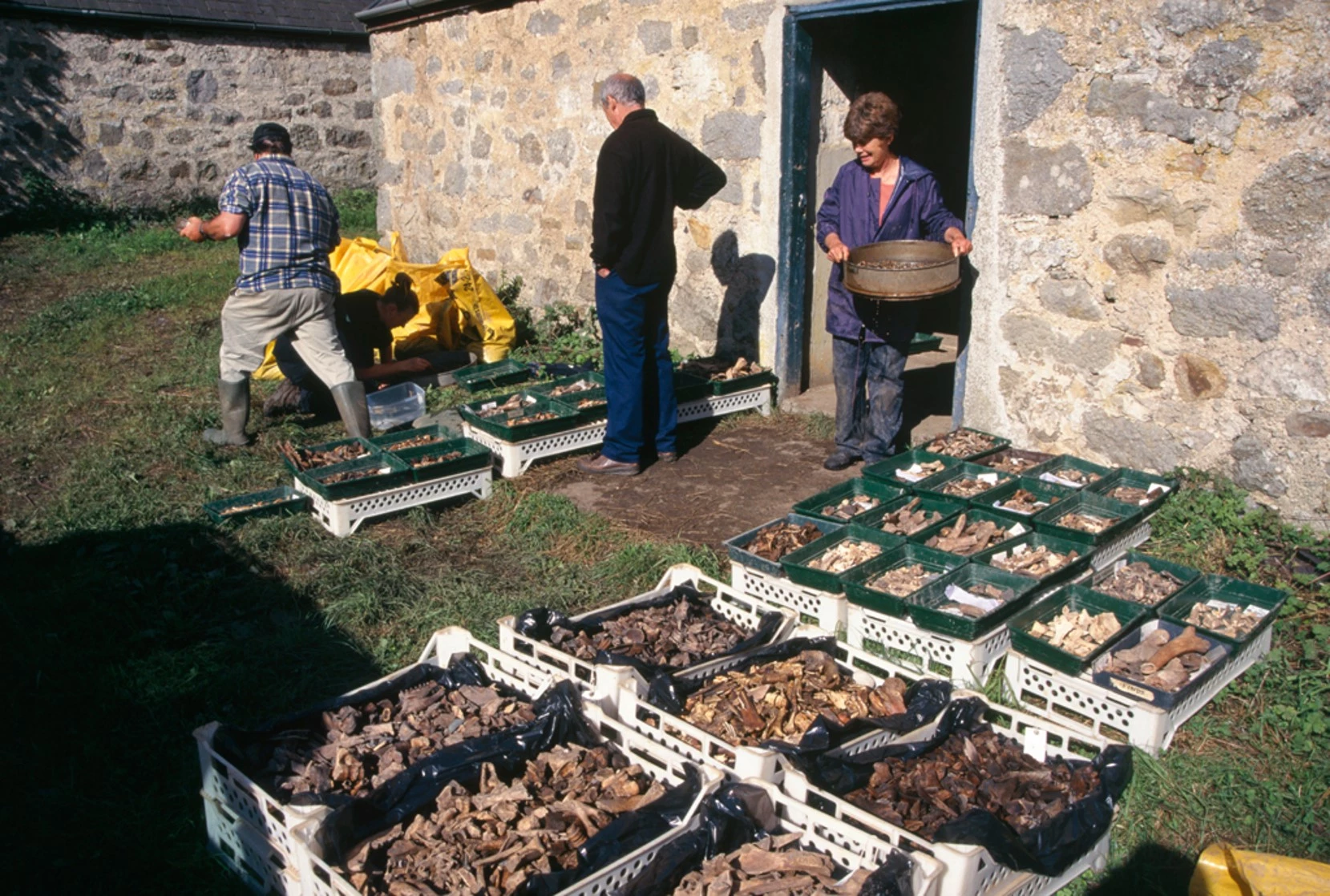
For my project, I am studying the animal bones from the site of Llanbedrgoch on Anglesey. This was an early medieval settlement, occupied from the 5th to 11th centuries AD. Archaeologists recovered over 50,000 pieces of animal bone from Llanbedrgoch, which will provide a really valuable insight into farming practices and diet at this time. You can read about my research in a little more detail here.
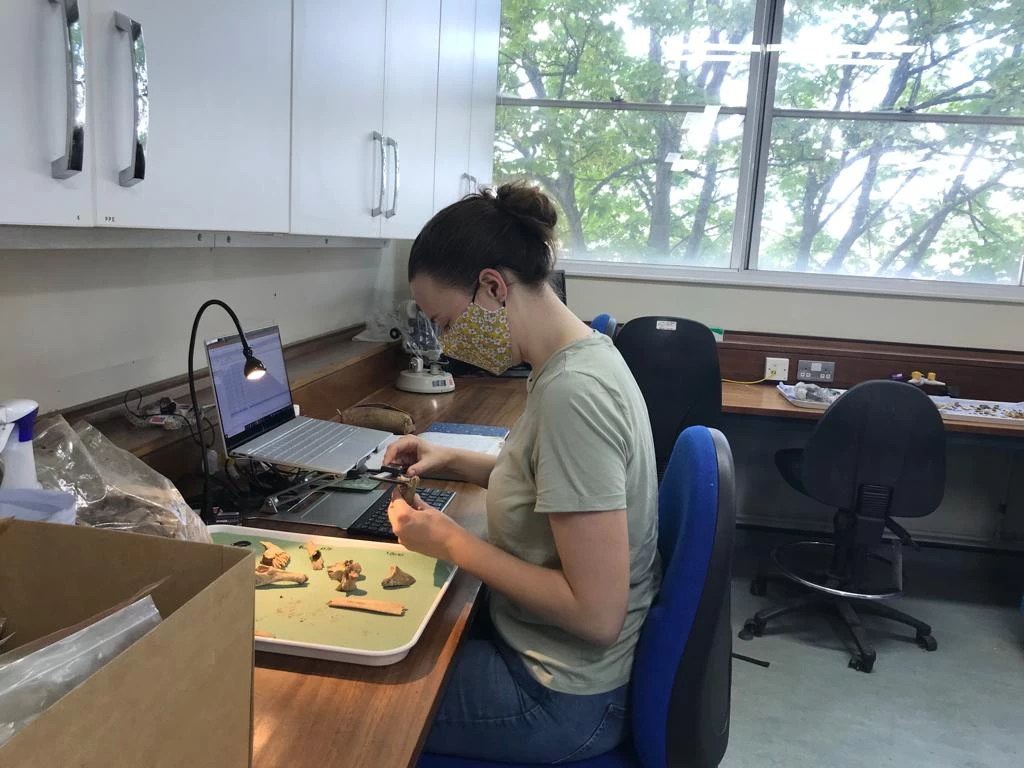
I am currently recording all the bones into a database and trying to identify what animals they came from. This can be tricky, particularly when the bones are very broken. Sheep bones can also be an extra challenge to identify as they look extremely similar to goat bones!
Recording animal bones in the bioarchaeology laboratory at Cardiff University. (Photo: Meredith Hood)
How can we find about sheep farming in the past?
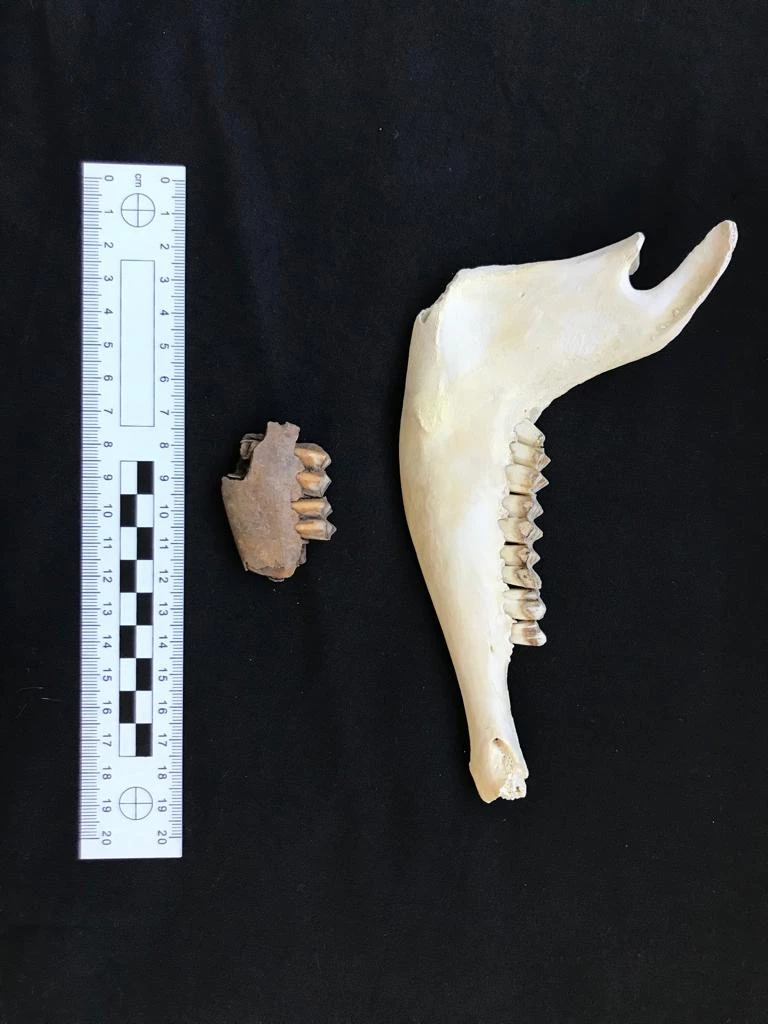
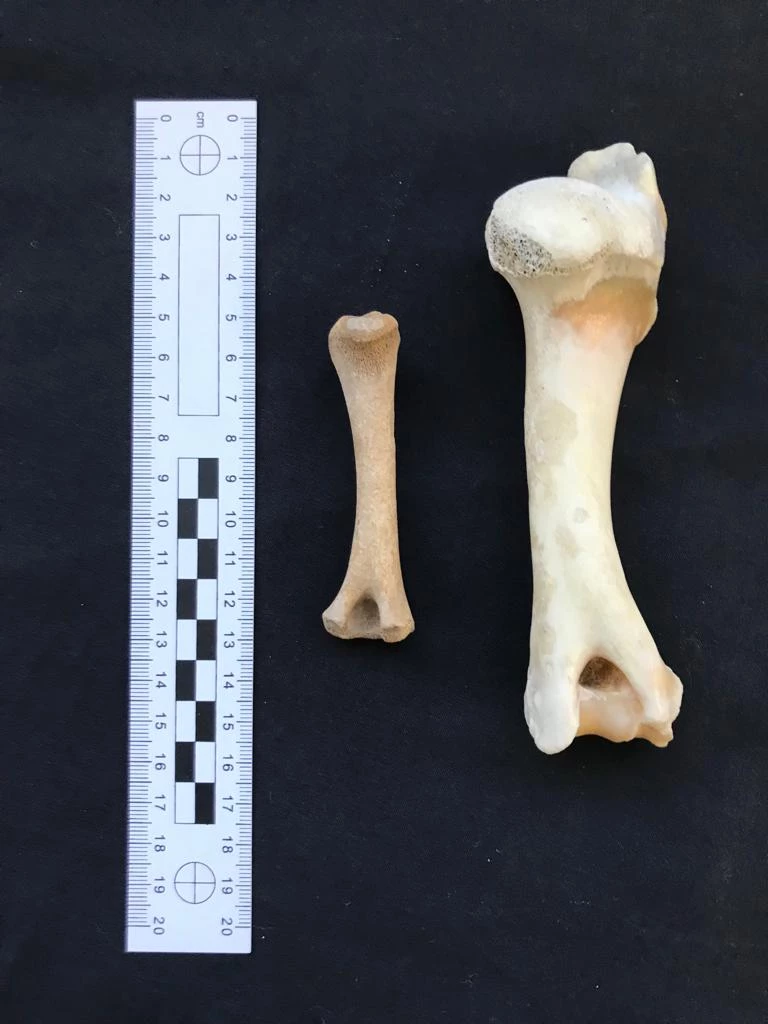
Sheep remains can tell us lots of information about how sheep were farmed and used in the past. For example, we can estimate the age at which a sheep died by looking at how worn their teeth are, or whether their bones have fused. Sheep that were kept for a long time as adults may have been used for their wool or milk.
A modern sheep mandible/jawbone (top) compared to an early medieval fragment of a sheep jawbone from Llanbedrgoch, Anglesey (bottom) (Photo: Meredith Hood)
Two sheep humeri (upper arm) bones. The bone on the left is from a juvenile, and the bone on the right is from an adult. (Photo: Meredith Hood)
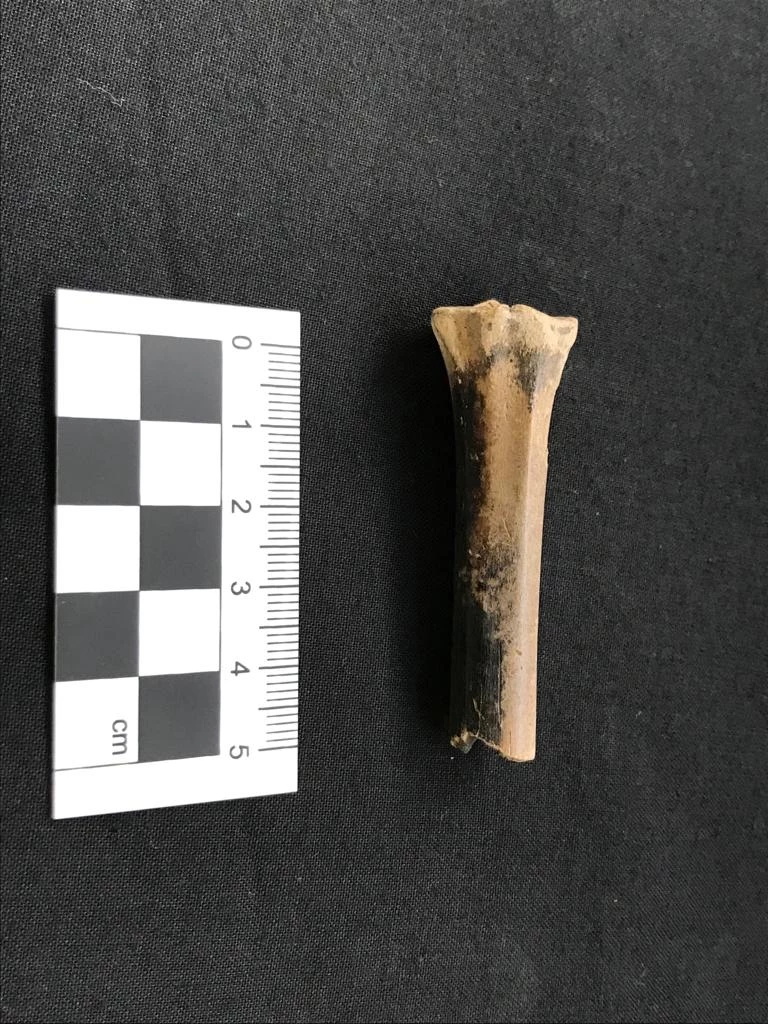
We can also look for things such as butchery or burning marks on bones which might tell us that lamb or mutton was eaten. Certain body parts, like the pelvis, can tell us the sex of the sheep, which can suggest whether breeding might have taken place on a site.
Part of a sheep metatarsal showing black burning marks. (Photo: Meredith Hood)
What do we know about sheep farming in early medieval Wales?
Unfortunately, animal bones from early medieval Wales haven’t survived very well in the soil. But from archaeological sites where they have survived, it appears that sheep were predominantly being kept for their secondary products like wool and milk.
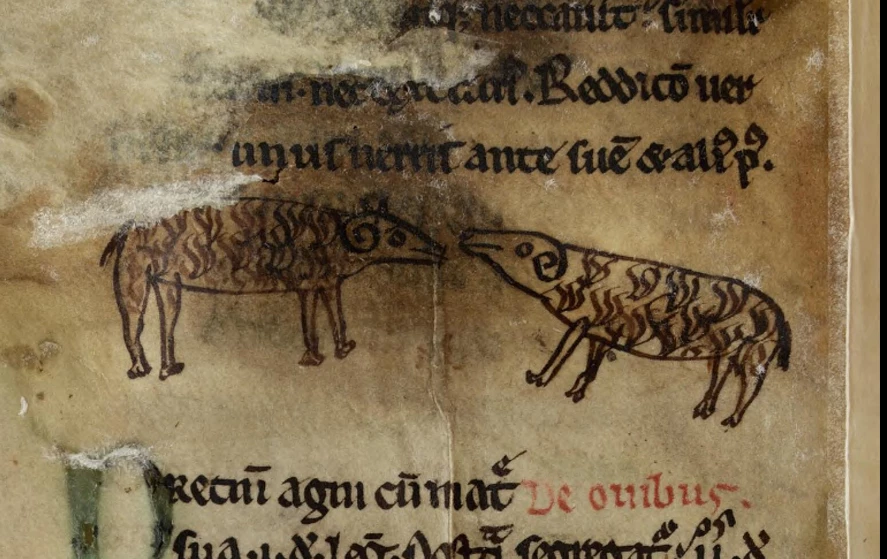
Historical texts can also give us some clues. Law texts surviving from the 13th century which have been attributed to Hywel Dda (a 10th century king) describe, for example, how much sheep were worth (‘One Penny is the worth of a lamb whilst it shall be sucking’1) and that ‘fat’ sheep should be given to the king as render payments.
The large number of bones from Llanbedrgoch is really exciting and should provide us with more information about early medieval Welsh sheep farming, so watch this space!
Illustration of sheep from the Laws of Hywel Dda, mid-thirteenth century. From: Peniarth MS 28 f. 25 v. (Image: Llyfrgell Genedlaethol Cymru – The National Library of Wales, Public Domain)
[1] Owen, A. (1841). Ancient Laws and Institutes of Wales. London, p.715
Y Porthdy Mawr, Rhaglan. Codwyd y porthdy rhwng 1460 a 1469 ac fe'i cynlluniwyd i wneud argraff ar ymwelwyr ac i'w dychryn drwy gynnwys rhesi o gloerdyllau, tyllau arllwys, porthcwlisau a drysau. Llun: Cadw (Hawlfraint y Goron).
Adluniad o Gastell Rhaglan, tua 1620, yn dangos y gerddi ffurfiol yn ystod dyddiau gorau'r castell. Llun: Cadw (Hawlfraint y Goron).
Adluniad o fywyd yng Nghastell Rhaglan yn yr unfed ganrif ar bymtheg, yn ystod cyfnod Trydydd Iarll Caerwrangon. Llun: Cadw (Hawlfraint y Goron).
Recording animal bones in the bioarchaeology laboratory at Cardiff University. (Photo: Meredith Hood)
A modern sheep mandible/jawbone (top) compared to an early medieval fragment of a sheep jawbone from Llanbedrgoch, Anglesey (bottom) (Photo: Meredith Hood)
Two sheep humeri (upper arm) bones. The bone on the left is from a juvenile, and the bone on the right is from an adult. (Photo: Meredith Hood)
Part of a sheep metatarsal showing black burning marks. (Photo: Meredith Hood)
Illustration of sheep from the Laws of Hywel Dda, mid-thirteenth century. From: Peniarth MS 28 f. 25 v. (Image: Llyfrgell Genedlaethol Cymru – The National Library of Wales, Public Domain)