Cataloguing the Oakdale Library - Architecture, Austen and Ants Volunteer from the Insole Court 50+ Group, 26 Medi 2016 We met in the Museum’s car park, not quite knowing what to expect. Our 50+ Group had been asked if we fancied cataloguing more than a thousand books from the library at the Oakdale Workmen’s Institute as part of the re-interpretation of the building and all four of us had been intrigued by the request.Sioned greeted us with a warm welcome and we were taken to the library in the ‘new’ building to meet Richard, the librarian. And so began five extremely enjoyable Thursdays.The books had been packed into boxes and our task was to fill the spreadsheets with name, author and publication date. We noted the condition of the book and if it had come from another library or institute (e.g. Nantymoel or Aberkenfig).Delving into each box, not knowing what we might discover, was like plunging into a box of chocolates. Mining and engineering books were obviously very popular in Lewis Merthyr Library – were they borrowed by young men keen to further their careers? There were many books on mathematics, science and architecture – all well-used according to the date stamps on page three. And then there were novels by popular authors like Jane Austen, Daniel Defoe and Charles Dickens – read and enjoyed in a time before television and computers. A few books, with risqué titles, were obviously well-thumbed and our work stopped as we contemplated why they appeared to be more popular than ‘Advanced Algebra’ or ‘Modern Mechanics’.It was a fascinating insight into a random selection of books, some dating back to the 1870s, and we are so grateful to the Museum for including us in this work. Richard was on hand to answer questions and solve mysteries – why did so many Welsh preachers write books about themselves? Who bought them? And who decided to write ‘The Life of the White Ant’ (and did anyone ever read it)?We’ve thoroughly enjoyed our five days ‘work’, have learnt new skills, met lovely people and, also, become better acquainted after visiting all of the eateries in the Museum for lunch. If there’s any more volunteering on offer – please put our names on this list.The re-interpretation of Oakdale Workmen’s Institute is supported by the Armed Forces Community Covenant Grant Scheme.
Arnie Guide Dog's Museum adventure Arnie Guide Dog, 26 Medi 2016 My name is Arnie. I am an eight and a half year old Labrador retriever cross and I am a dog with a job. I am a guide to my human, the one called ‘Mum’.We have been partners for seven years and she has very poor vision. Although she can see colour and shape, she has no depth vision and lives in a blurry world. My role is to keep her safe, stopping her from bumping into things and causing chaos.This has been particularly important on our trips to one of our favourite places, National Museum Cardiff. Mum loves art and history, and we have been invited to help develop their audio tours for visually impaired people like Mum.My role during these tours hasn’t just been to keep Mum safe but also to protect the priceless antiquities, beautiful paintings and fragile exhibits from the accident-prone one!During these audio tours the museum guides describe in detail, to visually impaired visitors, their surroundings and interesting objects around them.They also had sighted guides to help guide visually impaired people round the museum safely. Sighted guides are humans that do what I do: indicate steps, avoid objects and keep the visually impaired person safe. I think this makes a lot of sense because if they are anything like Mum they may need a little supervising.One of the tours took us through the Evolution of Wales galleries. Our guide explained that each time the floor surface changed, it represented a movement forward in time in the story of the Earth. I took my time and stopped and tapped Mum's knee with my nose, so she knew to lift her feet and be aware of the changes in the surfaces.I worked hard to ignore the giant bones, hanging in shapes of strange creatures, all over the place. I am sure they would have been very tasty, but I was in harness and at work!The only part I was greatly concerned by was the terrible giant hairy creature that made a noise and moved, I tried to walk straight past and guide Mum safely out, but everyone stopped and stood to listen to one of the human guides talk about woolly mammoths and changing landscapes….? I had my eye firmly fixed on a quick exit!Arnie Guide DogPS If other Guide Dogs want to take their owners on a pawsome Museum adventure, you can book a place on their audio description tours by phoning (029) 2057 3240. Woofing great!
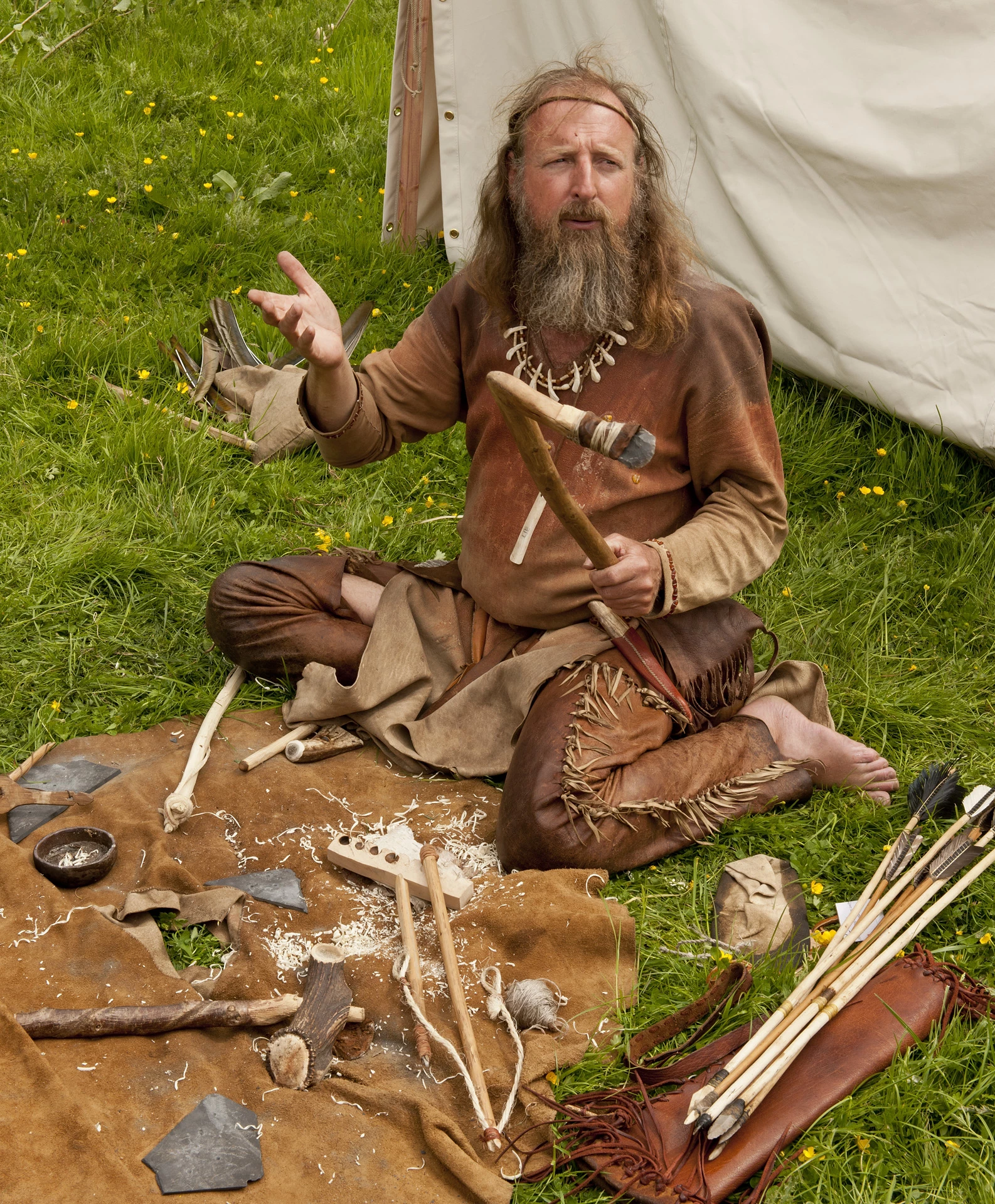
The Chambered Cairn Guest Blog: Thomas Goddard, Cadw Artist in Residence, Parc le Breos, 16 Medi 2016 My artistic practice is multi-disciplinary and includes film, performance, design and engagement with communities. Using an investigative approach my work responds to journeys and geographical locations. Previous projects have included, an odyssey across Wales (Cerbyd), the life, death and afterlife of an elephant in Swansea and a hunt for the Beast of Bala.From November 2015 to April 2016 I was chosen as artist in residence at Parc le Breos, Neolithic chambered tomb. During the residency I used engagement activities and film making to explore how the exposure and freedom to explore the Parc le Breos site through a host-guest scenario could give agency to the individuals involved.Focusing on the themes of shelter, survival, hunting and rituals, I arranged a programme of regular activity for Community First groups to work with myself and local practitioners in the area sharing their expertise. Partners included Dryad, Forest Schools, Gower Unearthed and Guerrilla Archaeology who created experiences including shelter building, fire making and story telling. Over 1000 people took part in the project, many of whom had never visited Parc le Breos and the Gower before.Amgueddfa Cymru provided a vital resource throughout - this included visiting the Museum stores with Jody Deacon, Curator: Prehistoric Archaeology (Collections and Access) to film material relating to Neolithic sites in Wales.I was also given access to the taxidermy, scenes, models and soundtrack from the Natural History displays. This was particularly special for me; as a Cardiff boy I remember the mammoth from my school visits to the museum. The opportunity for me to return to this remarkable beast was not only nostalgic but added a sinister dimension to the project by questioning the unharmonious co-existence of the neolithic period, my own childhood memories and the present day.A range of academics and specialists have given their time for audio interviews to be used within the film of the project including Professor Alasdair Whittle, Research Professor in Archaeology, Dr Jacqui Mulville, Reader in BioArchaeology and Roy Church, Manager of the Gower Heritage Centre. Audio was also gathered from story telling developed with the English and Maths Group based at Phoenix Centre in Townhill.Since April I have been editing together footage and audio for my film The Chambered Cairn. The film itself opens up a variety of possibilities, suggesting that not everything is as it seems and highlighting the inevitability of change. It also hints at the hidden or unknown aspects of human development. For example, for approximately 2 million years prior to the advent of agriculture, gatherer-hunters enjoyed excellent health, social and sexual equality, very light workloads, plenty of leisure time and freedom from any form of government. The Chambered Cairn explores our evolution and migration to the British Isles and the impact of human development from hunter gathers to agriculture and domestication.The launch of film will be on Saturday 17 September between 12.00 – 3.30pm at Gower Heritage Centre. The film will be screened in La Charrette, a 23 seated cinema, built by Gwyn Phillips, an electrician who fell in love with the movies in his youth while working as a projectionist, and began showing films in 1953 in his back garden in Gorseinon.All are welcome.The Chambered Cairn La Charrette, Gower Heritage Centre Sat 17 Sept 12-3.30pmThis project was funded and supported by Cadw, The Gower Landscape Partnership, Arts Council for Wales, Welsh Government, Heritage Lottery Fund, National Trust, Natural Resources Wales, City and County of Swansea, Cardiff University’s Guerrilla Archaeology, Amgueddfa Cymru and Gower Heritage Centre.
Owain Glyndŵr a thrawst Sycharth Dafydd Wiliam, 14 Medi 2016 Ar 16 Medi, 616 o flynyddoedd yn ôl cyhoeddwyd Owain Glyndŵr yn Dywysog Cymru gan ei ddilynwyr yn ei lys yn Glyndyfrdwy. Pahaodd ei frwydr yn erbyn grym Lloegr rhwng 1400 ag 1409. Roedd ei gartref, Sycharth, yn gastell mwnt a beili Normanaidd yn Llansilin, Sir Ddinbych. Cyn y gwrthryfel, honnai y bardd Iolo Goch fod naw neuadd yn y llys, a bod to o lechi ar bob un. Ysgrifennodd ‘Mae’i lys ef i nef yn nes’. Ar y stad roedd llyn pysgod, perllan, gwinllan, ceffylau, ceirw, peunod, a dim ond y cwrw lleol gorau fyddai ei weithwyr yn yfed. Wedi darganfod Sycharth yn wag fe losgwyd y lle i’r llawr gan Harri o Fynwy (a goronwyd wedyn yn Harri V). Wedi hynny fe losgodd Glyndyfrdwy.Yn 1927 cysylltodd Yr Aldramon Edward Hughes o Wrecsam â Syr Cyril Fox, pennaeth Amgueddfa Genedlaethol Cymru, a oedd newydd agor i’r cyhoedd. Yn ei lythyr honodd fod trawst mawr derw wedi cael ei ddarganfod 30 mlynedd ynghynt tra’n gwagio ffos Sycharth I’r perchennog, Syr Watkin Williams-Wynn. Symudwyd y trawst yn ofalus i Neuadd Llangedwyn gan y Foneddiges Williams-Wynn. Yn 1924 gofynnodd Y Aldramon Hughes os gallai ddefnyddio’r trawst yn Neuadd Goffa newydd Llansilin. Roedd y trawst yn rhy hir i’r pwrpas, felly fe lifiwyd darn o un pen, gwaith anodd iawn yn ôl y son. Rhoddwyd y darn a oedd ar ôl i’r Amgueddfa.Glanhawyd y trawst yn ddiweddar fel y gellid tynnu lluniau ohono ac ei arddangos yn Eisteddfod Genedlaethol y Fenni. Doedd dim golwg o losg arno fel y disgwylid, ond fe all fod yn ddarn o’r bont dros y ffos na losgwyd i’r un raddfa. Mae yn 50cm o uchder, a 27cm x 36cm o drwch (20” x 11” x 14”). Mae y mortis sylweddol sydd i’w weld yn un ochr yn 27cm x 14cm (11” x 6”).Achosodd yr arddangosfa gryn diddordeb, ac fe gysylltodd Richard Suggett o Gomisiwn Brenhinol Henebion Cymru i gynnig mwy o wybodaeth. Rhai blynyddoedd ar ôl codi Neuadd Llansilin, tynnwyd trawst Sycharth o’r adeilad oherwydd pydredd, a rhoddwyd mewn sgip. Achubwyd y trawst gan Mr. Dick Hughes, perchennog garej lleol, a’i rhoi yn ôl i’r Neuadd rhai blynyddoedd wedyn. Mae gweddillion y trawst yn awr mewn cas gwydr, a bellach ond yn 75cm o hyd.Mae gwaith cloddio archaeolegol yn Sycharth wedi darganfod neuadd 18 medr o hyd (43’), ond nid y naw a honnai Iolo Goch. Er mwyn cefnogi yr honiad taw darn o Sycharth yw’r trawst mae angen ceisio dyddio y pren. Wedi dweud hyn, nid yw pob darn o bren yn addas i’r dechneg o ddyddio drwy dendrocronoleg, ac ar ôl i’r lluniau gael ei archwilio, ymddengys efallai na fydd yr un o’r darnau yn addas at eu dyddio drwy’r dull hwn.
Paratoi i ‘ail agor’ siop draper Emlyn Davies - Rhan 1: Siwtcês o storiau a script? Orinda Roberts, 7 Medi 2016 Yr Oriel yn SiaradWrth i mi sefyll a myfyrio yng nghanol yr arddangosfa, tybiais i mi weld ffigwr yn sefyll tu ôl i’r cownter pren……yna wrth edrych ar y bolltiau a’r crysau gwlanen ar y silffoedd…bron â chlywn i leisiau dynion…gydag acenion amrywiol…teimlais fy hun fel pe bawn yn llithro’n llythrennol i’r gorffennol….mae’n wir mae distaw oedd y presennol…ond deuai bwrlwm siop brysur o’r gorffennol yn fyw i’m meddwl i……yn sydyn dychmygais gyda gwên ddrygionus bod siwtcês David Lewis yn neidio allan o’r casyn gwydr ac yn mynnu dweud ei stori am ei anturieithau cyffrous…….Yn wir roedd fel petai congl arall o’r amgueddfa yn galw am y cyfle i fynegi ei hun a dweud ei stori mewn modd bywiog a dramatig.Dyma stori siop draper Emlyn Davies!Pwy oedd Emlyn Davies?Dyn lleol o Gastell Newydd Emlyn a symudodd i Ddowlais, Merthyr Tydfil i weithio fel cynorthwy-ydd yn siop J.S.Davies Drapers. Ym 1898 agorodd ei siop ddefnydd ei hun.Gwerthu gwlanen fyddai yn bennaf, a prynai’r mwyafrif o’i stoc o Felin Cambrian yn Drefach Felindre (sydd nawr yn gartref i’r Amgueddfa Wlân). Byddai David Lewis, perchennog y felin, yn teithio i’r cymoedd i gasglu archebion am wlanen, a’r defnydd yn cael ei gludo ar y tren i Ddowlais o stesion Henllan. Byddai’r gwlanen yn cael ei droi’n grysau a dillad isaf i weithwyr y pyllau glo a’r gweithfeydd haearn lleol.Creu Sesiwn i BlantYchydig o fisoedd nôl, fe ddechreuais i weithio ar y syniad o greu sesiwn a gweithdy i blant ysgol yn yr amgueddfa wlân wedi selio ar yr hanes uchod, ac atgyfodi’r siop a chafodd ei ail greu yn yr amgueddfa yn 2013.Mae’n hanfodol, i ddechre, i unrhyw hwylusydd neu actor mewn amgueddfa pan yn ceisio bywiogi darn o hanes i wneud ei waith ymchwil ei hun. Rhaid darllen y ffeithiau wrth gwrs, gwrando ar unrhyw dystiolaeth sydd ar gael yn yr archif, a chael gweld gwrthrychau priodol o’r casgliad - ond hefyd yn ychwanegol i hyn oll mae’n rhaid ymgolli eich hun yn llwyr yng nghefndir a chyfnod yr hanes yn gyffredinol.Mae’n bwysig i ffurfio perthynas dda gyda’r curaduron, ac unrhyw arbennigwyr arall sydd yn gweithio I’r sefydliad, a thrwy’r unigolion hynny cael mynediad i lu o adnoddau defnyddiol arall i sicrhau bod y sesiwn neu weithdy yn un a sail hanesyddol gywir iddo.Gweithio Gydag AtgofionY stop gyntaf i mi wrth droedio nol i orffennol y siop oedd i gysylltu a Mark Lucas, Curadur y Diwydiant Gwlân, a fi’n gyfrifol am gasglu’r hanes at ei gilydd.Fe rhoddodd bentwr o ffeil i mi i ddechrau, yn cynnwys copi o fywgraffiad bywyd a hanes teulu Emlyn Davies a ysgrifennwyd gan ei wŷr Alan Owen: Emlyn Davies: The Life & Times Of a Dowlais Draper in the first Half Of The Twentieth Century.Un o’r profiadau mwyaf cyffrous i mi yn y broses yma o adfywio hanes yw i gael cyfarfod mewn person a phobol sydd ynghlwm yn uniongyrchol â’r hanes. Diddorol oedd nodi bod Mark Lucas mewn cysylltiad rheolaidd a Alan Owen, a bod cyfle i mi gyfarfod ag ef i holi cwestiunau - mwy am hyn yn y blog nesa!