Polychaete research in the Falklands by Teresa Darbyshire - day 17

I’m halfway through my trip. Two weeks from now, at the time I’m writing this, I should be back in my own bed. It’s a strange thought.


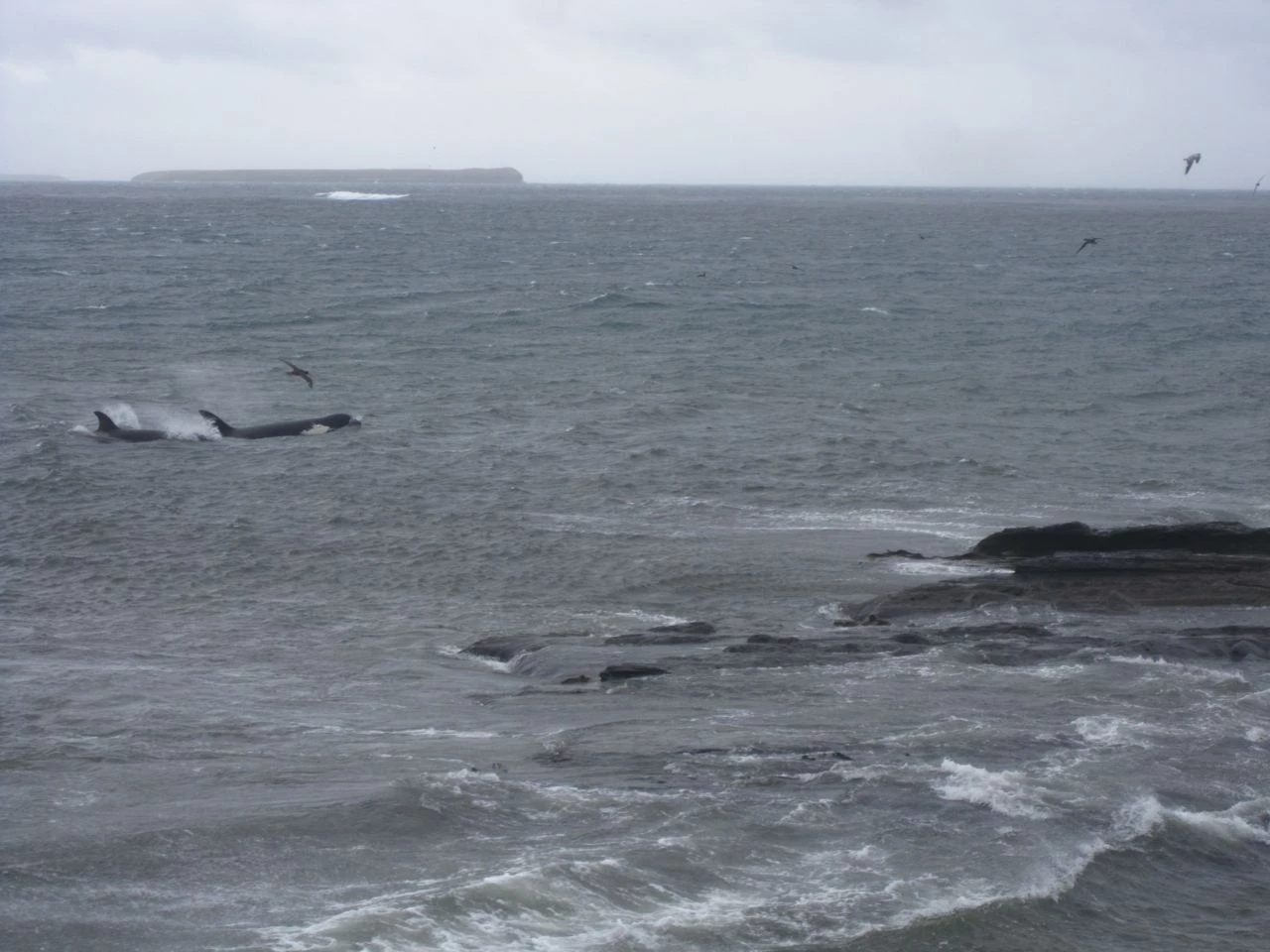
My intention to do another pre-breakfast orca vigil this morning failed as I woke to to the sound of wind and rain at 5.30. I wasn’t that dedicated and so went back to sleep. Still, after breakfast, with a couple of hours before my flight back, I headed out with a last hope. As I reached the beach I thought I saw a black fin in the water….no it was five! I spent the next hour and a half happily watching a pod of orcas patrolling outside the sheltered pool that the seal pups play in (photo 1). The occasional squall blew through leaving me very damp and the strong wind made standing up difficult but it was worth staying. My camera’s not good enough to get really good shots from the distance I was at but I did what I could. Sadly, I didn’t get to see any seal-munching though, ah well.


The flight back was bumpy and the landing was my first experience of approaching a runway sideways but ended smoothly. The flight also afforded good views of the islands from the air (photo 2) The afternoon was spent editing two talks I am due to give here, one to a general public audience and one, slightly more technical, to the staff at the Fisheries department. Now that I have had a couple of weeks here and have some photographs of the worms I have been collecting, I was able to add a bit more local relevance to the presentations.


Sadly, the night before I went diving last week, the owner of the car I was borrowing returned and retrieved it. I now have to work on finding an alternative in order to do more shore sampling. Still ,we are off on a new dive survey on Friday morning and I have plenty to do at the lab tomorrow to keep me going until then.


Not much to report today so I thought I might add a few words on life out here for those who are interested.


Before I flew out, several friends voiced doubt and some concern about the availability of various supplies out here. In some cases you might have thought I was flying out to a third world country! Just in case though I was careful to pack some essentials. A small jar of marmite and some chocolate. Well, let’s face it, toiletries were bound to be available. I am happy to report however, that supply levels are good and marmite, the rating standard, is indeed available. Even my Green & Blacks milk chocolate can be replaced.


Groceries are generally quite expensive. However, as the two main supermarket brands stocked are Sainsbury and Waitrose it’s difficult to judge how much of the expense is the brand and how much the shipping!


Fresh fruit and vegetables are expensive and not available in a large variety but frozen and tinned varieties are easy to stock up on. Fresh meat is mostly beef or mutton of varying cuts and both are cheap, very good quality and very tasty. In terms of other kinds of non-food supplies its difficult to know what’s available. From what I’ve heard though most are bought via Amazon!


People are all very friendly and in that typical island style, everyone knows everyone and where they live. If you need to know where someone lives or their phone number, if you ask someone on the street then they will probably know!


As mentioned before, 99% of all cars on the road are 4x4s and most of these are landrovers. Speed limit is 25mph around town and 40mph everywhere else for very good reasons. It’s only around Stanley that smooth roads exist. Outside of town, roads are just gravel and only go to the main settlements. Beyond that there are just tracks that require the 4x4. I’ve heard several stories of accidents and none are between cars, all involve coming off the road. I won’t be speeding anywhere! Fingers crossed I’ll get some transport sorted though so I can trundle off somewhere new soon.

William James Tatem, Barwn 1af Glanely, 1868-1942

William James Tatem, Barwn 1af Glanely o Sain Ffagan.

William James Tatem, Barwn 1af Glanely o Sain Ffagan.

Mae'n debyg taw fel perchennog ceffylau rasio nodedig y cofiwn ni am Arglwydd Glanely heddiw, gyda'i geffylau yn ennill pob un o'r pum Clasur Prydeinig. Yn y diwydiant llongau y gwnaeth ei ffortiwn fodd bynnag, ac roedd yn hael yn ei gefnogaeth o achosion da yn ne Cymru, yn enwedig Amgueddfa Cymru a Phrifysgol Caerdydd.

Nid Cymro oedd Tatem o gwbl; cafodd ei eni yn Appledore yng ngogledd Dyfnaint ym 1868, ac wedi marwolaeth ei dad yn ifanc, symudodd ei fam y teulu i Gaerdydd pan oedd Tatem yn ddeunaw. Ymunodd â chwmni llongau Anning Brothers fel clerc gan ddod i ddeall y busnes llongau yn drylwyr. Defnyddiodd y wybodaeth hon i fentro i'r busnes ar ei liwt ei hun ym 1897, ac roedd meistr un o'i longau hefyd yn frodor o Appledore, William Reardon Smith.

Fflyd fawr

Erbyn 1914 roedd Tatem wedi adeiladu fflyd sylweddol o un llong ar bymtheg. Cafodd ei urddo'n fachog ym 1916 ac ym 1918 cafodd ei ddyrchafu'n un o arglwyddi'r deyrnas gan ddwyn y teitl, Barwn Glanely o Sain Ffagan. Roedd yn berchennog llongau craff a werthodd ei fflyd am grocbris ym 1919 pan oedd ffyniant diwedd y Rhyfel Byd Cyntaf ar ei anterth, cyn dychwelyd i'r busnes gyda chwe llong newydd am fargen ychydig flynyddoedd yn ddiweddarach. Diolch i hyn, bu blynyddoedd y dirwasgiad yn llawer haws iddo na'i gyfoedion.

Exning, plasty'r Arglwydd Glanely yn Newmarket

Exning, plasty'r Arglwydd Glanely yn Newmarket

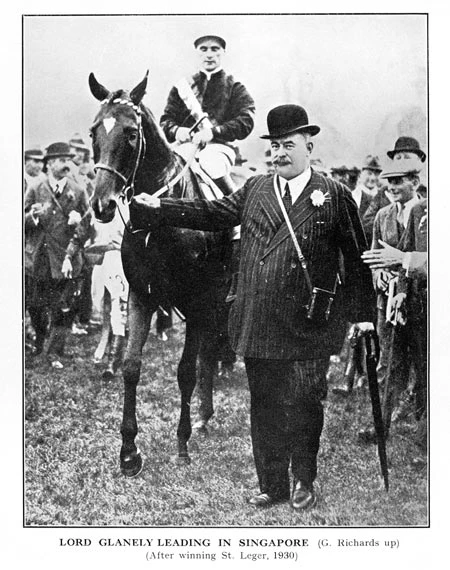
Yr Arglwydd Glanely yn arwain <em>Singapore</em>, wedi ennill ras St Leger 1930; Gordon Richards oedd y joci

Yr Arglwydd Glanely yn arwain Singapore, wedi ennill ras St Leger 1930; Gordon Richards oedd y joci

'Sporting Bill'

Datblygodd ei ddiddordeb mewn rasio ceffylau ymhellach wedi diwedd y Rhyfel Byd Cyntaf. Ym 1919-20 prynodd dŷ gwych Exning yn Newmarket, a stablau cyfagos Lagrange. Daeth ei fuddugoliaeth fawr gyntaf yn Royal Ascot ym 1919 pan enillodd Grand Parade y Derby. Roedd y fuddugoliaeth hon yn ddadleuol ar y pryd, gan taw ef oedd yn berchen y ffefryn yn yr un ras, Dominion. Roedd Dominion ymhell ar ei hol hi pan basiodd Grand Parade y postyn yn gyntaf am bris o 33/1 — gyda arian Glanely i gyd ar hwnnw! Roedd yn ffigwr adnabyddus yn y rasys mawr i gyd a byddai pawb yn ei adnabod fel "sporting Bill".

Dyngarwch ac achosion da

Roedd yn hael ei gefnogaeth ariannol i Amgueddfa Cymru, ac enwyd Oriel Glanely yn Amgueddfa Genedlaethol Caerdydd ar ei ôl. Bu'n llywydd Coleg Prifysgol De Cymru a Sir Fynwy ddwywaith, ym 1920-25 a 1934-42, ac ariannodd y gwaith o adeiladu labordai gwyddonol newydd.

Yn ystod Rhyfel Cartref Sbaen defnyddiodd ddwy o'i longau ei hun i gludo nifer fawr o ffoaduriaid o Wlad y Basg i dde Cymru, a sefydlodd elusen i'w cynorthwyo yn ddiweddarach.

Er iddo lwyddo mewn sawl maes, profodd sawl tristwch yn ei fywyd personol. Bu farw ei unig fab, Shandon yn chwe mlwydd oed ym 1905, a bu farw'r Arglwyddes o'i hanafiadau yn dilyn damwain car ym 1930. Cafodd yntau ei ladd mewn cyrch awyr ar Weston-Super-Mare ar 24 Mehefin 1942.

Polychaete research in the Falklands by Teresa Darbyshire - mean birds

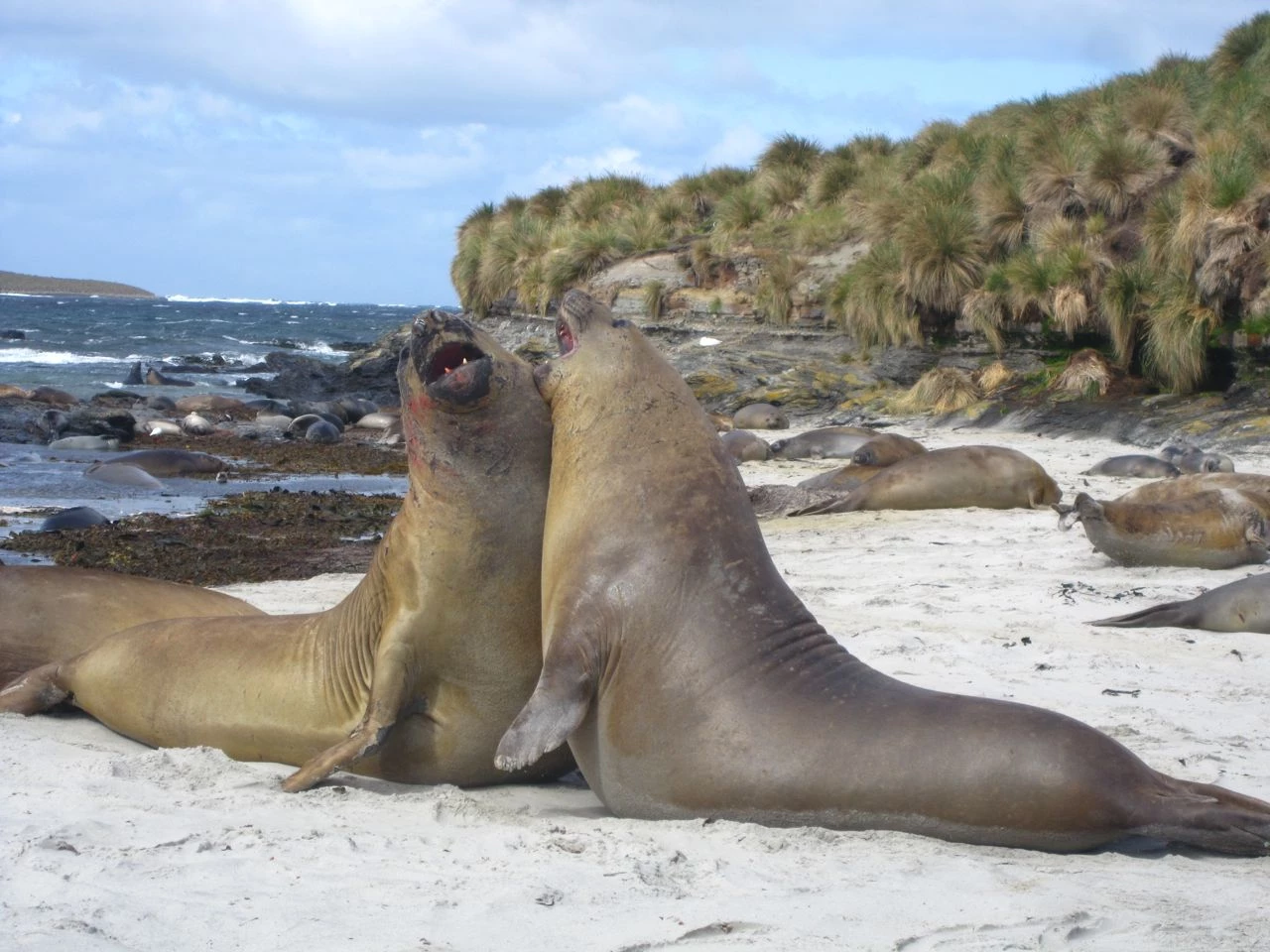
This morning I got up at 6am to go and watch for Killer Whales that often patrol the nearby Elephant Seal beach. Unfortunately last night the wind blew up (even more than usual) and was still going this morning making the sea on that side very choppy. Apparently the Killer Whales don’t like wind and choppy seas – wimps! So no joy there. The Elephant Seals however are much more active at this time of day and I got to see them fighting (photo 1) each other (not very seriously) and making lots of noise.
Having walked one side of the island yesterday today I made the obvious choice and walked the other side, always on the hunt for more potential sampling sites. Also no joy. The north coast of the island is mostly cliffs that drop off to the sea or solid rock with no way down. Further down towards the west end there are large, rounded clean rocks embedded in a loose clean sand, that rarely has much in, or more solid rock. At the east end, which I visited on my way back last night there is lots of open white sand and sand dunes, very much like Surf Bay where I also didn’t find anything. In this wind the whole area also becomes a sand-blasting site where if you stop for more than a few seconds one side of you gets coated in an inch of the stuff.


So back to the same sites I did yesterday, on the south side, which wasn’t such a bad thing. The effects of the wind were very evident on this side as the waves crashed in all along the shoreline (photo 2). No Elephant Seals followed me today, but the caracara, annoyed at being denied yesterday came back and attacked me. Yes, actually attacked me. It watched me do my sampling, pacing back and forth on a nearby rock, flexing it’s talons, and then as I started to leave and head back up the beach something hit me on the head - the caracara. Luckily I had my woolly hat on (highly protective) but this bird really didn’t want me to leave the beach and hovered inches above and/or in front of me when I tried. Eventually, the oystercatchers, also upset by its presence, flew at it and ran it off giving me just enough time to make my escape from the beach.


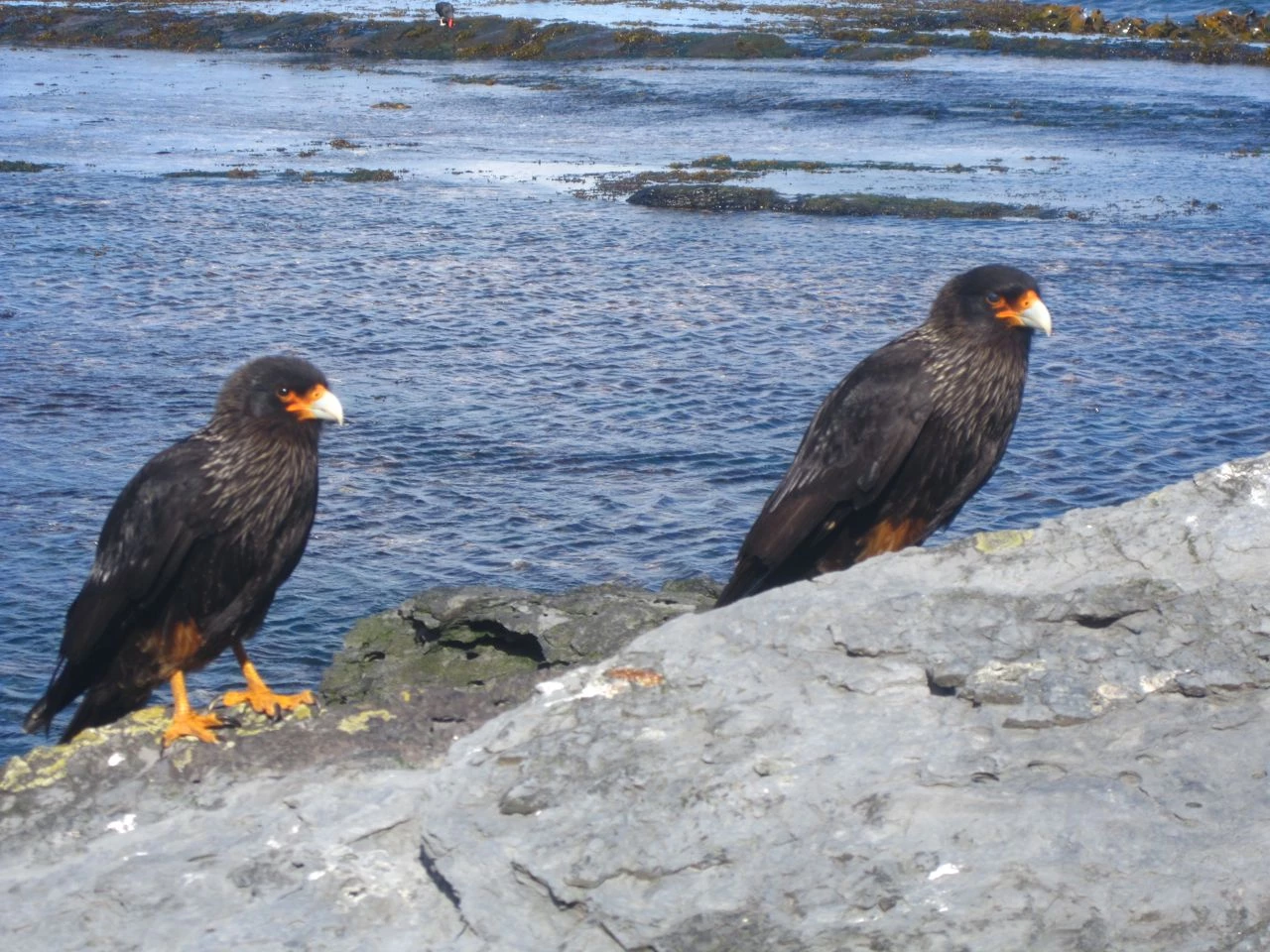
So on to the other site. After some more slate-splitting I returned to my bag, which I had left on a dry rock, to find the caracara sitting on the rock next to it. And it had brought a friend (photo 3). Not that I’m feeling freaked out by this bird at all but I really do think it’s following me, and those talons and beak do not look nice. This time though I was merely watched as I packed up and left, casting nervous glances behind me.


They are definitely going on the risk assessment form next time!

Polychaete research in the Falklands by Teresa Darbyshire - seals, seals, seals

Shore sampling can be risky. Tides, slippery rocks, remote places. We always fill in risk assessment forms before we do fieldwork and I duly filled mine in before heading out here. I must now put my hand up though and admit it was incomplete, I had left off some risks. In my defence though, elephant seals sidling up behind you and birds of prey flying off with your samples are not risks that most people would have thought of.


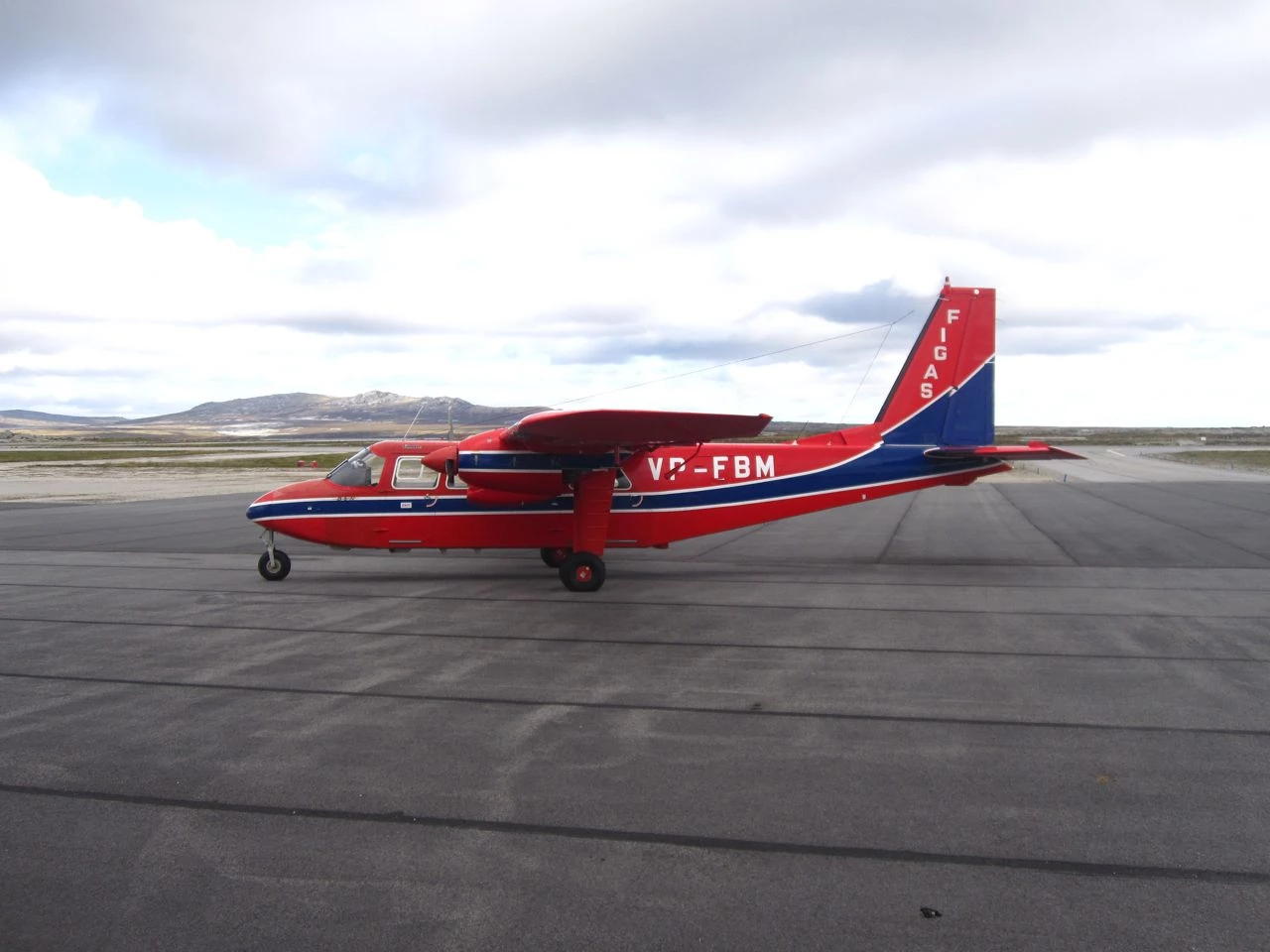
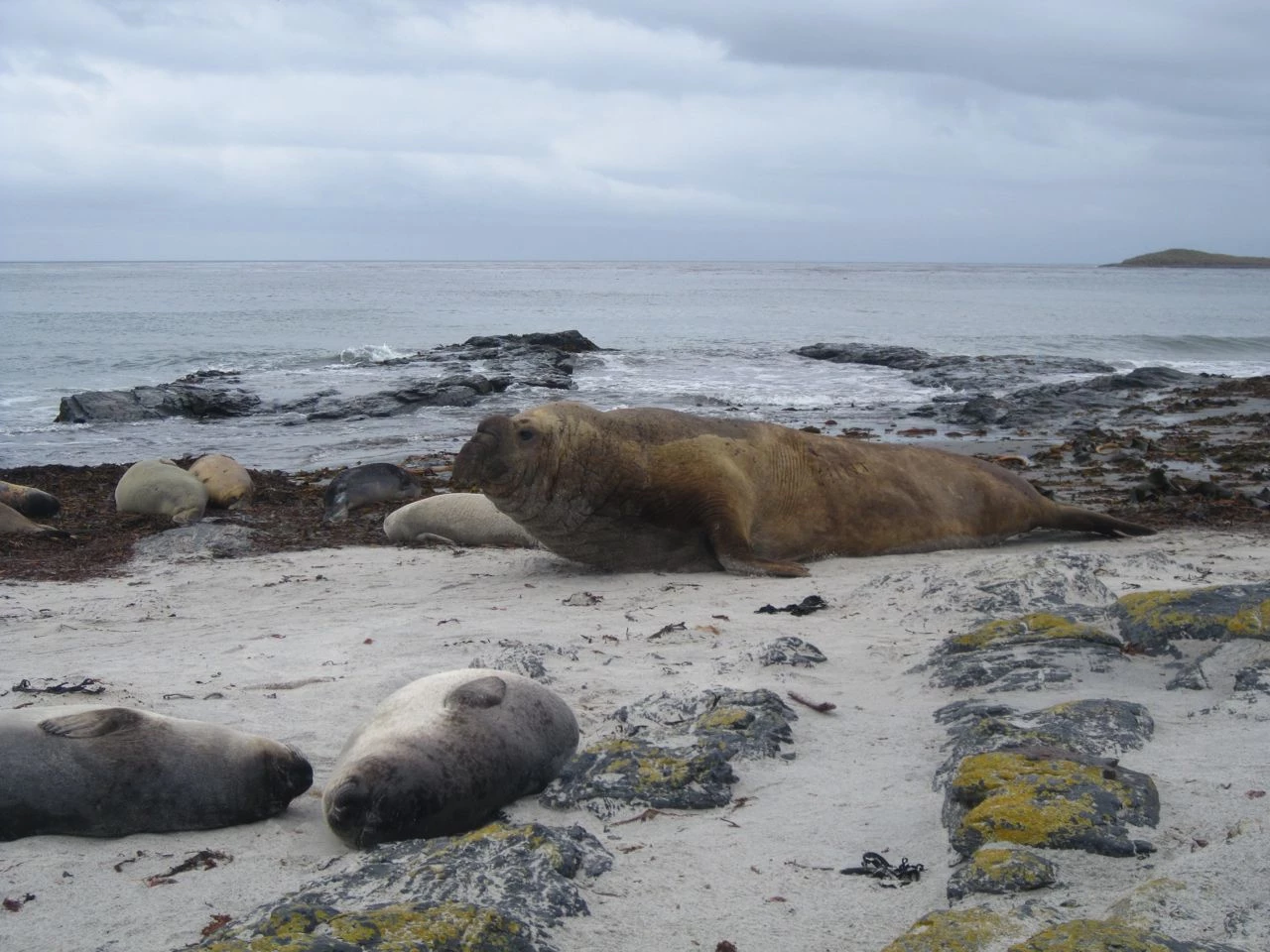
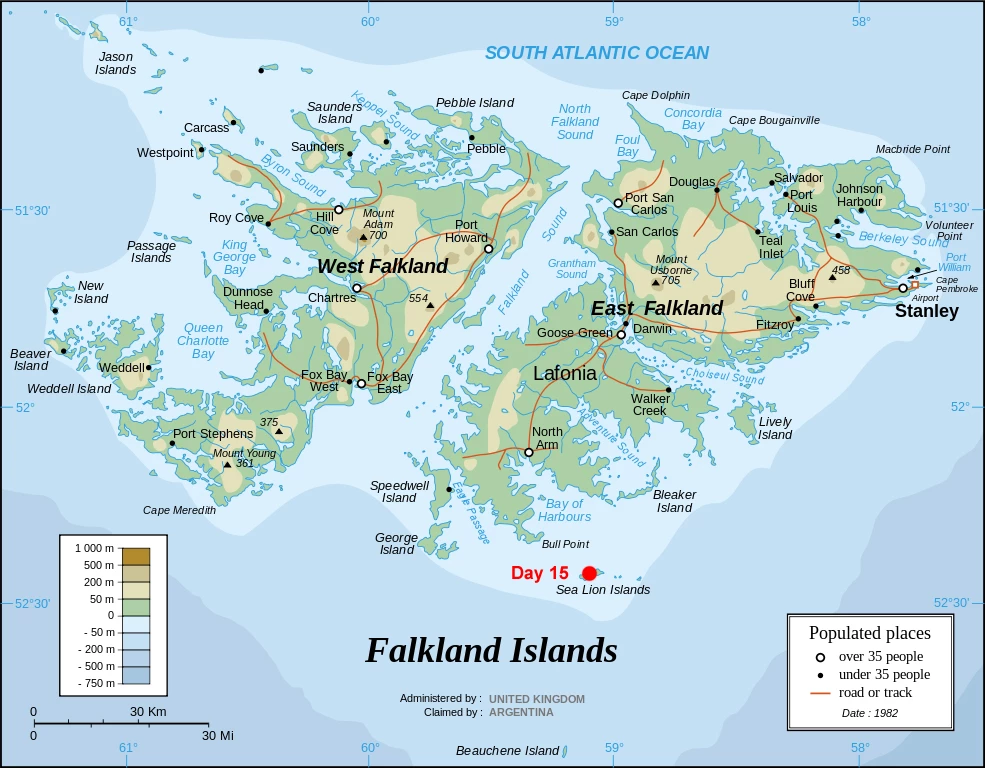
I flew out to Sealion Island this morning. A small island that is the southernmost island of the Falkland Islands group and notable for its breeding colony of Elephant Seals. It is part free time and part still sampling where possible. After the short flight in the little 8-seater plane (photo 1), I headed straight down to the beach to watch the enormous bull Elephant Seal (photo 2) lolloping along like a huge rippling slug with all the pups around laid out ready for a bit of sunbathing. From there I wandered down along the rocky shoreline keeping an eye out for potential dive sites (definitely not for orcas or more seals). Coming across a flat expanse of rock still just under water I was interested to see it was very slate-like with lots of potential layers to lever up to look for worms. This was great as I hadn’t seen any rock like this up to now as most of the islands are fairly solid granite. I had forgotten my dive knife which would have made a good chisel but my penknife didn’t do a bad job and I was soon picking out worms from the crevices. As I worked I heard a strange splashing sound, looked up but didn’t notice anything. As it happened again a short time later I again looked up to see one of the Elephant Seal pups I had earlier walked around to get on to the ledges had moved along towards me. I looked at it, it looked back and didn’t move. I carried on, more splashing, I looked up. The seal was closer and another had also appeared. I carried on. Splash, splash, splash. Looked up, they were a bit closer. This carried on for a bit until their courage ran out and they kept their distance to the relief of all. I moved on.


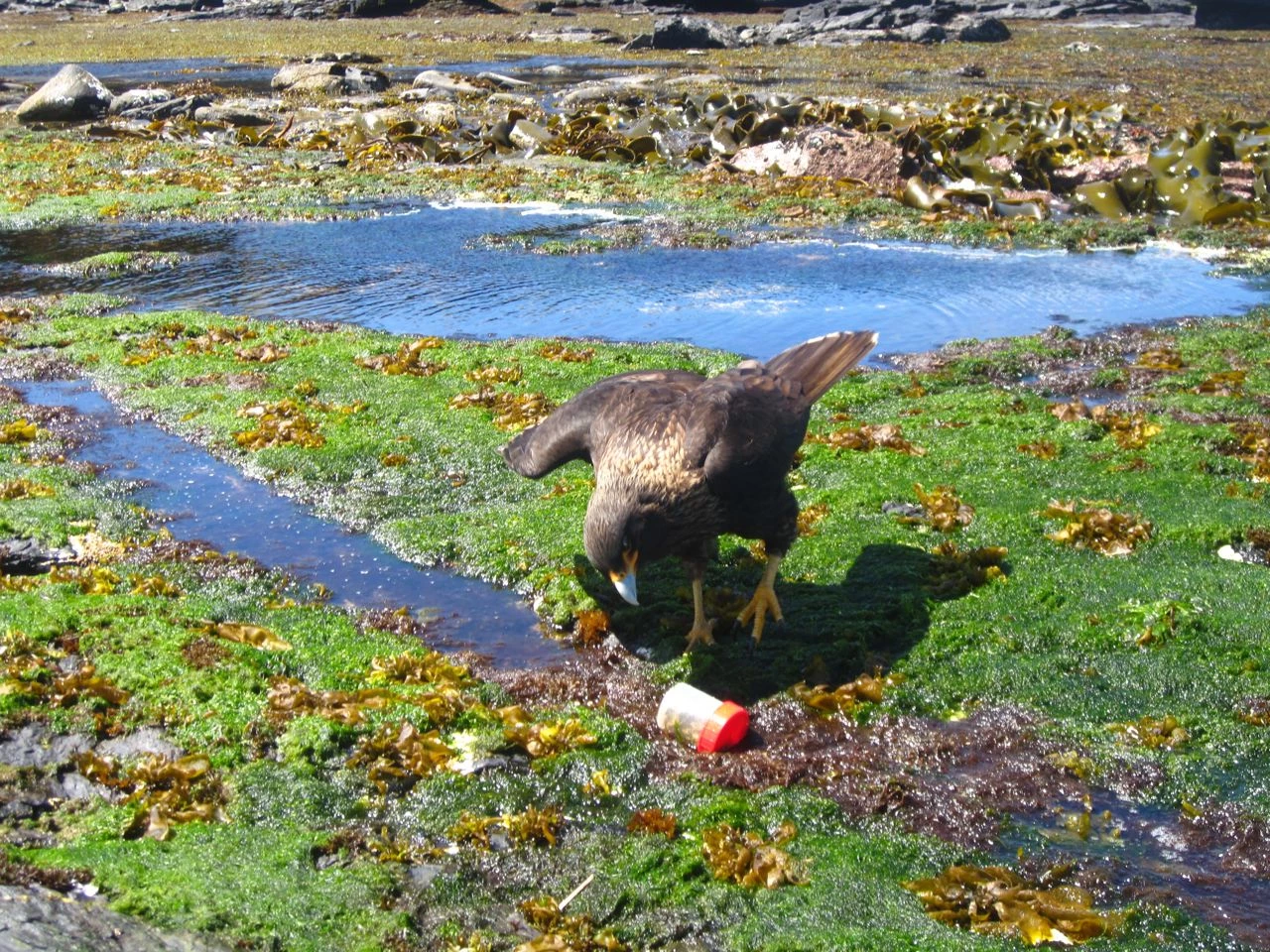
Down to another shore and a bit more scraping and collecting. This time I look up and what I think was a Striated Caracara landed only a couple of metres away and looked at me. I had already seen one of these twice, also close up and was beginning to feel followed. It hopped closer, surely not normal behaviour for such birds. The Striated Caracara, according to the island’s leaflet is one of the rarest birds of prey in the world. This rare bird then hopped over to the sampling pot near my bag, curled its talons round it and flew off (photo 3) as I watched in disbelief. It landed higher up the shore where a friendly goose then attacked it until it abandoned the pot and flew off again. Very surreal. I retrieved my worms and left.


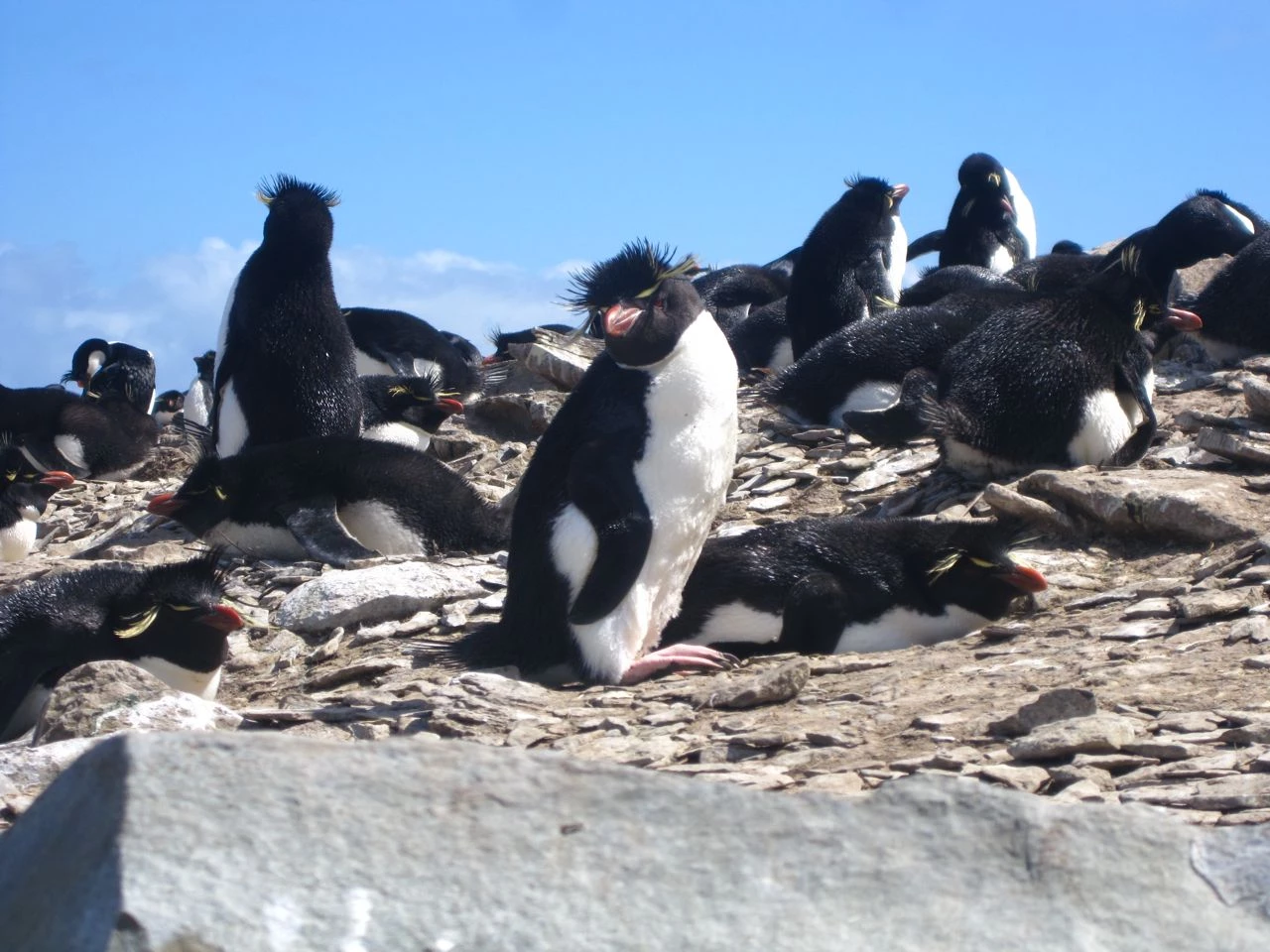
The rest of the day involved more penguins, including rockhoppers (photo 4) which I hadn’t seen before, lots more birds and more seals.


Tomorrow will probably be much the same, hopefully without the wildlife trying to steal my precious samples!

Polychaete research in the Falklands by Teresa Darbyshire - The dive blog

This was to be ‘liveaboard’ diving. We loaded all our kit on to the Hans Hansson, an ex-North Sea Scandinavian rescue vessel that has only been down in the Falklands for a few months in her new role as a tourist/research vessel. Setting off on Thursday morning we didn’t have very far to go but took it easy with a slow steam towards the north of Stanley. The slow roll eventually made my stomach wonder whether or not to stay friends with me but happily we managed to hold it together.


I had been concerned about just how cold the water was going to be with the suggestion that it would be around 5°C, which would have been painful. In general though, temperatures varied between 7 (cold, my hands hurt) and 9°C (chilly, some feeling remaining at end of dive). My new 7mm hood did its job to keep my head warm while the rest of me tended to get quite cold towards the end of each dive. Of course I was moving around very little and less than on a normal dive as I was mostly in one area collecting each time.


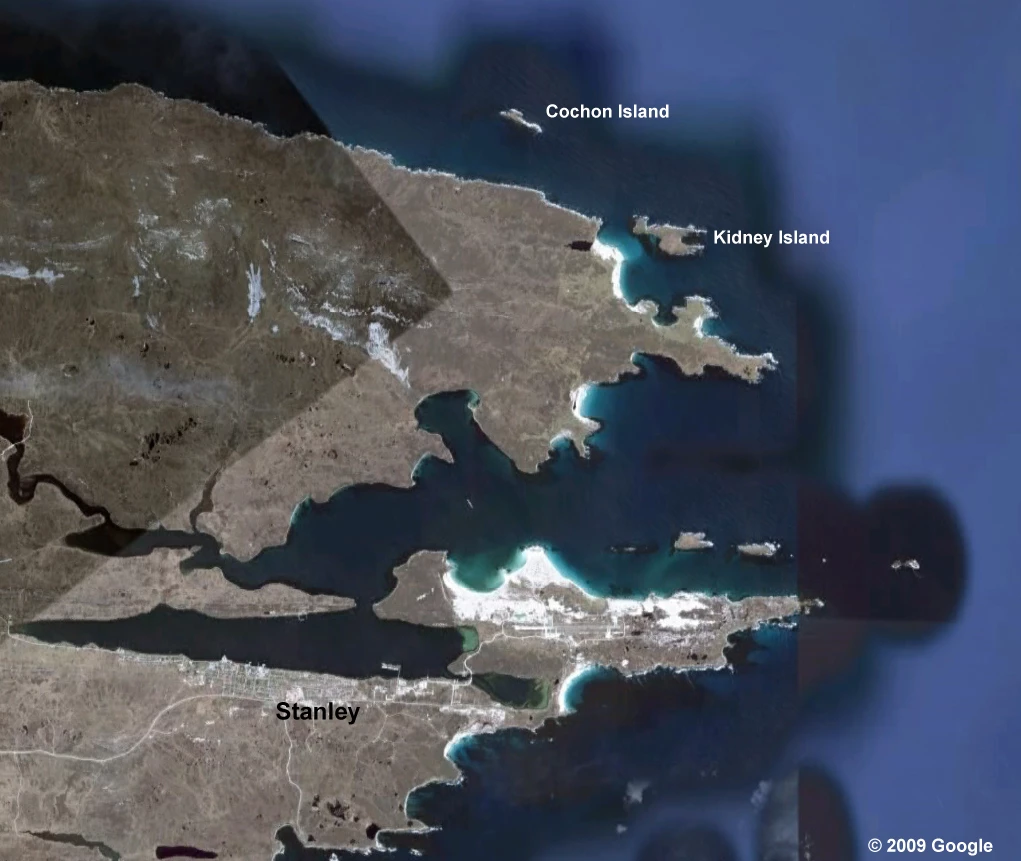
The seabed around Cochon Island was very rocky with steep walls and gullies in the shallower water (6-8m), large rocks and cobbles over coarse sand at around 10-15m and larger boulders/bedrock with bigger patches of open sand from around 15m and deeper. This also varied according to where we were around the island.


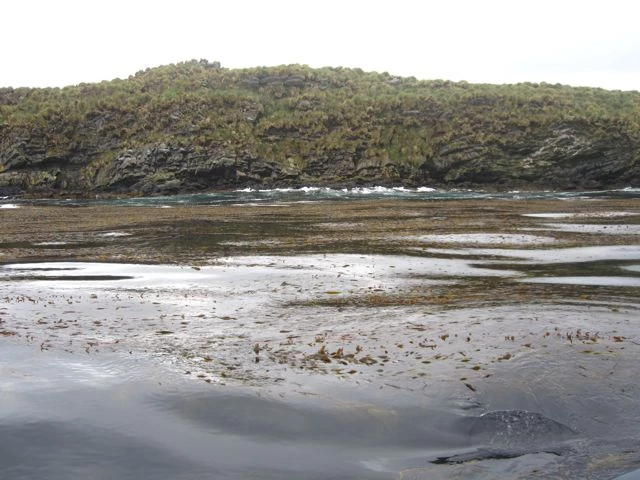
Diving through the giant kelp was an interesting experience. This kelp is nothing like anything you see in the UK. It grows up from its holdfast which attaches to the seabed at any depth down to 20m or so and then the fronds spread out on the surface for many more metres creating a thick mat of surface kelp (photo 1). This stuff is so tough that the RIB would actually anchor to it while the divers went in and then the divers themselves could use it as a shot line to the seabed and back again. When going in from the RIB it could be hard to get your feet under you through the fronds and then the general rule was sink straight down and don’t flounder! Otherwise it wraps itself round you and you end up dangling mid-water (probably upside down) hoping that your buddy might notice, take pity and cut you free.


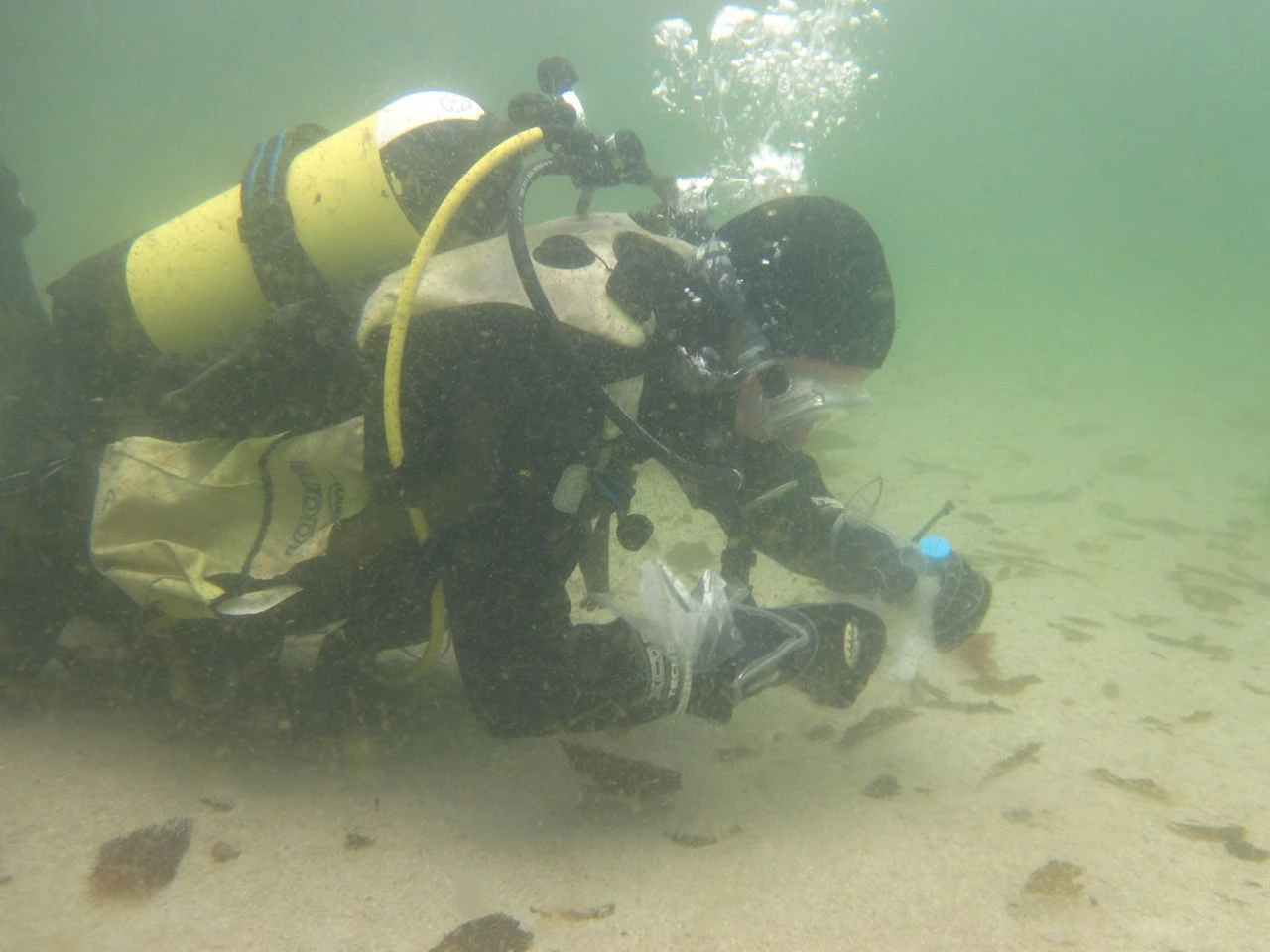
Diving is done to very safe protocols here as the nearest recompression chamber is in Chile. Therefore, all dives are done shallower than 20m and there is no decompression diving, reducing the risk of nitrogen issues. The dive surveys are carried out by volunteers, who make up the Shallow Marine Surveys Group, just like the SeaSearch volunteers in the UK. These guys all give up their time willingly, often, as in this case, taking time off work to be involved or, where self-employed, giving up a day or two’s pay. It makes you feel very humble knowing that you are being paid to be there with them.


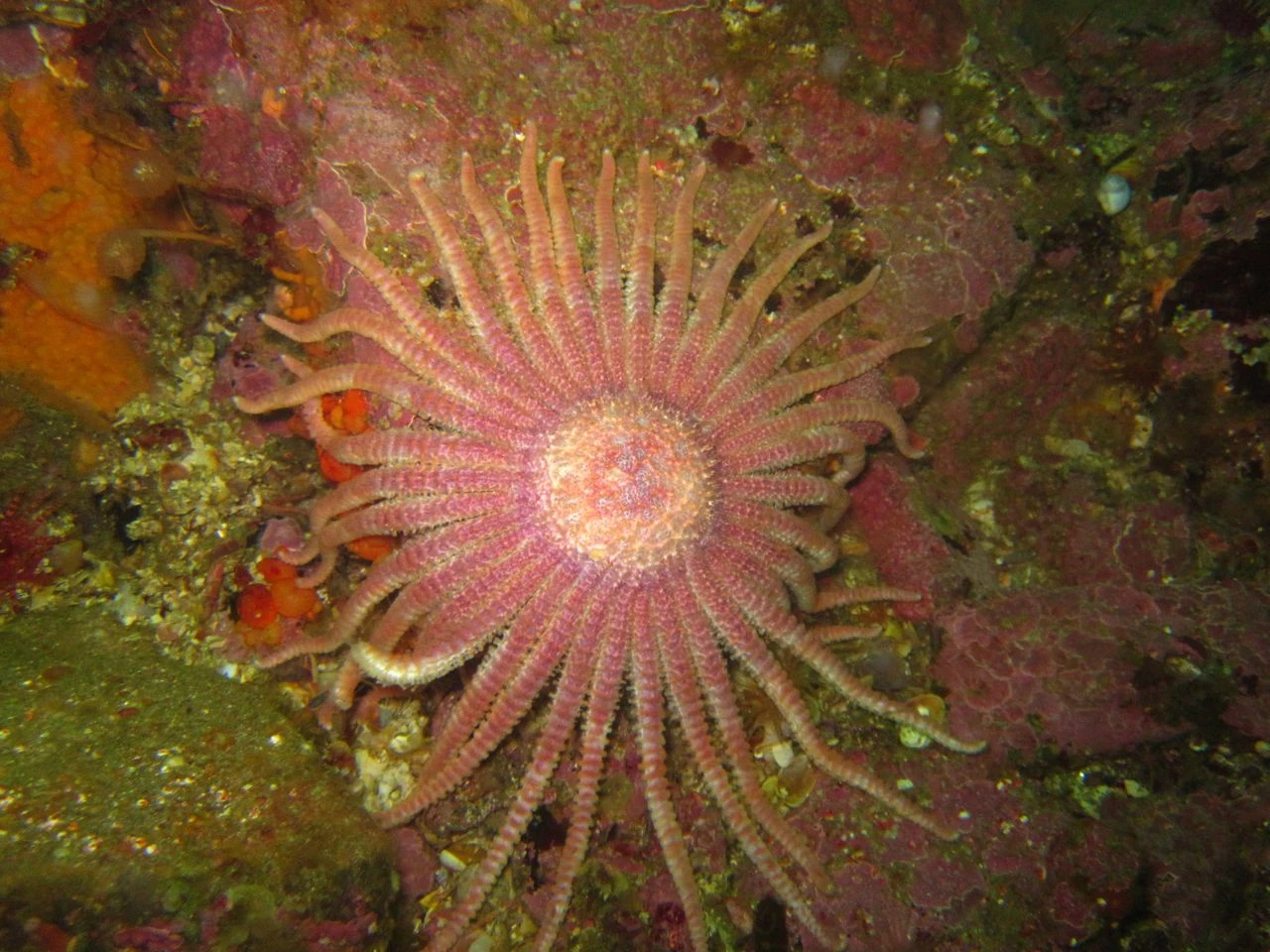
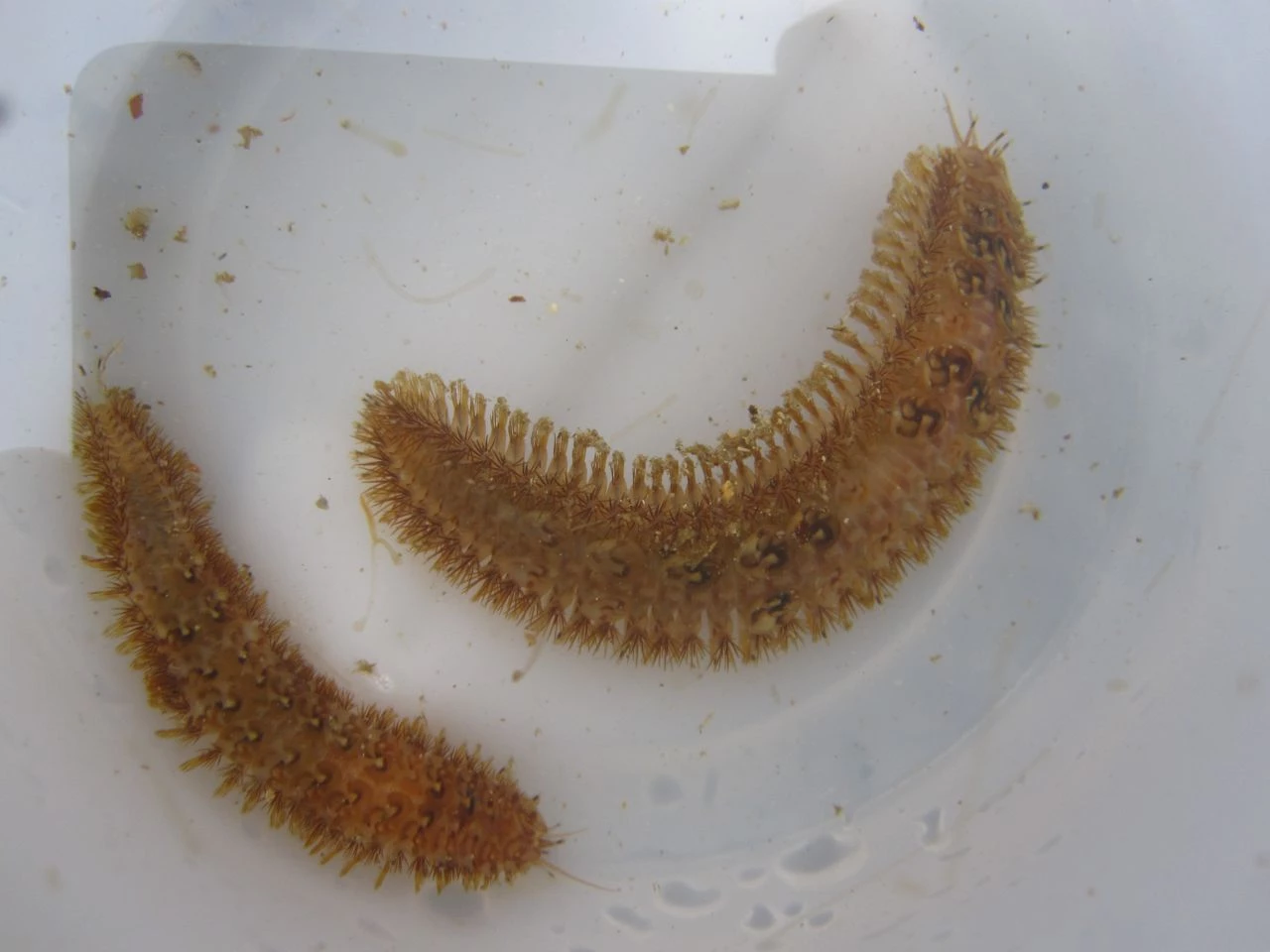
The marine life was colourful and diverse. Lots of different nudibranchs, starfish (photo 2), sea cucumbers, urchins, snails and crabs with many of the surfaces covered in a pink encrusting alga so thin in places that you could put a finger through it. Worms were not immediately evident unless you went looking for them. Turning over rocks was the simplest method and yielded many different species although some were particularly common. Those most often seen were large scaleworms (photo 3) more than 6cm in length, long paddleworms up to 20 cm long (photo 4) and on many surfaces were the long tubes of parchment worms (Chaetopterus sp.). Other methods of collecting involved scraping rock surfaces covered in a turf of hydroids and/or bryozoans, taking samples of the loose pink algal crusts and pieces of giant kelp holdfast. I say pieces because these holdfasts are enormous being nearly a metre wide and half as much high. I’d never be able to get one of those in a bucket!


I was also joined in my collecting by Christoph (photo 5), a German researcher just back from a cruise to South Georgia who was looking at crustacea, particularly isopods. Between us, life on the seabed was not safe.


The threatened weather didn’t materialise as forecast. The worst predicted day, Saturday, turned into the best with the least swell on the exposed side of the island leading to an amazingly still evening watching penguins and shearwaters return to the island for the night. This to the delight of the surveyors who managed to blitz the entire island with survey sites over the four days.


The visibility was the only disappointing point of the weekend. Again like the UK, a spring bloom is in progress here with plankton thick in the water. Visibility is still good in my eyes being a minimum of 6 m but knowing it can be crystal clear and at least 50 m is merely a tantalising thought. Macro shots are still possibly but wider shots of the scenery are impossible in the thick plankton, particularly as the kelp can increase the gloom at times.


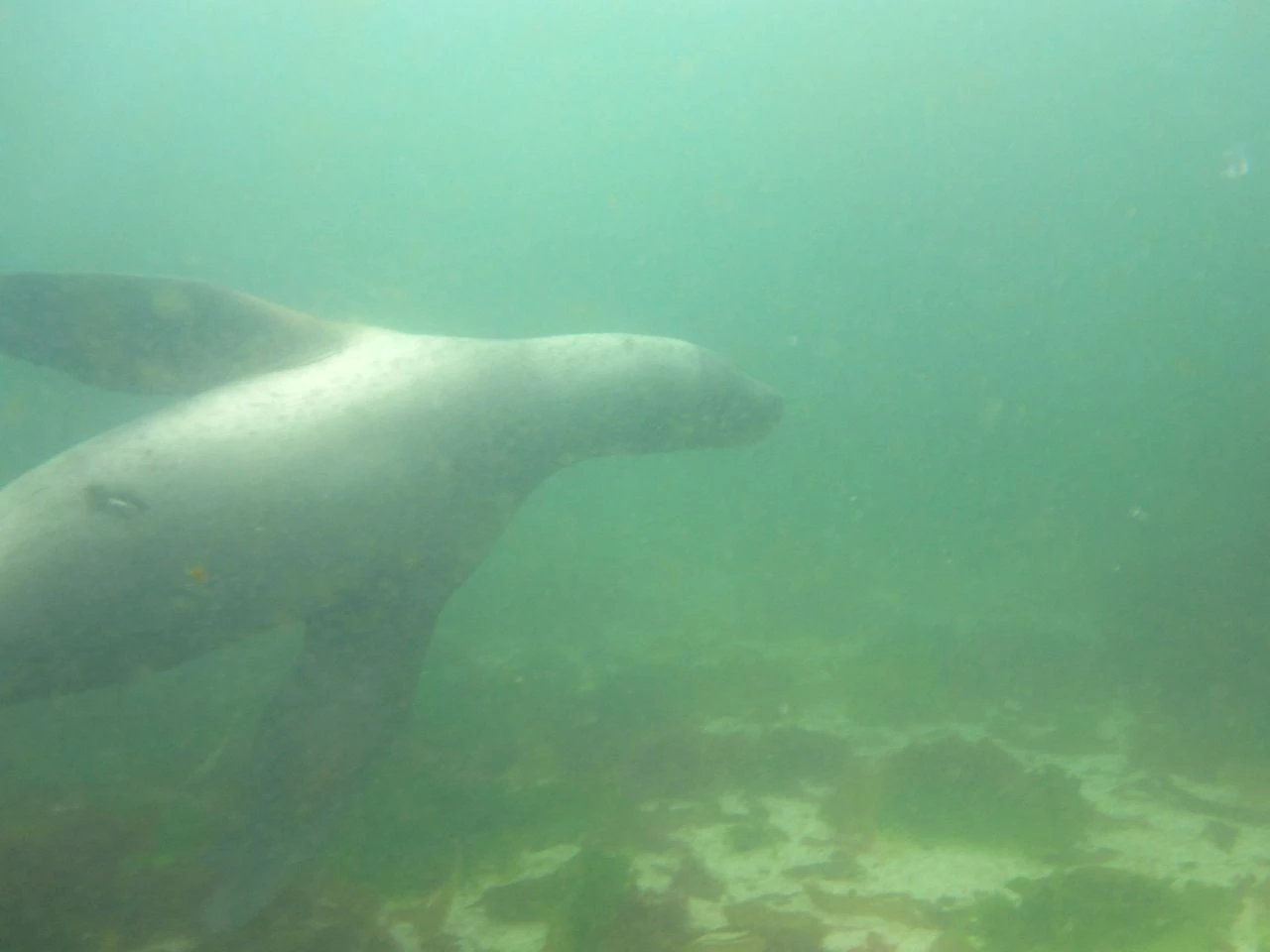
The weather forecast for Saturday appeared with gusto on Sunday morning and although a first couple of pairs got in for a dive it was quickly decided to pack up and move slightly down the coast to Kidney Island where there was a chance of more shelter. This then ended our weekend with a shallow dive in a bay with the prospect of seeing sealions (photo 6). These did indeed come to play in the water and I quickly realised that the seals in the UK are little puppies compared to the full grown St Bernards I was seeing. Having 3 or 4 of these in your face under water having the occasional nibble at extremities gets a little nerve-wracking but still an unmissable experience. Also found a 'worm garden' with the worms poking upright out of their tubes in the sand into the surrounding water. Dug some of that up to bring back but I promise there was loads more left!