Ian Smith - Uwch Guradur Diwydiant Modern a Chyfoes, Amgueddfa Genedlaethol y Glannau, 4 Mehefin 2020
Yn 2016 cefais alwad ffôn gan Nichola Thomas. Roedd ganddi fab, Rhys, a fyddai wrth ei fodd yn gwirfoddoli yn yr amgueddfa. Roedd yn ddwy ar bymtheg ac yn y coleg yn rhan-amser ac yn awtistig.
Fe benderfynon ni gwrdd â Rhys a Nichola i ddarganfod beth oedd ei ddiddordebau a sut y gallai helpu yn yr amgueddfa.
Roedd Rhys yn eithaf swil ar y dechrau ac ni ddywedodd lawer, ond cymerodd bopeth i mewn. Fe wnaethon ni gytuno ar gynllun fyddai’n gofyn iddo ddod am ddwy awr bob dydd Mercher o unarddeg o'r gloch tan un. Byddai Rhys yn fy helpu ar y bwrdd ‘trin gwrthrych’ a byddem yn annog ymwelwyr i ddal gwrthrychau o’r 1950au, 60au a’r 70au a siarad am eu hatgofion neu ddim ond dysgu am y gwrthrychau. Pethau fel ‘Green Shield Stamps’, cwponau sigaréts, hen eitemau trydanol a hen offer.
Nawr, nid oedd gan y mwyafrif o staff yr amgueddfa fawr o ddealltwriaeth o awtistiaeth, os o gwbl. Mae gan un ddynes, Suzanne, fab awtistig a gallai egluro pethau fel sut i gyfathrebu’n effeithiol â Rhys. Roeddem i gyd yn teimlo y dylem fod yn fwy gwybodus, felly cynigiwyd hyfforddiant ‘ymwybyddiaeth awtistiaeth’ i’r holl staff. Rwy'n credu bod pawb wedi cofrestru. Agorodd yr hyfforddiant ein llygaid i fyd awtistiaeth. Un pwynt enfawr a ddaeth allan o’r hyfforddiant oedd bod gan lawer o sefydliadau le ‘ymlacio’. Mae hyn ar gyfer unrhyw un sy'n teimlo'n bryderus neu dan straen neu sydd angen dianc o'r prysurdeb am dipyn. Fe wnaethon ni benderfynu bod angen rhywbeth fel hyn arnom yn yr amgueddfa.
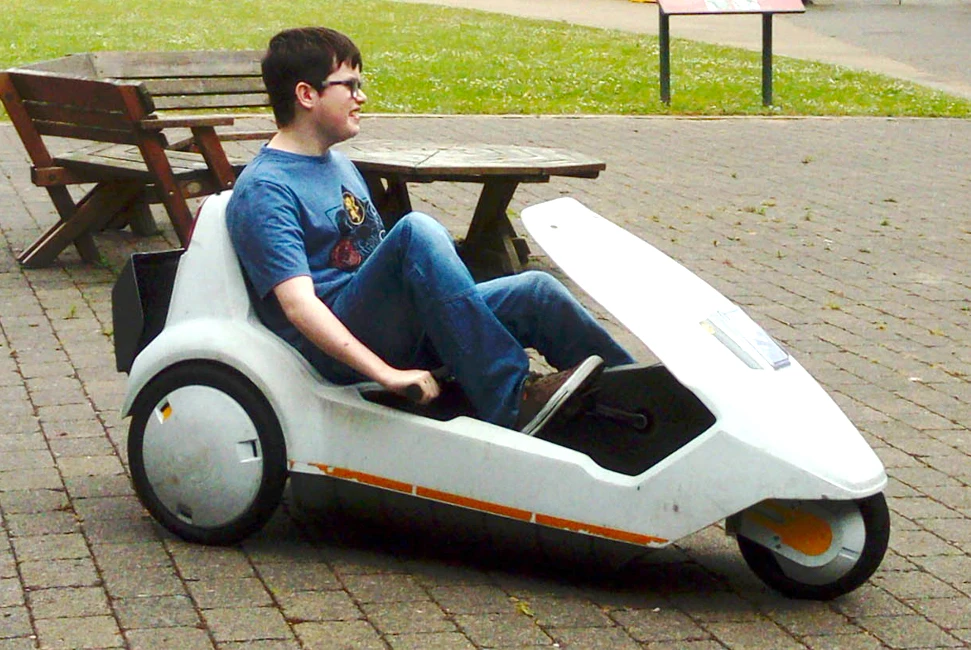
Rhys Thomas, gwirfoddolwr Amgueddfa Genedlaethol y Glannau cerbyd trydan o gasgliad yr amgueddfa.
Erbyn hyn roedd Rhys wir wedi dechrau mwynhau ei amser yn y ‘gwaith’. Sylwodd pawb ar weddnewidiad go iawn wrth iddo ddod yn fwy allblyg a llai swil a dechrau sgyrsiau gyda dieithriaid llwyr yn rheolaidd. Gofynnom i Rhys ein helpu gyda dyluniad yr Ystafell Ymlacio. Roedd e’n wych - gan wneud argymhellion pwysig a hefyd bod yn llefarydd ar ein rhan am yr hyn yr oeddem yn ceisio'i gyflawni. Gwnaeth hyd yn oed nifer o ymddangosiadau ar sioe radio Wynne Evans. Daeth Rhys yn gymaint o ffefryn ar y sioe nes iddo wahodd Wynne i ddod i agor ein Hystafell Ymlacio yn swyddogol.
Erbyn hyn, mae Rhys yn mynychu coleg llawn amser, felly dim ond yn ystod y gwyliau y gall wirfoddoli yn yr amgueddfa. Rydyn ni bob amser wrth ein bodd yn ei weld ac mae wir yn ychwanegu rhywbeth arbennig at ein tîm. Mae ein Hystafell Ymlacio yn llwyddiant ysgubol ac yn cael ei defnyddio’n ddyddiol.
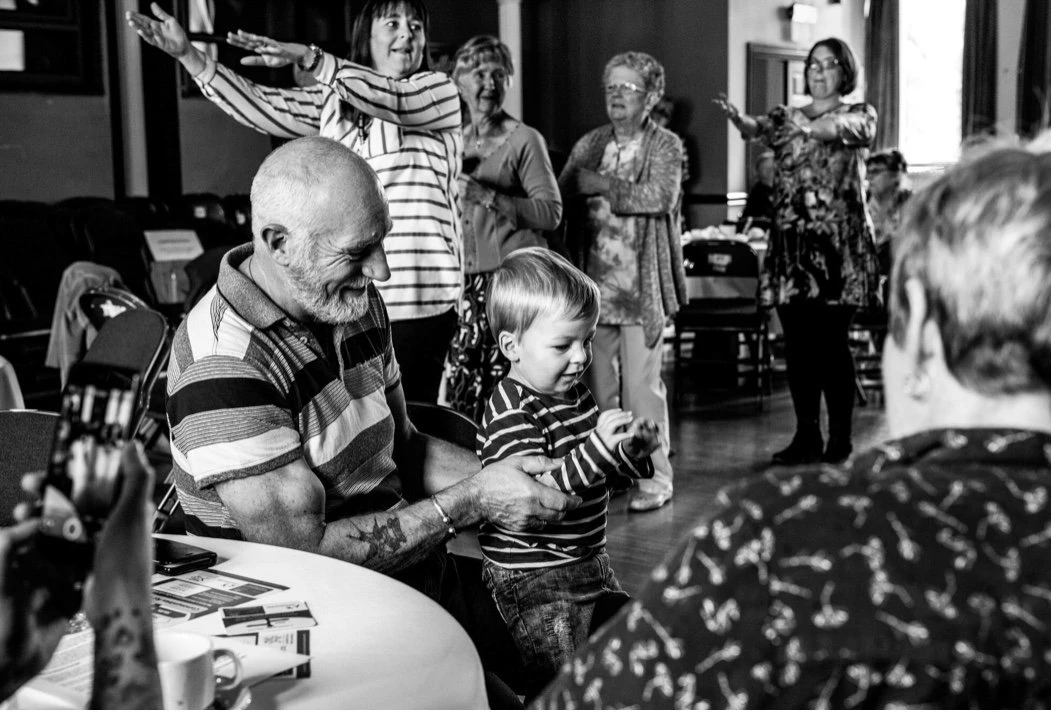
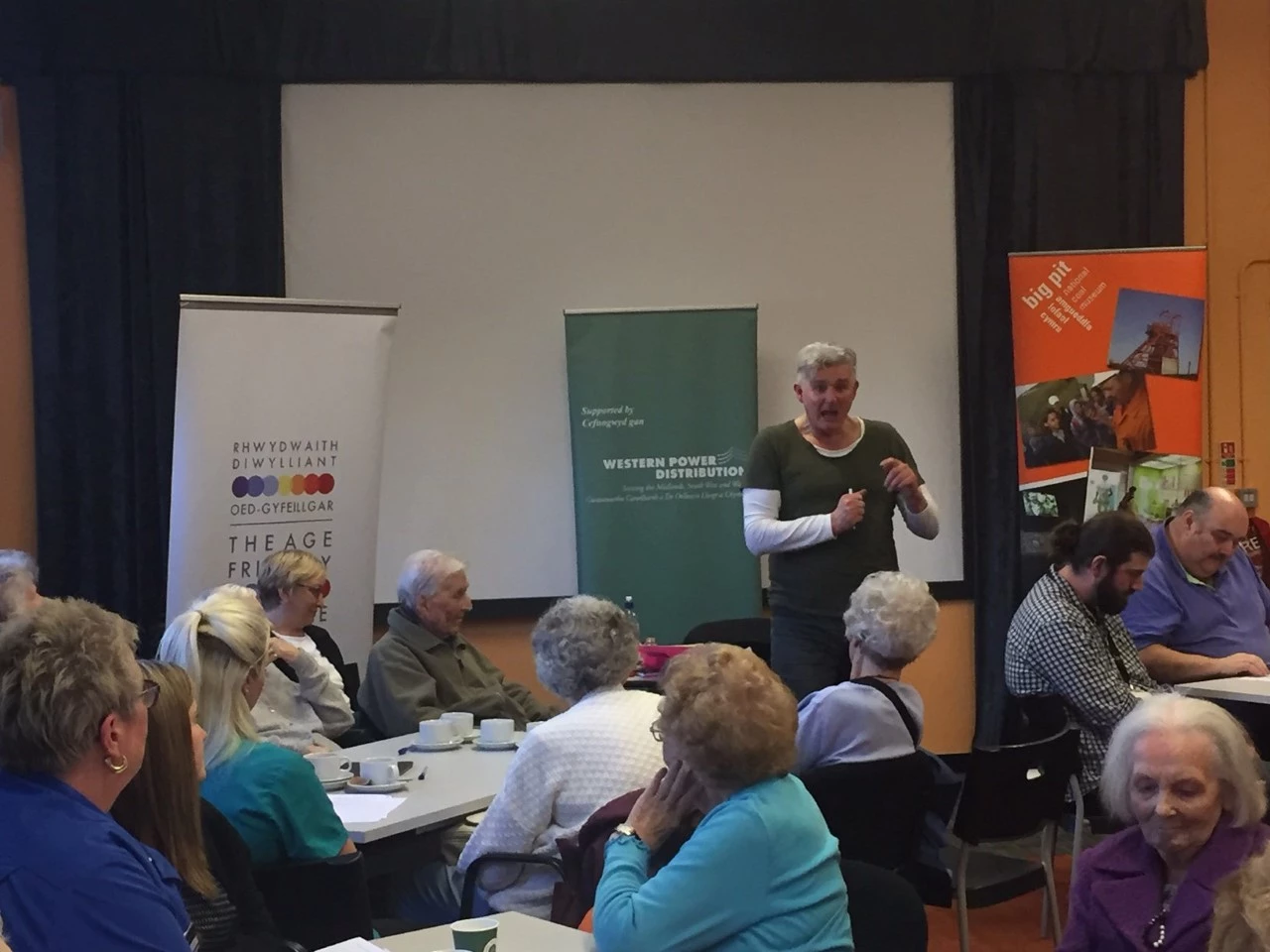
Ym mis Gorffennaf, cynhaliwyd y Grŵp Pontio’r Cenedlaethau cyntaf yn Big Pit. Nod y grŵp oedd dod â’r hen a’r ifanc ynghyd, chwalu’r rhwystrau rhwng cenedlaethau a chefnogi aelodau’r gymuned sy’n byw gyda dementia neu’n ei brofi.
Bob mis, mae thema wahanol ac mae pobl o bob oed yn dod at ei gilydd i rannu profiadau ac atgofion, weithiau i ddysgu rhywbeth newydd, ymweld â rhywle newydd neu am baned a chlonc.
Mae gennym nifer o wirfoddolwyr hen ac ifanc, gan gynnwys rhai sy’n byw gyda dementia.
Dyma Gavin a Kim. Mae Gavin yn berson iau sydd â dementia, ac yn ddiweddar mae wedi ymuno â ni fel gwirfoddolwr gweithredol ar gyfer y grŵp. Mae wedi arwain gweithgareddau celf hefyd.
O’r sesiynau cynnar, rydym wedi sylwi ar gynnydd sylweddol yn hyder pobl, a mae’r parodrwydd i rannu sgiliau, syniadau a gwybodaeth wedi tyfu o wythnos i wythnos. Mae cyfeillgarwch wedi datblygu ar draws y cenedlaethau, gyda phobl yn trefnu cymryd rhan mewn gweithgareddau cymdeithasol tu hwnt i sesiynau’r grŵp.
Os hoffech chi ymuno â’r grŵp fel gwirfoddolwr, neu os hoffech ragor o wybodaeth am y grŵp, cysylltwch â: gwirfoddoli@amgueddfacymru.ac.uk
Mewn partneriaeth â Chyngor Tref Blaenafon, gyda chymorth Hwb Ieuenctid Blaenafon a Western Power Distribution.
Dyma ddyfyniadau ac adborth gan aelodau a’u teuluoedd:
“[Mae Mam] wedi bod yn dweud wrtha i am y clwb, a dwi’n cael y teimlad ei bod wedi mwynhau ei phrynhawn yn fawr… roedd hi’n falch iawn o’i darluniau o’r pwll… mae hi wedi darlunio mwy yn y diwrnodau diwetha nag ers blynyddoedd! Mae hi wir yn hoffi cwrdd â phobl mae hi’n eu ’nabod am glonc”.
Adborth gan ferch i aelod Grŵp Pontio Cenedlaethau Blaenafon. Cafodd yr aelod strôc yn ddiweddar sydd wedi effeithio ar ei golwg felly mae hi wedi colli peth o’i hannibyniaeth.
“Dwi wastad yn mwynhau dod i’r grŵp. Rydych chi wastad yn gwneud i ni deimlo’n arbennig, ac mae cael bod gyda’r plant yn hyfryd. Maen nhw’n rhoi cip gwahanol i chi ar y byd. Gallwch chi deimlo’n unig yn y cartref, hyd yn oed pan mae llawer o bobl o’ch cwmpas. Alla i ddim diolch digon i chi gyd”.
Aelod rheolaidd o Grŵp Pontio Cenedlaethau Blaenafon, sy’n byw mewn cartref gofal.
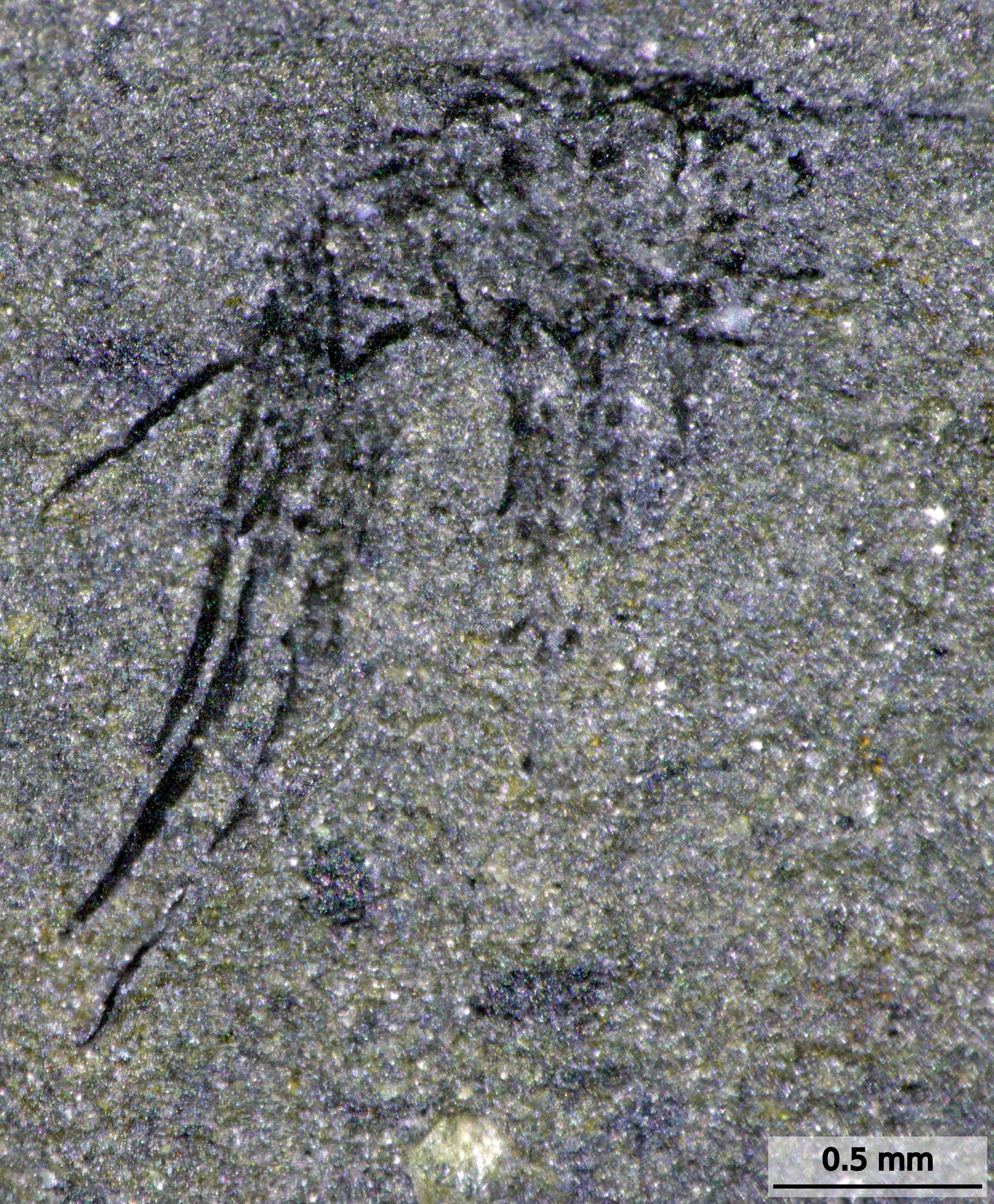
News of a very special new fossil from north Wales was recently published in the scientific journal Royal Society Open Science. I was lucky enough to be involved in the study of the fossil, which was led by Dr Stephen Pates of Harvard University and also included two Museum Honorary Research Fellows, Dr Joe Botting and Dr Lucy Muir. Joe and Lucy found the fossil back in 2012, during fieldwork funded by the National Geographic Society, and donated it to the Museum along with other fascinating fossils from the same site, including various sponges and worms. The fossil was not looked at in any detail until Stephen visited the Museum last year to research other fossils from our collections. His experience told him that it looked like something unusual, so we decided to investigate further. We studied it under the microscope and took detailed photographs, which were then compared with fossils from other places. It turned out to be not only an animal previously unknown to science, but the first of its kind ever to be found in the UK, and probably the smallest known example of its kind.
The new fossil radiodont 'claw'.
Where is the fossil from?
The fossil was found in a block of rock collected from a stream section close to the Arenig Fawr mountain, near Bala in north Wales. You can see a video of Joe collecting fossils at the site here. It comes from the Dol-cy-Afon Formation, rocks that were laid down in the sea around 480 million years ago. What we think of as Wales today, was at that time part of a continent called Avalonia, which was located in the southern hemisphere. The animal was fossilised inside a large burrow, along with remains of other small creatures. We don't know if it was intentionally brought in by the burrow's owner (as a meal perhaps), or if its remains just happened to be present in mud that was pulled in during burrowing.
What kind of fossil is it?
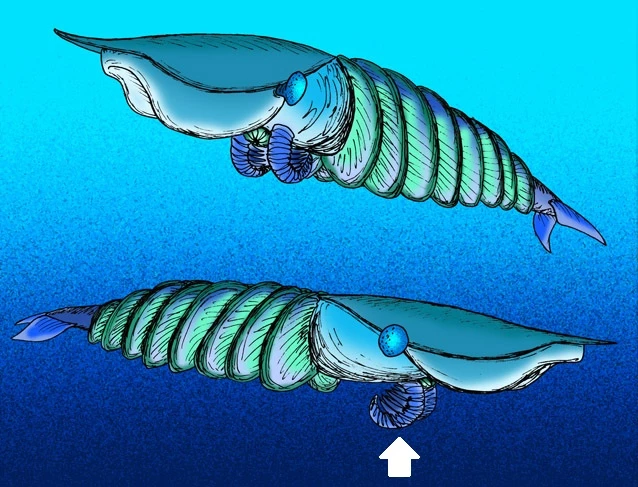
Reconstruction of Hurdia victoria, a close relative of the new Welsh radiodont from Canada. White arrow points to the 'claws', equivalent to the Welsh fossil. Credit: image adapted from original by Apokryltaros, licensed under the Creative CommonsAttribution-Share Alike 3.0 Unported license.
The fossil is tiny, less than 2mm long. It looks a bit like a comb, with long, thin spines coming off a chunkier shaft. It is actually only part of an animal, a 'claw' used by a creature called a radiodont for feeding with. Radiodonts are relatives of modern-day arthropods such as crabs, insects, spiders and scorpions - segmented animals with hard skins. They were unusual in lacking the jointed legs that their distant cousins scuttle around on. Instead, they had a row of overlapping flaps along the sides of their segmented body, used for swimming rapidly through the ocean. They had large eyes on the end of stalks, one of the features that equipped them to be the earliest known group of large predators to exist on Earth. The new Welsh fossil represents one of a pair of large segmented, spiny claws, which these animals had at the front of their head for capturing food.
Radiodont means 'wheel spoke tooth', a name that reflects their circular mouth, which had a ring of hard, sharp-edged plates that looks a bit like a pineapple ring with razor-sharp teeth. The most famous member of the group is Anomalocaris, first found in Canada's Burgess Shale and thought to have been top predator in the seas over 500 million years ago. If Jaws had been made about the Cambrian Period when it lived, the film might have been called Claws and Anomalocaris would've been the reason not to go back in the water. It is thought to have spied its prey using its large eyes, swooped down and grabbed it with its spiny claws, and then crushed it between the hard plates of its circular mouth.
But while Anomalocaris was a giant for its time, one of the largest animals in existence 500 million years ago at up to half a metre in length, the new Welsh animal was tiny. The whole creature is estimated to have been only around a centimetre long. That makes it the smallest radiodont fossil ever found. We can't tell if it was a fully-grown adult or not, because, as far as we know, juvenile radiodonts looked like their parents.
What did it look like and how did it feed?
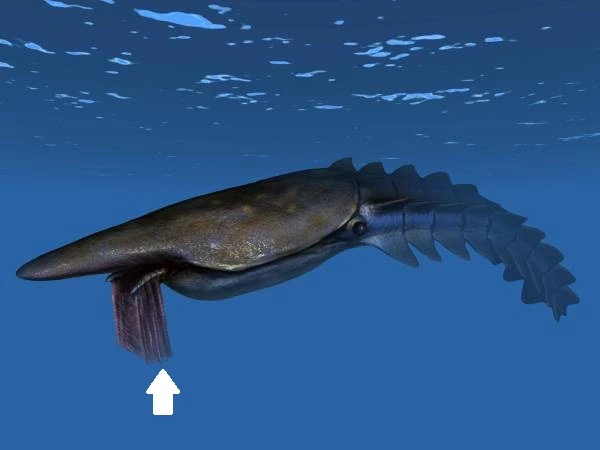
Reconstruction of Aegirocassis benmoulai, the largest radiodont ever discovered. It lived in Morocco at around the same time as its relative, the new Welsh radiodont. White arrow points to the 'claws', equivalent to the Welsh fossil
Not all radiodonts were predators like Anomalocaris. Features of their 'claws' provide evidence about how they likely lived. Some had tiny secondary spines coming off the long main spines, creating a network of fine combs that they used for sifting food particles out of mud at the bottom of the sea, or for filtering them out of the water. The Welsh fossil 'claw' has a small number of these secondary spines on it, and it may originally have had these along the full length of the main spines. In any case, its main spines are very close together, which suggests that it was either using them as filters to trap small food particles, or was using them to actively pick up very small items of food.
Although we have only found the fossilised 'claw' of this animal, the bodies of other known radiodonts are all fairly similar, so we can make a good educated guess as to what the rest of it probably looked like. It is likely to have looked similar to one of its closest known relatives, Hurdia, which is known from North America and the Czech Republic. The head was likely covered in a tough carapace with stalked eyes, a mouth underneath consisting of a circle of tooth plates, and the pair of claws attached in front of the mouth to capture and shovel in its food. The segmented body likely narrowed backwards, and had an overlapping row of flaps along its sides for swimming, with gills along its back for breathing. Almost all radiodonts, like the Welsh animal, would have been good swimmers, perhaps spending much of their time skimming along just above the sea bed in search of food. Intriguingly, this tiny Welsh animal is a very similar age to the largest radiodont ever discovered, its relative Aegirocassis from Morocco, which reached two metres in length. By 480 million years ago, radiodonts had clearly adapted to life at both ends of the size scale.
The radiodont shared its home with a huge variety of different sponges. There were also various kinds of worms around, trilobites, shellfish including brachiopods and primitive molluscs, and primitive relatives of starfish.
What can I do if I find an unusual-looking fossil?
Reconstruction of Aegirocassis benmoulai, the largest radiodont ever discovered. It lived in Morocco at around the same time as its relative, the new Welsh radiodont. White arrow points to the 'claws', equivalent to the Welsh fossil
As this fossil shows, there are still lots of exciting new things to discover in Wales. If you find something that looks interesting and you're not sure what it is, our Museum scientists would be happy to try to identify it for you, whether it's a fossil, rock, mineral, animal or plant. Just send us a photo (with a coin or ruler included for scale) with details of where you found it. You can contact us via our website or on Twitter: @CardiffCurator
Since lockdown began, I have found myself spending more time than ever peering in to people’s windows. Not because I’m nosy (well, maybe just a little) but because our streets have become almost living galleries, with art popping up in windows everywhere – mostly rainbow art, as symbols of hope.
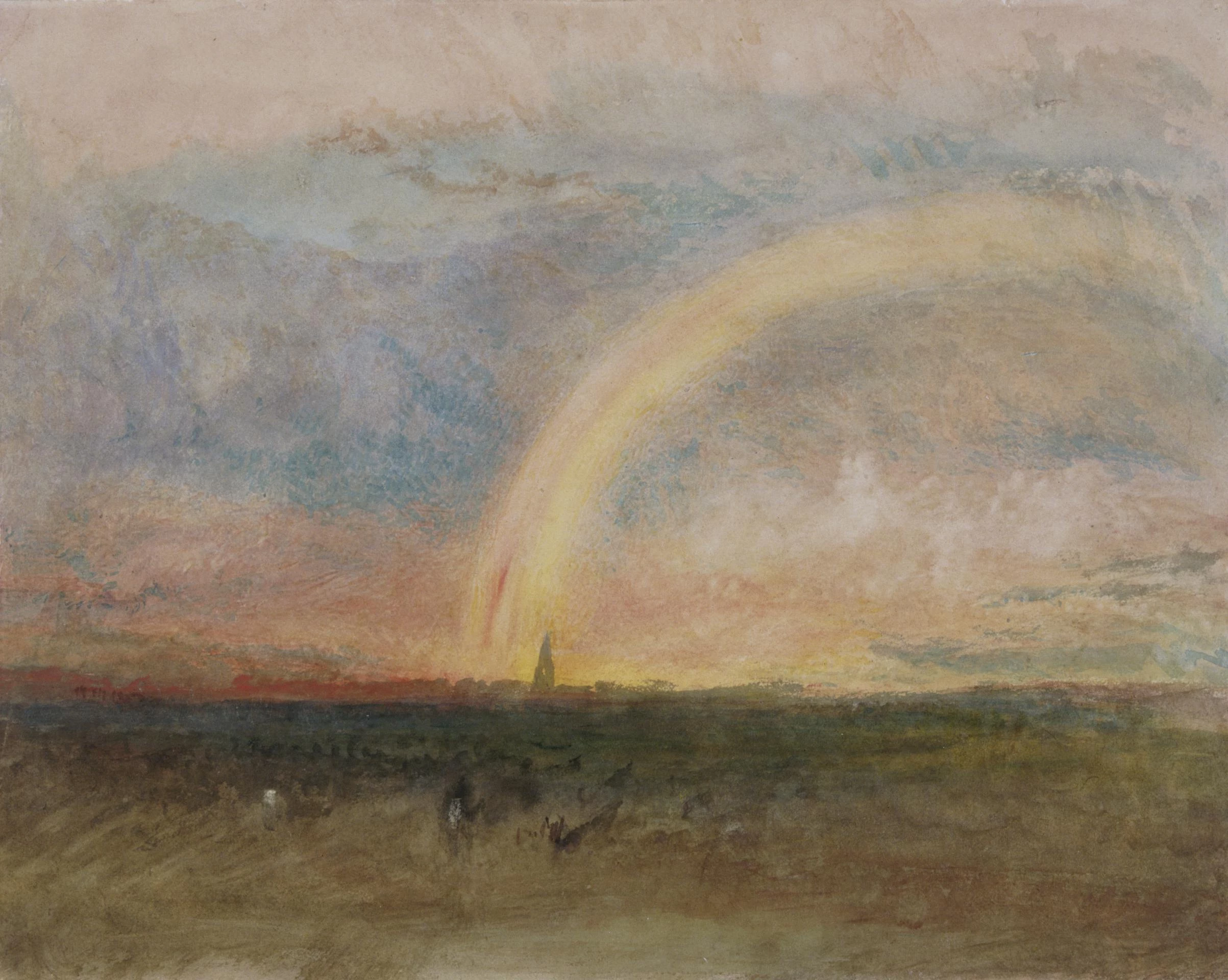
This got me thinking about the rainbows in the national art collection, like the Turner watercolour given to us by Gwendoline Daviesin 1952 as part of the Davies sisters bequest; Thomas Hornor’s rushing waterfall rainbow; and this more melancholic painting in the manner of Constable of a rainbow cutting through dark clouds, with a solitary figure at a fence seemingly oblivious to the rainbow above.
Comfort on our doorsteps
The weather was a constant source of fascination to Constable. He was drawn to rainbows as a scientific spectacle, and also for their calming effects. He once said ‘nature… exhibits no feature more lovely nor any that awaken a more soothing reaction than the rainbow’. For Constable, the rainbow represented a glimmer of hope in tumultuous times – something that may resonate with many of us today, as we struggle to come to terms with traumatic world events.
Constable believed artists should paint views and subjects with deep personal connections – things that they know and love; things that have stirred their senses and emotions. He once said that ‘painting is but another word for feeling’. For some, this is key to understanding his art. Constable’s paintings are not meant to looked at – they are meant to be felt.
Much of his work was inspired by childhood memories of his native Suffolk. A Cottage in a Cornfield shows a humble cottage in the country, with what appears to be a little donkey and foal hiding in the shadows at the gate – a simple scene he saw every day on his way to school as a boy. He delighted in the smallest details – things that many of his contemporaries in the nineteenth century art would have overlooked. ‘The sound of water escaping from mill dams, willows, old rotten planks, slimy posts, and brickwork, I love such things’ he wrote. Nothing was too commonplace, too mundane to be in his paintings. He saw beauty in things that at the time were not considered worthy to be the subject for art. He teaches us to find beauty in the everyday, and comfort on our doorsteps.
Today lockdown has stripped many of us right back to basics, and we are being encouraged to seek comfort and value the everyday more than ever before. We would love to see the things that are helping you get through these difficult times. You can share your #ObjectsofComfort with @AmgueddfaCymru on Twitter, or follow to see the items in our collections that have brought comfort to different people through the ages.
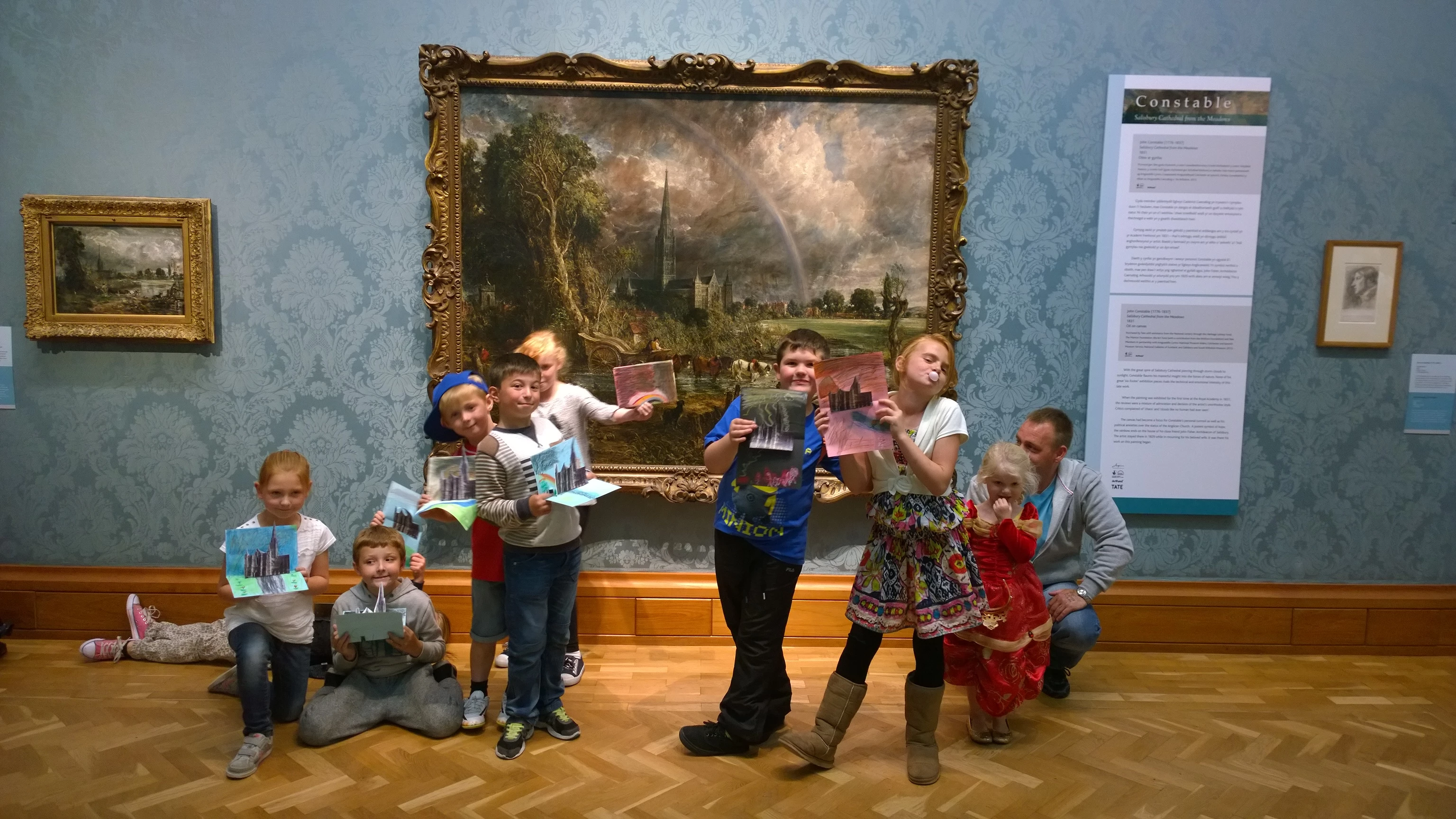
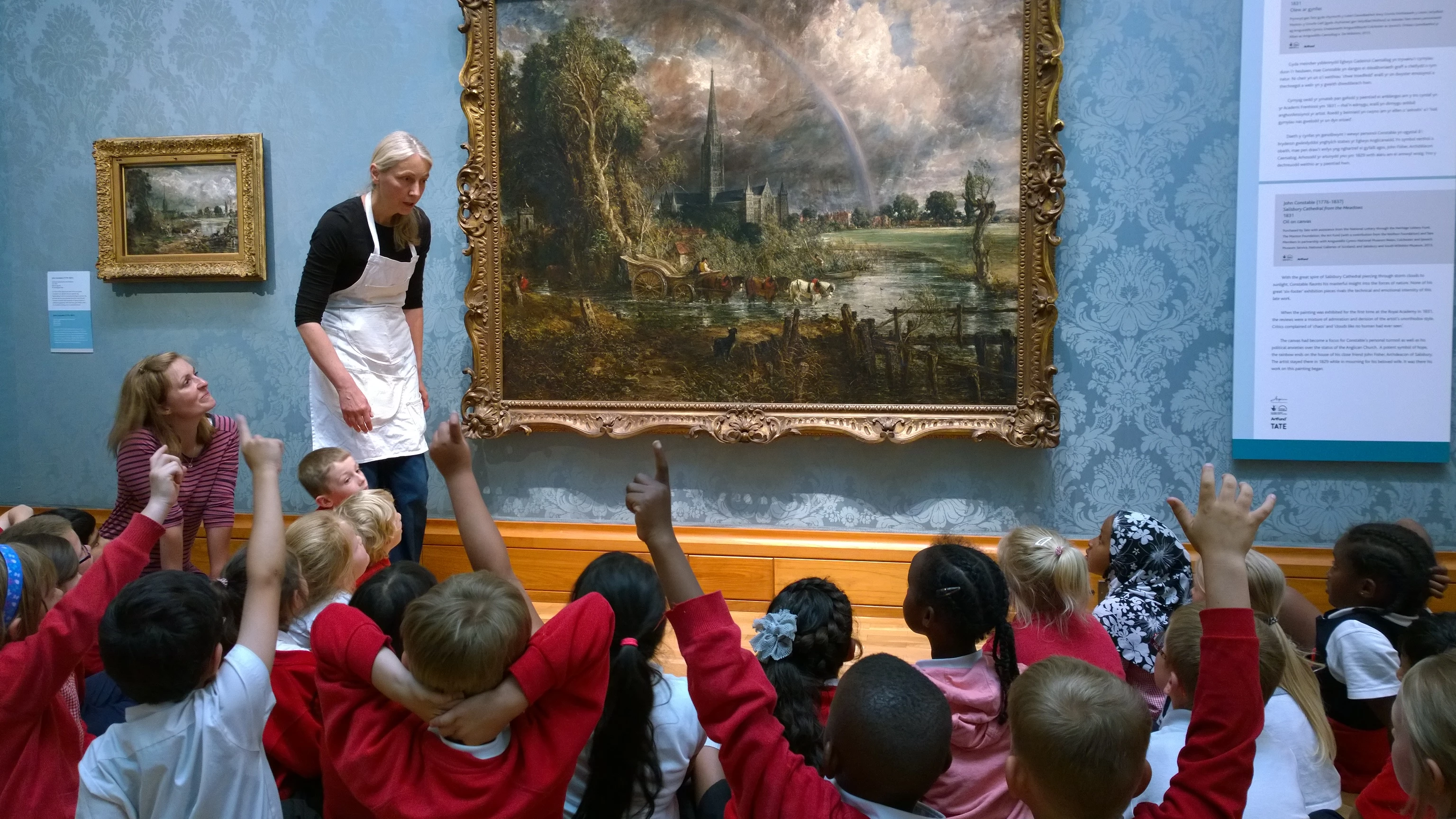
The painting shows Salisbury Cathedral under a storm-heavy sky, a flash of lightning striking its roof. When he began paiting it in 1831, Constable was caught up in his own personal storm. His wife Maria had died from tuberculosis, leaving Constable to raise their seven children alone. He was also plagued by anxiety about political and religious changes raging around him. The painting is seen as an expression of the deep anxieties Constable felt at this time - anxieties, which were nonetheless mixed with a glimmer of hope for the future, symbolised by the faint rainbow. It is no coincidence that the rainbow ends at Leadenhall, the home of his friend and patron John Fisher who supported him through his darkest days.
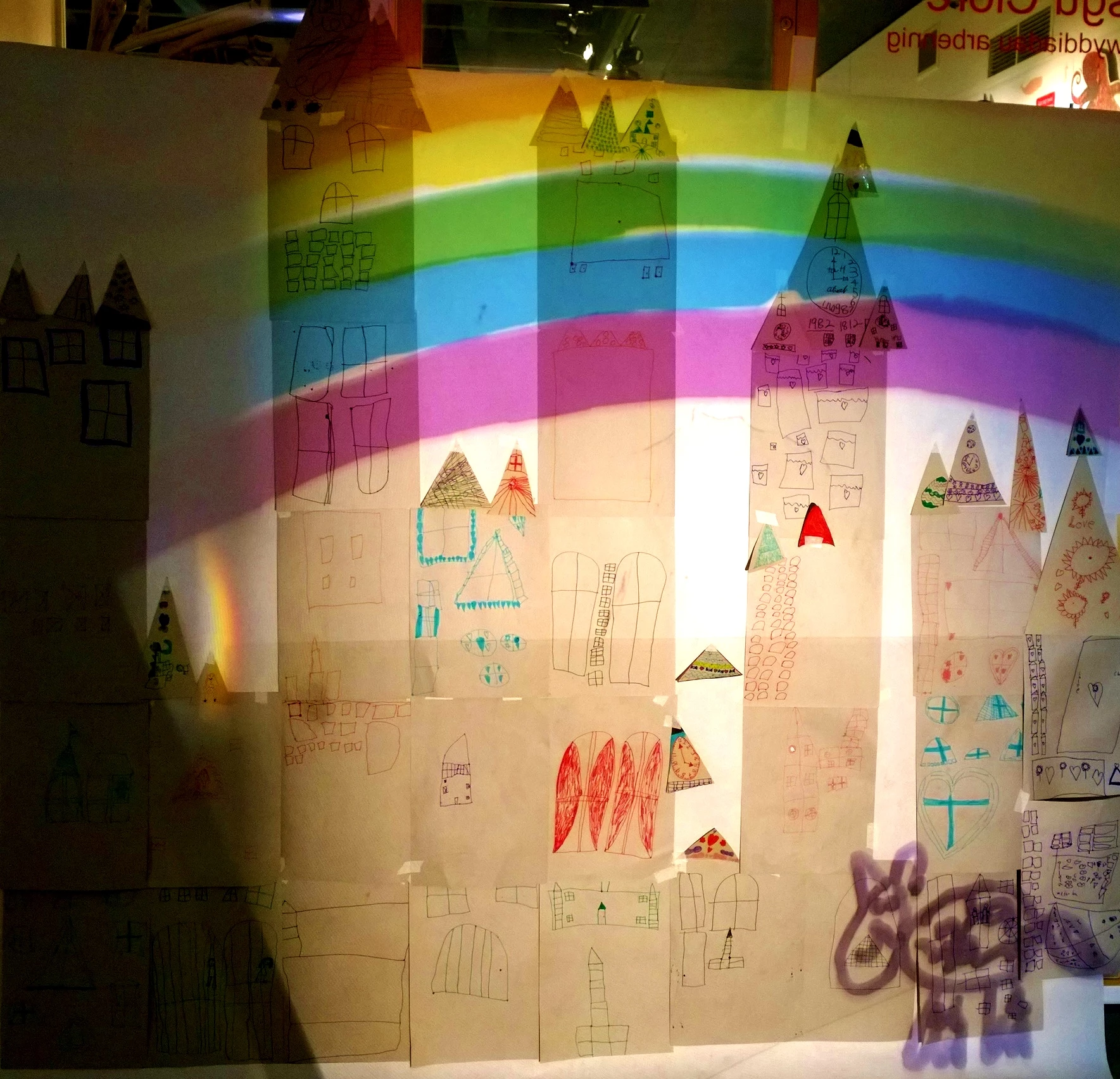
Alongside the display we co-ordinated a series of learning activities, working with different visitor groups to create artworks and poems inspired by this painting. Over 6000 people took part in the programme, and I loved seeing the creative responses like these amazing pop-up rainbow landscapes made in family workshops. The animated light projections made by school groups working with artist Anne-Mie Melis , and CPD workshops for teachers led by poet clare e. potter were also real highlights.
Hope and broken hearts
What struck me during this project is that people of all ages responded so openly to the painting, and how it sometimes opened up dialogues about complex emotional states like grief, loss, hope and happiness.
One young pupil, Charles, asked ‘why does the dog look up for hope but the horses look down with their broken hearts?’; another, after learning that it took Constable four years to complete this painting, wondered ‘can you be that sad for that long? cos for every day you have a different feeling.’ I think about these questions even six years later: how emotions are never seperate - they intermingle and change so easily - and how our emotional states are never static, but are in a constant state of flux, which can sometimes make them difficult to deal with because they seem impossible to control.
This, I think, is why we need art and creativity more than ever. Not because I think art will solve the issues we are facing today - but perhaps it has a role in helping us to ask the right questions, and in teaching us how to feel our way through, together.
In 2013 Constable’s Salisbury Cathedral from the Meadows 1831 was secured for the British public through the Heritage Lottery Fund, the Manton Foundation, the Art Fund (with a contribution from the Wolfson Foundation) and Tate Members. The acquisition was part of Aspire, a five year partnership between Amgueddfa Cymru, Colchester and Ipswich Museum Service, The Salisbiry Museum, National Galleries of Scotland and Tate Britain, sponsored by the Heritage Lottery Fund and the Art Fund.
To secure the painting, a unique partnership initiative was formed between five public collections: Tate Britain, Amgueddfa Cymru – National Museum Wales, Colchester and Ipswich Museums, Salisbury and South Wiltshire Museum and the National Galleries of Scotland. This initiative, named Aspire, was a five-year project supported by the Heritage Lottery Fund and the Art Fund enabling the work to be viewed in partner venues across the UK. National Museum Cardiff was the first venue to display the work.
I'm living in Roath in Cardiff in a terraced house with my wife. My grown up kids both live in England. We haven't seen our sons or their girlfriends since it all blew up. I haven't seen my 88 year old mother either.
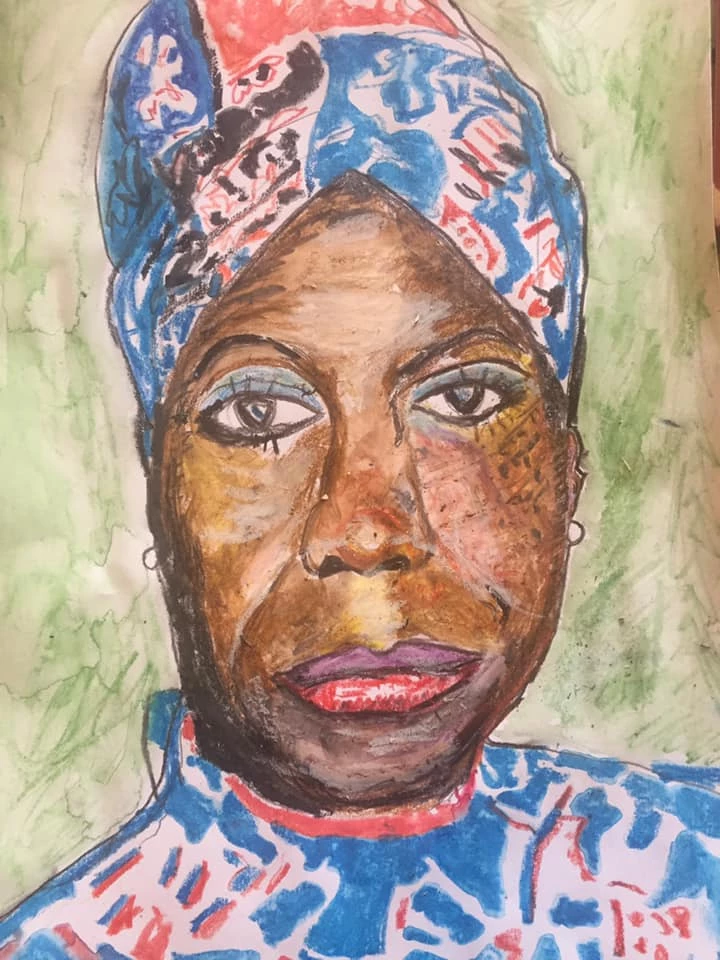
I set up the ‘Home Portrait Society’ on the first day of lockdown. I'm a semi professional singer and writer but had not really tried art since failing O' level in 1980. Just before lockdown I started doing portraits of people I knew and enjoyed it. Others said to me "Oh I wish I could paint" and I said well you are probably as good as me. So I set up a Facebook page. In the 10-11 weeks of lockdown over 50 artists ranging from never done a picture before to professional illustrators and art teachers have got involved with artists aged from five to 88 (my mum) have contributed 400 portraits. I have contributed a portrait a day and have moved from bad sketches to watercolours and oils. All the artists have grown in confidence and have rekindled old friendships or found new ones.
Rhys Thomas a chyflwynydd Radio Wales, Wynne Evans yn Ystafell Ymlacio Amgueddfa Genedlaethol y Glannau
Rhys Thomas, gwirfoddolwr Amgueddfa Genedlaethol y Glannau cerbyd trydan o gasgliad yr amgueddfa.
Gavin a Kim
The new fossil radiodont 'claw'.
Reconstruction of Hurdia victoria, a close relative of the new Welsh radiodont from Canada. White arrow points to the 'claws', equivalent to the Welsh fossil. Credit: image adapted from original by Apokryltaros, licensed under the Creative CommonsAttribution-Share Alike 3.0 Unported license.
Reconstruction of Aegirocassis benmoulai, the largest radiodont ever discovered. It lived in Morocco at around the same time as its relative, the new Welsh radiodont. White arrow points to the 'claws', equivalent to the Welsh fossil
Reconstruction of Aegirocassis benmoulai, the largest radiodont ever discovered. It lived in Morocco at around the same time as its relative, the new Welsh radiodont. White arrow points to the 'claws', equivalent to the Welsh fossil