what i've been up to...

Sian Lile-Pastore, 2 Gorffennaf 2013

Hello!

I've been pretty quiet blog-wise but not work wise! Oriel 1 is now shut so I've been taking my art and craft activities further afield, trying out different locations on the site in St Fagans: National History Museum and going to Hay festival, Tafwyl, as well as doing some outreach work with schools.
Our quilting club is still going and our next meeting will be on 20 July and will be all day! from 11 until 1 and 2 until 4 (though you are welcome to just come along for some of it). I have also started up a knit and sew group, it's just a chance to come along and meet new people and exchange ideas and the next one of those is on 28 September from 11 until 1.

To keep up to date with what we're up to quilt and craft wise, have a look at our facebook page

We've also taken part in a few Craftivism projects and hope to do more of those over the next few months too. Again, there's a facebook page for that, although we don't just meet in the museum and take part in lots of other events!

And the other newish thing that I've been involved with is the St Fagans book group (yep, there's a facebook page for that too) which meets every month (next meeting 20 july) to discuss novels that have links with the site or have links with Wales. We also invite speakers to come and give us some context for the books too - so, for instance, when we read 'The Rebecca Rioter' by Amy Dillwyn, Sioned Hughes (curator: Politics, Trade and Religion) talked to us about the Tollhouse in St Fagans, when we 'read' (I'm yet to finish it) 'For Whom the Bell Tolls' by Hemingway, Heulwen Thomas talked to us about the Welsh links with the Spanish Civil War, and last meeting when we disussed 'The Hill of Dreams' by Arhtur Machen, writer and Machenite Catherine Fisher talked to us about Machen's life and times. The current book we are reading is Wolf Hall by Hilary Mantel and we'll then be joined by Dr Madeleine Gray who'll be giving her historical take on the novel whilst we visit the church.

If you are interested in getting involved with any of these things please let me know! my email address is sian.lile@museumwales.ac.uk and I'd love to hear from you.

I have to get back to my crochet bunting now!

We need you - have your say!

Grace Todd, 2 Gorffennaf 2013

We’re very excited about our newest specimen on display here in the Clore Discovery Centre –an ichthyosaur skull that was found not far from here at Lavernock (near Penarth).

The skull is going to be on display throughout the summer and this is where you come in.

Instead of us writing an information panel based on what we know about the specimen, we’d rather find out what you would like to know.

So over the next couple of months come into the museum, investigate the specimen and leave your suggestions for what you’d like to discover about the ichthyosaur in the ballot box we’ve set up in the Clore Discovery Centre.

We’ve also got some exciting family workshops lined up where we’ll be learning more about the Jurassic seas that our Ichthyosaurs lived in.

 FOLLOW US ON TWITTER @cloreexplorer

Saturday 6th July 2pm

Sunday 7th July 2pm

Saturday 13th July 2pm


Hunt for the black lugworm

Peter Howlett, 27 Mehefin 2013

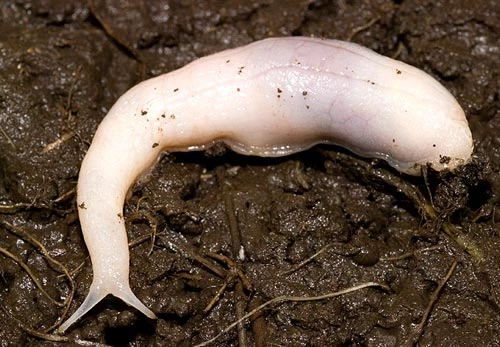
This week, three members of the department travelled to Whiteford Burrows on Gower to hunt for the black lugworm Arenicola defodiens. This species is less common than the blow lug Arenicola marina that most people may have heard of or seen previously, tends to be larger and, as the name suggests, is darker in appearance (see picture).

Digging for these animals is difficult as their burrows go deep into the sediment so we used a ‘bait pump’ to try and suck them out (see picture)! Success was variable but we did manage to collect a few of each species.

The black lug was first described in 1993 from shores in South Wales including Whiteford Burrows, so this area is considered the ‘type locality’ for the species. As we didn’t have any specimens of the black lug in our collections, we felt it was important to collect a few for future reference and potential research possibilities. Some material was also preserved in 100% ethanol for possible future genetic work.

Supporting Kids in Museums

David Anderson, 24 Mehefin 2013

The launch of the ‘Kids in Museums’ manifesto with the Minister for Culture and Sport John Griffiths and Children’s Commissioner Keith Towler took place at National Museum Cardiff this morning. It was a great event and good to see so many young people involved and supporting this project.

A few weeks ago Maria Miller, the English Culture Secretary, made a speech in which she justified the arts and culture on economic grounds. I was glad to hear John Griffiths challenge this reductionist and limited perspective, by emphasising the social and educational value of museums. We are the largest provider of learning outside the classroom in Wales, and play a key role in many communities across the nation.

Amgueddfa Cymru supports the Kids in Museums Manifesto which pledges to work towards putting the twenty points – from inviting teenagers to hang out at museums to creating a comfortable safe place for children and families – into practice. There is a Welsh language version of the manifesto, produced with support from the Welsh Government.

Something that’s fast becoming a star attraction at National Museum Cardiff is a beautiful bronze sculpture of a galloping horse by the famous 19th century French Impressionist, Edgar Degas. The work, which has found a permanent home alongside other works here, has been accepted in lieu of inheritance tax from the estate of the artist, Lucian Freud, who died in 2011, and allocated permanently to Amgueddfa Cymru – National Museum of Wales. The sculpture will be a major addition to our collection, of which we can all be proud.

Last weekend was particularly busy for National Museum Cardiff. We joined up with the BBC and a host of wildlife partners to host the ‘Summer of Wildlife’, a fun day of discovering more about our wildlife and we also supported the Welsh language festival Tafwyl in the grounds of Cardiff Castle with a chance for visitors to see the clogmaker from St Fagans and experience some of our natural history and art collections on our stand. Tafwyl Festival helps Welsh language thrive in the capital and we were more than happy to support this successful event.

At the end of May Amgueddfa Cymru had a very successful presence at both the Urdd Eisteddfod and the Hay Festival.

Over 5000 people attended our stand at the Urdd Eisteddfod in Boncath, north Pembrokeshire, where the focus was on the National Wool Museum, being just half an hour away from the Maes. John Griffiths, Minister for Culture and Sport visited the stand and Stephen Crabb MP for Preseli Pembrokeshire really got stuck into the knitting with the giant knitting needle! At the GwyddonLe science pavilion there was an opportunity to learn more about the archaeology of the Preseli Mountains and the Bluestones with Ken Brassil.

At the Hay Festival, we shared a stand with Cadw, the Royal Commission and the Historical Houses Association under the branding History Wales. We ran a number of activities for children during the week highlighting in particular the 30th birthday of Big Pit: National Coal Museum and craft work from St Fagans. The stand was extremely busy, and it was a great opportunity to work with partner organisations to promote Welsh History. John Griffiths, Minister for Culture and Sport, visited the stand to launch the latest edition of Big Pit’s people’s history magazine, Glo, which was dedicated to the 30th anniversary of the establishment of Big Pit as a museum.

Our new children’s book ‘Albie the Adventurer: Dinosaur in the Forest’ was launched officially at the festival in an interactive session with children. The story is by Grace Todd, and is based on a workshop run for Foundation Phase children in the Clore Discovery Gallery at National Museum Cardiff, where Albie discovers the sights and sounds of the prehistoric forest! I’m sure the book will charm children and grown-ups alike!

One event which I really enjoyed a few weeks ago was the National Theatre Wales’ production ‘Praxis Makes Perfect’. It was an immersive gig imagining the life of Giangiacomo Feltrinelli, the millionaire Italian communist who was at the heart of many of the most extraordinary events of the twentieth century. I thoroughly enjoyed it and the show will be going on tour to festivals this summer. I’d definitely recommend! And on the subject of things Italian, I have also been reading The Dark Philosophers by Gwyn Thomas, a Library of Wales publication, about a group of men who meet in an Italian café in an industrial community in the period around World War II. For me, Gwyn Thomas is a real discovery, a powerful writer with (is it just my imagination?) just a touch of Damon Runyon?

Museum collections in Wales – Knowledge is Preservation

Christian Baars, 14 Mehefin 2013

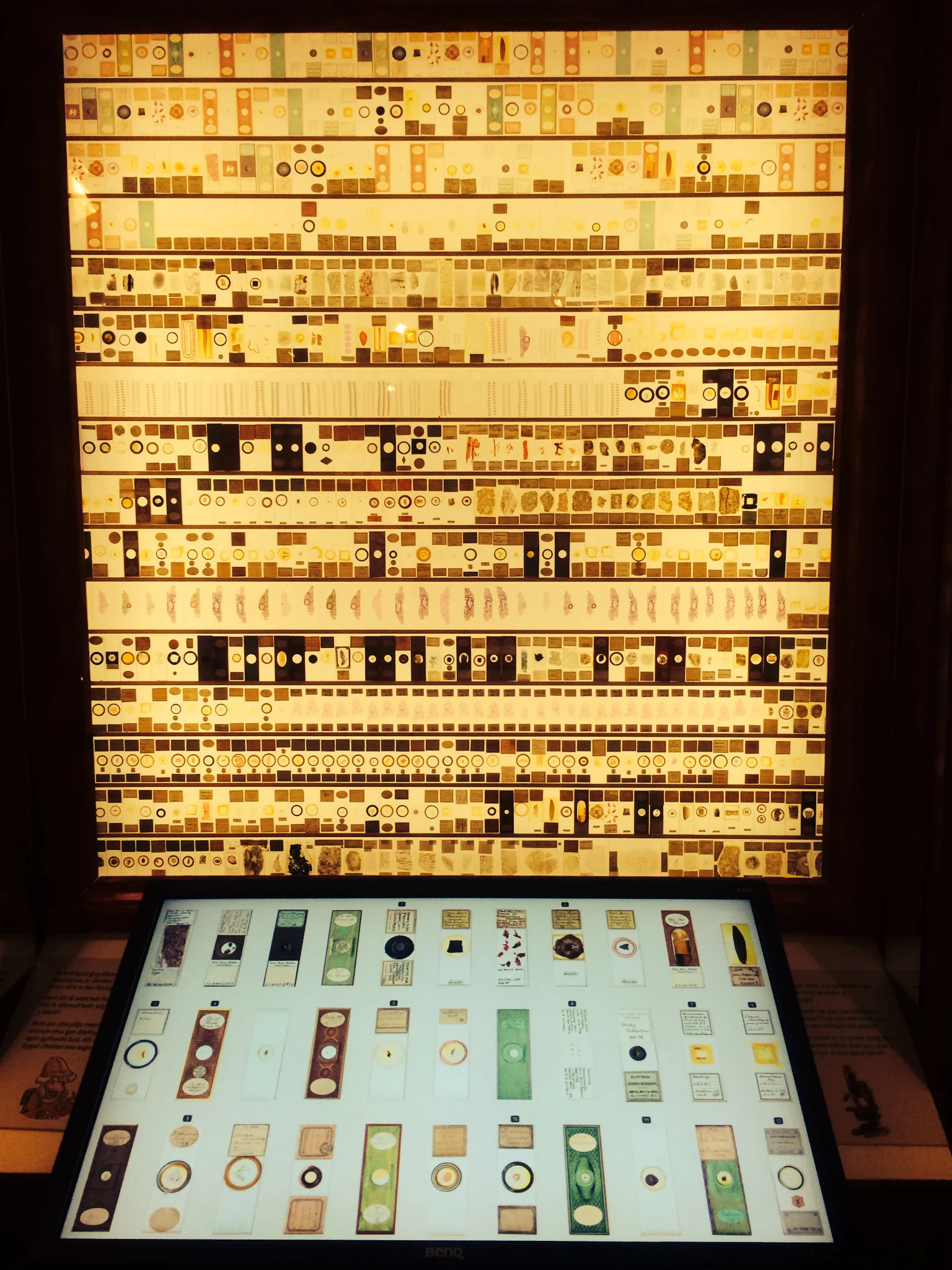
More than 100 institutions in Wales have natural science collections in their care. Natural science includes all things connected to the natural world: bird skins, insects, minerals, shells, fossils, plants, fluid preserved specimens and even microorganisms such as diatoms. These collections contain an awful lot of knowledge of our present and past natural history, and one purpose of museums is to preserve this knowledge for posterity.

What is a museum?

Museums are guardians of knowledge, and collections are what makes museums special. Collections are what sets museums apart from other organisations, the absolute core of museum work. There has been a discussion for a while over the traditional concept of the museum as a collecting institution, and whether to broaden the definition of a museum to include institutions without collections, for example one-object museums (e.g., ship museums) or science centres. However, exhibitions, research and many education activities are not possible without specimens and objects from museum collections.

Hand in hand with collections goes the knowledge that is embodied in them. Knowledge of the objects, their collectors, their provenance, their age, their cultural and scientific associations, and simply where objects are stored. This is the information that makes a collection usable. In recent years, many museums have managed to update their storage records. In many cases records are available in digital form and are easily searchable. Having said that, every museum curator knows that records are far from complete even in large museums with fancy collections management systems.

Collections information

The overwhelming majority of collections information is in the heads of the curators looking after these collections. This is especially the case for tacit knowledge – the ‘soft data’, information about collectors and their biographies and interests, stories and anecdotes about objects and collectors. The sort of thing that makes or breaks good exhibitions. Most of the time, these stories are never written down; instead, they are passed down the generations from curator to curator, and it takes years to learn all this.

It is easy to argue that a collection without information is worthless. If I cannot identify the objects in my collection, if I cannot find them, if I do not even know I have them, there is no point keeping the collection because it is, to all intents and purposes, worthless. Ultimately, this last point is the biggest danger – most curators are aware of stories of valuable collections ending up in a skip because the person making the decision did not have the right knowledge. And if we do not know what we are throwing out we have no idea what we are losing. Ultimately, society as a whole would become poorer culturally, historically and scientifically.

The specialist curator

Good curators then are not a luxury but a necessity. And a good curator needs to be a jack of all trades to be master of one: trained in a specialist subject, with experience of collections management, research, design, public speaking and storytelling, a communicator who understands the need for sharing knowledge with other museums and, crucially, the public. With people like that looking after museum collections our cultural and scientific heritage should be perfectly safe.

But here’s the thing: the number of natural history curators fell by one third in the past ten years (Museums Journal 113/04). The trend is similar – if somewhat less dramatic – in other subject disciplines. There is an increasing number of ‘orphaned’ collections, which have nobody to care for and protect them, let alone use them. In Wales the current situation is that out of more than 100 institutions with natural science collections, only a single one has any specialist curators left – the National Museum.

This makes it immensely more difficult for museums to use their collections. We do need to know where collections are and how they can be accessed. Local communities, schools, tourists and researchers want to see those collections and learn about them. The good news is that most of the collections are still there.

How collections reviews can help

The ‘Linking Natural Science Collections in Wales’ project is now starting to assess the first collections in local museums. Specialist curators from Amgueddfa Cymru – National Museum Wales are soon going to review collections across Wales. The intention is to capture information about those collections in a single database. This does not replace the need for specialist curators, But local staff and volunteers will trained and much more able to utilise their collections. This will mean better educational materials, better exhibitions and a better experience for museum visitors. Most importantly, however, it means that these collections will be safely preserved for future generations.