Babis Gwyrdd yn Sain Ffagan!

Dros y misoedd diwethaf rydym wedi cynnal cyfanswm o 5 diwrnod Babis Gwyrdd yn y T? Gwyrdd yma yn Sain Ffagan. Y syniad tu ôl i'r dyddiau Babis Gwyrdd oedd hybu ymarferion gwyrdd ac i leihau'r effaith amgylcheddol y gall godi babi gael. 

Er mwyn gyflawni hyn gwahoddwyd nifer o arbenigwyr mewn i'n helpu, fe hoffwn i ddiolch pob un ohonynt! 

Yn amlwg un o'r prif ffyrdd o leihau effaith amgylcheddol wrth fagu plentyn yw drwy ddefnyddio cewynnau y gellir eu hailddefnyddio. Mae hyn hefyd yn ffordd wych o arbed arian, tua £ 700! Mae'r cewynnau y gellir eu hailddefnyddio wedi symud ymlaen cryn dipyn ers dyddiau terry towelling a phinnau enfawr! Roedd yn wych gweld ymateb pobl pan ddangosir enghreifftiau o'r gewynnau ffansi newydd ac i glywed eu straeon! 

Felly, rhaid i mi roi diolch enfawr i'r 3 darparwyr cewynnau y gellir eu hailddefnyddio a helpasom ni dros y 5 diwrnod. Yn gyntaf oll i mamigreen sydd wedi eu lleoli yng Nghaerdydd a ddaeth i helpu i ni ar y 2 ddiwrnod cyntaf Babis Gwyrdd. Yn ail diolch yn fawr iawn i Gemma o Little Gems Nappies (Pontypridd) a ddaeth i'n helpu dros 3 diwrnod yr wythnos diwethaf yn ystod gwyliau'r Pasg. A hefyd diolch yn fawr iawn i Melanie o Little Lion (ger Pen-y-bont ar Ogwr) am fenthyg i ni amrywiaeth o gewynnau a gellir eu hailddefnyddio er mwyn i ni ei harddangos! 

Os oes gennych ddiddordeb mewn dysgu mwy am gewynnau y gellir eu hailddefnyddio neu yn ystyried defnyddio nhw, yna edrychwch ar eu gwefannau. Maent i gyd yn ymdrin â'r rhan fwyaf o de Cymru ac yn ymgynghori dros y ffôn yn ogystal ag ymweliadau cartref! 

Roedd hefyd stondin gan Fairdos sef siop Masnach Deg yn seiliedig yn Nhreganna yng Nghaerdydd. Fel cyflenwr o bob math o nwyddau Masnach Deg roedd hwn yn gyfle gwych i arddangos eu dillad baban, teganau a bibiau o gotwm Masnach Deg. Diolch yn fawr iawn i'r gwirfoddolwyr Fairdos a roddodd eu hamser i staffio'r stondin! 

Y maes olaf buom yn eu trafod oedd bwyd babanod. Mae gwneud bwyd baban eich hun yn iach, yn rhad, ecogyfeillgar, ac rydych yn gwybod yn union beth sydd ynddo! Roedd gennym ddogfennau cyngor Llywodraeth Cymru a ryseitiau ar gael i'w darllen. Fe wnaeth llawer o ymwelwyr gofyn i ni lle gallent ddod o hyd i'r dogfennau eu hunain. Felly dyma ni ...

Dogfennau Cymraeg

Dogfennau Saesneg 

Yn olaf, diolch enfawr i bawb a ddaeth i'n gweld yn ystod y digwyddiad ac am rannu eich gwybodaeth, yn enwedig y rhai a gymerodd ran yn ein cystadleuaeth drwy roi cyngor ar ein coeden syniadau Babis Gwyrdd! Cyn bo hir byddwn yn dewis enillydd a chysylltu â nhw er mwyn anfon gwobr iddynt

Meini prawf

Mae Tŷ Hwlffordd, prosiect diweddara' Sain Ffagan yn adeilad bach lwcus iawn. Achubwyd yr adeilad beth amser yn ôl - ac ar ôl cyfnod o recordio, datgymalu, symud cerrig, ymchwil ac ail-adeiladu, mae bron yn barod i gael ei agor yn swyddogol.

Bydd raid i ni aros i'r mortar calch sychu'n drylwyr cyn dodrefnu'r lle, ond yn y cyfamser, mae rhaglen arbennig iawn am stori'r adeilad am ymddangos ar y teledu heno: 'Brick by Brick' gyda Dan Cruickshank, am 9.00 ar BBC2 (9.30 ar BBC2 Wales). Os 'dych chi 'di bod yn Sain Ffagan a 'di meddwl "sut ar y ddaear ma' nhw'n symud adeilad?", hon yw'r rhaglen i chi. Cliciwch isod i gael golwg ar glip o'r rhaglen:


'Brick by Brick' - Charlie'n adeiladu' crymdo
tu fewn i Dy Hwlffordd

'Gwisgo' yr ystafell ar gyfer y criw teledu. Bydd arddangosfa barhaol o wrthrychau'n cael ei gosod yn yr adeilad unwaith y bydd y calch yn ei furiau wedi sychu.

Bydd yr adeilad yn cael agoriad swyddogol yn ystod yr Haf, ond yn y cyfamser, rydym ni'n gobeithio gallu rhoi rhagolwg i chi o beth 'dyn ni'n wedi'i gyflawni hyd yn hyn. Gallwch ymweld â'r adeilad rhwng 10 a 5 dros y penwythnos. Fe fydda i'n postio rhagor o fanylion ar y blog pan fyddan nhw'n fy nghyrraedd - yn y cyfamser, os oes cwestiwn gennych chi am yr adeilad, neu'r rhaglen, dodwch nhw yn y sylwadau isod a mi wnai 'ngorau i'w hateb.

seremoni orffen ty hwlffordd

Rhan o'r criw fu'n gyfrifol am achub yr adeilad, a rhan o'r criw fydd yn edrych ar ei ôl o hyn ymlaen!

Sgiau o Alldaith Antarctig Brydeinig Scott (Terra Nova) 1910-13

Y sgïau hir, pren a ddefnyddiwyd gan Raymond Priestley ar alldaith olaf Scott.

Y sgïau hir, pren a ddefnyddiwyd gan Raymond Priestley ar alldaith olaf Scott.

Marc L.H. Hagen&Co., Christiania, ar waelod pob sgi.

Marc L.H. Hagen&Co., Christiania, ar waelod pob sgi.

Llythrennau Raymond Edward Priestley wedi'u cerfio i bob sgi.

Llythrennau Raymond Edward Priestley wedi'u cerfio i bob sgi.

Y rhwymiad lledr a ddefnyddiwyd ar y sgïau.

Y rhwymiad lledr a ddefnyddiwyd ar y sgïau.

Mae pâr o sgïau pren, hir yng nghasgliadau Amgueddfa Cymru. Mae gan y ddwy farc "L.H. Hagen&Co Christiania" ar y gwaelod a'r llythrennau "R.E.P" wedi'u cerfio ar y top. Ramond Edward Priestley (1886-1974), daearegwr ar Alldaith Antarctig Brydeinig Scott a ddefnyddiodd y sgïau yma.

Tra'n paratoi ar gyfer ei ail alldaith i'r Antarctig, ymwelodd Capten Robert Falcon Scott â Norwy ym Mawrth 1910 i weld slediau modur yn cael eu profi. Yn Olso (a elwid yn Christiania bryd hynny) prynodd Scott hanner can pâr o sgïau gan L.H. Hagen&Co a chael ei gyflwyno i arbenigwr sgïau ifanc o'r enw Tryggve Gran gan y fforiwr Arctig enwog Fridtjof Nansen. Yn y treialon slediau modur yn Fefor, cyrchfan sgio i'r gogledd o Oslo, gwnaeth sgiliau sgïo Gran gryn argraff ar Scott, a wahoddodd y gŵr ifanc i ymuno â'r alldaith fel hyfforddwr sgïo.

Mae lliw a graen y pren yn awgrymu taw o goed collen Ffrengig y cafodd y sgïau eu gwneud. Mae pob sgi wedi'i wneud o un darn o bren a'i blygu i siâp gyda stêm, cyn cerfio'r pen â llaw. Defnyddiodd aelodau o alldaith Scott sawl math gwahanol o sgïau a dulliau rhwymo.

Dull rhwymo carai lledr syml gafodd ei ddefnyddio ar sgïau Priestley. Mae darn troed y rhwymiad wedi'i wneud o groen carw Llychlyn, ac mae peth o'r blew yn dal yn weladwy. Darn hirsgwar o ffwr oedd y darn troed hwn yn wreiddiol, sydd bellach wedi crebachu a chael ei anffurfio i'r hyn a welwn ni heddiw.

Byddai'r amgylchedd hallt a brofodd y sgïau yn ystod yr alltaith; fel y fordaith o Norwy i Gaerdydd a'r Antarctig ac yn ôl; wedi cynyddu cyfraddau crebachu a dysychiad y lledr a'r ffwr. Maen ddigon posibl hefyd y byddai'r lledr wedi amsugno halen wedi toddi yn iâ'r Antarctig hefyd.

Mae ôl du ar waelod pob sgi. Dyma weddillion y cwyr fyddai'n cael ei daenu ar y sgïau er mwyn iddynt lithro'n haws dros yr eira. Roedd defnyddio cwyr ar y sgïau yn dechneg a gyflwynodd Gran, ac mae'n bosibl bod hwn yn un rheswm pam y cawsant fwy o lwyddiant yn defnyddio sgïau nag ar alldaith flaenorol Scott, y Discovery.

Erthygl gan: Tom Sharpe a Megan deSilva

Diolchiadau: Heather Lane, Athrofa Ymchwil Begynol Scott, Prifysgol Caergrawnt; Lizzie Meek, Ymddiriedolaeth Treftadaeth yr Antarctig.

Art Gallery VADU

VADU: Visual Audio Display Unit

My last blog entry was back in April 2009, so this is a hesitant return.

Background

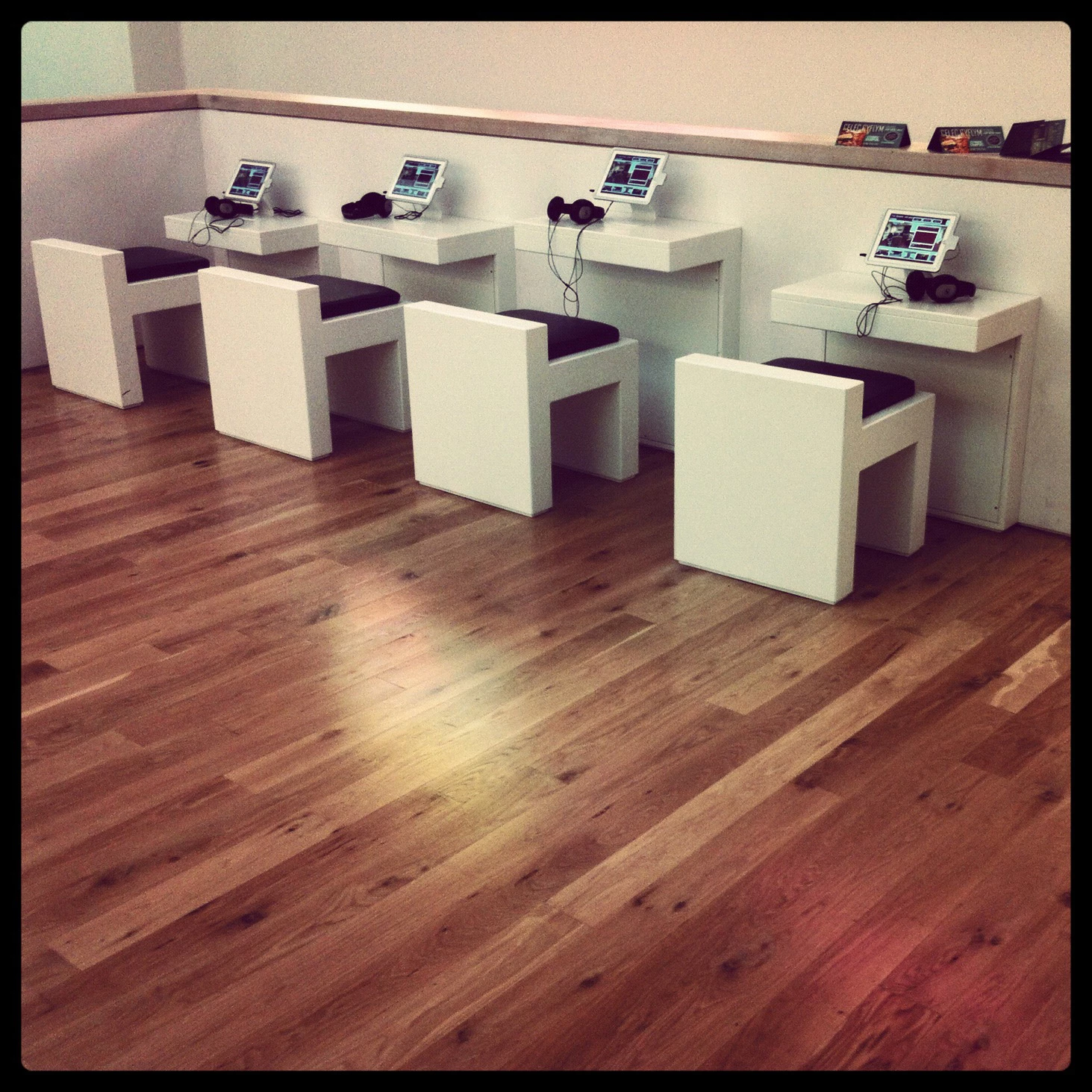
In July 2011 the refurbished Contemporary & Modern Art galleries were re-opened at the National Museum Cardiff, the following VADU would be included in the initial exhibition. The specification was mainly to showcase video shorts: recorded, interviewed and edited by a few of my colleagues (Art and New Media), the videos would have subtitles and also there would be a visitor comments page.

The iPad 2 was about to be launched when I started work on the VADU. Magic was in the air, queues were forming.

Note: it has been used for two exhibitions, so far:

  1. Contemporary & Modern Art (July 2011 – January 2012)
  2. The Queen: Art and Image (January 2012 – April 2012)


Project Ethos

Although there is an 'App Store', it seemed like overkill to write and release an application simply for four machines in an art gallery - I used 'Kiosk Pro' instead, an application which basically removed all the usual iPad functionality and locked it down to a fullscreen Safari browser.

In terms of creating the backend mechanisms for providing/collecting content, one shouldn't reinvent the wheel. Therefore, I used the trusty Museum‘s web CMS (Amgueddfa CMS) to control things - the Amgueddfa CMS controls the museum websites and intranet for all seven nation museums. Built in-house over several years, it has evolved with the requirements of the organisation. It's built with open source PHP, MySQL and Javascript. Succinct and effective, even if we say so.

In regards to the actual design aspect of the VADU interface: the only two constraints were museum brand guidelines and a particular colour had to be used to unify it with the surrounding new gallery signage.

Around May 2011, Braun's designer Dieter Rams design ideas entered my world (I can't repeat his mantra here, but only because it is copyrighted). Anyhow, I tried to create an interface that was simple, intuitive, consistent, and didn't distract the user from the actual content:

  • Only two colours
  • No drop-shadows or gradients
  • 10px borders
  • I did allow myself one curvy corner (bottom-right), one guilty pleasure
  • User navigation: horizontal gestures only
  • Page transitions: vertical only

Building Blocks

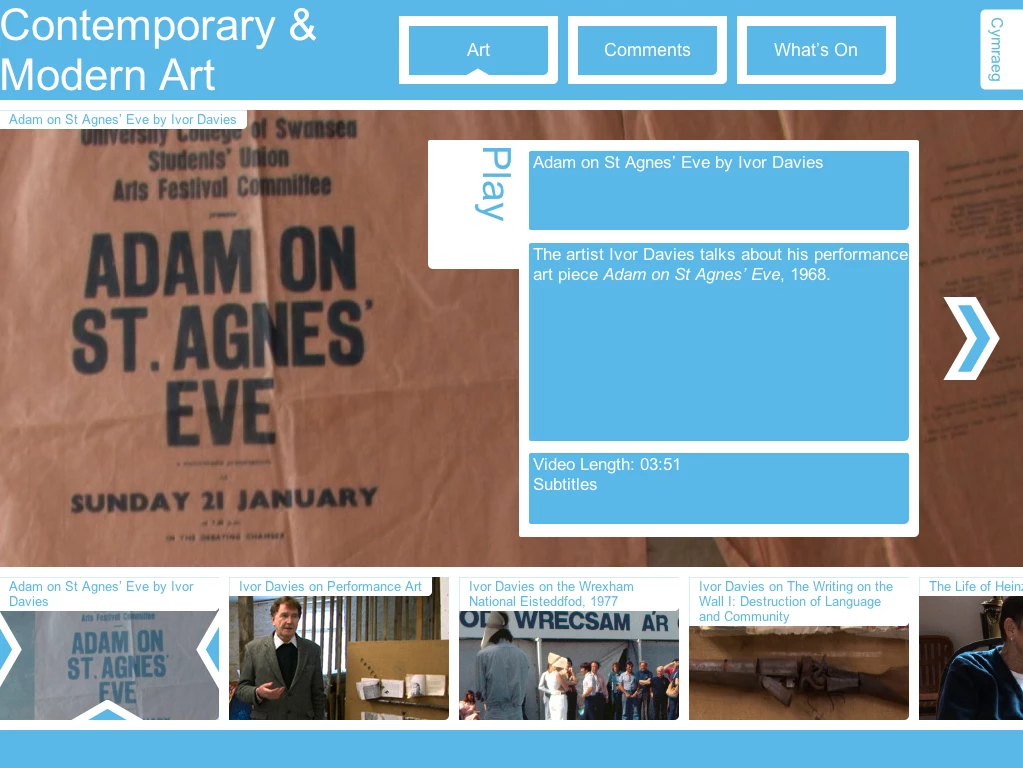
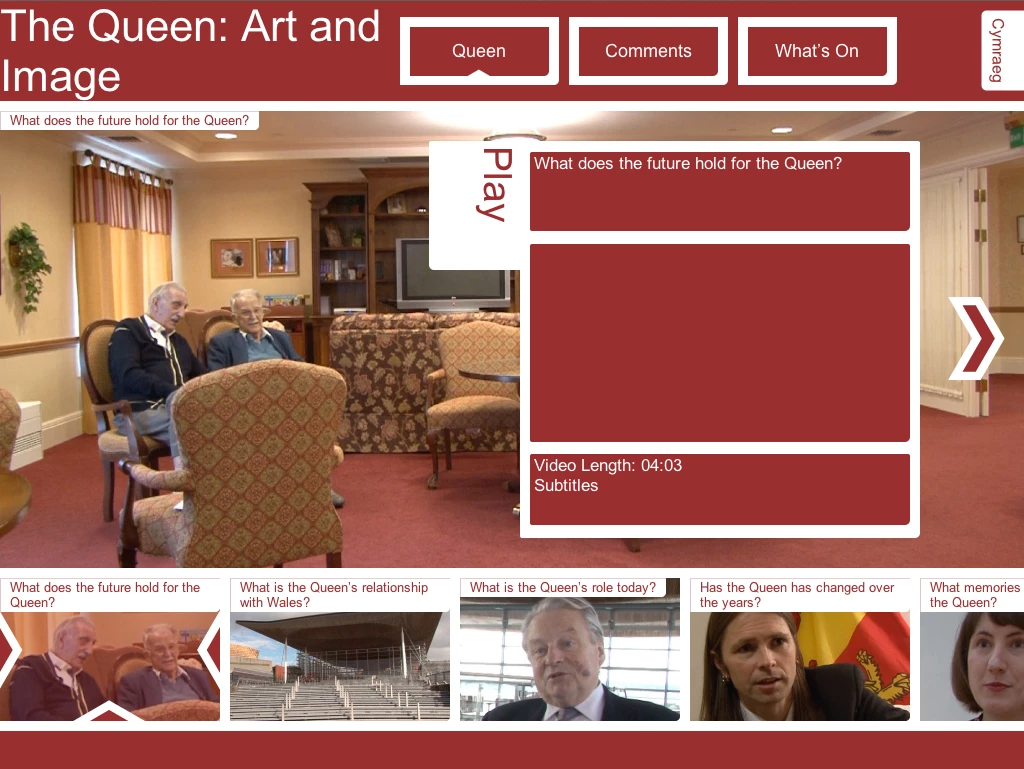
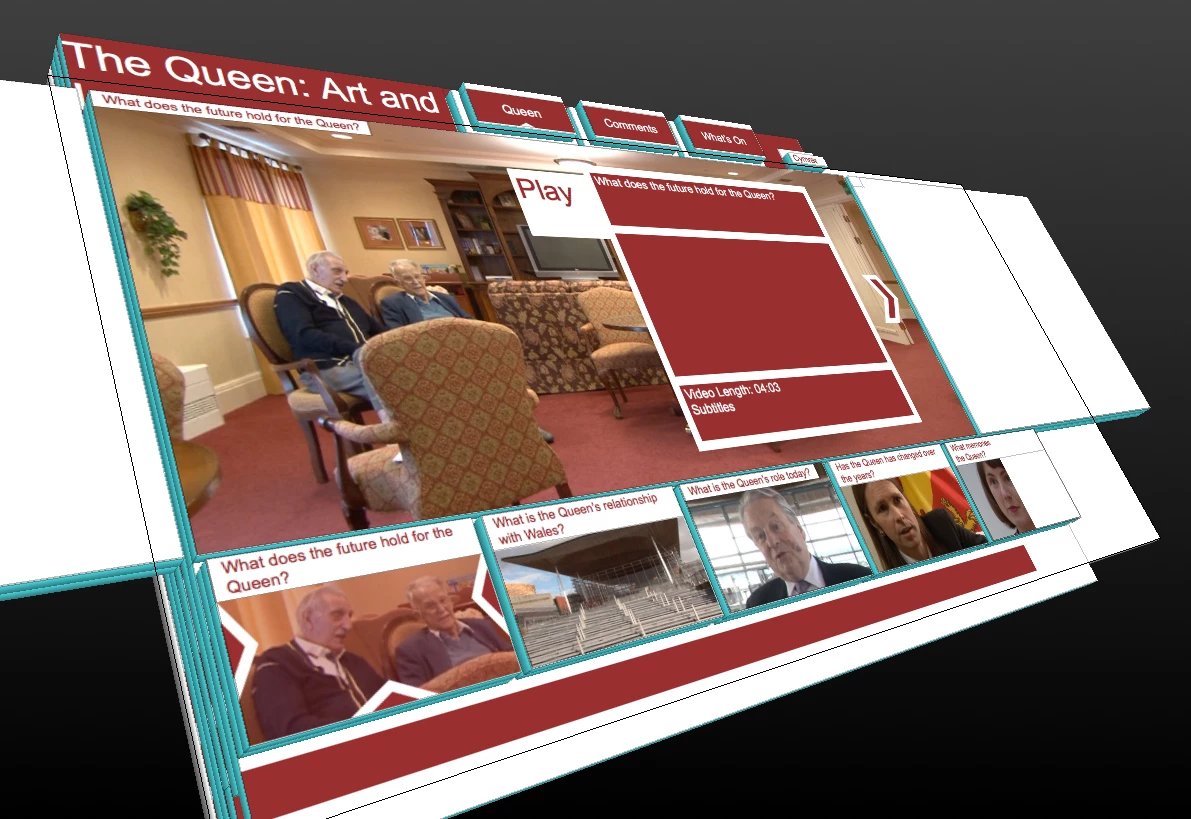
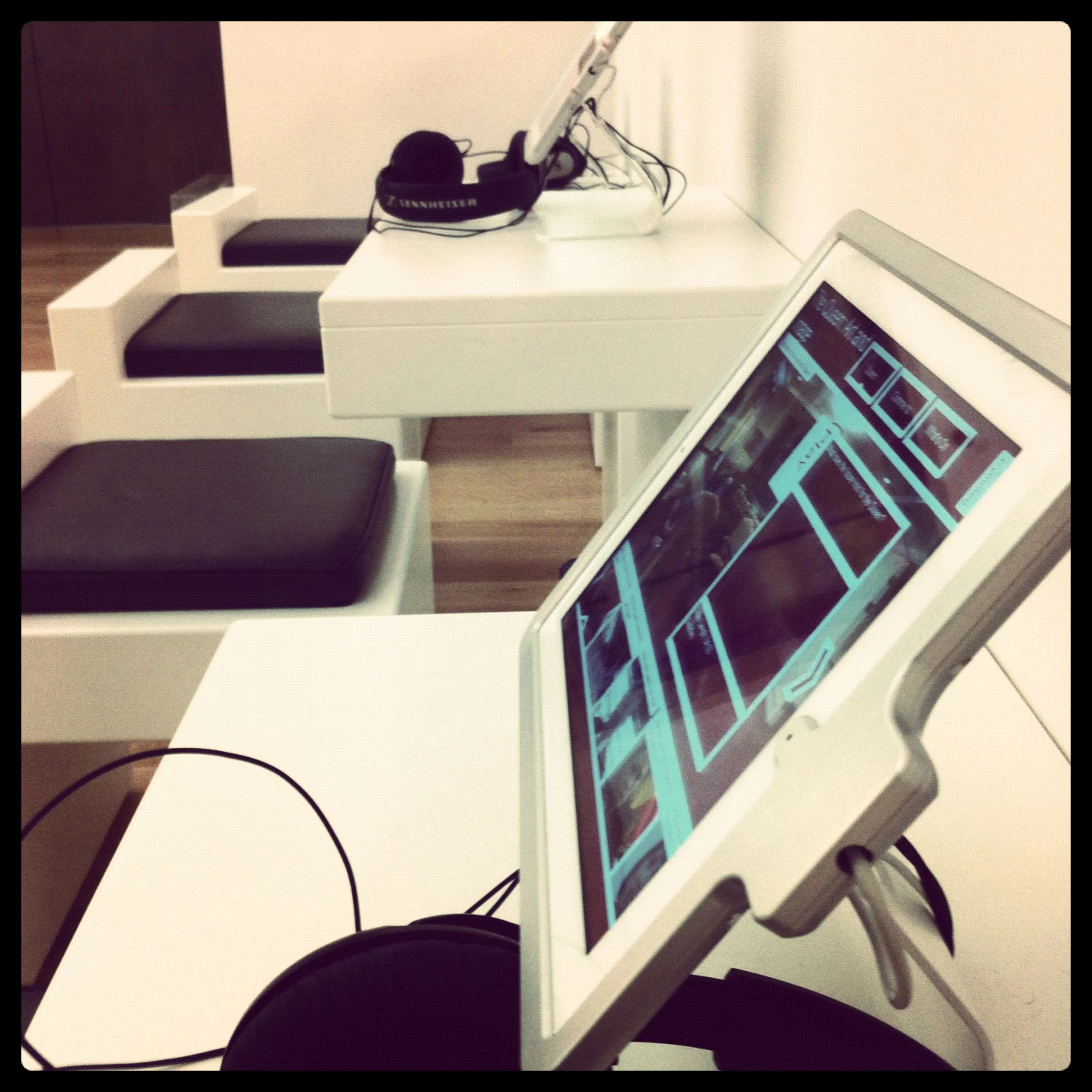
If you haven't already looked at the photograph 1 and 1b, I would take a look now; so we have a shared reference images in mind.

The top section displays the title of the exhibition, followed by page buttons (Art, Comments and What's On). All exciting stuff - the tip of an arrow indicates which page the user is on (hopefully in a subtle fashion).

The language button starts the most convoluted process on the VADU, in terms of animating a page change. I didn't want the change to be instant, instead I gave it a more graceful flow. The actual result of changing the language only swaps the domain name from English to Welsh or visa-versa (museumwales.ac.uk, amgueddfacymru.ac.uk), but the time it takes to do that is over four seconds. It should become clearer later, if you watch the video below.

I used the Javascript Mootools framework, it has served us well - lightweight and fast. I chained the transitions and effects to create the smooth transitional actions throughout the VADU. It was also necessary to chain things because I would describe the Safari browser on the iPad as OK, in regard to the power of Javascript, rather than excellent if used on a desktop (there is reduced access to the normal power you find in apps wrapped up in objective C; no WebGL access).

The middle section displays the video in focus at the time, large screen print from the video is shown in the background - title, summary and extraneous information such as video length are shown on the information panel. In large font the word: 'Play', indicating the user can start a video. Left and right arrows also allow the user to shuffle through the videos. The information panel can be moved from the right or left of the background image - something that resulted from the fact artists don't like their work flipped [in a digital sense] i.e. if the focus of the background is to the left, the information panel can be positioned to the right by indicating such in the CMS metadata entry.

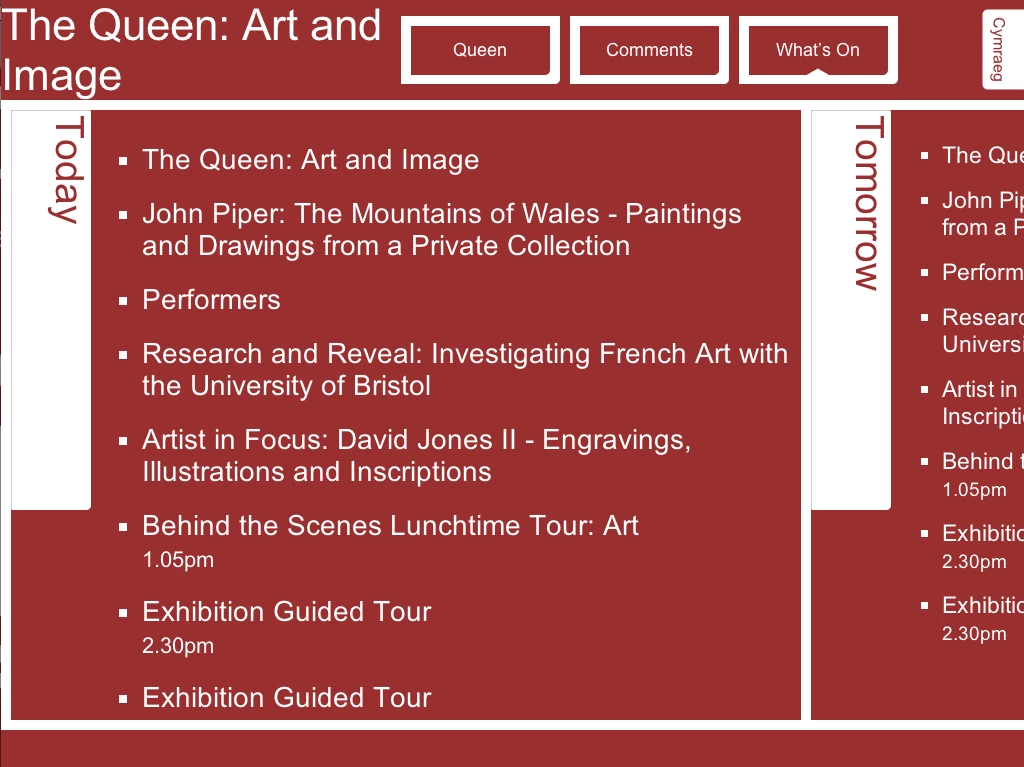
The bottom section can be dragged with a finger left and right, selecting any one of the sixteen videos. It was quite important to have draggable areas, because it is simply expected by iPad users (thus, making it intuitive). The same draggable feature is used for the what's on page (photograph 6).

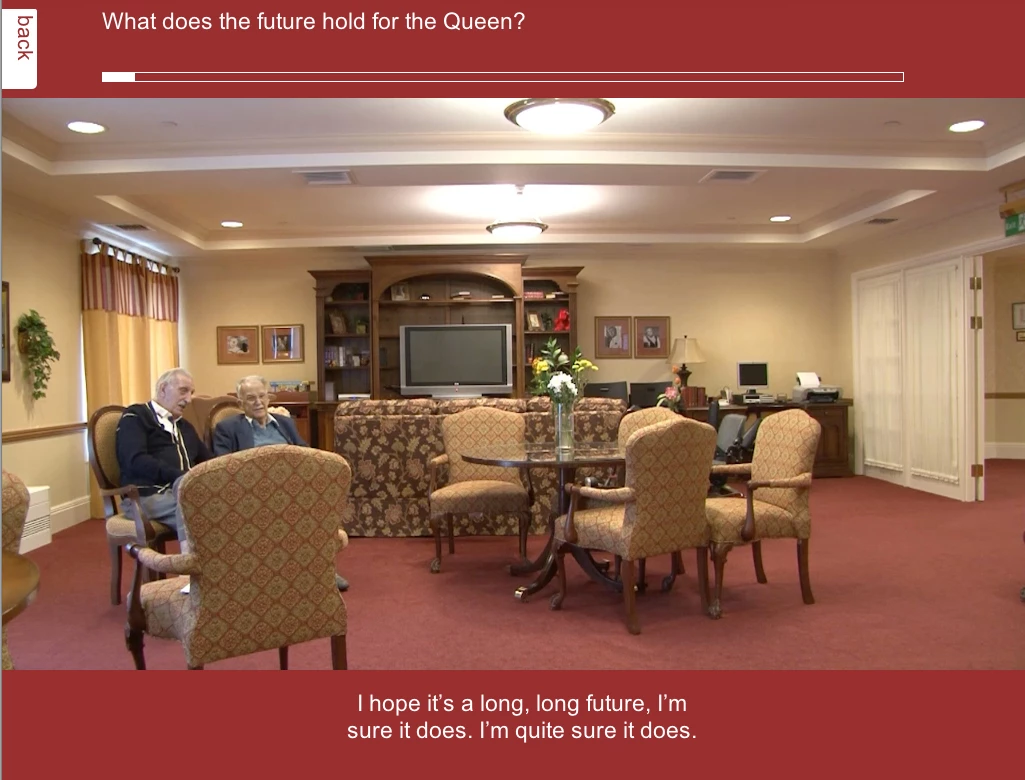
If the user selects a video, the screen removes all navigation features so they are only left with the title of the video, a video time indicator (so the user knows the video is only short), the video itself in the center of the screen, the subtitles at the base of the screen and a 'back' button. The user can pause and un-pause the video by tapping of the video in the center (see photograph 3). The video's themselves use the same colour as the VADU, so it all fits together neatly.

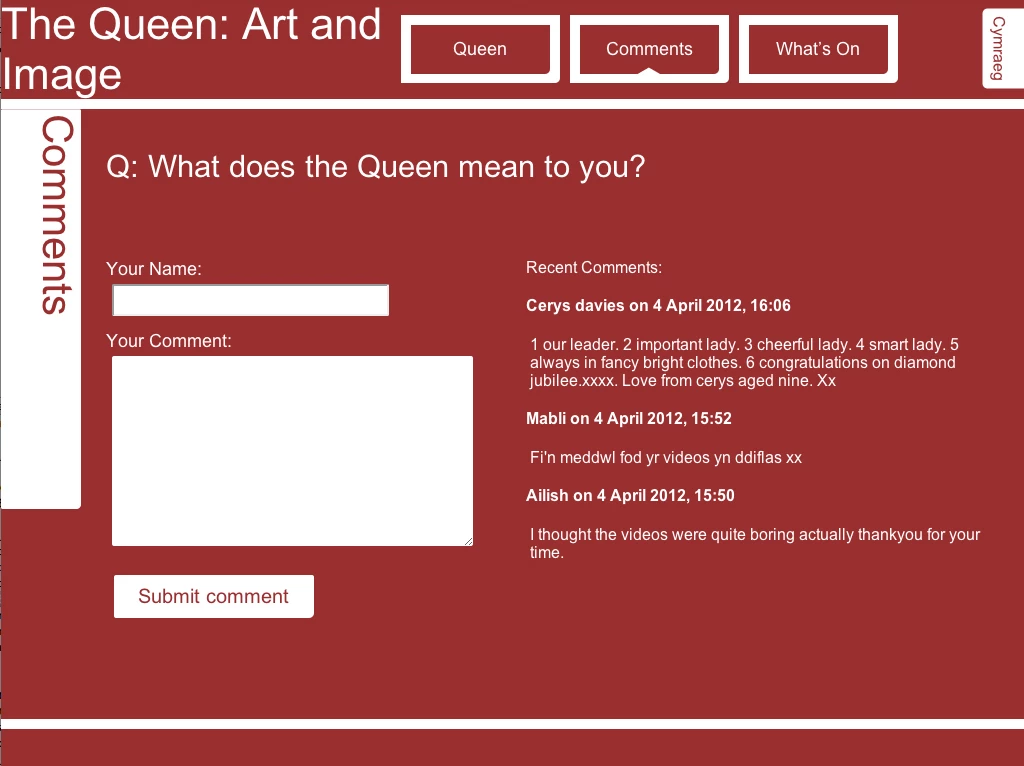
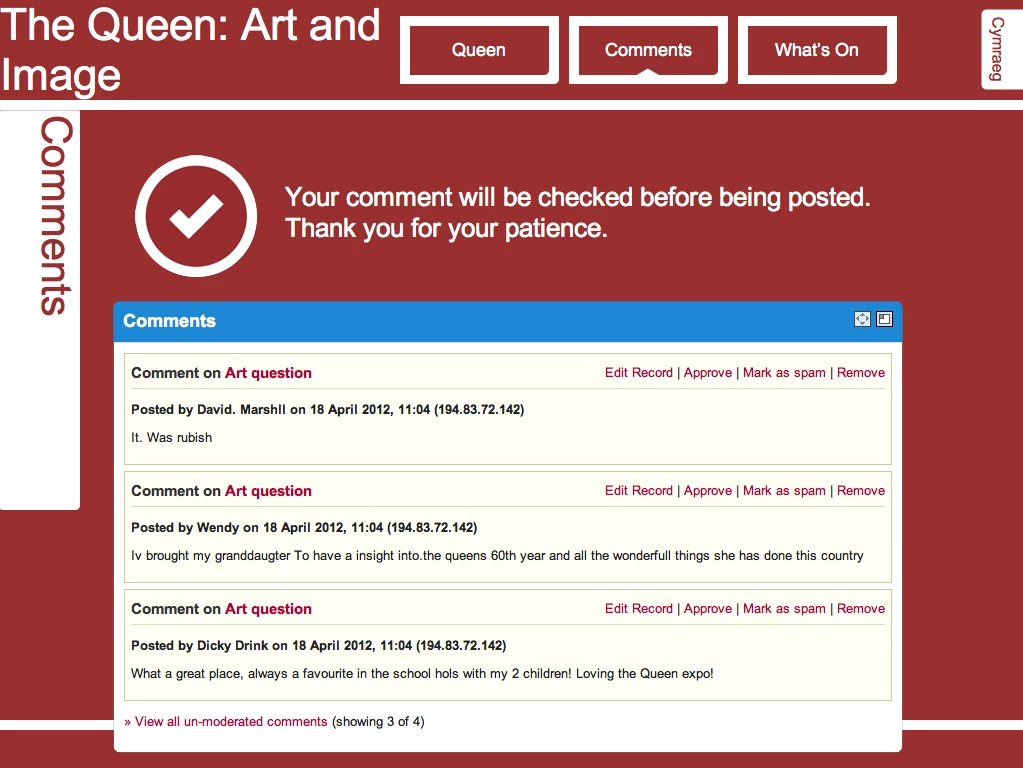
Finally the comments page is simple too: optional name input, text input and the last three comments are displayed on the right-hand side (hopefully encouraging the user to write something). The comments are fed into the usual website comments system, approved (or not) by a staff member (photograph 5) – there has been over 2000 comments left of the gallery VADU since July 2011, which is quite a lot considering no one was forcing these people to write something.

Subtitles

The subtitles are again displayed using javascript, they are not integrated into the video. I built a subtitles tool within the Amgueddfa CMS using Javascript and Flash, which creates a XML file that could be dropped into the caption of the video. The idea being that the majority of videos need to be available to two languages and if the videos were published on the main website at anytime, a transcript could be displayed too. Hopefully the task of transcribing the video in the first place is easier because of it. There you go, a little of the behind the scenes work (photograph 7).

Past Performance

The gallery VADUs have been very reliable; once every few months one of them may freeze, but considering they are always on (one weakness of iOS software is you can‘t boot-up into a single application), that's not too bad. I darken the screen after the galleries close – simply using a whole–screen black div.

We had a brief problem when changing the local network settings in January, so I added a check before the VADU changes language to see if there is a network available (an AJAX query: onSuccess or onFailure).

Future Development

If it continues to be used, I would like to develop a local version of the VADU, providing a fallback if the network goes down, or maybe a hybrid version (storing the videos on the VADU). This would mean a update of the iOS (from 4.3 to 5.1+), but I‘m sure there would be some associated browser performance improvements.

Other major changes shouldn't be required, as the video shorts are meant to be the star of the show.

Final Word

Obviously it helps to have a pleasant environment to place the VADUs (photograph 9).

Video Demo

I've included a short demo video for posterity:

Art Gallery VADU (demo video)

Roman Mosaics at Easter

So during this very busy Easter holiday our visitors have been taking inspiration from the Roman building materials we have in the Clore Discovery Centre to make their own Roman mosaics. The results have been oustanding with adults getting as absorbed as children. Here are some of the results but for more come and see the big screen in The Clore Discovery Centre