Y Fforymau Cyfranogi Penny Dacey, 25 Chwefror 2014 Y Fforwm Addysg AnffurfiolYn y cyd-destun hwn, mae Addysg Anffurfiol yn cyfeirio at addysg y tu hwnt i gwricwlwm yr ysgol. Mae’r grŵp yn cynnwys cynrychiolwyr o sefydliadau ar draws Cymru sy’n hwyluso addysg i oedolion a theuluoedd. Roedd y rhan fwyaf o’r aelodau eisoes yn gyfarwydd â’r project gan eu bod wedi cymryd rhan mewn gweithdai yn ystod y cam cynllunio. Penderfynwyd y bydd y grŵp yn helpu i ddatblygu rhaglen o weithgareddau sy’n apelio at bobl o bob math o gefndiroedd a lefelau gallu ac yn adolygu cynnwys yr orielau er mwyn sicrhau ein bod yn darparu dulliau dehongli priodol ar gyfer y cynulleidfaoedd hyn.O ganlyniad i’r Fforwm, cymerodd grŵp o oedolion sy’n ddysgwyr o Gymdeithas Addysg y Gweithwyr ran mewn gweithdai dehongli ym mis Gorffennaf. Roedd y gweithdai’n gyfle i aelodau’r grwp ddweud eu dweud am yr eitemau y bwriedir eu harddangos yn oriel Dyma yw Cymru. Roedd y gwrthrychau gafodd eu hastudio’n agos yn cynnwys cwilt teiliwr a gwrthrychau o’r Rhyfel Byd Cyntaf. Cafodd y sesiynau eu hwyluso gan guraduron sy’n gweithio’n uniongyrchol â’r gwrthrychau gan sicrhau y bydd yr adborth yn cael effaith uniongyrchol er eu gwaith
Bwrw glaw yn sobor iawn... Catalena Angele, 21 Chwefror 2014 On’d oedd mis Ionawr yn wlyb a gwyntog gyfeillion y gwanwyn? Dwi’n siŵr ei bod hi wedi bwrw bob dydd! Ond faint o law welson ni, o’i gymharu â’r cyfartaledd?Mae Gwyddonwyr Tywydd y Swyddfa Dywydd wedi creu’r map yma o’r DU i ddangos faint o law a ddisgynnodd ym mis Ionawr. Gallwch chi gael golwg fanylach drwy ddilyn y ddolen.Sut wnaethon nhw gyfrifo’r cyfartaledd glawiad? Mae Gwyddonwyr y Swyddfa Dywydd wedi bod yn cadw cofnodion tywydd am amser maith! Dyma nhw’n canfod cyfanswm y glawiad yn Ionawr am 30 mlynedd (rhwng 1981 a 2010) cyn rhannu â 30 i weld cyfartaledd blynyddol y glawiad.Allwch chi weld y ddau liw glas tywyll? Disgynnodd rhwng dwy a thair gwaith yn fwy o law na’r cyfartaledd yn yr ardaloedd yma yn ystod mis Ionawr? Allwch chi weld yr ardaloedd du yn ne Lloegr a dwyrain yr Alban? Roedd y glawiad yn yr ardaloedd yma dros dair gwaith yn fwy na’r cyfartaledd yn ystod mis Ionawr!Cyngor craff i ddefnyddio’r map: Mae 100% o’r cyfartaledd yn golygu ei bod hi wedi glawio yr un faint â’r cyfartaledd. Mae 200% o’r cyfartaledd yn golygu ei bod hi wedi glawio ddwywaith cymaint â’r cyfartaledd. Allwch chi ganfod eich cartref ar y map? Beth yw lliw y map yn eich ardal chi? faint o law ddisgynnodd yn lleol? Oedd mwy neu llai o law na’r cyfartaledd? Efallai y gall eich athro eich helpu i ateb y cwestiynau yma!Eich cwestiynau, fy atebion:Gladestry C.I.W. School: Our school was closed on Thursday because of a power cut so our head teacher recorded the results that day. Prof P: We done to your head teacher! I am very glad your head teacher is helping you with your investigation.St Mellons Church in Wales Primary School: Hello Professor Plant. It has been so windy this week that our thermometer has blown off the wall and broken. We have been using the car thermometer. L, J and L-b. Prof P: Hello L, J and L-b at St Mellons School! I am very sorry to hear that your thermometer is broken, I will email your teacher and arrange to send you a new one. Well done for your quick thinking in using the car thermometer.Bleasdale CE Primary School: It is very cold and wet. Prof P: I agree Bleasdale School!Ysgol Gynradd Dolgellau: Yn anffodus mae ein thermometr wedi torri ar ol cael ei chwythu gan y gwynt mawr yn ystod yr wythnos. Athro’r Ardd: Trueni mawr i glywed hyn Ysgol Gynradd Dolgellau. Bydda i’n e-bostio eich athro i drefnu anfon thermomedr newydd atoch chi.Manor Road Primary School (Lancashire): on Wednesday there was a red weather warning but luckily the plants stayed in place. Prof P: I’m very happy to hear that your plants are okay!Stanford in the Vale Primary School: It is very rainy here but we are not flooded. Prof P: I am very glad to hear that Stanford! What colour is the rainfall map is your area?Burscough Bridge Methodist School: The heavy gales have caused the rainfall measurements to be unreadable as the measuring vessel was continually disrupted and blown over. Prof P: Gosh it must have been very stormy. Thanks for letting me know, keep up the good work!Diolch yn fawrAthro'r Ardd
Exploring Insect Diversity in Thailand Katie Mortimer-Jones, 17 Chwefror 2014 Work continues in a joint project with colleagues at the Entomology Section of the Queen Sirikit Botanic Garden (QSBGE) in Thailand exploring the diversity of tropical Diptera (flies). The objectives are to learn more about why two mountains in northern Thailand are such hotspots of diversity (the number and variety of species) and why so many endemic species are found there (an endemic species is one entirely confined to a particular locality). We should also learn much about the ecology of different communities of insects living in different forest types occurring at different altitudes. The project was started last January with Malaise traps (a tent-like structure into which insects fly and can be trapped) being set up along an altitude transect on Thailand’s highest mountain Doi Inthanon, and in the summit forests of slightly lower Doi Phahompok. Wichai Srisuka and his staff from QSBGE will empty the contents of the traps every two weeks for a full year and their team of expert technicians will conduct initial sorting and identifications at their laboratories and collection centre not far from the city of Chiang Mai. Some of the initial collections have already been made and many potentially very interesting specimens have been collected. The first consignment of material will be arriving in Cardiff shortly where I will begin the detailed taxonomic work; identifying species that have already been described, and, the more exciting part of recognizing and describing the many completely new species that will undoubtedly be found. I hope to feature some of the new species found in this blog later this year as the work progresses.Introduction to the projectDr Adrian Plant
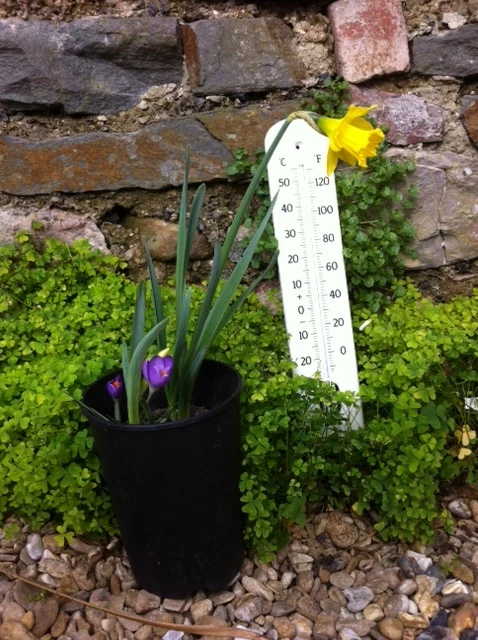
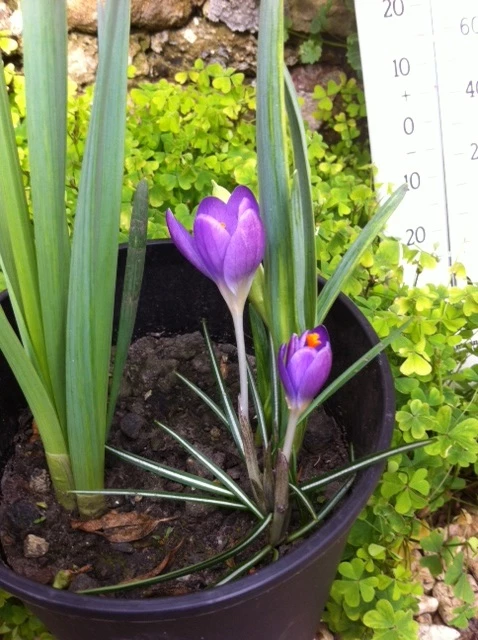
Blodau cyntaf Cymru a Lloegr! Catalena Angele, 14 Chwefror 2014 Newyddion gwych gyfeillion y gwanwyn, mae’r cofnodion blodau cyntaf wedi cyrraedd!Ysgol Gynradd North Road, Carnforth yn Swydd Gaerhirfryn, oedd yr ysgol gyntaf i anfon eu cofnodion ata i. Agorodd eu crocws cyntaf ar 4 Chwefror.Ysgol Gynradd Wirfoddol Reoledig Raglan yn sir Fynwy, oedd yr ysgol gyntaf yng Nghymru i anfon eu cofnodion blodau. Agorodd eu crocws cyntaf ar 7 Chwefror.Da iawn i’r ddwy ysgol am anfon eu cofnodion ata i!Mae Ysgol Gynradd yr Archesgob Hutton yn Lloegr hefyd wedi sylwi bod y crocysau a blanon nhw yn y ddaear yn dechrau tyfu. Bydd planhigion yn y ddaear yn aml yn blodeuo’n gynt na phlanhigion mewn potiau. Oes unrhyw un arall wedi sylwi ar hyn?Mae’r cofnodion blodau wedi cyrraedd yn llawer cynt na’r llynedd. 1 Mawrth oedd dyddiad blodeuo cynharaf y crocysau y llynedd. Beth yw’r rheswm am hyn?Wrth edrych ar ganlyniadau Project Bylbiau’r Gwanwyn dros y blynyddoedd, gallwn ni weld bod y dyddiadau blodeuo yn gynt gan fo glawiad yn uwch, y tymheredd yn uwch a mwy o oriau o heulwen. Meddyliwch pa dywydd ydych chi wedi ei brofi yn ddiweddar? Fydd y tywydd eleni yn helpu eich blodau i dyfu ys gwn i?Eich cwestiynau, fy atebion:Ysgol Terrig: Our bulbs are now growing above the soil. Prof P: Fantastic new Ysgol Terrig, hopefully it won’t be long until you start to see flowers.Glyncollen Primary School: we are very exited because are bulbs are going to open soon. next week we are going to measure them. Prof P: Great investigating Glyncollen, have fun with your measuring.Manor Road Primary School (Lancashire): It rained a lot and it was very cold and windy. It has not been minus yet. Prof P: I haven’t recorded a minus temperature in Cardiff either.Stanford in the Vale Primary School: We have had alot of rain recently but the bulbs continue to grow bigger and bigger. Prof P: It certainly has been very very rainy, I hope you haven’t had any flooding.Greyfriars RC Primary School: Me and D. are watering the plants really well. We enjoyed it alot. D: I am really enjoying the bulbs. My one is called xdox and pop. It was supposed to be xbox and pop. Thank you enjoyed this week. Prof P: What funny names for your plants! Very imaginative.Freuchie Primary School: The children were really excited on Monday 27th January when they realised that 40mm of water had been collected over the weekend! Prof P: Wow - that really is a lot of rain!Woodplumpton St. Anne's Primary School: We are very excited because the first shoots are beginning to appear. It has been very wet but so far the temperature has not dropped below zero. We wonder if this is unusual. Prof P: Great question Woodplumpton! I have had a look back over our weather data for previous years and it looks like this is not that unusual. The average daytime temperature for the month has only dropped below zero once in the 8 years we have been running the Spring Bulbs investigation. This was in December 2011 when there was heavy snow. I do think it has been less cold this January than in previous years. I look forward to receiving the weather data from all the schools so I can compare all the data in my Spring Bulbs Report!Newport Primary School: Horrible wet weather most of the week. Prof P: The trouble with the rain is that it gets in the way of playtime doesn’t it?Manor Road Primary School (Lancashire): The weather has been cold, wet and windy this week. We have spotted our first shoots peeping through in our pots though. Prof P: It seems like your bulbs don’t mind the wet weather too much.Chatelherault Primary School: Bad news some people have been pulling out our bulbs but some are growing. And we have had a lot of rain and sun. Prof P: Oh no! I’m sorry to hear that someone has disturbed your bulbs. I hope that the ones that are left will be okay. Sun and rain are the perfect combination to make them grow! Diolch yn fawr Athro'r Ardd
Project Partners Christian Baars, 12 Chwefror 2014 Now that the collections reviews have started in earnest (6 collections down, 14 to go) and things are settling down a bit (ahem...), it is about time to introduce our project partners. Linking Natural Science Collections in Wales is a collaborative project involving many people and organisations. The idea of creating a network of collections (the very philosophy of the Distributed National Collection) would not be possible without partnerships. If we think of the project as a growing plant a number of analogies spring to mind.Seeds The Welsh Museums Federation is instrumental for sowing the seeds of the Linking Collections project; the Federation is the strategic body for sector professionals in Wales and promotes good practice while providing a forum for discussion. Like a spider in her web, the Federation has the links it takes to pull the strings.WaterThe seeds are watered by the Esmée Fairbairn Collections Fund which provided a grant of £100,000 towards the project. These grants fund collections work outside the scope of an organisation’s core resources; in this case for a project manager to pull together collections reviews, data digitisation and online publishing, education resources, a touring exhibition, community engagement and training for museums.Nutrients Major nutrients for healthy growth of the little plant, lets say Nitrogen and Phosphorus, are provided by two major partners, Amgueddfa Cymru – National Museum Wales and CYMAL. Amgueddfa Cymru looks after the national collections. Seven museums in different parts of Wales with different themes provide one of the cultural backbones of the nation. Specialist curators from National Museum Cardiff are crucial for the smooth and reliable completion of the collections reviews in the partner museums.CYMAL are the Welsh Assembly Government's heritage and culture arm; they provide advice and support to the sector in Wales, develop professional standards, manage grant schemes and advise the Minister for Culture and Sport on policy matters. Thanks to support from CYMAL, a number of training courses are going to be run for partner museum curators and volunteers.Soil And here they come – they have already been mentioned a couple of times: the partner museums. There are 20 of them, and in our little analogy they are the soil in which the plant is growing. I am going to list them all because they deserve it:Abergavenny MuseumBrecknock Museum and Art GalleryCaldicot CastleCarmarthenshire MuseumCeredigion Museum Chepstow MuseumCyfarthfa Castle Museum and Art GalleryHolyhead Maritime MuseumLlandudno MuseumLlanidloes MuseumMold Library and MuseumNewport Museum and Art GalleryOriel Ynys MonPowysland Museum Radnorshire MuseumRhayader Museum and Art GalleryScolton ManorSwansea MuseumTenby Museum and Art GalleryWrexham County Borough Museum and ArchivesCarbon DioxideAnd we are not finished: communities are the carbon dioxide each plant needs for photosynthesis, and communities take an increasing interest and get more involved in their local museums. This ranges from amateur collectors organising community-curated displays, to Welsh speakers sharing their knowledge of vernacular terminology, to volunteers helping with identification and curation of museum specimens.LightThe light for the healthy growth of the plant comes, naturally, from school pupils (particularly from local primary schools), who are increasing better able to utilise their museum, through improved engagement programmes, updated exhibitions and a system of ready-to-use loans boxes with activities and guidance for teachers.GardenersLast but not least, each plant needs someone to look after it, and the gardeners in this case are the members of the steering group. Usually, they prefer to remain modestly in the shadows, but they, too, deserve a mention for their work of seeding and weeding:Dr Richard Bevins, Keeper of Natural Sciences, Amgueddfa Cymru - National Museum WalesDiane Gwilt, Keeper of Collections, Amgueddfa Cymru - National Museum WalesJane Henderson, Senior Lecturer, School of History, Archaeology and Religion, Cardiff UniversityDr Hefin Jones, School of Biosciences, Cardiff UniversityRachael Rogers, President, Welsh Museums FederationMike Wilson, Head of Entomology, Amgueddfa Cymru - National Museum WalesA healthy plant is growing Now I am going to sit back and watch the plant grow. Oh no, there is the next collections review to organise, the data to be edited, the annual report to finish, another meeting coming up… However, I will very much enjoy this new growth in the museum landscape. I hope you will enjoy it too.For any comments, suggestions, or to contribute to this exciting project please get in touch: Facebook - Linking Collections Wales, Twitter - @LinkinCollWales.