Dim ond pythefnos i fynd Cyfeillion Gwanwyn!

Penny Dacey, 13 Mawrth 2015

Helo Gyfeillion y Gwanwyn,

Wel, rydych chi wedi bod yn brysur! Rwyf wedi derbyn 75 o gofnodion blodeuo dros yr wythnos ddiwethaf, sy'n creu cyfanswm o 175 planhigyn wedi blodeuo!

I'r rhai ohonoch sy’n dal i aros am eich blodau dyma rai awgrymiadau:

  1. Bydd eich planhigyn wedi blodeuo pan fyddwch yn gallu gweld yr holl betalau, heb y casyn allanol sy'n eu diogelu tra eu bod yn datblygu (gweler y llun ar y dde).
  2. Cofiwch fesur mewn mm!
  3. Mesurwch o bwynt uchaf y pot i bwynt uchaf y blodyn.
  4. Cofiwch gofnodi'r dyddiad wrth rannu gwybodaeth flodeuo ar wefan Amgueddfa Cymru!
  5. Gadewch sylwadau wrth wneud cofnodion, dyma eich cyfle i ddweud wrthyf beth ydych chi wedi’i fwynhau neu beidio am y project!
  6. Rhannwch eich lluniau! Rwyf wedi rhannu lluniau ysgolion ar Twitter. Os nad yw eich ysgol yn defnyddio Twitter gall eich athro neu athrawes e-bostio lluniau i mi.

Does dim llawer i fynd nawr! Dim ond dwy wythnos o gasglu a chofnodi data tywydd sydd ar ôl!

Cofiwch, y 27ain o Fawrth yw'r diwrnod olaf i gofnodi eich data tywydd. Mae'n rhaid i chi wneud hyn er mwyn ennill eich tystysgrifau Gwyddonydd Gwych a chael cyfle i ennill taith natur yn yr amgueddfa!

Daliwch ati Gyfeillion y Gwanwyn,

Athro’r Ardd

Eich cwestiynau:

Your comments:

The Blessed Sacrament Catholic Primary School: We were very excited this week as there were lots of buds on our crocuses. The weather has been getting warmer and today the first crocus flowers opened in the sunshine and we had to measure them carefully, H and J. Prof P: Well done H and J! I hope you have enjoyed studying the development of your plants. There are other experiments you can do that demonstrate how your flowers respond to light and heat. I will send these to your teacher but you can also find them on the website under ‘Professor Plant’s investigation ideas’. Keep up the good work!

Rivington Foundation Primary School: On Monday we had snow! And on Thursday we were on a school trip. Prof P: Well Rivington Foundation Primary School, you’ve had quite an exciting week! And you still managed to document your weather records, thank you very much!

Stanford in the Vale Primary School: Still no sign of bulbs in pots flowering yet, we think the ones in the ground are doing better, as the roots have more space to grow, unlike the pots which have restricted space! It’s lovely and sunny here today, with a good sunny forecast for the weekend. When we return to school on Monday we should hopefully start to see our bulbs flowering. Prof P: Hi Stanford in the Vale Primary, I’m pleased to hear that you are observing other plants and discussing the effects of environment on growth and development. I hope the sun over the weekend spurs on your plants, it shouldn’t be long now so watch them closely!

Our Lady of Peace Primary School: The bulb's still have not came out yet but one of them is almost out. Prof P: It shouldn’t be long now Our Lady of the Peace Primary! Watch the flower buds carefully to see how they open. The spathe will begin to split lengthways as the bud grows! If your teacher has a camera you might be able to take pictures that show the different stages of the bud flowering!

Thorn Primary School: We are very sorry but we were unable to submit plants data this week as there was building work taking place at school and we could not safely get to the thermometer and rain collector. We will be fine to collect our data this week. Prof P: Thank you for letting me know Thorn Primary School, and not to worry! I look forward to seeing your data next week.

Our Lady of Peace Primary School: My name is T and my flower was first to open. It was outside when it opened but when we brought it inside it opened even more. We were amazed. Even our teacher was amazed. Prof P: Hi T. I’m glad that you have been studying your plants so closely, they are fascinating things! Did you discuss why the flower reacted to being moved inside? I suspect your classroom was a lot warmer than the playground!!

Swiss Valley School: Hello how do we record the mystery bulbs please? Prof P: Hi Swiss Valley School. You can record the mystery bulbs flowering dates for your own records in the class room, but there is no need to record them on the NMW website. Schools that are taking part in the Edina Trust extension projects were given an extra 20 daffodil bulbs to plant in the ground, and those schools are asked to document the flowering dates for these on the Edina Trust website. This is so that they can compare the flowering dates of those in the ground to those in pots and think of reasons why these might be different. Have you noticed differences in the development of your mystery bulbs to your bulbs in pots? Can you think of reasons for this?

Ysgol Iau Hen Golwyn: We enjoyed measuring them. Prof P: I’m glad to hear that you are enjoying the project Ysgol Iau Hen Golwyn! Keep up the good work.

Stanford in the Vale Primary School: All our crocus have flowered and they are looking so pretty. What a lovely week of warmer weather, and finally the rain came today, we are so in need of more rain.....we looked at the weather data as a group and noticed Oxfordshire have had little rain this year! Prof P: Hi Stanford in the Vale Primary. What a lovely post, and it’s nice to see a positive spin on rain! I’m glad that you are using the resources on the map to study readings from other schools! You can also use the Met Office WOW website to look at readings in other areas.

Hacio'r Iaith - Cyflwyno Kate

Sara Huws, 10 Mawrth 2015

Ro'n i'n falch iawn (a braidd yn nerfus) i fynychu Hacio'r Iaith am y tro cyntaf dros y penwythnos. Mae'r diwrnod ar fformat barcamp - sy'n gofyn bod pawb yn dod â rhywbeth i'w drafod, ei gyfrannu neu'i gyflwyno. Canlyniad hyn oedd diwrnod llawn ymgysylltu, dysgu a hwyl - mi oedd bron bob sgwrs yn sesiwn yn ei hun, a mi ddysgais i gymaint am blatfformau a phrosiectau digidol Cymraeg. Dwi ar fy ffordd i sesiwn Digidol ar Daith, felly gobeithio y gallai bostio crynodeb fwy trylwyr o beth ddysges i yn fuan.

Er fy mod i wedi hen arfer siarad yn gyhoeddus, dyma fy sgwrs gyntaf ar ran yr adran ddigidol - ac am fy mod yn cyflwyno am @DyddiadurKate, roeddwn i'n awyddus i wneud argraff dda ar ran y tîm sy'n gweithio mor galed ar y prosiect. Cewch edrych dros fy sleidiau, a chrynodeb o'r sgwrs ar wefan Hacio'r Iaith. Cewch chwilio trwy #fwrlwm y dydd ar twitter hefyd.

Diolch i'r trefnwyr a'r cyfrannwyr am y croeso, ac am yr ysbrydoliaeth!

Wyna – gwir pob gair

Bernice Parker, 10 Mawrth 2015

·         Ar hyn o bryd mae gennym tua 100 o ddefaid magu felly rydyn ni’n disgwyl dros 150 o wyn.

·         Mae’n defaid ni’n ddwyflwydd oed yn wyna am y tro cyntaf.

·         Mae dafad yn feichiog am 5 mis:

  • maen nhw’n dod i’w tymor ym mis Medi
  • rydyn ni’n rhoi’r hyrddod mewn gyda’r defaid ar 1 Hydref
  • bydd cyfnod wyna yn cychwyn ddechrau mis Mawrth
  • ni sy’n dewis y drefn yma er mwyn cael wyn i’w gweld yn y caeau dros y Pasg.

·         Mae’r defaid beichiog yn dod mewn o’r caeau’n syth ar ôl y Nadolig er mwyn cael lloches, bwyd a gofal ychwanegol. Mae hyn yn bwysig ar gyfer datblygiad yr wyn.

·         Maen nhw’n cael eu sganio yn y flwyddyn newydd er mwyn eu gwahanu i ddau grwp:

  • y rhai sy’n disgwyl oen sengl
  • a’r lleill sy’n disgwyl gefeilliaid neu dripledi.

·         Pen a choesau blaen yn arwain ydy’r ffordd arferol i oen gael ei eni. Os felly, mae’r defaid fel arfer yn gallu ymdopi heb unrhyw gymorth. Ond weithiau bydd angen ychydig o help os yw’r oen yn fawr, neu’n dod allan am yn ôl.

·         Wedi bwrw, bydd y ddafad a’i hwyn yn mynd mewn i gorlan ar wahân:

  •  er mwyn sefydlu perthynas famol
  •  i atal defaid heb eu bwrw rhag ‘mabwysiadu/dwyn’ oen dafad arall.

·         Maen nhw’n aros ar wahân am 1–2 diwrnod.

·         Mae defaid a’u hwyn sy’n iach yn cael mynd allan i’r caeau ar ôl 3–5 diwrnod – os yw’r tywydd yn caniatáu.

·         Mae’n beth arferol i weld rhywfaint o waed a slwtsh o gwmpas pen ôl dafad sydd wedi bwrw yn ddiweddar.

·         Mae’n beth arferol i wyn newydd gysgu llawer – rhyw 12–16 awr y dydd.

·         Bydd y rhan fwyaf o’r wyn benywaidd yn aros gyda ni neu’n cael eu gwerthu fel defaid pedigri. Bydd yr wyn gwrywaidd yn mynd i’r lladd-dy am eu cig, gyda chwpl o’r goreuon yn cael eu gwerthu fel hyrddod.

·         Mae’r cig oen ar eich plât yn 4–12 mis oed.


Dyddiadur Kate: Anturiaethau’r peiriant dyrnu

Elen Phillips, 9 Mawrth 2015

A ninnau bron ar derfyn 3 mis cyntaf @DyddiadurKate, mae un ‘cymeriad’ wedi chwarae rhan blaenllaw iawn yng nghofnodion yr wythnosau diwethaf sy’n haeddu bach o sylw ar y blog – y peiriant dyrnu. Rhwng Ionawr a Mawrth 1915, bu’r peiriant hwn ar grwydr i sawl ffermdy gerllaw cartref Kate a’i theulu. Ynghyd â mynychu’r capel, corddi a chrasu, hynt a helynt y peiriant dyrnu yw un o brif weithgarwch y dyddiadur hyd yma. Ond diolch amdano. Arferion amaethyddol fel hyn sy’n gwreiddio’r dyddiadur o fewn cymuned a chyfnod.

18 Ionawr – Yr injan ddyrnu yn Llwyniolyn

23 Ionawr – Ellis yn Tynybryn gyda’r peiriant dyrnu

30 Ionawr – Y peiriant dyrnu yn Penycefn

2 Mawrth – Yr injan ddyrnu yn y Derwgoed

4 Mawrth – Ellis yn mynd i Fedwarian at y peiriant dyrnu

Yma yn Sain Ffagan, mae sawl un mwy cymwys na fi i drafod peiriannau dyrnu. Un o fy mhrif ddiddordebau i fel curadur yw hanes prosesau casglu – y dulliau hynny a ddefnyddwyd gan Iorwerth Peate, Ffransis Payne, Minwel Tibbott ac eraill i roi hanes Cymru ar gof a chadw. Mewn blog blaenorol, soniais am waith arloesol yr Amgueddfa ym maes cofnodi hanes llafar – bu Kate Rowlands ei hun yn destun sawl cyfweliad. Dull poblogaidd arall a fabwysiadwyd gan yr Amgueddfa i gasglu data oedd holiaduron a llyfrau ateb. Roedd y rhain yn cael eu gyrru at unigolion o fewn plwyfi yng Nghymru yn gofyn am wybodaeth benodol ynglyn ag arferion eu milltir sgwâr. Mae casgliad helaeth ohonynt yma yn trafod amrywiol bynciau – meddygyniaethau gwerin, arferion tymhorol ac ati. I’r un perwyl, mae gennym hefyd bentwr o lythyrau ac ysgrifau.

Tra’n chwilota am ddeunydd yn yr archif o ardal y Sarnau, Cefnddwysarn a bro @DyddiadurKate, fe ddes i o hyd i ysgrif gan Mary Winifred Jones o’r Hendre, Cwm Main. Bydd mwy ar y blog cyn hir am y teulu hwn – mae tad a brodyr Mary yn cael eu crybwyll sawl gwaith yn y dyddiadur. Ysgrif yw hon sy’n disgrifio ffotograff o ddiwrnod dyrnu ar fferm Pentre Tai’n y Cwm, Cefnddwysarn. Gallwch weld y llun a’r ysgrif fan hyn. Tybed os mai hwn yw’r peiriant dyrnu y mae Kate yn sôn amdano?

Ar fuarth fferm Seimon Davies Pentre Tai yn Cwm Cefnddwysarn y tynwyd y darlun hwn. Perchenog y peiriant oedd Morgan Hughes Bryniau Cynlas ar ol hyny. Bu y peiriant yn gyfrwyn i roi gwaith i amryw amaethwyr bychain yn ystod y gaeaf pan oedd ychydig yn dod i fewn am fod ganddo ychwaneg nag un peiriant yr oedd yn rhaid cael dau ddyn i ganlyn pob un sef y gyrwr ar porthwr…

Yr hyn sy’n dod yn amlwg wrth ddarllen atgofion Mary Jones, ac yn wir dyddiadur Kate Rowlands, yw pwysigrwydd cydweithio o fewn cymuned amaethyddol – cymdogion a ffrindiau, hen ac ifanc, yn cynorthwyo’i gilydd.


Seaweeds in Northumberland

Katherine Slade, 5 Mawrth 2015

On 19th February, I joined science curator Kate Mortimer-Jones to study marine life on the shores around Berwick-upon-Tweed in Northumberland, not far from the border with Scotland. While Kate hunted for magalonid marine bristleworms, I looked at seaweeds. Much of England’s east coast is not particularly suitable for seaweeds; however, the rocky shores around Northumberland form plenty of ideal habitats.

It was early in the year, so I wasn’t expecting to see the seaweeds that die down for the winter (similar to annual and perennial flowering plants). I was also expecting a lower diversity here when compared with Welsh shores due to the colder climate. Species with south-western distributions that prefer a relatively warmer climate, such as Brown Tuning Fork Weed (Bifurcaria bifurcata), relatively common in Wales, do not grow as far north and east as Northumberland. With climate change, however, there is always the possibility that these southern species may expand their range further north. This is more likely for non-native species that are in the process of establishing in the UK, so I was on the look-out.

There are some seaweeds that only grow in the north of the UK, such as the Northern Tooth Weed (Odonthalia dentata) which is absent from Wales. I wanted to become familiar with these in the field rather than just seeing them as pressed specimens in our collections. It’s always exciting to find a species for the first time in the wild too.

Despite the time of year and the north-eastern location, the very sheltered shore was an excellent one for seaweeds and I documented a wide range of species. While it was important to collect specimens as a permanent back-up for records and for future research, I had to remind myself not to collect too many as they take a long time to process and I didn’t want to be up until the ‘wee hours’.

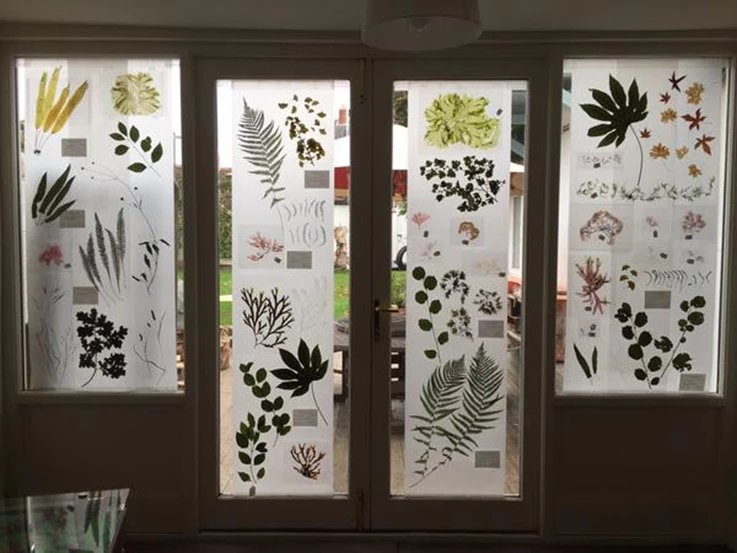
Preservation of the seaweeds involves several techniques depending on future use. To preserve the seaweed’s DNA for molecular analysis, the seaweed needs to be dried as quickly as possible in a bag with silica gel. Combining DNA characters with morphological ones (such as shape and colour) is sometimes the only way to be sure of an identification. To preserve 3D structure and some microscopic details well, a sample is placed in a tube with formaldehyde for fixation. Finally, the traditional and still most effective method for overall preservation is to press and dry the specimen, unfortunately this is the most time consuming process. You float each seaweed out onto paper, place nappy liners on top (a crucial part to stop the seaweed sticking to the paper above it), then place a piece of blotting paper underneath and on top and put it into a plant press. At least once a day, I swapped the wet blotting paper for dry and made sure the wet paper dried out quickly enough to be used in the next cycle. A lengthy procedure, but worth it for excellently preserved specimens that will be invaluable for future research.

I had access to a microscope with a camera attached and so was able to take close-up images of the seaweeds while they were fresh. These will be useful when looking at dried specimens back in the museum. Characters such as colour and 3D structure can be altered in the drying process, but will show up well in these photos. I also took lots of photos with a waterproof camera (it is too terrifying to take a non-waterproof camera onto the shore!) and I will share some more of these in my next blog.