Diwrnod Olaf Casglu Data Tywydd!!
Penny Dacey, 27 Mawrth 2015
Helo Cyfeillion y Gwanwyn!
Heddiw yw'r diwrnod olaf o gasglu data tywydd a'r diwrnod olaf i rannu eich holl ddata ar wefan Amgueddfa Cymru! Os wyt yn cael unrhyw drafferth anfonwch e-bost ata i neu gadewch sylwadau wrth gofnodi eich data a wnâi cysylltu â chi mo gynnar a posib!
Os ydych wedi nodi eich holl ddata tywydd a'r dyddiadau blodeuo cyntaf ar gyfer eich ysgol, yna byddwch yn ennill tystysgrifau Gwyddonydd Gwych o Amgueddfa Genedlaethol Cymru ac y Edina Trust. Mae'r rhain yn cael eu dyfarnu i gydnabod y sgiliau yr ydych wedi eu datblygu wrth gwblhau'r prosiect Bylbiau'r Gwanwyn i Ysgolion. Hoffwn ddiolch i chi am gymryd rhan.
Wyf yn drist bod y prosiect yn dod i ben. Ond rwy'n edrych ymlaen at gloddio i mewn i'r data i weld a oes unrhyw batrymau a thueddiadau ac i gymharu canlyniadau â blynyddoedd blaenorol! Wnâi anfon y canlyniadau i'ch ysgol a rhannu'r adroddiad ar-lein erbyn canol mis Mai!
Rhwy’ gobeithio eich bod i gyd wedi mwynhau'r prosiect. Nawr bod eich cipio data yn gyflawn, gallwch ddadansoddi eich cofnodion a chymharu eich canlyniadau hefo ysgolion eraill trwy ddefnyddio'r Map ar y wefan. Yna gallwch gymharu hyn â blynyddoedd blaenorol drwy edrych ar adroddiad llynedd. Tybed os byddwch yn rhagweld canlyniadau'r adroddiad eleni?
Cofiwch, mae 'na fyrddau gwahanol i ddatblygu eich sgiliau gwyddoniaeth. Os ydych wedi mwynhau'r prosiect hwn gallech barhau cadw cofnodion tywydd a rhannu eich canlyniadau ar wefan y Swyddfa Dywydd, WOW. Mae yna hefyd llawer o arbrofion gwyddonol i gael ar safleoedd addysgol fel y swyddfa MET a BBC Bitesize.
Os nad ydych blanhigyn wedi blodeuo erbyn diwedd y tymor yna gallech gymryd o adra dros y gwyliau a chofnodi'r dyddiad ar-lein pan mae'n blodeuo. Cofiwch i gymryd eich enw-defnyddiwr a chyfrinair adra gyda chi fel y gallwch gael mynediad i'r wefan!
Mae rhai ohonoch wedi rhoi gwybod bod eich planhigion heb dyfu. Mae'n ddrwg gen i glywed hyn gan fy mod yn dallt faint mo siomedig gall o fod pryd nad yw arbrawf yn mynd yn ôl y bwriad. Ond di hyn ddim yn golygu ac nad oedd yr arbrawf yn llwyddiannus! Mae'n mor bwysig a diddorol i'r ddogfen pan nad yw pethau'n digwydd ac mae o bryd mae pethau yn digwydd. Am y rheswm hwn, mae'n bwysig eich bod yn cofnodi eich canlyniadau ar wefan Amgueddfa Cymru. I wneid hyn ewch i'r adran 'cofnodion blodau' ar y wefan a dewis 'nad oedd blodyn' o'r ddewislen.
Gwyliwch y gofod hwn i weld pa ysgolion sy'n ddyfernir tystysgrifau Gwyddonydd Gwych ac sy'n ennill Taith Natur!!
Diolch i chi am eich holl waith caled Gyfeillion y Gwanwyn,
Athro’r Ardd
Sylwadau ac ymatebion:
The Blessed Sacrament Catholic Primary School: We made a bar chart of how high the crocus plants they are growing. Well they are tall. From F to professor plant. Prof P: Fantastic! Can you send me a picture of your graph? Keep up the good work Bulb Buddies.
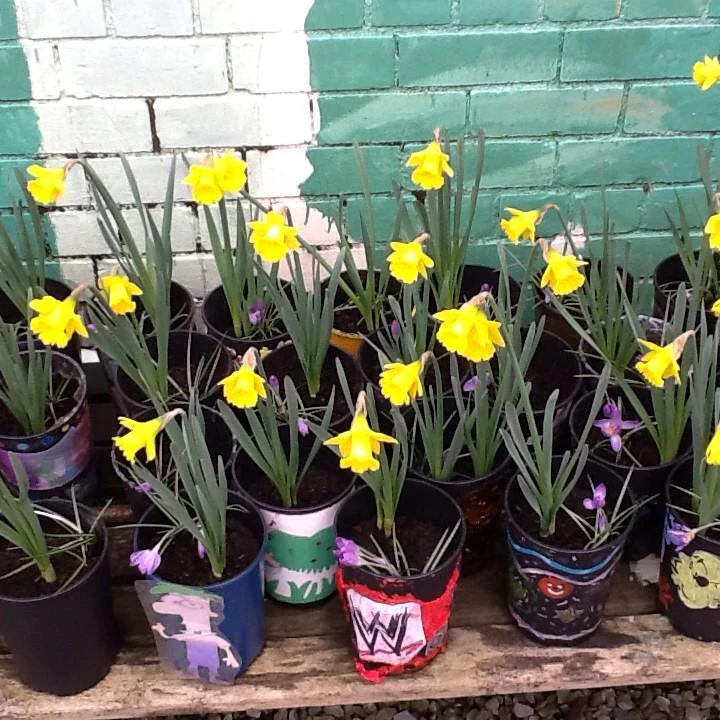
Stanford in the Vale Gardening Club: Another week of recordings, we have had a mixture of sunny, cold and windy weather here, but still little rain! We became true scientists today watching the solar eclipse using buckets of water as a reflection. Our grounds are looking beautiful with the daffodils all in flower, swaying in the wind, and bright yellow in colour with the sun shining down on them! Pof P: What a lovely picture you paint of the daffodils! And what a fantastic way to have studied the eclipse! I didn’t think of using water, we were using a reflection method but with colanders and paper at the Museum. Keep up the good work Super Scientists.
Tongwynlais Primary School: My daffodil has still not grown. I think it has died Prof P: I’m sorry to hear that your plant hasn’t grown. Thank you for logging the information on the website, it is very important to the investigation. You really are a Super Scientist.
Coleg Powys: Sorry I sent the first measurement incorrectly. I thought it was in cm. The second measurement I have submitted is the correct one. Prof P: Thank you for spotting the mistake and rectifying it. I will delete the first entry. You are not the only one to make this mistake and we will add measurement information to the data entry page for next year!
The Blessed Sacrament Catholic Primary School: All the crocus flowers opened this week except for mine! We have been busy measuring them. I hope mine will open soon, it is still quite small. Prof P: I’m glad to hear your plants have flowered and don’t worry I’m sure the last one won’t be long now!
Rivington Foundation Primary School: It was the highest its been on Wednesday and Thursday and on Friday we were on a school trip. Prof P: Wow Rivington Primary, your temperatures were high for Wednesday and Thursday! 30°c! Your thermometer must have been in direct sunlight and it must have been a very nice day! I hope you enjoyed the weather and your school trip.
Ysgol Clocaenog: Wedi cynhesu yma wythnos yma. Prof P: Helo Ysgol Clocaenog. Rwyf yn hapus i glywed bod y tywydd yn gwella!
Bickerstaffe CE Primary School: Daffodils in the pots have been a little later than the ones planted in the ground. We were surprised by this! We are going to select 2 pots that are at a similar stage and take one of them inside to see if it speeds up. We won't be able to keep the watering the same though - have you any suggestions? We thought about putting an 'umbrella' over the outdoor pot and not watering the one indoors? Professor P: Ooo this sounds like an exciting experiment Bickerstaffe Primary! Let me know how you get on and what your findings are! As for watering the plants, you really are thinking like Super Scientists by trying to keep all variables the same except for the one you are monitoring. This is very important to maintaining fair experiments. In this case, I wouldn’t worry about watering them exactly the same. You can keep them roughly the same by looking at how moist or dry the soil is in each pot and watering them accordingly. I think you will see a difference in the plants very quickly if your classroom is nice and warm!
The Blessed Sacrament Catholic Primary School: At last, my crocus finally flowered. It was the last one. From E. Prof P: I’m glad to hear all of your plants have flowered! Thank you for logging your flowering dates and heights.
Stanford in the Vale Primary School: Another dry week, since doing this very important investigation, we have noticed we have had very little rain this year. We would like to "Thank You" for allowing us to take part in this study, and we have really enjoyed finding out about the rain fall and taking daily temperature recordings, we spent a lovely afternoon eating ice-cream and drawing our daffodils ready to be judged! This week we have experienced sunshine, especially in the mornings, with winds picking up around lunch time! Stanford would like to wish you all a happy Easter. And we hope to take part in this investigation next year, as we are becoming experts in this field! Prof P: Hello Stanford in the Vale Primary, I should be thanking you for taking part in the project and for all your hard work! I’m glad to hear that you have enjoyed the project and that you will be applying for next year. I look forward to seeing your pictures if you are able to send them in, but the competition itself is not running this year! I will still post any pictures I receive on Twitter and on the Museum Blog. Happy Easter!
The Blessed Sacrament Catholic Primary School: Nearly all our daffodils have flowered now. There is just one bud showing but 2 do not seem to have buds. The mystery plants are growing really well. I think they are daffodils but they are smaller than our daffodils. A and F. Prof P: Hello Blessed Sacrament Catholic Primary. I’m glad to hear the mystery bulbs are growing, you are right, they are a different variety of daffodil! It’s strange that two of your daffodils don’t have buds. Could you send pictures to me? If these plants don’t flower then you can still log the details and height on the NMW website. But I’d wait a bit, they might surprise you!
Rivington Foundation Primary School: We had our first 2 flowers flower today one in the ground and one in the pot but we still have a lot more to go though. We think it took such a long time to flower because we have so many trees blocking out some of the sunlight. Prof P: Hi Rivington Foundation Primary, if your plants haven’t flowered before the holidays please take them home with you and log their flowering dates on the NMW website. If the trees were shading your plants from the sun this will have had an effect on their growth. Well done for thinking about what effects the environment is having on your plants - you really are Super Scientists.
Ysgol Bro Eirwg: Bylbiau cudd! Rydyn ni'n credu mae cannin pedr bach sydd gennym ni! Prof P: Dda iawn Ysgol Eirwg. Maent yn amrywiaeth wahanol o gennin Pedr!
Coppull Parish Primary School: Yesterday we had strong winds. Unfortunately a wooden pallet blew onto our daffodil plot and damaged some of them before they flowered. Prof P: Hello Coppull Parish Primary. I’m sorry to hear that your plants have been damaged. If they don’t look like they will flower you can still log their heights on the Museum website and select ‘did not flower’ from the menu.
Ysgol Tal y Bont: At the end of the project we found 2 bulbs did not produce any flowers and 1 bulb produced a double flower. Prof P: Hi Ysgol Tal Y Bont. It’s interesting that some of your plants didn’t flower and exciting that one produced a double flower! Would you be able in send in pictures?
Our Lady of Peace Primary School: Thank you for letting us take the temperature and rainfall readings. We are going to miss doing it. Prof P: Hello Our Lady of the Peace Primary School. You can always apply to take part next year and continue developing the skills you have learnt from the project. You could also continue to take weather records and share them on the MET Office WOW website. Thank you for taking part and for all your hard work.