Polychaete research in the Falklands by Teresa Darbyshire - Day 4

Today I became connected to the rest of the Falkland Islands or at least became easier to find and for cheaper. Having had people trying to find me and failing yesterday, also sadly leading to a missed dive opportunity, I managed to buy a local SIM card for my phone and also unlock my phone in order to use it! Phone numbers here are short whether they are home or mobile, consisting of only 5 numbers. Well, I suppose the population just isn’t big enough to need anything longer! As well as meaning that those trying to help me out here actually can, this also now has the added bonus of personal safety in case I slip on some giant kelp while chasing a worm and injure myself (hopefully not) at least I can get someone to come and rescue me.


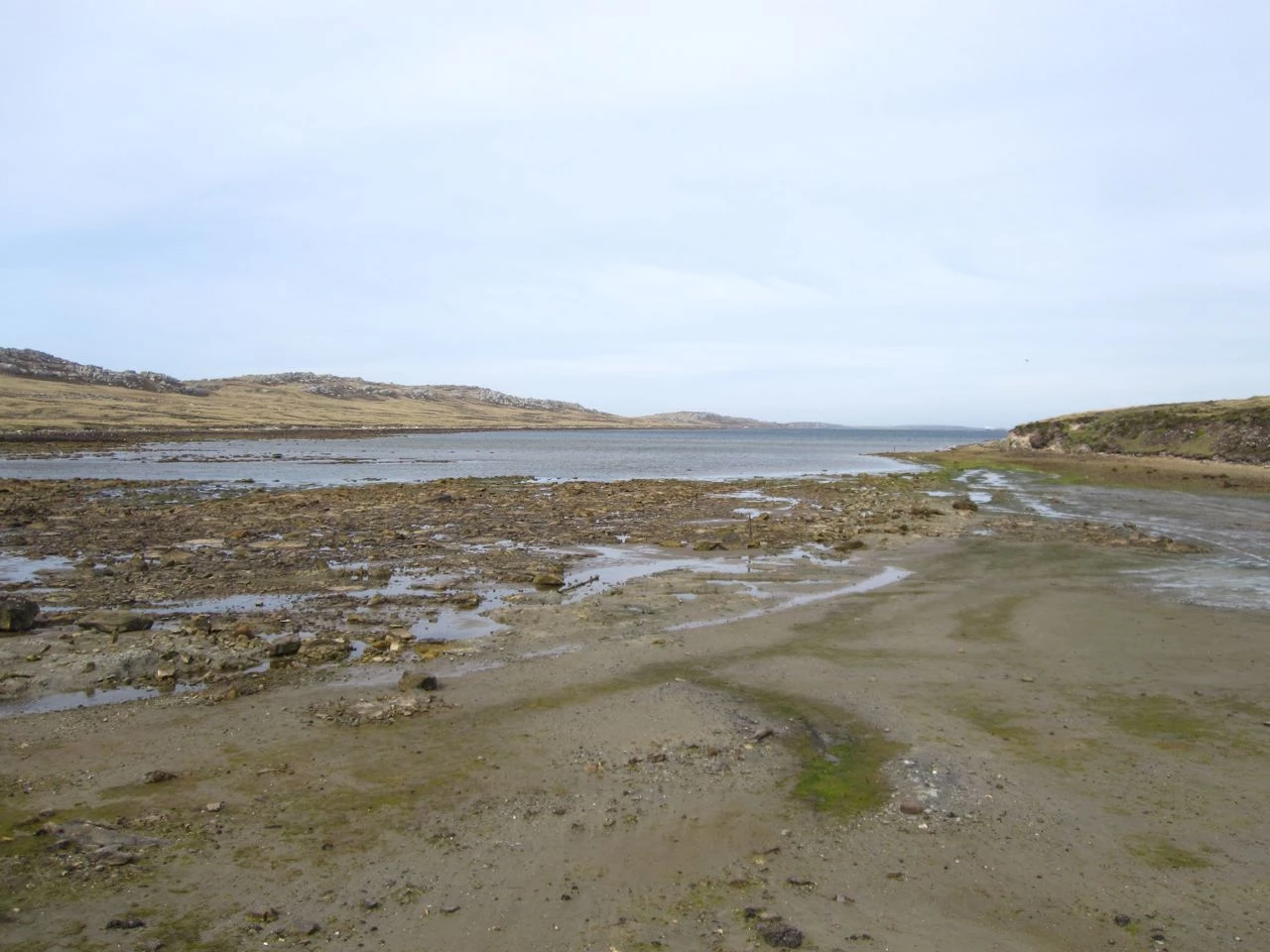
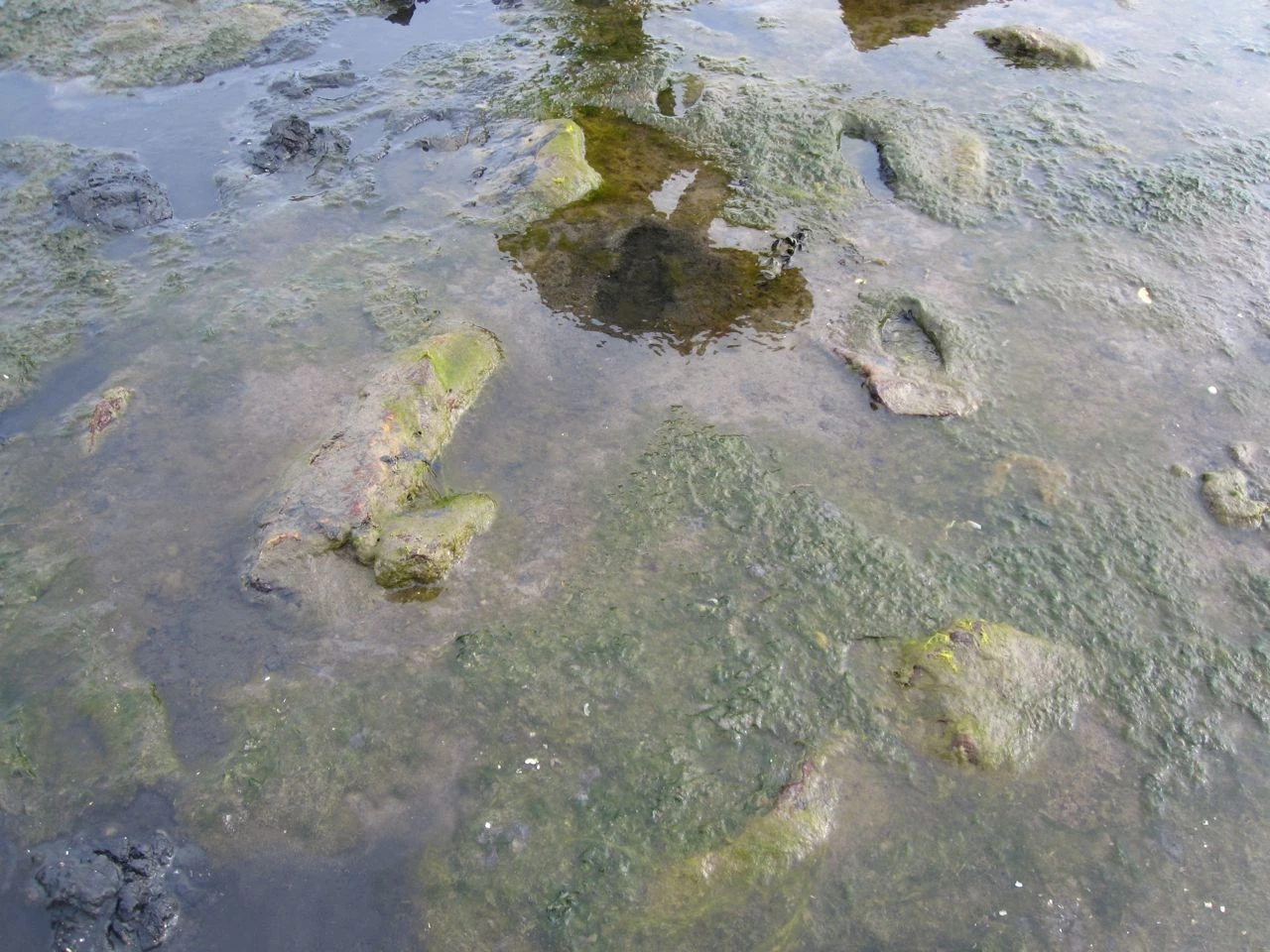
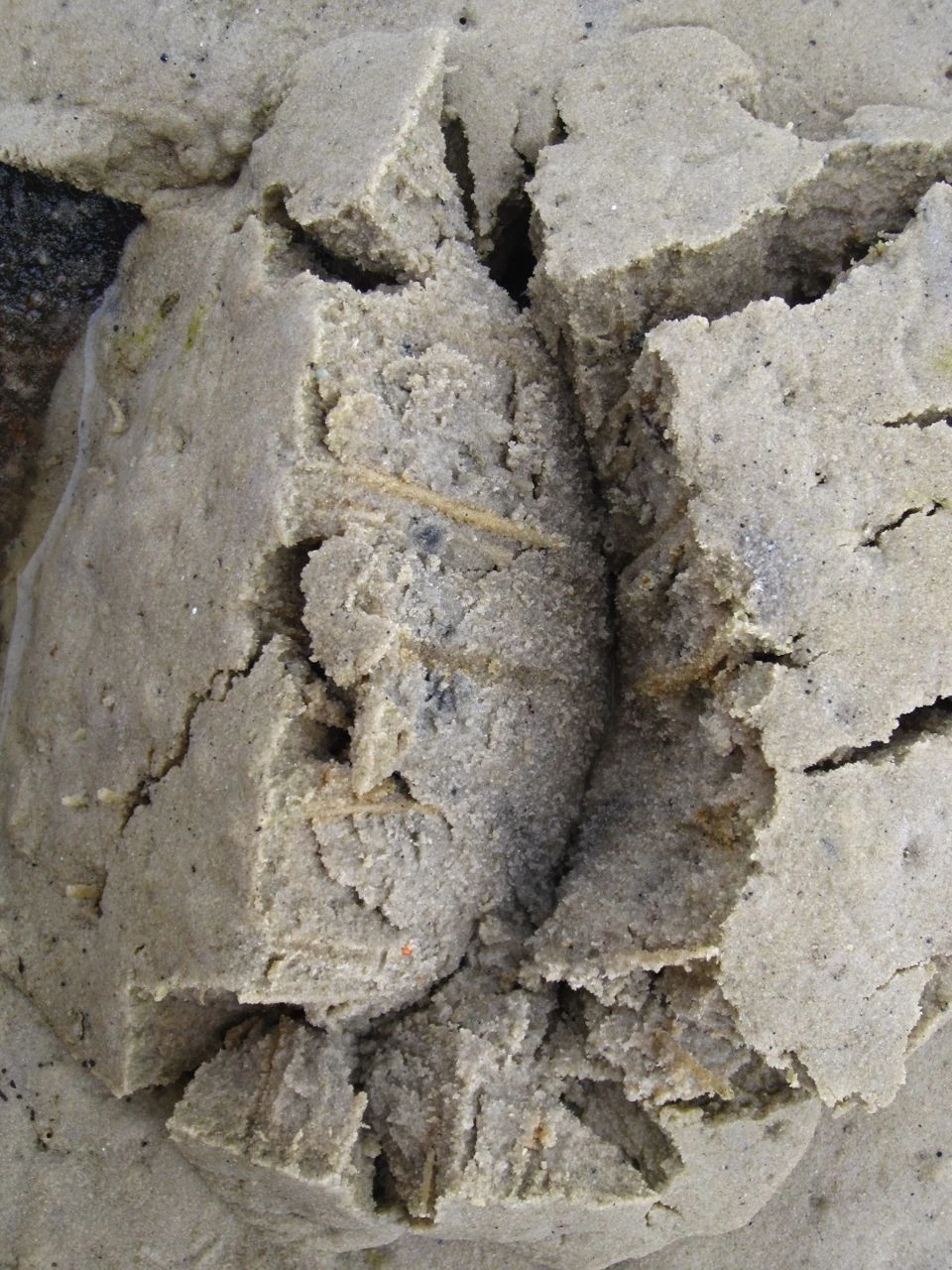
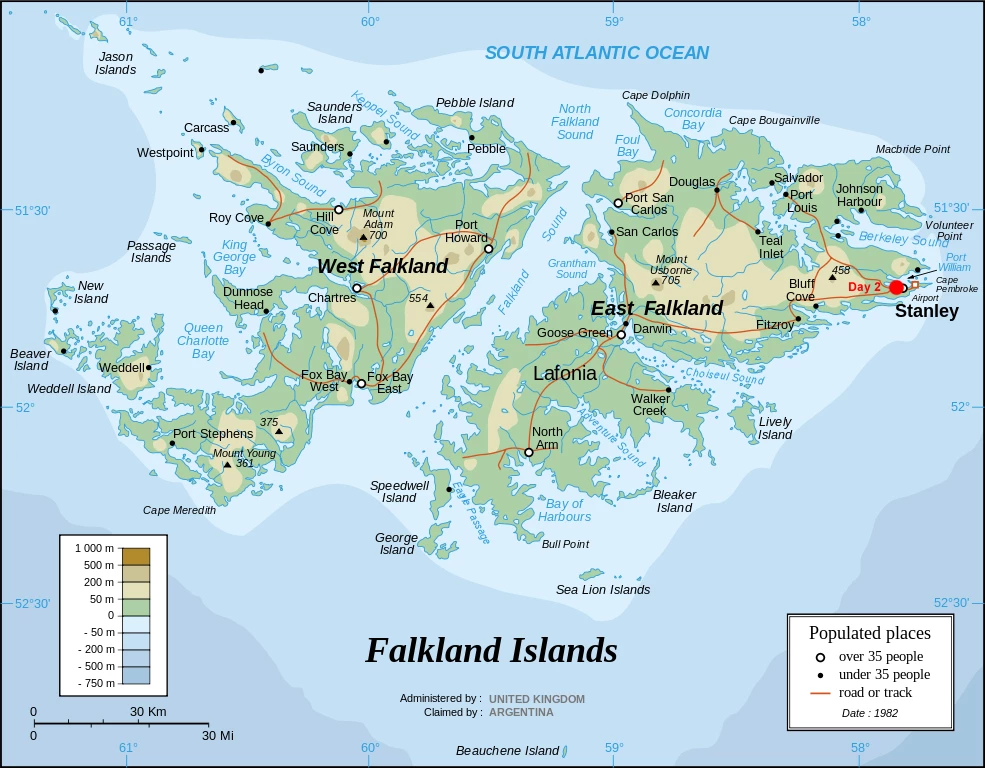
Tides are getting later and today’s was not until 1650. So around 3pm Freya and I headed down to Moody Brook (photo 1), a fantastically named area west of Stanley where a river joins the sea making a slightly estuarine region. I hoped to find a different brackish water fauna here but it didn’t seem to quite work out. The animals I was finding were not ones that I would associate with lower salinity water and in fact, the lower we got on the shore the more they looked like several we had found at previous sites. Some were different, more a product of the softer muddy sand than the salinity though. Our last sampling spot in fact, was so soft that it threatened to steal my wellies several times (photo 2). Luckily there were several rocks around as well to help lever myself back out with thanks to the spade.


We were getting pretty cold towards the end and trying to draw a map of the sampling sites with numb fingers certainly didn’t create artwork. It was windy before but it has definitely picked up and with a colder edge to it than before. Apparently it’ll be gale force by tomorrow and its certainly whistling round outside right now!


Investigations back in the lab showed that indeed several of the species were the same as those I had found before although in some cases this was very welcome as it provided additional numbers of animals that I had only found single numbers of before. Having multiple specimens of species is very important if you later need to describe a new species or just improve current descriptions. With only a single animal to work with you can never be quite sure if it truly represents the rest of the species or not as mutations can frequently occur.


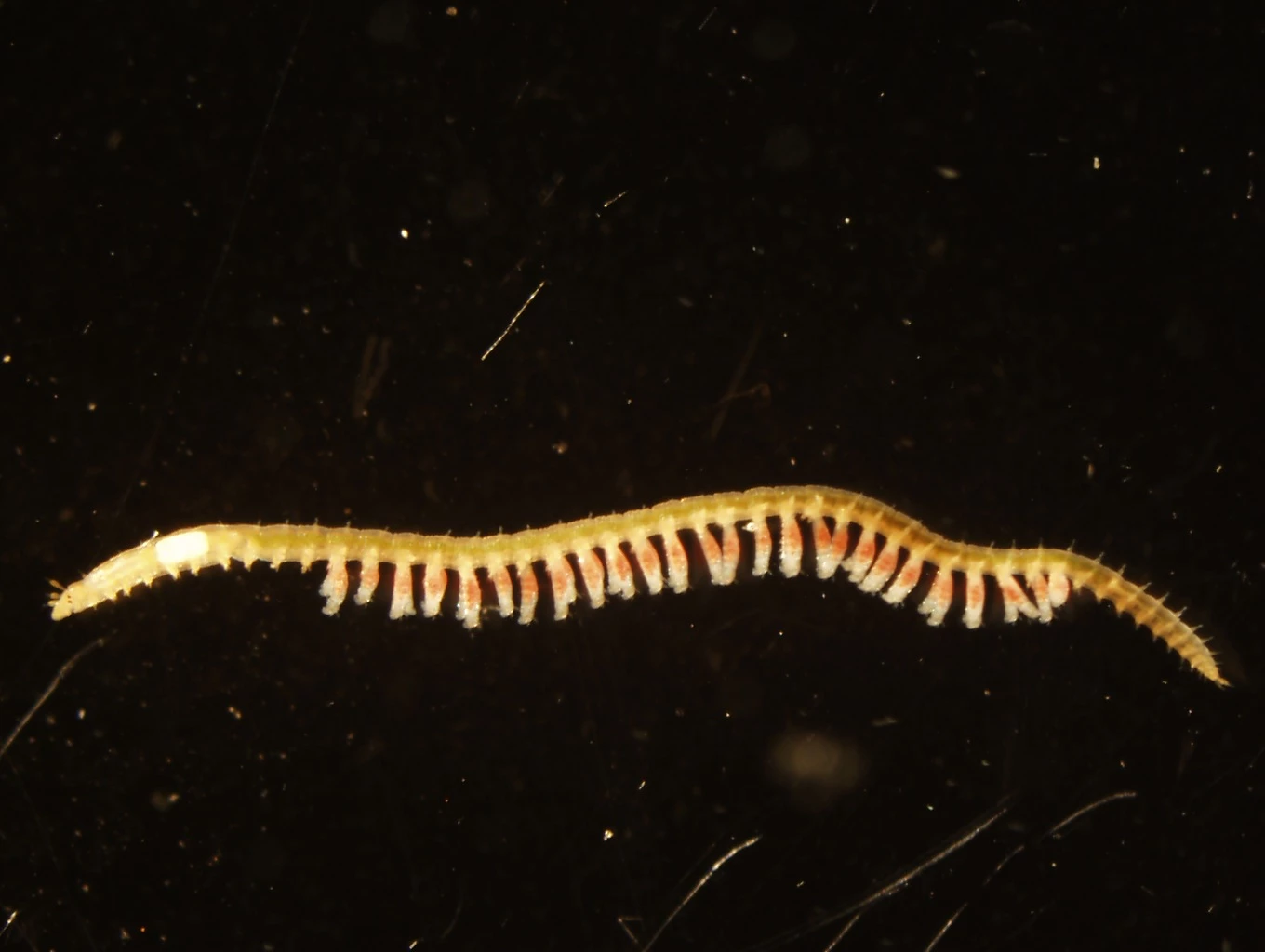
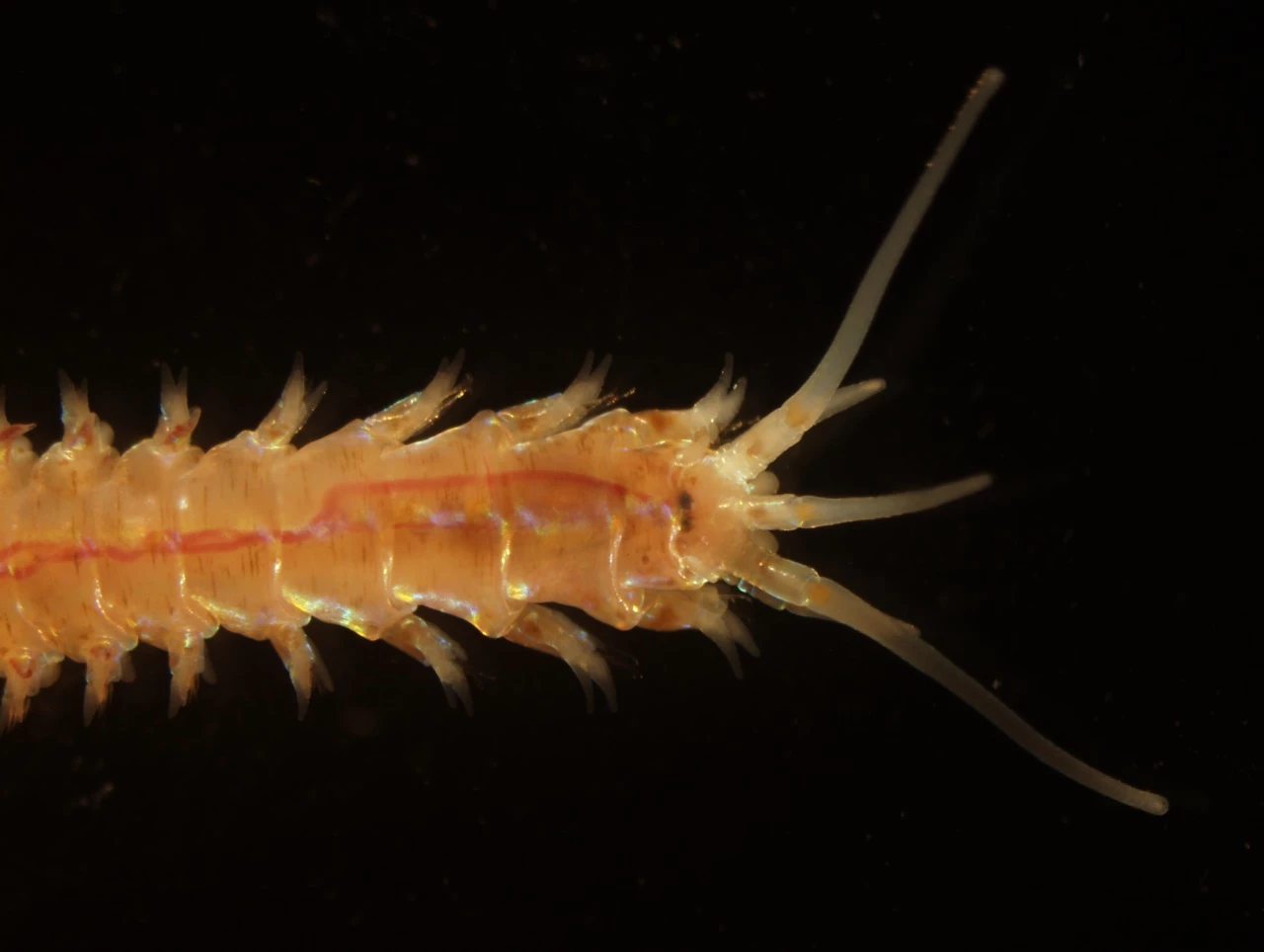
I have noticed as well over the last few days that the worms here are doing what everything else at this time of year (spring in this case) is doing – reproducing! Many of the worms have eggs or larvae attached and I took this image (photo 3) of an animal called a syllid with all its larvae attached for safe-keeping giving it a very strange appearance.


Tides tomorrow are very awkward – do I go for the 5am or the 6pm? Early start or late finish… ?

Polychaete research in the Falklands by Teresa Darbyshire - Day 5

So did you guess which one I went for. Yes it was the early one which involved getting up at 4am. Sounds bonkers I know but there was some method in the madness not least of which was that it was still early enough to go back to bed once I finished for a couple more hours sleep!

To the east of Stanley but on the outward facing coast is Surf Bay. As its name suggests it is an exposed beach and is also made up of fantastically white sand looking very tropical in the bright sunshine the first time I saw it (photo 1). Sadly it didn’t quite look like that at 4am with a bit of mist and grey sky, but at least the wind had dropped for now which it always seems to first thing in the morning here.

The sand is very fine and to be honest did not look like the kind of habitat you normally find much in the way of worms in. However I wanted to try sieving a bit of it to see if there were any of the tiny species that sometimes inhabit such areas. For this reason I only needed a short time around low tide to try this as I could always come back if necessary. After this I moved across the headland to the even more exposed rocky side with low rock pools and mostly bare rock. The rocks here are covered in a pink encrusting alga similar to that you may have seen in the UK. This also sometimes harbours its own fauna under the crust so I took a small rock covered in that away too to see what it might hold.

After catching up on some sleep I took my small collection to the lab. As suspected the pale sand held nothing in store for me except some very active amphipods and isopods (small crustacea). Glad I hadn’t wasted good collecting time there! The rock however turned out more interesting. The pink crust was so tightly fixed to the rock that there were no animals under the small pieces I managed to chip off. However the small pieces of seaweed that had been attached yielded several small worms new to my list from their holdfasts. These were interesting enough that I will go back to this site on Monday to get some more rocks to play with (at a more sociable time as well).

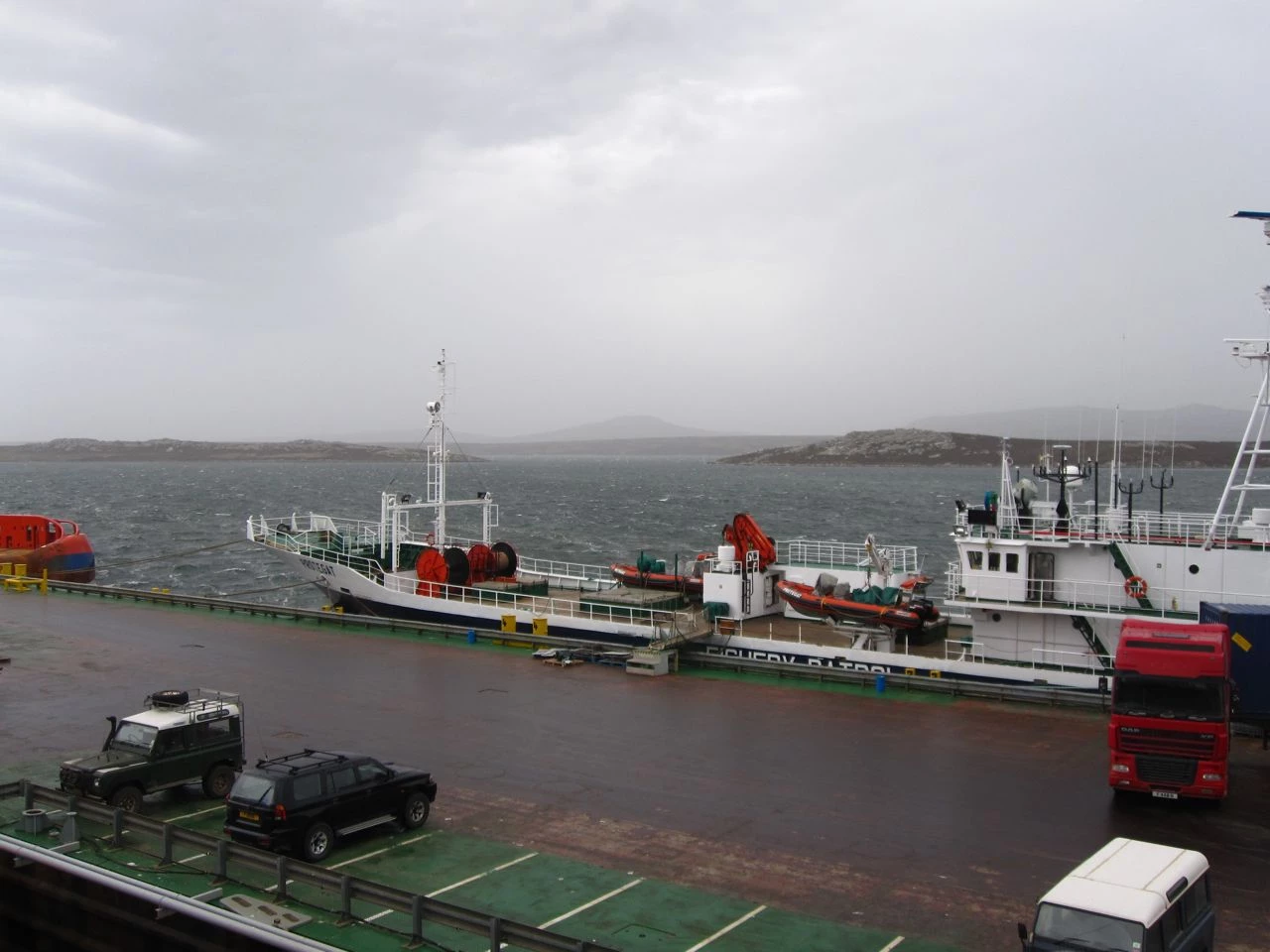
My other reason for choosing the early tide was the fact that I am being dragged off this evening to visit the King Penguin colony over at Volunteer Point. One small drawback to this is the fact I have to camp. Not that I am averse to such activity but I normally choose warmer weather, the offer of a wetsuit to join in some body boarding may also require some inventive excuses. Do surfers need shore cover? I think they do and I may sacrifice my enjoyment to provide it. The weather has now also deteriorated, probably due to the impending camping event, and it's raining combined with a howling gale force wind (photo 2). Just like camping in the UK really. I am of course also taking some sampling gear with me just so no opportunity will be missed!

Polychaete research in the Falklands by Teresa Darbyshire - Day 3

So, I’m happy. A new day with new worms (yes, I am easily pleased). Having said that, it is only the second day’s sampling and the challenge will be to be still finding new worms on day 28, I’ll let you know!


Bit of a late one though as late tides mean a later finish in the evening but conversely this does give me a lighter morning. I spent the morning driving around (I do like the landrover!) the local area checking out potential sampling sites, the idea being to spot places that have different habitats to each other that may harbour different species. On my way back into town I visited the local Museum. A small place with every square inch of wall space and several other cabinets covered in information on the history of the Falkland Islands from shipping, social history, whaling, natural history, geology and of course the Falklands War and island defence over the years. Very interesting.


For the afternoon, Freya made her return. This time we headed just east of Stanley to a spot known as The Canache. Strangely I hadn’t put Freya off the day before with a 2 hour stint on the beach and several more in the lab and she still seemed keen and smiling (Photo 1). The shore was very sandy, a complete contrast to yesterday’s rocks. This was of course deliberate as mentioned above in the bid to find new species. The shore was heavily dominated by a group of worms called bamboo worms (Maldanidae) whose tubes were evident with every spadeful (Photo 2). While kneeling down in the wet sand in my borrowed oilskin trousers (thanks Paul), I duly found the holes in the seams as the water seeped down my legs. Ah well.


We sampled a few times down the sandy beach and then moved across a small spit to a rocky area where we found a few of the same species as yesterday but also several new ones, including different species of ragworm and a large 1.5inch scaleworm (for those who don’t know this is very large), larger than any I have seen in the UK.


Back in the lab I had now managed to access the camera microscope, the downside of this being that it adds even more time to that needed to go through the animals. The results can be nice though although it will only take images of a small area so the animal needs to be small or you take a picture of a small piece. New to the day were some onuphids (Photo 3), flattened worms that build tubes on rocks and a goniadid (I think) that obligingly pushed its proboscis (the spiky-looking tube) out of its mouth (Photo 4). In these animals, the appearance of the papillae on this structure is often used to help identify the species so this was very useful. Pictures also act as later reminders of the colours of the animals as these can be a distinctive feature for identification but fade once they are preserved. I just need to find more tiny things now (sigh) so I can take pictures of whole animals as well.


What’s in store for tomorrow? (today actually as I didn’t manage to finish writing this last night), well you’ll have to wait and see as I haven’t made my mind up yet. Sun’s shining again though…

Polychaete research in the Falklands by Teresa Darbyshire - Day 1

I'm a polychaete (marine bristleworms) taxonomist in the marine section of the Department of Biodiversity & Systematic Biology. I was awarded a grant by the Shackleton Fund to visit and conduct research in the Falkland Islands, so now I'm off to Stanley for the next month to collect and investigate the polychaete fauna of the Islands. I'll be collecting specimens by digging them up on the beachesand also by diving. It's nearly 100 years since scientists last looked at this group in the intertidal and shallow subtidal regions of the Islands and there is much potential for the discovery of new species.

Day 1

I can’t say I was looking forward to an 18 hour flight that much although it has to be said I had no idea what to expect flying on an RAF flight from Brize Norton. With dive kit in tow, I had a lot of baggage with me but this paled into insignificance next to the guys checking in from the BBC who faced a £4500 bill for excess baggage! The flight itself was fairly painless in the end taking off at 11pm and heading south through the night.

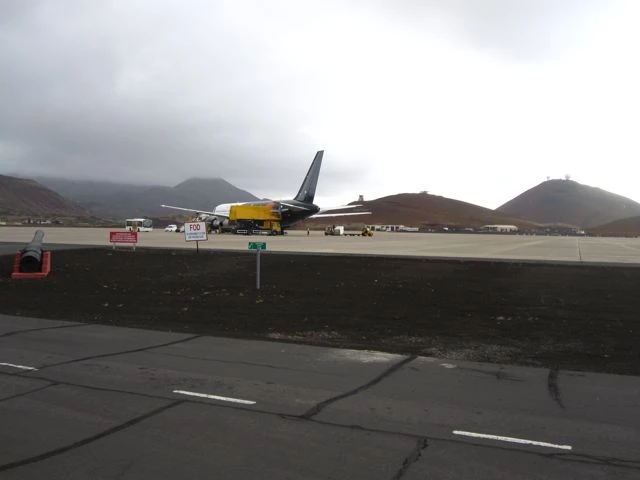
Nine hours and not much sleep later we landed on Ascension Island for a 2 hour refuelling stop. The 23°C fresh air was welcome although the views were very bleak (photo 1). Another 8 hours and 2 films later we finally arrived at Mount Pleasant in bright sunshine and more warmth. Not what I was expecting and I didn’t pack that much in the way of light clothing!

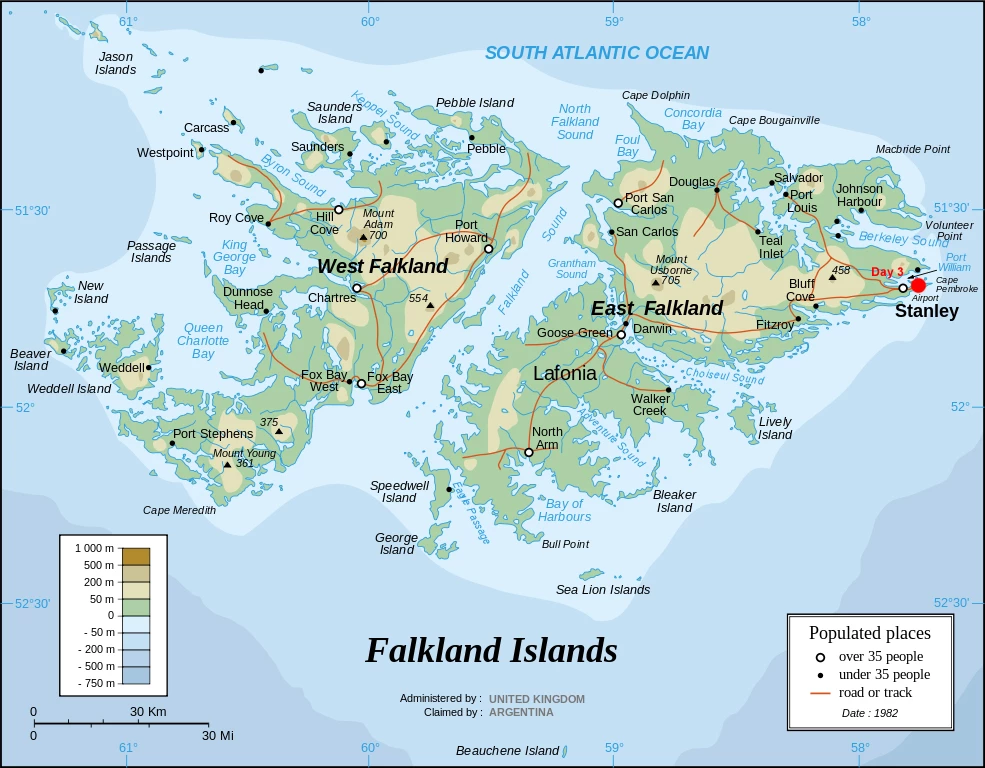
A long and dusty trip to Stanley showed a very windswept, rocky landscape dotted with sheep. After finding the flat I am staying in I also met Steve and Jude who I will be diving with later in the week. Jude then whisked me off for a quick tour of the local area including seeing my first penguin and a couple of beaches roped off due to mines!

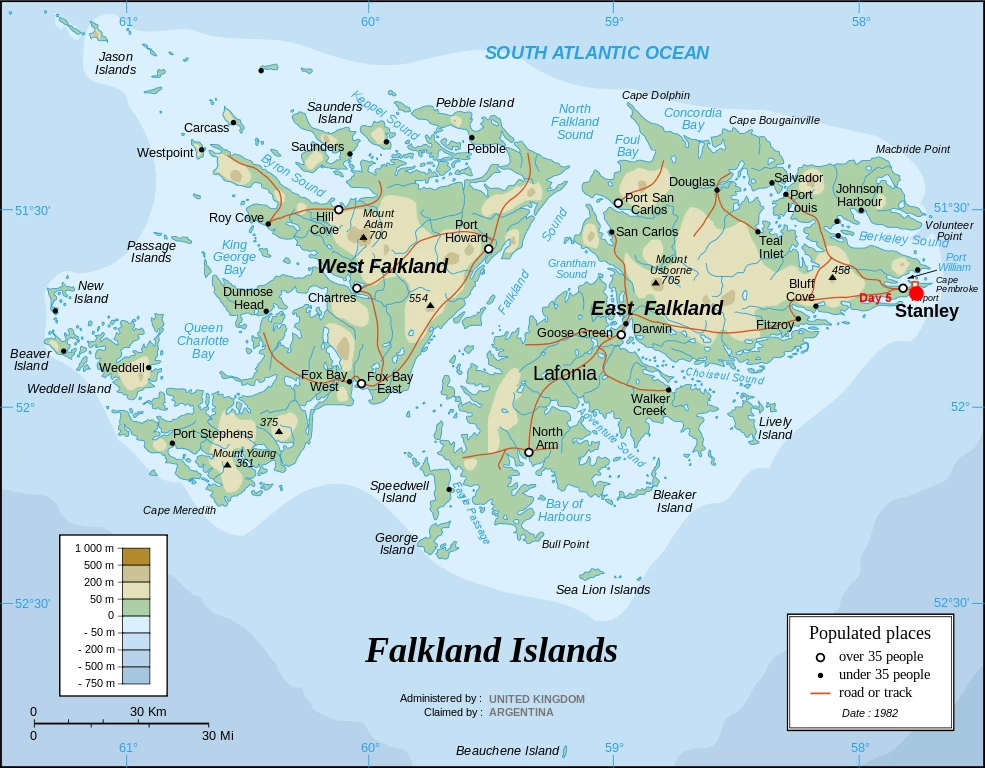
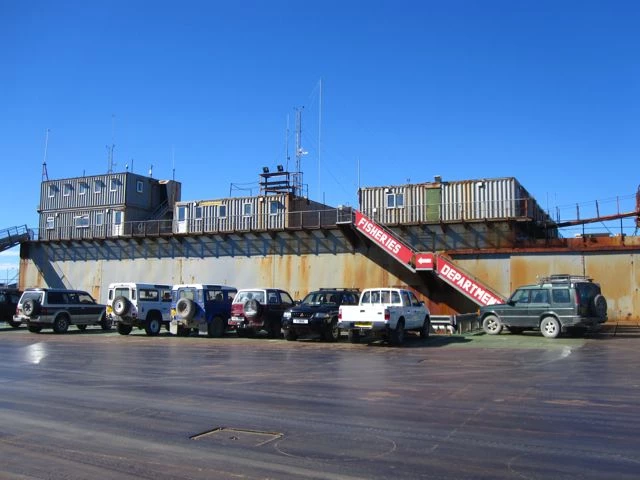
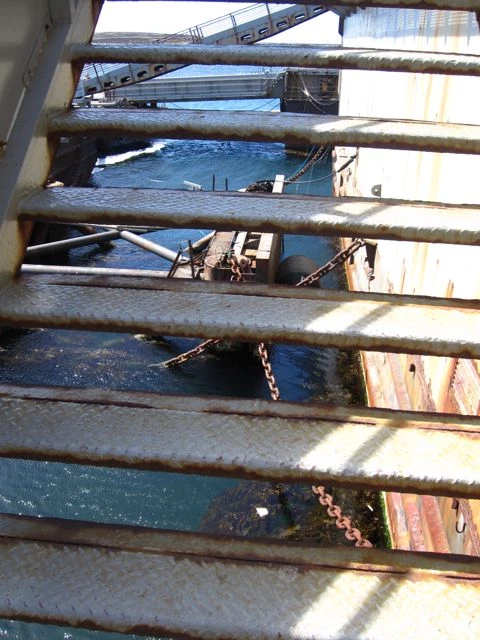
This morning I made it to the Fisheries department where I will be based. Built on a large floating pontoon (photo 2) with a very disconcerting set of steps up to it (photo 3) everyone I met was very helpful and friendly and I’m looking forward to viewing my first group of worms in the lab there! Low tide is at 3pm this afternoon so I will be out with my fork and bucket beginning my investigations very shortly. I will also have the help of Freya a local volunteer and biology graduate who is keen get involved and see what we can find! 

Teresa Darbyshire

Polychaete research in the Falklands by Teresa Darbyshire - Day 2

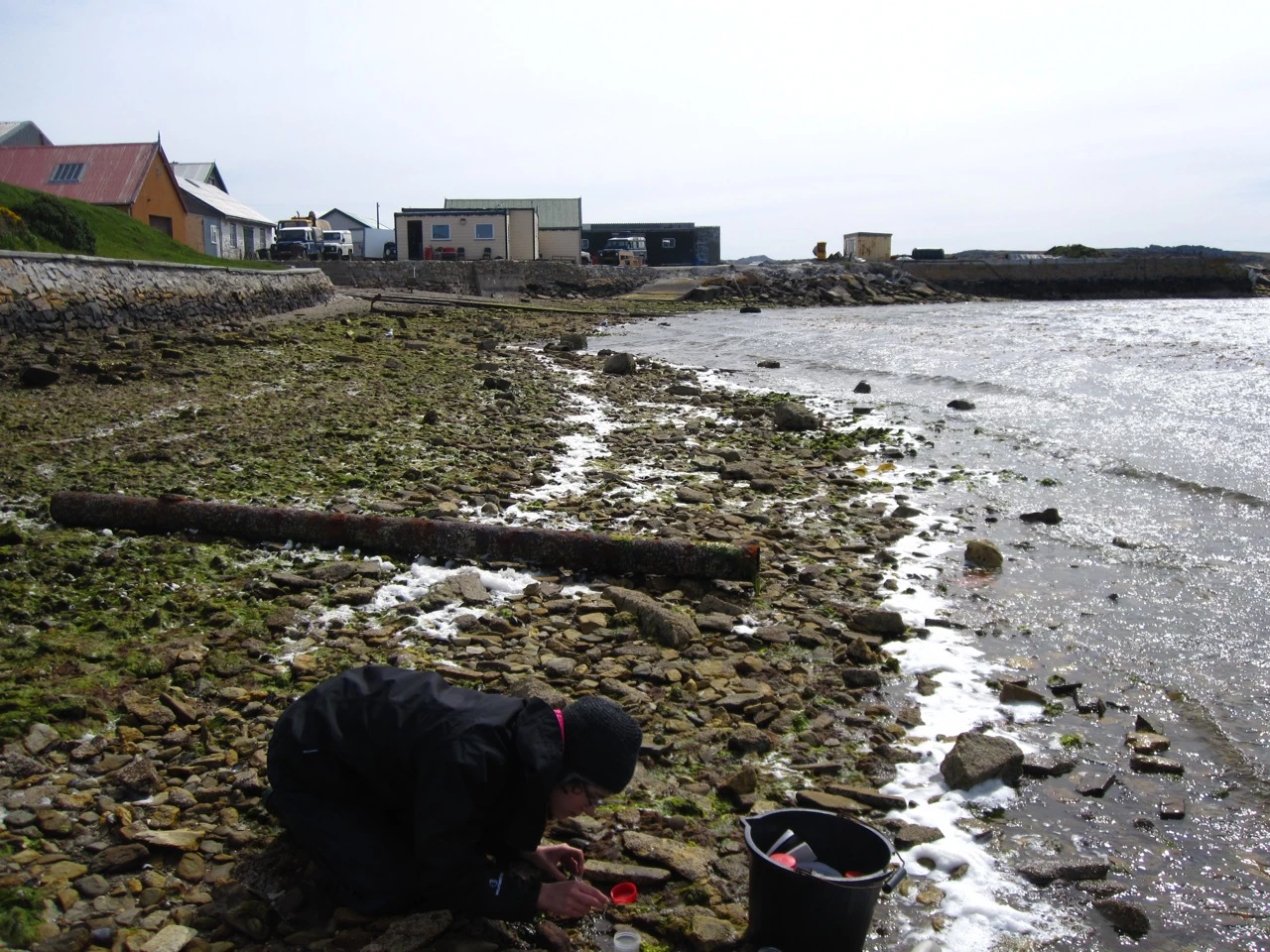
So, Freya and I tramped down to the local shore in our wellies and waterproof trousers earlier. The wind was whistling around us but was surprisingly not as cold as you might expect. I introduced Freya to the delights of attacking a shoreline with a large garden fork and then having to peer at the results as if you’ve lost a contact lens (photo 1). There is not a large tidal range here, less than 1.5m which for someone used to the 10m range of the Bristol Channel is tiny. Still we found a reasonable range of little worms, some excitingly large, others eye-strainingly small and did our best to keep them from breaking into several smaller pieces before we could get them back to the lab.

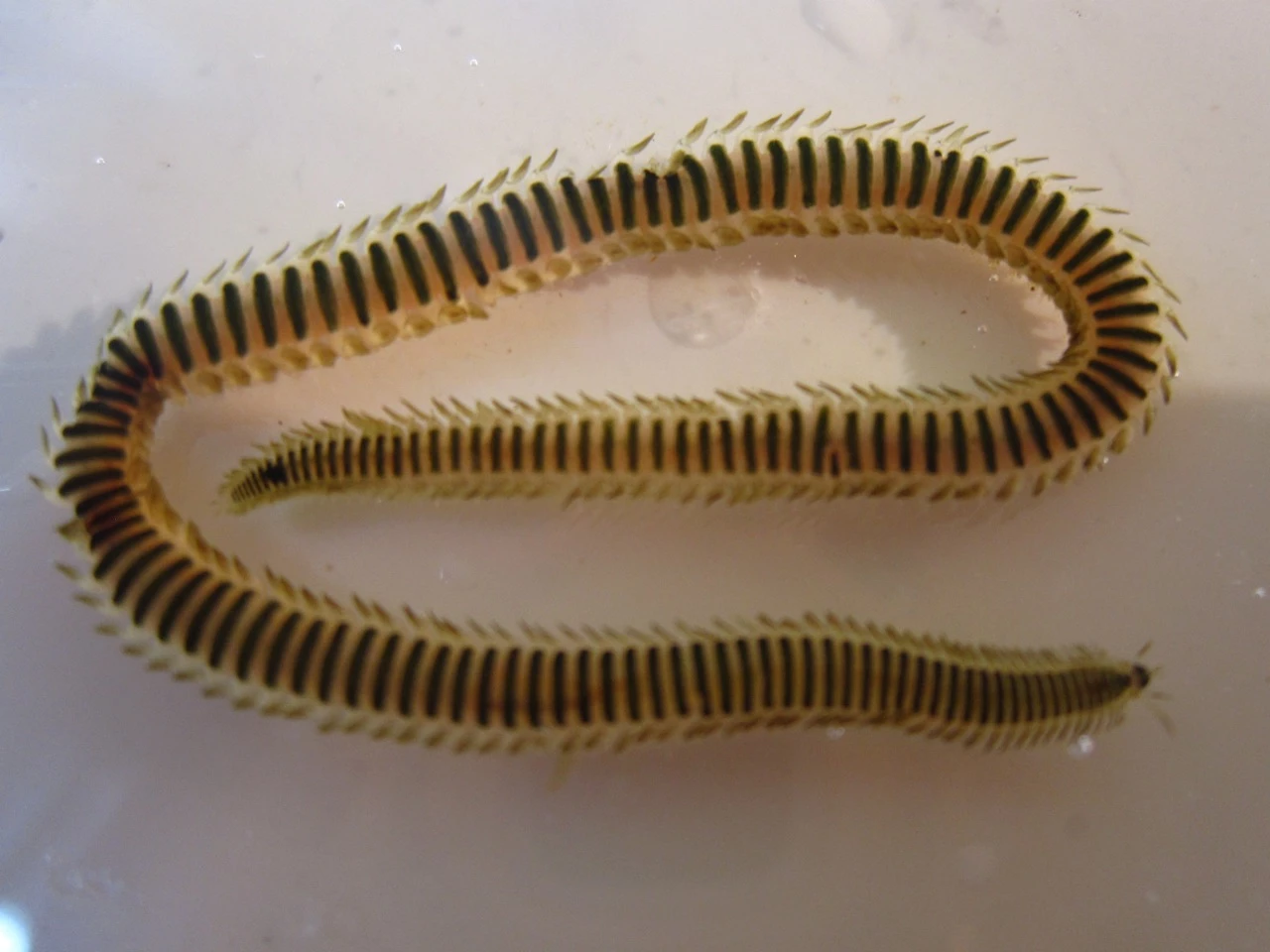
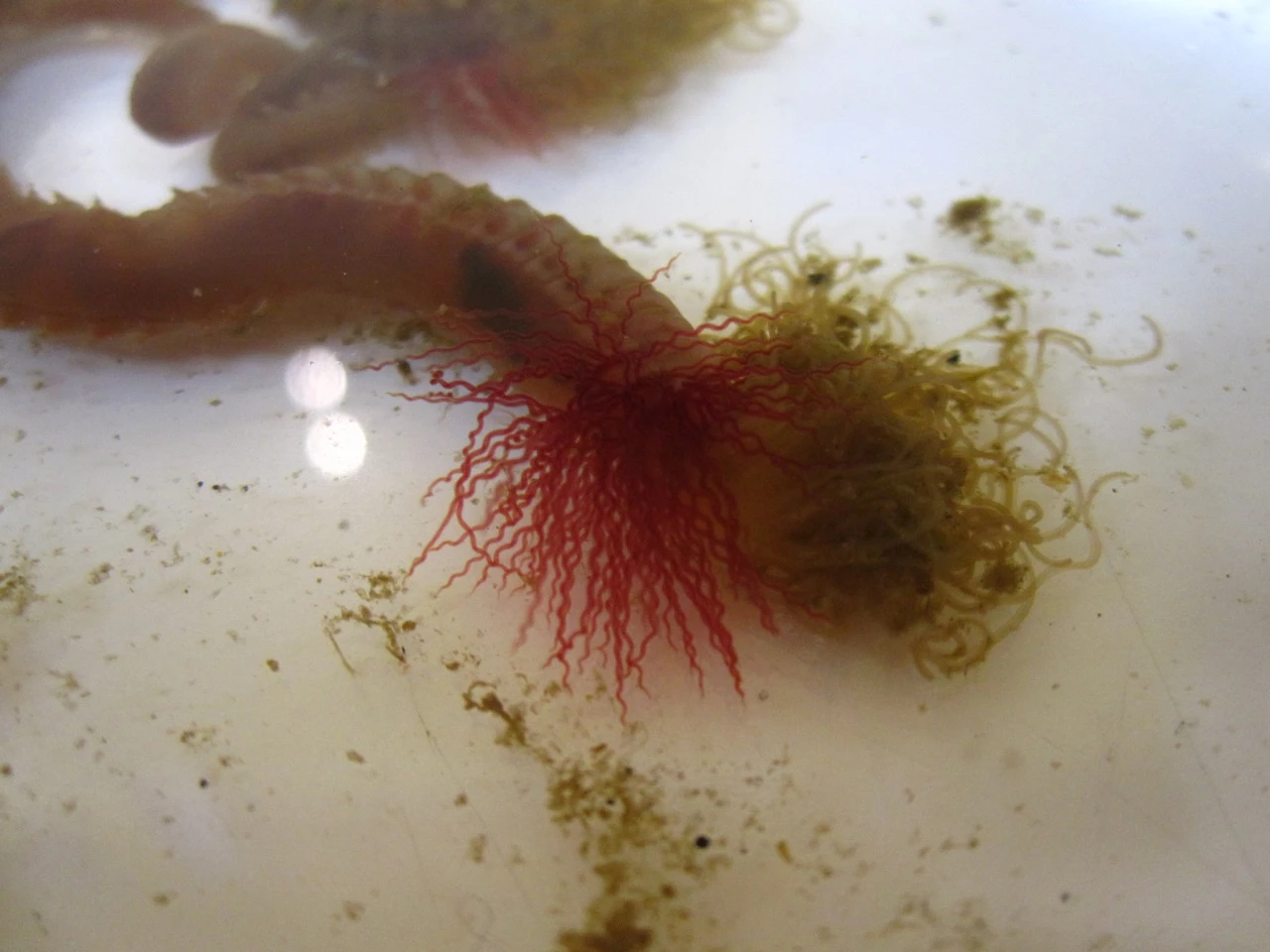
We sampled 3 sites down the shore and, not surprisingly with such a small tidal range, found that the specimens varied little between samples and there was not a high diversity within those. That said, I have a nice collection just from today covering at least 12 different family groups and slightly more species. The most striking was a very stripy phyllodocid looking as if it had just escaped from jail (photo 2) and a terebellid with a fantastic ‘80s crimp to its gills (photo 3). Not the best photos I admit but I am hoping to access the camera microscope soon!

Tomorrow will be a new site, hopefully with different animals to find. Luckily I havebeen given a landrover to use as I need to get around. I’m just about used to it now and have stopped hopping along when I set off!. 4x4’s are the only vehicles seen on the roads and I’m very grateful to the complete stranger who has entrusted me with this vehicle to use while he is away! People here are very friendly, nothing is locked and doors are left open. In paranoia, I did try to lock the landrover last night but found that the locks were so unused that I couldn’t get a key in them!