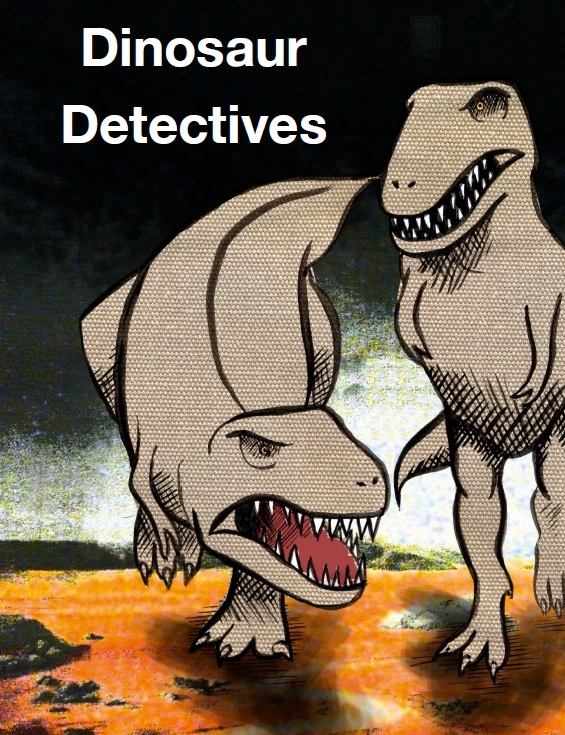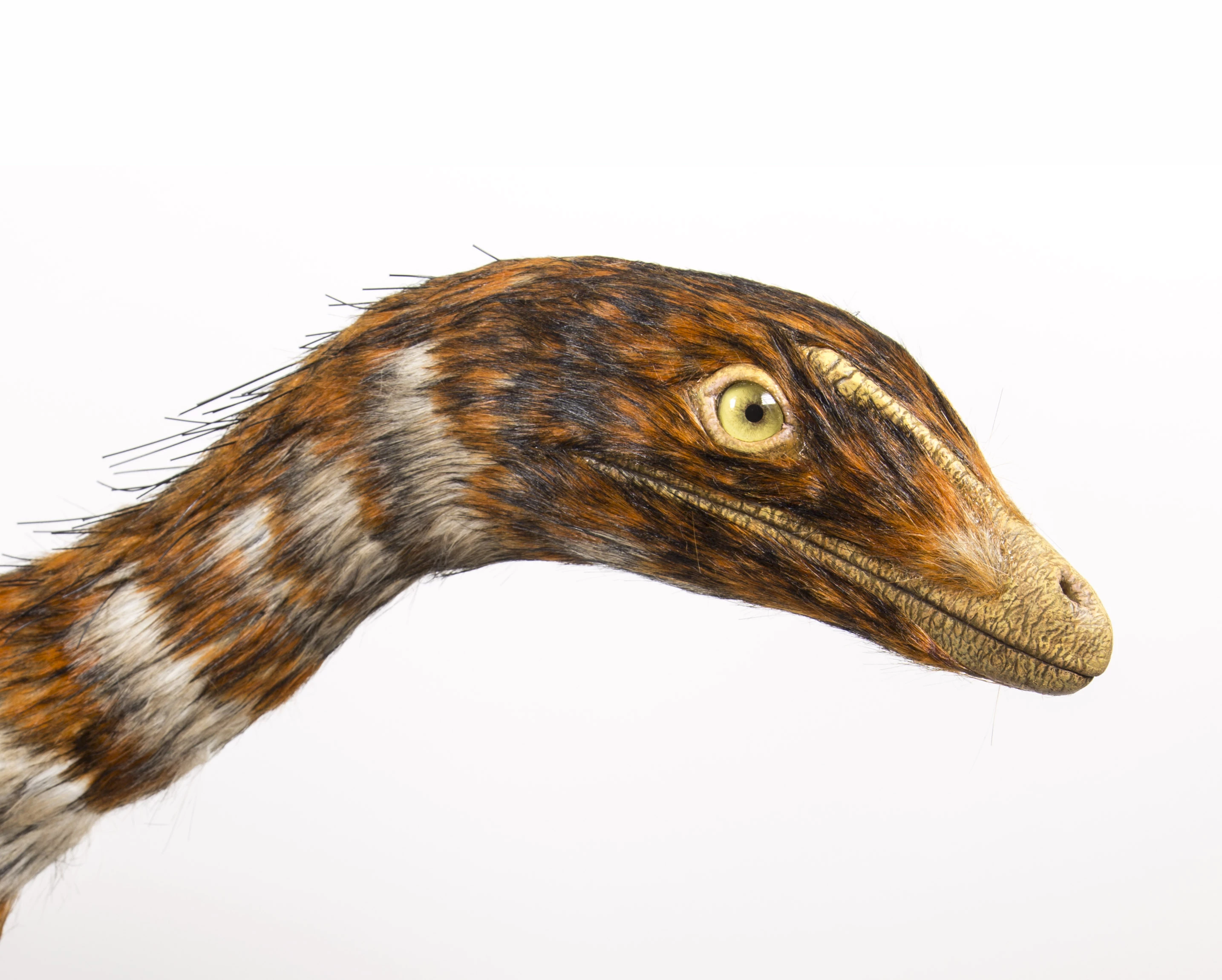
Wyt ti’n Dditectif Deinosoriaid? Liam Doyle, 25 Mai 2017 Mae pob math o ryfeddodau yn Amgueddfa Genedlaethol Caerdydd, ond mae’n debyg mai’r deinosoriaid yw hoff atyniad ein hymwelwyr. Mae oriel Esblygiad Cymru yn aml dan ei sang, ac mae galw mawr am ein sesiynau i ysgolion ar thema deinosoriaid.Dyna pam bod Amgueddfa Cymru yn cyhoeddi’r eBook newydd, Ditectifs y Deinosoriaid. Mae’r adnodd rhyngweithiol, sydd wedi’i anelu at ymwelwyr 7–11 oed, yn troi ymwelwyr yn balaeontolegwyr a’u galluogi i archwilio ffosilau go iawn o’n casgliadau. Mae’r eBook yn cynnwys ffotograffau o sbesimenau yn ogystal â darluniau Frank Duffy o’n stori i blant, Arwyn yr Anturiwr.Chwilia am ffosil deinosor, dysga am fwyd y deinosoriaid a rhyfeddu at ba mor fawr oedd traed T. rex drwy gyfrwng gemau, posau a gweithgareddau rhyngweithiol sy’n rhoi addysg yn nwylo’r defnyddiwr. Mae’n gyfle hefyd i gwrdd â’r deinosor Cymreig newydd, Dracoraptor hanigani. Gellir lawrlwytho’r eBook ar iPad neu ddyfais Apple arall, ac mae modd ei ddefnyddio adref, neu ddod ag ef i’r Amgueddfa i archwilio’r orielau. Chwilia am y symbol yma am fwy o ffeithiau deinosor yn oriel Esblygiad Cymru. Rhanna dy hoff ddarganfyddiad deinosoraidd o’r eBook neu’r Amgueddfa ar Twitter, drwy dagio @Museum_CdfLearn. Cofia chwarae’r gêm ‘dylunio deinosor’ a rhannu hynny ar Twitter hefyd!Fersiwn Apple / PDFOs nad yw hynny’n ddigon o ddeinosoriaid, beth am ymweld â’n harddangosfa newydd, Deinosoriaid yn Deor? Mae’n agor ar 27 Mai, a dyma’r cyfle cyntaf i weld yr arddangosfa wych hon i’r teulu yng Nghymru. Mae’n cynnwys sgerbydau deinosor maint llawn, modelau o embryonau ac wyau deinosor, a hyd yn oed nyth deinosor anferth, 2.5 medr! Mae mwy o fanylion ar ein tudalen Ddigwyddiadau.
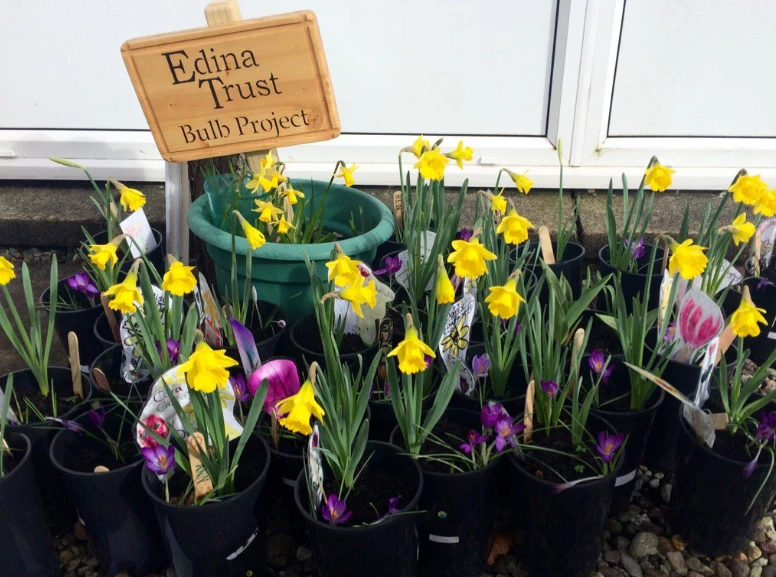
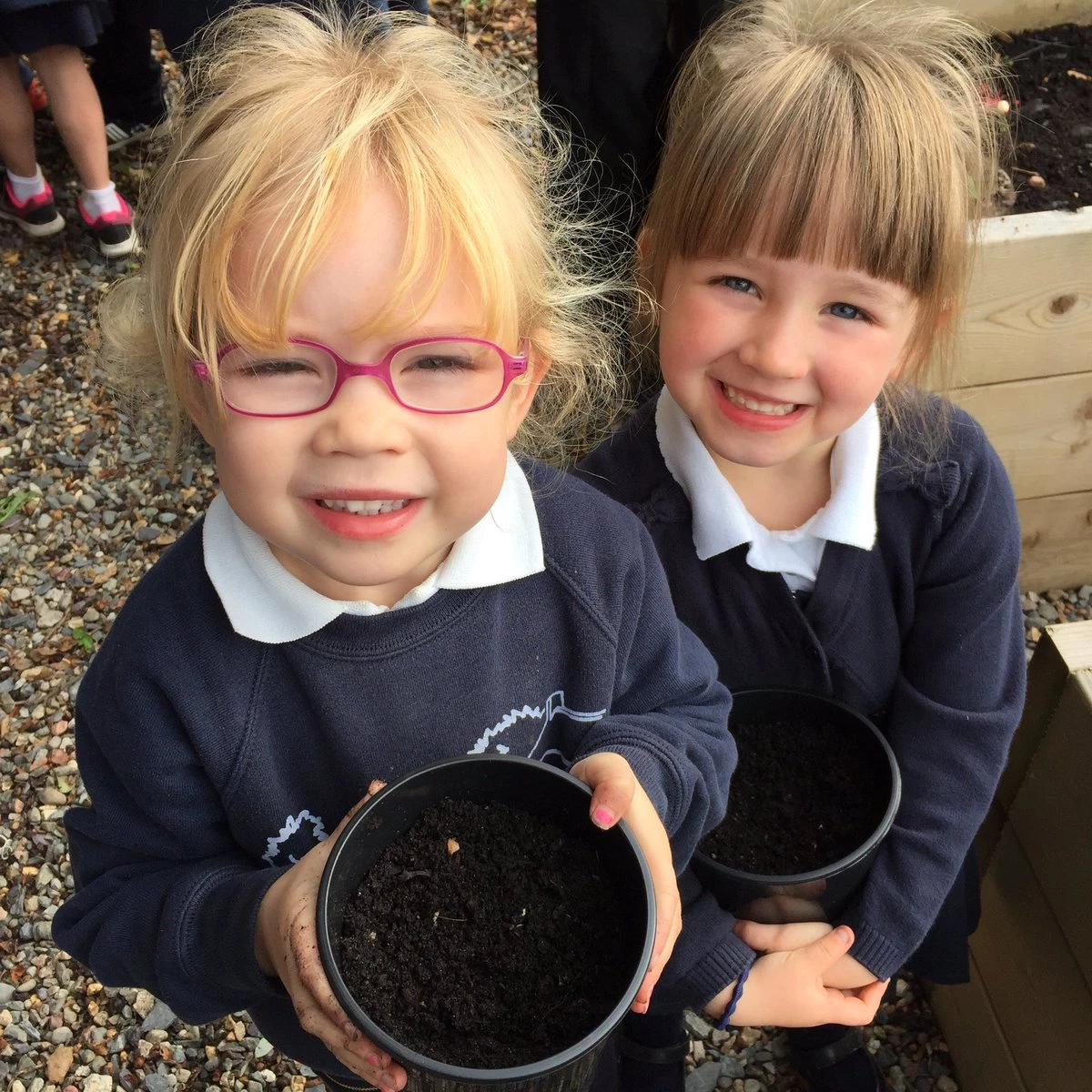
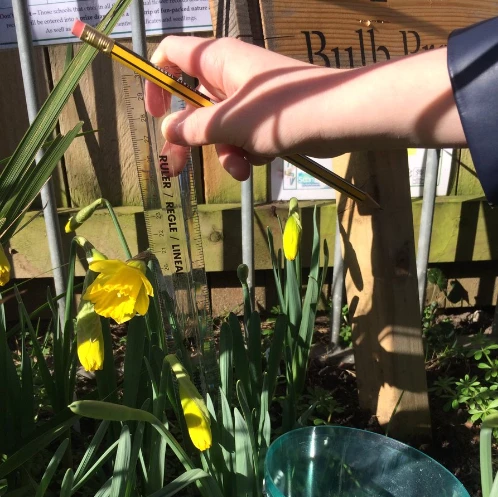
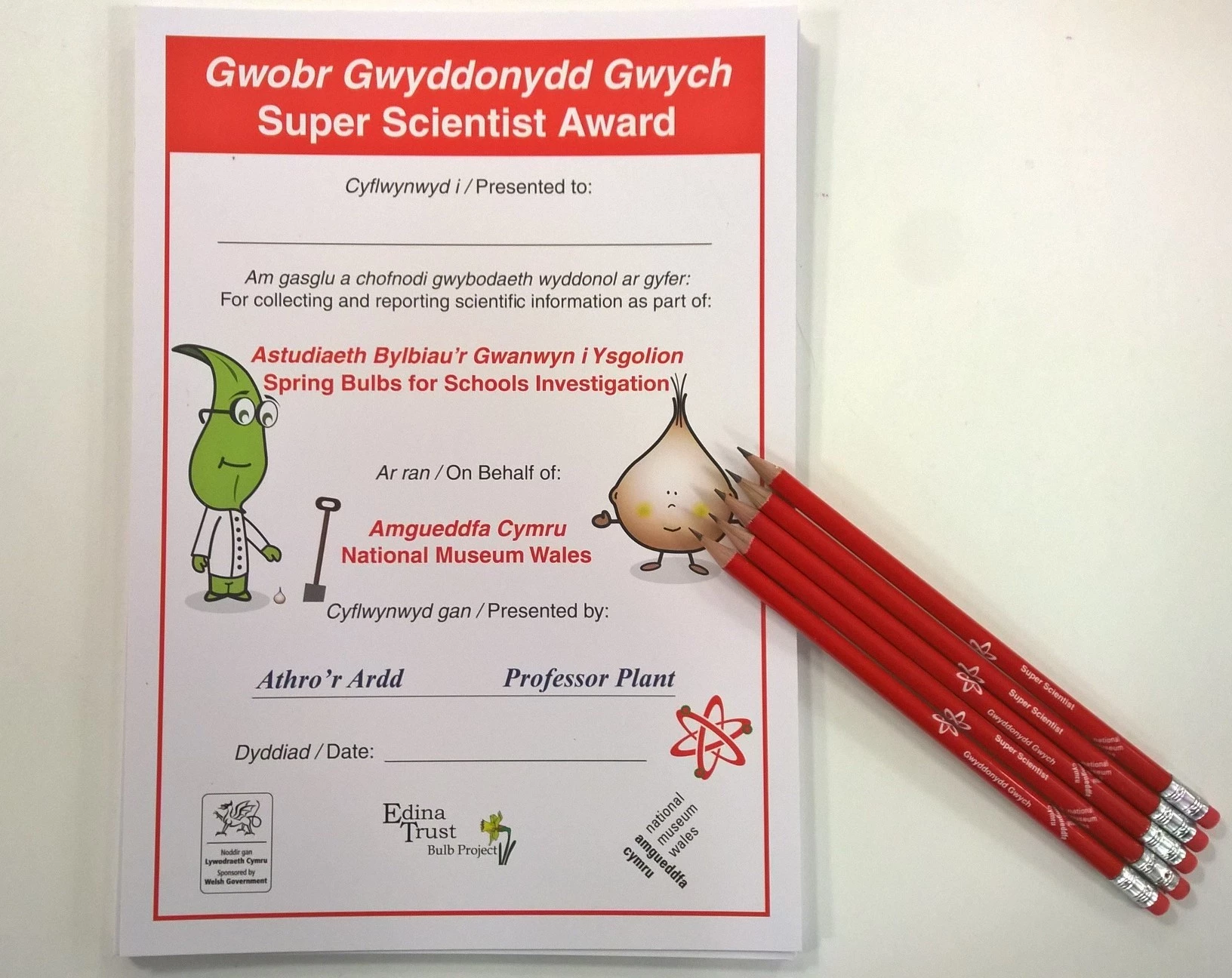
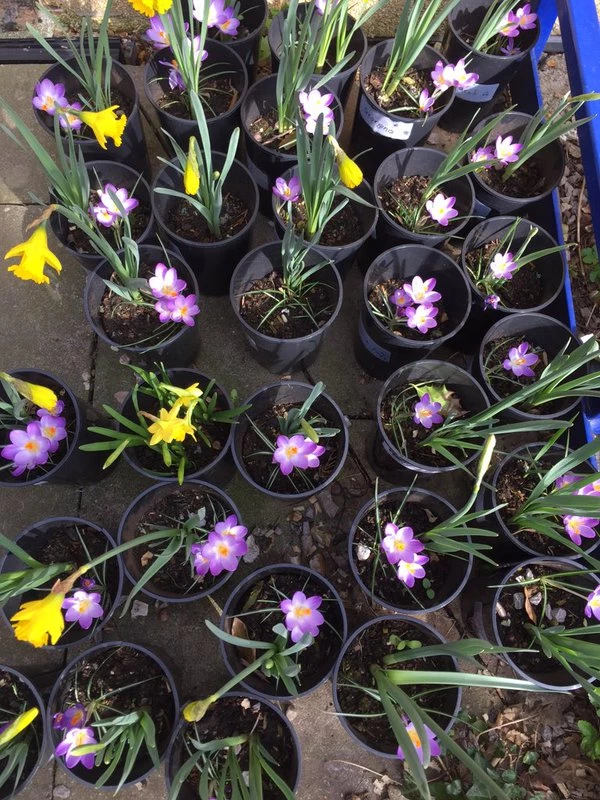
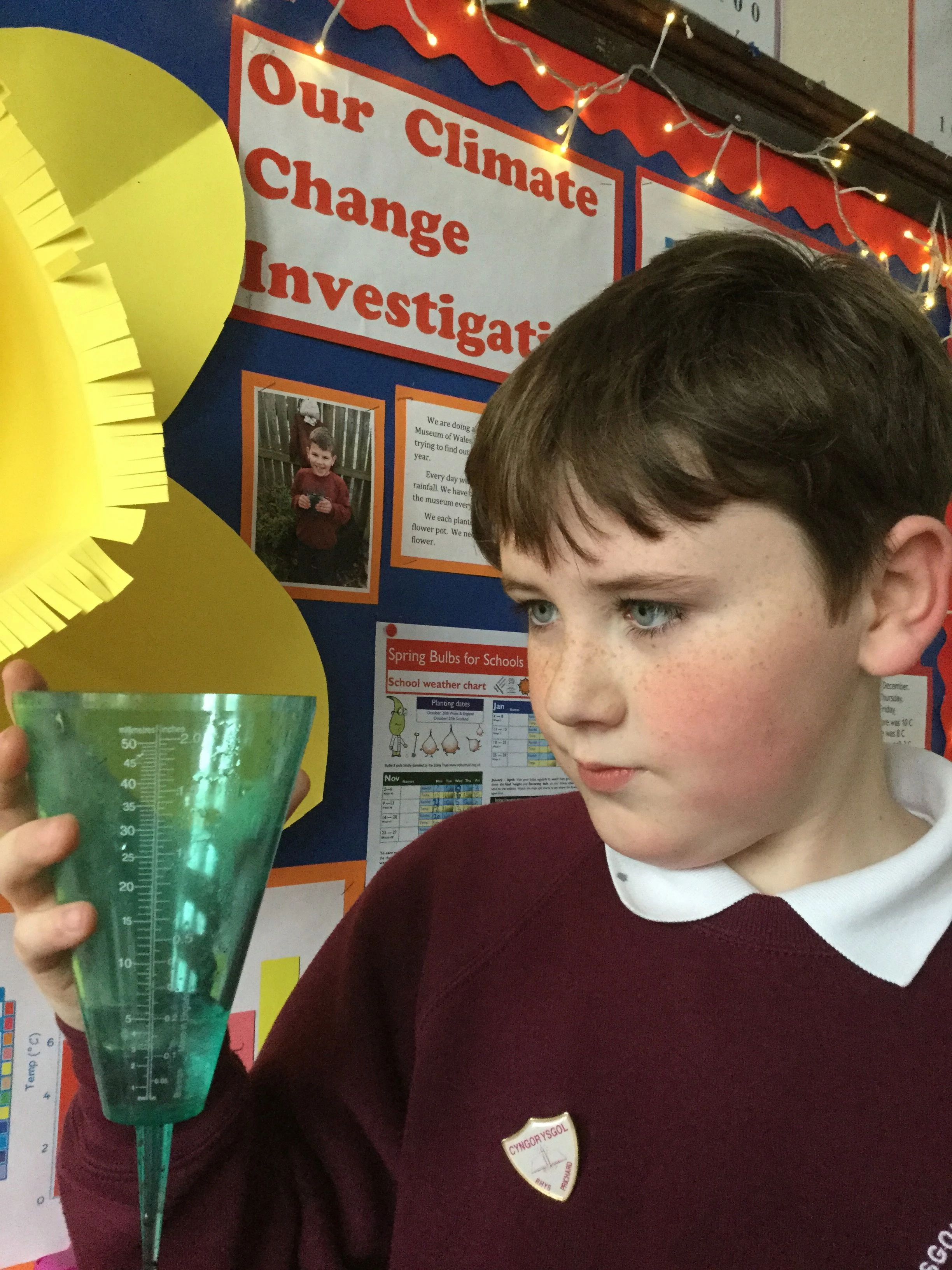
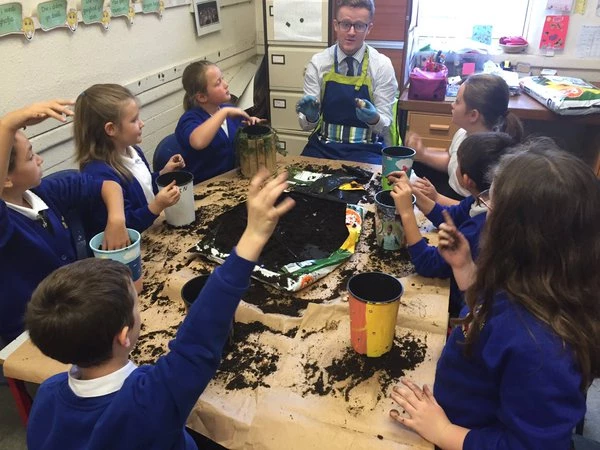
Gwobrau Gwyddonwyr Gwych 2016-17 Penny Dacey, 28 Ebrill 2017 Bydd Amgueddfa Cymru yn dyfarnu tystysgrifau Gwyddonwyr Gwych i ysgolion o ar draws y DU, i gydnabod eu cyfraniad i'r Ymchwiliad Bylbiau’r Gwanwyn I Ysgolion.Llongyfarchiadau anferth i bob un o’r ysgolion!Diolch i bob un o’r 5,098 disgybl a helpodd eleni! Diolch am weithio mor galed yn plannu, arsylwi a chofnodi, rydych yn wir yn Wyddonwyr Gwych! Bydd pob un ohonoch yn derbyn tystysgrif a phensel Gwyddonydd Gwych.Diolch yn fawr i Ymddiriedolaeth Edina am eu nawdd ac am helpu i wireddu’r prosiect.Enillwyr 2017:Lloegr: Carnforth North Road Community Primary SchoolYr Alban: Auchenlodment Primary SchoolCymru: Tonyrefail Primary School Redwyr i fyny: Lloegr:Arkholme C of E Primary SchoolBreckon Hill Primary SchoolHemlington Hall AcademyLadygrove Park Primary SchoolSt Clare's Catholic Primary SchoolSt Michael's CE Aided Primary SchoolSt Nicholas Primary SchoolSt Peter's Primary SchoolYr Alban:Biggar Primary SchoolCarnbroe Primary SchoolGavinburn Primary SchoolCymru:Broad HavenEvenlode PrimaryGlanyfferiHenllys Church in Wales PrimaryRougemont Prep SchoolSt. Robert's Catholic PrimaryTrellech Primary SchoolYsgol Borth Y GestYsgol DeganwyYsgol Gynradd Gymraeg TonyrefailYsgol PentrefoelasYsgol RhostyllenYsgol y Wern Clod uchel:Lloegr:Coppull Parish Church SchoolGarstang St ThomasHudson RoadStanford in the Vale Primary SchoolThe Blake CE Primary SchoolAbbey Primary SchoolYr Alban:Bellyeoman Primary SchoolLawhead SchoolLoch Primary SchoolOur Lady of Peace Primary SchoolSt Mary's Primary SchoolWormit Primary SchoolCymru:Ysgol Tal y BontBlaengwawr Primary SchoolLlangors Church in Wales SchoolLlanharan Primary SchoolLlanvihangel Crucorney Primary SchoolSevern Primary SchoolSt Athan PrimaryYsgol Tanygrisiau Derbyn hadau blodyn yr haulLloegr:Barmston Village Primary SchoolBarnes Junior SchoolBernard Gilpin Primary SchoolBoston West AcademyChorley St James Primary SchoolEllel St John's CE Primary SchoolFosse Way AcademyLeyland Methodist Junior SchoolOur Lady Queen of Peace RCVA Primary SchoolPeel Park Primary SchoolQuernmore Primary SchoolSaint Leonards Church of England Primary SchoolSt Leonard's RC Primary SchoolStaining C of E SchoolUsworth Colliery Primary SchoolYr Alban:Alexander Peden Primary Sch Alexander PedenBarsail Primary SchoolBent Primary SchoolCarbrain Primary SchoolDykesmains Primary SchoolEast Fulton Primary SchoolGreenburn SchoolHill of Beath Primary SchoolKelso High SchoolLanark Primary SchoolLaw Primary SchoolNew Monkland Primary SchoolNewmains Primary SchoolNewport Primary SchoolOur Lady and St Francis Primary SchoolPirnmill Primary SchoolSt Charles Primary SchoolSt Columbkilles Primary SchoolSt Mary's Primary School, LanarkSt Mary's Primary School, PaisleySt Ronan's Primary SchoolCymru:Beulah SchoolCoedpenmaen PrimaryCrymlyn primaryDarran Park PrimarySt. Paul's CIW PrimaryTrallwn PrimaryWhitestone Primary SchoolYsgol PennantYsgol Rhys Prichard Derbyn tystysgrifau a phensiliauLloegr:Alston Lane Catholic Primary SchoolBacup Thorn Primary SchoolBelmont Community Primary SchoolBolton-le-Sands Church of England SchoolConingsby St Michael's Primary SchoolGeorge Washington Primary SchoolTrinity Church of England Methodist Primary SchoolWolvercote Primary SchoolYr Alban::Abronhill Primary SchoolCalderbridge Primary SchoolGlebe Primary SchoolSt Catherine's Primary SchoolStane Primary SchoolWest Primary SchoolCymru:Betws Primary SchoolCastle SchoolMelin Junior SchoolSt Brides Major CW Primary SchoolSt. Michael's RC PrimaryYsgol AbererchYsgol BethelYsgol Betws yn RhosYsgol Bro OgwrYsgol Iau Hen GolwynYsgol PencaeYsgol San SiorYsgol TudweiliogYsgol Ty CochYsgol y Tywyn Diolch i chi am eich holl waith caled Cyfeillion y Gwanwyn,Athro'r Ardd
Beachcomb take 2 Stacey Owen, 27 Ebrill 2017 Looking across Swansea Bay on a chilly spring morning and seeing that the tide was out came with a sigh of relief as this meant we didn’t have to wait an hour or so to get started with our beachcomb.I joined Swansea Museum on The Mumbles side of the Bay to take part in one of their community projects that aims to engage local communities with their pasts. On this occasion the museum teamed up with the Llanrhidian Women’s Institute and the Gurnos Men’s Community First group to take part in a beachcomb led by archaeologist Paul Huckfield, from the Glamorgan Gwent Archaeological Trust.All wrapped up in extra layers we were ready to begin our trek across the swamp-like beach, luckily most of us received the wellies memo and they were definitely needed. Paul wanted to create a sense of what the landscape would have been like during the Bronze Age and took us to areas on the beach where some of the landscape remained fairly similar and unchanged. “We’re standing on the actual ground surface as it would have been in the Bronze Age. You can see the peat levels just here show what would have been around in the Bronze Age; you can see that this is black in colour from the trees and bits of foliage. So you’re actually standing in the past at around 4,000 years ago.” Travelling through time across the bay allowed us to think of what life would have been like 4,000 years ago, what is now a beach would have been a woodland and shrubbery area surrounded with fresh water pools.Paul talks about some of the reason why the landscape changed and during what periods. You can watch the clip HERE:Bringing us through time to the 19th and 20th century we were then led to some of the remaining shipwrecks found on Swansea Bay. On the Mumbles side of the bay alone we could spot around 14 shipwrecks and vessels. Vessel remains are still on the bay and these would have been used to protect the area from submarine attacks during the Second World War. Paul said: “The whole beach is covered in metal uprights and wire to stop enemy gliders coming onto the beach.” Another shipwreck was part of an oyster fleet. We learnt that the bay was a natural resource for oysters and they were a major food source, some dating back to Roman times, however this source was destroyed during the industrial period.After having a look around the beach and learning how it has changed through time with different inhabitants we were then given clear bags and told to try and find our own items.We found a variety of items during the beachcomb from ceramics, beer bottles from London, fossils and different types of slate and stone. The items found today along with others from previous beachcombs with Swansea Museum will be kept and made into a mosaic for public viewing in the future. Swansea Museum are currently working on a project called ‘The Lost Treasures of Swansea Bay’, which is funded by the help of the ‘Saving Treasures; Telling Stories’ project and you can read about the last walk I attended with them HERE. Saving Treasures is funded by the Heritage Lottery Fund which is acquiring archaeological objects for local and national collections and providing training for heritage professionals and volunteers.
Work experience with the Saving Treasures; Telling Stories Project (April 17) Stacey Owen, 26 Ebrill 2017 By Rebecca LingI took part in a two week work placement at The National Museum Cardiff to work on a project called Saving Treasures; Telling Stories. I wasn’t too sure what to expect as a journalism student or how working at a museum could help enhance my journalistic skills, but I was ready to explore new ways of researching and writing stories and was pleasantly surprised with just how hands-on the placement was.Saving Treasures; Telling Stories made me realise how I can help bring history to life through researching around archaeological finds and discovering that every item has a past and story to tell. The first day was an introduction to the department and a chance for us to find out more about the project itself as well as the role of The Portable Antiquities Scheme in Wales to find out how that fits into the Saving Treasures; Telling Stories Project. I was fortunate enough to have a look around, almost a behind the scenes tour, to see some of the interesting finds that weren’t currently on display. I also got to get a close up view as to what was going on the conservation laboratory as I watched the conservators in action!So where does journalism come into it all?During my two weeks I conducted phone interviews with curators, archaeologists and metal detectorists before having to transcribe these and write up blogs and articles. We also had the opportunity to film on location at Pontypool Museum and talk to someone whose recent treasure find is now going to be displayed at the museum for the first time. I wrote press releases covering upcoming events and even was invited to attend an oral history interview training course to learn different interview techniques and skills. From camera work to interviewing there was never a dull moment and I found myself busy each day. The placement has inspired me to be more creative with my journalistic skills and to think outside the box, I didn’t know from my first day how I would be able to bring archaeology to life and create current and relevant stories in the public interest.Overall this experience has made me aware that archaeology evokes important questions that hadn’t crossed my mind before. Items and stories I have worked on during my time at Saving Treasures; Telling Stories make me wonder- Where did this come from? What importance does that piece of history hold? But more interestingly it makes you imagine what life was like during that time period, it's almost as if you are time travelling.
Torfaen Treasure day Stacey Owen, 12 Ebrill 2017 Last Friday we attended the Torfaen Treasure Day at Pontypool Museum, where the latest treasure finds from the Trevethin and Henllys area were presented.The treasure included a decorative gold finger-ring from the late 16th or early 17th century, as well as Bronze Age artefacts, which date back 3,000 years. The Bronze Age hoard consists of five Bronze Age artefacts, including three socketed axes and two spearheads and these will be the first Bronze Age items to be displayed at Pontypool Museum. Rt Hon. Lord Paul Murphy of Torfaen, President of the Torfaen Museum Trust, welcomed in the event warming up the audience before presentations from Adam Gwilt and Rhianydd Biebrach from Amgueddfa Cymru and local MP Mr Nick Thomas-Symonds followed.The newly declared treasure was presented to the museum by Adam Gwilt, the Principal Curator of Prehistory in the History & Archaeology Department. Adam talked about the history of the treasure and provided background information so the audience could gain a further understanding of the items. Since the items were acquired by Pontypool Museum with grant funding from the Saving Treasures;Telling Stories Project Dr Rhianydd Biebrach, the Saving Treasures; Telling Stories Project Officer discussed the key messages and aims behind the project. The Saving Treasures; Telling Stories project is currently working with the University of South Wales assisting student journalists for a two-week work placement where they can use their journalistic writing and interviewing skills to help tell the stories behind items. We thought it would be a good idea to send them up to Pontypool Museum before the event to talk to the curators at the museum and the finders of the treasure.They spoke to Gareth Wileman, a metal detectorist in the Pontypool area who found the hoard back in November 2014, and asked him how he felt about his discovery being exhibited. While we would have loved to hear from Simon Harrison, the finder of the gold finger-ring, he wasn’t available at the time so a potential phone interview looks likely for the next batch of students.The students are still currently working on this project and will provide us with written and video content of their interview - so keep your eyes peeled on our Twitter and Facebook account for more content and videos coming your way!The hoard is being acquired by Pontypool Museum with grant funding from the Saving Treasures;Telling Stories Project. This project, funded via the Collecting Cultures programme of the Heritage Lottery Fund, is acquiring archaeological objects discovered by members of the public for public museum collections across Wales. The project is also encouraging communities to engage with their pasts and portable archaeological heritage, by funding a programme of community archaeology projects led by staff in museums throughout Wales.