Cyffredinol

ARTIST'S PROJECT: Celebrating 10 Years of Volunteering

A few months ago, I was given the opportunity of a lifetime. I was invited to work at Amgueddfa Cymru as an artist in residence and asked to organise a project to celebrate 10 years of the volunteer programme. The project has consisted of a series of creative workshops with volunteers at sites across the country, which have fed into the creation of a celebratory artwork.

My name’s Robin Bonar-Law, I’m a self-taught artist and graphic design graduate of Falmouth University. From the time of my graduation up until my residency, I have been working in the catering industry so my artistic outlet has been primarily restricted to latte art. The creative industries are incredibly competitive and coming from a low-income family I have often felt stifled by a lack of social mobility. I take portrait commissions and enter competitions when I can but over the coming years, I would like to make the rewarding leap into self-employment by becoming a freelance mural artist.

Early this year I applied to an artist opportunity based at St Fagan’s. After a thoroughly exciting interview process, I was asked to join the team and given an open brief, ‘Create an artwork that is inspired by the volunteers and showcases the amazing contribution they have given to the museum. The process should also include a series of creative workshops with volunteers.’ With over 900 volunteers this year alone this was no small task, nonetheless, overflowing with unbounded enthusiasm and a sense of freedom (from the coffee shop) I got to work planning.

The project is split into two main components; the workshops and the final artwork. I love drawing and wanted to run a series of ‘mark-making’ workshops that help re-introduce the volunteers to the idea of drawing as something that’s fun and relaxing. By normalising and simplifying drawing through a series of games and activities, I hoped to make it less daunting and something relaxing that they may enjoy doing brief moments of spare time.

Blog gwirfoddoli

As well as allowing me to teach the volunteers new drawing techniques the workshops served as a time for the volunteers to teach me about their roles and experiences at the museum. From the beginning of the project, I have wanted to create an authentic artwork that represents the true collaborative spirit of the volunteer workforce and the best way to do that is to meet them and get their personal input. Visiting the sites and talking to members of staff was another valuable resource.

I have met such a large number of enthusiastic and happy volunteers, they are all equally passionate and have truly enriched my experience. The workshops have been far more rewarding than I could ever have expected, I hope the volunteers enjoyed them as much as I did.

My favourite part of any project like this is the final, hands-on crafting of a design, but there’s no point rushing into it without a strong design process as a foundation. Alongside the workshops, I started amassing a large pool of research to help shape the direction of the artwork. I gathered inspiration from celebratory imagery such as friendly society banners, religious artworks, Flags, political/social murals etc. I also furthered my knowledge of Welsh craft and traditions by meeting with curators, visiting volunteers outside of workshops and making use of the information on display to the public. I wanted to create a final piece with mulitple layers of complexity; representing the wildly diverse range of roles, having that celebratory feel and being reminiscent of the traditional craft that imbues each site.

I am in the final stages of the design process and putting the finishing touches to my artwork. Once complete, the modular, hanging banner inspired artwork will be transformed into a majestic, megalithic and meaningful mural adorning the walls of Tŷ Gwyrdd (the new volunteer hub) and made into a digital print for each of the 7 museums around Wales. It will also be made into tote bags and given to each of the volunteers. From the very beginning, I have wanted to create a purposeful artwork that rejuvenates and enriches the volunteer spaces, fostering an environment that helps individuals find a sense of well-being, pride and identity. I can’t wait to show you all the finished product.

I am incredibly grateful for the museum and all the staff that have given me this once-in-a-lifetime opportunity.


Robin's placement was funded by the Hands on Heritage youth project at Amgueddfa Cymru, which is supported through the National Lottery Heritage Funds ‘Kick the Dust’


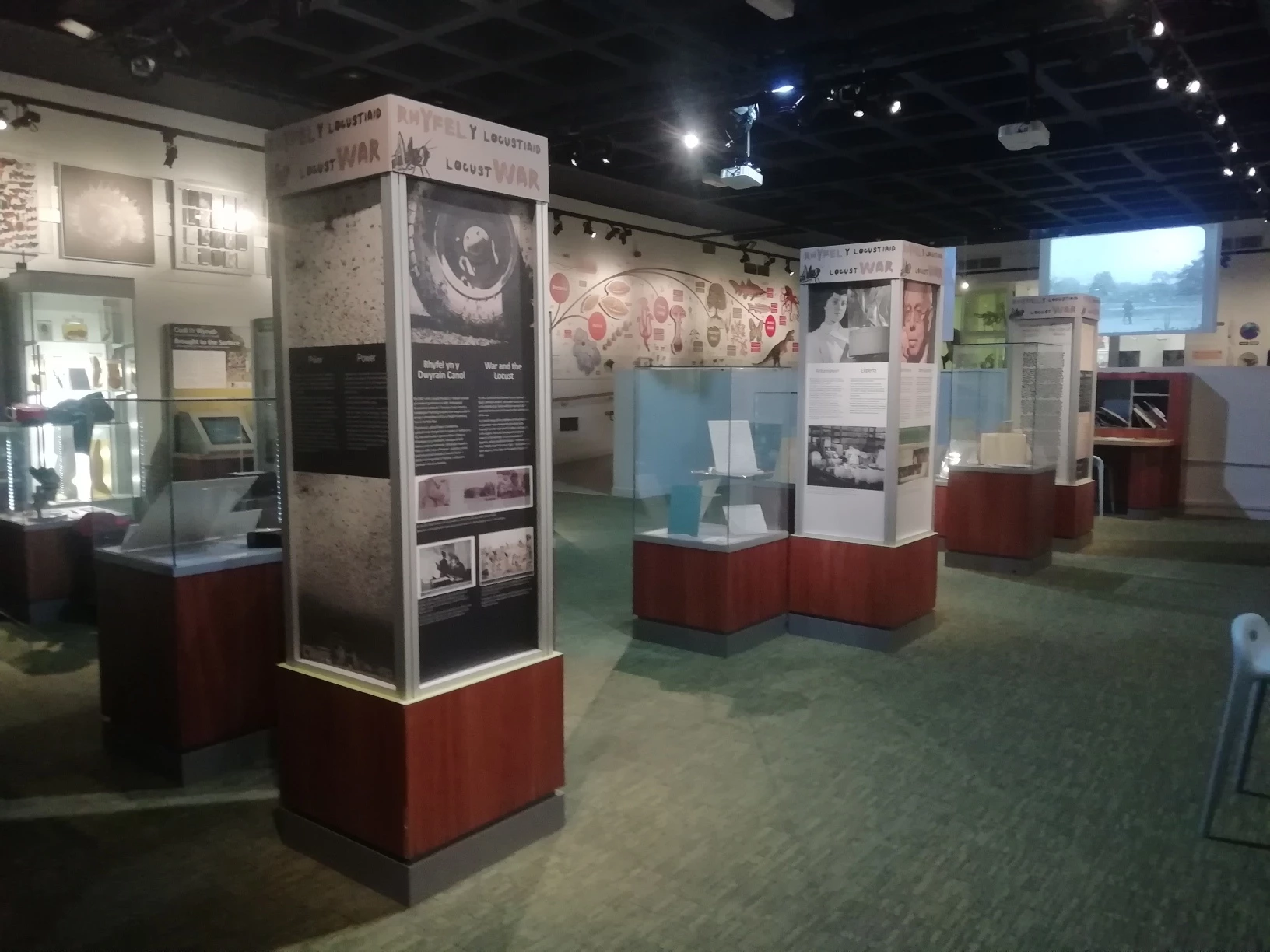
'Locust War' - A new display in our InSight Gallery

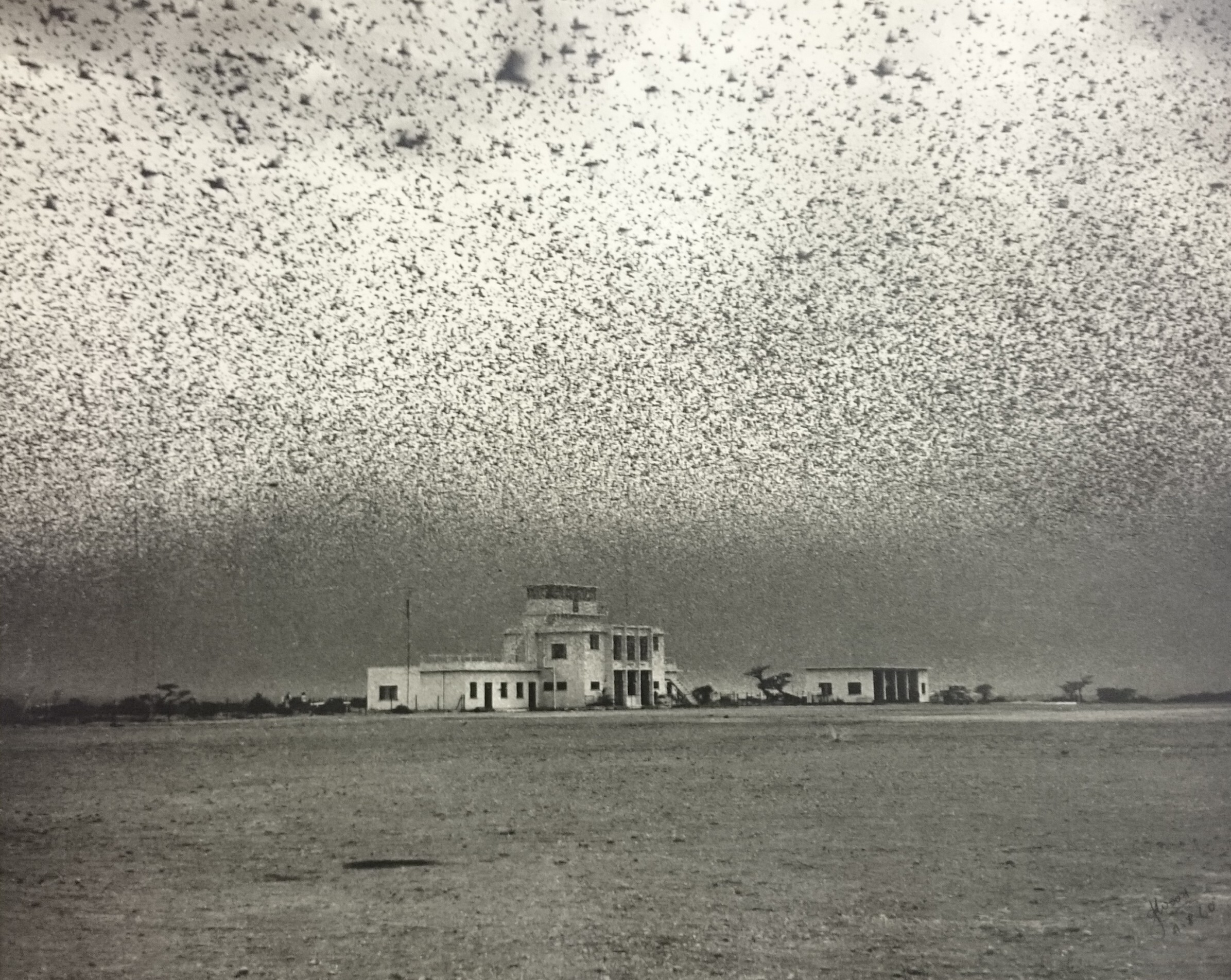
Locust swarms have for centuries destroyed crops and threatened food supplies across large parts of Africa, the Middle East, and Asia. This threat continues today - a recent plague in Madagascar destroyed 2.3 million hectares of crops. Controlling it took three years and cost $37 million.

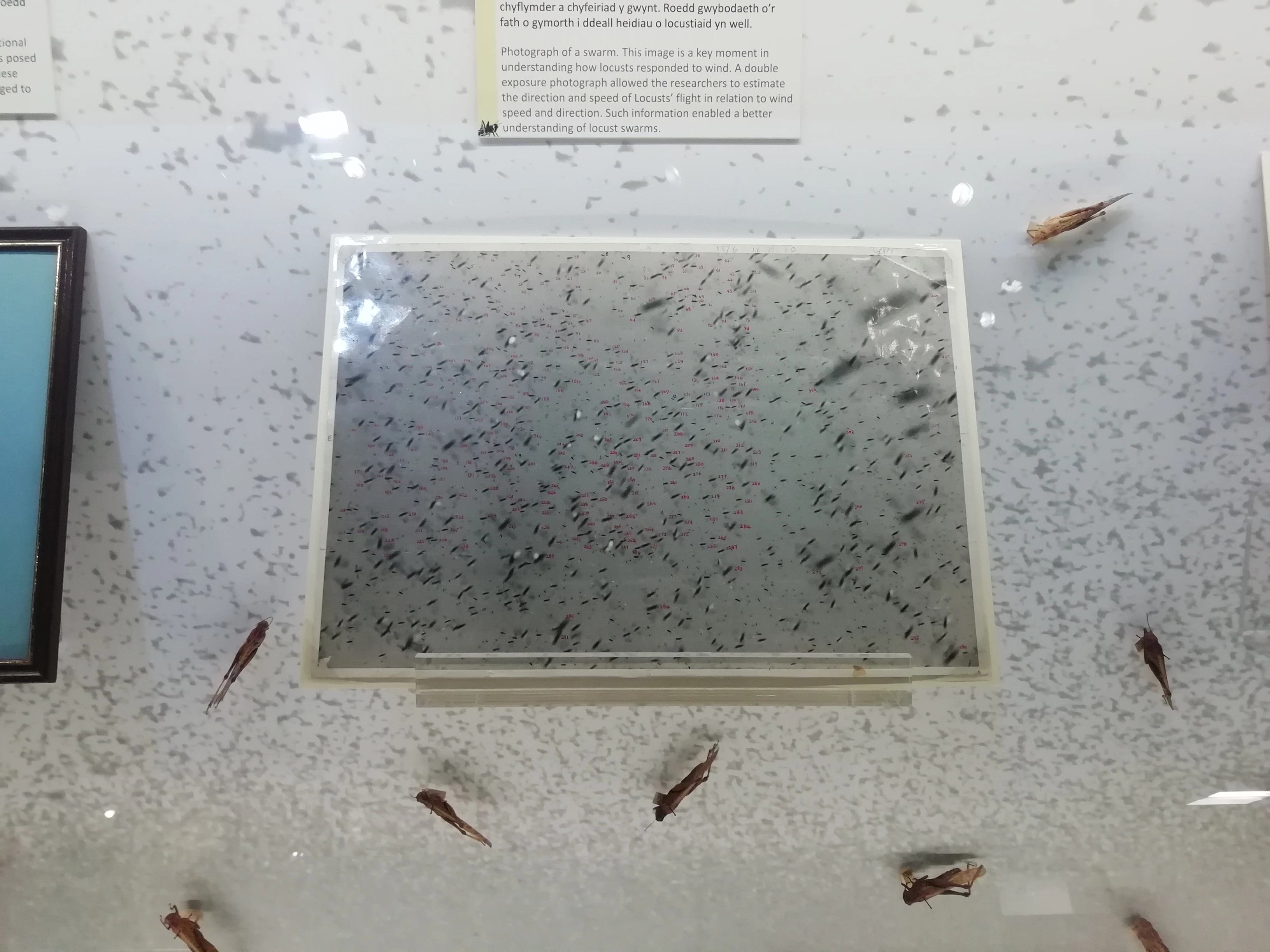
Desert Locust (Schistocerca gregaria) swarms can move hundreds of miles within a vast ‘invasion area’ that can span dozens of countries, and even continents. To better understand and control such plagues of locusts the British founded the Anti-Locust Research Centre (ALRC) in the 1920s.

The ALRC took the lead in monitoring, studying, forecasting and controlling locust swarms. To do this they had to work with different experts including entomologists (insect specialists), cartographers (map makers), toxicologists (experts on poison), explorers, photographers, the military and local people.

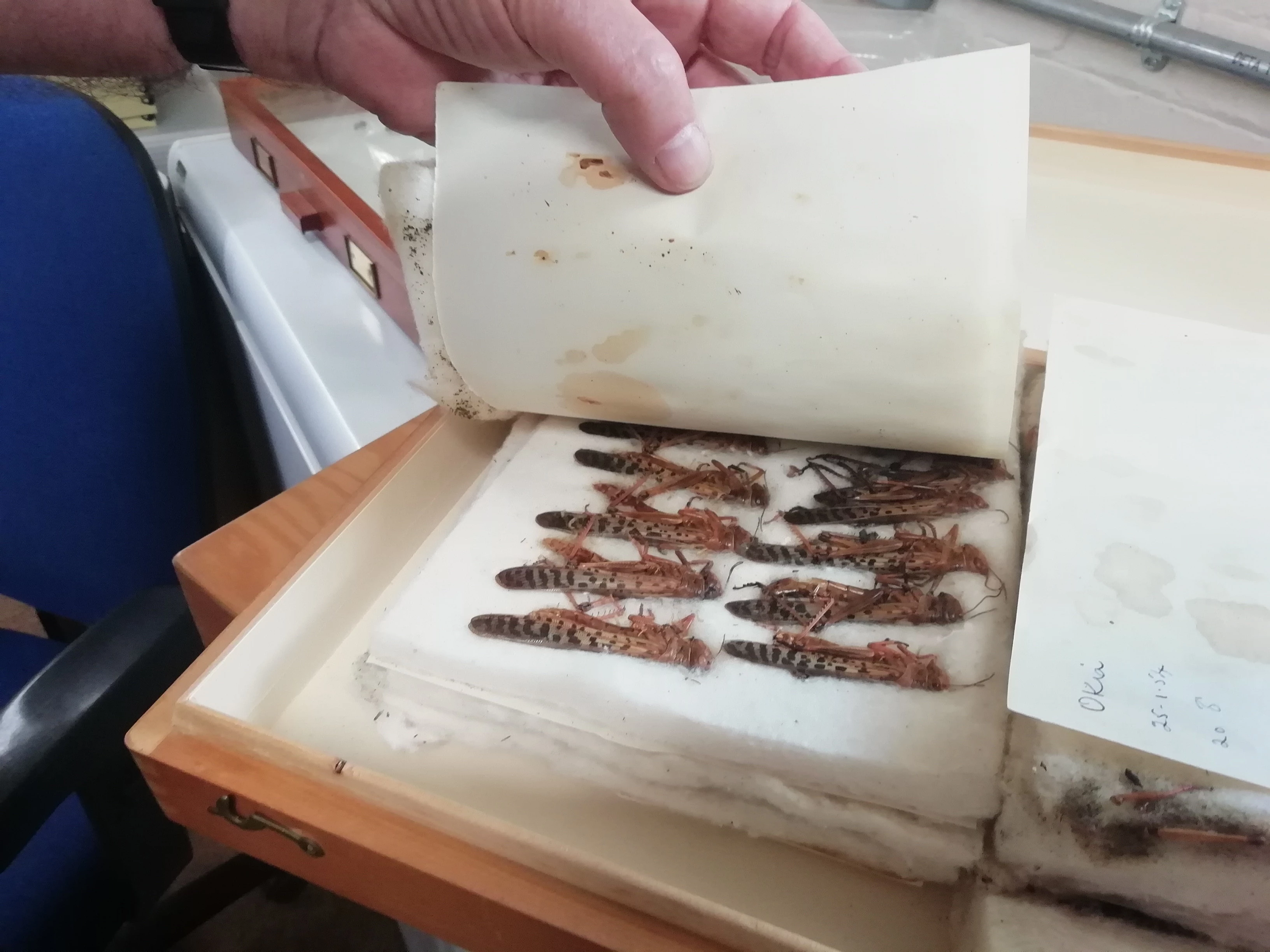
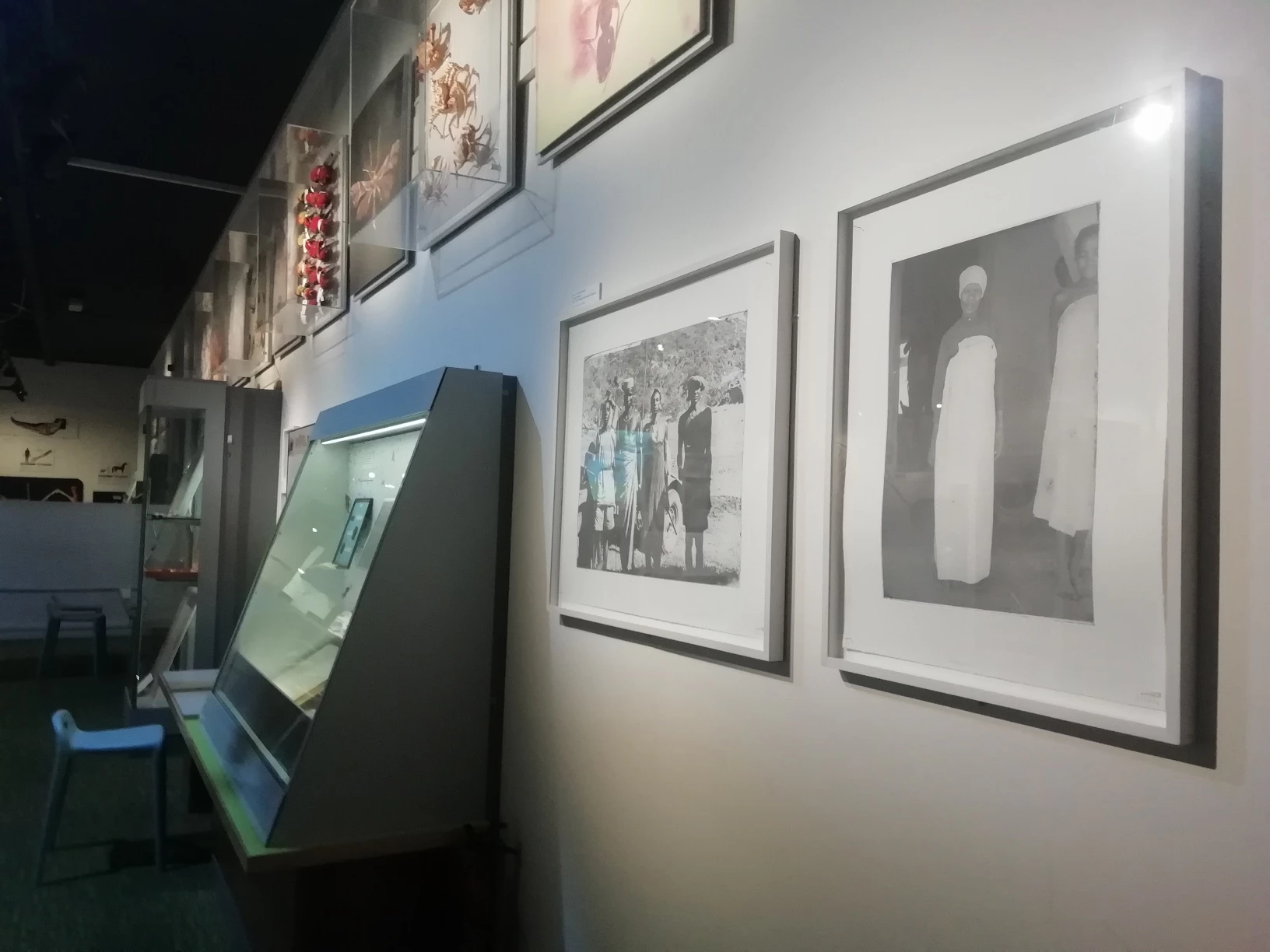
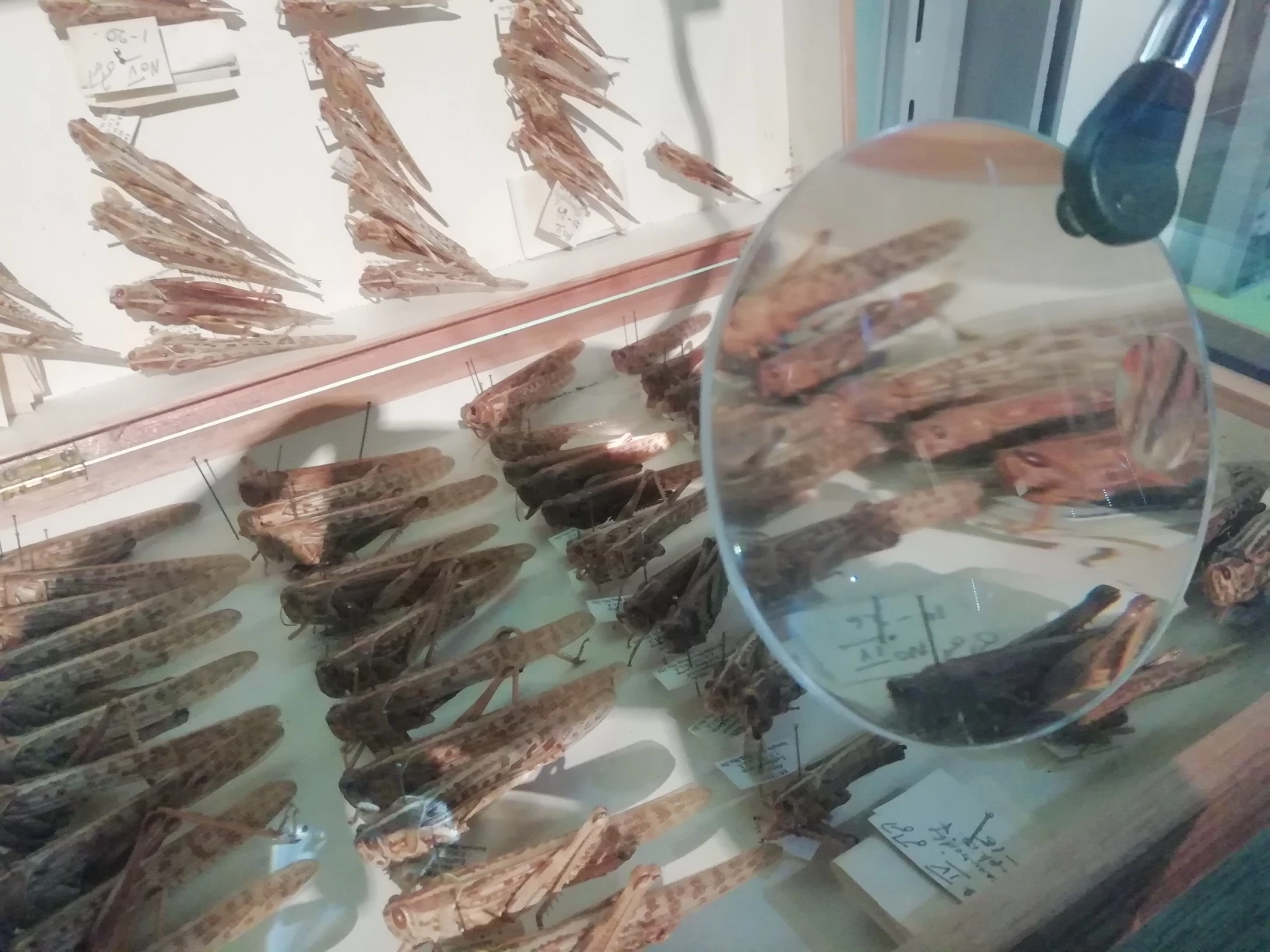
For decades the ALRC gathered information on locusts worldwide. This now forms an incredible archive of thousands of documents, maps and photographs held at the Natural History Museum in London, and a collection of over 70,000 locust specimens that are now part of the collections here at Amgueddfa Cymru.

Our new display ‘Locust War’ reunites the archive and specimens to rediscover the remarkable work of the ALRC and the challenges it faced to understand and control the desert locust.

The exhibition is the work of a collaborative research project led by academics from the University of Warwick, University of Portsmouth and Glasgow School of Art, and supported by the Arts and Humanities Research Council.

‘Locust War’ is part of the displays in our InSight Gallery, and runs until the 16th September 2019.

Shells at the source of “Brought to the Surface”

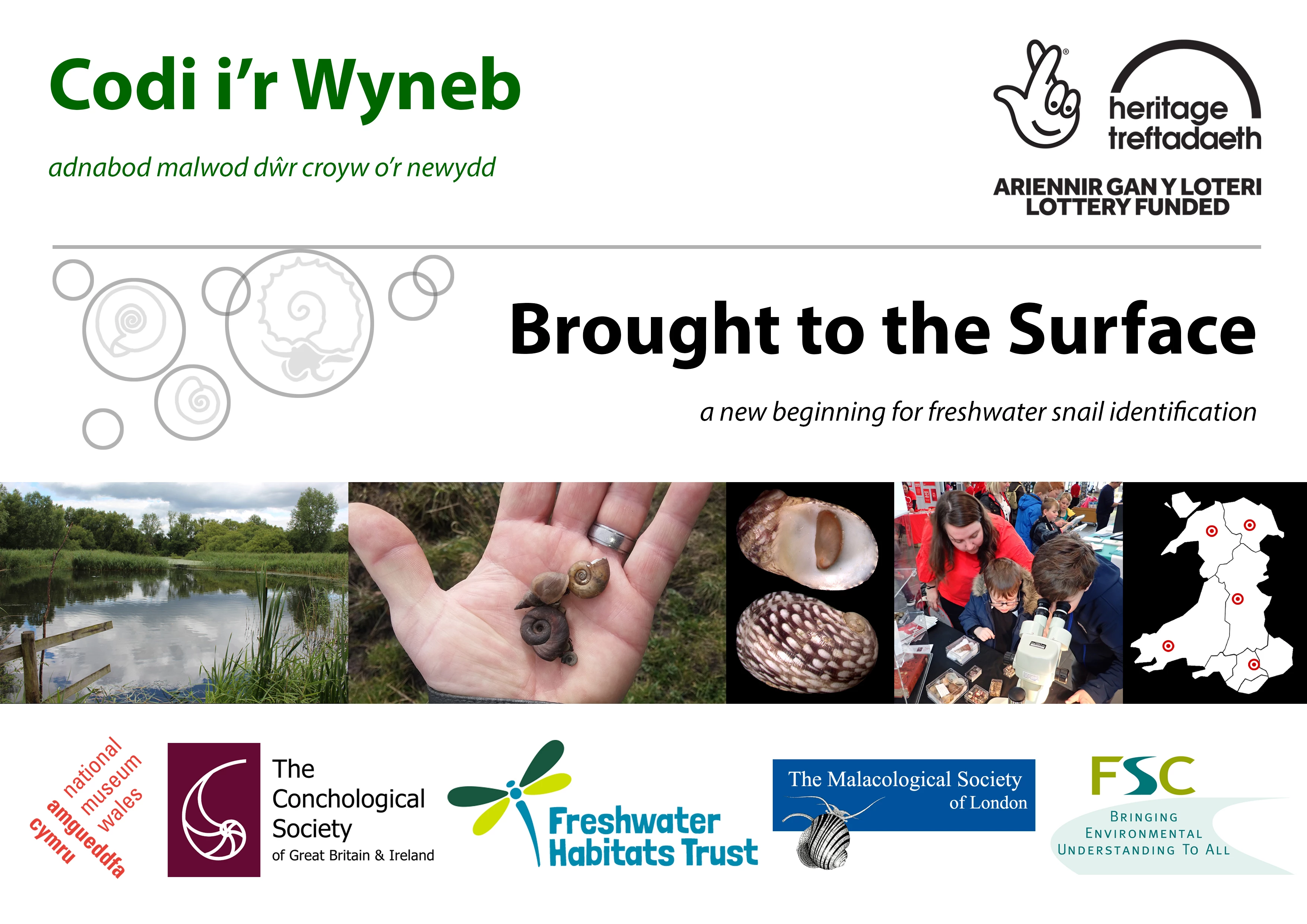
Every river has its source, starting small then gathering pace. Our project on freshwater snails is doing just that as we tumble into 2019. “Codi i’r Wyneb – Brought to the Surface is a 2-year project to create a new guide to the freshwater snails of Britain and Ireland, supported by the National Lottery through the Heritage Lottery Fund. Where better to begin than with Amgueddfa Cymru’s world class Mollusca collections?

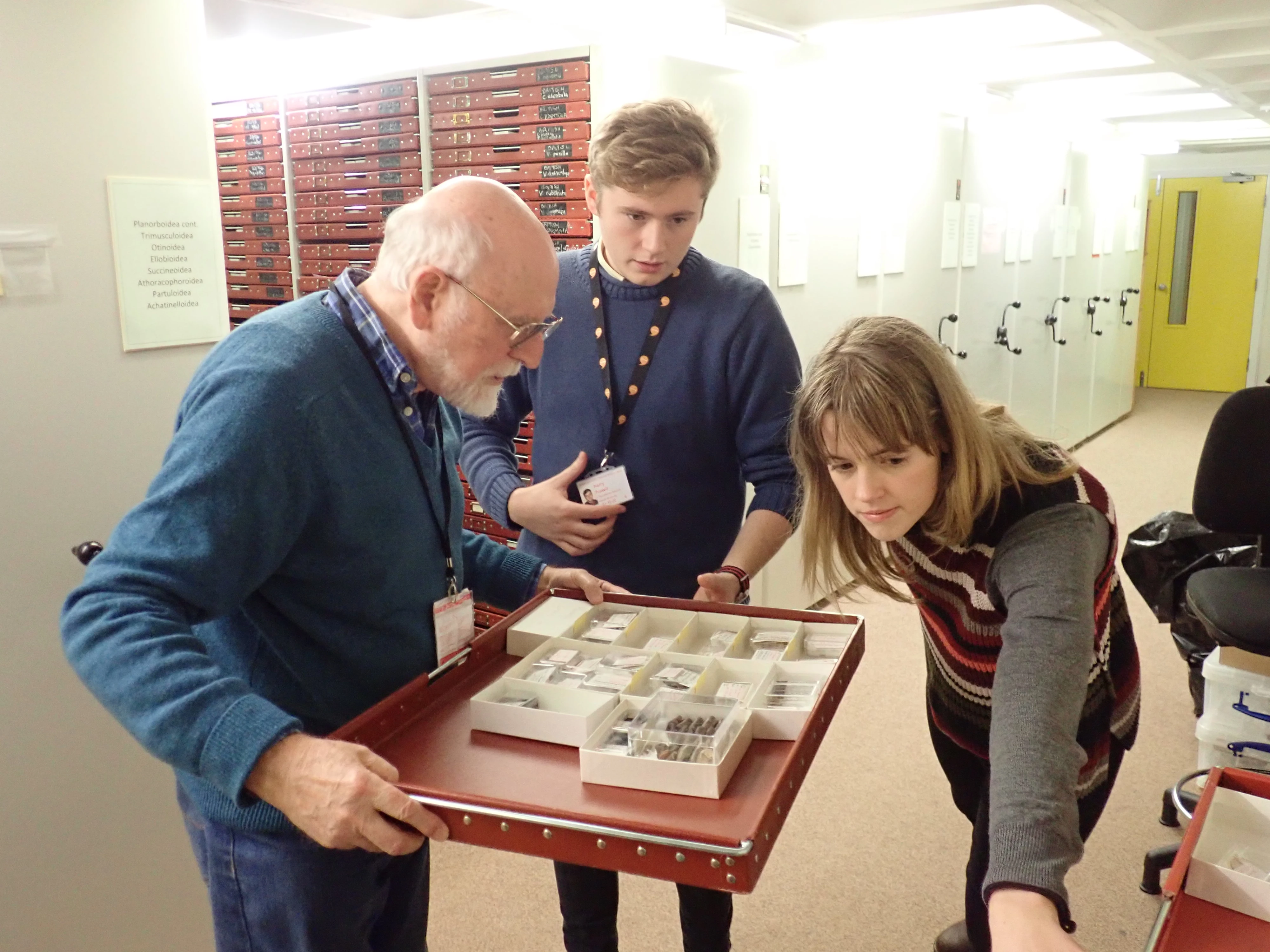
This month we are joined by three new faces: our Project Officer, Harry Powell, and volunteers Jelena Nefjodova and Mike Tynen. Harry studied biology and ecology at Plymouth University, and is a former volunteer here himself. Mike spent many years with the Cheshire Wildlife Trust and Jelena is a current student at Cardiff University. All four of us have gotten stuck in to the snail collections here, of which we’ll say more in a moment.

To date over 1000 other people, and several organisations, have already engaged with Brought to the Surface. Our travelling display was especially popular at Swansea Science Festival in November 2018, where many members of the public took the chance to get up close (up to 50X magnification!) with British and foreign freshwater snails on our stand. We also showcased specimens at two conferences at the Museum, Unknown Wales (Wildlife Trust of South and West Wales) and at the Wales Biodiversity Partnership.

These displays will evolve as the project does, but also on the way is a more permanent exhibit at the Museum, now in the design stages. This gives us an excuse to feature a photo by our partner Hannah Shaw, of the magnificent Llangloffan Fen near Fishguard, Pembrokeshire. We’ve been looking for a lush landscape, captured in summer, to make a good backdrop for the display. It’s also a reminder that, having passed the solstice, outdoor snail activities are not too far away.

Summer will also bring our series of “Snail Day” training and key testing events around Wales. Our partner Mike Dobson has been especially quick of the mark in helping draft a comprehensive key to try out with the public at these. We are fortunate in having such a range of snail specimens from the Museum to use in these activities, but it will also be fun for people to have a go at finding and identifying their own. After all, the ideal key is one that should allow a total beginner to identify the very first snail they find…

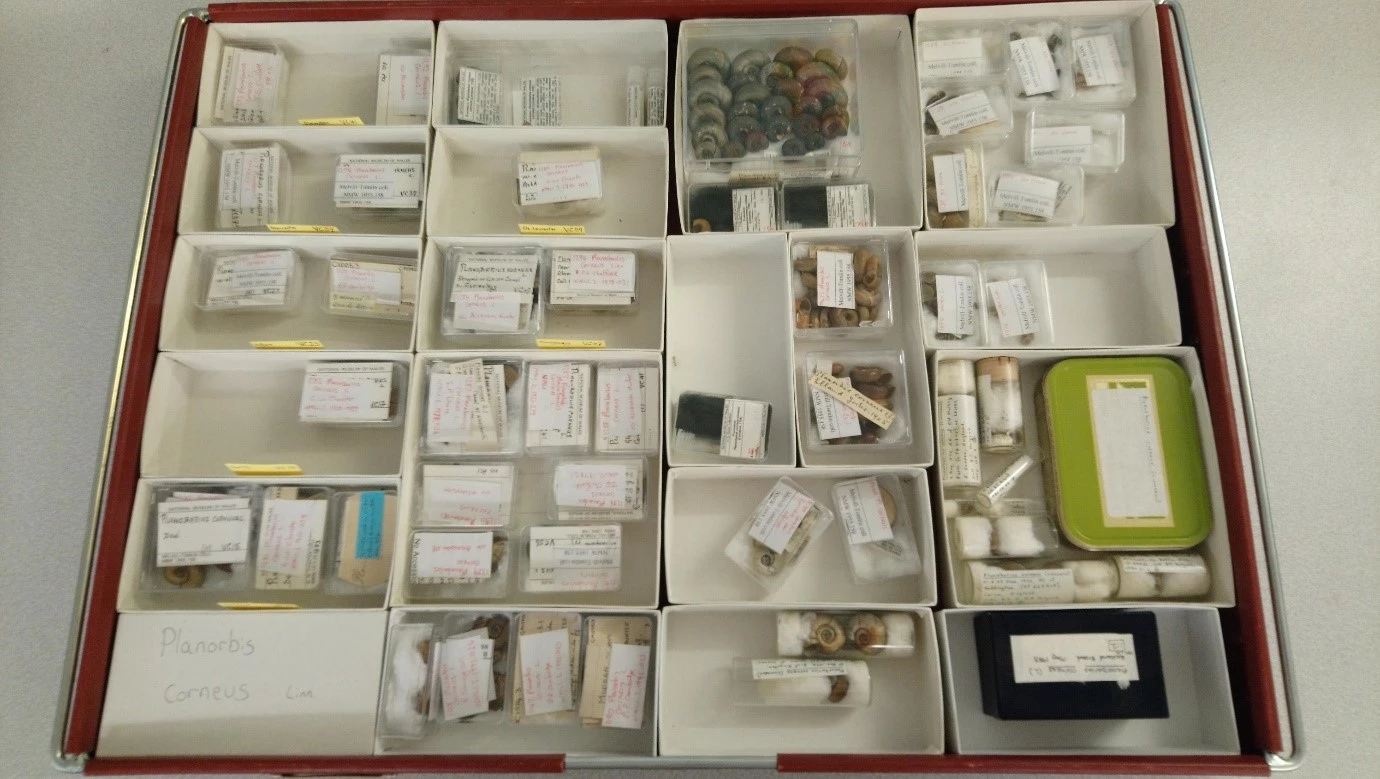
And so back to the collections, the foundation of this kind of biology and a unique asset of museums. Harry, Mike and Jelena have been helping review and curate what we already have, and others have kindly been sending specimens from England, Scotland and Northern Ireland for our project. Particular thanks to our partner Martin Willing from the Conchological Society, who is hot on the trail of Britain’s more obscure freshwater snail species. Our Twitter account @CardiffCurator will feature many of these over the next couple of years with the hashtag #FreshwaterSnailoftheFortnight. The photos, descriptions and DNA sequences from 150 years’ worth of snail study will all be the basis for our eventual Field Studies Council publication.

We’ll report again as more people, places and snails join us on our journey.

Coast – an exhibition fusing art, science and museum activism

Over the past few months the museum has been working closely with colleagues at the beautiful Oriel y Parc gallery in St Davids to bring together an exhibition celebrating Wales ‘Year of the Sea’ called ‘Coast’.

The exhibition fuses artworks and natural science specimens specially selected by the Oriel y Parc team from Amgueddfa Cymru’s collections, and displays these alongside some of the recent museum activisim work of Amgueddfa Cymru’s 'Youth Forum Group' highlighting the issues of plastic pollution.

The multidisciplinary nature of the display explores how the sea has inspired artists for centuries, highlights the biodiversity of the Pembrokeshire coast, and how plastic now impacts on the environment and our everyday life.

Centre piece to the art works is Jan van de Cappelle’s masterpiece ‘A Calm’, surrounded by sea and coast inspired paintings from a selection of other artists including Cedric Morris and John Kyffin Williams. Amongst these works are specimens from the natural science collections capturing the richness of Pembrokeshire's wildlife, including the skeleton of a leatherback turtle found dead on Skomer Island in 1988.

The turtle had in the past been on display at the visitor centre on Skomer, but was removed a number of years back when the buildings on the Island underwent redevelopment. In need of some repairs and cleaning, the specimen became an excellent project for one of our conservation student placements at the museum, Owen Lazzari. The end result has enabled us to bring the specimen back to Pembrokeshire to form one of the centrepieces of the exhibition.

Other highlights from the natural science collections include one of our historic Blaschka glass models dating from the late 1800s, and a Goose barnacle covered builder's helmet found off the Welsh Coast.

Further information can be found on Oriel y Parc's website: https://www.pembrokeshirecoast.wales


Who Decides? - what you had to say

Hi, I’m Thea, a sixth form student from Shropshire who decided to create this short video as part of my work experience at the National Museum Cardiff.

I had heard about Who Decides? before I became involved in the exhibition, so I was very eager to find out more. After working with the public opinion cards, speaking to the people involved in the museum and doing some short interviews, I created an animation that I thought would best reflect the aims of exhibition and the feedback it had received.

I am passionate about art and against the idea that art and museums are ‘elitist’ or should be for the ‘privileged’ rather than the majority, so I wanted to focus on this issue in the video.

Working with the Wallich

The exhibition itself was incredibly eye opening for me; the museum had decided to work with the charity The Wallich to involve people with experience of homlessness in the process of designing and creating the exhibit and gives the public the chance to choose some of the artwork on display. I haven't seen an exhibition that has ever taken this kind of approach, so I found it intriguing to see how others reacted to the idea.

I hope this refreshing approach to curation will be an archetype for future exhibits and museums because it challenges what we usually connote with galleries and exhibits and hopefully encourages more people to visit exhibitions and museums.

Who Decides? is on show at National Museum Cardiff until 2 September 2018. You can also contribute to Who Decides? by voting for your favourite work to be ‘released’ from the store and placed on public display.