: Amgueddfeydd, Arddangosfeydd a Digwyddiadau

Beth sy’n digwydd i ŵyn Sain Ffagan?

Aled Jones, 14 Mawrth 2018

Cwestiwn sy’n cael ei gofyn yn aml i’r tîm ŵyna yw beth sydd yn digwydd i’r ŵyn ar fferm Llwyn-Yr-Eos unwaith mae’r tymor wyna ar ben?

Mae’r ŵyn ar y fferm yn mynd allan i bori ar y gwair ac yn cael eu symud yn aml o amgylch caeau’r amgueddfa.

Byddwn yn dewis yr ŵyn gorau ac yn eu cadw ar gyfer bridio yma ar y fferm. Yr ydym yn gobeithio cadw tua 50 o’r ŵyn eleni.

Bydd y rhan fwyaf o’r ŵyn benywaidd yn aros gyda ni neu’n cael eu gwerthu fel defaid pedigri.

Bydd yr ŵyn gwrywaidd yn mynd i’r lladd-dy am eu cig, gyda chwpl o’r goreuon yn cael eu gwerthu fel hyrddod.

Mae’r ŵyn arall yn cael eu gwerthu ar gyfer cig oen.

Ble mae’r ŵyn yn cael eu gwerthu?

Mae’r ŵyn yn cael ei gwerthu yn farchnadoedd  Rhaglan, Llanybydder a Tal-y-bont ar Wysg.

Mae ‘na werthiant bridiau prin ar gyfer defaid Llanwenog, defaid Mynydd Maesyfed a defaid Mynydd Duon Cymreig ym marchnad Raglan.

Yr ydym yn gwerthu rhai ŵyn i gigyddion lleol ac yn gobeithio creu perthynas gyda bwyty amgueddfa Sain Ffagan yn y dyfodol fel bod y cig oen sydd ar werth yno yn tarddio o fferm Llwyn-Yr-Eos.

Mae’r cig oen ar eich plât yn 4-12 mis oed.

Medieval goings on at Wrexham Museum!

Alice Pattillo, Tom Price, Leon Thomas, 7 Mawrth 2018

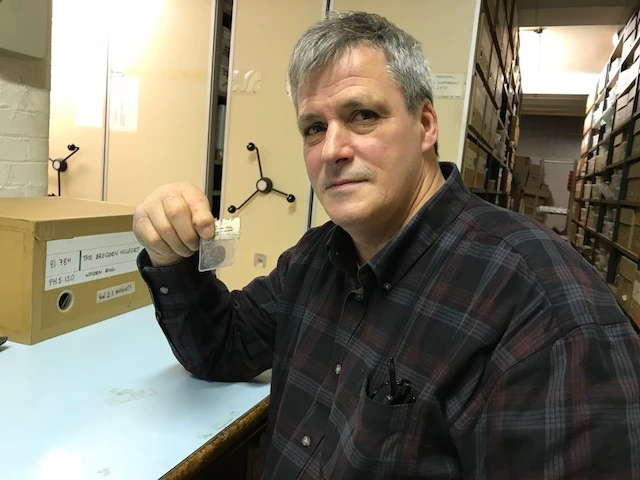
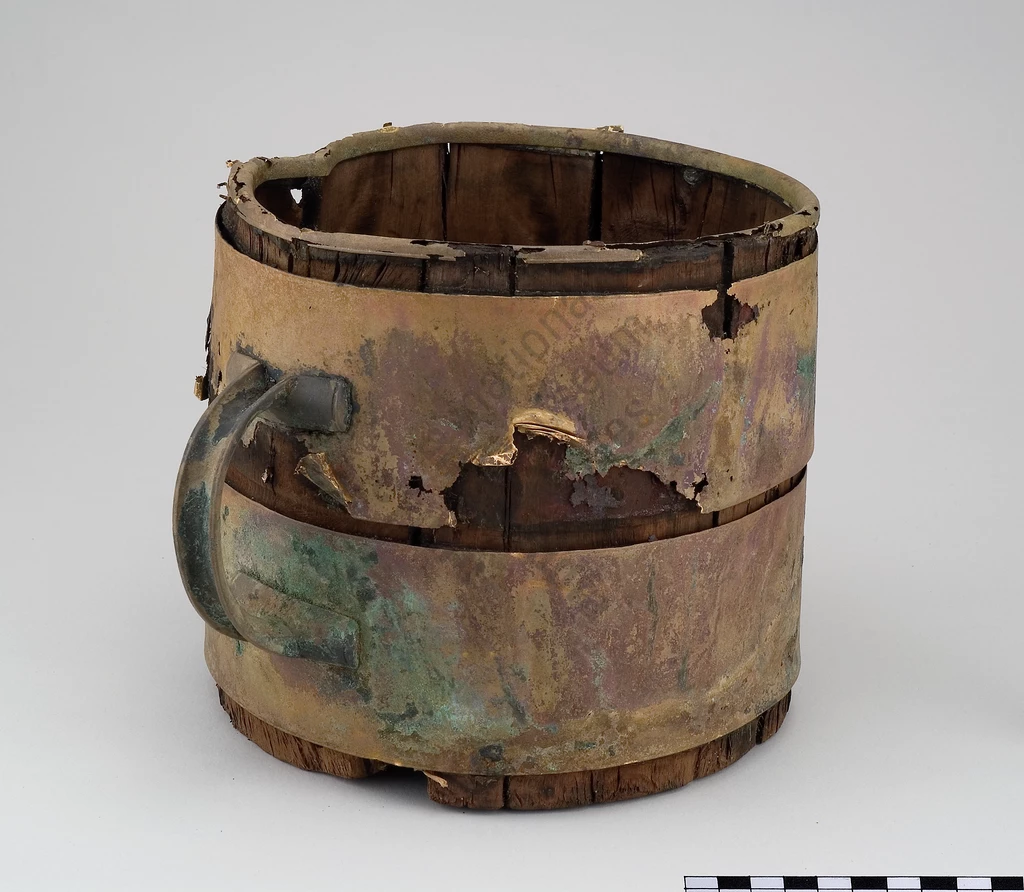
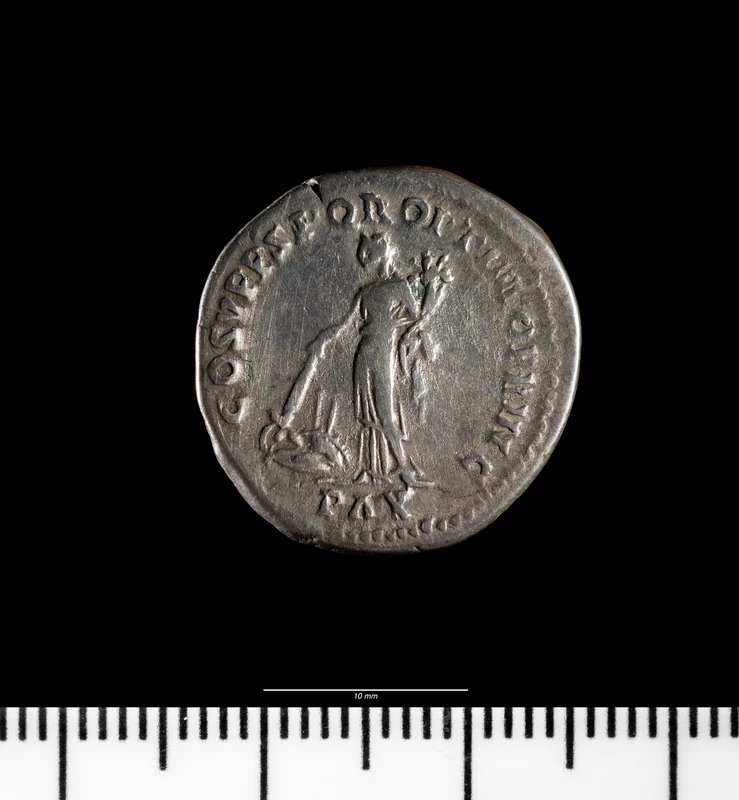
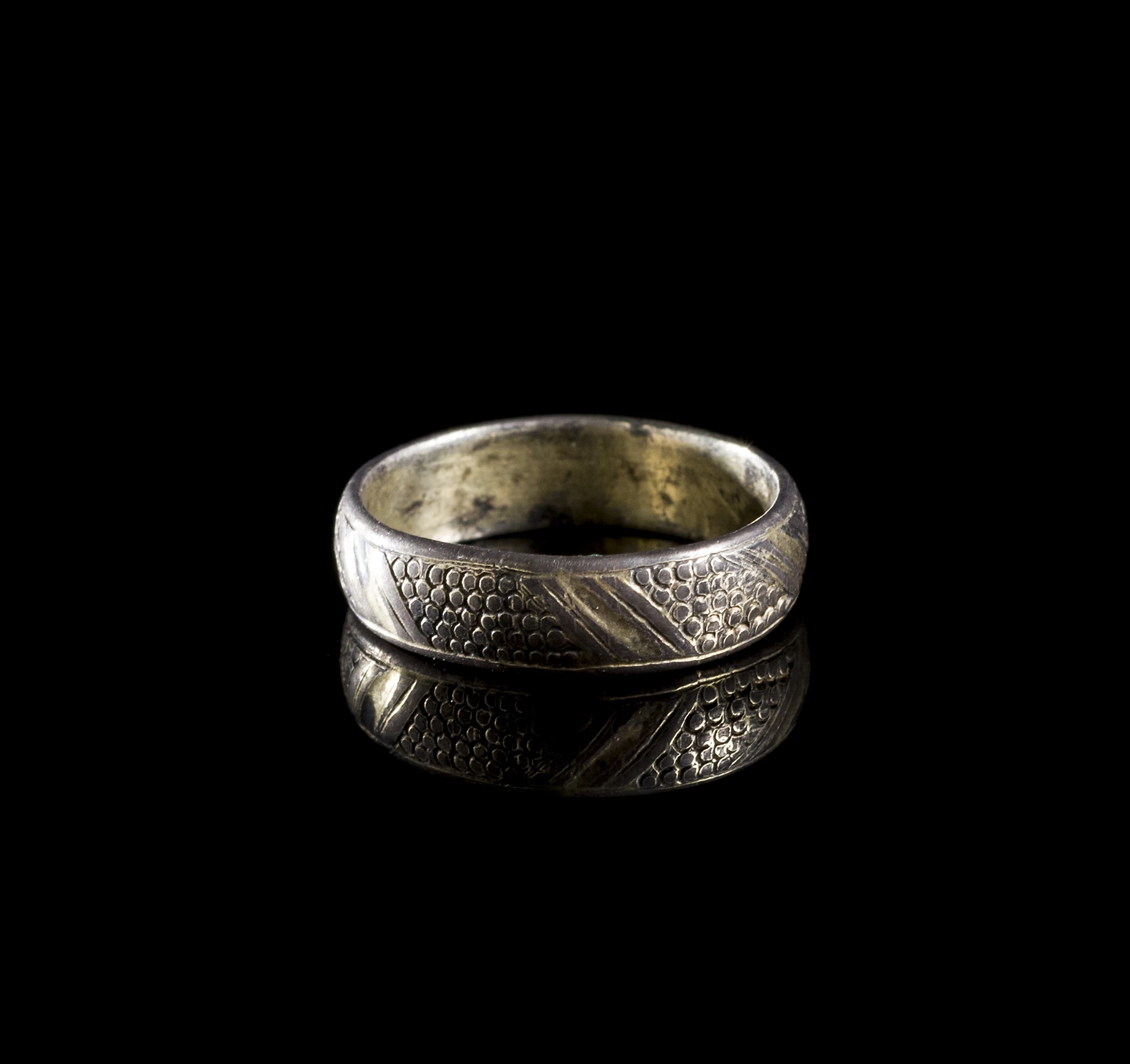
Wrexham Museum is currently hosting their Buried in the Borderlands community archaeology project, a project based around a hoard of Medieval silver and gold coins and a stunning sapphire and gold ring discovered by metal detectorists in Bronington.

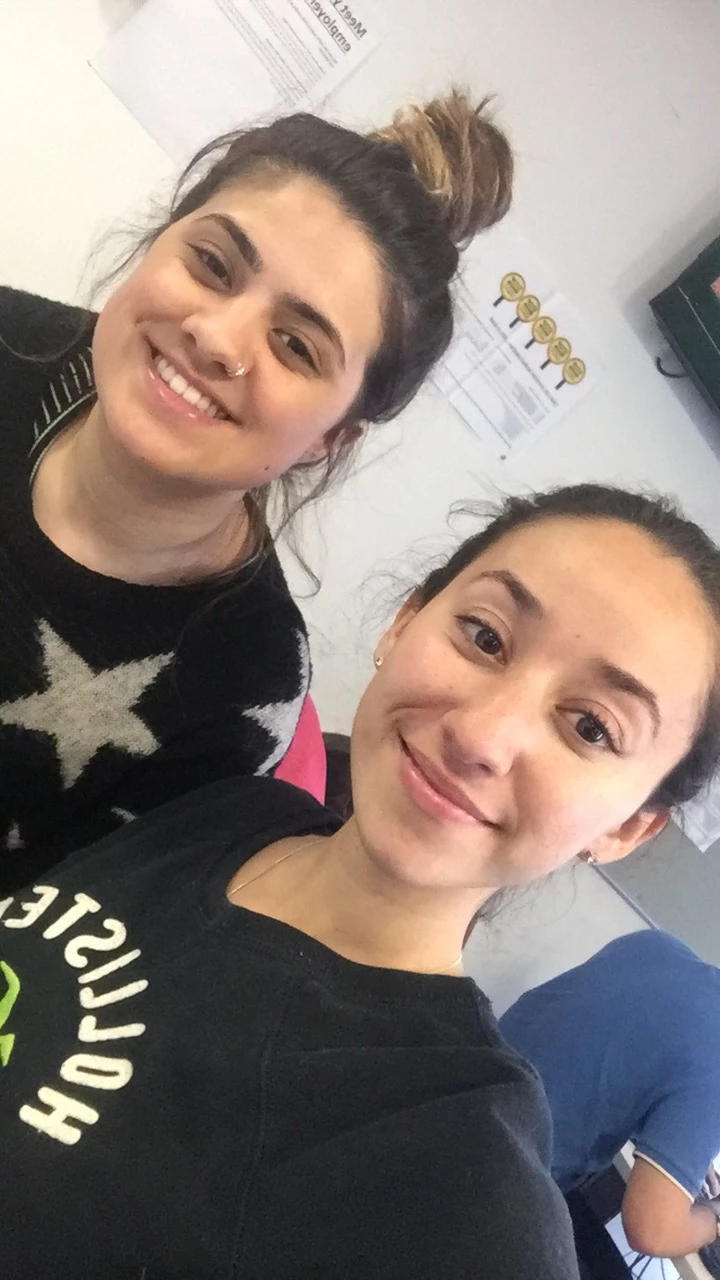
Thomas and Leon are students working hard on the Bronington Hoard project at Wrexham Museum, learning about the value of the coins and archaeology. Read more about them here.

The duo have been keeping us updated of their work experience progress. Leon has been working on an information booklet about the hoard while Tom has been focused on making a craft session for the children who come to the museum.

“I’ve been looking into some ways to make coins out of clay or foam board and some paint. I’ve also been looking at ways to be able to print the patterns on the coins onto the craft coins,” explains Tom. All their effort has been paying off, as the boys are getting involved with events this Easter holiday time.

“We’ve recently decided what we’ll be doing in our craft session during the Easter holidays. We’ll be making coins! We’ll be introducing families to the hoard and get them to make their favourite coin out of clay. The clay and metallic paint we’ve ordered arrived this week! We look forward to seeing some of you at our ‘Make & Take’ craft session at the museum on Tuesday, April 3rd, 10.30am – 12.30pm.”

Leon explains that they are also excited to hosting a visit from History Matters, a 15th century re-enactment group who are visiting Wrexham Musuem on May 30th. “They’ll be showing us and our visitors all about everyday life when the hoard was buried,” explains Leon. “We’re looking forward to learning about what people and ate. It’d be great to see you there! You might even spot us in period dress.”

Meanwhile, Leon has been working on an information booklet for visitors for when the hoard actually goes on display at the museum in March. “It’s more difficult than I first thought!” he admits, “trying to write enough information and make it interesting without being too dull or boring. I’m getting great help from the museum staff though. My booklet will be translated, designed and printed so I’m looking forward to getting all the information written to share with you.”

Click here for a full list of events being held at Wrexham Museum

The Buried in the Borderlands Project is funded by the Heritage Lottery Fund via the Saving Treasures; Telling Stories Project.

Meet our student intern: Eirini!

Alice Pattillo, 23 Chwefror 2018

As we are sure you are aware, there's a lot that goes on behind the scenes at the National Museum of Wales, including research, conservation and work experience. This week is Student Volunteering Week and in honor of this, we have taken the time to find out a little bit more about one of our interns, Eirini...


Profile

Name: Eirini Anagnostou

Job title/ Role: Intern

Department: History and Archaeology, National Museum Cardiff


Where you are you from?

Greece

What are you studying?

I am a student of Aristotle University of Thessaloniki, studying Archaeology and History of Art

Why did you choose to study Archaeology and History of Art?

I've been interested in Art since high school, particularly Contemporary but also Renaissance and Byzantine art and I am also interested in cultural history and civilisations.

What are you doing here?

Erasmus+ placement programme, working as an intern updating the Portable Antiquities Scheme Cymru database – I’ve worked here for 2 months so far!

What are your main duties?

Using the Photoshop programme and processing images of artefacts found by mainly metal detectorists to go on the PAS database.

Next week I will be doing some photography, and working on developing stories on a collection of Ancient Greek coins. I am also hoping to have input into the development of an exhibition concept.

Why did you come to Cardiff?

I visited Cardiff three years ago and I liked the city. I chose the National Museum because it is one of the biggest museums in the UK. I think it’s a good experience for my personal development and future aspirations.

Are you enjoying your time in Cardiff?

Yes, Cardiff is a lovely city with friendly people. There are many things to do and a beautiful castle!

What have you enjoyed the most about working at NMW?

The working environment here is very friendly and helpful. I’ve learnt a lot and I’ve had the opportunity to see the galleries – I was amazed at the extensive collection of Impressionist paintings!

Have you seen anything that’s not currently on display that particularly interested you?

I’ve never seen so many artefacts before – I’ve never seen bones and prehistoric artefacts like those collected in the museum’s stores, and I enjoyed having the opportunity to see them.

What do you hope to learn from this experience?

I hope to learn how a museum works because I’d like to do a Masters in Museum Studies and possibly become a curator. I am still deciding where to study for my Masters degree. I also am enjoying experiencing living abroad and I hope to continue travelling for a couple more years.

To see more content related to the Portable Antiquites Scheme and the Saving Treasures; Telling Stories Project, a project currently working with PAS and local metal detectorists and communities to record all archaeological findings, click here.

Bronze Age discovery dishes the dirt on Swansea's heritage

Alice Pattillo, 2 Chwefror 2018

Swansea has a whole host of treasures just lying within its midst, from the Red Lady of Paviland to the 4200 year old flint dagger that formed the basis for Saving Treasures; Telling Stories first Community Archaeology project, ‘The Lost Treasures of Swansea Bay’. With the rip roaring tides, miles of beaches and hidden caves waiting to be discovered, you’d expect the sea (for which the city is named) to occasionally stir up something significant; but what about an unassuming Welsh livestock farm? Doesn’t sound like the setting for a major archaeological discovery, does it? Suprisingly, that’s exactly where local man, Geoff Archer, picked up one half of a Middle Bronze Age copper-alloy palstave axe mould dating somewhere between 1400-1200 BC.

It was over two decades ago when Geoff first picked up a metal detector, having first taken it up as a hobby after he got married. But it wasn’t until he retired last year that he was able to really get out into the field, and armed with a pair of wellies and a brand spanking new detector, he decided to venture to one of his old jaunts – a farm not far from his home.

“Over the last few nights I’d been thinking about going to the farm and something was telling me to go to the right hand side of it, just to walk the fields,” he explains, “so that’s what I did.” After traipsing around in the mud for a few hours, Geoff stumbled upon a patch of uneven terrace he couldn’t help but investigate.

Unearthing History

“I got to the lumpy, bumpy parts, had a couple of signals – nothing much.” But then Geoff had another signal, “a cracking signal” and realised it was time to dig around in the dirt to find out what it was. Figuring it would just be another case of random odds and sods, or a coke bottle lid (they find an abundance of litter!) he was surprised to hear a clunk.

“I hit this bloomin’ great big stone, so I dug around it, lifted up a clod of earth” and underneath yet another stone he noticed something interesting inside the muddy cave, something not made of rock. “What the heck’s that?” he thought, picking up the oddity with care. 

“I pulled it out and on the back end of the mould there’s, like, ribs.” This prompted Geoff to recall a discovery he made about 15 years ago, when he wasn’t so rehearsed in Bronze Age metalwork.

“Going back, must be about 15 years ago, I found an item - I didn’t know what it was. I wasn’t experienced enough then. So this item, I took it home and I put it in the garage, as most detectorists do!” He had a feeling it was important but wasn’t sure why.

After a few years of picking the item up off his work bench and trying to decipher its meaning, Geoff decided to take it up to the kitchen and do some research. “So I started buying books to research Roman, believe it or not, alright? So, I bought this book and I was looking through it. I got to the part for the Stone Age, read that. Then I got to the Bronze Age, and I turned a couple of pages and there was the item I’d found! Bronze Age Axe Head. My jaw just dropped, right? And the Bronze Age Axe Head had ribs on the outside.”

Devastatingly, Geoff has misplaced the axe head, which he is now, more than ever, desperate to locate – and even more upsetting still, it’s the same type of axe as the mould he discovered 15 years later would have been built to make. “It’s what they call a loop, I think it’s got two loops on this one, each side, where they used to put, if you can imagine, the Bronze Age axe head. It’s flat, but this part at the back, its round and they put it over the wood and then they loop it, they tie it onto the wood to secure it.”

Monumental findings

When Geoff uncovered the mould, he immediately realised its importance thanks to his previous finding – but he still wasn’t entirely certain of what it was he’d discovered. “On the inside of the mould, there’s like a round piece, like in the middle part. I honestly thought at that time that it was a bit off a tractor, because it was so… the engineering of it, the precision engineering of it! But in the back of my mind I was thinking it can’t be off a tractor because it’s got these ribs at the back from this Bronze Age axe that I found.”

After digging out some modelling clay and experimenting, he came to the realisation that what he’d found was an axe head mould. Geoff phoned up one of his buddies at Swansea Metal Detectorist Club for a second opinion and after a positive diagnosis by them both, he took it along to a club meeting.

“As it so happened, it was our ‘Find of the Month’ meeting!” Geoff explains. “So I won find of the month for the artefact and Steve, our Finds Liaison Officer, said ‘you’d better show this to someone in Cardiff because they are going to be interested.’ So, photographs were sent to Cardiff [National Museum of Wales] and they wanted to see it. I went with Steve to Cardiff and the mould’s been there ever since!”

Mark Lodwick, the Portable Antiquities Scheme (PAS) Cymru Co-Ordinator at The National Museum of Wales in Cardiff confirmed Geoff’s identification and has recorded the item so it can be used in further research and study.

Under the Treasure Act, the mould isn’t classed as ‘treasure’, so why is it so special? “It’s the only one that’s been found in South West Wales,” Geoff enthuses, “and it’s the second one that’s been found in Wales. The other one was found in a hoard of axes in Bangor in the 1950’s, so this is the first one that’s been found since then!”

Preserving the past

Geoff is in utter disbelief that he was the one to stumble across the important artefact, which has been conserved at the National Museum of Wales, Cardiff, but, eventually he’d like it to end up back home at Swansea Museum.

Having reported the axe mould to the museum, Geoff sees this as an important part of his role as a treasure hunter. Letting other people view the item, he says, “gives other people a chance to understand about their locality, of what’s been going on.”

“I think it opens up a new chapter in [Swansea’s history]. There’s a bit of history regarding the Bronze Age but to find something like an axe making product in Swansea, which has never been found before - it opens up a new chapter of where these people were living and how far were they living on the fields of that farm,” explains Geoff. “That’s my quest now I suppose, is to try and find out – keep walking the fields and I might find the other half, I don’t know.”

With hopes of the axe mould ending up in Swansea Museum, Geoff is keen that people will be interested in viewing his remarkable find. “The more publicity it gets the better!” he says. “The more people who know about this the better as far as I am concerned, because it’s the first one to be found in South West Wales and the second one to ever be found in Wales – so don’t tell me that’s not important.”

To discover more about Swansea’s Bronze Age history and see some fascinating Neolithic archaeological artefacts visit Swansea Museum, entry is free!

Words: Alice Pattillo

Dyma Morgie!

Caroline Buttler, 26 Ionawr 2018

Dangosodd ddarganfyddiad y deinosor Cymreig, Dracoraptor, bod deinosoriaid yn byw yn ne Cymru 200 miliwn o flynyddoedd yn ôl. Petaech chi'n teithio 'nôl i'r cyfnod hwnnw, fe fyddech chi hefyd wedi gweld ambell i famal bychan, tebyg i lygoden goch, yn cuddio yn y tyfiant. Rhain yw rhai o'r mamaliaid cynharaf yn y byd.


Gellir darganfod esgyrn a dannedd y creaduriaid bach blewog yma mewn ogofau a mewn craciau mewn cerrig - efallai am fod rhain yn cynnig lloches, neu le i aeafgysgu. Darganfyddwyd y ffosilau cyntaf ohonynt mewn chwarel yn ne Cymru rhyw saith deg mlynedd yn ôl. Mae Palaeontologwyr wedi bod yn dadansoddi'r ffosilau, er mwyn creu darlun fwy cyflawn o sut greaduriaid oedden nhw. Enw un o'r mamaliaid cynnar yma yw 'Morganucodon', sy'n golygu 'Dant Morgannwg'.


Mewn prosiect ymchwil newydd wedi'i gefnogi gan Y Cyngor Ymchwil Amgylcheddol, defnyddiodd wyddonwyr o Brifysgol Bryste belydr-X pwerus i sganio'r esgyrn bychain, i greu darlun digidol o'r creaduriaid. Cymharwyd y darluniau digidol yma gyda mamaliaid modern, er mwyn ail-greu strwythr cyhyrau'r anifail. Ychwanegwyd rheiny i'r darlun digidol. Wedi hynny, defnyddiwyd rhaglen arbennig i asesu sut y byddai'r esgyrn a'r cyhyrau'n symud. Astudiwyd dannedd y creaduriaid mewn manylder - roedd rhai mamamliaid cynnar yn meddu ar ddannedd ddigon cryf i grensio pryfaid gyda casys adennydd, ac eraill ond yn medru bwyta pryfaid meddal.


Mae model hyfryd o Morganucodon, wedi'i greu can Bob Nicholls, y palaeoartist, i'w ganfod yn ein orielau hanes natur yn Amgueddfa Genedlaethol Caerdydd. Mae'n edrych fel creadur bywiog iawn a'i enw yw Morgie!