Mike and Mareth volunteer curators, 7 Tachwedd 2017
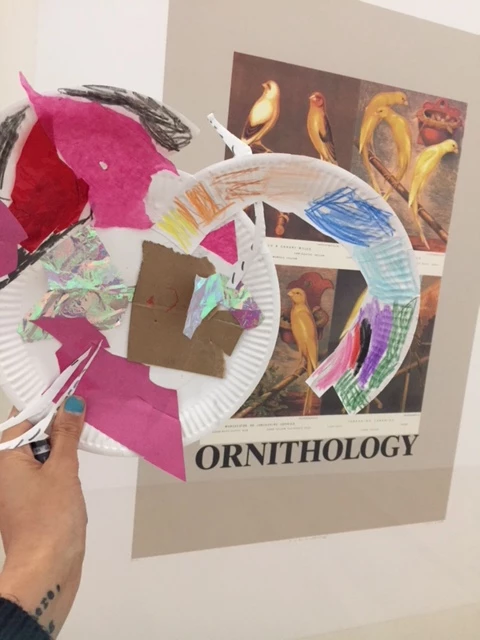
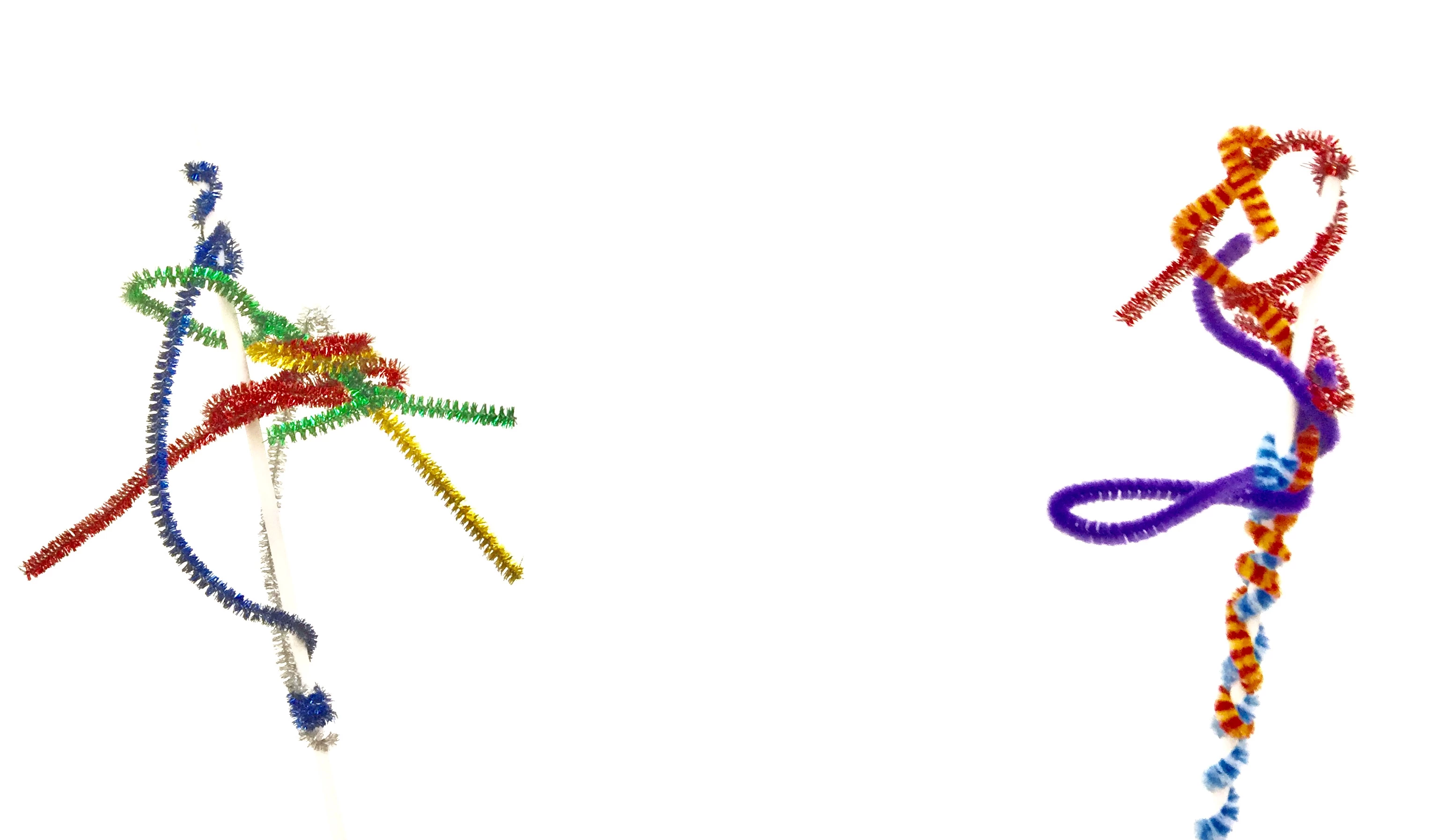
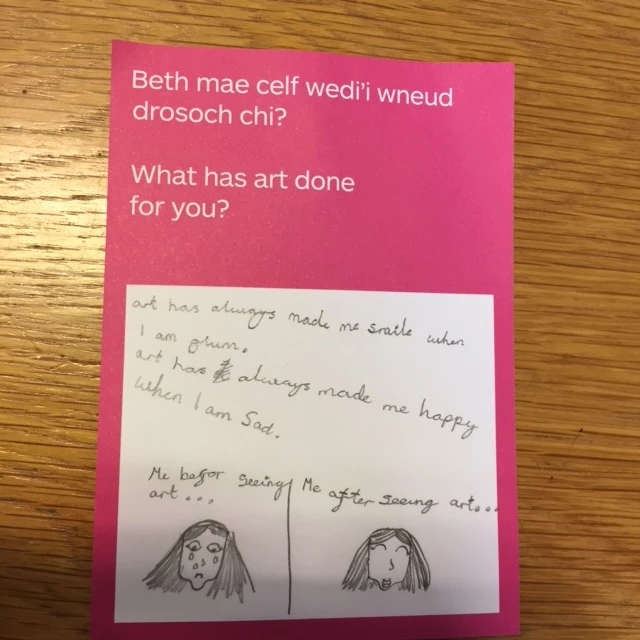
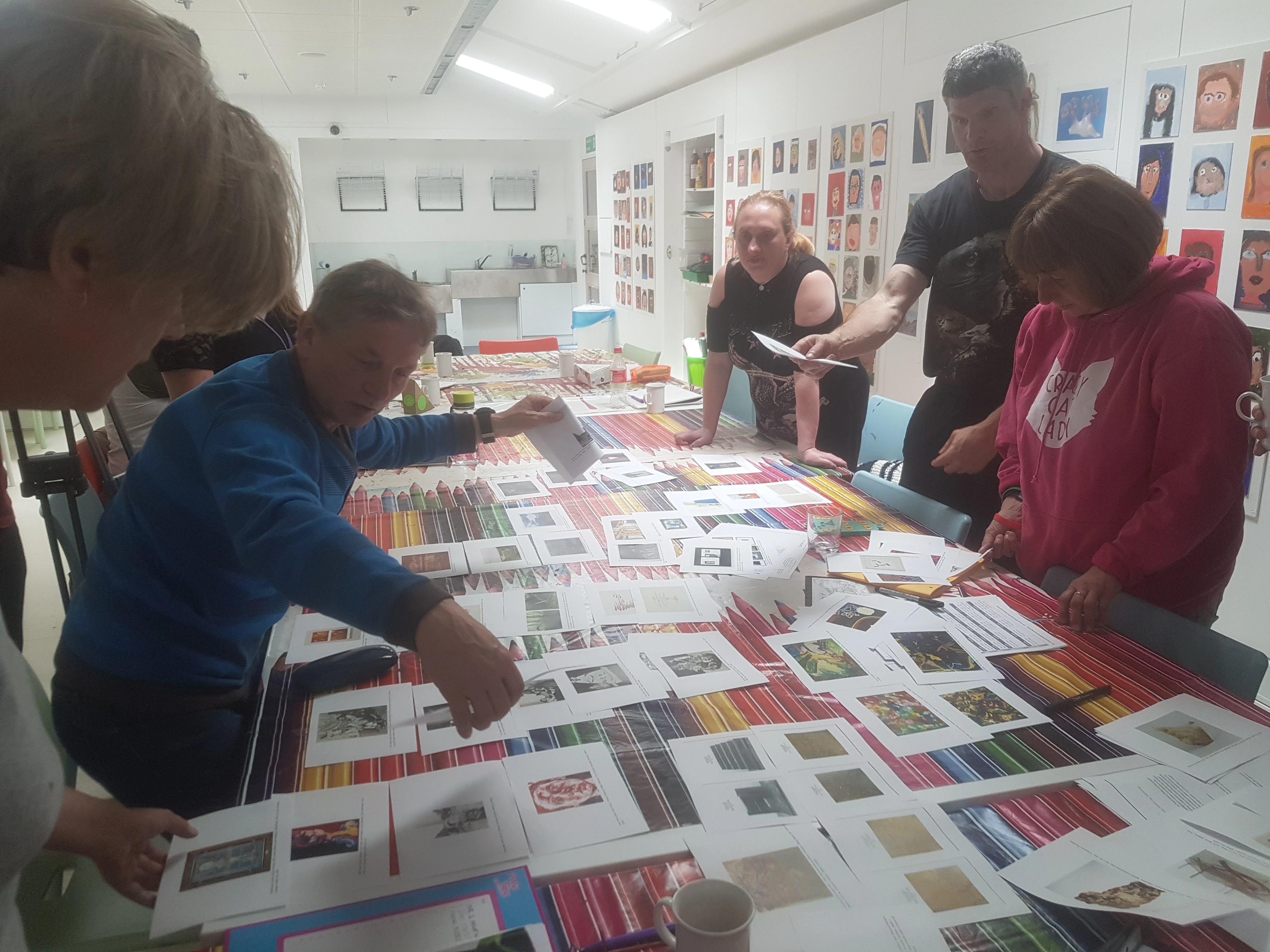
We've had a great few days at the museum, being half term we created lots of different art activities for visitrs to try in the 'Who Decides' exhibition. People created monsters and put them on sticks and took photos of their favourite things in the gallery.
Inspired by the sculpture they made sculptures from pipe cleaners. The Besson ceramics collection let people be creative by making their own designs on plates. The visitors really enjoyed taking part and we had a great time to, talking about the art we've chosen with visitors.
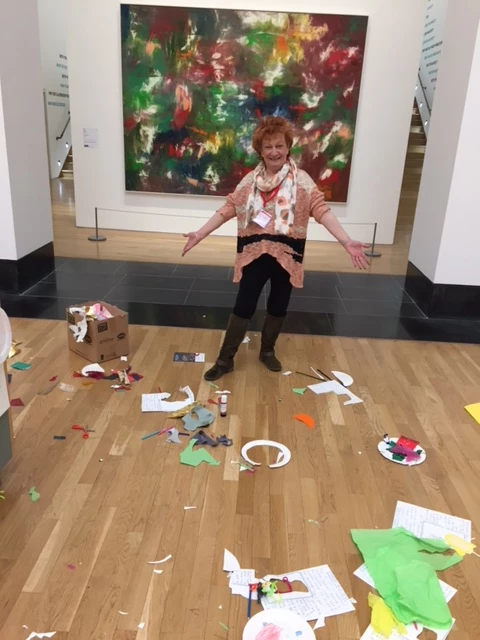
There was a (nice!) mess on the floor afterwards but Mike did a great job clearing up!
If you took part dont forget to share your photos on social media using #wallichXart
There will be lots more events and activities happening in the gallery over the coming months. Check our events web page for more information.
Hi Everyone! Uri Guide Dog here, the new doggie bloggist taking over from my big bro Arnie, who’s now retired. I’ve been getting to know National Museum Cardiff very well as it’s one of my mum’s favourite places EVER!
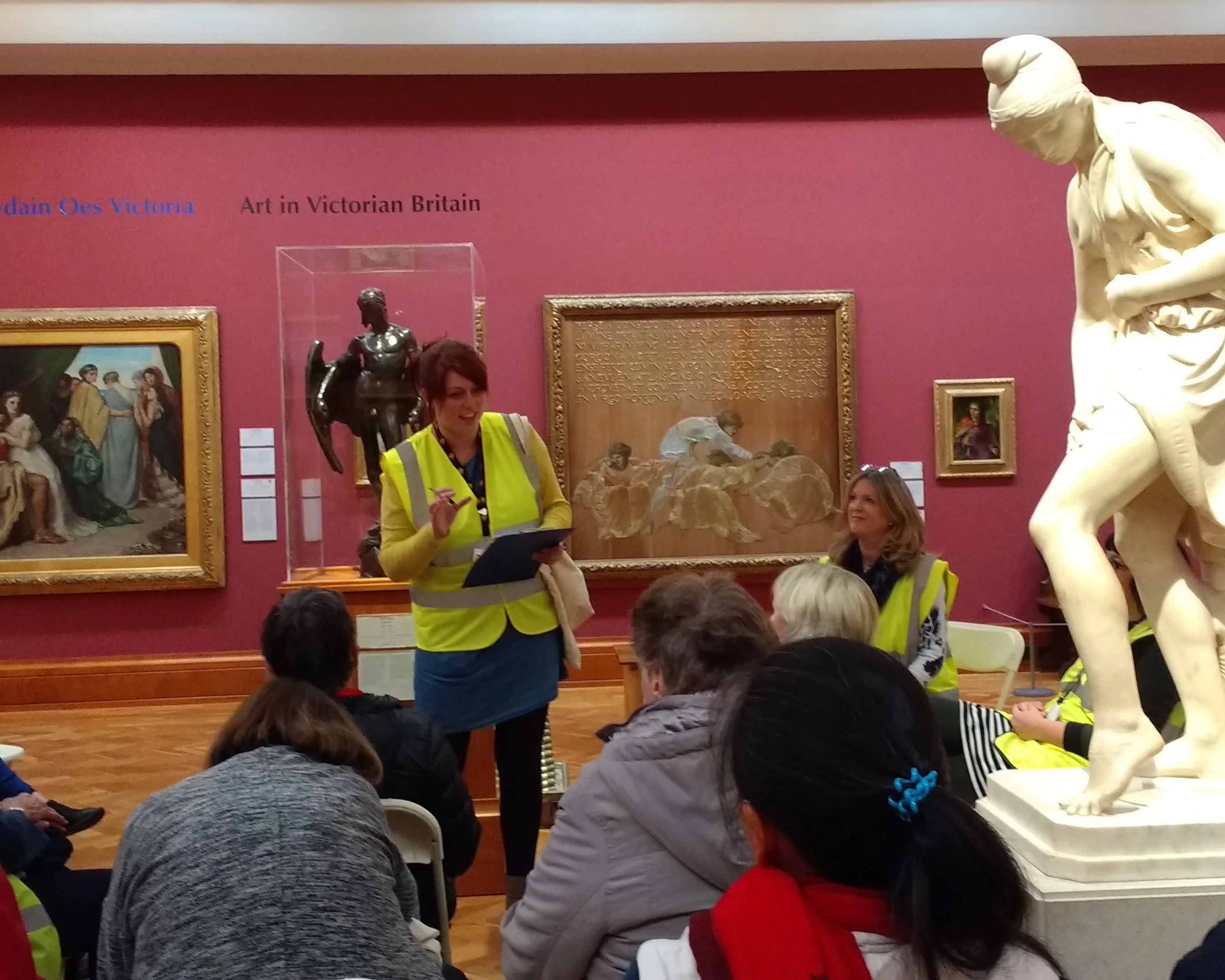
We went to the Museum’s audio tour about Victorian art recently. The paintings and sculptures were beautifully described by the human guides. I was listening intently, even if it did look like I was having a little snooze next to mum. That’s just my listening face.
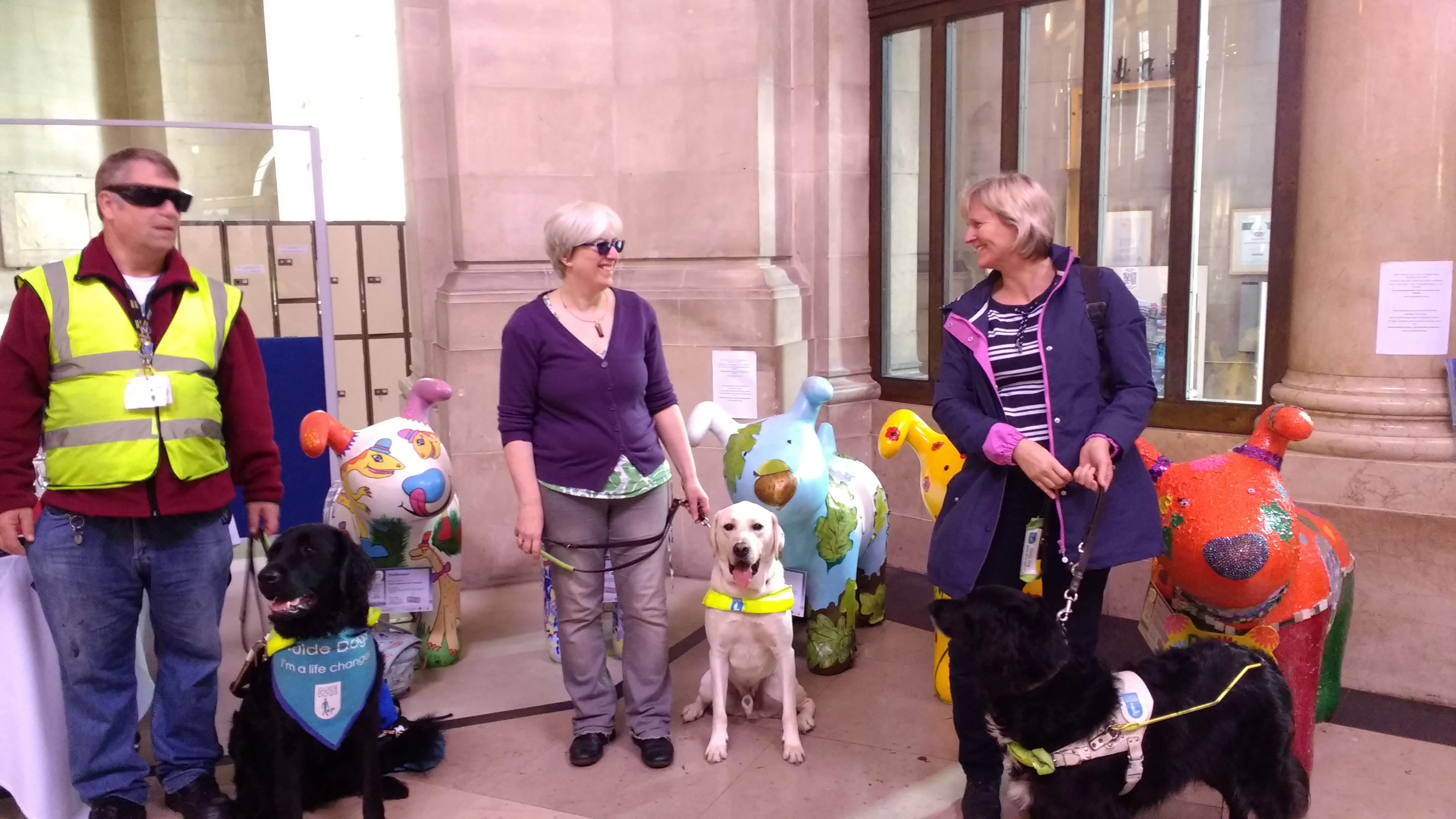
Anyway I had the chance to meet up with a few colleagues, Guide Dogs Ruby and Alfie, who were also keeping their two-leggeds safe. But we were surprised to find other dogs at the Museum!
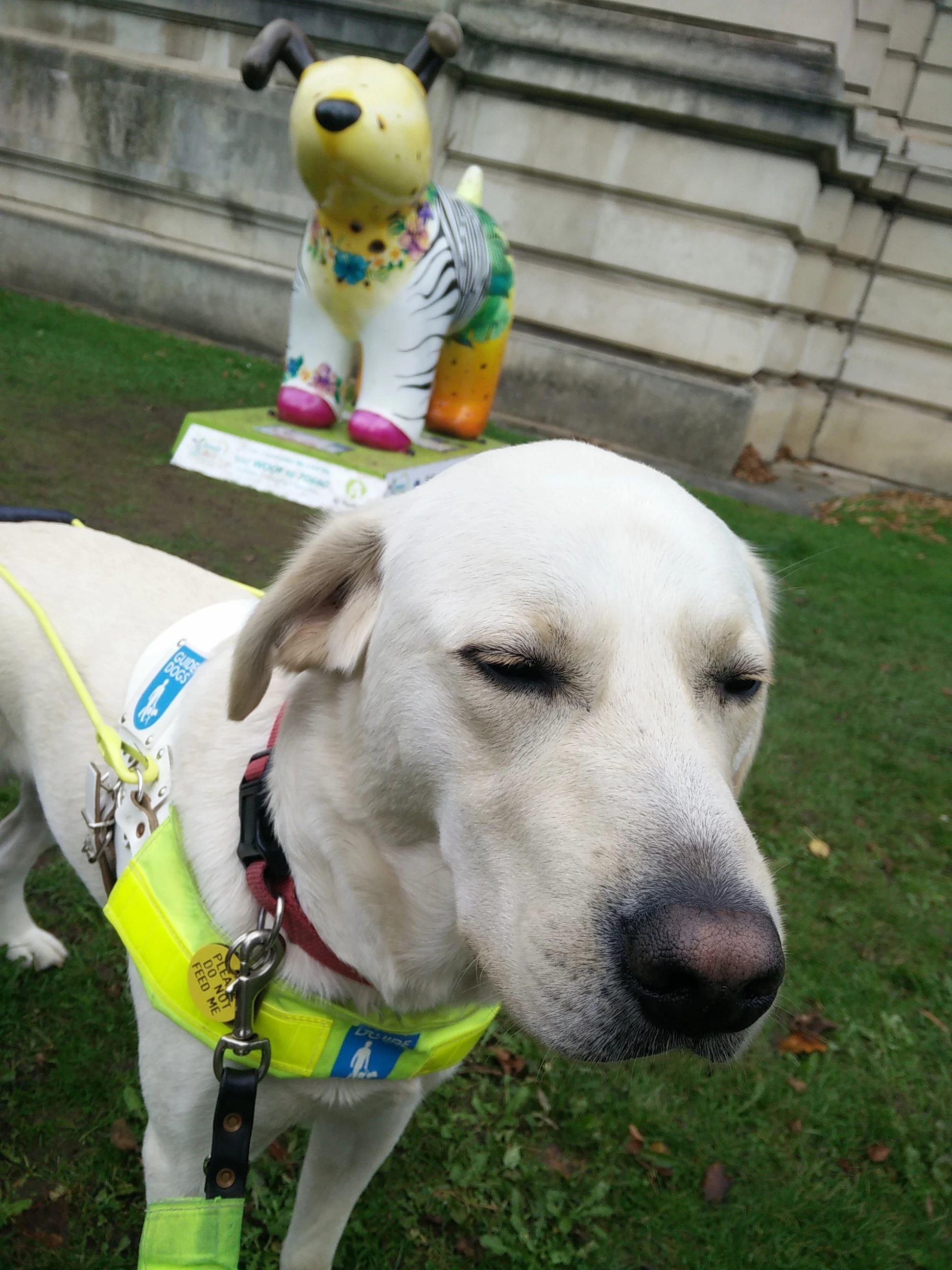
I should have known something was up as soon as I arrived… Outside, after a doggie relief moment, I bumped into a colourful dog just sitting on the grass! A beauty, too! I couldn’t believe my luck! But she didn't respond to my waggy tail or my friendly bow. Rude, I thought, but I took a sneaky selfie anyway. Then, inside, I was even more surprised to find a whole pack of multi-coloured pups! I met Oakly, Abi, Smileosaur, Percy and Doris.
Mum explained these are ‘Snowdogs’, and that just like me these are helping dogs too. Except they are made of fiberglass, not fur. They have been made as part of an appeal to help Tŷ Hafan, the children’s hospice in Wales. These sculptural dogs have been decorated by local artists, schools and community groups, and you can follow the Snowdogs: Tails in Wales trail to find them all around Cardiff and the Vale!
As we sat next to the dogs a little girl came up to say hello. She gave me a cuddle and said she was from Marlborough Primary School and had actually helped decorate Percy the pup! Everyone in her class had put a fingerprint on a red background to create a flower pattern on their dog. She was very proud of their work. I told her Percy is PAW-SOME. He really is.
Apparently the Snowdog was chosen because it features in a film, based on a character created by Raymond Briggs. The Snowdog helps a boy deal with the loss of his pet dog by taking him on a magical adventure.
The pack of Snowdogs are going to be sold at auction after the public exhibition and trail finishes. The money raised will help support lots of children and their families, proving that Guide Dogs are not the only dogs who change lives. Good job guys!
The Museum's next Audio Description Tour takes place on 7th December
Guest Blog by Mike, Volunteer Curator, 18 Hydref 2017
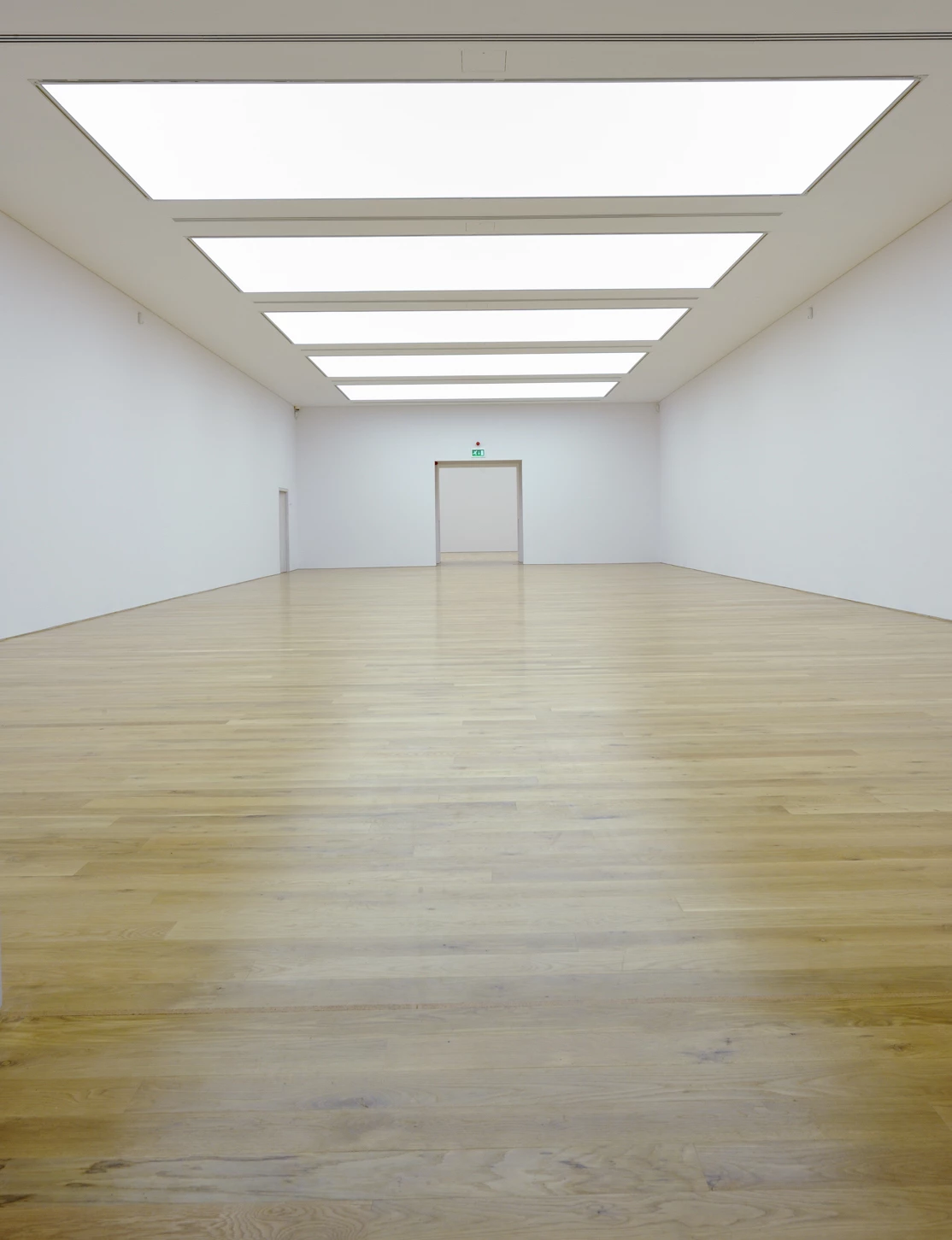
Hi, it’s me Mike, volunteer curator with The Wallich working on a new exhibition called ‘Who Decides: Making Connections with Contemporary Art’. The old exhibition that was in the gallery has come down, it’s totally empty now.
So we are going to start this new exhibition; with new art, photos and films that you won’t have seen before. You can see some of my favourite pieces. I really hope you enjoy this new exhibition.
‘Who Decides: Making Connections with Contemporary Art’ opens on October 26th 2017. More information here and here
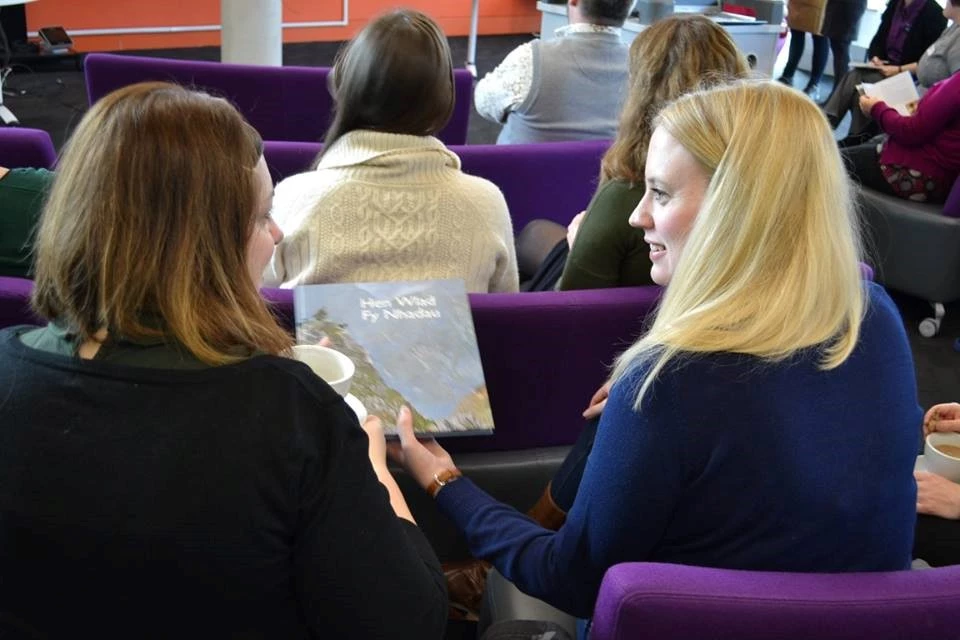
A wonderful new book has been created by Picture to Share. This dementia-friendly book is the first of this type that has been produced bilingually in both Welsh and English.
Pictures to Share teamed up with us, The National Library of Wales, Alzheimers Society and the Welsh Poet Laureate to produce Hen Wlad Fy Nhadau, a beautifully illustrated book to help carers communicate with people living with dementia. Pictures to Share have produced many books on this theme but this is the first to focus upon the Welsh language, in order to help people living with dementia whose first language is Welsh.
This was an opportunity to highlight the importance of the work we do to help people living with dementia as well as highlight our collections and showcase our commercial Picture Library. The images used in the book, Hen Wlad Fy Nhadau, portray many things which people in Wales can relate to, prompting discussion.
Dementia is a subject which many of our staff are passionate about, with many of the staff undertaking training to become a Dementia Friend in order to help enhance the visitor experience of people living with dementia.
After communicating with the editor Michelle Forster, we supplied the images and license to use them in order to comply with copyrights laws. We have to issue a license to anyone who wishes to use our images. Pictures to Share invited us to Cardiff Library for their book launch in November 2016 to see the completed book, which was attended by staff from our Image Licensing, Photography and Translation departments. We were all very impressed with the end product which is now available at our shop at National Museum Cardiff and our on-line shop.
If you would like to use our images within a publication, please contact us at Image Licensing.
You can also purchase images for your home from our on-line shop.
Thank you to Cardiff Council for permission to use images from the book launch.
Fel arfer Mis Hanes LGBT ym mis Chwefror yn frith o erthyglau a digwyddiadau yn ymwneud â chyfeiriadedd rhywiol, hunaniaeth, a’u hanes. Ond ddylai hanes byth gael ei gyfyngu i un mis, felly ar achlysur Pride Cymru yng Nghaerdydd, dyma gyfle da i ystyried hanes LGBT.
Stori ar Blât
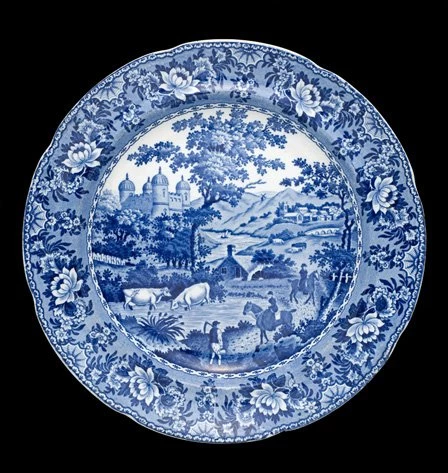
Ystyriwch, er enghraifft, y plât yn nghasgliad Amgueddfa Cymru ag arno olygfa o ddwy fenyw yn marchogaeth. Mae’n un o filoedd o eitemau crochenwaith printio troslun glas a gwyn fu mor boblogaidd ers y 19eg ganrif. Ond mae’r llun hwn yn fwy nag addurn.
Plât, Crochendy Morgannwg, oddeutu 1813-1839
“Menywod Llangollen” yw teitl y gwaith, a ysbrydolwyd gan hanes dwy fenyw – y Fonesig Eleanor Butler a Miss Sarah Ponsonby.
Taniwyd fflam rhwng Eleanor a Sarah gartref yn Iwerddon, a chan ofni’r atyniad hwn rhwng dwy ferch, ceisiodd y ddau deulu eu gwahardd rhag gweld ei gilydd. Yn benderfynol o fod gyda’i gilydd, dihangodd y ddwy liw nos, ond cawsant eu dal ymhen fawr o dro. Brwydrodd Eleanor a Sarah yn ddiflino am yr hawl i fod gyda’i gilydd tan i’w teuluoedd ildio, a gadel iddynt fynd.
Teithiodd y ddwy i Gymru ac ymgartrefu ger Llangollen, gan fyw yno am dros 50 mlynedd.
Enwogrwydd 'Menywod Llangollen'
Lledodd yr hanes amdanynt yn gyflym, a byddent yn llythyra gydag enwogion megis Shelley, Byron, Syr Walter Scott, Dug Wellington, Josiah Wedgewood a Caroline Lamb, gyda nifer yn ymweld â’r ddwy yn Llangollen. Parhaodd y diddordeb yn y cwpl wedi eu marw ym 1829 a 1831 ac erbyn heddiw maent yn adnabyddus fel un o’r cyplau lesbiaidd enwocaf erioed.
Roedd y ddwy yn bendant yn ystod eu bywydau nad oedden nhw am gael llun neu bortread wedi’i dynnu.
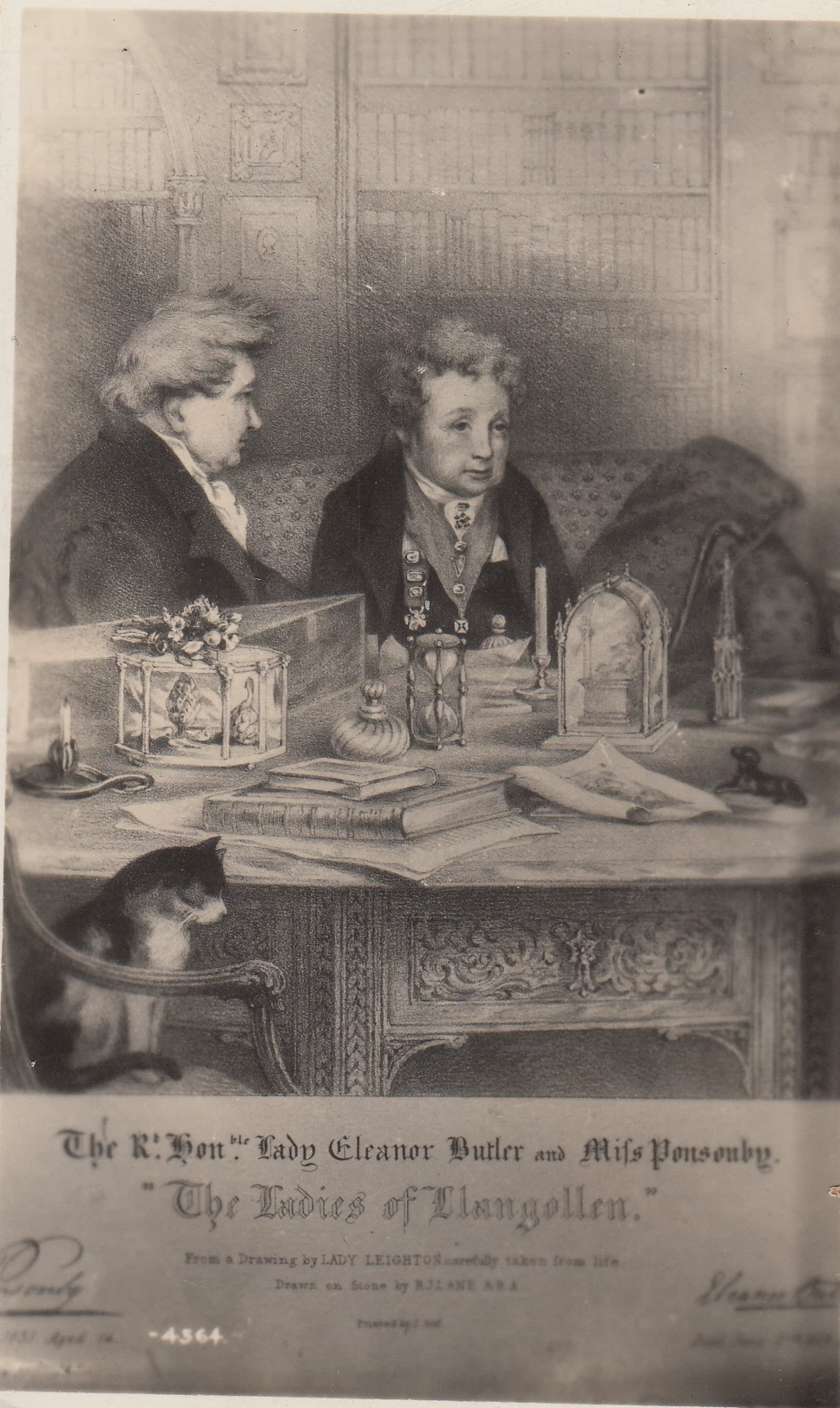
Ond pan ymwelodd y Fonesig Parker ym 1829, perswadiodd ei mam i ddwyn sylw Eleanor a Sarah tra’i bod hithau’n creu brasluniau cyflym o dan y bwrdd. Erbyn hynny roedd Eleanor yn hollol ddall, felly llwyddodd y Fonesig Parker i fraslunio’i hwyneb yn llawn, tra bod Sarah mewn proffil. Wedi i’r cwpwl farw, datblygodd y brasluniau yn ddarlun llawn o’r ddwy yn eu llyfrgell a gwerthu copïau i godi arian at elusennau.
Portread o'r Foneddiges Eleanor Butler a Sarah Ponsonby, wedi'i ddarlunio ar sail sgets cyfrin a wnaethpwyd yn eu cartref yn Llangollen
Dwyn Portread
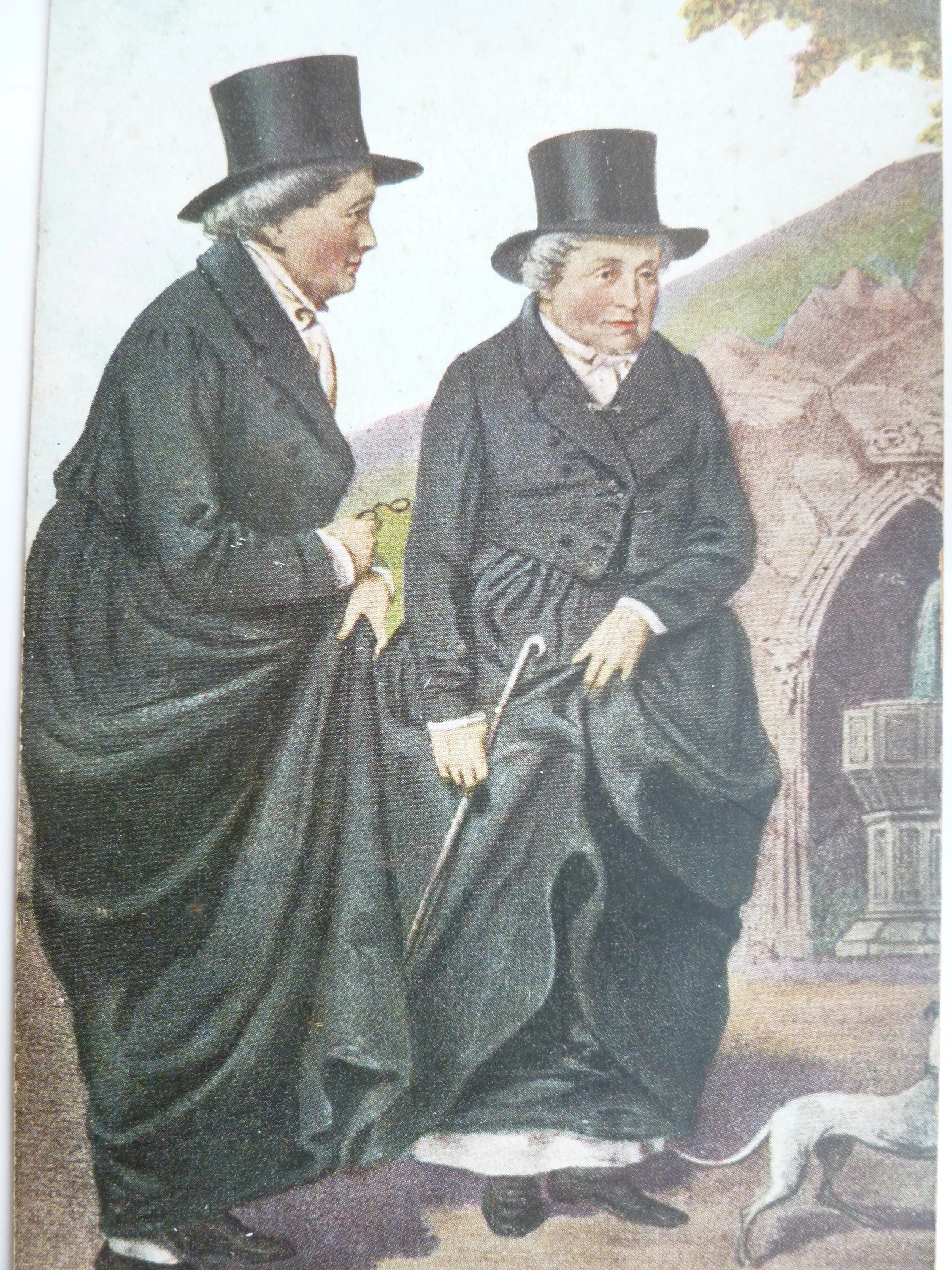
Oddeutu 1830 copïwyd y darlun heb ganiatâd gan James Henry Lynch ac ef gynhyrchodd y darlun mwyaf adnabyddus o Eleanor a Sarah. Masgynhyrchwyd y darlun a’i ddefnyddio ar amryw o nwyddau megis cofroddion twristiaid, cardiau post a chloriau nifer o lyfrau.
Portread 'Lynch' o'r Foneddiges Eleanor Butler a Sarah Ponsoby, wedi'i gopïo yn helaeth o'r portread 'Llyfrgell'. Fe werthwyd nifer sylweddol o'r print hwn.
Mae darlun Lynch yn eu dangos yn sefyll yn yr awyr agored ac yn gwisgo’r clogynnau marchogaeth oedd yn gymaint o ffefryn gan y dwy. Ymddangosodd y gwaith tua diwedd y cyfnod o ddiddordeb cyhoeddus ym mywyd Eleanor a Sarah; erbyn troad y 19eg ganrif roedd hanes y menywod wedi lledu a nifer yn cyhoeddi eu stori.
Ysgrifennodd William Wordsworth gerdd ym 1824 ar ôl ymweld â’r ddwy. Ymddangosodd y crochenwaith felly mewn cyfnod pan oedd diddordeb mawr yn eu hanes.
Crochenwaith Morgannwg a Hanes 'Plât Llangollen'
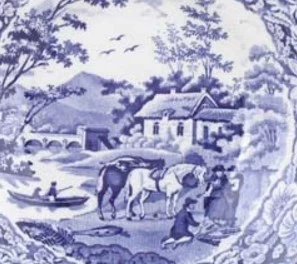
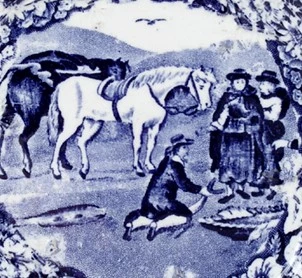
Mae’r plât cyntaf yn dangos y ddwy ar eu ceffylau yn siarad â gwr yn cario pladur dros ei ysgwydd. Yn y cefndir mae gyrr o wartheg, tref Llangollen, afon Dyfrdwy a fersiwn hynod ramantus o gastell Dinas Brân.
Gwyddom ddyddiad cynhyrchu cynharaf y plât o stamp y gwneuthurwr ar y gwaelod – ‘BB&I’, sef Baker, Bevin and Irwin o Grochendy Morgannwg ac a ddefnyddiwyd oddeutu 1815-25. Daeth yn un o blatiau enwocaf y crochendy hwnnw. Er bod Eleanor a Sarah yn frwd dros gadw dyddiaduron, ac i’r gwaith gael ei gynhyrchu yn ystod bywydau’r ddwy, nid oes sôn amdano yn eu hysgrifau. Wyddon ni ddim os oeddent yn gwybod am fodolaeth y platiau neu wedi cytuno i gael eu portreadu yn y fath fodd.
Ym 1838 daeth Crochendy Morgannwg dan reolaeth y gwr busnes o Abertawe Lewis Llewelyn Dillwyn ac fe barhaodd i gynhyrchu’r platiau dan stampiau Morgannwg, Abertawe a Cambrian tan oddeutu 1840. Mae’n debygol ei fod yn defnyddio’r un dyluniad yng Nghrochendy Cambrian ym 1925; roedd cystadleuaeth gref rhwng y ddau grochendy a byddent yn aml yn copïo gwaith ei gilydd.[1]
Y cyswllt rhyfeddol yma yw taw un o aelodau enwocaf teulu Lewis oedd Amy Dillwyn. Menyw fusnes oedd Amy, ac yn ogystal a bod yn nofelydd blaenllaw, hi gymerodd yr awenau yng ngweithfeydd sinc ei thad wedi iddo farw.
Roedd Amy hefyd mewn perthynas hoyw. Braf yw breuddwydio bod Amy, wedi gweld plât Crochendy Morgannwg, wedi dwyn perswâd ar ei thad i’w gynhyrchu yng Nghrochendy Cambrian, ond nid oes unrhyw dystiolaeth o hyn.
Mae’n anodd dweud os taw plât Crochendy Morgannwg oedd y cyntaf i gael ei gynhyrchu, neu plât gan William Adams o Stoke. Ladies of Llangollen yw enw’r dyluniad hwn hefyd, gyda dwy fenyw mewn clogynnau marchogaeth yn sefyll dros ŵr sydd yn dangos pysgodyn mawr i’r ddwy. Yn y cefndir mae’r ceffylau, ac yn y pellter mae dau ŵr mewn cwch ar afon gyda phont drosti a bwthyn gwerinol ar y lan. Ar y gorwel mae mynydd Cadair Bedwyr.
Cynhyrchodd Adams gyfres grochenwaith dan y teitl ‘Native’ yn y 1820au, ac roedd y plât hwn yn rhan o’r gyfres honno. Yn fuan caffaelwyd y dyluniad gan F. ac R. Pratt o Fenton, Swydd Stafford gan ailenwi’r gyfers yn ‘Pratt’s Native Scenery’ a’i hatgynhyrchu rhwng 1880 a 1920. Prynwyd y busnes gan Cauldon yn y 1920au a cynhyrchwyd yr un dyluniad tan y 1930au.
Mae diddordeb mawr o hyd ym mywydau Eleanor a Sarah, yn enwedig wrth i ni drafod y diffiniad o berthynas lesbiaid yn y gorffennol. Er gwaetha’r diddordeb, prin yw’r sylw a roddir i’r crochenwaith glas a gwyn yma, a peth da yw cofio bod y gweithiau yma yn rhan o gasgliad LGBT Amgueddfa Cymru.
NORENA SHOPLAND
Awdur Forbidden Lives: LGBT stories from Wales a gyhoeddir gan wasg Seren, 17eg o Hydref, 2017
Taith Sain Ddisgrifiad Celf Fictorianaidd yn Amgueddfa Genedlaethol Caerdydd
Cwrdd a'r Snowpups
Hunanlun Uri a'r Snowdog
Plât, Crochendy Morgannwg, oddeutu 1813-1839
Portread o'r Foneddiges Eleanor Butler a Sarah Ponsonby, wedi'i ddarlunio ar sail sgets cyfrin a wnaethpwyd yn eu cartref yn Llangollen
Portread 'Lynch' o'r Foneddiges Eleanor Butler a Sarah Ponsoby, wedi'i gopïo yn helaeth o'r portread 'Llyfrgell'. Fe werthwyd nifer sylweddol o'r print hwn.


 Roedd y ddwy yn bendant yn ystod eu bywydau nad oedden nhw am gael llun neu bortread wedi’i dynnu.
  Mae’r plât cyntaf yn dangos y ddwy ar eu ceffylau yn siarad â gwr yn cario pladur dros ei ysgwydd. Yn y cefndir mae gyrr o wartheg, tref Llangollen, afon Dyfrdwy a fersiwn hynod ramantus o gastell Dinas Brân.
 Mae’n anodd dweud os taw plât Crochendy Morgannwg oedd y cyntaf i gael ei gynhyrchu, neu plât gan William Adams o Stoke. Ladies of Llangollen yw enw’r dyluniad hwn hefyd, gyda dwy fenyw mewn clogynnau marchogaeth yn sefyll dros ŵr sydd yn dangos pysgodyn mawr i’r ddwy. Yn y cefndir mae’r ceffylau, ac yn y pellter mae dau ŵr mewn cwch ar afon gyda phont drosti a bwthyn gwerinol ar y lan. Ar y gorwel mae mynydd Cadair Bedwyr.