The Marine Section at National Museum Cardiff have studied the shores around Berwick-upon-Tweed for several years now, concentrating on the marine bristleworms living in the muddy sand and the rocky outcrops of this beautiful beach. This is an historic beach for these fascinating creatures as several species were first described from this locality by Dr George Johnston (1797 – 1855), a Scottish physician and naturalist who studied the fauna and flora of the area. One of the most abundant types of bristleworms found there are shovelhead worms, beautiful creatures that use their flattened heads to dig in the sand and feed using two long feeding tentacles. Staff at the museum specialize in this group and hence Berwick-upon-Tweed is an important site for their research. Hence, I “set sail” to the shores of Northumberland again to collect more samples both for our research and the museum’s natural history collections. One of our current focuses is to understand how these animals feed, breed, burrow and behave and our latest findings have recently been published in the proceedings of the 11th International Polychaete Conference.
On this trip, I was joined by fellow science curator Kath Slade from the Botany section, who specializes in seaweeds. This allows us to look more holistically at the shore’s ecology, by looking at both the flora and fauna.
We will keep you posted with updates about what we have discovered.
Our trip to collect shovelhead worms (a type of marine bristleworm called a magelonid) at Berwick-upon-Tweed started last Thursday (19th) at 06.30, giving us plenty of time on the shore before low tide. We were extremely lucky with the weather, as although it was only 7 degrees, the sun was out and it wasn’t raining. Staff at the museum specialize in this fascinating group and this particular trip was aimed at collecting animals to further our understanding of the biology of the group but also to gain specimens for the Museum’s natural history collections. Magelonids are extremely abundant on this shore and material used in the description of the British species, Magelona johnstoniwas collected here by Head of Invertebrate Biodiversity Andy Mackie, who was one of the team who described the species back in 2000. The species was given its name in honour of the work carried out by the naturalist Dr George Johnston in this region.
Although, abundant on this shore, finding and collecting animals which are less than 1 mm in width can be tricky! These animals are rather long and fragile and a great deal of care has to be taken when collecting them. Animals are gently removed from the sand using a water bottle and soft forceps and placed into a cool box to keep them cool on the journey home. Once back to our makeshift laboratory I was able to identify and observe them for our research. We have designed a specialist tank in order to observe them over longer periods of time as well. We have successfully kept animals in this tank for nearly two years. We are hoping to observe the difference between three species, which can be found on this shore, Magelona johnstoni, Magelona mirabilis and Magelona filiformis. A fourth species is known to occur in low numbers on this shore, however, we were unable to locate any specimens for study this time.
We spent four days on the shore at Berwick-upon-Tweed collecting animals and although the weather did turn and temperatures on the beach dipped significantly it is a lovely shore to collect on. The tank and the animals have now made the long trip back to Cardiff and are now in the marine laboratory at National Museum Cardiff. We will continue to observe and publish research on these fascinating and also beautiful creatures (although may be I am somewhat biased, I shall leave it up to you whether you agree or not!).
Watch this video, to see how we sample shovelhead worms.
Hello and sut mae. This is my first blog entry and it’s my story about being a trainee gardener and Welsh learner at St Fagans over the course of 14 months. I’d better start by telling you a bit about myself. I arrived on the Heritage Horticulture Skills Scheme (HHSS) last September and I’ll be blogging about what I get up to until I finish the course in November.
Before I became involved in the scheme I was a self-employed ‘maintenance’ gardener for several years in Cardiff. My technical knowledge was limited and I was really looking to learn new skills through practical experience. I also wanted to expand my knowledge of plants and horticulture techniques. In the past I’d tried doing this through books and YouTube videos, but I soon realised that what I really needed was some kind of gardening guru to guide me. When I heard about the HHSS scheme I got very excited and knew it would be perfect for me as it was an opportunity to learn a huge amount in a practical hands-on way, with guidance from experts in the field.
So, here we are in mid-Feb and I can’t believe I’ve been on the scheme for just over 5 months already. It’s been incredibly busy and I haven’t had much time to stop and think. The months have flown by. In this post I’ll be talking about what I and the other trainees have been doing over winter. Lots of people think that winter is a quiet time without much going on in the garden. A time to tidy up the shed, clean your tools, and think about your summer planting scheme. Don’t believe that for a second. Trust me, there’s plenty to do!
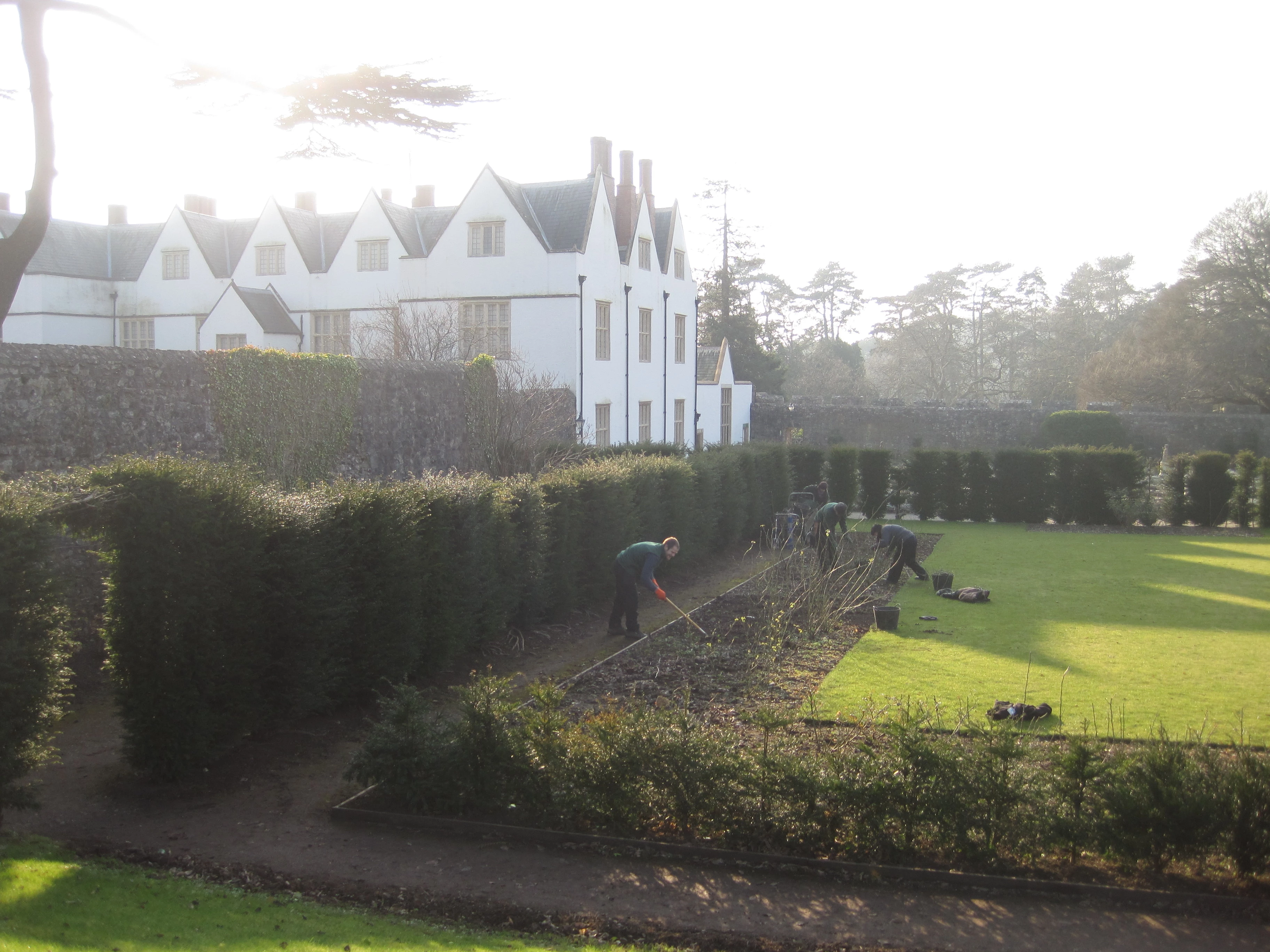
During the winter months the daylight hours are shorter and weather conditions can be harsh at times, but in a place like St Fagans the gardens are so varied there’s always a job that you can get on with. There are lots of plants that benefit from pruning at this time of year including fruit trees and bushes, late flowering shrubs, roses and some climbers. In the past few weeks we’ve tackled a few of these, and used different techniques to suit the individual needs of the plants.
Why prune at this time of year?
In winter, deciduous plants shed their leaves and that makes it much easier to see its general structure. There is also less chance of transmitting diseases from one plant to another or attracting insects to fresh pruning wounds. Sap producing plants will bleed heavily if you prune when the sap is rising. Many of these are dormant over winter and bleeding is not so much of a problem if you prune at this time of year. As you may have already gathered, this post is going to focus on winter pruning techniques.
The first thing to remember when pruning any plant is the 4 D’s: always remove Dead, Diseased, Damaged or Displaced material, in that order!
There are 4 main types of pruning:
· Formative pruning encourages growth and builds the basic framework in a young plant.
· Maintenance pruning improves the look of the plant as well as increasing the amount of fruit or flowers.
· Regenerative pruning – If you have a plant that’s been left to itself and grown out of control for a few years, there’s no need to panic. Certain plants can be restored. This type of pruning can help you manage the growth, size and the overall look. It’s often an intimidating prospect. But, if you have an idea about what you’re doing and you feel brave, it can give your old plants a new lease of life. And save you throwing them out, when all they need is a good prune.
· Specialised pruning creates and maintains an attractive look. If you’ve always wanted a hedge in the shape of an elephant, then Topiary is a form of specialised pruning that might be right up your street.
Now that you know the basic rules, I’ll talk a little bit more in depth about what we’ve been doing recently.
Pollarding Lime (Tilia) trees
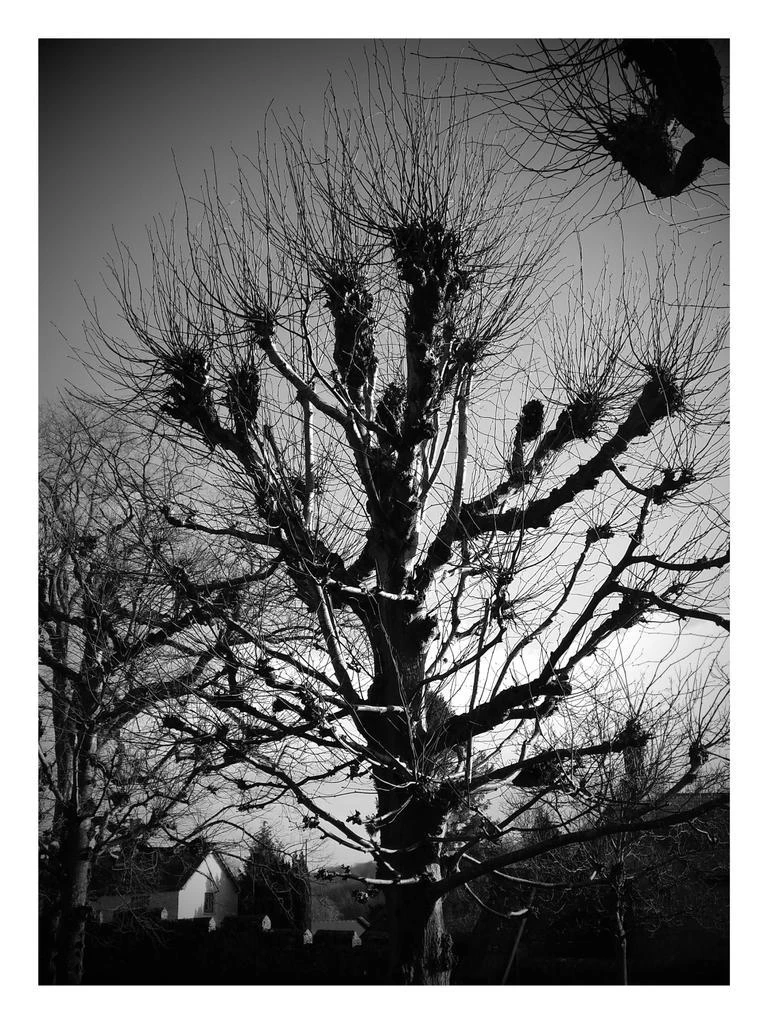
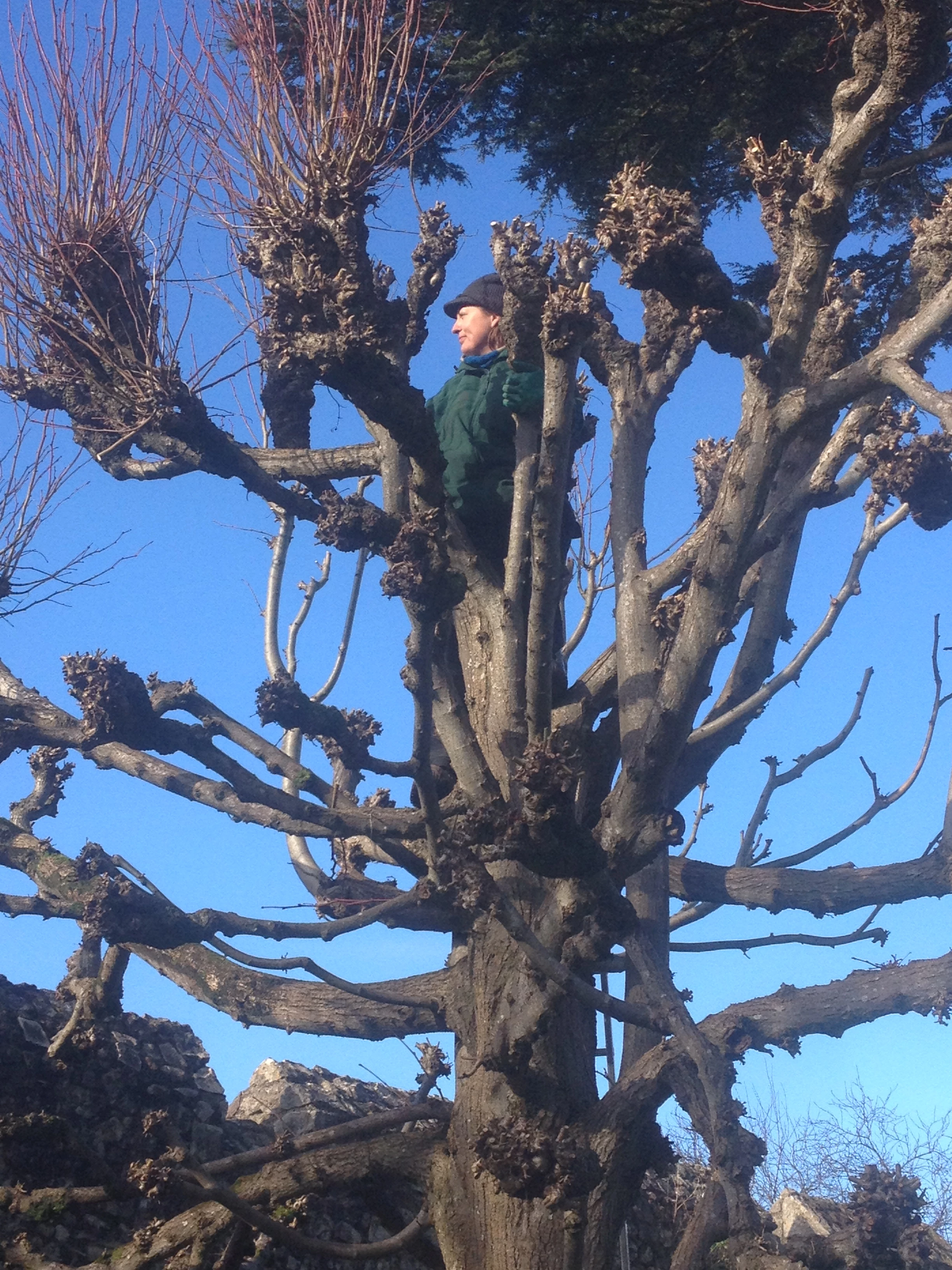
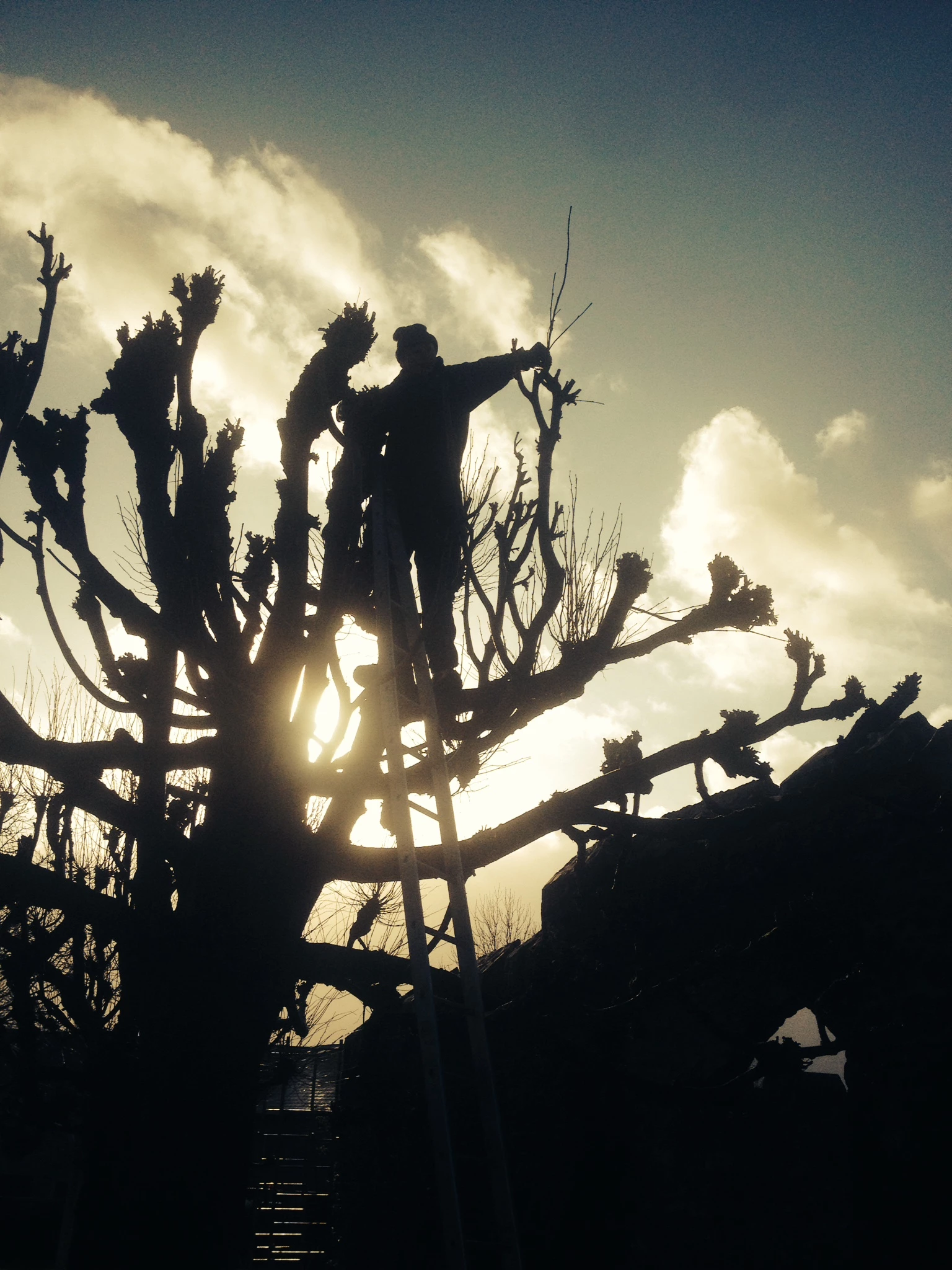
It’s best to Pollard Lime trees annually in late winter or early spring if you want to restrict height. Prune the new shoots back to a bud, 1-2cm from the pollarded head. This will also stimulate new shoot production for the following spring.
Wisteria
Wisteria can grow 10-12ft in a season, it’s a beast, and benefits from pruning twice annually in summer and winter. At this time of year we prune the lateral growth back to 2 or 3 buds on each spur shoot. These spurs will bear the following season’s majestic display of flowers.
Standard Apple Trees
Apple trees are pruned to manage fruit buds and the shoots they grow on. Not, as many people think, to control the size of the tree. Start by concentrating on one main branch at a time. Find the leader and work your way down to the main trunk. Cut the leader by a third, leaving a bud facing the direction you want the new growth to follow. Prune back any laterals to 2-3 buds. Thin out large groups of spurs because too many will produce small fruits and it’s much better to have less quantity, but bigger and better quality.
Hard Pruning Yew (Taxus baccata) Hedges
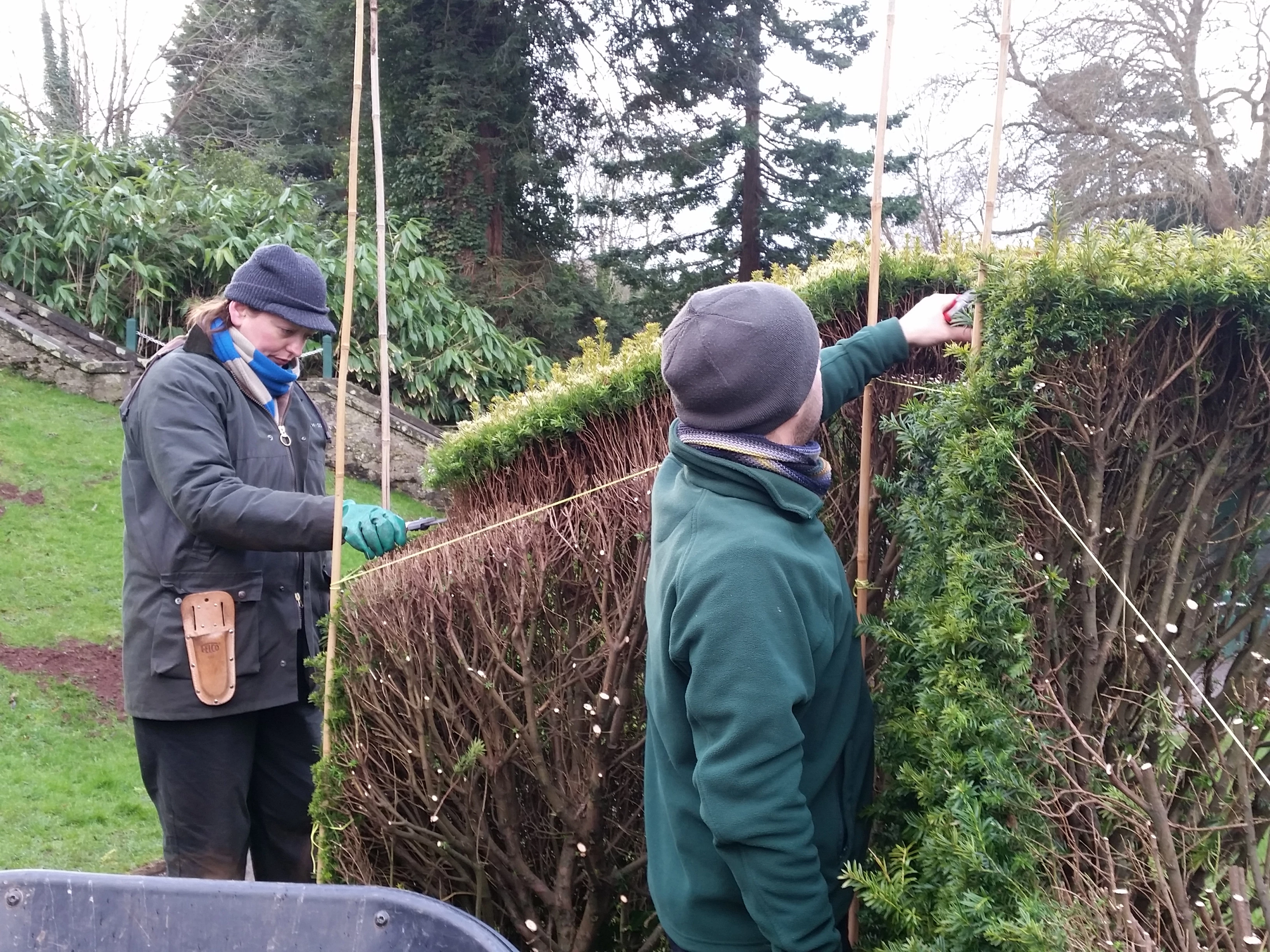
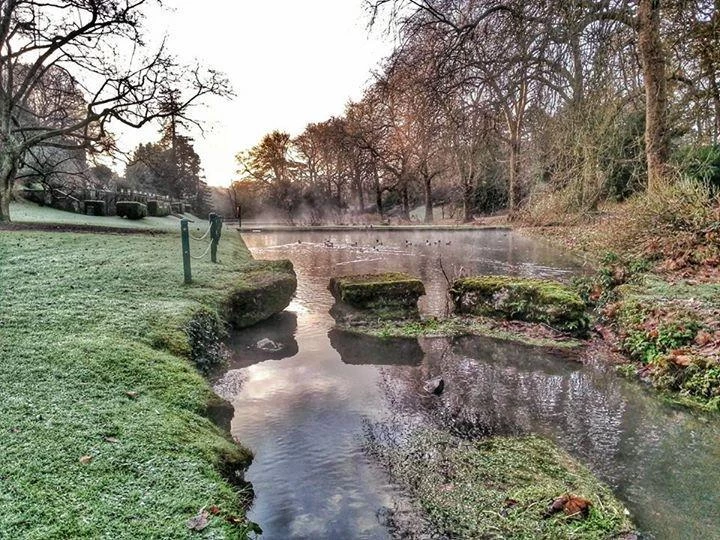
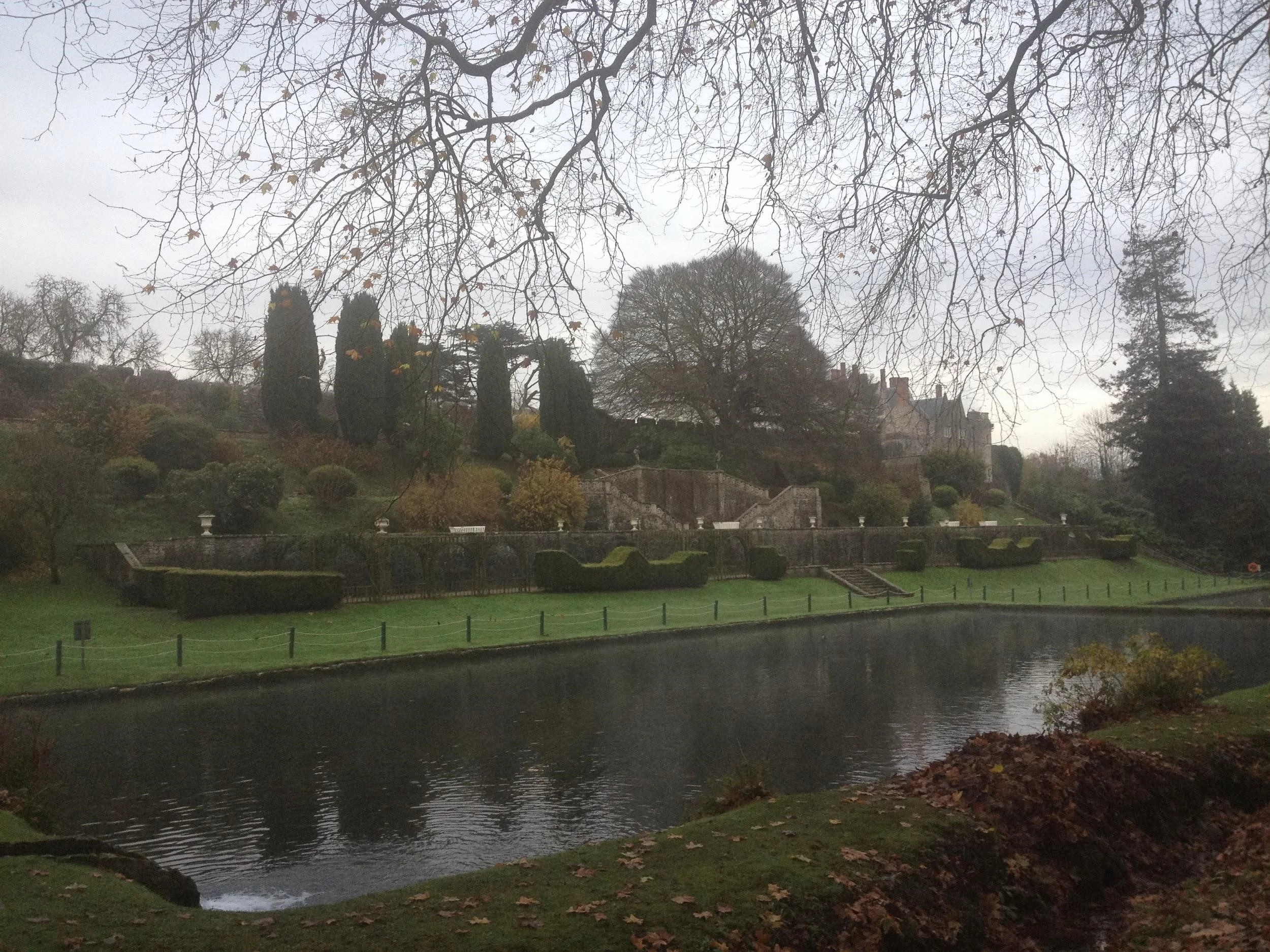
We decided to prune back hard the Yew hedges down by the ponds because they had grown too wide, and in places the height was obscuring the pretty spectacular view. Yew responds well to renovation pruning, but it’s best carried out staggered over a few years. This year we concentrated on one side and the top. We used string lines tied to bamboo canes to mark out a straight cutting guide. We cut back hard using loppers and secateurs to reduce the height and width, and to re-shape where needed. After hard pruning it’s always good idea to apply feed and mulch at the base to give the plant a bit of extra nutrition and TLC while it recovers.
Rose Pruning
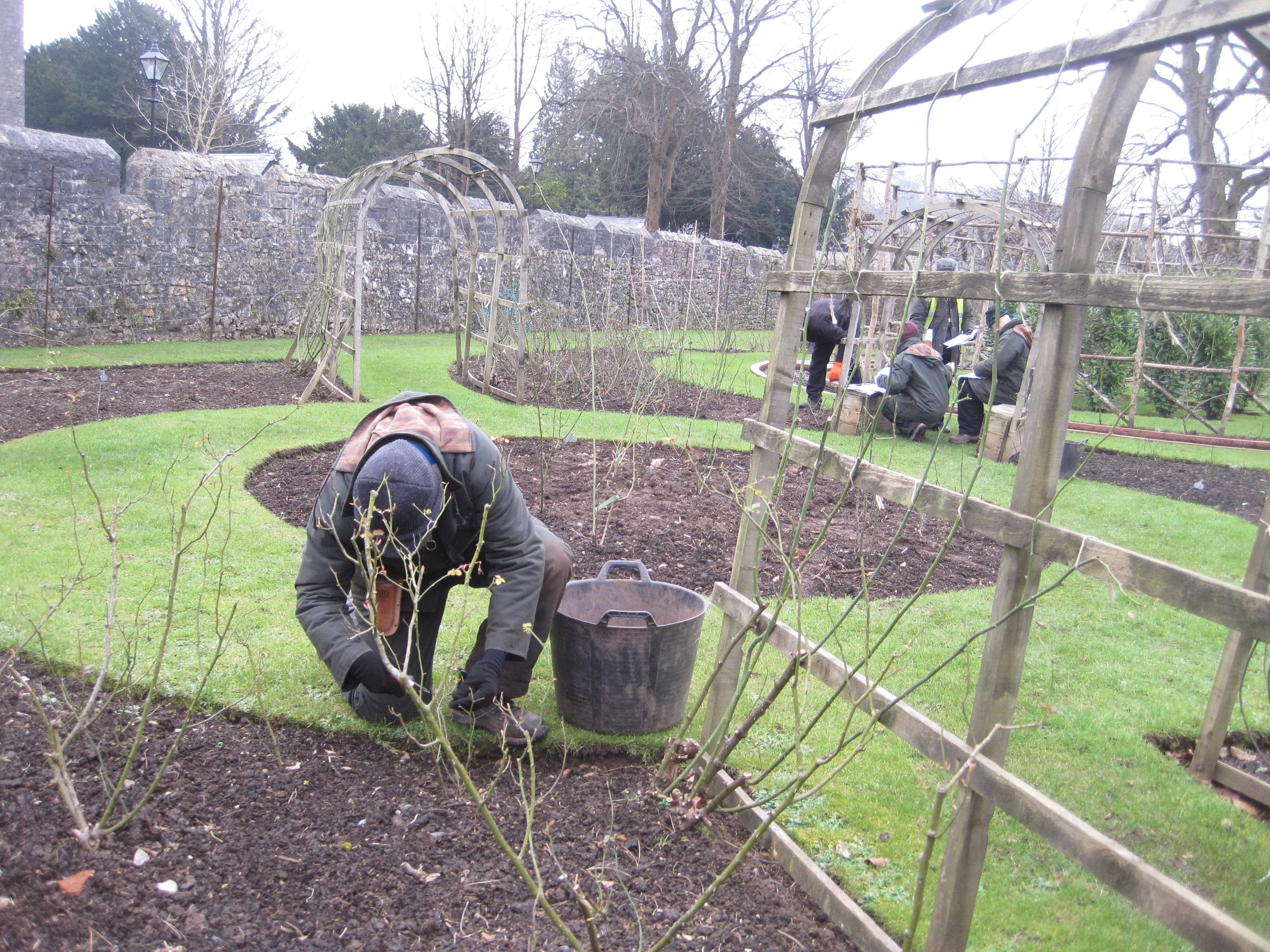
A few of the other HHSS trainees from other gardens on the scheme joined us just last week for a Rose pruning workshop led by St Fagans gardener Julie. Our task was to give the Roses a light annual prune. Different Roses respond better to different styles of pruning. We were each given a specific Rose bed, a map, and a list of the Roses with their pruning preferences. I was working with ‘Gruss an Teplitz’, which are a beautiful and fragrant old Hybrid Tea which prefer to be pruned thin. The first move was to remove any dead, diseased and damaged or displaced material. The 4 D’s! Next I thinned out the centre to produce a well-balanced open shape, and removed any crossing stems to stop them from rubbing against and damaging each other. I removed some of the very old, less productive wood to encourage new growth from the base. Always remember to prune to just above an outward facing bud, and make sure the cut slopes away from this to shed water.
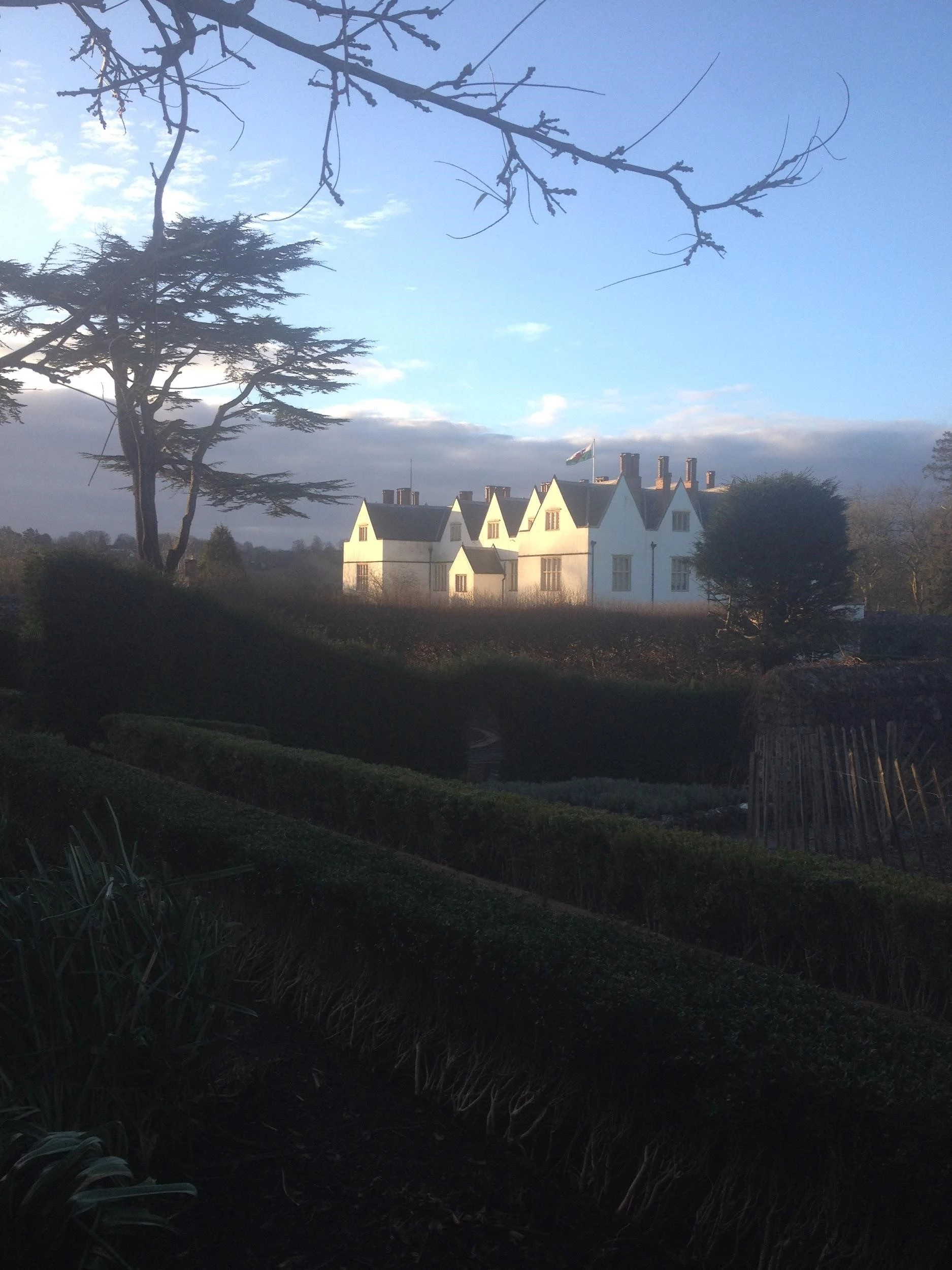
Les jardins du château de St Fagans montrent à quoi pouvaient ressembler la propriété du conte de Plymouth et sa famille à la fin du XIXe siècle et début du XXe siècle.
Ces jardins sont bordés par un parc paysagé arboré qui nous mène vers 4 étangs en cascade surplombés par des terrasses formelles finies en 1871 et pensées par le paysagiste James Pulham.
S’en suis de magnifique parterre qui nous mène vers différents jardins comme le Dutch Garden entourant une fontaine, la roserais recréé comme elle avait été pensé en 1899 ou encore l’Italien Garden qui a été restauré il y pas longtemps grâce à des récits et photos d’époque pour retrouvé sa beauté d'antan.
Ces jardins regorge de secret historique comme les serres construite en 1899 et, de très belles variété de plante et de vieux sujet comme un hêtre planté en 1872.
Alors n’hésitez pas au cour de votre visite de questionner les jardiniers présent qui s’occupe avec passion de ces jardins.
I nifer fawr o bobl, bydd gaeaf 2014-5 yn cael ei gofio fel gaeaf y lempsip max strength. Mae bron pawb dw i’n ’nabod wedi bod yn diodde’ eleni – anwyd trwm, cur pen a pheswch sy’n anodd i’w waredu. O ddarllen cofnodion diweddar @DyddiadurKate, mae’n ymddangos mai sefyllfa go debyg oedd yma yng Nghymru canrif yn ôl. Yn Chwefror 1915, roedd nifer o deulu a chymdogion Kate yn y Sarnau a Chefnddwysarn, gan gynnwys ei thad Ellis, yn ‘clwyfo o’r influenza.’ Dyma ddetholiad o’r cofnodion:
5 Chwefror - Diwrnod braf iawn. Myfi yn dod adref. Mr E. H. Evans yn darlithio yng nghyfarfod Cymdeithas Ddirwestol. Tywydd mawr iawn min nos. Ellis yn cwyno "influenza".
8 Chwefror - Tomi yn mynd a hwch dew ir Bala. Myfi yn mynd iw phwyso. Tomi yn dod a llwyth o galch adref. Myfi yn dechreu clwyfo or influenza. Ellis ychydig yn well. Codi i nol "orange" yn y nos.
9 Chwefror - Ellis heb fod gystal. Richard yma yn "bailiff". Minnau yn reid ddrwg. Wedi cysgu.
19 Chwefror - Halltu yn y boreu. Johnny Llawr Cwm yn galw yma. Richard yma yn helpu malu gwellt. Mammam yn dod yma ar ol tê. Jane Pantymarch a finnau yn mynd ir Byrgoed min nos. Mrs Williams Derwgoed yn cwyno yn bur arw (influenza).
Er gwaetha’ sgil effeithiau’r haint, mae’n amlwg nad oedd Kate a’i chyfoedion yn swatio yn eu gwaeledd. Mewn cymuned amaethyddol fel hon, roedd bywyd bob dydd yn mynd yn ei flaen fel arfer, ffliw neu beidio. Ond mae’n amlwg o ddarllen papurau newydd y cyfnod bod ffliw 1915 yn anarferol o ffyrnig. Dyma nodyn a gyhoeddwyd yn Y Cymro ar 17 Chwefror 1915:
Salwch – Fu erioed y fath salwch a sy’n ymdoi Penllynyn awr. Y mae yn ffeindio cryd ymhob ty. Influenza, dyna’r enw medda nhw.
Mae ffigyrau marwolaeth y cyfnod yn ategu tôn brawychol Y Cymro. Roedd y nifer a fu farw o’r ffliw ym Mhrydain yn 1915 bron ddwywaith gymaint â’r flwyddyn flaenorol:
1914 – 5,964
1915 – 10,484
1916 – 8,791
1917 – 7,289*
Wrth gwrs, roedd gwaeth i ddod gyda’r pandemig yn 1918-9. Bu farw 112,329 o bobl ym Mhrydain o’r ffliw yn 1918 a 40 miliwn yn rhyngwladol – mwy na’r cyfanswm cyfan a fu farw ar faes y gad yn ystod y Rhyfel Mawr.
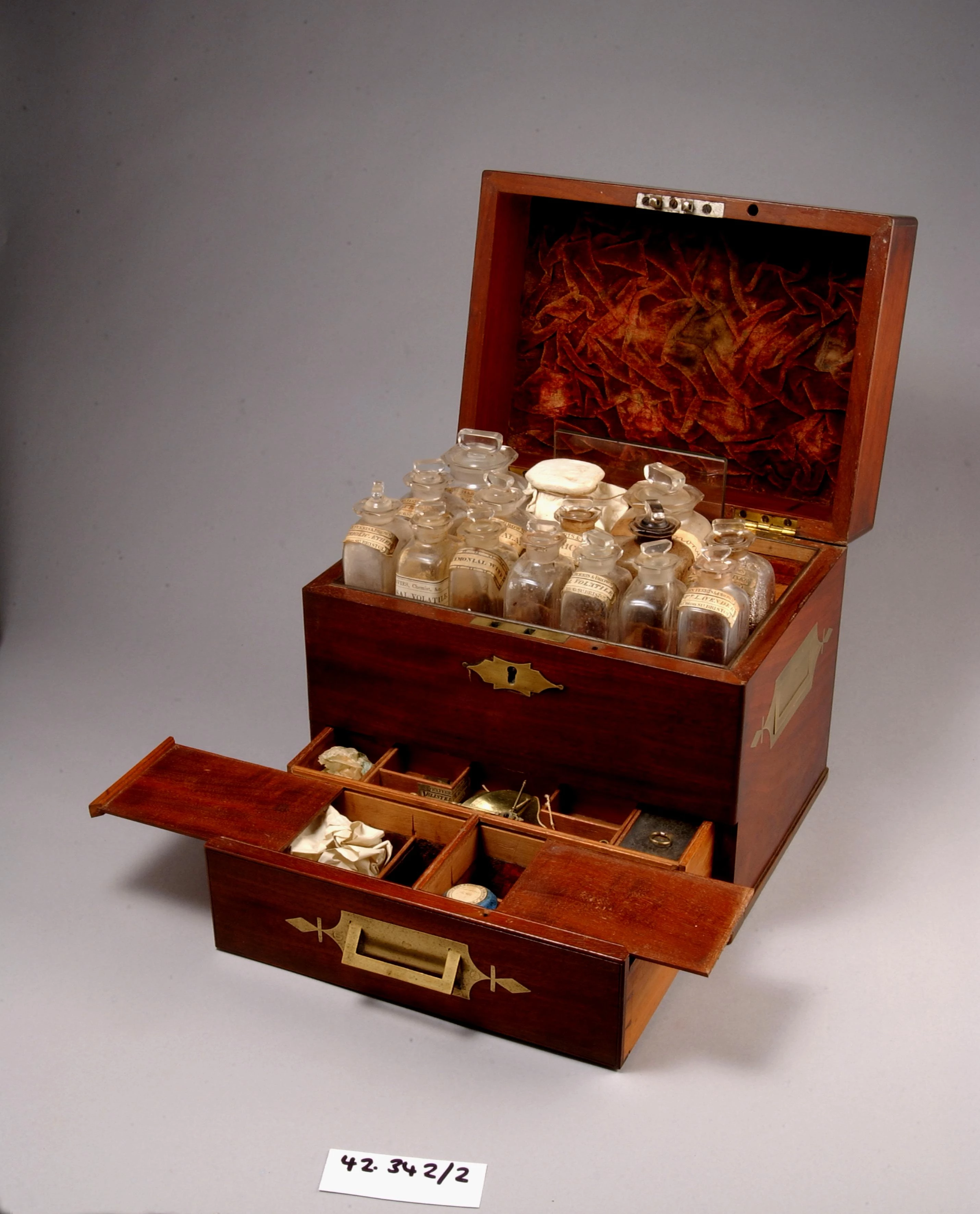
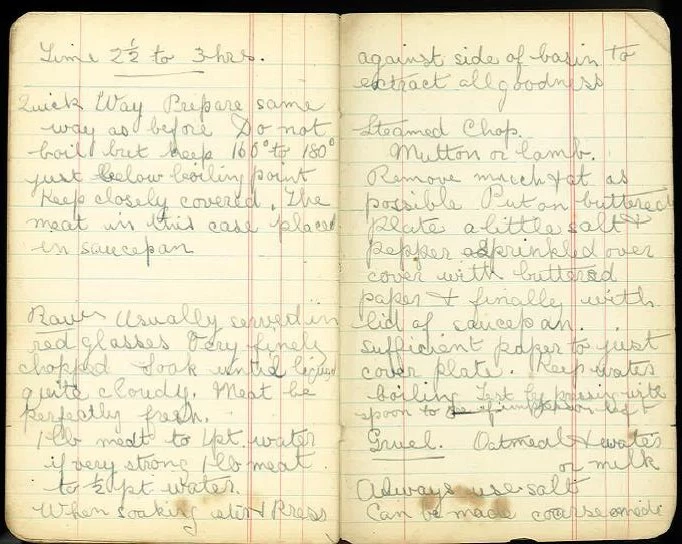
Mae’r casgliadau yma yn Sain Ffagan yn cynnwys nifer o wrthrychau ac archifau sy’n gysylltiedig â meddyginiaeth ac ymadfer. Gallwch weld rhai ohonynt ar dudalen Trydar @SF_Ystafelloedd (Mared McAleavey – Prif Guradur Ystafelloedd Hanesyddol). Un o fy hoff ddarganfyddiadau diweddar yw’r llyfryn a welir
a oedd yn eiddo i Phryswith Matthews – merch saer olwynion pentre Sain Ffagan. Mae’r llyfryn yn llawn ryseitiau, gan gynnwys prydau bwyd addas i gleifion. Bu Phryswith mewn darlith ar ‘invalid cookery’ ar 6 Ionawr 1914 – mae’i nodiadau o’r ddarlith honno yn y llyfryn. Yn ystod y Rhyfel Mawr, roedd hi’n gweithio fel nyrs VAD yn Ysbyty’r Groes Goch ar dir Castell Sain Ffagan. Gallwch weld rhagor o wrthrychau a lluniau sy’n gysylltiedig â stori'r ysbyty ar ein gwefan.
*Ystadegau: The Lancet, rhifyn 2, Chwefror 2002, tt. 111-3.