Amgueddfeydd, Arddangosfeydd a Digwyddiadau

Peregrines on the Clock Tower 2013 May 3

Peter Howlett, 3 Mai 2013

May 3 update

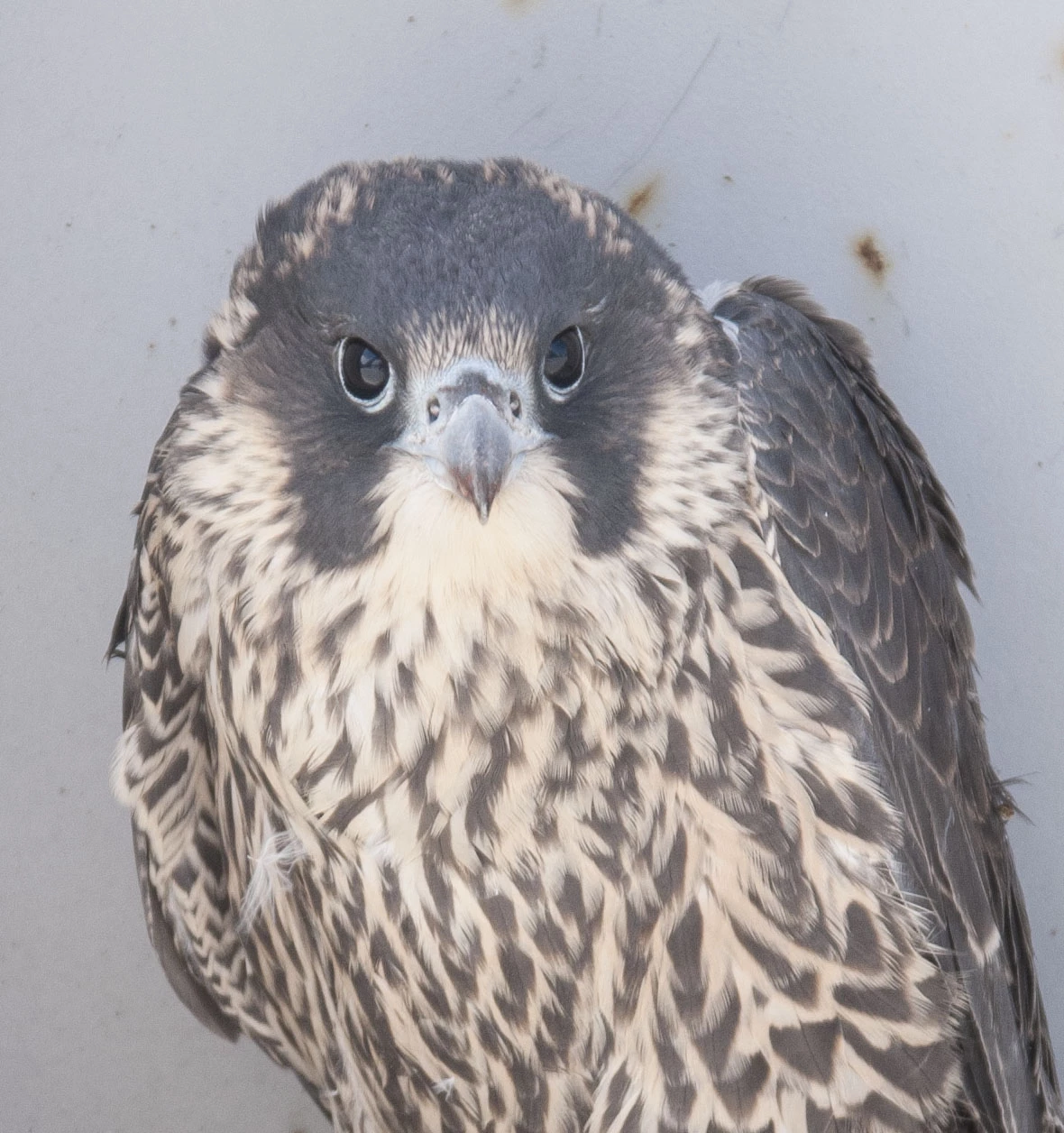
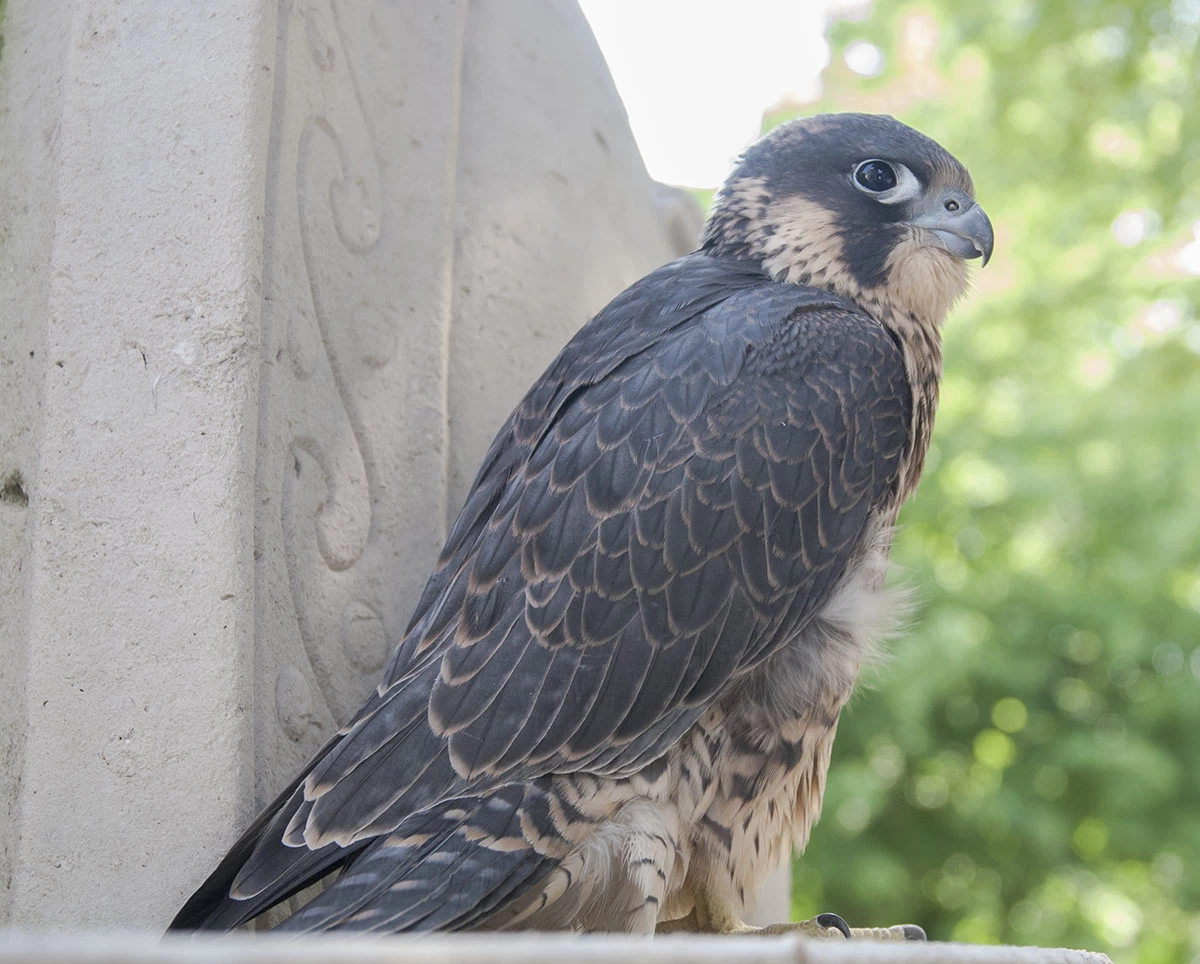
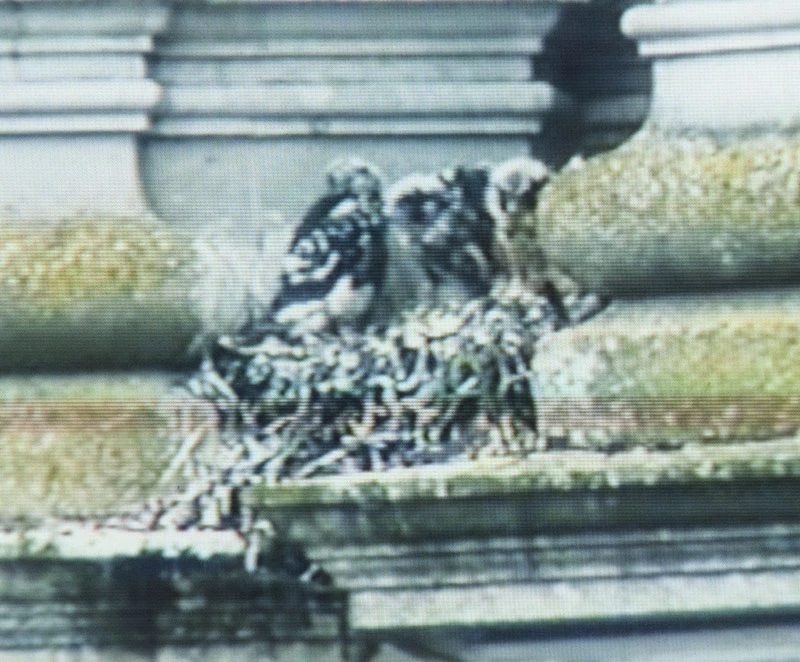
Plenty of feeding taking place today and I think there may now be 3 chicks. Their heads are becoming more visible by the day so it should soon be very obvious how many chicks there are. Female seems to be doing most of the feeding at the moment with the male bringing in the food.

I hope the chicks are more sensible this year when they are bigger and don't get too adventurous too soon - the ledge by the nest isn't very wide! 

Watch their progress here

Peregrines on the Clock Tower 2013 - April 30

Peter Howlett, 30 Ebrill 2013

Update 30 April

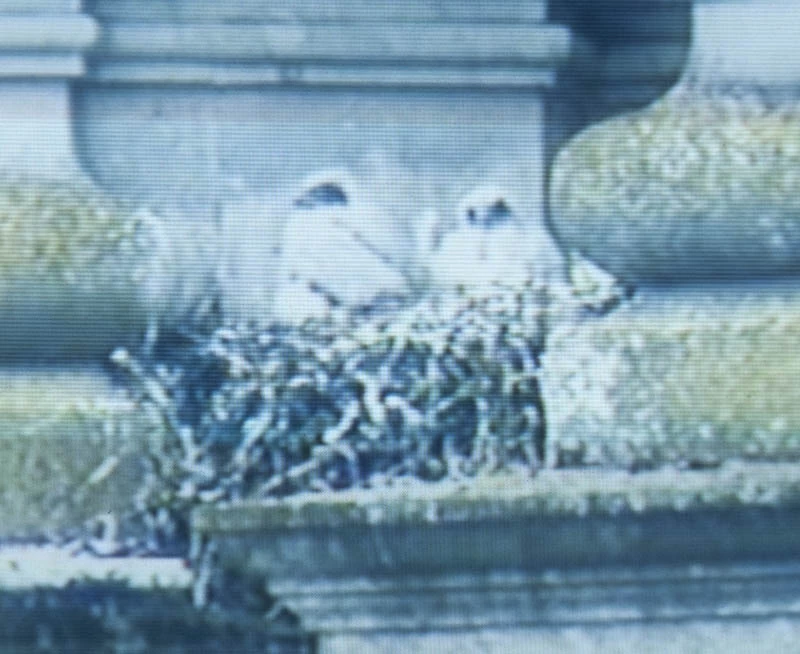
Great news, at least one chick has hatched over the weekend. The female spent 10 mintues or so tearing off little morsels for a chick this morning. I could just make out a little white head wobbling around. As I write this the female is back brooding the chick and the remaining eggs. Apologies for the quality of the photo, the only way I can get screen shots of any activity is to photograph the screen.

Peregrines on the Clock Tower 2013 April 04

Peter Howlett, 11 Ebrill 2013

April 10th: There are eggs

The female started incubating on the 20th March so, all being well, we can expect the first chick to be hatching in the latter half of April. There was relatively little sign of the pair earlier in the year and the report of a dead Peregrine in Alexandra Gardens just before Christmas was a cause for concern!

With so little displaying and calling around the tower I was quite surprised to see the female begin brooding in late March, let's hope this pair is successful.

Penblwydd hapus to Alfred Russel Wallace!

Julian Carter, 8 Ionawr 2013

Today, 8 January, marks the 190th birthday of the intrepid explorer and brilliant naturalist Alfred Russel Wallace. Born in 1823 in the village of Llanbadoc near Usk, Wallace went on to be one of the most celebrated scientists of his era.

Wallace spent much of his early working years as a civil engineer in the south Wales area, particularly in the Vale of Neath. This involved spending a great deal of time working outdoors, which allowed him to indulge in his growing passion for natural history.

Soon, inspired by the writings of traveling naturalists such as Alexander von Humboldt and Charles Darwin, Wallace set out on his own intrepid travels. These adventures started in the Amazon Basin and were followed later by his explorations of the Malay Archipelgo.

During these trips Wallace collected many thousands of birds, butterflies and beetles, many of which were new to science. The biological diversity he encountered inspired his thinking in many areas of biology such as the distribution and evolution of species. His brilliance did not go un-noticed and in 1858 he famously co-published the theory of evolution by natural selection with Charles Darwin.

During 2013 Amgueddfa Cymru – National Museum Wales, along with other museums and institutions across the world, will be marking the centenary of the death of A R Wallace in a celebration of his life and legacy. Keep an eye on our web site and blog for further information as we finalise details and dates. You will also be able to follow other events and exhibitions on the Wallace100 website.

Natural History Halloween Open Day - more scary pictures!

Julian Carter, 13 Tachwedd 2012

Following on from the last post about our Natural History Halloween Open Day, we thought you might like to see some more pictures of the event.

We had some freshly collected fungi on display, including an invitation to sample the smell of a fresh stinkhorn and to speculate on the significance of the smell to the biology of the fungus. We found it got some interesting reactions (although it’s not so fun being sat downwind from it!).

There were also some less stinky but realistic wax models of fungi. These were made in the mid 1900s by our in-house botanical model-maker, a practice that continues today.

A ‘murder mystery’ had also taken place in our herbarium (the plant collections), an area not usually open to the public. Whilst surrounded by our quarter of a million pressed herbarium specimens, you had to work out which plant was used to poison the victim!

If this has whetted your appetite, keep an eye on our Natural History collections Twitter feed @NatHistConservation for more behind the scenes sneak peeks. Also stay tuned to the What’s On guide on our main website for details of the next Open Day. More stories from behind the scenes can also be found on the 'Rhagor' pages of our website e.g. conserving wax models.