: Casgliadau ac Ymchwil

A soldier's story - Private Oscar Foote

Richard Edwards, 7 Gorffennaf 2017

The collection at St Fagans National Museum of History includes numerous archives relating to the Welsh experience of the First World War. While working with colleagues to produce a digital database to commemorate the centenary of the conflict, I found an intriguing bundle of documents associated with a young soldier with connections to Penarth who died, serving with the Grenadier Guards, exactly 100 years ago today. His name was Oscar Foote and in this blog I have pieced together his last 24 hours from the archives we hold at the Museum.

On the night of 6 July 1917 an exhausted Oscar Foote had just returned from fighting in the trenches of Ypres for some well-earned rest and recuperation in a nearby camp. This camp was well within range of German artillery and on occasions they would shell the area. The morning of 7 July had begun like any other morning for Oscar. He had just put away his shaving kit when shells suddenly started bursting in the vicinity. A shell landed close to Oscar’s hut, creating murderous splinters in its aftermath. One of these splinters caught Oscar in the head and neck. Although his comrades desperately went to his aid, their efforts were in vain. He had been killed instantly. That afternoon, Oscar was buried by his comrades in Canada Farm British Cemetery, near Elverdinghe. A card dated 3 January 1918 includes a photograph of a simple wooden cross marking his resting place. 

The Oscar Foote archives came into the national collection in 1946 – a donation from a Mrs Maillard of Penarth who had been corresponding with him during the War. It appears that Mrs Maillard also donated material to the Imperial War Museum (IWM), possibly in response to the Bond of Sacrifice initiative. More research is needed to unpick how letters addressed to Mrs Maillard from the IWM came into our possession in 1946, but both institutions were actively collecting war memorabilia from soldiers and their families during and immediately after the conflict. Another blog for another day.

The digitisation of Amgueddfa Cymru – National Museum Wales’ First World War collection is supported by the Armed Forces Community Covenant Grant Scheme.

Down 2 Earth...with an impact!.

Cerys Roche, 5 Gorffennaf 2017

I joined the museum team in June this year, as a design placement student from Brunel University, to begin the process of digitising parts of the Natural Sciences outreach collection. The project makes use of 3D scanning technology to create virtual versions of meteorite, rock and fossil specimens. Which can then be used to create a digital library of the collection.

The aim of this project is to create an online exhibit which is always accessible and available for everyone, developing it for outreach and education in a virtual environment. Digital scans will allow the public to get 360o views of specimens, meaning you could notice newfeatures and details not seen when specimens are behind a display case or shown in photographs.

Initially I will be working on the collection available in the Down2Earth loan boxes and designing the best environment for them to be displayed digitally. The objective is to create an environment that allows for exploration of specimens and the ability to see them in a whole new way, while also encouraging learning. Making the scans will be a useful resource both for those who are borrowing the boxes, as a source of information, and for those who are unable to borrow the boxes as a way to still interact with the specimens and learn about them.

The process of creating the virtual specimens uses an Artec 3D scanner, a rotating turntable and a computer. Placing the specimen on the turntable, several scans are made with it at different orientations. Once the whole specimen has been imaged computer software is used to align each scan, this can be a fairly fiddly job but once complete the software runs a process that removes any outliers and creates an accurate and precise representation of the specimen’s shape and surface texture. I then begin the post-processing steps of setting the material to look as realistic as possible along with setting it into a virtual scene and lighting it. The final stage is to add in the information that comes with the specimen and highlighting points of particular interest.

However not all specimens can be imaged using the scanner as they may be too shiny, in the form of slices or too delicate. The plan with these objects is to photograph them in high detail from multiple sides and in different settings (e.g. backlit), in the hopes that the user can still find ways to explore the specimen, by moving around, zooming in and changing the lighting.

Creating a virtual collection to go alongside the physical one could completely change the way the public engage with the collection. Opening up new avenues of user interaction and therefore adding to the user experience. The specimens scanned so far are being hosted on our Sketchfab account, sketchfab.com/museumwales, until the project page has been designed and developed. You can explore objects such as this cast of a Tyrannosaurus Tooth and many other fossils, meteorites and rocks there right now. 

Collection Care Challenges - Storing the Big Marine Fossils

Julian Carter, 28 Mehefin 2017

Storing and accessing many of the collections housed in the museum can be quite a challenge. Within the natural sciences we have over 4 million objects and specimens that exist in a huge range of materials, sizes and shapes. These range from frozen DNA samples to the full skeleton of a humpback whale!

In a recent project we had to consider how to improve the storage of our collection of large marine fossils of fabulous Ichthyosaurs and Plesiosaurs.  This is a highly important collection but due to the large size, weight and nature of the specimens they are very difficult to store and access easily.

Over 30 years ago the geology team had come up with a clever solution using metal runners mounted on a commercially available heavy duty racking system. However over time this had started to become distorted, and accessing the fossils was becoming hazardous to both museum staff and the fossils themselves. We needed an effective long term replacement…

Fortunately the commercial world now has many more options available and we thus went through the process of obtaining quotes and potential design solutions to the storage of the fossils which ranged from refurbishing the existing racking to using heavy duty pull out shelfs.

In the end we went with the idea of adapting the roller beds used to move pallets along racking systems. Long span shelves covered with these rollers would provide a large surface area to spread loads, and enable easy movement of the fossils on and off the racking via a loading platform or pallet.

With a decision made, the challenge was now to safely remove the fossils off the existing racking, and to find somewhere where they could be temporarily stored – finding space is a huge challenge in an overstuffed museum like ours!

With careful planning space was found and it was time to move the fossils. None of the really big ones had been moved in a very long time so we weren’t sure of how they could be handled or the actual weight of the fossils. So to get started we chose to move one of the biggest and heaviest (i.e. most awkward) specimens, acquired a range of pallet trucks, lifts and dolley skates, and worked through the logistics of how to move this unwieldy specimen safely….

This first fossil was not easy to move and highlighted the key issues we faced in the relocation process. The second one went better, and by the third we had an efficient system going that minimised handling and lifting, reducing risks to both staff and our precious fossils! The temporary holding areas also had limited free space, thus how we subsequently stored and stacked the fossils required further creative thinking.

It took a few days, but all the fossils were safely moved. With the old racking cleared it was now a case of bringing in the contractors to replace the old system with our new shiny racking. Unfortunately this stage took longer than planned but eventually all was sorted and it was a case of moving the fossils all over again…. However the experiences of the initial move resulted in a rapid and efficient return of all the fossils to their new storage racking, with the new roller racking proving excellent for moving the fossils on and off the new units.

The result is we now have the collection in a much more accessible state. This will enable better access for both researchers and visitors but also enable us to put into place digitisation and conservation projects to ensure the long term protection of these historic fossils for science and society as a whole. In the end a job well done by an excellent team!

A Window into the Industry Collections - June 2017

Mark Etheridge, 27 Mehefin 2017

Over the last few months we have added some interesting objects to the collections. As usual this month I’d like to share with you some of these, to illustrate the range of objects collected for the industry & transport collections at Amgueddfa Cymru.

Illustrated here is a debenture for The Western Counties and South Wales Telephone Company, Limited. Dated 6th May 1889. This company was formed in 1884, a few months after liberation of telephone regulations made regional networks feasible for the first time in the UK. It was one of the seven regional telephone companies that covered the UK in the 1880s and early 1890s prior to the National Telephone Co. Ltd. achieving UK-wide dominance. By 1888 the south Wales portion of its network extended from Cardiff and Newport, westwards to Swansea and Llanelli, with some connections to valleys towns – connecting all the major industrial and urban centres of the south Wales coastal belt.

This Western Mail Ltd., Cardiff, employees' Roll of Honour, 1914-1918, was almost certainly displayed in the company’s main offices in Cardiff. It lists the names of 152 men who served during the First World War, with the names of those who died picked out in gold. The roll of honour joins an important collection of objects related to Welsh industry and the First World War. These items plus others from the National collection can be viewed on this online database

We are not sure exactley why this fretwork of 'The Lord's Prayer' was made. It was however, made by Llewelyn Richards, a haulier at Lewis Merthyr Colliery. 

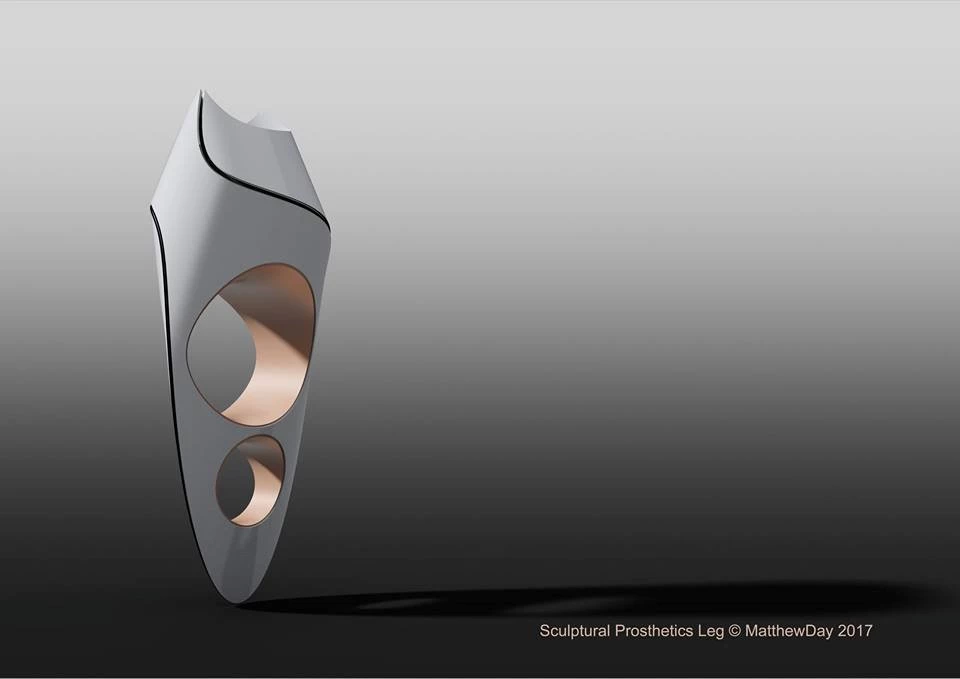
This brass object is a 'Turnip', and was used to protect a miner’s watch whilst he was working underground. It was used at Oakdale Colliery, and was donated along with an MSA self-rescuer, c.1989. Self rescuers such as these are still used at Big Pit National Coal Museum where they are part of the safety equipment given to visitors on the underground tour. These objects were both collected as part of St. Fagans Oakdale Workmen’s Institute re-interpretation project. You can find out more about this here.

We have acquired a few objects relating to the Mathews family. This oval shaped brass twist box has an inscription on the lid that reads ‘D.MATHEWS / GORSEINON 1897’. It belonged to David John Mathews, who was born on 7 July 1891 in Gorseinon. He died on 8 September 1959 of lobar pneumonia following massive pneumoconiosis at the West Wales Isolation Hospital in Upper Tumble. Coal miners were unable to smoke underground for fear of causing an explosion, so many chewed tobacco, and twist boxes such as this one were used to hold this chewing tobacco. They are usually oval in shape, made of brass and have an inscription on the lid (such as this example), although there are variations on this. A large collection of twist boxes can be seen on display at Big Pit National Coal Museum.

Along with the twist box, the Museum was also donated a photograph and newspaper cutting relating to the death of Ifor Mathews who was tragically killed in an accident at Great Mountain Colliery in 1936. Ifor Mathews had played rugby for Neath, Swansea, Carmarthen 'Quins', Llandebie, Penygroes and Cefnithin. The photograph was taken about 1926, and shows him wearing a rugby shirt. Can anyone identify the club?

Finally, this photograph shows a blacksmith with a horse, and dated from the early 20th century. The photograph was probably taken at a slate quarry in north Wales, possibly in the Blaenau Ffestiniog area. Can anyone help confirm or identify the location? 


Mark Etheridge
Curator: Industry & Transport
Follow us on Twitter - @IndustryACNMW

Hetty Edwards - Part One

Mel Taylor, 22 Mehefin 2017

Elizabeth Harriet Edwards, known to family and friends as Hetty, was Librarian at the National Museum of Wales from 1931 until her retirement in 1970. She is our longest serving Librarian, racking up a whopping 39 years’ service.

The National Museum’s Annual Report for 1969/70 records the Museum Council thanking her for her work;

‘Miss E H Edwards has served as Librarian for 39 years. During this period the Library has become one of the most important special libraries in Wales, now containing more than 80,000 books.  She has served as Chairman of the Welsh Branch of the Library Association, and is President-elect of the Cardiff Naturalists’ Society.’

We knew very little about her. There are just occasional remarks as above in the Museum’s Annual Reports and small pieces of information about lectures she’d given and broadcasts she’d made. I was tasked with discovering more about Hetty; from where did she hail, what sort of person was she and when did she die?

Rummaging through the Museum’s records and other sources of information I discovered that Hetty had lived in 22 Plas y Delyn, Lisvane and was made a Fellow of the Library Association in 1930. She must have had a keen interest in Natural History as she was a member of the Cardiff Naturalists’ Society for many years, including standing as vice president during 1973/4.

My search then took me to a donation record at the National Library of Wales. According to the NLW catalogue, The Gwenfron Moss Papers had been donated by Gwenfron Moss and Hettie Edwards, Cardiff, in July 1984. Although the spelling was different, surely this was our Hetty Edwards? Further examination of the records brought me to an entry in the Dictionary of Welsh Biography for Gwenfron Moss;

‘She [Gwenfron Moss] decided to leave Coed-poeth and to live with her adopted sister, Miss Hetty Edwards.’

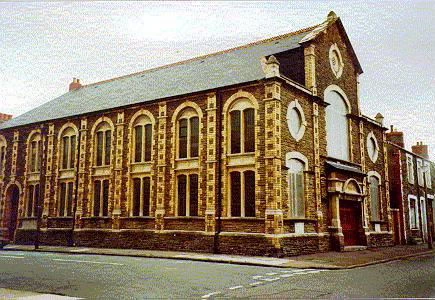
This was my ‘Eureka!’ moment. Hetty and Gwenfron were sisters! Now I had information about where Gwenfron came from and possibly Hetty, the date when Gwenfron died and the fact that Hetty died a fortnight later. The entry also mentioned that Gwenfron had been a deacon at the Welsh Congregational Church in Minnie Street in Cardiff. This snippet of information gave me an idea of where to look next. Would they be able to help me in my search for Hetty?