: Casgliadau ac Ymchwil

Volunteering at St Fagans during the First World War

Elen Phillips, 26 Mai 2015

With Volunteers’ Week fast approaching, many museums and galleries are busy planning events and activities to promote and celebrate the contribution of their volunteers. Here at St Fagans, volunteers play an active role in all aspects of our work. From whitewashing to thatching, rag-rug making to gardening, their skills and dedication are visible across the site.

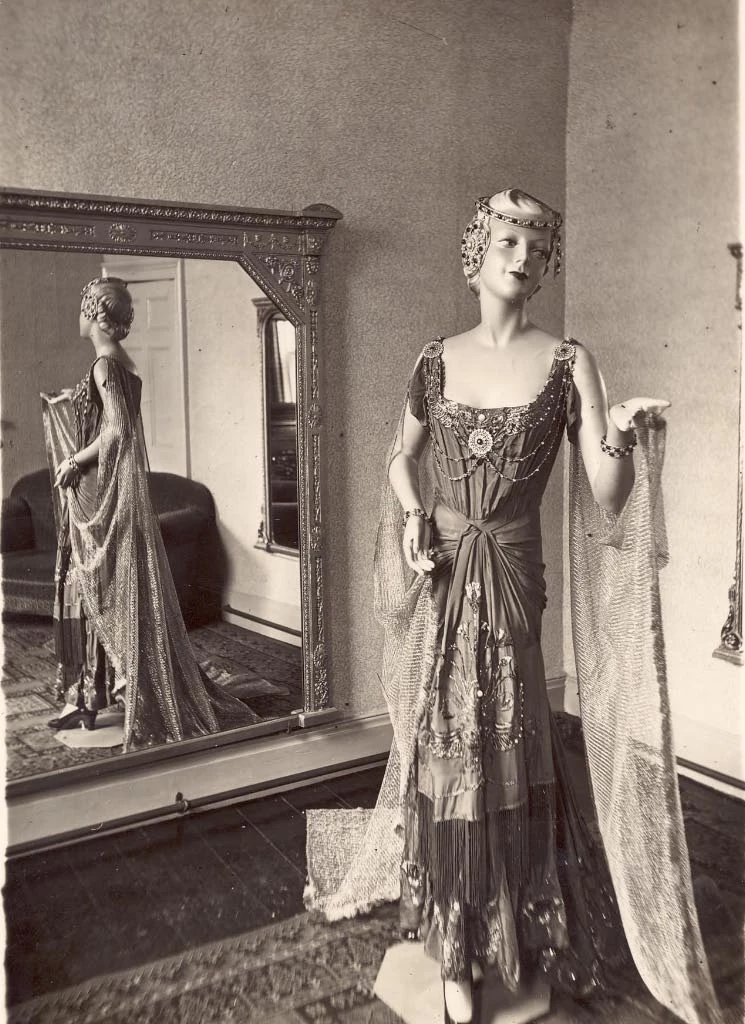
A hundred years ago, volunteers were leaving their mark on St Fagans under very different circumstances. During the First World War, the British Red Cross opened a 70 bed auxiliary hospital in the grounds of St Fagans Castle, staffed by Voluntary Aid Detachment nurses (known as VADs) from the local area.

The VAD scheme was formed in 1909 by the British Red Cross and the Order of St John, with the intention of providing additional nursing services in the event of war. Detachments (or units) were organised at county level, with each volunteer member receiving training in first aid and basic nursing skills. The first detachment to be established in Wales was formed at St Fagans Castle, of all places, in November 1909. The following year, two hundred VAD members from the county of Glamorgan took over the grounds for a training day. A reporter from the Cardiff Times witnessed the action:

An interesting demonstration was given in a field, showing how the wounded can be carried to the rear for treatment at hospital bases. Dr Sparrow explaining how first aid can be given without special provision of splints, bandages etc. A feature of the demonstration was a spring cart, lent by James Howells and Co Cardiff, which in less than seven minutes can be improvised for twenty-four wounded soldiers under cover. [Cardiff Times 24 September 1910]

Many of the nurses who volunteered at the St Fagans Red Cross Hospital during the war joined the VAD scheme at this early stage. One of whom was Mary Ann Dodd – known as Polly. She worked as a housemaid for the Windsor-Clive family in the Castle, but also did turns of duty at the hospital, as she recalled some 40 years later:

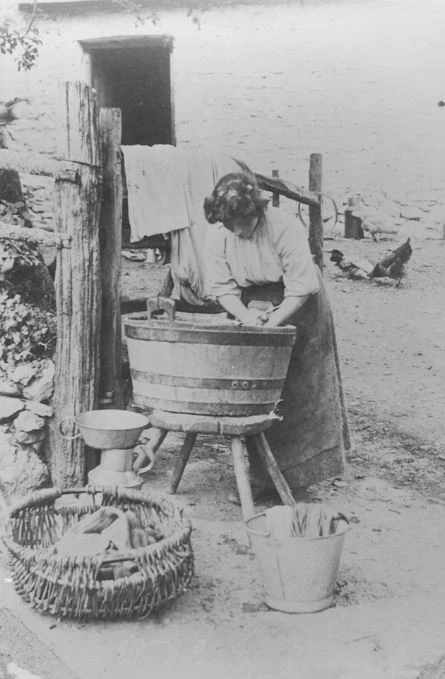
I used to cook and clean and one day a week I did the washing. Those soldiers’ socks were in a state, many had no heels in them at all. The soldiers only laughed and teased us, and when they got better, they tried to help us.

In July, we’ll be exploring some of these personal stories on-site through music and performance. The much-anticipated culmination of the Make an Aria project (in partnership with Music Theatre Wales and the Royal Welsh College of Music & Drama) will give operatic life to the men and women who lived, worked and convalesced at the Castle during the war. The Make an Aria project is a first for the Museum - we don't often experiment with musical interpretation. Book your tickets now! And of course, don't forget about the First World War online catalogue. We’ve created a ‘volunteering’ tag to pull together all the collections relating to voluntary action during the First World War, both here at St Fagans and in communities across Wales.

UPDATE! Free tickets now available for MAKE AN ARIA on 7 July 2015. Experimenting with opera and performance in the grounds of St Fagans Castle. An opportunity not to be missed. See What's On for further details.

Up on the roof with the bees!

Annette Townsend, 26 Mai 2015

Last week I got the chance to go up on the roof of National Museum Cardiff to see the two Natural Sciences beehives. Since the bees arrived last year, Ben Evans and his team of trained staff from across the Cathays Park site have been responsible for the weekly maintenance of the hives. On this occasion Ben was able to sign me in as a visitor and we collected the box of beekeeping equipment and made our way up and out onto the roof. Next we put on our beekeeping gear; a half suit with an integral hat and face net and some thick gauntlet gloves. Ben lit up the smoker and waved it near the entrance of the hives to calm the bees. He then took the top off the hive and carefully pulled out the individual layers so that we could have a clear look inside. Each layer was covered in hundreds of bees and underneath we could see the beautiful hexagonal formations where the bees store their food and larvae. We also checked through each layer to locate the queen. She is marked with a green spot on her back so she can be clearly identified. The two hives are very different, in one the bees are quite subdued so Ben is feeding them with a sugary syrup to help them along.  In the other hive the bees seem very active and are starting to produce honey. I actually got to taste the honey and it was gorgeous! Ben plans to produce a beekeepers diary, so keep an eye out for further updates about the bees on our blog pages and our Twitter Feeds (@NatHistConseve or @CardiffCurator). Let’s hope they produce more honey so we can eventually sell it in the museum shop!    

Wallace Goes West…

Julian Carter, 26 Mai 2015

On his death over 100 years ago, Alfred Russel Wallace was widely praised as the 'last of the great Victorians'. But who was he?

Wallace was many things - an intrepid explorer, a brilliant naturalist, a social activist - overall a remarkable man. In his time he collected over 125 000 animal specimens, published more than 800 articles and wrote 22 books.

He is most famously associated with co-discovering the process of evolution by natural selection alongside Charles Darwin. Yet we have all heard of Darwin, whilst Wallace had become more of a forgotten figure.

In 2013 AC-NMW produced an exhibition commemorating the life and work of this great man. This exhibition has now journeyed westwards to the Oriel y Parc Gallery in St Davids, and can be explored by visitors until the 25th November.

@DyddiadurKate - A oes heddwch? Eisteddfodau a'r Rhyfel Byd Cyntaf

Fflur Morse, 22 Mai 2015

Wythnos nesaf bydd Caerffili a’r cylch yn croesawu Eisteddfod yr Urdd a dros 15,000 o blant a phobl ifanc i’r dref i gystadlu mewn cystadlaethau megis canu, dawnsio a pherfformio. Uchafbwynt yr ŵyl i lawer fydd seremoni’r coroni a chadeirio.

Ar y penwythnos yma, ganrif yn ôl, bu Kate hefyd yn ymweld ag Eisteddfod, sef Eisteddfod Llanuwchllyn 1915.

Enillydd cadair Eisteddfod Llanuwchllyn y diwrnod hynny oedd neb llai, nag Hedd Wyn, un o brif ffigurau llenyddol Cymru.

Y gadair yma oedd y bedwaredd gadair iddo ennill mewn eisteddfod leol, a’i ffugenw oedd ‘Fleur-de-lis’, enw a ddefnyddiodd sawl tro wrth gystadlu. Dyma hefyd oedd yr eildro iddo ennill cadair Eisteddfod Llanuwchllyn. Yn yr eisteddfod gyntaf, yn ôl llafar gwlad, bu’n rhaid cadeirio Hedd Wyn yn ei absenoldeb, oherwydd iddo adael yr eisteddfod yng nghwmni un o ferched y fro, ac aros allan gyda hi.

Derbyniodd glod aruthrol yn y ddwy eisteddfod. Meddai’r beirniad ym 1913:

Well done Hedd Wyn, dos yn mlaen hyd nes cyrhaedd Cadair Genedlaethol.

A dyna be wnaeth – yn 1915 aeth ati i geisio am Gadair Genedlaethol Eisteddfod Bangor ond ni ddaeth i’r brig y tro yna. T.H Parry Williams a gipiodd y gadair a’r goron y flwyddyn hynny.

Er iddo golli ym Mangor, ddwy flynedd yn ddiweddarach, bu iddo ennill Cadair Eisteddfod Genedlaethol Penbedw 1917, ond yn dorcalonnus, bu farw mewn brwydr yng ngwlad Belg rhai wythnosau ynghynt. Yn ystod y ddefod, gosodwyd gorchudd du dros y Gadair.

Bu eisteddfodau yn elfen bwysig o fywydau'r Gymru yn ystod y Rhyfel. Fe roddodd gyfle i bobl ddod at ei gilydd i fwynhau ag anghofio pryderon rhyfel, pe bai hynny ond am ysbaid fechan. Mewn cyfnod o ansicrwydd, dychryn a pherygl fe fydda’r eisteddfod yn corddi ymdeimlad o ysbryd cymunedol, nid yn unig ar y ffrynt Gartref ond hefyd i filwyr hiraethus o Gymru:

The Welshmen in khaki could not let Easter go by without his feast of song, and “somewhere in England” the lads from the Principality had a Welsh Divisional Eisteddfod. Cambrian Daily Leader, 25 Ebrill 1916  

Feedback on Fragile?

Penelope Hines, 20 Mai 2015

We have created word clouds based on the most commonly used terms in the responses to two questions on display in the exhibition. Figure 1 shows the feedback to the question "Which object would you recommend to a friend?" and Figure 2 shows the terms used to the query "How do you feel surrounded by so many fragile objects?".

We hope to periodically produce these word clouds; they may show that the most frequently used terms change over time or that they remain the same. Interesting conclusions could be drawn from either. If they change it could be that people will appreciate certain works due to the time of year, the likelihood that they attended an event or changing fashions. If they remain unchanged the conclusion could be drawn that some works resonate strongly with the majority of visitors.

The questions are posed using two methods on the landing of the west wing galleries; as a comments section on the iPad's and a bulletin board with paper and pencils provided to write a response (Figure 3).

These questions were posed to combat the standard "What do you think of the exhibition?". Rather we wanted to create questions which would encourage key concepts of the exhibition: to stimulate curiosity and encourage debate. This (we hope!) will happen through visitors reading the questions and considering their own responses and by seeing the responses of others which are left on display in the space.

Excitingly we have found visitors have taken to this style of questioning; the responses to the question about recommending an object to a friend (on the "bulletin board") have been through text and images with some visitors expanding upon why they like certain works (Figure 4) . In the comments field on the iPad's which asks about personal experience in the exhibition we have been interested to seeing the varying reactions. Such as a visitor on the 5th May who responded: "Scared worried but its lovely" or from the 16th May "I really liked the pull between wanting to touch and not being able to touch. When i stepped into the first installation i was overwhelmed with a child like want to feel and discover for myself.".

Let us know If you have any comments on the exhibition, questions or if there's a subject you'd like to see a future blog post about. By Penelope Hines & Jennifer Dudley