Wedi'r Feirniadaeth Sara Huws, 28 Medi 2015 Dyma flog i werthfawrogi gwagle.Dydyn ni ddim yn cael llawer o gyfle i fyfyrio am ein gwaith, achos ma' wastad mwy ohono i'w wneud. Felly, cyn i mi fynd i'r afael ag ail-wampio'n tudalennau llogi preifat; gorffen paratoi ar gyfer cynhadledd Archif Menywod Cymru a dechre helpu efo tudalennau 'cynnig syniad am ddigwyddiad', dewch i ni eistedd am eiliad a syllu 'mewn i'r gagendor mawr tawel, ac anadlu. Neis, ond'yw e? [The Sea's Edge, Arthur Giardelli]Gan fod 'cadw'n brysur' yn un o'n chwaraeon cenedlaethol, dyw hyn ddim at ddant pawb - ond dwi'n licio'r syniad o bwyso a mesur, aros yn llonydd am ennyd, a gwrando. Mi ddoiff na alwad bob tro: ebost sydd di syrthio lawr cefn y mewnflwch; llyfr 'dych chi wedi bod yn meddwl ei ddarllen ers sbel; neu bydd cyd-weithiwr liciech chi dreulio mwy o amser yn dysgu ganddynt yn taro'u pen trwy'r drws i weld a ydych chi ffansi paned.Gwerthuso ac ArchwilioRydym ni'n newid fel adran ar hyn o bryd - bydd dau aelod newydd yn ymuno â'r tîm yr wythnos hon - a rydym ni i gyd wedi bod yn gweithio ffwl-sbîd, os braidd ar wahan, ar brosiectau gwahanol ar y we, mewn orielau, y cyfryngau cymeithasol, rheolaethol, ymchwil a chynllunio.Mae Graham, sy'n arwain y tîm cynnwys, wedi bod yn cymryd rhan mewn prosiect sector-gyfan sy'n edrych ar fodelau gwerthuso, pwyso a mesur, o'r enw Let's Get Real. Yr wythnos ddiwetha, mi fuodd gerbron y 'Crit Room' ym Mrighton, yn cyflwyno'n gwaith ar gyfer ei archwilio a'i feirniadu. Diddorol a brawychus.Mae canlyniad y 'crit' wedi bod yn galonogol iawn - roeddwn i wedi bod yn poeni braidd am faint ein rhwydwaith twitter, am fod cost amser hyfforddi pawb yn tyfu drwy'r amser i fi. Ond, cawsom adborth fod hyn yn arwydd da ein bod yn ffynnu ar-lein, ac i boeni llai amdano.Dwi'n ceisio dilyn eu cyngor nhw, go iawn.Adborth y Stafell FeirniaduTafod allan-o'm-boch, dwi'n hapus efo sut 'dyn ni'n gweithio fel rhwydwaith dyddie 'ma, ac yn falch iawn pan dwi'n gweld pobl yn llamu 'mlaen yn defnyddio'u sgiliau newydd ar y cyfryngau cymdeithasol. Wrth dynnu rhifau at ei gilydd ar gyfer adroddiad arall, fe sylwais ein bod wedi cyrraedd carreg filltir bwysig iawn yn y misoedd diwetha: dros y rhwydwaith, mae gennym dros 125,000 o ddilynwyr. Dwi'n gwbod mai nid o rifau'n unig yr adeiladir llwyddiant ar-lein, ond, dwnim, mae 'na rywbeth tawel, boddhaol am weld rhes o '000'au gwag, cegagored.Mi gafodd Chris, sy'n gyfrifol am adeiladu seiliau ail-ddatblygiad y wefan (a llawer mwy), a gweddill y tîm, hwb gan y Stafell Feirniadu, hefyd - yn benodol, fod ein harlwy ar-lein yn 'werthfawr iawn, yn gyfoethog ac yn foddhaol'. Alla i ddim peidio â meddwl am goffi pan dwi'n darllen y geiriau yna. Amser i stopio blogio am stopio a dechre stopio am baned.
Fragile? Art & Craft Workshops for People Living With Dementia Jennifer Dudley, 24 Medi 2015 Teacups & MemoriesThe Exhibition: Fragile? Fragile? is an exhibition of contemporary ceramics at National Museum Cardiff, showcasing the beauty and variety of contemporary ceramics practice. The exhibition explores the artistic and expressive possibilities of clay as a material, including the contradiction between two of its innate qualities – durability and fragility. The exhibition includes items from the National Museum’s collection, shown alongside exciting new ceramic installations made especially for this exhibition. Dementia-friendly workshops – Free! But limited availability so please book in advanceOn October 1st we will be running a day of free workshops for people living with dementia and their carers, with activities inspired by the Fragile? exhibition. The workshops will be relaxed and friendly. No previous experience is required for any of the activities. Tea and biscuits will be provided and chatting is encouraged! Some sessions may be photographed, so that we have a record of our activities, but you can always ‘opt out’ of being photographed. Workshop schedule Explore the exhibition, 11am-1pm. Maximum 10 people - please book in advanceIn the morning, we will take a spotlight tour of some objects in the Fragile? exhibition. You will not be given a full tour of the whole exhibition as it is quite large! There will be tea, cake, and music with different ceramic items available for you to touch, hold and chat about. A family member, friend or helper is very welcome to attend with you.Lunch, 1 – 2pm. Maximum 20 people – please book in advanceWe would love for you to join us for lunch if you have taken part in either or both of our sessions. Family members, friends and helpers are also invited.Teapots and Clay pots, 2pm-4pm. Maximum 10 people – please book in advanceIn this fun, hands-on session led by artist Jess Midgley, you can have a go at modelling and pattern making with clay. A family member, friend or helper is very welcome to attend with you.To enquire or book a place please email Jennifer.Dudley@museumwales.ac.uk
Making a photographic collection accessible - Part 1 Mark Etheridge, 17 Medi 2015 Staff at Amgueddfa Cymru work across a number of different departments. These departments do not work in isolation, but staff work together to look after the collections preserved for the people of Wales.The industry and transport photographic collections comprise over 206,000 images, covering all aspects of Welsh industrial, maritime and transport activity. One of the greatest treasures held within this rich collection is the Hansen Collection, which comprises of 4,569 negatives (two-thirds glass, and a third film) of ships mainly at Cardiff. These were taken by members of the Hansen family between 1920 and 1975. They provide an amazing photographic record of shipping activity at the port during those years. You can find out more about the history of this collection by reading this article from 2011.One of our main aims is to make all the collections we look after more accessible. When we purchased the Hansen Collection in 1979, the first stage in the process of making the collection available was to compile a catalogue. Initially a handwritten catalogue was produced which could be consulted in the photographic research room. Then in 1996 the catalogue was published under the title “the Hansen Shipping Photographic Collection” making the contents of this collection available to a wider audience. A few years ago I worked on converting this catalogue into a digital format so that it could be placed on the museum website. It is now available for anyone to search, and find vessels they are interested in. The online catalogue has greatly improved access to this collection, and we have had enquires from all over the world because of it. People might be researching a particular ship and are looking for an image of it. A family member might have worked on the vessel and so someone might be interested in seeing what the ship looked like.Following placing the catalogue online the next stage has been to input information on each negative onto our collections management database. A number of staff are currently involved in this, including myself and staff working in the History & Archaeology and Collections Services departments. We have so far put just over 1,500 negatives onto the system. It is a long process, especially as we are repacking the collection into conservation grade packing as we go along. As well as preserving the collection and making information on the collection available, we also need to digitise each negative. This will provide us with a record shot, meaning that we can minimize the handling of the original. This is especially important as so much of the collection is made up of fragile glass plates. We have made a start on this, and have so far digitsed 572 negatives. Our intention is now to continue this work and digitise the remainder of the collection.We will be doing a series of blogs on various aspects of the process to make this collection accessible, and will be blogging on cataloguing and adding the collection to our database, repacking the collection, and the digitisation process. Check back to see how we are getting on with this important photographic collection.Mark Etheridge Curator: Industry & Transport Follow us on Twitter - @IndustryACNMW
Jâd Tsieina yn Amgueddfa Cymru Penelope Hines (Curadur Celf Gymhwysol dros dro), 14 Medi 2015 Deunydd gwydn, lled dryloyw yw jâd a gall gael ei droi yn addurniadau, arfau seremonïol a gwrthrychau defodol. Am saith milenia a mwy mae jâd wedi bod yn bwysig yn niwylliant Tsieina a dros y canrifoedd mae crefftwyr wedi troi eu dawn a’u dylunio arloesol at greu amrywiaeth o wrthrychau, gydag amrywiaeth o jâd gwahanol. Y Deunydd Yr enw Tsieinëeg am jâd yw ‘Yu’, a gellir ei ddefnyddio ar gyfer unrhyw garreg brydferth neu werthfawr – fel agat neu lasfaen – sy’n dangos y pum nodwedd canlynol: Llyfn Caled Strwythur dwys Lled dryloyw Arlliwiau gwahanol Ond pan fyddwn ni’n trafod ‘jâd’ (yn enwedig mewn amgueddfa yn y Gorllewin) rydyn ni’n cyfeirio’n benodol at ddau fwyn gwahanol – neffrit ac arenfaen (jadeite). Dyfodiad cymharol ddiweddar i Tsieina yw arenfaen (tua diwedd y 18fed ganrif) felly neffrit yw’r rhan fwyaf o jâd Tseina. Jâd Amgueddfa Cymru Roedd pob anifail a gerfiwyd yn ystod llinachau Ming a Qing yn llawn ystyron ffafriol a dymuniadau da i’r gwyliwr. Dyma yw’r rhan fwyaf o wrthrychau yn Amgueddfa Genedlaethol Caerdydd. Hwyaden (NMW A 50761) Mae’r hwyaden hon fel pe bai’n nofio. Ar ei chefn ac yn ei phig mae blodau lotws fydd yn dod â lwc dda i’r perchennog. Roedd cyfuno ffurfiau syml a manyldeb cain yn nodweddiadol o ddiwedd cyfnod Ming. Byffalo (NMW A 50764) Defnyddiwyd y byffalo mewn tai i gadw ysbrydion drwg draw, ond gan fod yr anifail hefyd yn tynnu’r aradr mae wedi tyfu’n symbol o amaethyddiaeth a’r gwanwyn. Gall byffalo yn gorwedd gyda’i ben wedi troi ddynodi bod y byd mewn heddwch. Alarch / Ŵydd (NMW A 50767) Mae’n aneglur os taw alarch neu ŵydd sydd yma. Yn niwylliant Tsieina hynafol roedd yr alarch yn fersiwn ddwyfol o’r ŵydd, ond mae’r ddau aderyn yn sanctaidd. Llew (NMW A 50787) Does dim llewod yn byw yn Tsieina ond daethant yn adnabyddus gyda thwf Bwdhaeth. Mewn porslen ar ei orffwys y caiff y teigr ei bortreadu’n draddodiadol, ond mewn jâd byddant fel arfer yn cael eu darlunio yn yr un modd â chŵn. Mae hon yn esiampl dda o ddefnyddio jâd i ddangos cyfoeth. Diferwr Dŵr (NMW A 50777) Defnyddiwyd y diferwr dŵr i gynnal trysorau’r stiwdio, fel y brws, inc, papur a’r garreg inc. Defnyddiwyd y darnau yma mor gynnar â’r 13eg ganrif ond daethant yn offer cyfarwydd yn ystod llinachau Ming a Qing. Prin oedd y rhai fyddai’n casglu jâd Tsieina yn Ewrop cyn y 19eg ganrif ac mae’n debyg i’r diddordeb dyfu wedi dangos gwaith yn un o arddangosfeydd mawreddog y Crystal Palace. Daw’r eitemau cyntaf yn ein casgliad o gasgliad Tŷ Turner mewn gwirionedd, wedi’u caffael yn y 1800au mwy na thebyg gan noddwr cyntaf yr orielau, John Pike Thomas. Daw’r mwyafrif, fodd bynnag, o gymynrodd David Bertram Levinson ym 1967. Prin yw’r wybodaeth am darddiad y jâd ond mae’n debyg eu bod i gyd yn dyddio o’r 1800au a’r 1900au. Erthygl yn dilyn sgwrs am Jâd Tsieina, 15 Mai 2015. Llyfryddiaeth Llyfrau Lin, J C S. The Immortal Stone: Chinese Jades from the Neolithic Period to the Twentieth Century. The Fitzwilliam Museum, (Scala Publishers, 2009). Wilson, M. Chinese Jades, (V&A Publications, 2004). Erthyglau / Penodau Nichol, D. 2010. Chinese Jade from the National Museum of Wales Collection. National Museum of Wales Geological Series No 2x, 000pp. Gwefannau Casgliad Celf Ar-lein Amgueddfa Cymru
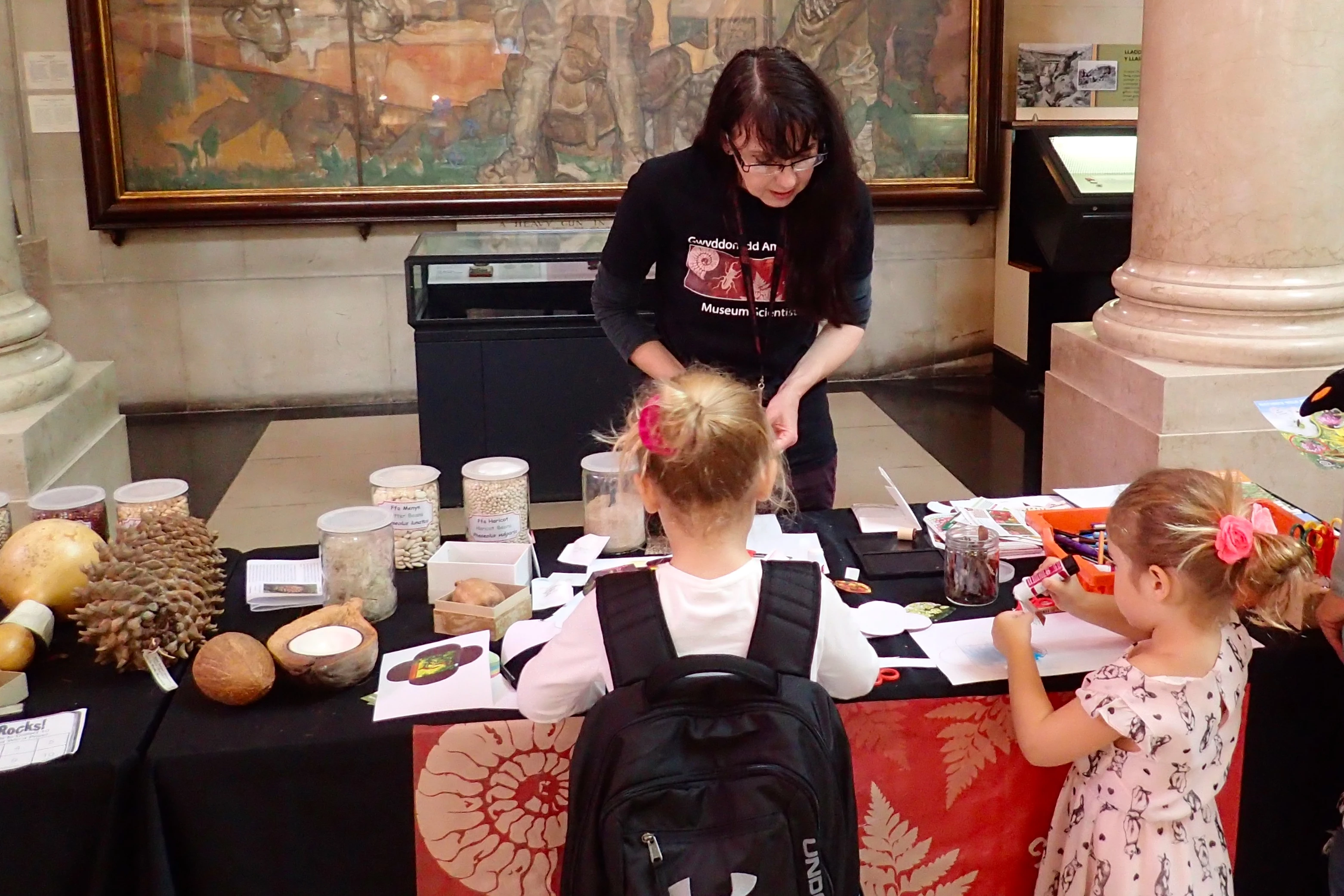
I Spy...Nature Competition Winners 2015 Katie Mortimer-Jones, 10 Medi 2015 The Natural Sciences Department at National Museum Cardiff have once again taken their 'I Spy...Nature' Pop-up museum to the Capitol Shopping Centre in Cardiff during this year's summer holidays. Our younger visitors were encouraged to utilise their drawing skills to draw some of the fantastic specimens from Amgueddfa Cymru Collections on display as part of a drawing competition. Examples were fossils, minerals, marine creatures, flowers and bugs from all around the world. We had some fantastic entries and it was extremely difficult to pick the winners. However, after much deliberation we eventually managed to pick a 1st, 2nd and 3rd place in three age categories (under 6, 6-9 and 10-13 years). Due to the fact that it was so hard to choose winners we also selected a couple of highly commended drawings.Each winner will receive a natural history inspired prize from the Museum's shop and will receive a special behind the scenes tour of the museum to find out what museum scientists do and where we house the museum's natural history collections, which comprise of over 3 million specimens.We very much look forward to welcoming our prize-winners and their families to the museum.