Palazzo Loredan dell'Ambasciatore ar y Gamlas Fawr yn Fenis gan Francsesco Guardi

Delwedd wedi'i hadfer yn rhannol o <em>Golygfa o'r Palazzo Loredan dell'Ambasciatore ar y Gamlas Fawr yn Fenis</em>

Delwedd wedi'i hadfer yn rhannol o Golygfa o'r Palazzo Loredan dell'Ambasciatore ar y Gamlas Fawr yn Fenis

Mae golau uwch-fioled yn dangos gwaith adfer blaenorol

Mae golau uwch-fioled yn dangos gwaith adfer blaenorol

Mae'r paentiad bychan hwn gan Francesco Guardi yn dangos llysgenhadaeth yr Ymerodraeth Lân Rufeinig yn Fenis mewn manyldeb rhagorol.

Saif yr adeilad yng nghanol prysurdeb bywyd bob dydd y Gamlas Fawr. Mae dillad yn sychu ar falconïau, cychod gondolïwyr yn pasio wrth eu gwaith a diplomyddion yn eu gwisgoedd drudfawr yn syllu o'u ffenestri neu'n cerdded ar y cei.

Yng nghanol y môr o ffigyrau gwelwn fonheddwr mewn gwisg las — y llysgennad ei hun mwy na thebyg — yn sefyll ger mynedfa'r palazzo yn dal teyrnwialen aur. Uwch ei ben, gwelwn arfbais y gyfundrefn bwerus fu'n rheoli rhannau helaeth o ganolbarth Ewrop am ganrifoedd.

Mae Guardi yn enwog fel un o beintwyr tirluniau Fenisaidd mwyaf y ddeunawfed ganrif; fe'u gelwid yn beintwyr veduta. Roedd ei weithiau yn hynod boblogaidd a cawsant ddylanwad ar artistiaid a chasglwyr Prydeinig a ymwelodd â Fenis yn ystod y Daith Fawr.

Mae'r gwaith hwn yn esiampl dda o'i dechneg aeddfed ac yn cyfuno'r manyldeb cywrain a feistrolodd dan ddylanwad Canaletto â gwaith brws cynyddol fynegiannol, atmosffer a golau.

Datgelodd gwaith glanhau gan gadwraethwyr yr Amgueddfa lewych syfrdanol yr effeithiau gwreiddiol yma.

Pan ddaeth y paentiad hwn i feddiant yr Amgueddfa'n wreiddiol, doedd effaith y dechneg ryfeddol ddim yn gyflawn. Roedd yr haen uchaf o farnais a orchuddiai'r paentiad wedi afliwio'n ddrwg, gan droi'n frown dros amser. Drwy edrych ar y llun dan olau uwch-fioled, gwelwyd hefyd bod gwaith adfer gormodol wedi cael ei wneud ar yr awyr.

Glanhaodd cadwraethwr yr Amgueddfa arwyneb y paent gan dynnu'r hen farnais a gwaith adfer blaenorol. Gwelwyd taw darnau bychan o bigment oedd y gronynnau du pitw yn y paent, yn hytrach na baw fel y tybid cyn hyn. Byddai'r artist wedi cymysgu ei baent ei hun a gellir gweld gronynnau tebyg mewn gweithiau eraill gan Guardi.

Gyda llewych gwreiddiol gwaith Guardi bellach yn amlwg, cafodd y paentiad ei ail-farneisio a'i arddangos.

Cyn ac wedi glanhau

Mae cadwraethwyr yr Amgueddfa wedi bod wrthi'n brysur yn glanhau'r gwaith, dyma lun o'r gwaith cyn ac ar ôl cael ei adfer:

Golygfa o'r Palazzo Loredan dell'Ambasciatore ar y Gamlas Fawr yn Fenis [cyn glanhau]

Golygfa o'r Palazzo Loredan dell'Ambasciatore ar y Gamlas Fawr yn Fenis [cyn glanhau]

Golygfa o'r Palazzo Loredan dell'Ambasciatore ar y Gamlas Fawr yn Fenis [wedi glanhau]

Golygfa o'r Palazzo Loredan dell'Ambasciatore ar y Gamlas Fawr yn Fenis [wedi glanhau]

Brwydr Sain Ffagan

Fe ymunodd y Cymdeithas Rhyfel Cartref Lloegr â ni y penwythnos diwethaf, i archwilio hanes Brwydr Sain Ffagan, ble yr ymladdod milwyr Cromwell a'r Brenin ym 1648. Fe ddaethon nhw â llond y lle o arfau, yn ôl y disgwyl - yn ogystal â nifer helaeth o sgiliau a gwrthrychau i'w harddangos. Byddai rhestr yn rhy ddiflas, felly dyma luniau o rai ohonyn nhw wrth eu gwaith! Diolch i Alcwyn Evans am dynnu'r lluniau.


Aelod o ECWS wrthi'n nyddu

Paratoi ar gyfer diwrnod o nyddu wrth ffermdy Cilewent

Gwersyll Seneddwyr

Gosod gwersyll y Seneddwyr ger ffermdy Abernodwydd

Y frwydr ar gychwyn yn Sain Ffagan - mwsgedi yn cael eu tanio

Taniwch!

Ail-grewyr hanes o bobo oed yn gwylio arddangosfa ryfela

Teulu o ail-grewyr. Roedd aelodau iau y grŵp yn hwyl i weithio hefo nhw!

Milwyr Rhyfel Cartref

Dynion a merched âd'u gwaywffyn, yn aros i fynd ar flaen y gâd

Uchelwr oes y Rhyfel Cartref

Uchelwr yng Nghastell Sain Ffagan, mewn gwisg o'r 1640au

Summer art activities

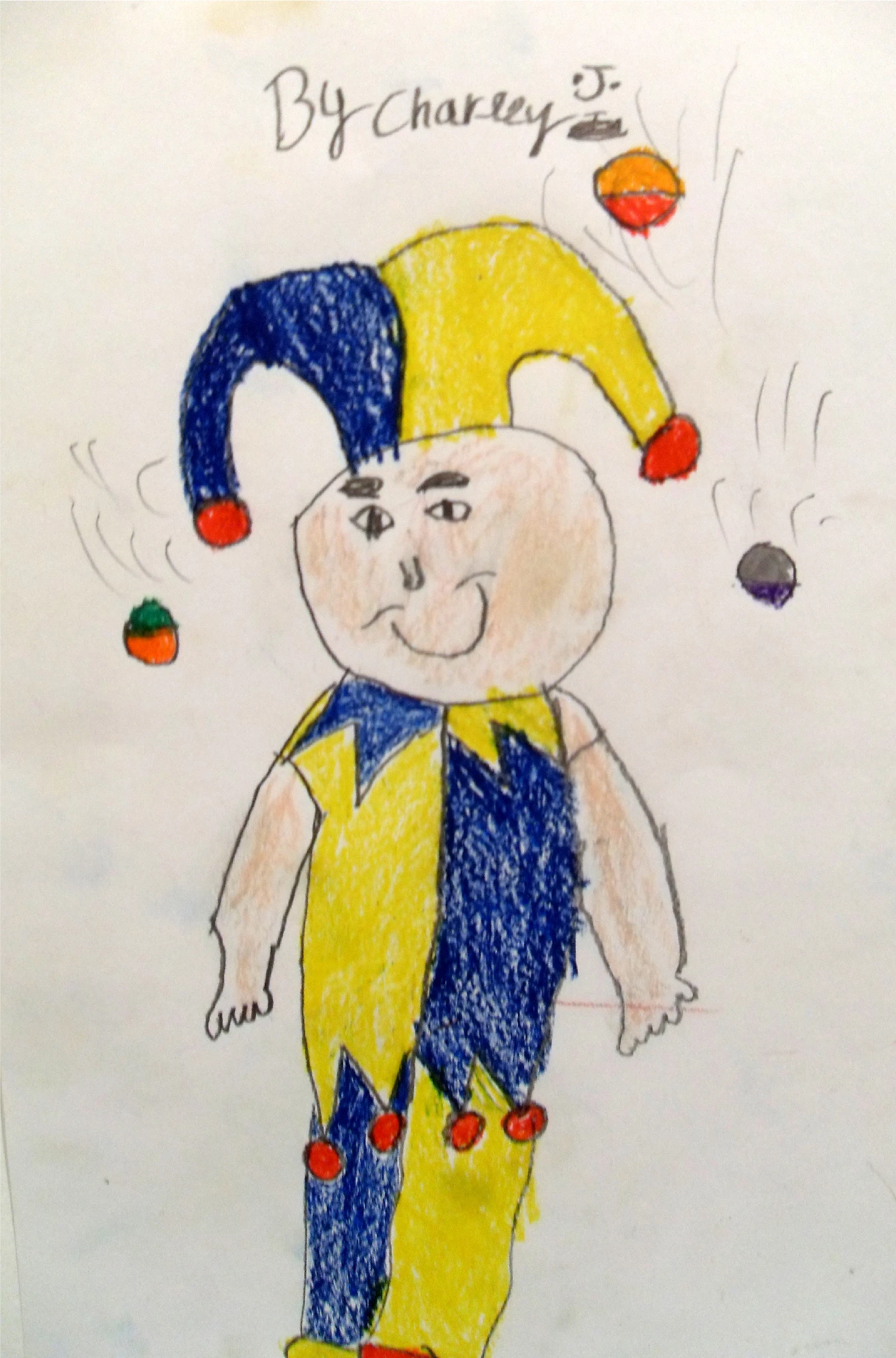
This is a wonderful drawing by Charley of a Jester which ties in with our Tudor art theme.

Don't forget that art activities are running all through August, and if you haven't been before, now is the time to visit as it's generally a little quieter in the galleries when the weather is good!

Block Blog: Primary Investigations

At this juncture in the investigation of this block-lift, I am making every effort to outline the relationships (if any) between artefacts. As can be see in the first photograph, plenty of small pieces of iron plate, often with no telling association with larger plates, emerge as soil is scraped away. Aside from photographing their position for future reference, and examining them for signs of the remains of fittings, impressions of textile or leather, there is not much that can be done with these anonymous fragments. Moreover, these fragments often overlie more interesting and coherent features, and so I am generally removing these: I will most likely x-ray these in large batches at a later date. As you can tell by the annotations, I’ve begun to get a good idea of the fragile nature of the fragmentary, corroded copper and iron artefacts mixed in the burial deposit, and have begun to grasp how difficult lifting the larger pieces of lorica will be.

So far I have had limited success at recovering any ‘true edges’ of the iron armour, as most of the vulnerable thin plate has been broken. Finding edges greatly improves our chances of identifying plates, and where two edges have been found, dimensions such as the width of the plate can give us an idea of which part of the lorica cuirass the plate comes from. It also helps us to make educated comparisons with examples of Roman armour found from other sites. For instance, the iron plate recovered in the second photograph has a width of 6.5 cm across, dimensions similar to those recorded for the armour fragments found amongst the Corbridge Hoard, and from the Austrian site, Carnuntum. It also has the very corroded remains of two copper alloy rivets, which improves our understanding of how the cuirass was constructed and held together.

As I work I am keeping the surface of the soil block wet, by spraying it with deionised water. This prevents the soil from drying out too much, separating, and breaking the iron remains as it falls into chunks. As most of the iron is in such a poor condition, consolidation with a removable acrylic adhesive, such as Paraloid B72 (ethyl methacrylate copolymer) is a must (which is why in some photographs the iron surface appears to have a dark sheen to it).  

Whilst excavating an area of the block to the left of the photograph, I came across an exciting, (and sadly, very degraded) find: copper alloy wrapped around a thin iron plate. It can be seen in-situ in the photograph to the right, and after excavation in the photograph below. Sadly, as not much of the object has been recovered, a firm identification of this piece hasn’t been reached yet, though further excavation might yield more clues.

Readers may have noticed that I have begun to clean the outside of what is most likely a girth hoop. The exposed iron plate is 1mm in thickness, and the hoop is broken in several places, that I can see from the surface. When focusing on this feature, I will have to be careful to remove enough soil and other burial debris to reveal the curved plate’s shape, whilst maintaining the earthy support until I am ready to remove the that section of armour from the soil block. The next blog entry will focus on describing the results of excavations in this area, which includes a copper-alloy tie loop, still associated with the iron plate.