Amgueddfeydd, Arddangosfeydd a Digwyddiadau

Voices of the Vulcan - Rachel Cable and the Save the Vulcan Campaign

Fflur Morse, 20 Ebrill 2016

It’s been a few weeks since I wrote my last blog about interviewing Mel and Rhona Rees, former landlords of the Vulcan pub. Our aim with the Vulcan project over the next few months is to capture the experiences and memories of the people who knew the Vulcan, with the interviews eventually being displayed in one of the redeveloped galleries.

Since the last interview, we’ve been out again hearing about a very different aspect of the Vulcan’s story and history, the pub’s closure and the campaign to save it. The Vulcan was due to close in June 2009 to make way for a multi-story car park and flats which resulted in the formation of the ‘Save the Vulcan Campaign’.

To capture the story, Dafydd Wiliam and I interviewed Rachel Cable, the ‘Save the Vulcan’ campaign manager. We met Rachel at the National Assembly in Cardiff Bay, where 7 years ago, around 50 campaigners presented a petition with over 5,000 signatures to save the pub to Assembly Members.

Among the famous names to back the 5,000-signature petition were James Dean Bradfield, of Manic Street Preachers, actor Rhys Ifans and sports presenter John Inverdale.

Rachel spoke about her first visit to the pub in Adamsdown and how she fell in love with its old fashioned décor and friendly punters and landlady. To Rachel and many others, this was a pub that needed to be saved. As part of the campaign they started a petition, made an application to CADW to get the Vulcan listed, designed and sold Save the Vulcan t-shirts and organised events at the pub such as literary nights and even a Star Treck party!

Rachel also spoke of the huge success of the Save the Vulcan blog and facebook page which helped attract support and also resulted in wider media attention. 

Due the determination and hard work of the campaigners an agreement was reached in 2009 for the Vulcan to remain open for a further three years. The campaign continued during these years, but unfortunately they were to lose the battle, and the last order was called on Friday 4th May, 2012.

You’ll have to wait until the new galleries open to watch the final interview, but until then keep an eye out for more blogs about recording the voices of the Vulcan!

If you or somebody you know have stories or objects related to the Vulcan, we’d love to hear from you – please leave a message in the comments box below.

The Vulcan Hotel is one of the museum's on-going building projects. Read more here.

Our volunteers 'Spring ' into action

Penny Hill, 14 Ebrill 2016

Sorry about the awful pun in the title. But, yes, it's that time of year, the sun is out, spring's officially here and it's getting warmer. Fantastic you may say, but for our Conservators and Volunteers a new battle is about to begin! As well as our lovely lambs and piglets, less desirable creatures are stirring. These are the insect pests, such as moths, carpet beetles and woodworm, that if left unchecked would quite happily eat our museum and its collections!

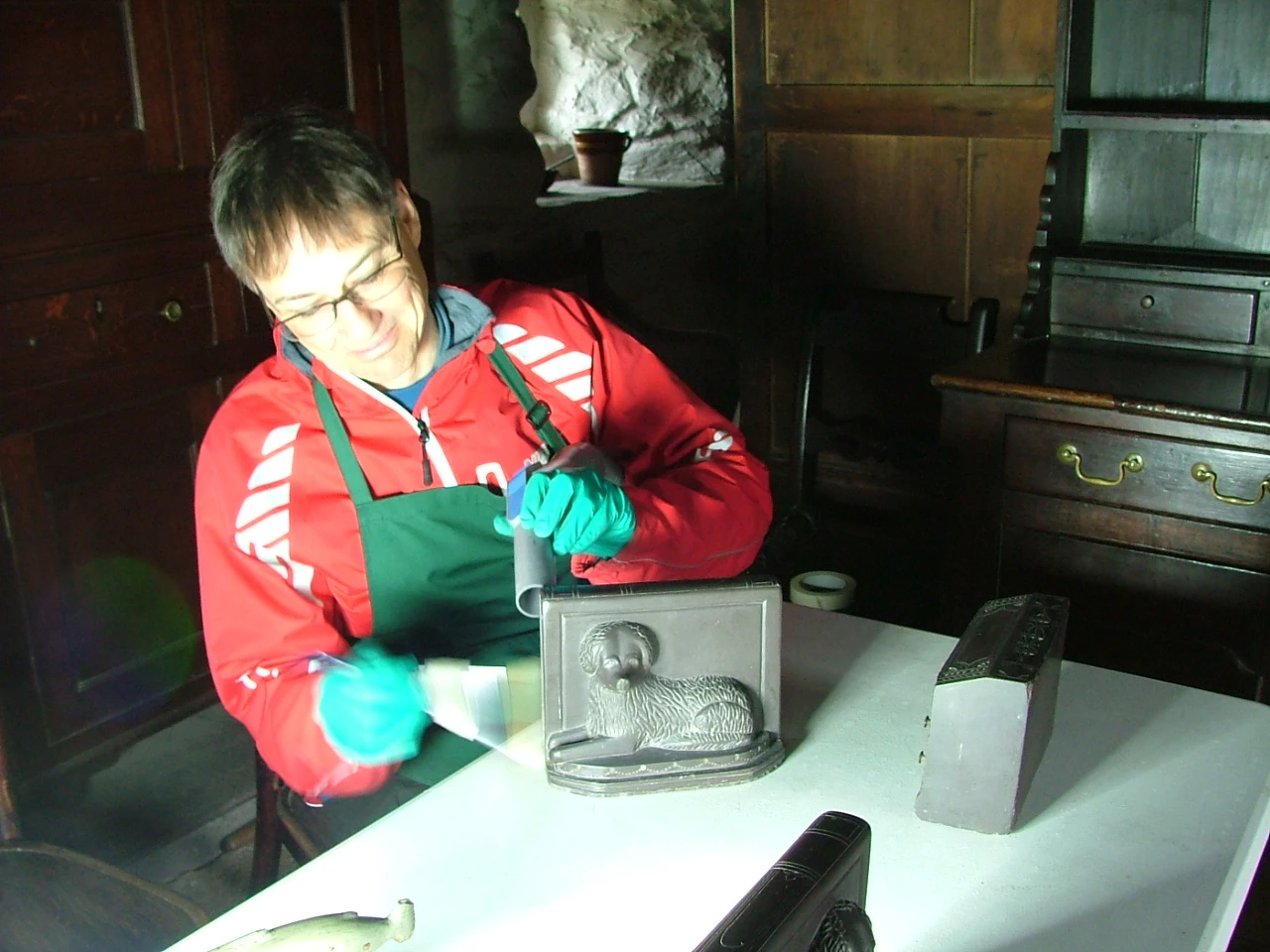
This week the volunteer conservation team were introduced to the enemy. In the natural world these insects perform an essential task, but in the confines of our historic houses, or anyone's home in fact, they can cause untold damage especially to items made from wool, fur, feathers, leather, paper and wood.

We have decided to go for a two-pronged attack. The first is to re-introduce traditional deterrent methods. Last year we worked with the gardening team collecting and drying a range of aromatic plants such as Tansy, Wormwood, Rue, Rosemary and Lavender traditionally used to deter insects. From the selection grown in our gardens we have created the extremely potent St Fagans blend.

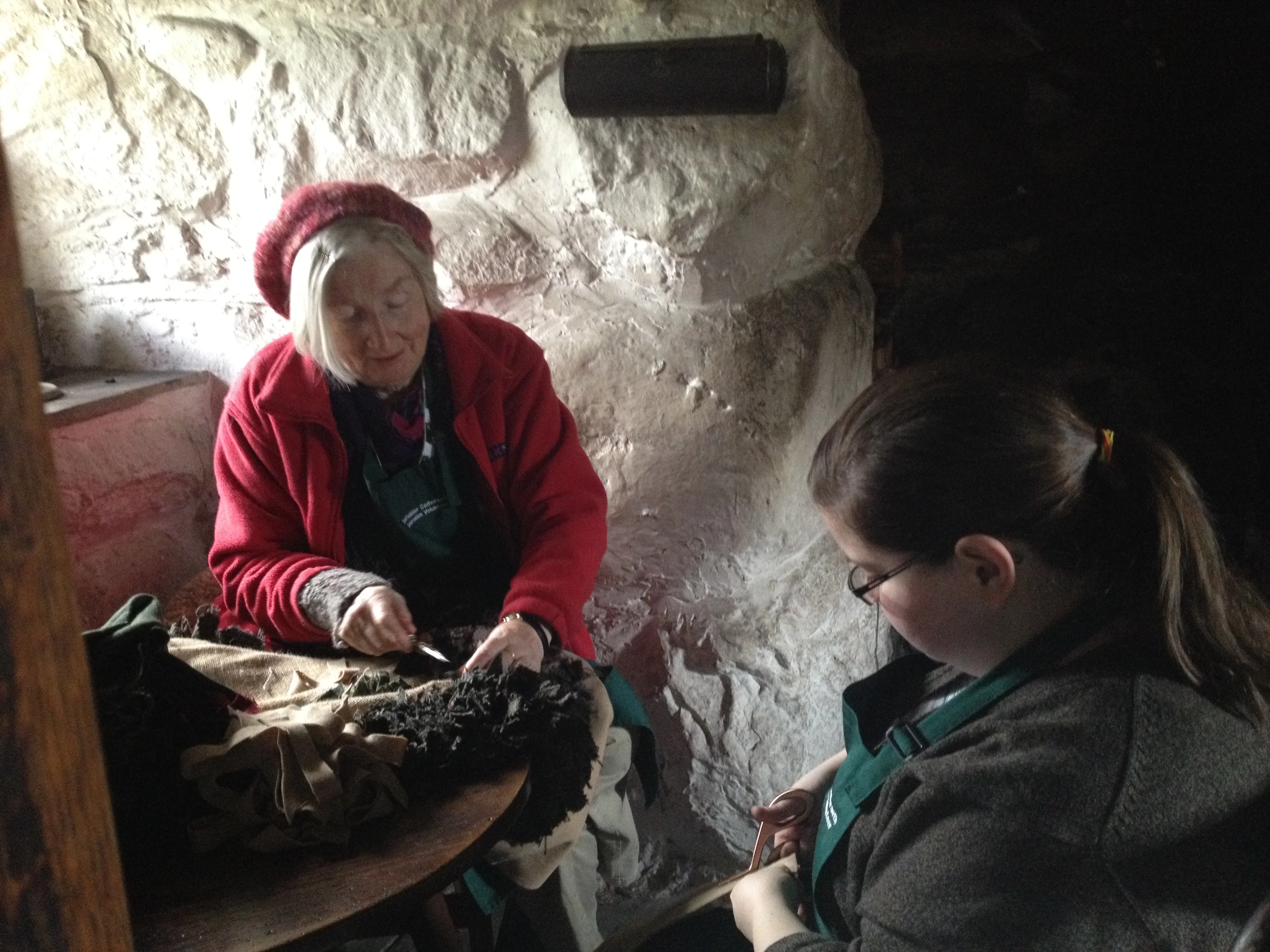
Now we are devising ways to deploy our deterrent in sufficient quantities that might have an effect. For this we found tights ideal for the task! Yes, that's correct, tights. These are especially useful for items of clothes hung up on display, they enable us to place the aromatic plants in the more inaccessible areas of a garment, such as down sleeves!

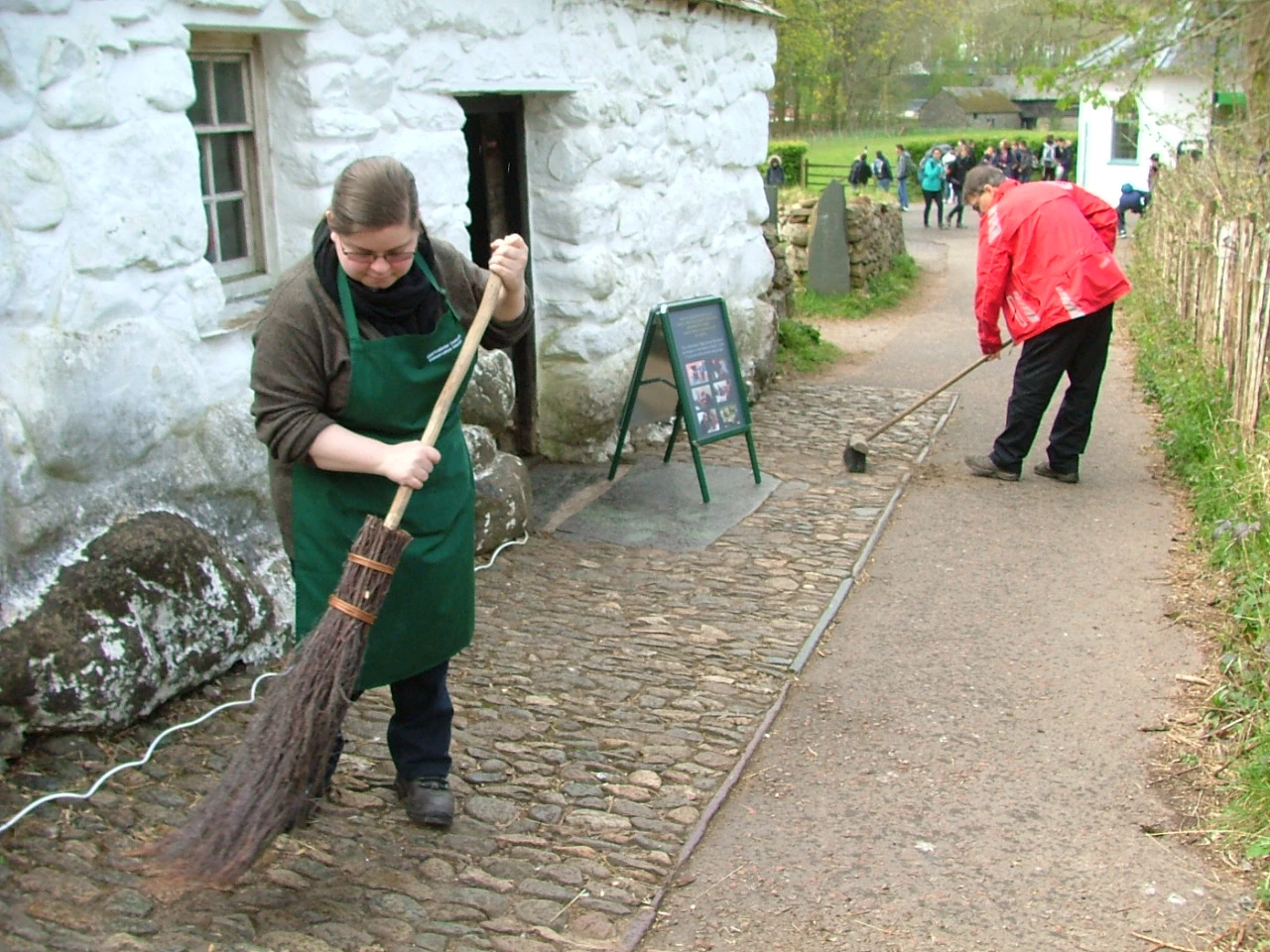
The second method of attack is of course good old fashioned housekeeping. Spring is the time to open up the house after a long winter and give everything a good clean, or in our case a good beating.

Evan William Jones - Slate Quarryman

Mark Etheridge, 12 Ebrill 2016

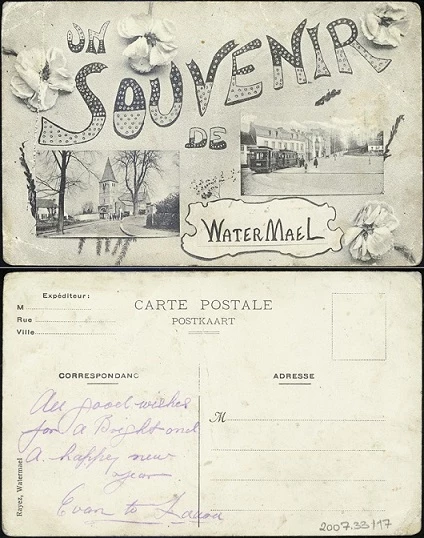
The National Waterfront Museum’s current exhibition “Forget me not: Postcards from the First World War” features a fantastic selection of various postcards from the industry & transport, and social & cultural history collections of Amgueddfa Cymru – National Museum Wales. An estimated 272,000 Welshmen served in the First World War, and at the height of the conflict a staggering 19,000 mail sacks a day were sent back to Britain from the front. As well as displaying a wide variety of different types of postcards, the exhibition also showcases some personal stories.


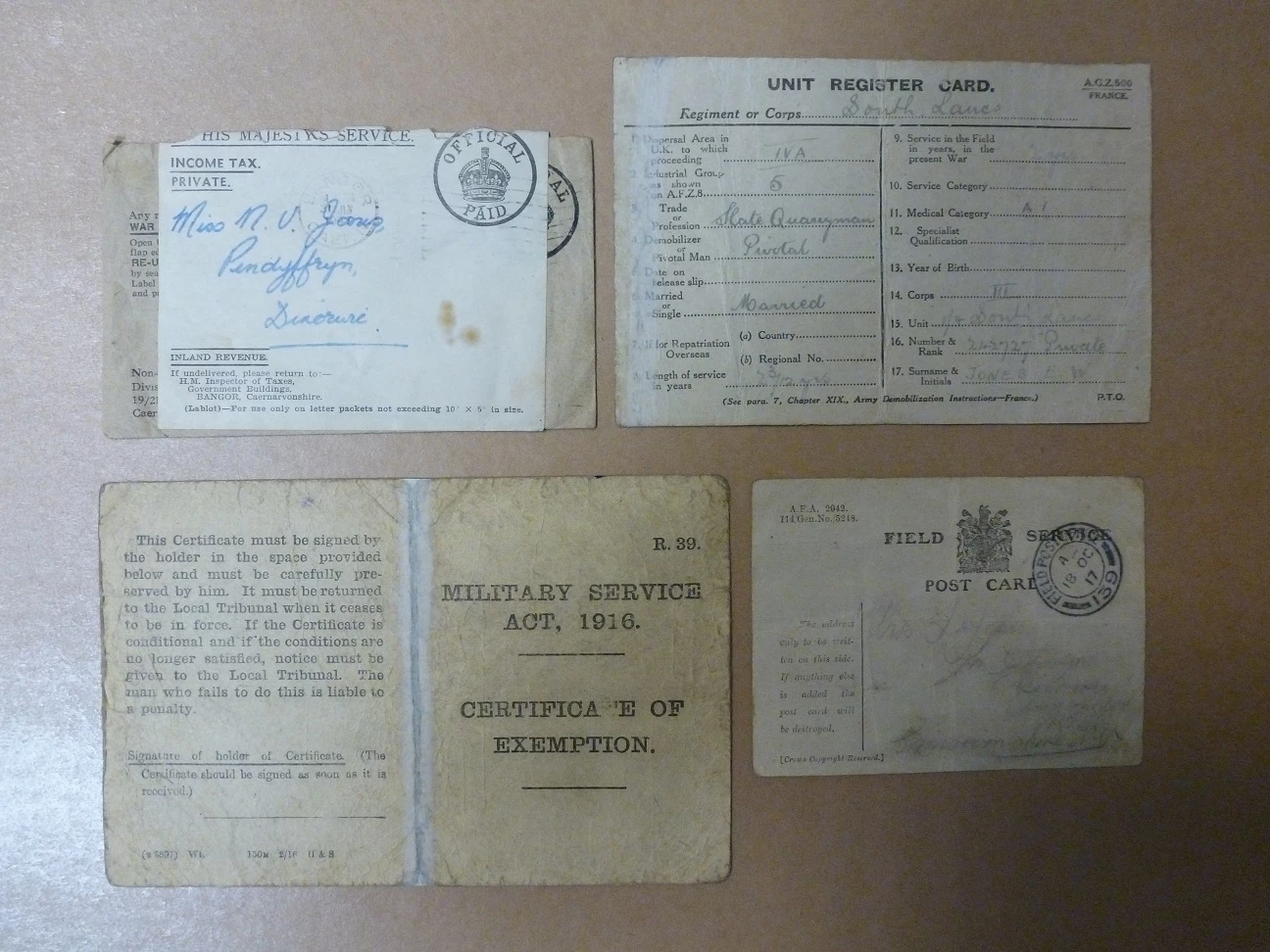
One of these personal stories relates to Evan William Jones, a slate quarryman from Pendyffryn, Dinorwig. Evan was born in about 1891, and when he enlisted was married to Laura with one daughter. He was initially exempted from military service on the grounds of 'exceptional domestic position', and this exemption lasted until 29th September 1916. He then enlisted in the 1/4th Battalion of the South Lancashire Regiment on 25th October 1916, where he was a Private with the Reg No. 242727. His Unit Register Card notes his occupation as ‘Slate Quarryman’. On 19th March 1919 he was transferred to the Army Reserve. At the end of the war he was awarded the British War Medal and Victory Medal.


Amongst the collection relating to Evan Jones’ First World War service are his ‘Certificate of Exemption’, ‘Unit Register Card’, and a ‘Field Service Post Card’. Along with these are eight postcards, one a studio portrait of Evan probably taken before he left for service, and five showing men in military uniform, along with three postcards sent by Evan to his family. There is also a good luck card sent from ‘Evan to my mother’. Most of these are on display in the current exhibition.


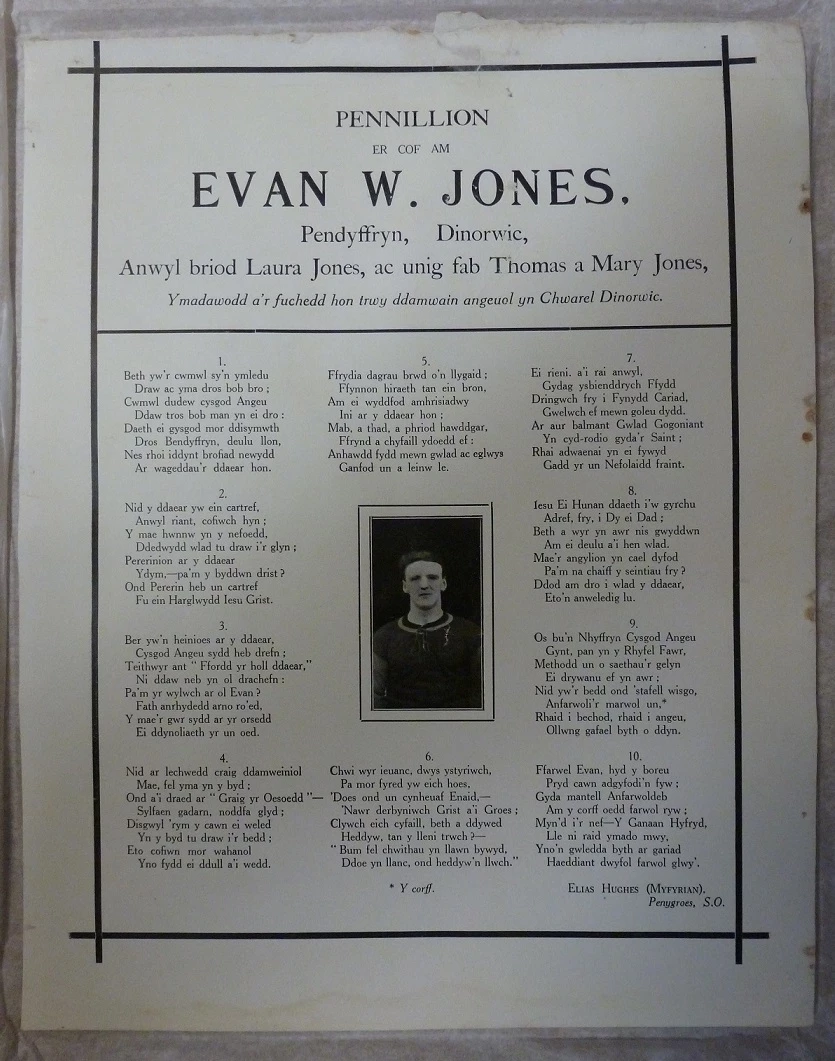
Evan W. Jones survived the war, but was later involved in an accident at Dinorwig Quarry when a crane overturned and fell on him, resulting in a fracture of his skull. He died at the Quarry Hospital on 1st December, 1924. The exhibition features a memorial poster printed with a poem (of ten verses) written in Welsh by Elias Hughes (Myfyrian), and containing a photograph of Evan W. Jones in the centre.


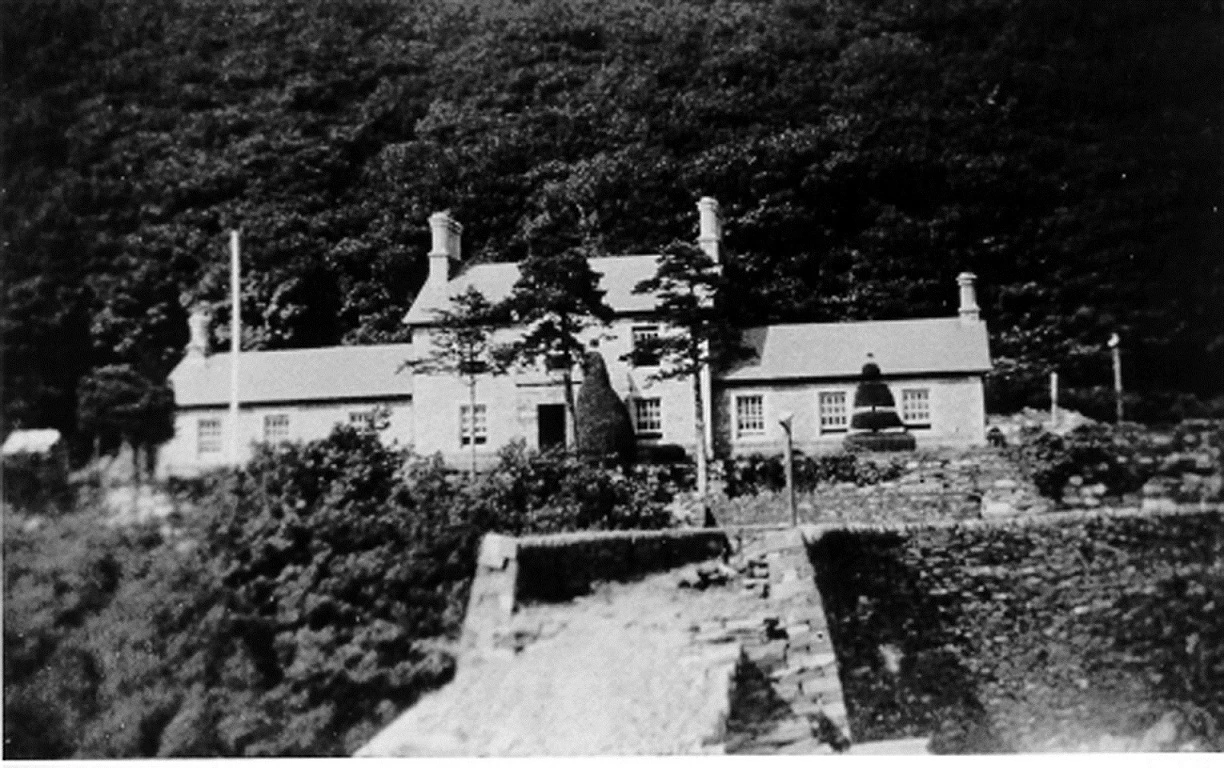
Dinorwig Quarry hospital was opened in 1860. General surgery was still practiced there till the 1940s when it became a first aid centre. It closed in 1962, and was later restored and opened as a visitors centre in 1970 as part of the Padarn Lake Country Park. The hospital is situated very close to the National Slate Museum at Llanberis.


“Forget me not: Postcards from the First World War” runs until the 19th June 2016 at the National Waterfront Museum, Swansea.


To discover more about First World War collection at Amgueddfa Cymru view this online catalogue.

Helping English Learners at St Fagans

Joe Lewis, 11 Ebrill 2016

Since September 2015 I have been working with Kate Congdon, Lecturer of ESOL (English as a Second or Other Language) at Cardiff and the Vale College. Together we have been working with ESOL students from the college to create learning resources to be used at St Fagans National History Museum as part of the colleges ESOL programme. The resources will provide ESOL students with the opportunity to practice their English abilities whilst learning about the history of Wales.

In September 2015, 200 ESOL students visited St Fagans. The students’ abilities ranged from beginners to those who were nearly fluent. Kate created a questionnaire for the students to choose their top 3 buildings at the Museum. The results of these were split into two groups to reflect the different learners’ levels, lower level and higher level.

Lower Level:

Higher Level:

In December 2015, a small group of students from the lower or entry level visited St Fagans again to act as a focus group for the project. They worked with Kate and I to choose the aspects of the buildings they found most interesting.

More recently, Kate, with information and images provided by the Museum, has designed and developed 2 draft resources for the students to trial, an entry level resource focusing on the St Fagans Castle and a higher level resource focusing on the Rhyd-y-Car Cottages. These were then proof read by myself and members of the curatorial staff team.

On the 17th March I travelled to Cardiff and the Vale College to help Kate trial the resources with her lower level class and one of the higher level groups. I was really impressed with how engaged students from both groups were with the resources. They not only enjoyed the opportunity to learn new words and phrases, but were also fascinated by the histories of the buildings and the people of Wales. From my perspective, it was a thoroughly enjoyable experience and I picked up a few new teaching tips from the ESOL lecturers. I especially liked the use of a mini Welsh rugby ball which was passed around the class as a way for students to know it was their turn to answer questions. The feedback on the resources from the students was very positive and many of them enjoyed the opportunity to discover more about the country they have chosen to call their home.

Kate will be returning to St Fagans in April to meet with myself and Mared McAleavey, Principal Curator: Historic Interiors. We will be discussing the history of the remainder of the buildings that the students chose and the learning activities that can be designed. I am really looking forward to trialling the next set of resources with the students and I’ll be posting updates here in the future. In the mean time you can keep up to date with the work of the Learning, Participation and Interpretation Department by following us on Twitter @StFagans_Learn.

War, What Is It Good For?

by National Roman Legion Museum - Youth Forum, 30 Mawrth 2016

Exhibition review by Museum's Youth Forum.

As youth forum members we were able to help input our opinions into the design of the temporary exhibition and have been able to see it develop from a drawing on paper to a physical form. Today we have examined the exhibition and have evaluated the information and items displayed.

Amgueddfa Cymru has been tasked with commemorating the WW1 centenary. Personally, we believe that the exhibition is very interesting as it gives an insight into the medicinal history starting from Ancient Greece right up to the 21st century. We enjoyed the exhibition overall. The video grabbed our attention the most and we were able to see a visual aspect of medicinal practice with a humorous touch.

The exhibition has a number of different displays which hold valuable information about medicine and the different tools used to carry out medical procedures such as amputations. It contains a silent video in both Welsh and English that shows a few medical procedures from the Roman times. There are some replicas of medical items in the display case that have been used such as a Face Mask used in World War One to disguise facial wounds. 

There is also a small game on an iPad that tests your knowledge of the information in the exhibition. This together with the video has proved to be a success with the general public. Some reviews say that they liked “the doctor video” and a young person enjoyed it when the doctor was “cutting the leg off”.


By Joel Powell, Emma Jones and Hannah Sweetapple.