Festival of British Archaeology 2009
It’s been a busy two days at the Festival. Yesterday started badly with torrential rain, but by midday the clouds cleared and St Fagans filled up with visitors.
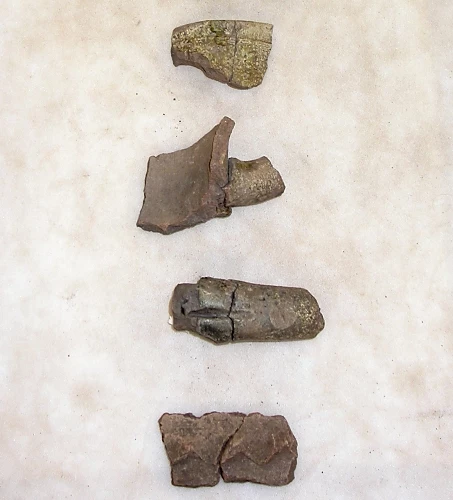
It was the first day of the Magic Flute event in which Gareth Riseborough began a project to make replicas of a medieval and a possible Neolithic flute, both found in Wales. The original medieval flute was made from the foreleg of a large deer, and Gareth has sourced the correct bone for the project. He set up shop in the smaller of the roundhouses in the Celtic Village, and much of the morning was spent trimming down the bone, and answering a near continuous stream of questions from interested visitors.
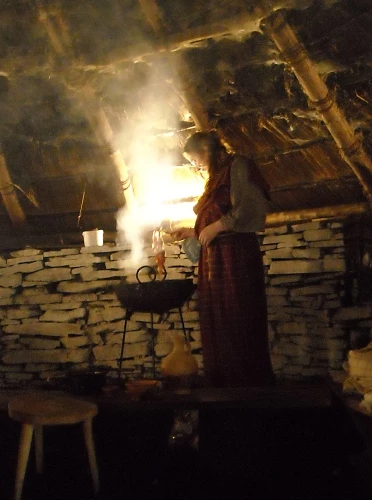
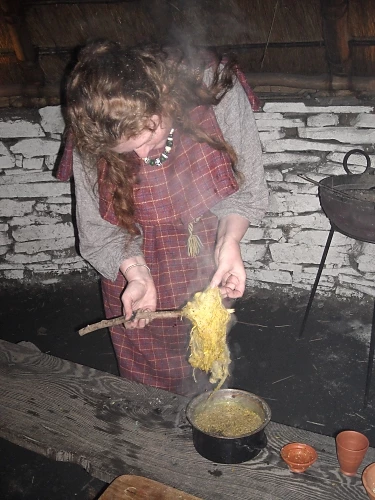
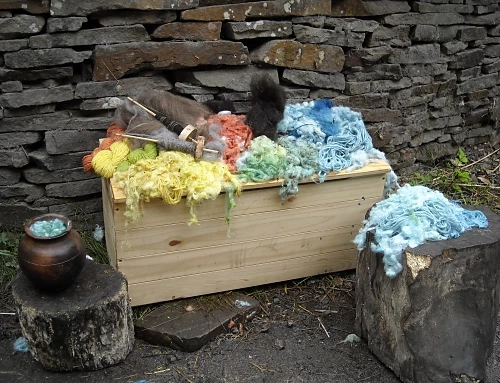
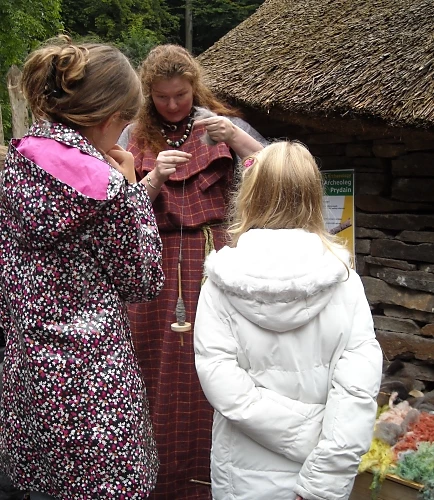
Sally Pointer, manager of the museum’s Glanely Gallery, worked alongside him demonstrating natural dyeing techniques and proving that people in the past wore clothes which were just as colourful as we have today. The grand finale of her demonstrations was the magical transformation that occurs when woad-dyed wool is removed from the dye pot, turning blue before your eyes. Fabulous.
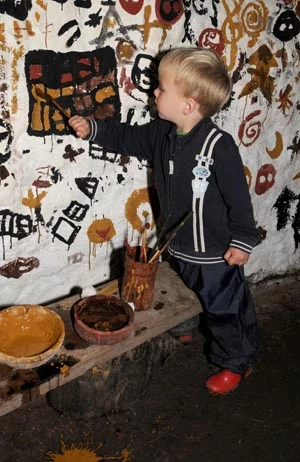
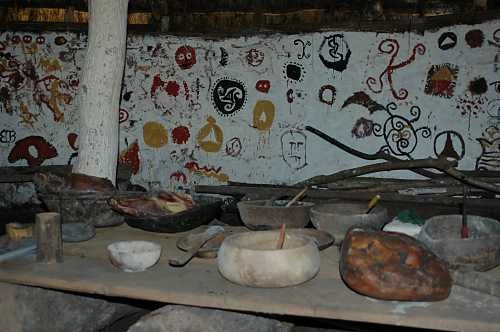
In the roundhouse next door Ian Daniel, interpreter in the Celtic Village, ran wall painting workshops. Tired of the house’s plain white walls, Ian had decided to enlist the public’s help in transforming them with Celtic designs drawn from a portfolio compiled by museum conservator and Iron Age art specialist Mary Davis. By the end of the day dozens of children had covered every spare inch of white wall with an amazing array of designs – all painted with natural pigments.
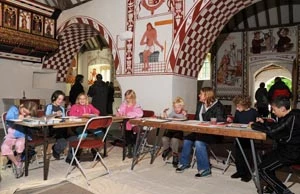
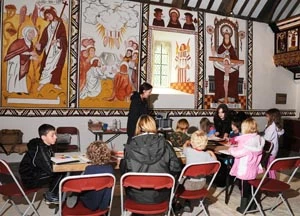
There was so much going on in the village that I didn’t have a chance to get over to St Teilo’s Church where another team was running painting workshops of a different kind. But I made up for it with a few trips over there today to catch up on what was going on.
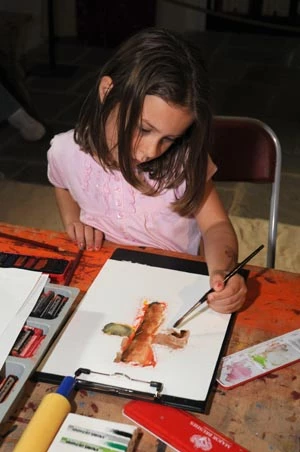
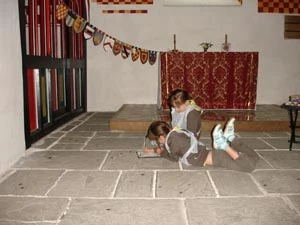
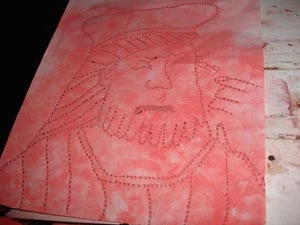
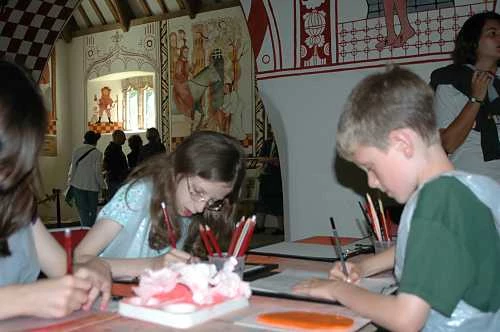
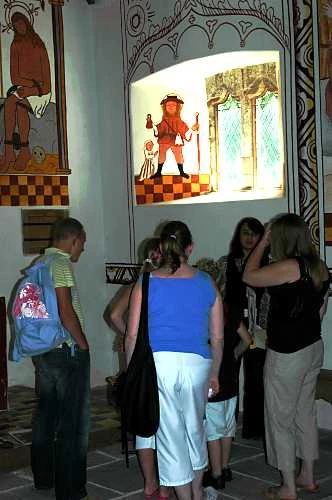
The painting activity proved extremely popular, with some children staying for over an hour while they created designs and learnt how these would have been transferred onto the walls of the church. Meanwhile for the adults there was the chance to hear museum conservator and pigment expert Penny Hill explain how medieval craftsmen had produced the original paintings at St Teilo's, and the lengths to which the museum has gone to ensure our reproductions are faithful to their work.
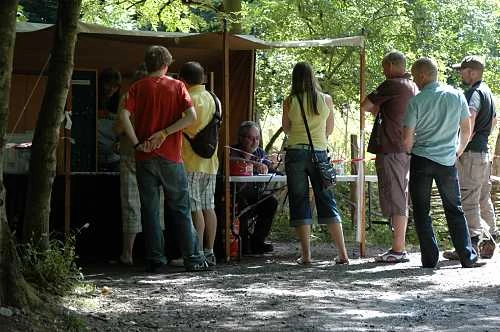
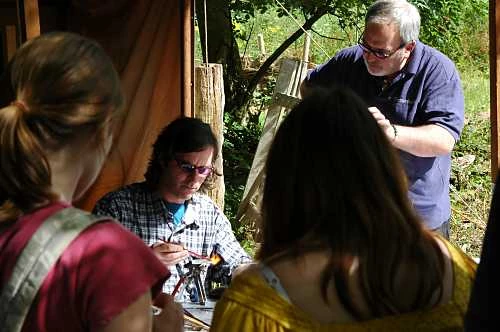
A highlight of the day for me was the chance to see Tillerman Beads at work producing Iron Age glass beads in their tent outside the Celtic Village. This was a real eye-opener and a good deal of time was spent in awe of Mike Poole as he created one amazing design after another. The crowds loved it too, with Su Poole providing expert commentary on the work, and explaining the history of glass beads using the incredible selection she had on display.
Tomorrow, Tillerman Beads continue their demonstrations, Gareth and Sally are back with their magic flute and dyeing events, Ian continues to enlist the support of budding artists to paint the inside of his roundhouse, and the team in the church will be back with more talks and painting workshops. Enough to ensure a good day out for all.