Graham Davies, Online Curator, Amgeddfa Cymru - National Museum Wales
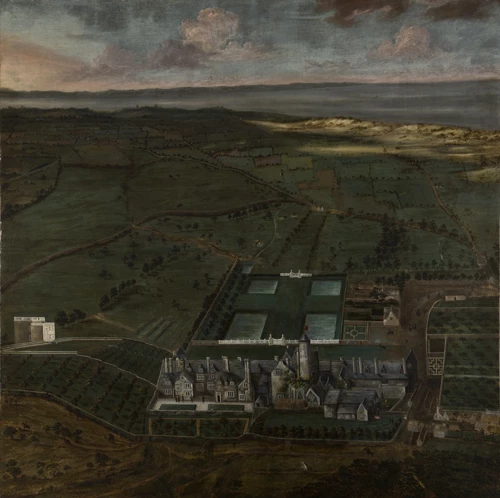
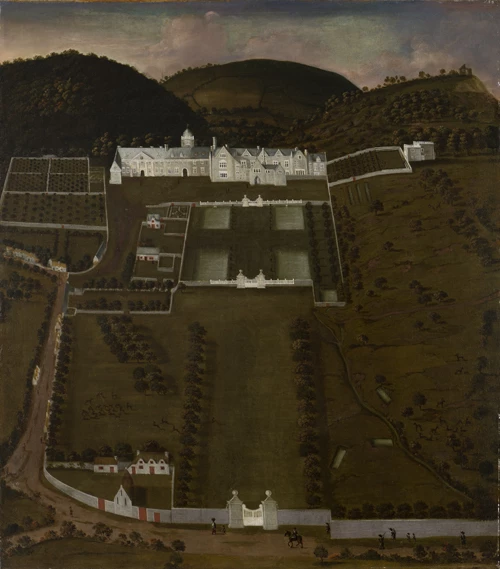
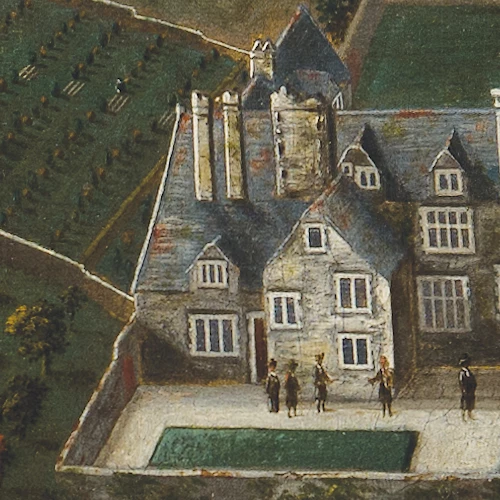
Earlier this year I was approached by the Keeper of Art regarding a recent acquisition of two oil paintings dating from 1700. The paintings in question - two large panoramic paintings of Margam House - were purchased with help from the Heritage Lottery Fund and the Art Fund, and as the funding included some form of digital exploration, I was asked to produce an interactive to compliment the gallery display (that would also be available to tour with the paintings).
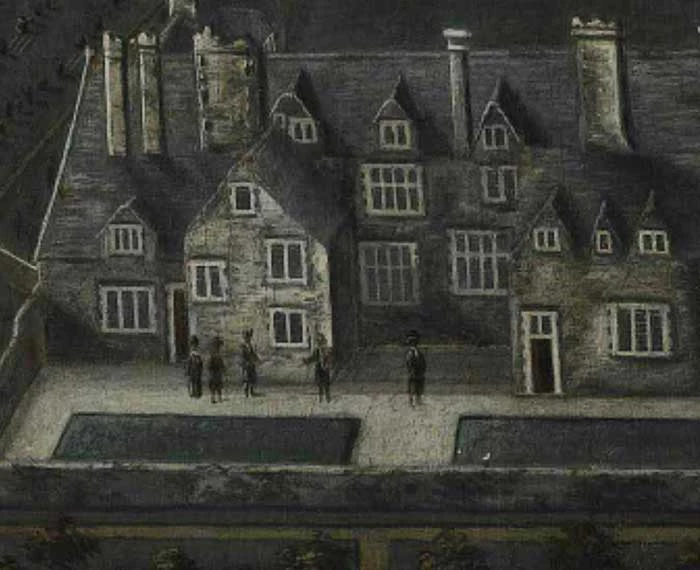
On closer inspection of the paintings, lot of small, intricate detail became noticeable. As some details were very small - and would benefit from additional interpretation - some sort of zoomable image would offer the visitors with the best form of digital exploration.
In previous gallery interactive developments, the New Media Department have used the iPad2 platform, but as the newer iPad3 has a retina display - a screen resolution and pixel density so high that a person is unable to discern the individual pixels at a normal viewing distance - this platform seemed ideal to explore small detail in high resolution images. As for the software, we decided to use an adaptation of a previously developed interactive that allowed the user to move around a high-resolution image to predetermined hotspots (to explain certain details of the painting).
I then went about locating numerous details on the canvas that would be interesting and informative to the viewer. I was keen to pick things out that would not be contained on the gallery labels, thus ensuring no duplication and offering an enhanced visitor experience.
Resolution issues
After obtaining high-resolution images of the two paintings I was able to upload these to our Content Management System (amgeuddfacms), to allow them to be served from our website server. It was at this point that a strange technical inconsistency occurred....
Viewing a 3800 pixel wide image on a standard Firefox browser on my desktop screen rendered the image sharp and clear. However, serving the exact same image into the iPad3 web browser rendered a fuzzy pixelated image. Given that the same image was being served to both screens it seemed that the different web browsers were handling the image in a different way.
A little bit of research on the internet revealed the possible problem: The default web browser on an iPad (Safari), runs WebKit which only seems to serve images up to a maximum size (somewhere around 1024 pixels wide). The iPad browser seemed to be downsampling the original 3800 wide image to 1024 wide, before then upscaling this 1024 wide image back up to 3800, causing the image to render at almost 400% it's downsampled 1024 pixel size.
The problem was how to get around this. After some researching on the internet for similar problems, it seemed that there was no conclusive solution. This was mainly due to the logical assumption that it’s bad practice to serve huge images to a website (especially on a mobile device such as an iPad, where web content was readily downloaded via mobile networks), so the advice was always to use small images. Of course we wanted very large images, so this didn’t help!
One solution that Chris Owen, our Web Manager came up with was to serve two halves of the image separately and automatically stitch them back together again after they loaded on the web page - thus the page would load two smaller images. Technically this gave a good result, but cutting the image in half was not enough. We therefore generated a script that sliced the image into 500 by 500 pixels (totaling 64 separate images), and stitched them all back together again once they were loaded into the browser.
The outcome was a high-resolution image (made up of smaller individual images) that renders sharply even when zoomed right in. This gets around the issue of the Safari web browser on an iPad automatically scaling down large images.
Research suggests that this may be a first in application development of this sort, especially one developed wholly in HTML5.
Gesture enhanced interactive
Once this high resolution was served up onto the new iPad3, in high resolution quality, it became clear that it would make more sense to make this a ‘gesture enhanced’ (pinch to zoom) interactive in addition to interpreting predetermined parts of the painting.
This means that the user can now fully explore the entire image, zooming right into any part of the image, whilst being able to read interpretive labels embedded within the image.
Colour Accuracy
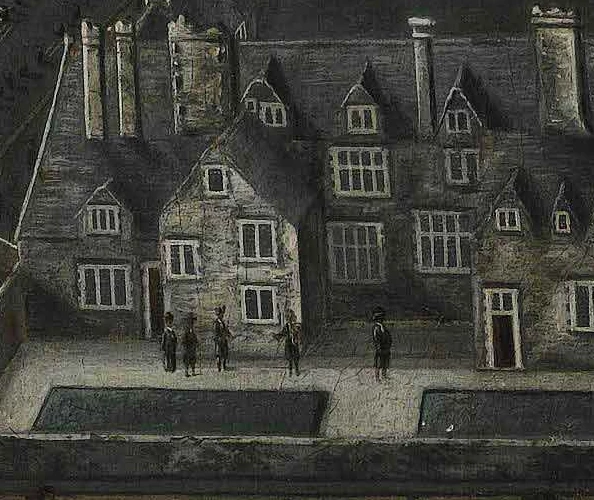
The next problem to solve was the one of colour accuracy. Due to the original paintings being very dark, most images that we had to play with were lightened in order to see the detail. This lightening caused the colours to be untrue to the original, something that would be noticeable once screen and canvas were next to each other in the gallery.
A quick phone call to our photography department affirmed that they had high-resolution master TIFF files available that were ‘colour correct’, i.e. the colours in the digital capture were exactly as they were in the painting.
These colour correct images turned out to be strikingly different to the ones that we had previously been playing with, the increased sharpness causing even more detail to become apparent, even figures appeared that weren’t noticeable on the previous images.
The application will be installed alongside the paintings of Margam House in the Art in Wales 1500-1700 gallery at National Museum Cardiff in October 2012.
Bringing it all together: Art in Wales 1550-1700
A parallel development to this in-gallery interactive is a website interactive exploring a major portrait of the builder of Margam House –
Sir Thomas Mansel with his wife, Jayne
(hung alongside the Margam paintings in Art in Wales 1550-1700 gallery). Again, certain parts of the painting can be explored in high resolution through interpretive labels embedded in the image. This further compliments an existing interactive, exploring another major portrait in the gallery –
Katheryn of Berain, the Mother of Wales.
It is hoped to extend this program to include all the items in the gallery, thus forming a holistic digital interpretation of Art in Wales from 1550-1700, available both within the gallery and through the website.