Storage of entomology collections in museums
, 25 Tachwedd 2014

What is the best way to store insect collections? Recently an enquiry was posted on NHCOLL-L (electronic forum for the care and use of natural history collections) about the use of wood as a material for insect storage cabinets. The question was:
What kind of preservative should be used to treat some new storage cabinets made of eucalyptus wood, that would not harm the insect specimens stored inside them?
The post sparked a discussion about ideal insect storage. Below is a little summary of the factors to consider when planning storage for your entomology collection.
The ideal solution
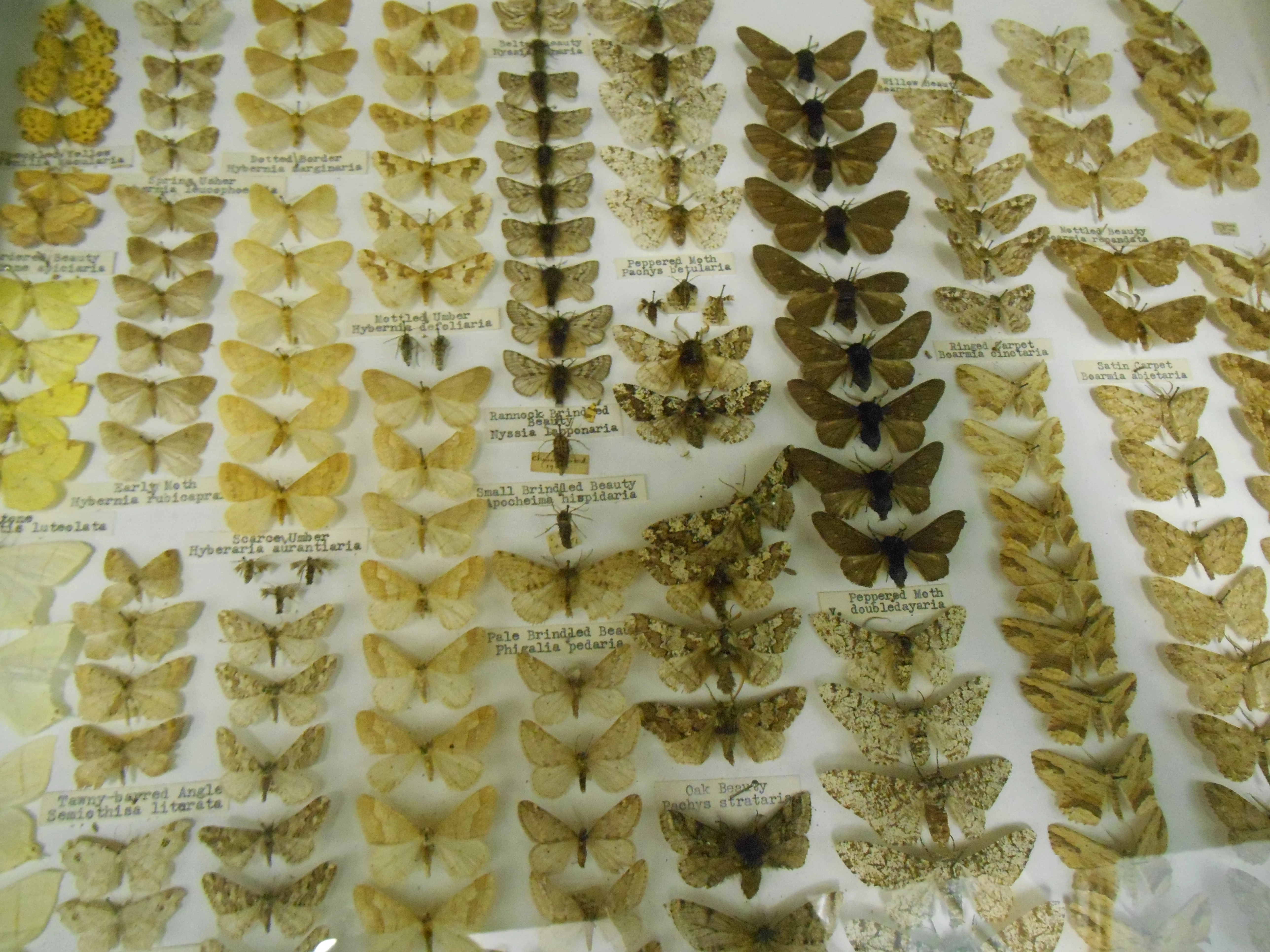
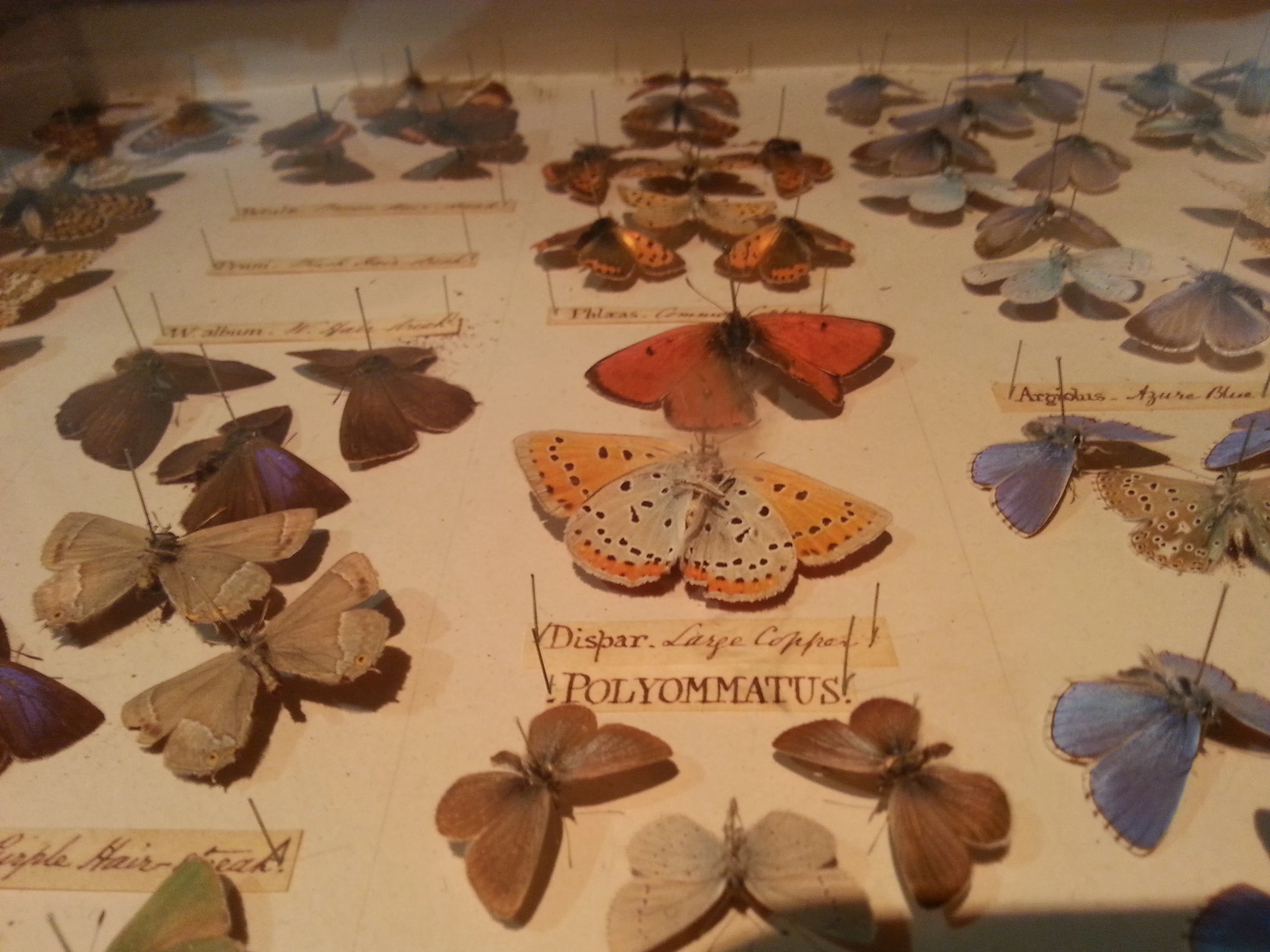
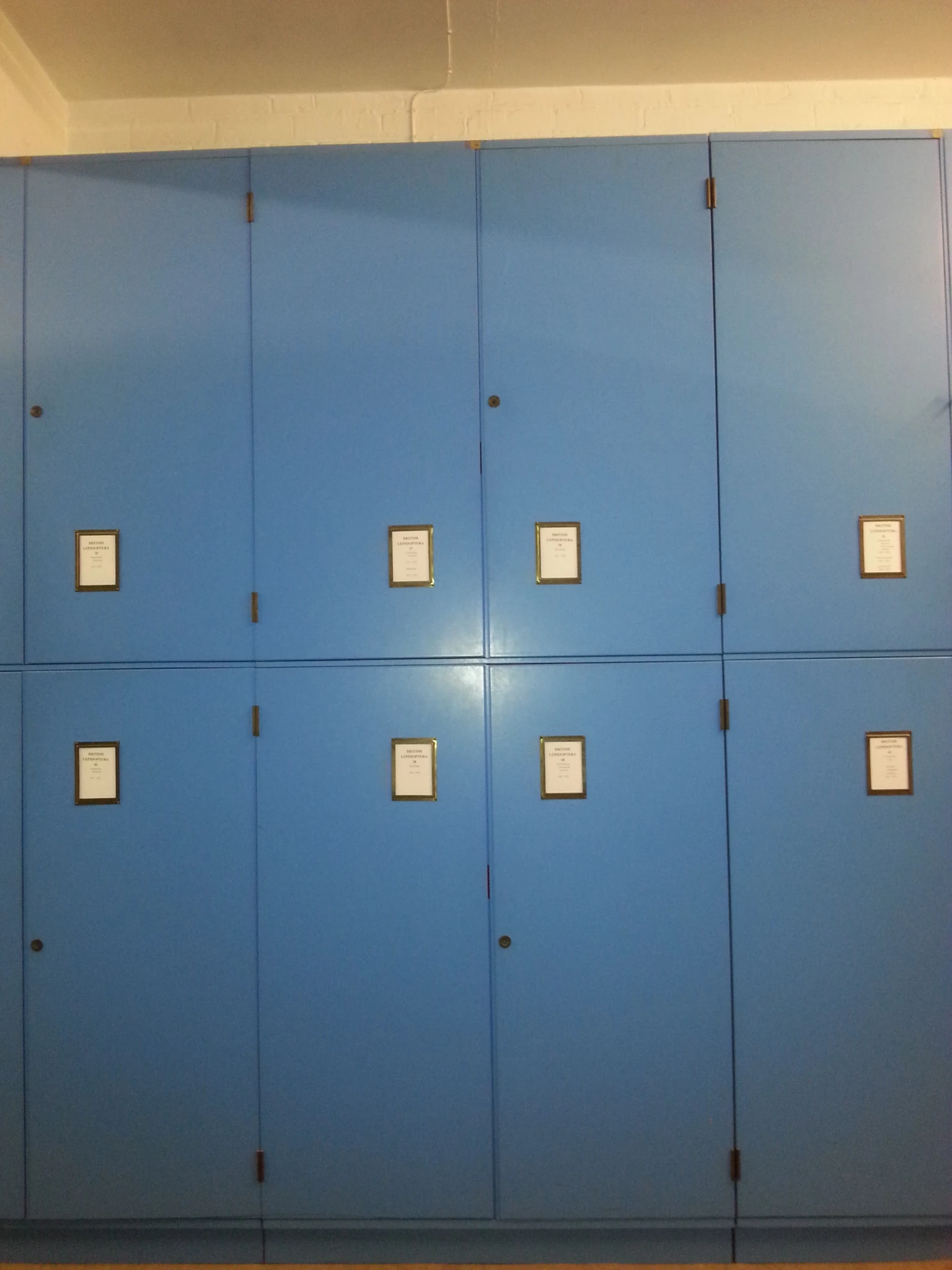
The ideal solution for insect storage in most situations are metal cabinets, which are robust, relatively cheap, made with a high degree of consistency and can be made air tight (well, almost). This will protect the collection against insect infestations, airborne pollutants and humidity fluctuations (although not temperature fluctuations – cf. Szcepanowska et al. 2013.
Why use wood preservatives?
However, if you do need to use wood for the cabinets, you should consider the following concerns.
Usually, the reasons for treating wood with preservatives are either:
- to make it more hard-wearing (in the case of wooden floors), or
- to stop it being attacked by fungi or insects, or
- to prevent it from greying when exposed to UV light.
Most of these issues are problems mainly in outdoor applications of wood, and there are a number of ways of dealing with these: wood can be varnished to make it protect it from physical impacts, stained to protect it from UV light, and pressure-treated or painted with insecticides and fungicides (ranging from highly toxic substances, such as pentachlorophenol, to less hazardous ones, such as borax).
Assuming the entomology store is dry, has a low relative humidity, clean and there is no problem with insect pests – which should all be the case to safeguard the collection, never mind the storage cabinets – there is really no reason why the cabinets need a finish at all. This applies to all woods – whether in a museum or in a domestic situation, wood used indoors should not require any treatment to protect it from fungal or insect infestations, or greying. Coming back to eucalyptus wood in particular: this has a naturally high content of polyphenols, which makes it naturally resistant to mould growth and insect attack, further negating the need to treat it.
There is one exception: if old cabinets are bought from another institution there is a danger that pest insects may be present already, which could introduce them into the new location. It is advisable therefore to check any old cabinets thoroughly before they are installed – better still, before they are transported to the new location. This then gives time to investigate appropriate treatment options, which are not restricted to chemical means; instead, the units may be frozen, heat-treated or treated in a nitrogen chamber. But that is an entirely different subject which shall be discussed in detail elsewhere.
Organic acid emissions
A further question was the issue of emissions of volatile organic compounds (VOCs). Wood naturally emits many different VOCs, including acetic and formic acids, which is a problem in many museum collections (e.g. causing Byne’s disease in Mollusca and egg collections, and enhancing pyrite decay in geological collections). There does not appear to be a problem with VOCs affecting insect specimens themselves, although organic acids frequently lead to pin corrosion in insect collections. Many wood preservatives may exacerbate the problem of VOC emissions from storage cabinets. As we always look for ways of lowering such airborne pollutants in museum stores and galleries there is another reason against the use of wood preservatives in entomology stores – actually, ANY museum stores.
What material to choose for the drawers? Experience has shown that plastic drawers have problems with static electricity charging, which attracts dust. Metal drawers can be heavy and unwieldy. Wooden drawers still appear to be very much the most practical way of storing insects. However, the type of wood used should not emit large amounts of VOCs, and the drawers should have well-fitting lids to keep out pests. If you wanted to use a locally sourced (sustainable and ethical) wood you might have to undertake a little research. Generally, hard woods are better than softwoods (drawers made from softwood can warp with time and often contain large amounts of resin), although many imported tropical woods used in days gone by are now controversial for environmental and social reasons. When researching the potential suitability of different wood types, try tracking down a comparative study of the VOC emissions of different local hardwoods, which would give you an indication of those high emission species to avoid in the construction of drawers.
Further guidance
The UK’s Natural Sciences Collections Association [http://www.natsca.org/] has published some guidance on the construction of insect storage units:
- Walker et al. (1999) (p. 49)
- Carter and Walker (1999) (p. 146)
NHCOLL-L is a general purpose electronic forum for those with an interest in the care, management, computerization, conservation and use of natural history collections. Hosted by Yale University, NHCOLL-L is co-sponsored by the Society of the Preservation of Natural History Collections (SPNHC) and the Association for Systematic Collections (ASC, Natural History Collections Alliance).
Disclaimer: The links in this article are purely examples of potential pest management but by no means an endorsement of particular companies or organisations.