We've been celebrating volunteering this week as part of Volunteers' Week (1-7 of June 2015) and a big part of this for us at Amgueddfa Cymru is saying Diolch/Thank you to the people who volunteer their time with us. To say thank you this year we decided to throw a Garden Party at St Fagan's Castle, unfortunately it was raining so we ended up with a Tea Party instead!
We had bunting, flowers and a pop-up exhibition celebrating all the projects volunteers volunteer on across Amgueddfa Cymru. This included rope out of nettles, Celtic tools and booklets on the torture of witches.
During the event our Deputy Director Mark Richards presented our Investing in Volunteers award, which we have achieved for all of our Museums across Amgueddfa Cymru, to the people who take part and are the reason behind the award; our volunteers, community partners and staff.
Paul and Anna, Samian Pottery Volunteers accepted the award on behalf of our volunteers across Amgueddfa Cymru, while Kat accepted it on the behalf of one of our Community Partners, Newlink Wales. Janet, Head of HBU accepted this on behalf of the staff who work with volunteers.
This was followed by tea, sandwiches and scones! Fortunately there was enough cake left that most of the staff at St Fagans were able to join in and have a scone or two... All in all a great party was had!
Our volunteers are an important part of our team at Amgueddfa Cymru, they add-value to our work, have fresh ideas and challenge us to be more creative. From all of the staff who work with you we would like to say a big DIOLCH!
To celebrate Volunteers' Week, Lydia Griffiths, a volunteer and Youth Forum member at Amgueddfa Cymru, talks about her research into British charity and voluntary action during the First World War through studying a collection of Flag Day badges at St Fagans National History Museum.
Voluntary action made a significant contribution to the First World War, not only in the numbers of soldiers who volunteered to fight but also the civilians on the Home Front who donated food and clothing in addition to providing medical and financial support. As part of my Art History Degree at the University of Bristol, I embarked on a dissertation to research a collection of Flag Day badges at St Fagans National History Museum and discovered a fascinating legacy of British voluntary action that can be traced to the present day.
Flag Day badges consist of paper and sometimes silk flags attached to metal pins that were simple to produce and sold for as little as a penny. They tended to be sold on specific days and in addition to being easily adapted to suit any cause, they were quickly and efficiently produced offering the contributor the opportunity to display their commitments to the war effort by simply purchasing and wearing a Flag Day badge. Many thousands of volunteers contributed to the war effort by selling and producing these badges which generated an impressive amount of money. It has been estimated that during the First World War, the Red Cross alone raised £22 million - the equivalent to £1.75 billion today - which included the selling of Flag Day badges.
The collection of Flag Day badges at St Fagans could be regarded as social signifiers indicative of a nation committed to supporting and helping those in need, a trend that continues today. There are hundreds of flags in the collection and all have their own specific purpose and underlying story, such as those that reference St Dunstan’s Day, a charity based in London which was set-up to help the blinded soldiers which is still functioning today under the title Blind Veteran UK. There are also many Red Cross related Flag Day badges and some bear the words ‘Our Days’ that reference a day dedicated specifically to fundraising for the Red Cross which has been described as the equivalent to our modern day Comic Relief and Children in Need.
Personally, I found the Russian Flag Day badges featuring the symbol of the Red Cross the most inspiring as they were established by a London based Russian Petroleum Scientist, Dr Paul Dvorkovitz, who wanted to improve the allied relationship between Russia and Great Britain. The archives in the Imperial War Museum currently have all his telegrams and diaries and they reveal that he proposed the idea that British towns across the country could hold ‘Russian Days,’ where Russian themed Flag Day badges would be sold to generate funds for the Russian war effort and in return certain Russian cities would hold similar English or British Flag Days to raise funds for Britain. In Wales, Welsh newspapers from the period report that many Russian Flag Days were held in Swansea and Cardiff which is why they appear in the collection at St Fagans. Nationally the movement raised £50,000 in 1916 that prompted the Tsarina to send a telegram to The Times newspaper thanking the British for their generosity.
Since the Great War, voluntary action and charities have emerged as hugely significant assets to British society and their importance has certainly not wavered. Without the work of volunteers many institutions across the country would struggle to survive and it is interesting to note that many of today’s volunteers could be viewed simply as following in the footsteps of our ancestors from the First World War who took it upon themselves to volunteer to fight, fundraise and work to ensure a better future for their country.
Happy Volunteers Week!
LYDIA GRIFFITHS @lydiabranweng
References:
Adrian Gregory, The Last Great War: British Society and the First World War (Cambridge, 2008)
Carol Harris, '1914-1918: How charities helped to win WW1' Third Sector
Imperial War Museum Archives
Peter Grant, Philanthropy and Voluntary Action in the First World War (New York, 2014)
Yn ystafell ffansi'r cyngor y byddwn ni'n cwrdd yfory, ar gyfer ail drydarfod blynyddol Amgueddfa Genedlaethol Caerdydd. Cynhaliwyd yr un cynta y llynedd i annog trydawyr amgueddfa i ddod i adnabod ei gilydd yn y cigfyd. Amcan gudd i fi (a eglurwyd i bawb cyn cychwyn) oedd i fi gael dod i ddeall rhagor am arfer da a rhwystrau cyffredin 'roedden nhw'n dod ar ei draws yn eu gwaith ar y cyfryngau cymdeithasol.
Fe ges i ddigon o adborth i lenwi blwyddyn o raglen waith, yn edrych ar broblemau oedd angen eu datrys ar lefel reolaethol; patrymau gwaith organig, clymog, oedd angen eu twtio, a chanu cloch uwch ar ran nifer o brosiectau da. Fe gadwais i'n brysur, felly, yn diweddaru polisi, cynnal hyfforddiant sylfaen, yn ogystal â phrosiectau peilot mwy uchelgeisiol, a chadw llygad fwy craff ar analytics. Dwi wedi mwynhau cyd-weithio efo'r holl bobl sy di cyfrannu at y prosesau uchod, a mae dychwelyd at fy nghariad cyntaf - y we - mewn cyd-destun proffesiynol, wedi bod yn hwyl chwerw-felys hefyd.
Museumweek - cyfle i werthuso
Bu Museumweek 2014 yn gyfle da i weld beth oedd iechyd rhwydwaith twitter Amgueddfa Cymru - mae'n wythnos pan fo pawb, o'r trydarwyr tawel i'r trydarwyr diocswrth (diolch @geiriadur) i fod yn rhoi rhywbeth ar y platfform. Felly, er nad yw'n sampl gynrychioladol o 'wythnos arferol' yn Amgueddfa Cymru, mae'n rhoi sbec i ni ar sut mae'r rhwydwaith yn siapo pan ma pawb (i fod) yn rhoi tro go lew arni. Pan ddaeth yr ymgyrch rownd unwaith eto, roedd yn amser i fesur eto i weld i le 'dyn ni'n mynd fel amgueddfa sy'n trydar.
Lawrlwytha'r adroddiad cryno
Mi fydda i'n dangos dau neu dri sleid yfory yn y trydarfod, ond dwi hefyd yn awyddus i bobl gael gweld crynodeb fwy manwl os hoffen nhw: mae modd lawrlwytho un fan hyn: lawrlwytho adroddiad cryno (pdf).
Mi sgrifennais i fe ar gyfer pwyllgor penodol - sgwn i sut y byddai'r adroddiad yn edrych petawn i wedi ei sgrifennu ar eich cyfer chi, fy nghynulleidfa ddychmygol? Gan fo fy nghenfndir mewn gwerthuso dysgu amgueddfaol, dw i wastad wedi gwyro tuag at yr ansoddol, felly roedd llunio adroddiad mesurol yn brofiad boddhaol, er i fi betruso wrth ei sgrifennu.
Adborth i'w gynnig?
Fe fyddwn i'n falch iawn o gael adborth gan unrhyw gyd-weithwyr sector sydd â sylw adeiladol i'w wneud ar sut y gallwn i fod wedi cyflwyno fy nehongliad a'm casgliadau. Neu labeli fy ngraffiau, unrhywbeth, rili, y gall wneud y gwaith yn eglurach ac yn fwy defnyddiol.
Fy nhasg nesaf fydd i gael gafael ar ddanteithion ar gyfer cyfarfod fory. O edrych ar ddata y llynedd, dwi di nodi tuedd ffafriol tuag at siocled a glwten. Gobeithio y bydd y canlyniad yma yn help i mi pan af i siopa bisgedi nes ymlaen.
Mae project Bylbiau'r Gwanwyn i Ysgolion yn gyfle i filoedd o wyddonwyr ysgol weithio gydag Amgueddfa Cymru i archwilio newid yn yr hinsawdd a'i ddeall. Ers mis Hydref 2005, mae gwyddonwyr ysgol wedi bod yn cadw cofnod o'r tywydd a phryd mae eu blodau'n agor fel rhan o astudiaeth hirdymor o effeithiau'r tymheredd ar fylbiau'r gwanwyn.
Mae tystysgrifau wedi cael eu hanfon at yr holl ddisgyblion yn 4,596 a gwblhaodd y prosiect eleni. Mae rhagor o fanylion yn adroddiadau Athro'r Ardd: Adroddiad Athro'r Ardd i weld y canlyniadau hyd yn hyn.
Gwnewch siartiau amlder a graffiau i ganfod y cymedrau.
A wnaeth blodau agor yn hwyr mewn ysgolion oedd yn cofnodi tywydd oer?.
Sut wnaeth tymheredd, heulwen a glaw effeithio ar ddyddiadau blodeuo ar gyfartaledd?.
Chwiliwch am dueddiadau mewn gwahanol lefydd yng Nghymru..
Hoffwn ddiolch i bob un o'r Gwyddonwyr Gwych a chymrodd ran eleni! Mae ar gyfer prosiect Bylbiau'r Gwanwyn 2015-16.
A lot of people wander around exhibitions with phones in their pockets or handbags. We decided to utilise this idea and serve up a Wi-Fi audio tour for the Chalkie Davies: the NME Years exhibition (9 May - 6 September 2015) - the museum has a web-server and there is Wi-Fi broadcasting in the exhibition gallery, allowing us to give it a whirl.
We wanted to give access to the maximum number of people with phones from this decade (HTML5 compatible devices).
We didn’t want an ‘app' because it creates a lot of hoops for developers and the museum to jump through, plus visitors probably don't want excessive fuss when entering an exhibition especially as they might only use it for five minutes in total.
We didn’t want to bring in traditional audio tour guides because of the hire price for the museum and we weren't going to ask the visitors to pay, as it's free entry to the exhibition.
We might want to use it again and would hope to do so with the minimum amount of technical fuss.
Free Wi-Fi but not sitting a Coffee Shop
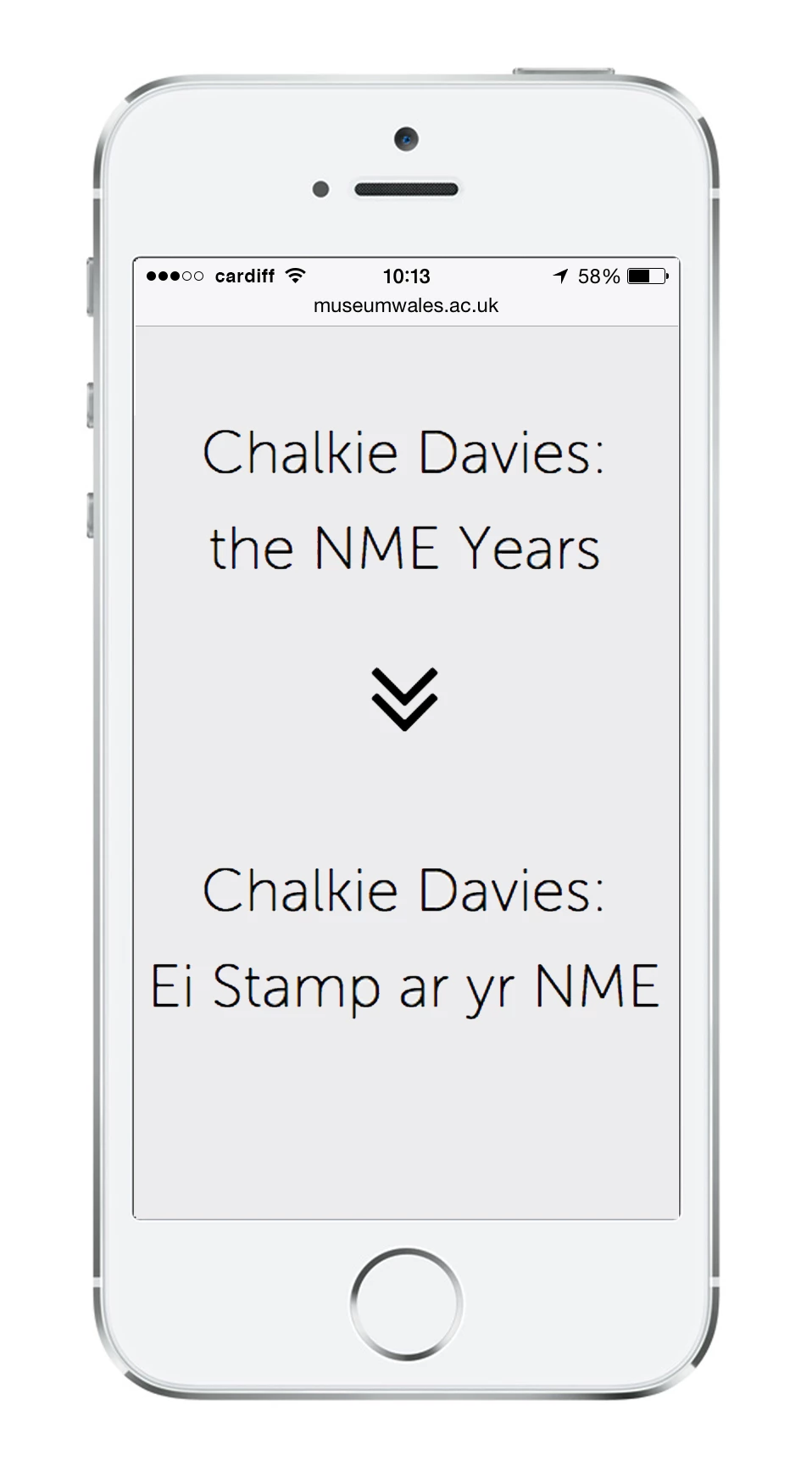
Once the visitor has connected to the free Wi-Fi audio tour ‘Chalkie' the Wi-Fi capture software will direct them to the correct web page with the name of the exhibition and a choice of languages (see picture 1). All is going well.
Language Choice
The english audio tour was written and recorded by Chalkie Davies and his team - it provides his personal insights into each of the photographs on display and some back stories. The welsh audio version was recorded in-house by Rhodri Viney (recording and editing) and Telor Gwyn (voice), using the Chalkie Davies translated transcript.
Choose a Number between One and Nine
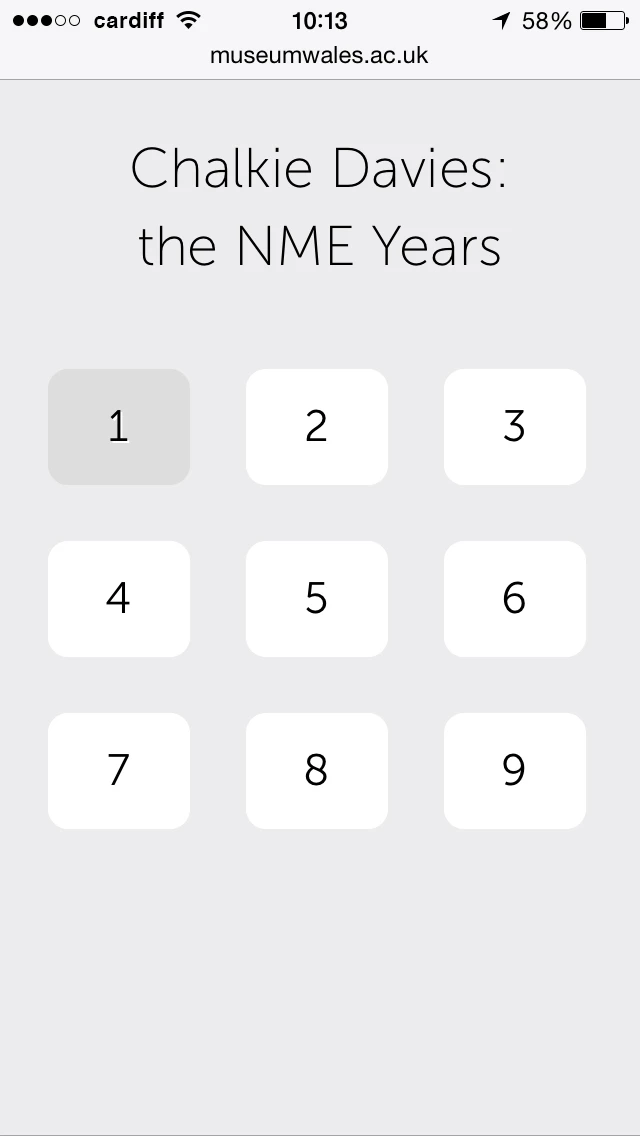
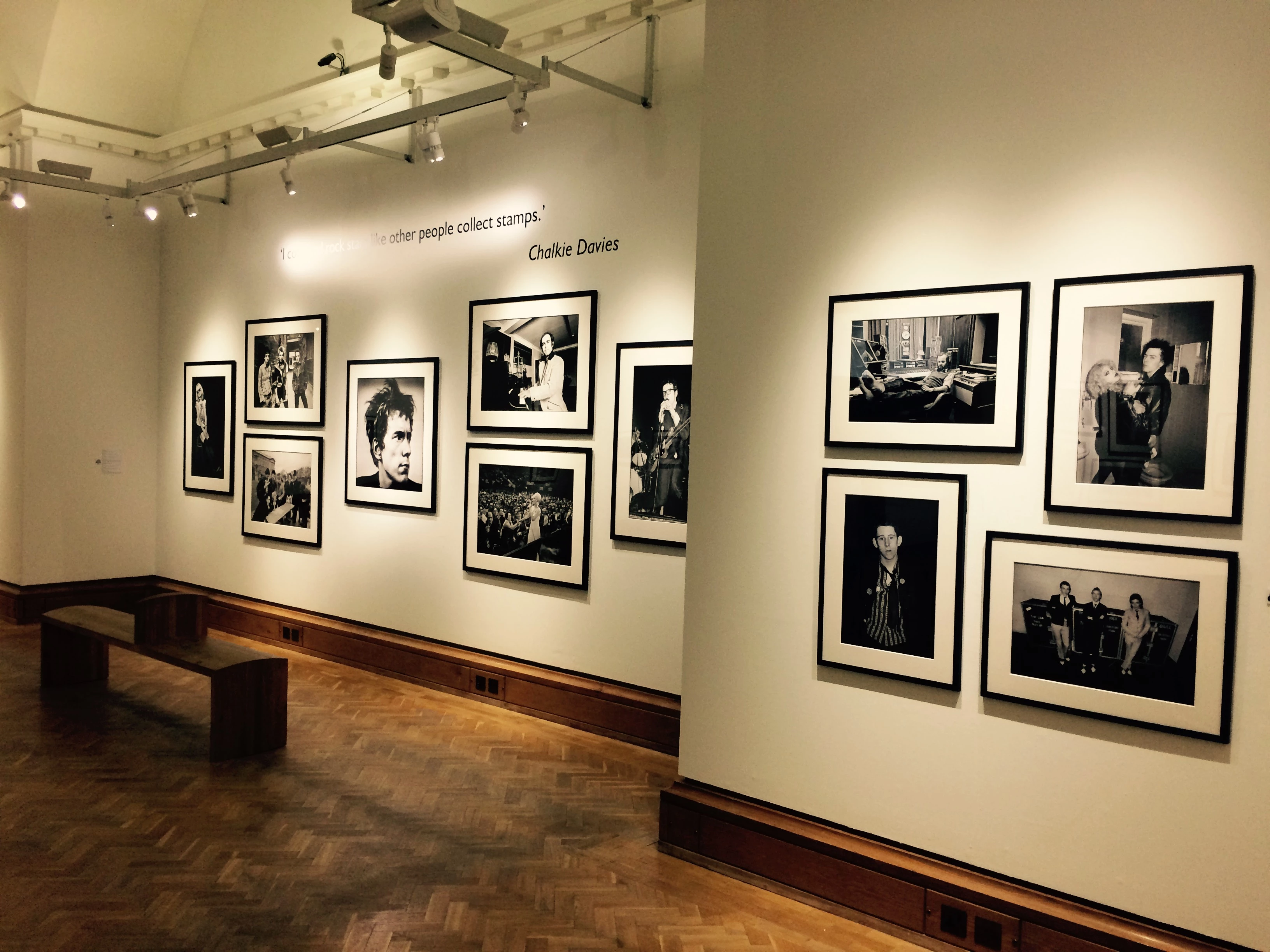
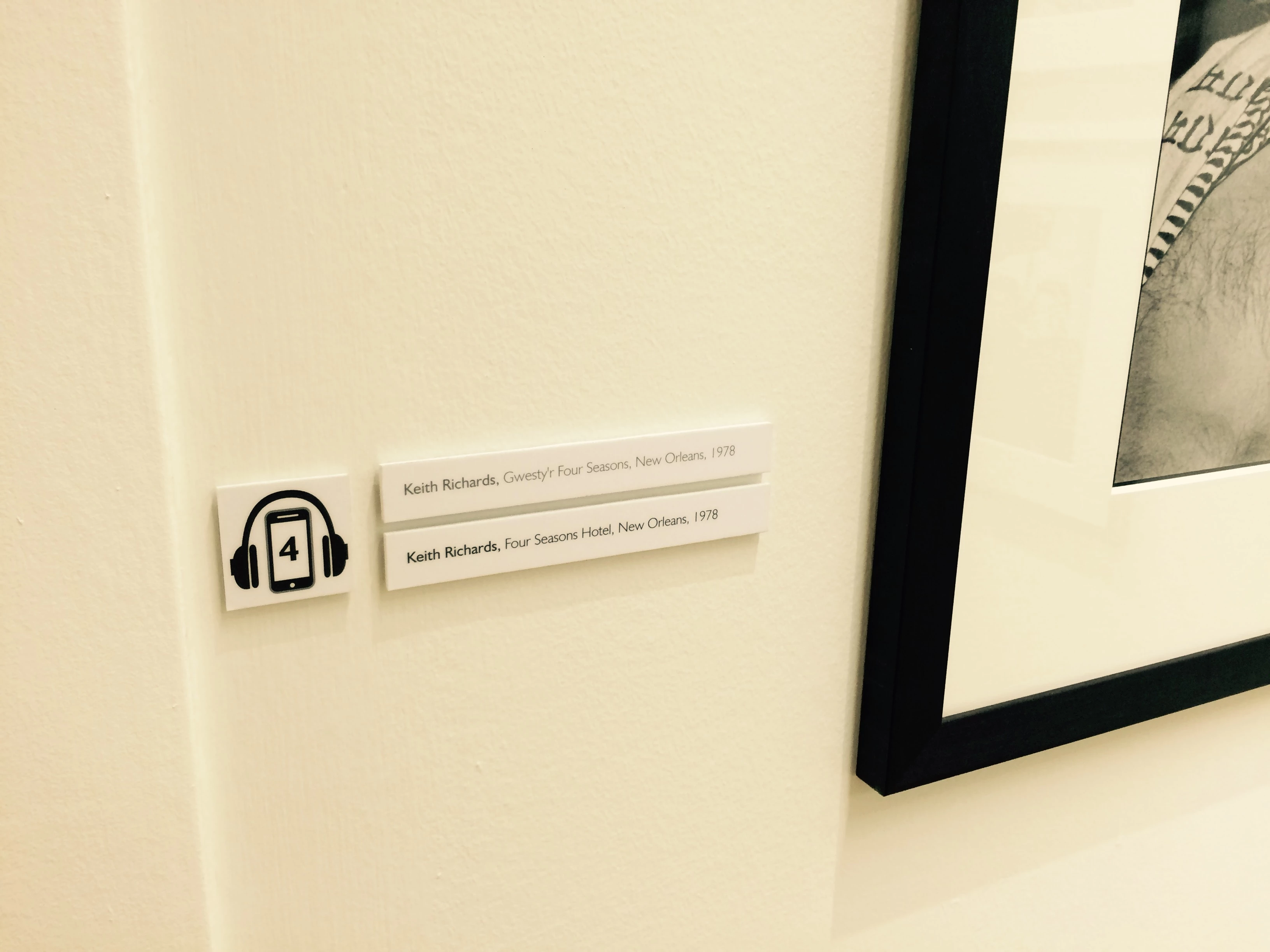
The visitor is given a choice of nine numbers, each matching a number on the gallery wall which refers to a selection of photographs (see picture 2). Once the person selects one of these numbers the audio tour begins...
"Listen To What The Man Said"
For the best experience the visitor should have headphones, but it's not the end of the world if they don't, they can still listen through their devices' built-in speaker, although this can look and feel a little awkward. Alternatively they could hand over £1.50 for headphones in the museum shop downstairs.
If they don’t want to walk around with a mobile phone protruding from their head, or leave the exhibition and come back in again to buy headphones downstairs, or find that their mobile phone has a low battery percentage - there is a printed version of the audio tour available within the gallery. They are the same words.
A Perfect Circle
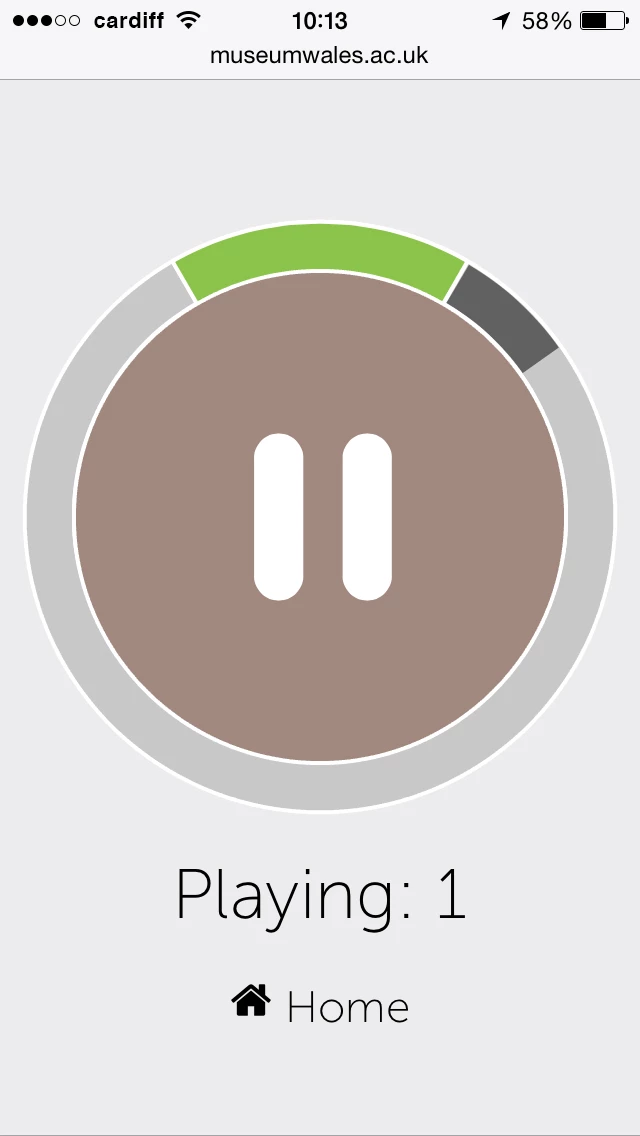
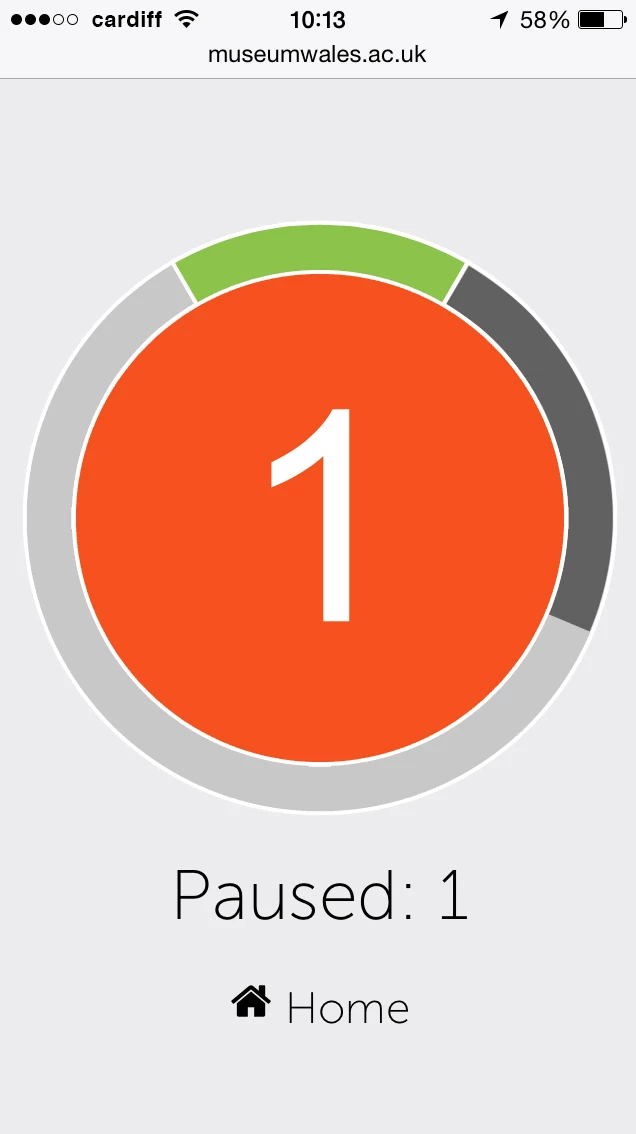
I used to have an analogue watch, but I left it accidentally next to the squash courts in the University - if anyone picked it up, could they hand it back please? Anyway, time can be measured within a circle. I like circles, so I built a large circle to indicate the progress of the audio track playing. The animated graphic uses SVG (Scalable Vector Graphics), which meant the page avoided the usual graphical software - it's all written in code: HTML5, javascript and CSS [Well, I find it mildly exciting] (see picture 3 and 4).
Pressing the circle will pause the audio. If the visitor listening to the audio tour wants to change to another number they can press the ‘Home’ button and the page will scroll up to the nine numbered keypad again. Another loop, of sorts…and repeat.
Before we go any further, maybe we could pause for a short film clip...
Additional Details You Might Enjoy
The gallery has a capacity of 40 people at one time.
There are two Wi-Fi hubs at each end of the gallery broadcasting wireless-N.
A web-server streaming the audio.
Each of the audio tracks are compressed to less than 2MB (MP3).
It takes less than ten seconds to download the whole MP3 on a iPhone 5S and the audio plays almost immediately.
We’ve tested it with various phones including one of the first Android audio HTML5 compatible phones (Gingerbread 2.3.6 ~ circa 2011) and Windows 8 phones.
If the device is not capable of displaying a SVG there is a fallback to similar looking GIFs.
Media Monitoring
The web-server records each time a track is requested. Therefore, we will have some data to indicate how much the audio tour is being used - thinking about it, we shoud gather additional information about the type of browser requesting the audio (it's a closed network so we can't involve Google Analytics, which is the usual goto reference for 'what kind of computer has visited the website recently'). We will monitor things during the exhibition and conduct evaluation once it has closed.