Rwy’n gobeithio bod pawb wedi mwynhau eu gwyliau hanner tymor!
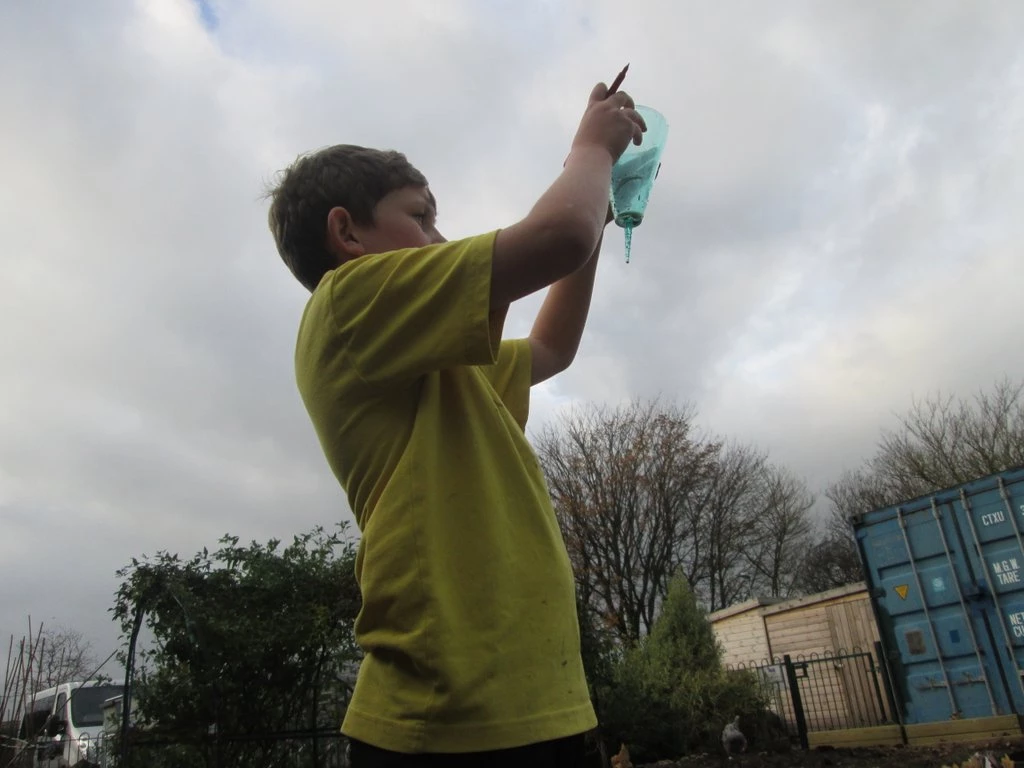
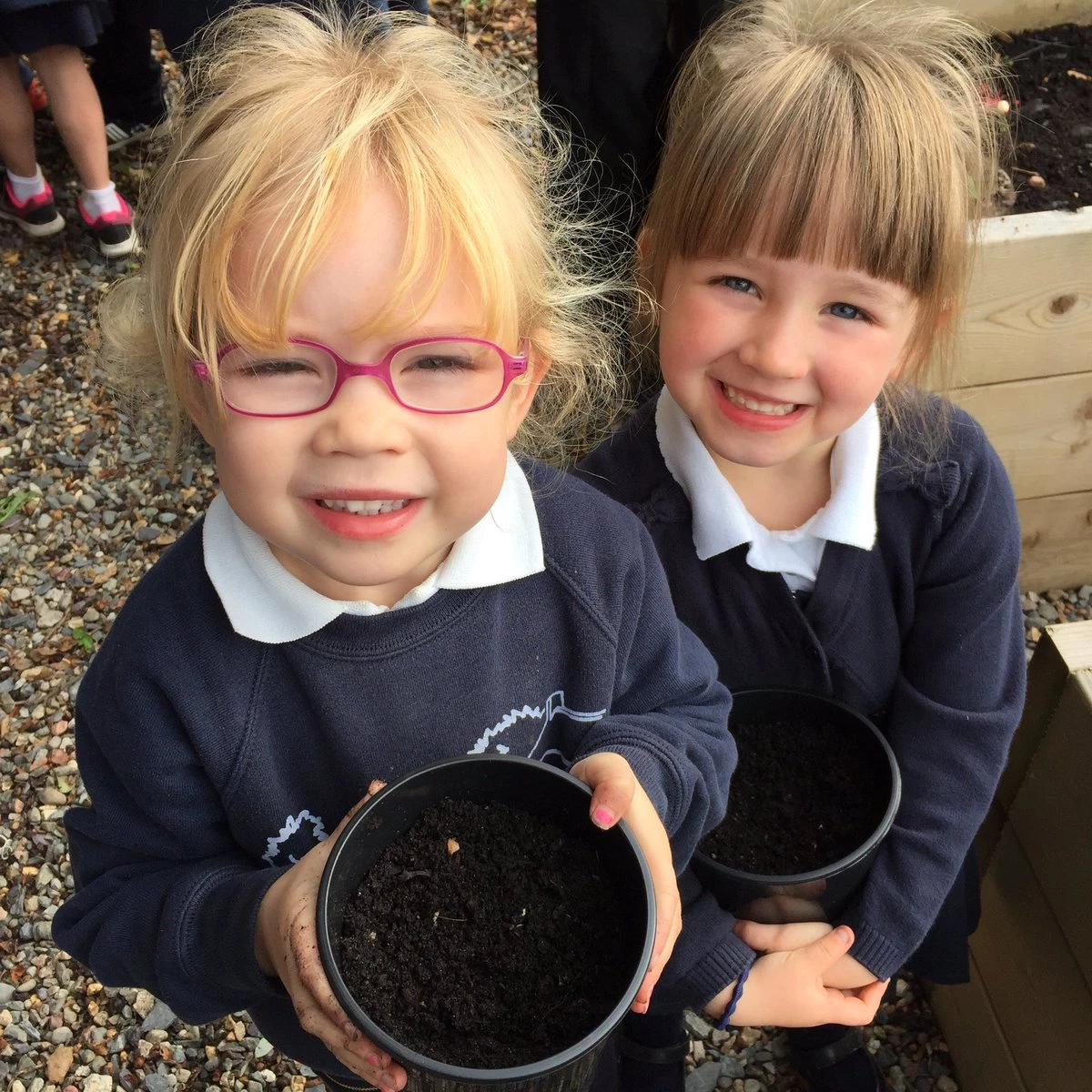
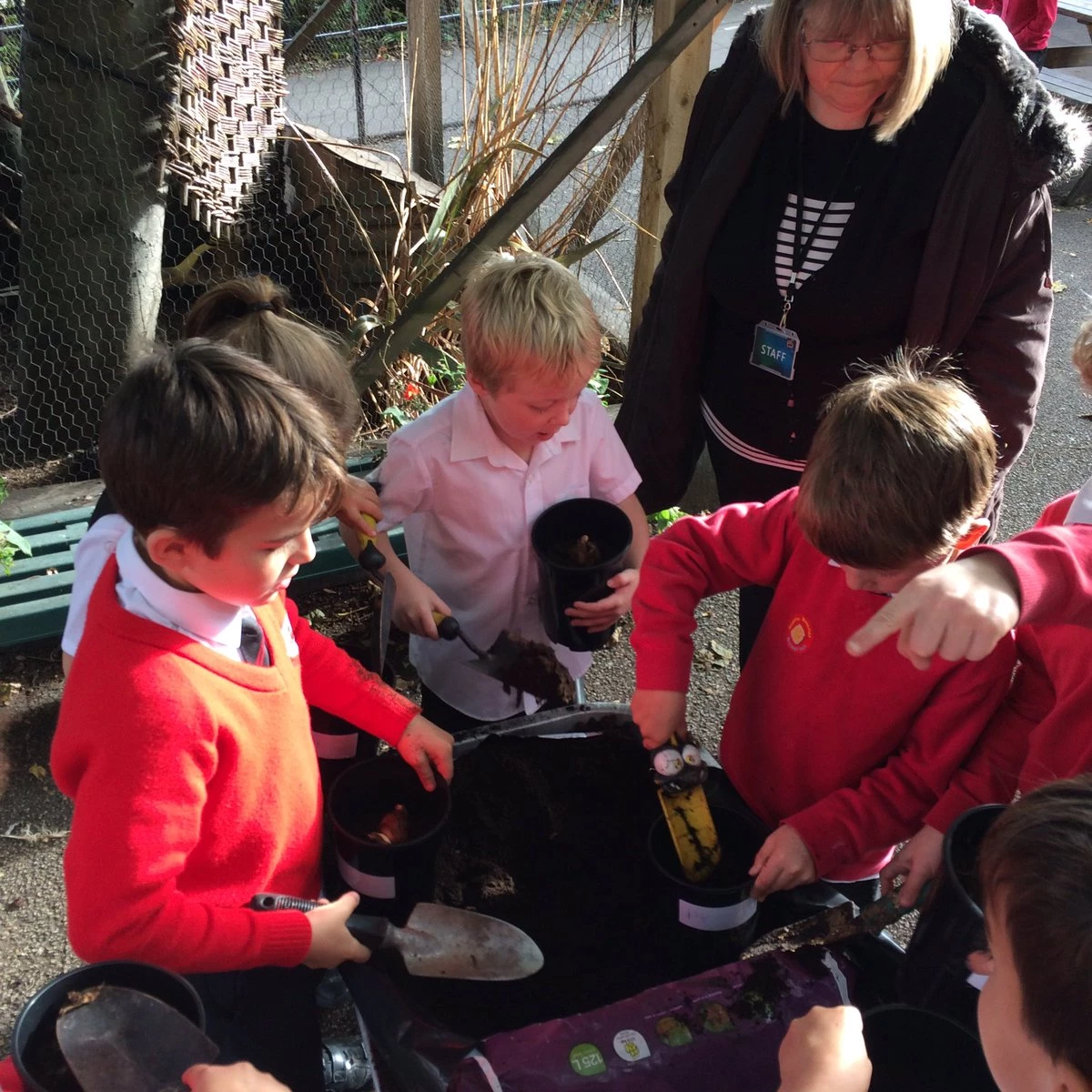
Rwyf isio ddweud diolch mawr i bawb am eich gwaith caled ar y diwrnod plannu. Cafodd dros 17,000 o fylbiau ei blannu ar draws y wlad! Welais o’r llunia bod pawb wedi cael llawer o hwyl yn helpu!
Wnaeth Cofnodion Tywydd cychwyn ar 5 Tachwedd. Mae 'na adnoddau dysgu ar y wefan i helpu paratoi am gymryd cofnodion tywydd. Rwyf wedi atodi hyn rhag ofn bod rhai heb ei gweld eto. Mae’r adnodd hyn yn helpu ymateb cwestiynau pwysig fel ‘pam mae mesur tywydd yn bwysig i’n harbrawf o’r effaith mae’r hinsawdd yn cael ar ddyddiad blodeuo bylbiau gwanwyn’!
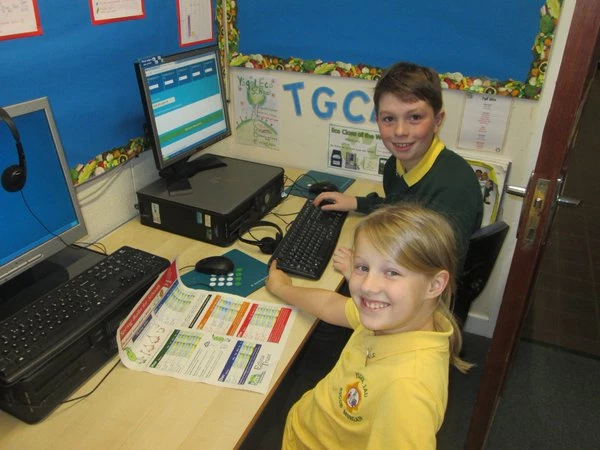
Defnyddiwch eich siart tywydd i gofnodi'r glaw a’r tymheredd pob ddiwrnod ysgol. Ar ddiwedd yr wythnos, cofnodwch mewn i’r wefan i rannu eich canfyddiadau. Fedrwch hefyd gadael sylwadau a chwestiynau i fi ymateb yn fy blog nesaf!
Plîs gadewch i mi wybod sut ydych yn wneud, a rhannwch luniau trwy Twitter ac e-bost.
Mae archif y Llyfrgell yn cynnwys deunyddiau sy’n taflu goleuni ar hanes cynnar yr Amgueddfa a bywyd Caerdydd ar ddechrau’r 20fed ganrif. Wrth i ni nesáu at ganmlwyddiant diwedd y Rhyfel Byd Cyntaf, dyma fwrw golwg ar yr ymdrechion i greu Cofeb Ryfel Genedlaethol i Gymru.
Sbardunwyd yr ymgyrch i sefydlu cofeb genedlaethol yng Nghaerdydd gan y Western Mail ym mis Hydref 1919. Sefydlwyd pwyllgor i oruchwylio’r project dan arweiniad yr Arglwydd Faer ar y pryd, G. F. Forsdike. Caeodd y gronfa ym 1921 wedi codi £27,500 a chynigiwyd comisiwn i Syr Thomas Brock ddylunio’r gofeb – ef oedd wedi dylunio cofeb Fictoria tu allan i Balas Buckingham. Fodd bynnag, er bod y dyluniad yn “brydferth ac urddasol” [1], roedd yn rhy ddrud a bu farw Brock cyn iddo allu cyflwyno cynnig arall. Felly, ym 1924 gwahoddwyd grŵp dethol o benseiri i gyflwyno dyluniadau. Yr enillydd oedd Ninian J. Comper, gaiff ei ystyried heddiw yn un o benseiri mawr olaf yr Adfywiad Gothig [2].
Roedd y pwyllgor eisiau gosod y gofeb ar ddarn crwn o dir o flaen Neuadd y Ddinas. Mae gan y Llyfrgell ddarluniau gwreiddiol yn dangos y safle hwn. Maent wedi’u llofnodi gan A. Dunbar Smith, a ddyluniodd Amgueddfa Genedlaethol Caerdydd gyda’i bartner Cecil Brewer.
Bu rhywun wrthi’n ddyfal yn cynhyrchu collage sy’n dangos i ni sut y byddai’r gofeb wedi edrych yn y lleoliad hwn. Mae gennym nifer o ffotograffau maint A3 o’r olygfa o flaen Neuadd y Ddinas, gyda llun model o’r gofeb wedi’i dorri allan a’i osod ar y llun mwy. Wyddom ni ddim pwy wnaeth hyn, ond mae’n amlwg bod y lluniau wedi apelio, gan mai’r cam nesaf oedd creu ffrâm maint-llawn o’r gofeb yn ei lle.
Mae gennym ffotograffau yn dangos y ffrâm yn ei lle gyda chynfas drosti. Fodd bynnag, gwrthwynebwyd y cynllun gan yr Amgueddfa a Neuadd y Ddinas [3]. Hawdd yw deall pam, o weld pa mor agos fyddai’r gofeb fawr wedi bod i’r ddau adeilad.
Felly roedd rhaid mynd ati i greu collage arall yn dangos y gofeb mewn lleoliad gwahanol. Yn y ffotograff hwn, sydd wedi’i dynnu ar Heol y Frenhines yn edrych tuag at Barc Cathays, mae’r model wedi’i osod yng Ngerddi’r Brodordy. Yn anffodus, gwrthodwyd y lleoliad hwn gan Ardalydd Bute, gan ei fod wedi nodi wrth drosglwyddo Parc Cathays i ofal y ddinas na ddylid codi adeiladau ar y safle hwnnw [4].
Yn ffodus, erbyn Awst 1925 roedd safle wedi’i ddewis ar gyfer y gofeb, sef Gerddi Alexandra, a chafodd Comper fwrw ymlaen â’r gwaith o’r diwedd. Bu wrthi o fis Mawrth 1926 tan ddechrau 1928, gyda’r gwaith adeiladu dan ofal E. Turner a’i Feibion.
Yn ôl papurau newydd o’r cyfnod, daeth Tywysog Cymru i ddadorchuddio a chysegru’r gofeb o flaen bron i 50,000 o bobl, ar 12 Mehefin 1928. Yn ôl un adroddiad, cafodd y Tywysog wers Gymraeg gan David Lloyd George ar y trên o Lundain, er mwyn iddo draddodi rhan o’i araith yn Gymraeg [5].
Llun: Trwy garedigrwydd gan y Western Mail
Mae mwy o eitemau diddorol ynglŷn â’r gofeb a’r Rhyfel Byd Cyntaf i’w gweld yma.
Cyfeiriadau
Welsh National War Memorial Official order of service at the ceremony of unveiling and dedication by H.R.H. The Prince of Wales on June 12th 1928. Caerdydd:Western Mail, t.8.
Symondson, A. & Bucknall, S. 2006. Sir Ninian Comper: an introduction to his life and work with complete gazetteer. Reading: Spire Books, t.198.
Welsh National War Memorial Official order of service at the ceremony of unveiling and dedication by H.R.H. The Prince of Wales on June 12th 1928. Caerdydd:Western Mail, t.10.
Gaffney, A. 1998. Aftermath: Remembering the Great War in Wales. Caerdydd: Gwasg Prifysgol Cymru, t.45.
Ffeil toriadau Llyfrgell Amgueddfa Cymru [Daily Chronicle 15/06/28].
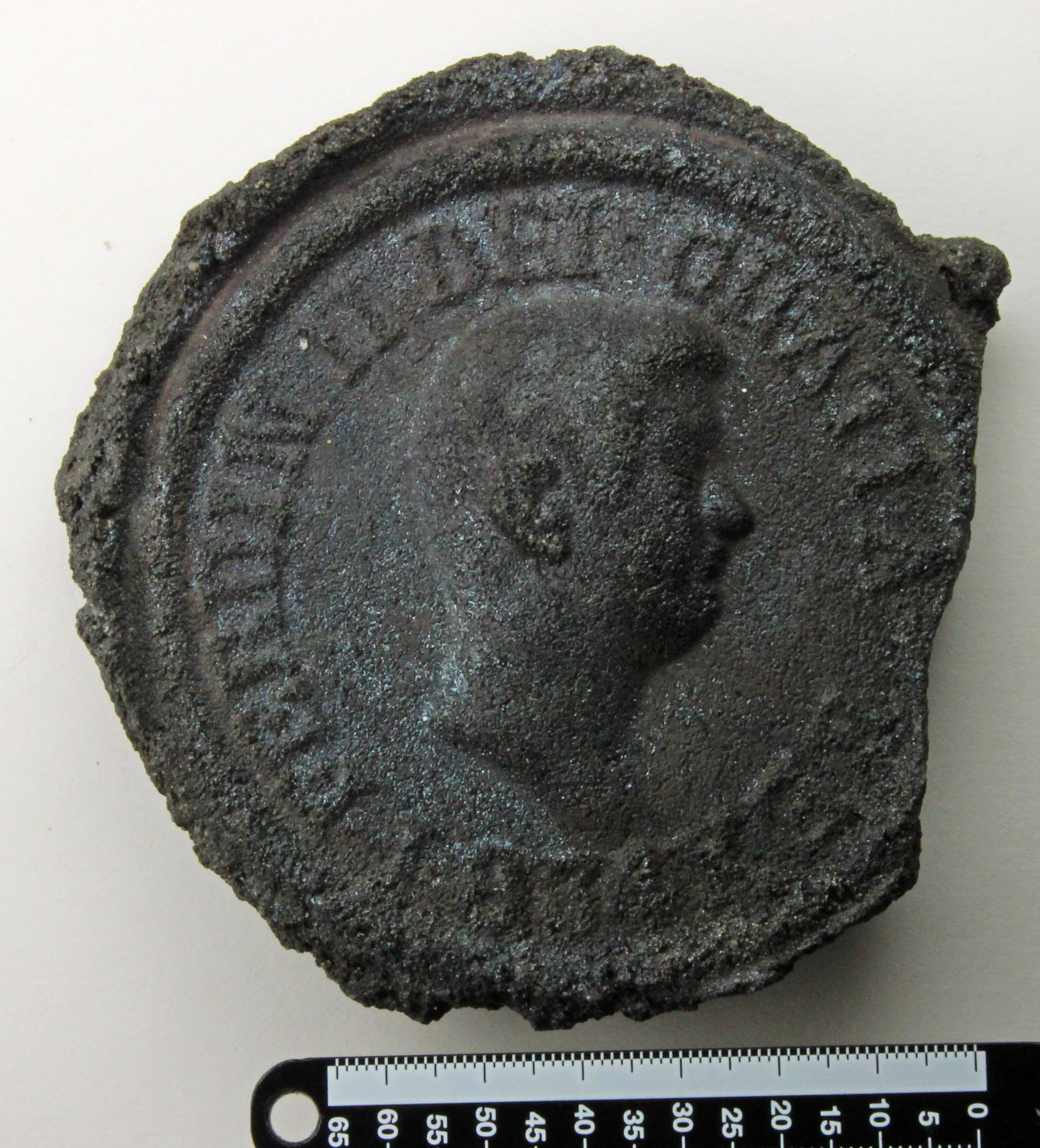
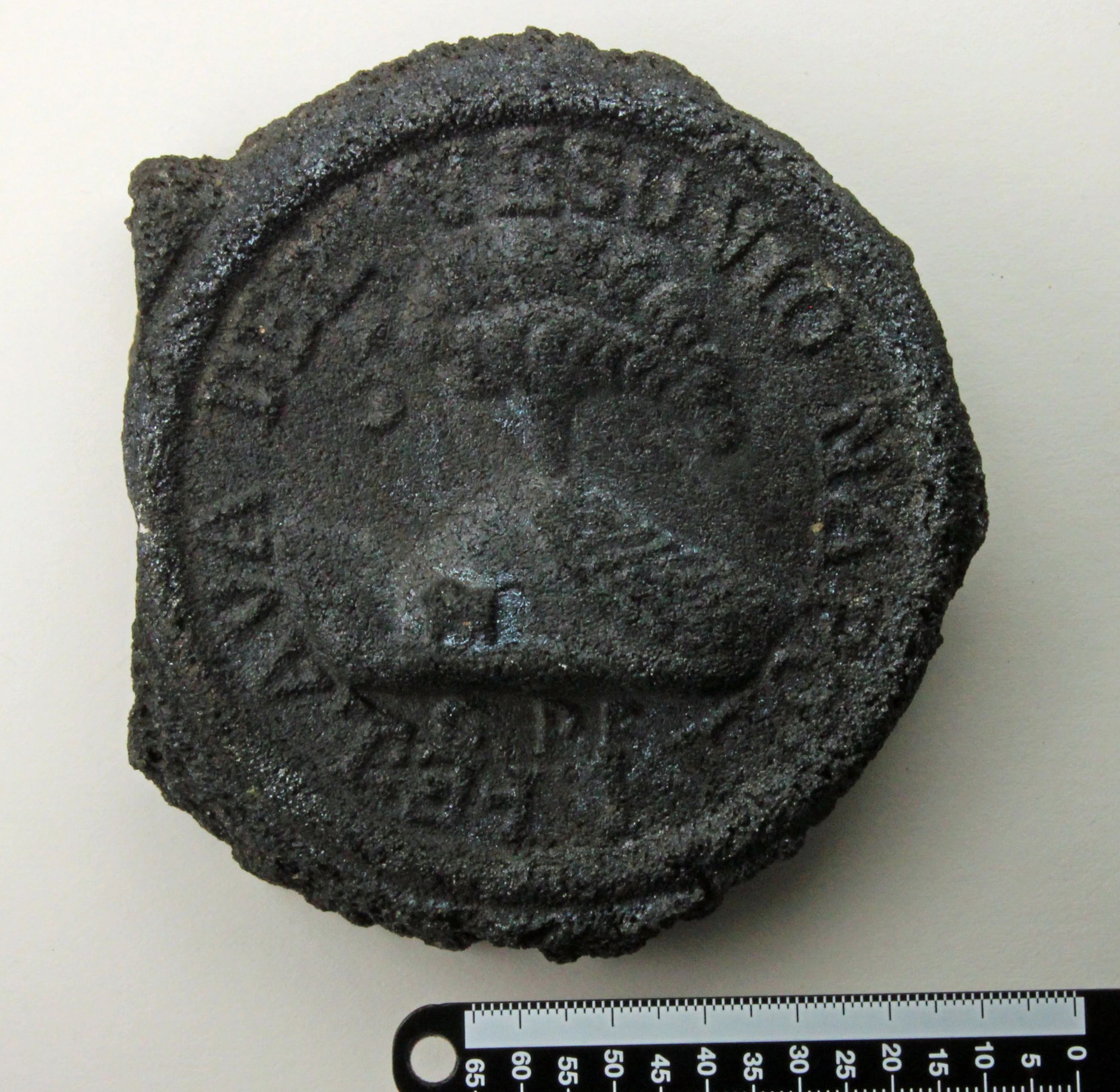
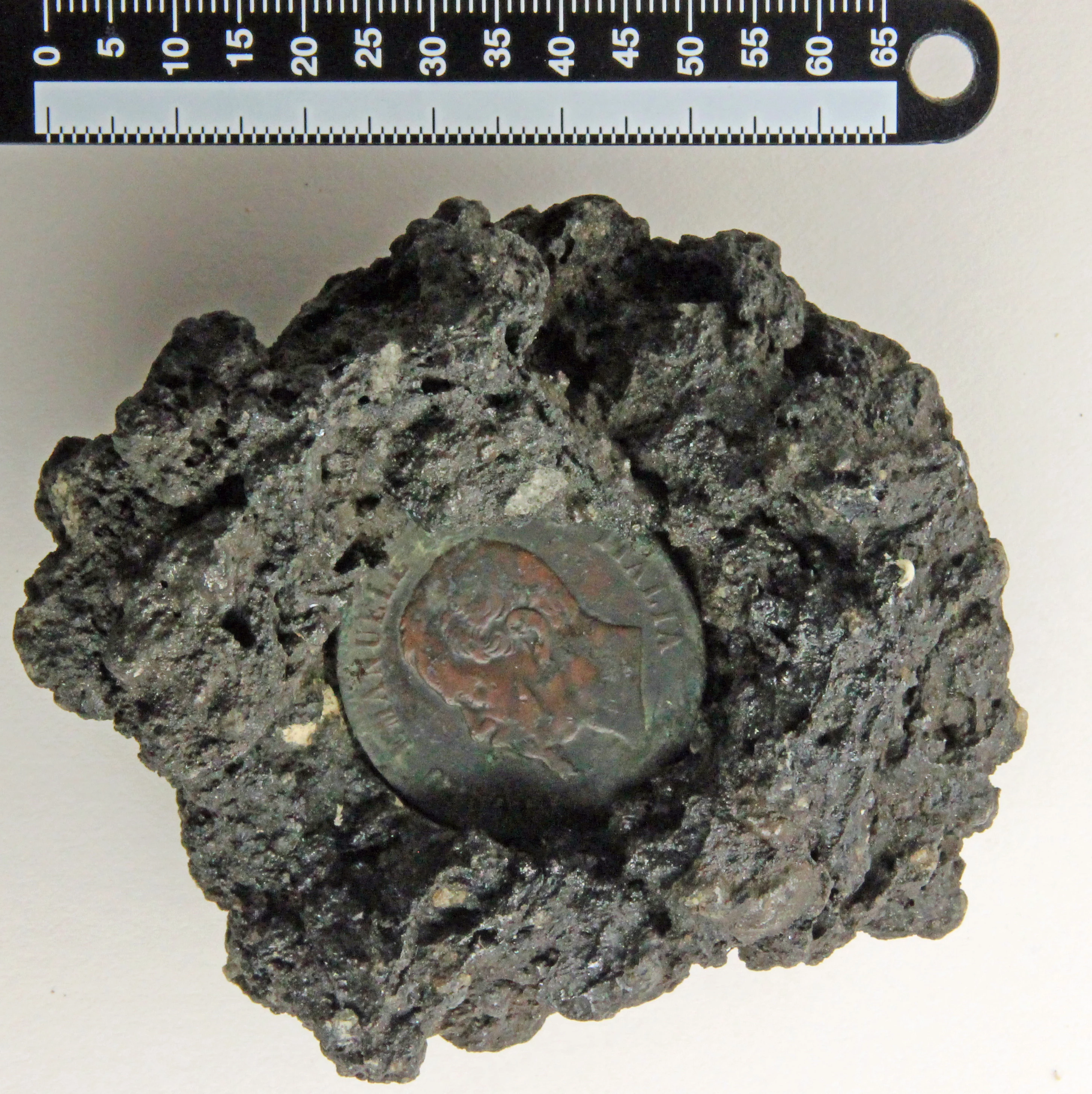
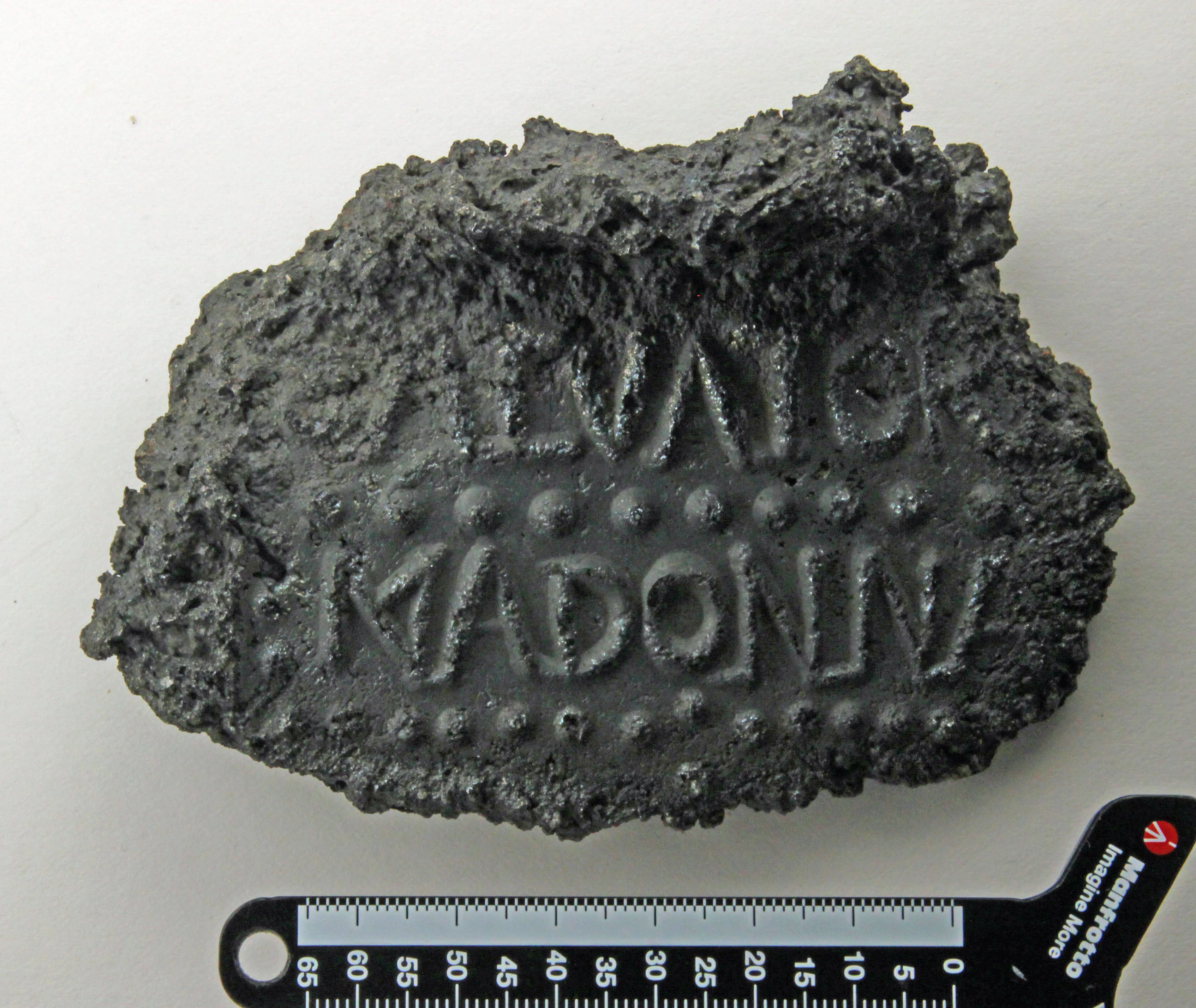
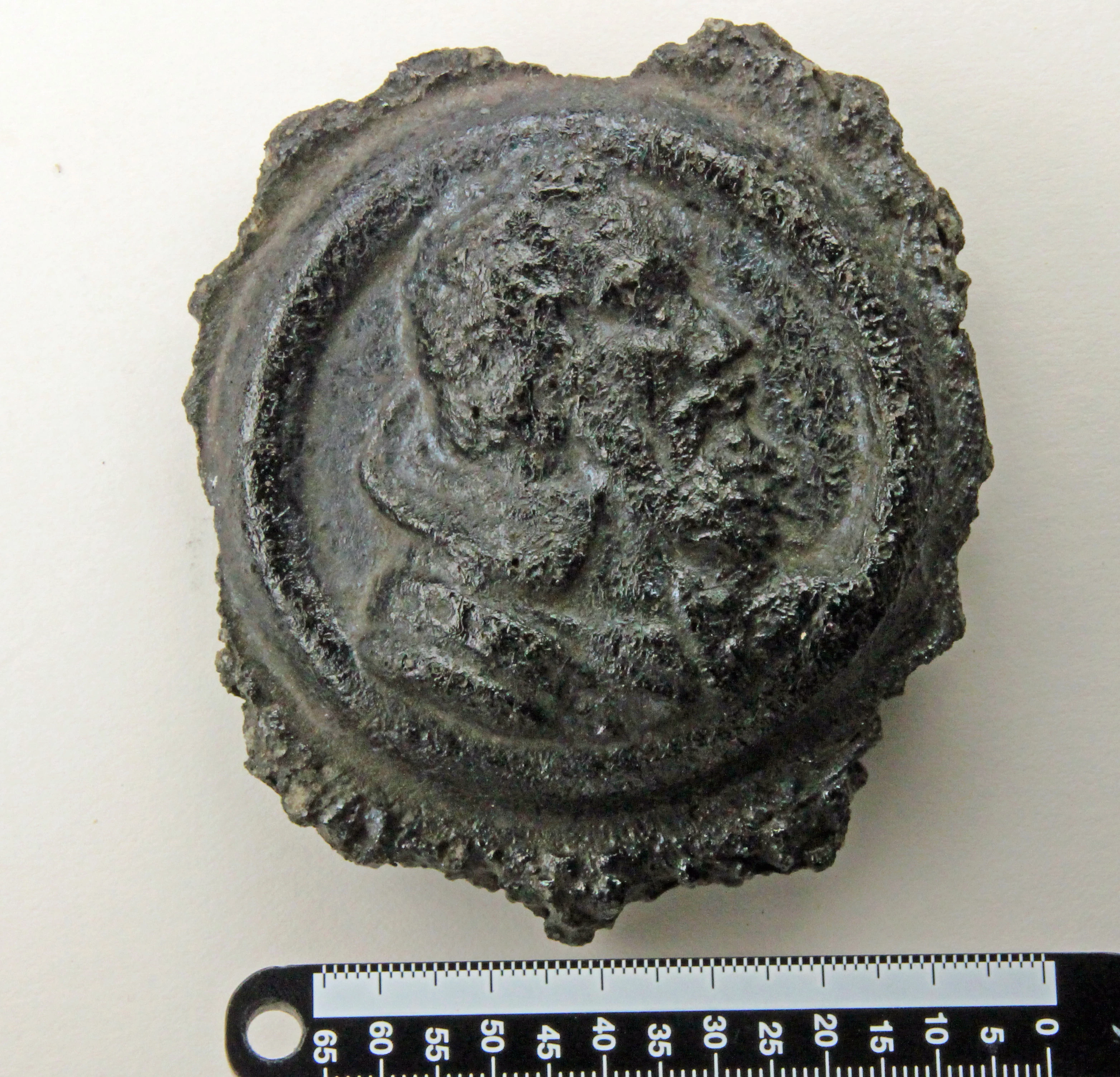
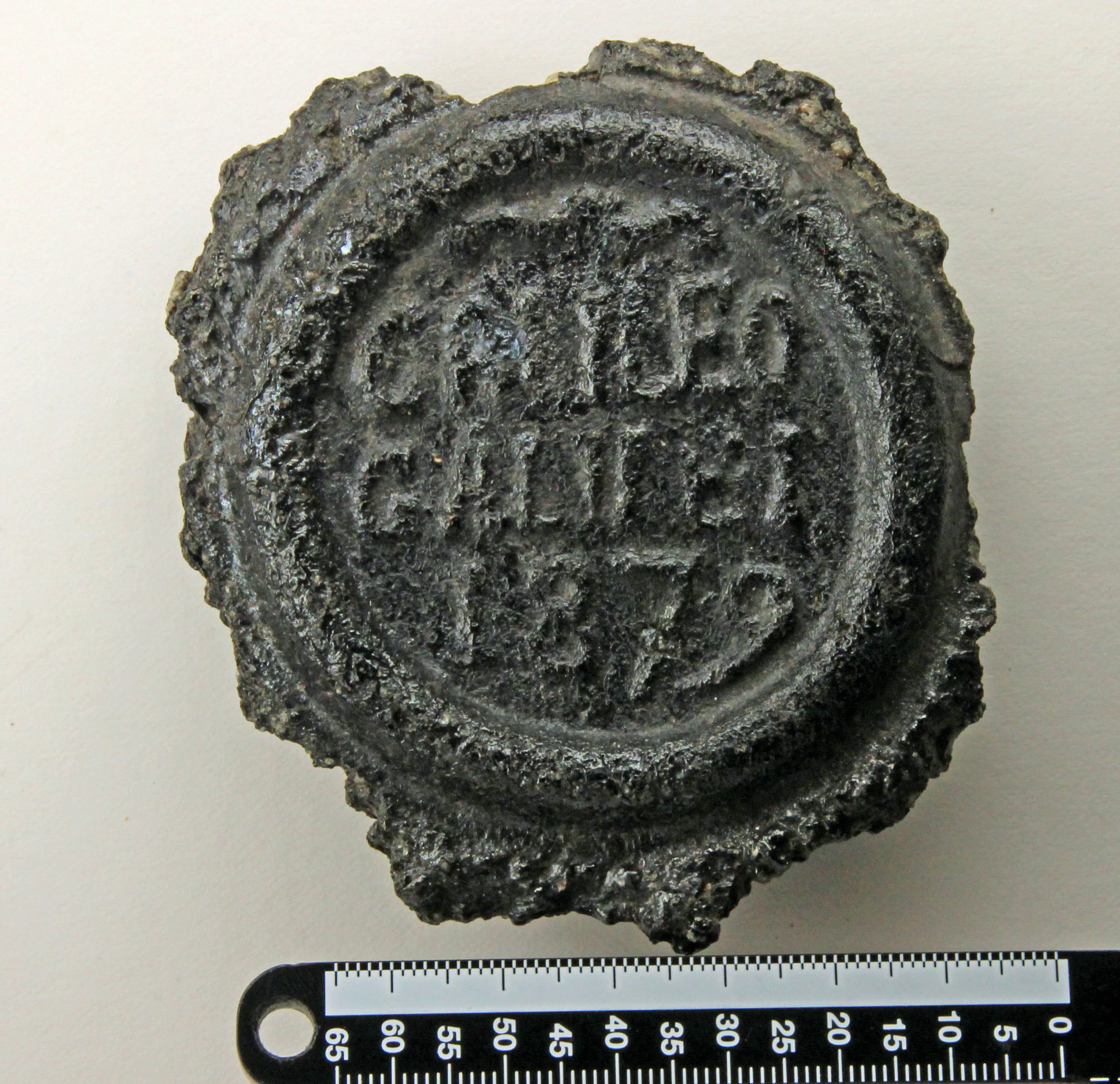
Lava medallions and coins in lava from Mount Vesuvius, Italy
The National Museum Wales Petrology (Rock) collection comprises 35,000 specimens, with many interesting rock samples from across Wales and the wider World. In the drawers of the Italian collection, alongside the pumice, volcanic ash and obsidian are these curious rocks.
What are lava medallions?
They are called lava medallions, medals or tablets, and along with coins embedded in lava they were probably first produced in the mid-18th Century when the ‘Grand Tour’ become fasionable among the wealthy elite of Europe. Taking in European cities like Paris, Rome, Venice, Florence and Naples, the ‘students’ would travel with a tutor on a Grand Tour to learn about languages, geography, culture, art and architecture. When passing through Naples, the volcano of Mount Vesuvius (Vesuvio) became a must see stop on the tour. Forget postcards, fridge magnets and selfies, the take home souvenir of the day was the lava medallion!
People have long been fascinated by destructive power of Mount Vesuvius, the volcano had lain dormant for centuries before the famous eruption in 79 A.D. when the Roman cities of Pompeii and Herculaneum were destroyed. Over the last two thousand years, the volcano has erupted many times. Between eruptions, Vesuvius can lie almost dormant for long periods of time before erupting violently once again. Volcanoes the world over that erupt in this explosive style after long periods of dormancy are known as Vesuvian eruption volcanoes.
How were lava medallions made?
To make a lava medallion, molten lava would have been retrieved (by some very brave individual with a long stick!) from a recent lava flow or lava close enough to the surface that was accessible and still hot enough to be malleable. It was then moulded, pressed with a stamp, or embedded with a coin, cooled in a bucket of water and sold to a passing grand tourist.
The French Revolution in 1789 marked then end of Grand Tours as they were known, but with the advent of the railways in the early 19th Century and the beginnings of mass tourism, these distinct souvenirs once again became popular take-home keepsakes, and they were produced in their thousands.
Over the years many of these medallions and lava coins have found their way into museum collections across the world. They often depict kings, Roman Emperors, famous scientists or events. All of the medallions and coins in the AC NMW collection date from the 19th Century, and originate from Mount Vesuvius, but examples in other collections have originated from Mount Etna, Sicily.
If you would like to know more about lava medallions, please contact Andrew Haycock via:
Mae'n bron diwrnod plannu ar gyfer ysgolion yn Gymru, Lloegr a Gogledd Iwerddon! Bydd ysgolion yn Yr Alban yn plannu wythnos nesa.
Cliciwch yma ar gyfer adnoddau i'ch paratoi ar gyfer heddiw ac am ofalu amdan eich bylbiau dros y misoedd nesaf!
Dylech ddarllen y dogfennau hyn:
• Mabwysiadu eich Bwlb (trosolwg o’r gofal fydd angen ar eich Bylbiau)
• Plannu eich bylbiau (canllawiau ar gyfer sicrhau arbrawf teg)
A chwblhewch y gweithgareddau hyn:
• Tystysgrif Mabwysiadu Bylbiau
• Creu Labelai Bylbiau
Mae'n bwysig eich bod yn darllen y rhain oherwydd maent yn cynnwys gwybodaeth bwysig! Er enghraifft, ydych chi'n gwybod i labelu eich potiau fel mae’n glir lle mae'r Cennin Pedr a Chrocws wedi eu plannu?
Cofiwch dynnu lluniau o'ch diwrnod plannu i gystadlu yn y Gystadleuaeth Ffotograffydd Diwrnod Plannu!
The medieval court, Llys Llywelyn, has finally opened its doors. The hall transports us back to a day in the 13th century when Llywelyn ap Iorwerth, Prince of Gwynedd is in residence and about to hold court. The recreated sumptuous decoration, furnishing and ornament reflects both his wealth and status, most of the portable items travelled with him as he progressed around his kingdom so were only present when the prince was in residence.
One way to reflect your wealth and status in the medieval period was through the use of colour. There were a wide range of artist's pigments available from which paint could be make, some were natural minerals like the bright red vermilion and others where man-made such as Verdigris, a green-blue colour created by suspending copper plates over vinegar or the waste from the wine making process.
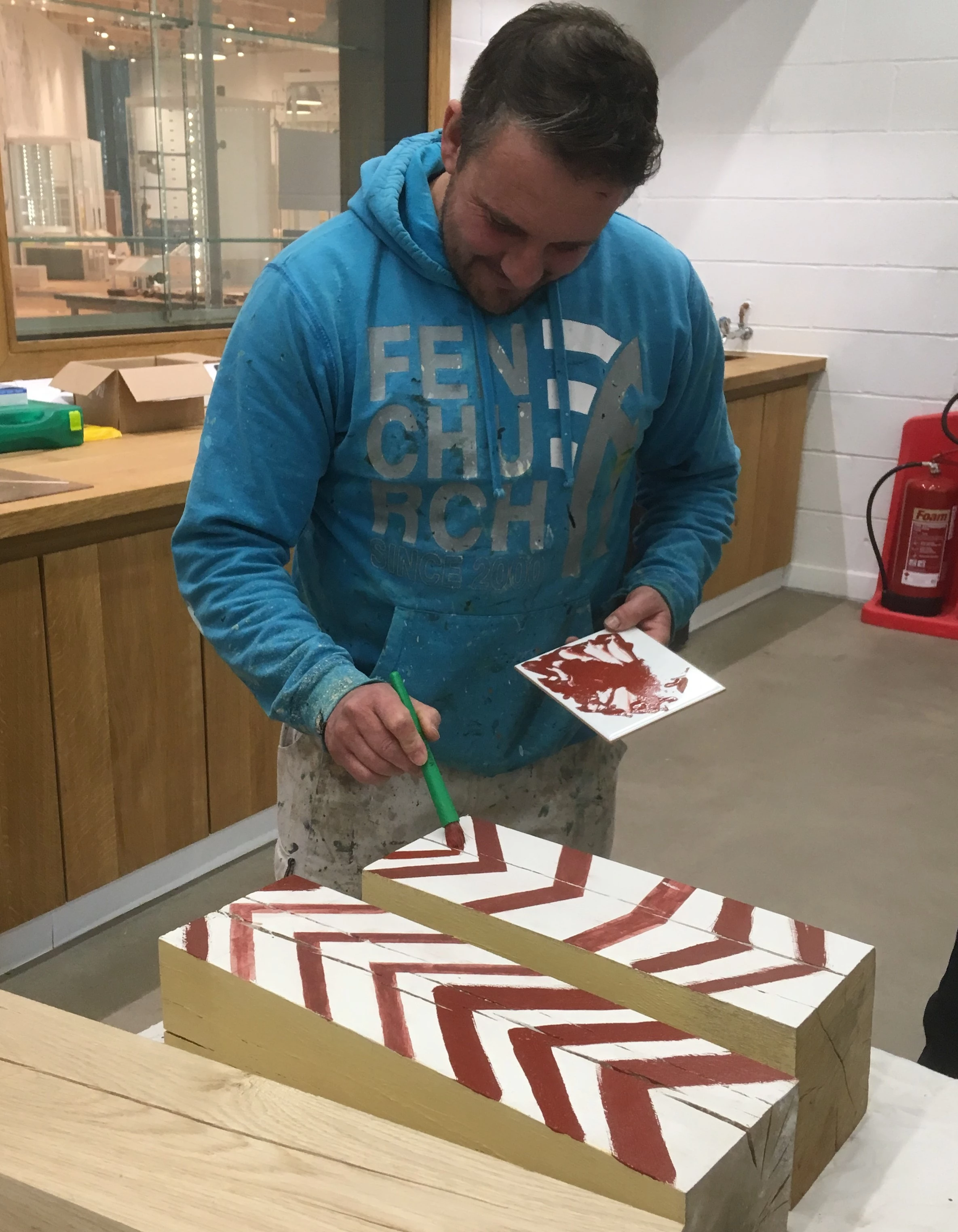
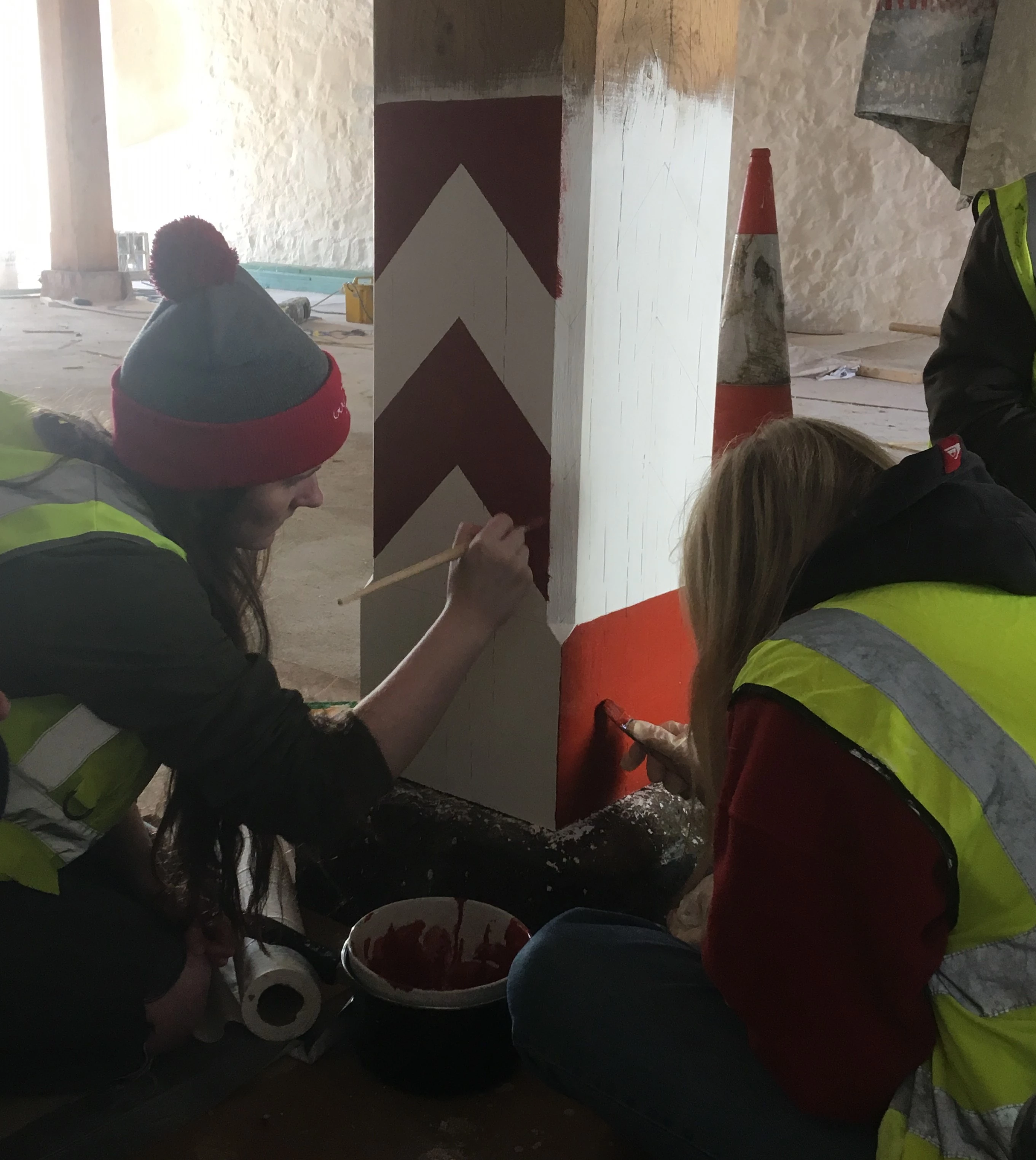
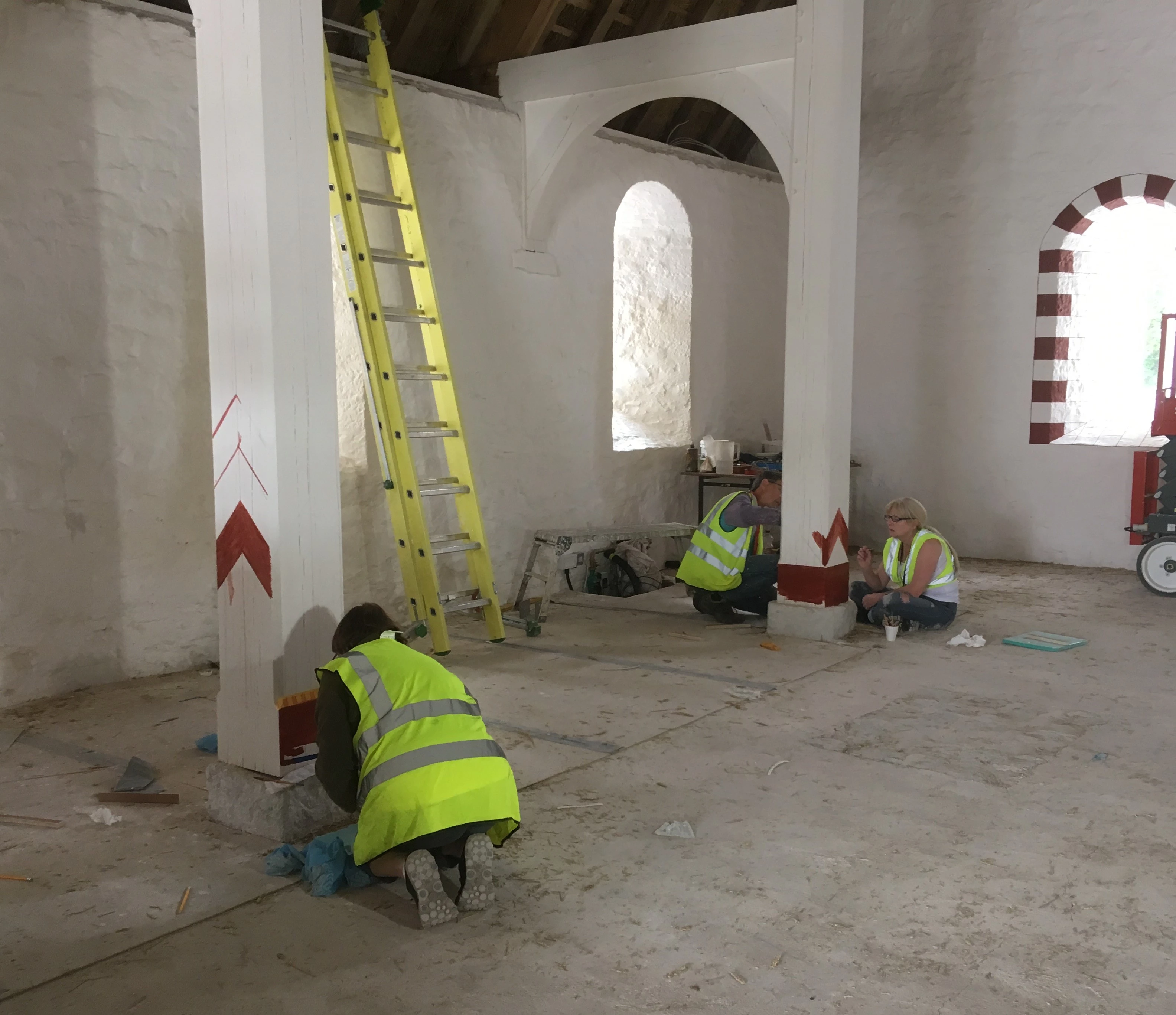
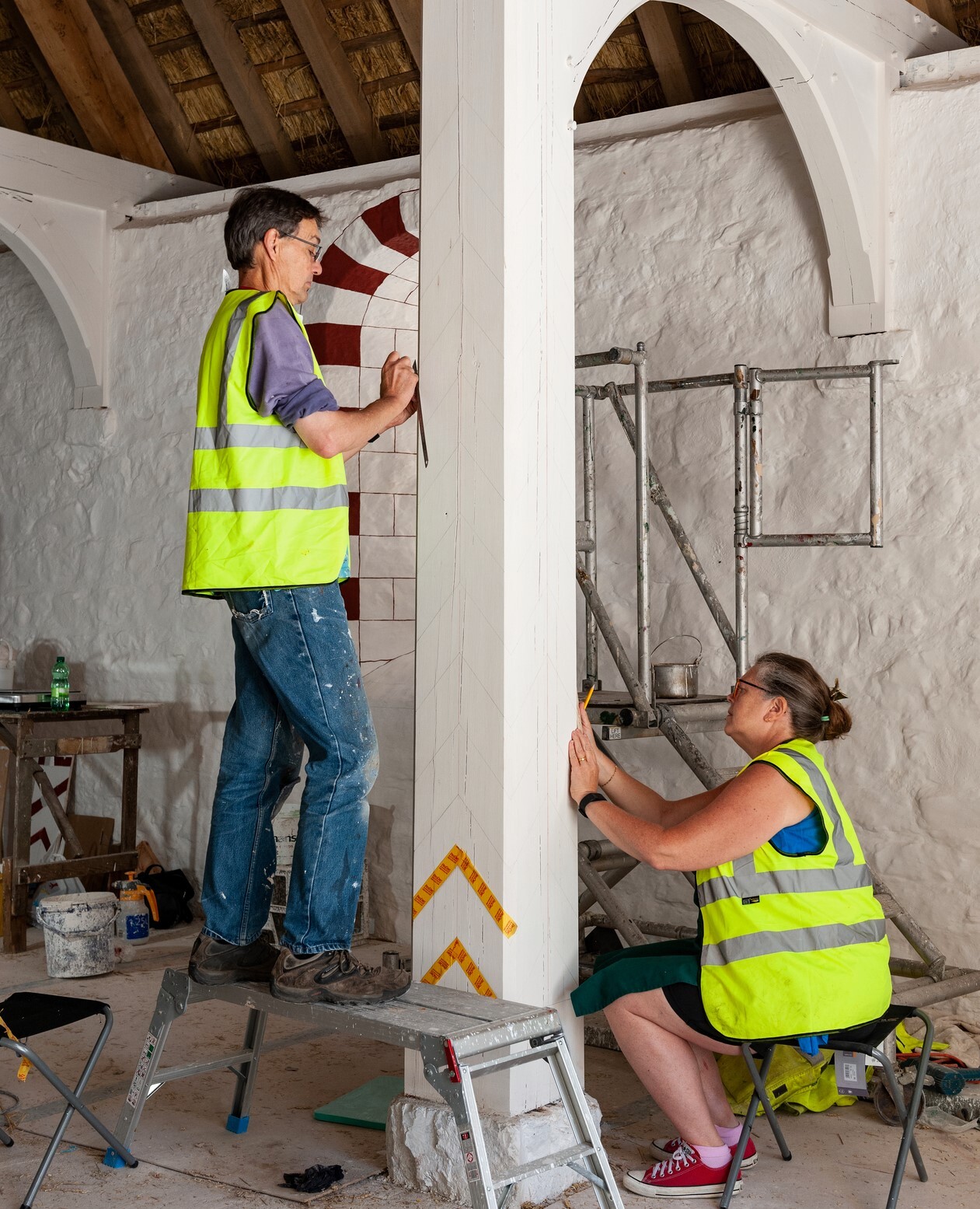
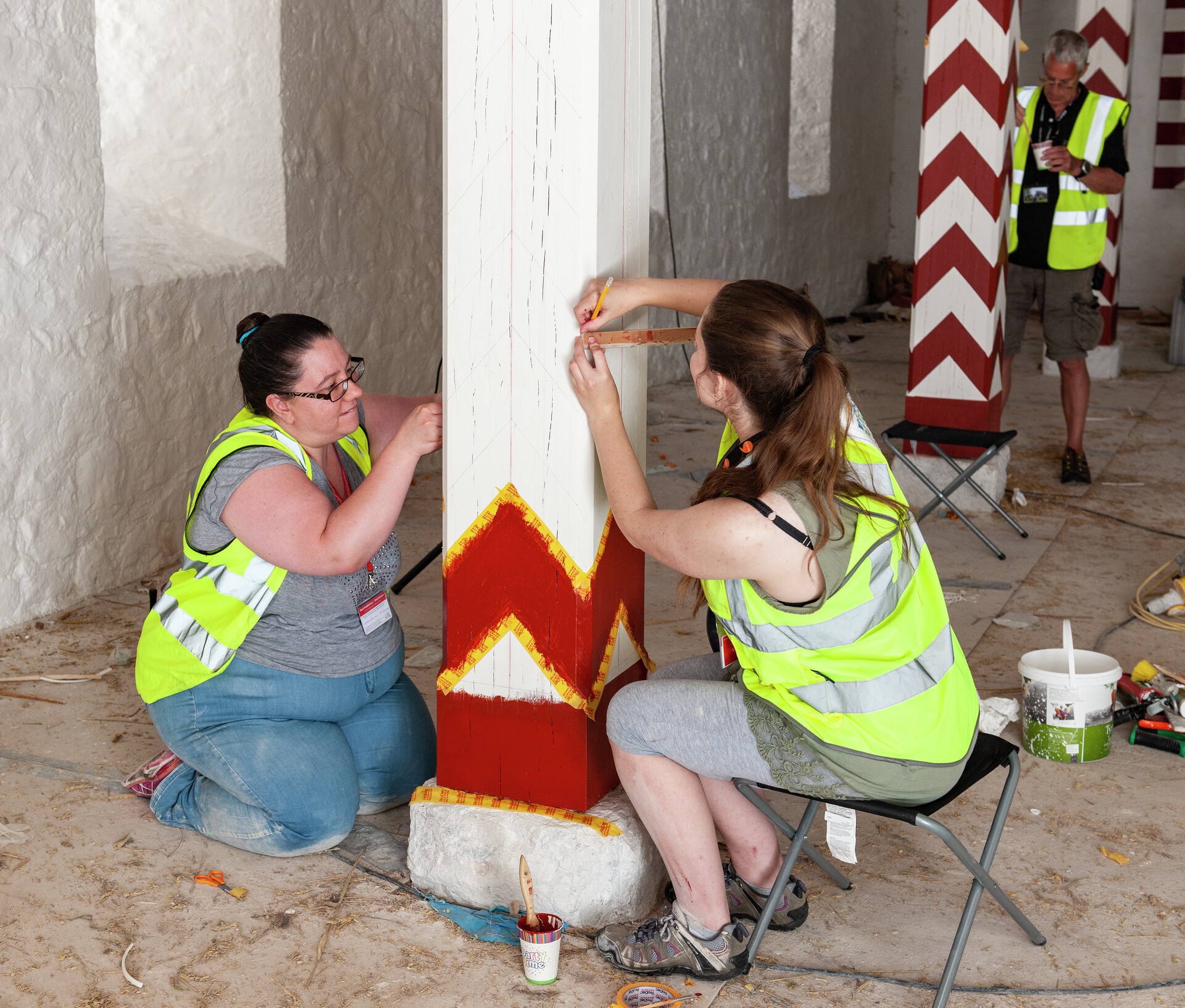
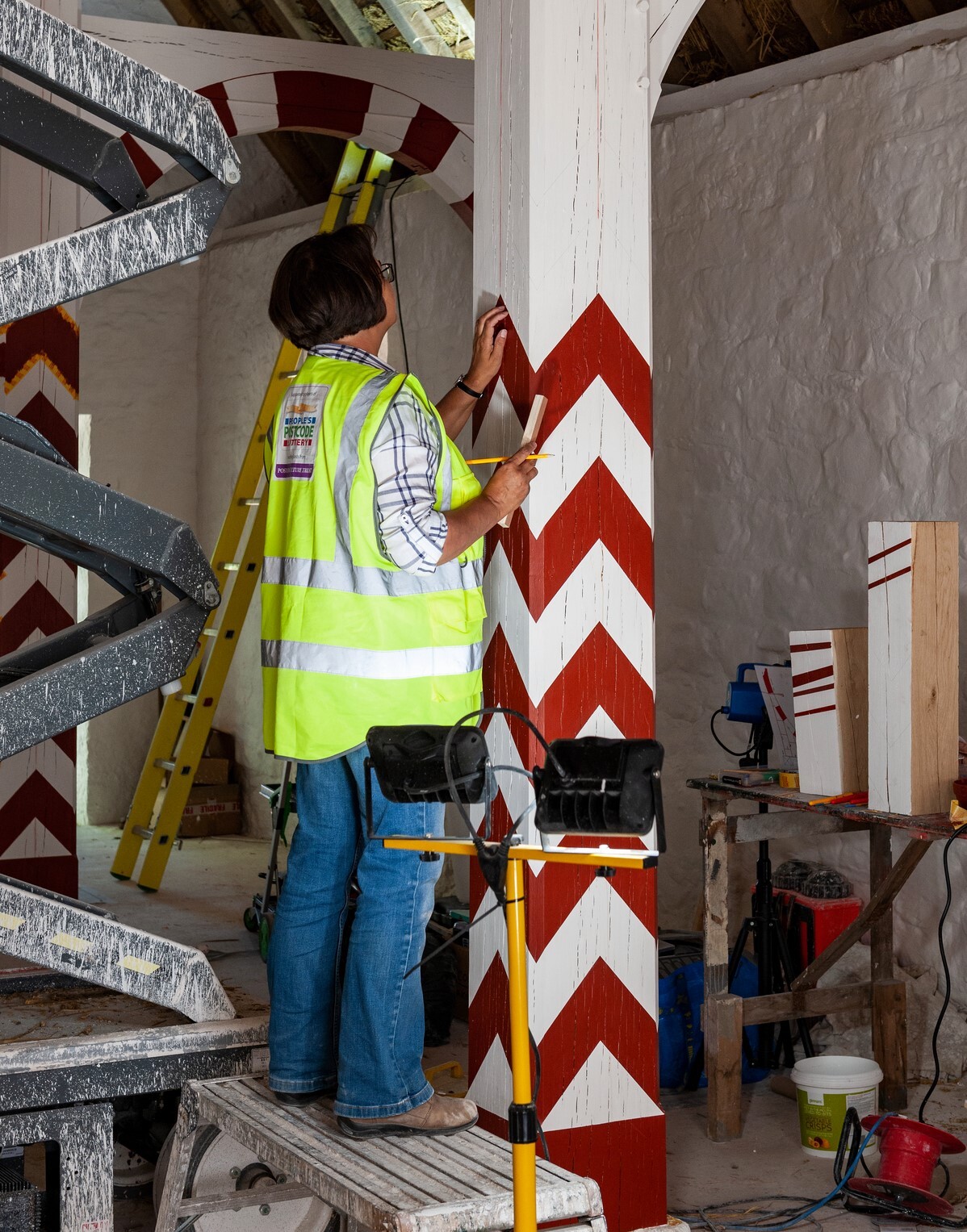
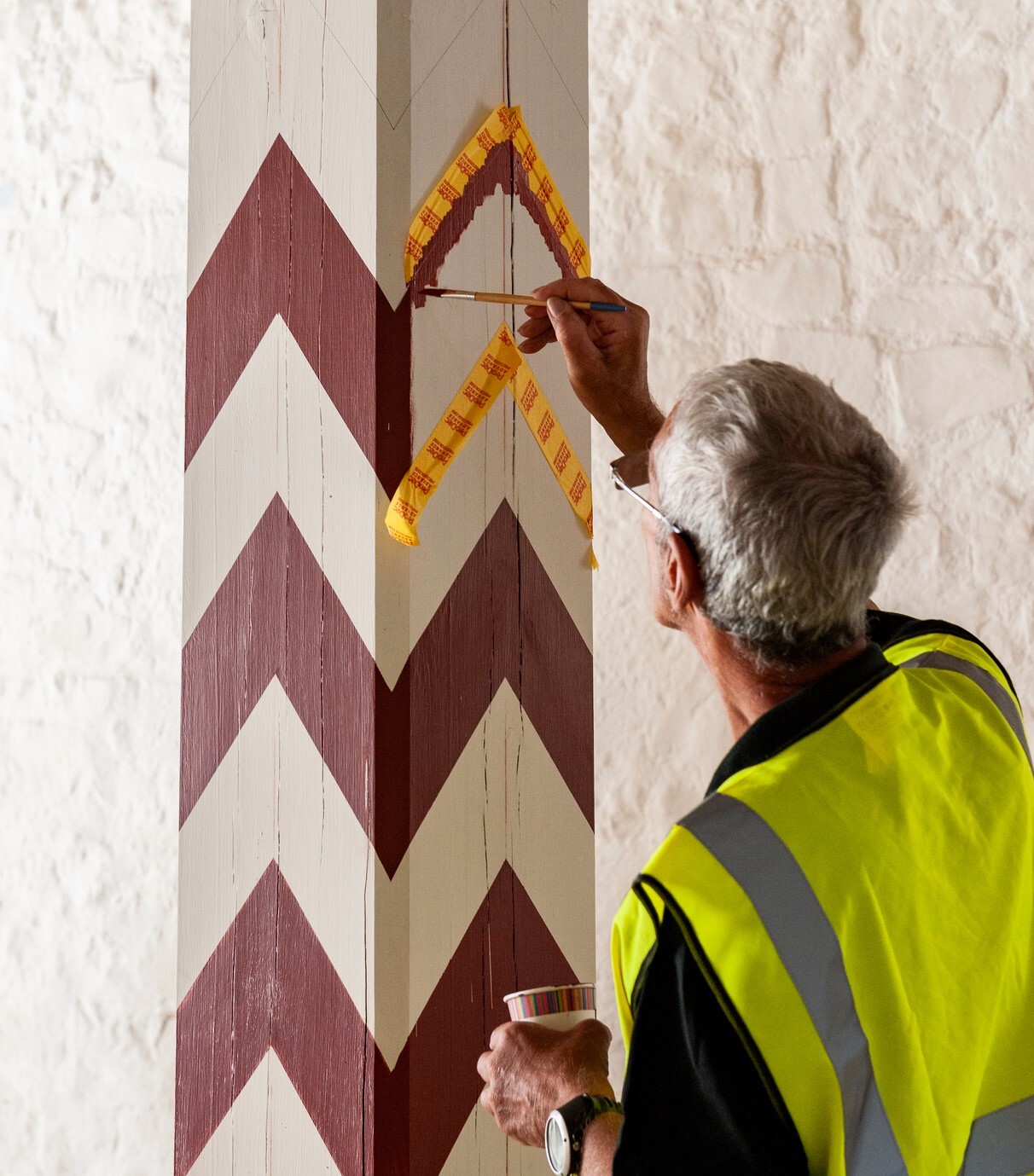
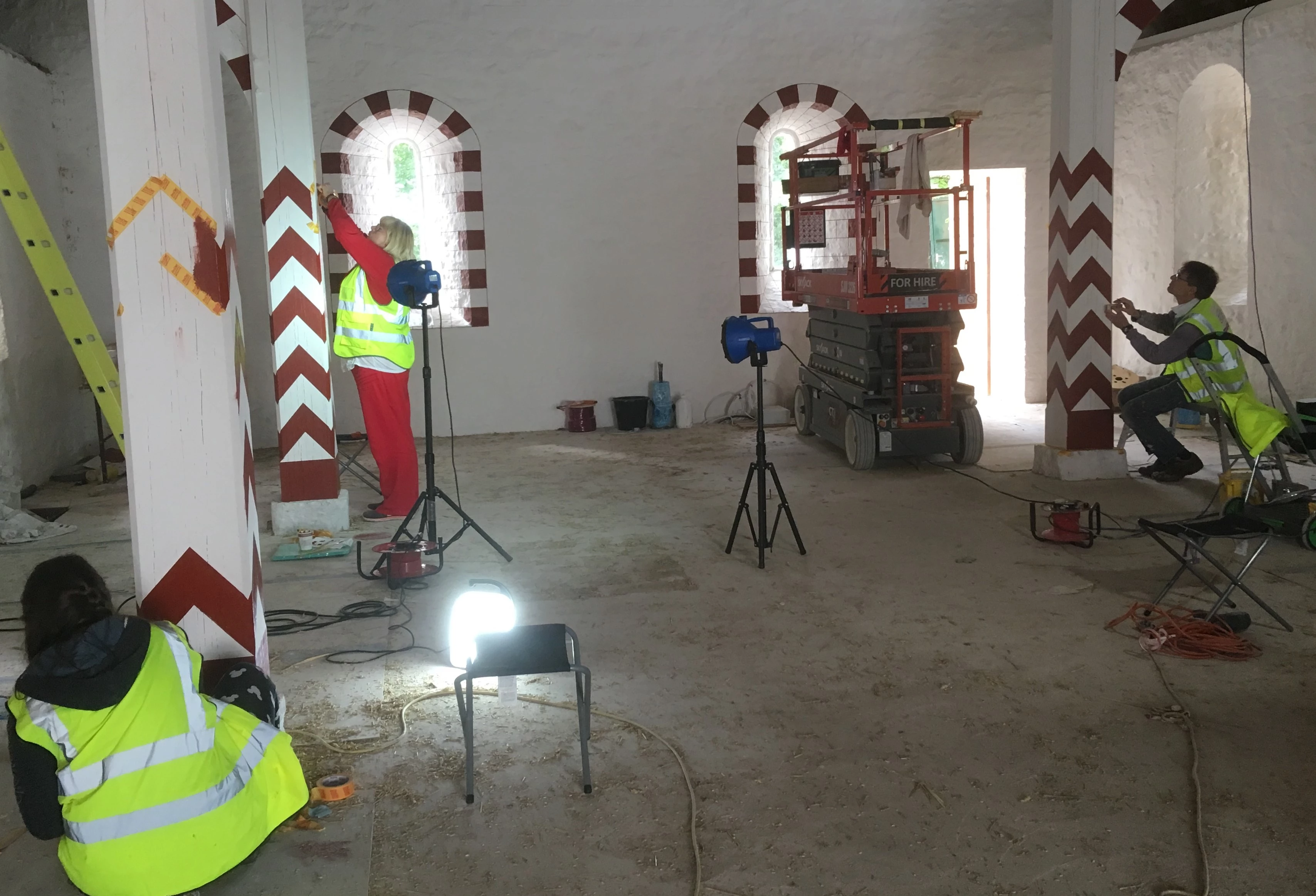
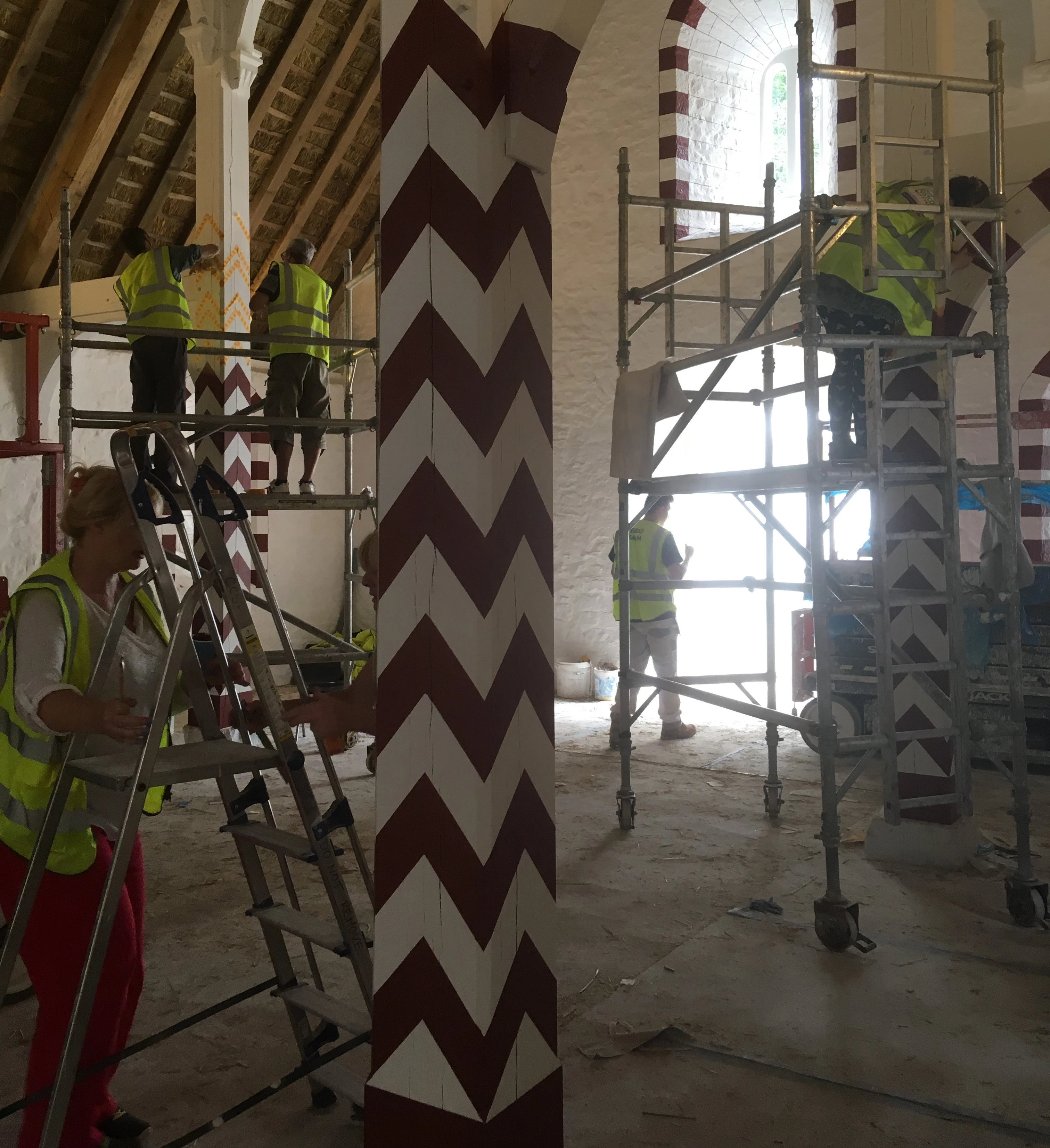
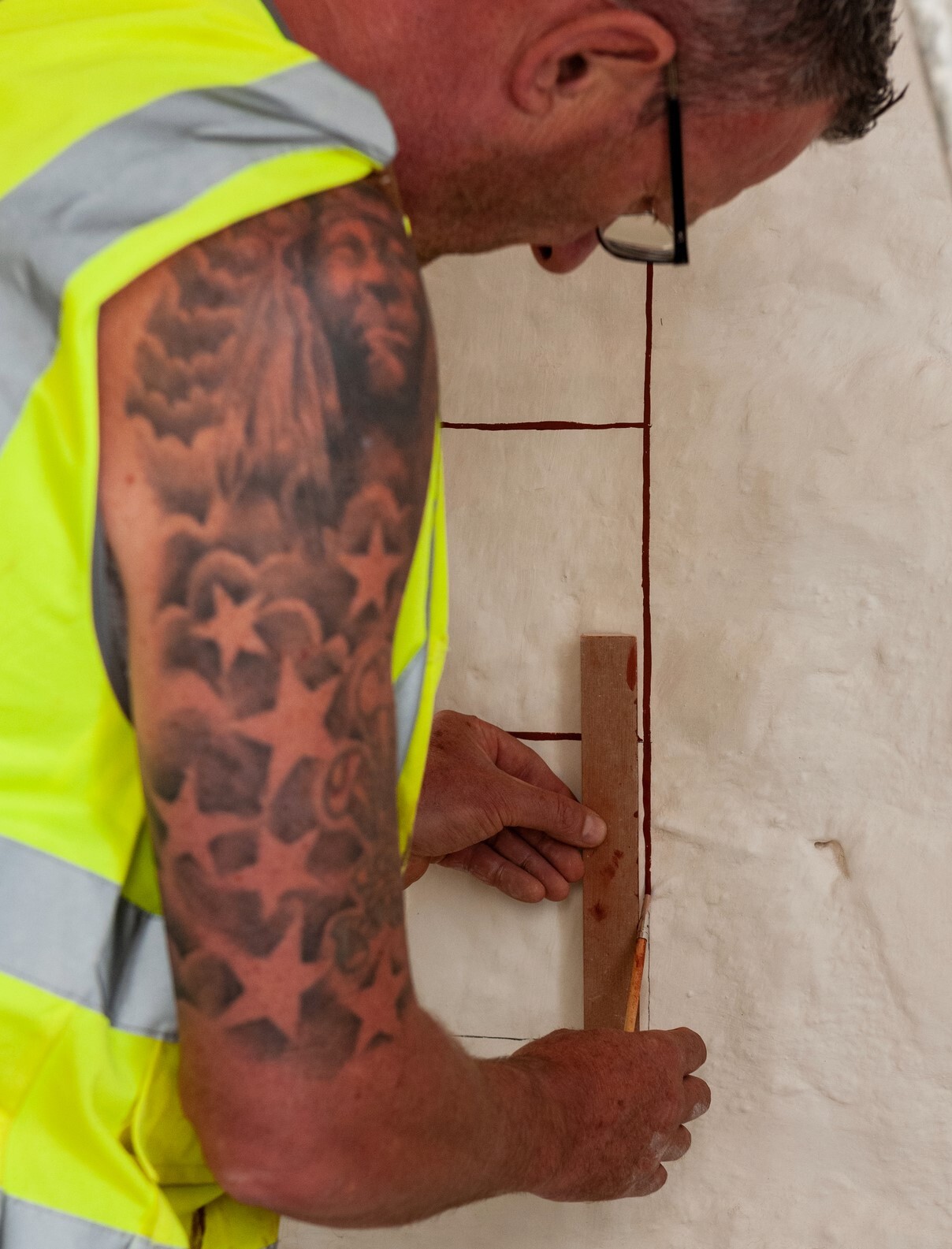
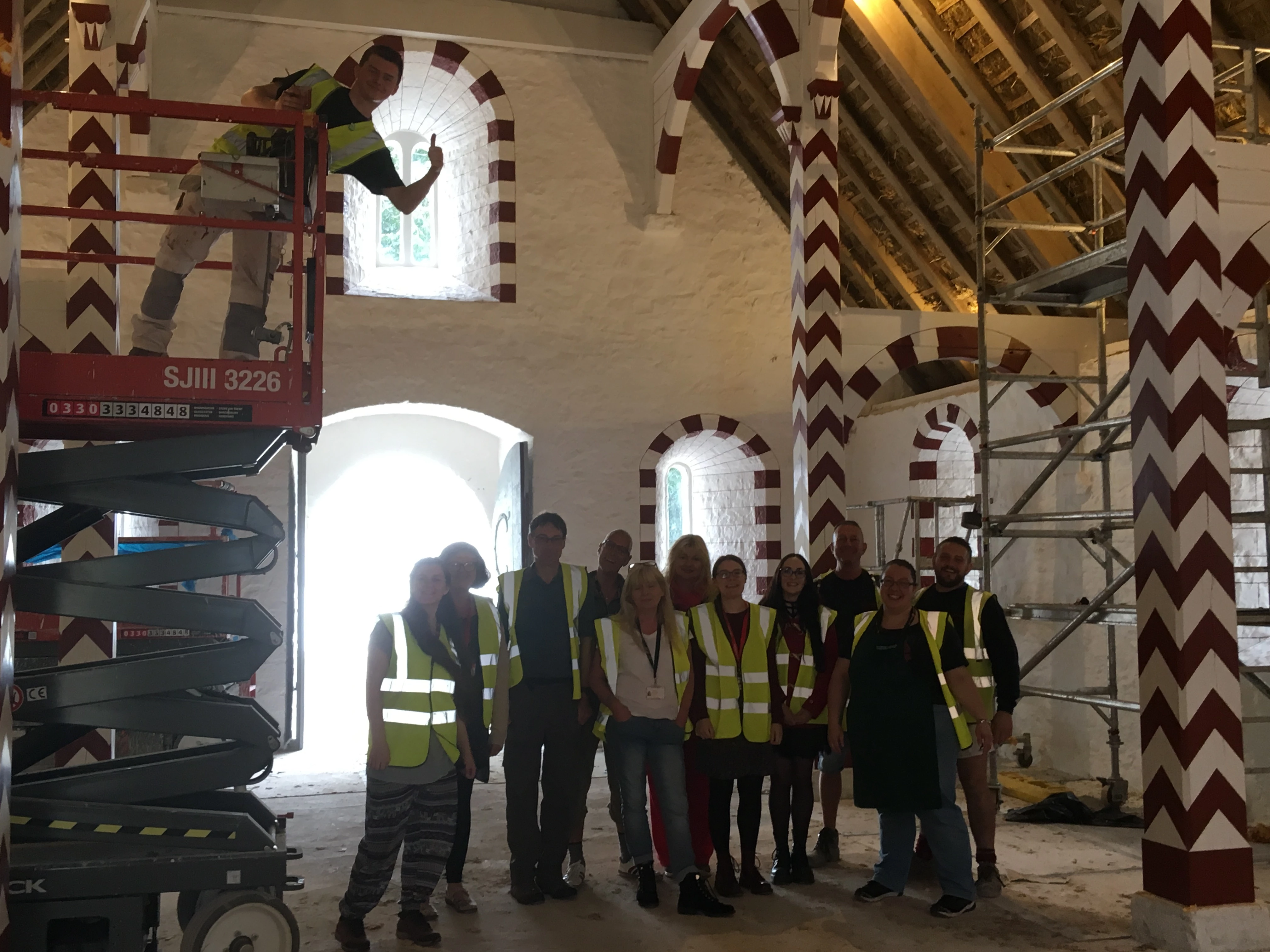
Our mission, along with the painters from the Historic Buildings Unit and volunteers from our Preventive Conservation Group, was to recreate the painted interior of the 13th century court. All was to be authentic including the pigments and paint medium we used. The wooden columns and arches were still drying out so whatever we applied had to be breathable, but also robust enough to cope with the thousands of visitors we welcome each year.
Paint is made up of two elements, a coloured pigment and a glue referred to as the paint medium. There were a variety of traditional mediums we could use such as gelatin, extracted by boiling up scraps of parchment made from the skin of sheep, calves or goat. Other options included egg and also casein derived from milk.
As you can see the options available were very 'organic' and certainly not familiar. Our only guides were the few remaining texts on the subject and analytical evidence from surviving paintwork.
Which paint mediums did we choose in the end?
Egg was an option, but it would have taken an awfully large number of eggs and been a bit smelly while the egg off-gassed sulphur during the paint setting process! We therefore started to trial gelatin in combination with the white pigment calcium carbonate for the background and red ochre pigment for the chevrons. This proved very successful for the white background but less so for the red chevrons. The next option was casein, this produced a much more robust finish and therefore was chosen in combination with the red ochre pigment for the chevrons.
One thing we learnt during this process was that our work had to be slow and methodical, traditional materials can't be rushed. We developed a huge respect for the medieval painter and the skill required when using these tricky materials to create decoration or works of art.
Finally I wish to thank all our volunteers for their help to deliver this project. We could not have done it without them and yes we spent a lot of time watching paint dry, praying it wouldn't flake off!