: Hanes Naturiol

Twin Peaks Blog Update

Katie Mortimer-Jones, 20 Mawrth 2014

There are two sides to exploring biodiversity. One is fieldwork, often in interesting and remote places looking for new or otherwise interesting forms of life. As an entomologist with an interest in tropical flies this often means extended trips under challenging conditions armed with a net, various kinds of insect trap, a pair of binoculars and a notebook. We know so little about tropical insects that discovery of new species is a daily occurrence and almost everything encountered is interesting for one reason or another. Unfortunately, identification of most insects in the field is quite impossible, let alone proper recognition of new species. This is where the second and perhaps less glamorous part of exploring biodiversity comes in involving long hours of study back in the laboratory when the true identity of captures may be revealed and their significance evaluated. My ongoing collaboration with Wichai Srisuka as the Entomology Section of Queen Sirikit Garden in Thailand (http://www.qsbginsects.org/) is starting to provide thousands of specimens for study. Wichai and his staff have been running a type of trap known as a Malaise trap to sample insects on the forested slopes of two of Thailand’s highest mountains, Doi Inthanon and Doi Phahompok. Specimens they have collected have been sent to me in Cardiff where I am beginning the process of ‘working up’ the samples. This involves first sorting the specimens into groups (or families and genera as systematists call higher groupings of species). Insect diversity is so great that no one person can be an expert in all of them. For this reason, many of the sorted samples are sent to collaborating colleagues around the world who are specialists in the groups concerned. I retain the rest for my own specialist studies.

Thereafter each specialist concentrates on identifying species that are already known and describing as new to science those that are not. The work does not stop there as once we have data on actual species and where they are found it can be interpreted to tell us more of, for example, the evolutionary history of a group of insects, their ecology or their biogeography (the study of how species and ecosystems are distributed geographically and historically). Furthermore, the results are of profound interest to conservation planners as they enable important areas of biodiversity to be recognised. As the work progresses I hope to feed back some of the more interesting finds through this blog.

by Adrian Plant

Previous Information:

http://www.museumwales.ac.uk/blog/2014-02-17/Exploring-Insect-Diversity-in-Thailand

http://www.museumwales.ac.uk/blog/2014-01-16/Exploring-Insect-Diversity-in-Thailand
Blodau i bawb!

Catalena Angele, 14 Mawrth 2014

Waw gyfeillion y gwanwyn! Mae cymaint ohonoch chi wedi gweld eich planhigion yn blodeuo ers y blog diwethaf! Mae’n rhaid bod meysydd chwarae a gerddi yr ysgolion yn werth eu gweld. Diolch am eich cofnodion blodau i gyd.

Pa ysgolion sydd wedi gweld eu blodau cyntaf?

Mae Ysgol Gynradd St Bernadette yn yr Alban ac Ysgol Gynradd WR Abergwili, Ysgol Gynradd Parc Darran, Ysgol Gynradd CIW Henllys, Ysgol Gynradd WR Llanishen Fach, Ysgol Bro Tawe ac Ysgol Gynradd Dolgellau yng Nghymru i gyd wedi gweld eu blodau cyntaf. Yn Lloegr, mae ysgolion Balshaw Lane Community Primary School, Dallas Road Community School, Golden Hill School, Holy Trinity CE Primary School, Manor Road Primary School, Red Marsh School, St Mary’s Catholic Primary School, St Michaels CE (Aided) Primary School, St Nicholas Primary School and The Blessed Sacrament Catholic Primary School i gyd wedi anfon eu cofnodion blodau cyntaf. Llongyfarchiadau i chi gyd!

Dim ond 3 wythnos i anfon eich cofnodion

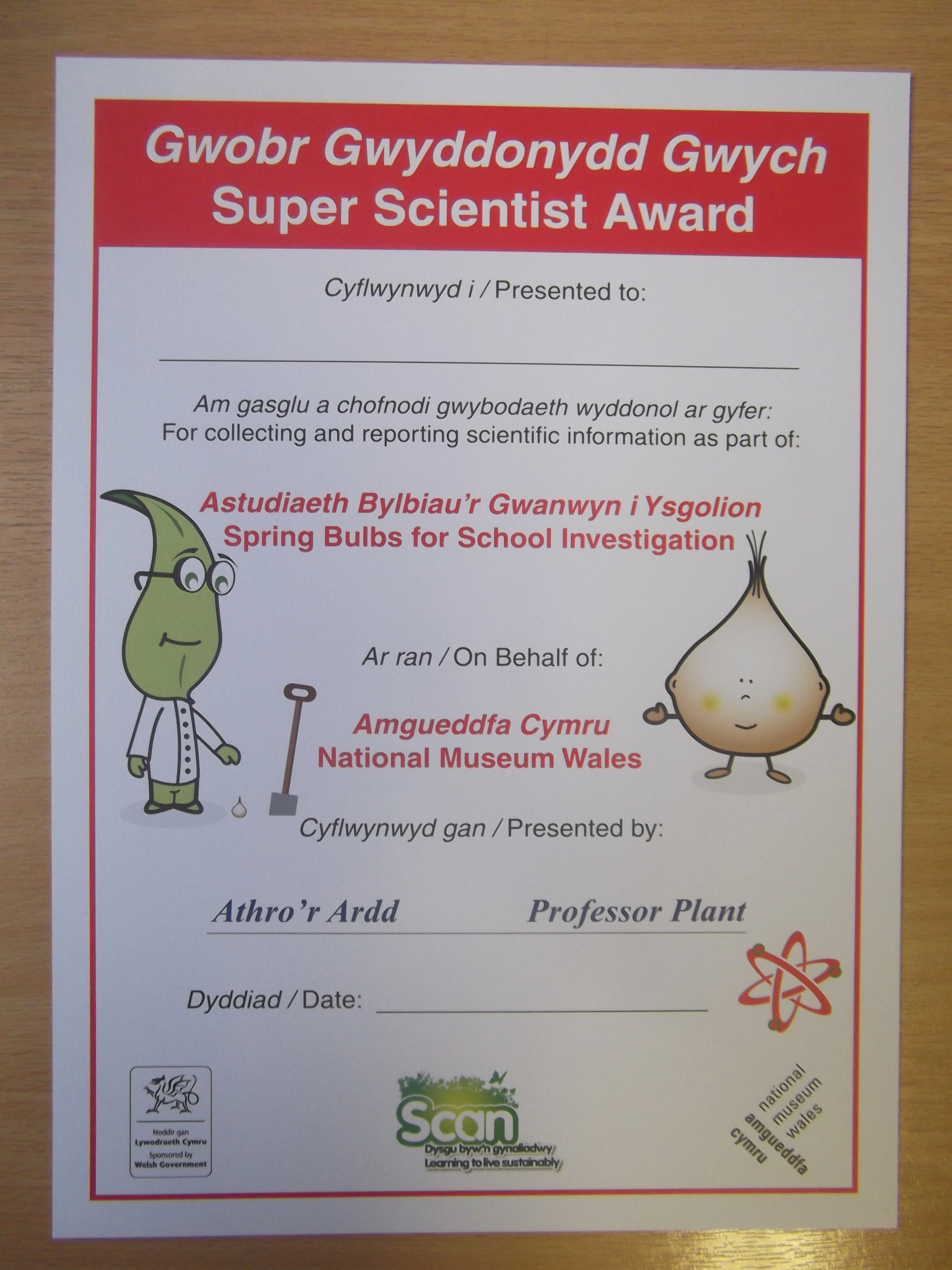
Fyddwch chi’n ennill tystysgrif Gwyddonydd Gwych eleni? Y dyddiad cau i anfon eich cofnodion blodau yw 28 Mawrth. Os byddwch chi’n anfon eich cofnodion tywydd a blodau ata i (os ydyn nhw wedi agor) byddwch chi’n dod yn Wyddonydd Gwych! Bydd pob Gwyddonydd Gwych yn derbyn Tystysgrif a Phensel. Bydd cyfle i chi hefyd ennill Taith Natur neu hadau i dyfu blodau’r haul eich hun!

Ydych chi’n artist? Beth am gymryd rhan yn y Gystadleuaeth Darlunio Cennin Pedr? 20 Mawrth yw’r dyddiad cau ar gyfer hon hefyd. Rydw i’n chwilio am ddarluniau botanegol – sef darluniau o blanhigion mewn arddull wyddonol. Rwy’n siŵr y gallwch chi dynnu lluniau gwych, ond cofiwch labelu rhannau’r Cennin Pedr yn glir hefyd. Gallwch chi weld yr enillwyr, a’r esiamplau gorau o’r llynedd drwy ddilyn y ddolen hon. Bydd yr enillwyr yn derbyn pecyn gwylio adar gyda binocwlars bach i’r dosbarth, a’r goreuon eraill yn derbyn bag o hadau blodau i’r ardd!

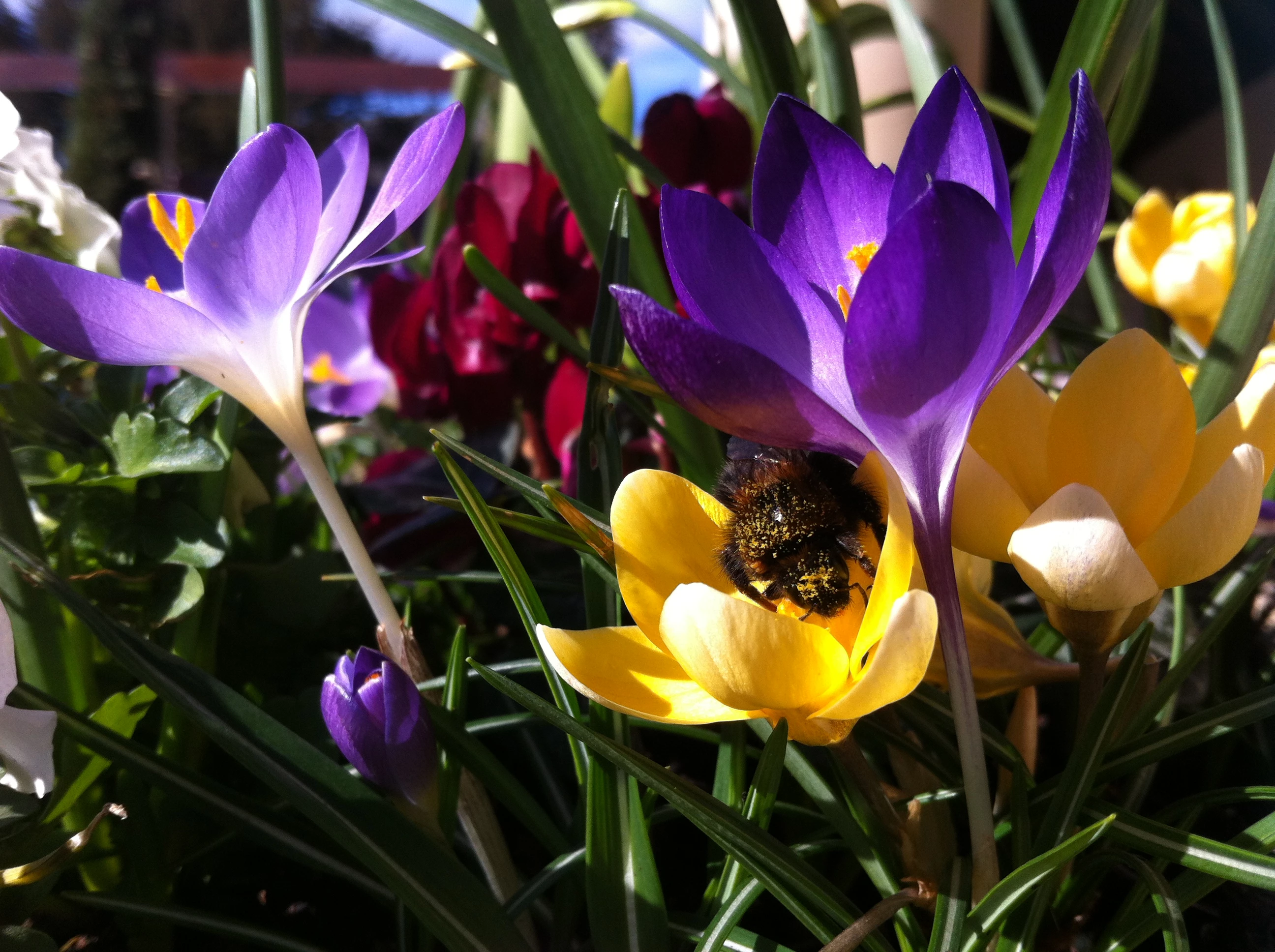
Dyw fy mhlanhigion i mewn potiau yn dal heb flodeuo, ond mae’r crocysau draw yng ngardd Sain Ffagan Amgueddfa Werin Cymru yn werth eu gweld. Mae’r gwenyn yn eu mwynhau nhw hefyd y ôl y ffotograff yma! Allwch chi weld bod paill melyn dros gorff y gacynen? Pan fydd e’n hedfan at flodyn arall bydd e’n trosglwyddo’r paill o un blodyn i’r llall – dyma sut mae blodau yn cael eu ffrwythloni!

Eich cwestiynau, fy atebion:

Raglan VC Primary: Still no sign of the flowers this week! We are having some good weather. Prof P: Don’t worry Raglan School, mine haven’t flowered yet either. Hopefully the good weather will help our plants to flower.

Cutteslowe Primary School: Monday 17th - school closed, no heating or hot water. Prof P: Brrrr that sounds very chilly.

Manor Road Primary School (Lancashire): One of are crocus bulbs are starting to flower. Prof P: Fantastic news Manor Road, Congratulations!

Chatelherault Primary School: Wk 10: Most of our plants have started to too grow. It has raining a lot and some snow. Prof P: We didn’t have any snow at all in Cardiff this year, but we did have lots of rain.

The Blessed Sacrament Catholic Primary School: It has been so exciting this week as the buds all suddenly started to appear and on Friday some crocus flowers opened! The daffodils have suddenly grown and we know it won't be long before they too flower. They just love the sunshine! Prof P: Hooray! It’s such a lovely feeling to see your flowers open isn’t it?

Greyfriars RC Primary School: S - ten of our crocuses have budded. Prof P: Great news S. at Greyfriars, I’m sure the other crocuses won’t be far behind.

Dallas Road Community Primary School: Super Fun!!! Prof P: I’m so glad you think so Dallas Road! Science IS Super Fun!

Diolch yn fawr

Athro'r Ardd

Cofnodion blodau cyntaf yr Alban!

Catalena Angele, 7 Mawrth 2014

Llongyfarchiadau i Ysgol Gynradd Ladywell am fod yr ysgol gyntaf o’r Alban i anfon eu cofnodion blodau! Anfonodd Ysgol Gynradd Lakeside, Caerdydd eu cofnodion blodau cyntaf hefyd – agorodd eu crocws cyntaf a’u cennin Pedr cyntaf yn yr un wythnos! Da iawn chi gyfeillion y gwanwyn.

Tair wythnos… Dyddiad cau anfon eich cofnodion tywydd a blodau ata i yw dydd Gwener 28 Mawrth, felly dim ond tair wythnos sydd ar ôl!

Os ydych chi wedi bod yn cadw cofnodion ond heb eu hanfon nhw eto cofiwch frysio – mae pob un o’ch cofnodion tywydd a blodau yn bwysig i fi! Bydd pob cofnod anfonwch chi ata i yn gwneud Ymchwiliad Bylbiau’r Gwanwyn yn well ac yn fwy cywir.

Os nad ydy’ch blodau wedi agor eto, peidiwch poeni. Gall tipyn ddigwydd mewn tair wythnos, yn enwedig os bydd yr haul yn tywynnu!

Hoffech ddefnyddio’ch planhigion i gynnal Astudiaeth Gwyddoniaeth Gwych? Rydw i wedi casglu rhai syniadau ar gyfer arbrofion allwch chi eu cynnal yn y dosbarth! Allwch chi dwyllo eich crocws? All eich cennin Pedr symud? Edrychwch ar Syniadau Athro'r Ardd am brojectau ymchwil. Yn ogystal ag arbrofion cyffrous, gallwch chi hefyd ddarllen fy hoff gerdd Saesneg! Cennin Pedr yw’r testun, a dyma’r pennill cyntaf:


Daffodils

I wander’d lonely as a cloud

That floats on high o'er vales and hills,

When all at once I saw a crowd,

A host, of golden daffodils;

Beside the lake, beneath the trees,

Fluttering and dancing in the breeze.

gan William Wordsworth (1770-1850).


Ydych chi erioed wedi meddwl ysgrifennu cerdd am y gwanwyn? Neu beth am gerdd i’ch hoff blanhigyn? Rhowch gynnig ar farddoni!

Your questions, my answers:

Ladywell Primary School: We have had our computer system upgraded in school and it has been difficult for us to send weekly weather reports because we lost a lot of data which was stored on our apple mac and which we cant convert to PC. However we have been taking temperatures and it has not really been cold and we have had a lot of rain. Some of our plants didn't grow very well but our first daffodil opened today 25th February and it is 28 cm tall. We have another one about to open and some others not far away. We hope this is ok with you and we will send more information soon. Prof P: Sorry to hear you have had computer trouble Ladywell School, don’t worry, I completely understand. Thanks very much for sending your first flower record! Keep up the good work and send in your other flower records when they open.

Lakeside Primary: Daffodil comment: Only one is open and the one that has opened has only got half a pot of compost, we think it was knocked over and some soil lost so perhaps less soil has led to quicker flowering, but why? Prof P: Great question Lakeside! Do you have any ideas? This is my theory: A bulb closer to the surface may flower sooner because it warms up quicker and has less soil to push through when it starts to grow. So why don’t we plant them all close to the surface? Well, if there is a very cold winter the frost can damage bulbs that are too close to the surface, and then they may not grow at all.

The Blessed Sacrament Catholic Primary School: We all brought our wellies into school this week so that we can go out and look at our bulbs whatever the weather. We went to check on them all on Friday and measured how tall the leaves were, and started recording them in a table like we had been doing in maths. We hope to do this every week now then we can make a graph of the results. Still no sign of flowers yet! Prof P: What a fantastic idea! I love making graphs, they are a great way to see what the numbers are telling me. You must be very dedicated scientists to bring your wellies in to school so you can measure your leaves. Well done, I am very impressed!

Diolch yn fawr

Athro'r Ardd

Gwanwyn yn Gwawrio

Catalena Angele, 28 Chwefror 2014

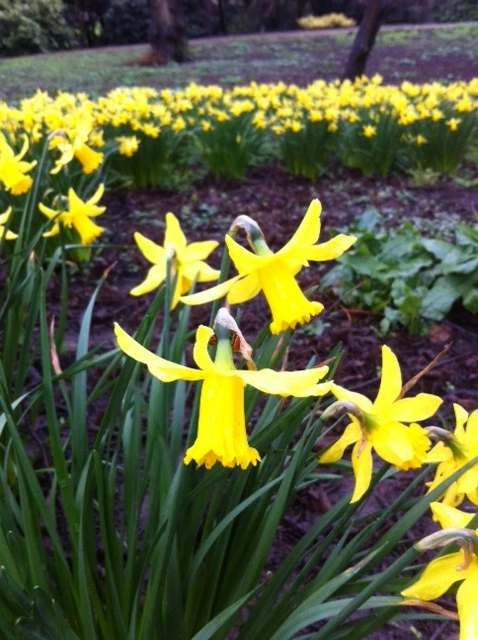
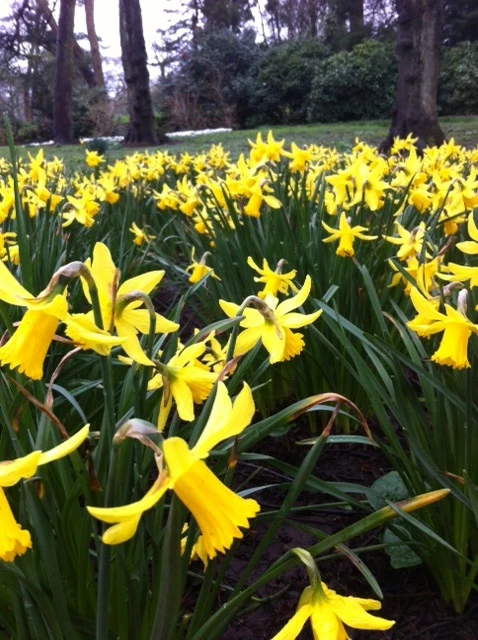
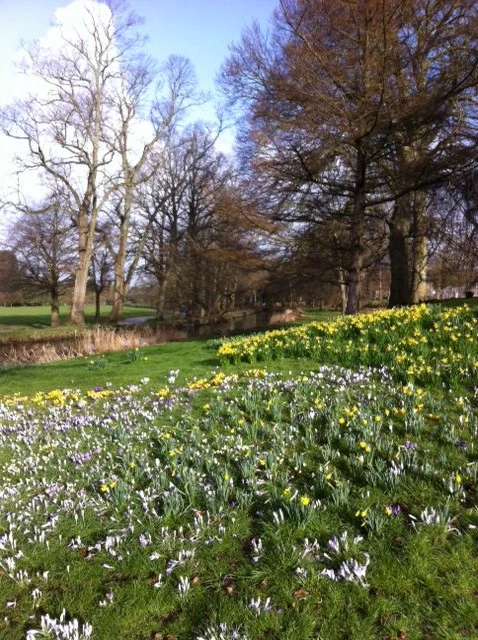
Mae’r haul yn disgleirio drwy ffenest fy swyddfa yng Nghaerdydd ac mae’n teimlo fel gwanwyn o’r diwedd! Dyw fy mhlanhigion i ddim yn barod i flodeuo eto – mae’r cennin Pedr talaf yn 80mm o uchder a’r crocws talaf yn ddim ond 30mm o uchder – ond dwi’n siŵr y byddan nhw’n mwynhau’r heulwen! Fe dynnais i lun o’r cennin Pedr a’r crocysau yn eu blodau ym Mharc Bute yng Nghaerdydd y bore ’ma. On’d ydyn nhw’n brydferth?

Pa ysgolion sydd wedi cofnodi eu blodau cyntaf?

Cofnododd Ysgol Glan Cleddau bod eu crocws cyntaf wedi blodeuo, ac mae Ysgol Gynradd yr Archesgob Hutton yn Lloegr wedi cofnodi bod eu cennin Pedr cyntaf wedi blodeuo.Llongyfarchiadau, a da iawn chi am anfon eich cofnodion!

Dyma Ysgol Gynradd Rougemont yn anfon y neges hon: Mae cyffro mawr yma yn Ysgol Rougemont Athro’r ardd ... mae ein BYLBIAU DIRGEL wedi dechrau blodeuo! Mae nhw’n edrych yn iach iawn gyda choesau byrrach na’r cennin Pedr a blannon ni. Rydyn ni’n meddwl taw Narcissus ydyn nhw, Tete a Tete efallai? Byddwn ni’n anfon ffotograff cyn hir. Athro’r Ardd: Mae hynna’n gyffrous iawn Ysgol Rougemont, a da iawn chi am ymchwilio i weld pa fath o Narcissus ydyn nhw – gwyddoniaeth gwych! Rwy’n edrych ymlaen i weld y ffotograffau.

Dywedodd Ysgol Arbennig Kilmaron: ARSYLWI BYLBIAU’R LLYNEDD. Rydyn ni wedi bod yn monitro bylbiau crocws a chennin Pedr y llynedd i weld os yw’r hen fylbiau yn blodeuo cyn y rhai newydd. Ar ôl gwyliau hanner tymor dyma ni’n canfod bod bylbiau crocws y llynedd wedi blodeuo tra bod bylbiau eleni wedi blodeuo tua 7-10 diwrnod yn ddiweddarach. Rydyn ni’n gobeithio anfon cofnodion eleni tua diwedd yr wythnos nesaf. Athro’r Ardd:Arsylwi ac ymchwilio arbennig Ysgol Kilmaron! Rydych chi’n iawn bod bylbiau hŷn fel arfer yn blodeuo yn gynt na bylbiau newydd ifanc, ond y rheswm dros hyn yw eu bod nhw wedi cael blwyddyn ychwanegol i dyfu a storio bwyd.


Ys gwn i ble fydd y blodau nesaf yn agor? Gallwch chi weld ble mae’r blodau wedi agor hyd yn hyn drwy edrych ar y map yma.Os nad yw eich blodau chi wedi agor eto, gwyliwch nhw’n ofalus. Gallan nhw agor unrhyw ddiwrnod!

Cofiwch anfon eich cofnodion blodau ata i cyn gynted fydd y blodau’n agor. Os nad ydych chi’n cofio sut i wneud hyn, defnyddiwch y cyflwyniad PowerPoint Cadw cofnodion blodau, a darllen y dudalen Beth i'w gofnodi a phryd ar y wefan.

CYNGOR CRAFF:

  1. Gall pob disgybl yn y dosbarth anfon eu cofnodion blodau. Mae’r holl ddata fyddwn ni’n ei dderbyn yn cael ei ddefnyddio i ganfod dyddiad blodeuo cyfartalog pob ysgol. Gwyliwch y siart crocysau a’r siart cennin Pedr i weld y tablau yn newid wrth i fwy o ddata gyrraedd. Mae’n bwysig ofnadwy bod pob disgybl yn anfon eu cofnodion, fel bod y wefan yn gallu cyfrifo dyddiad blodeuo cyfartalog yr ysgol.
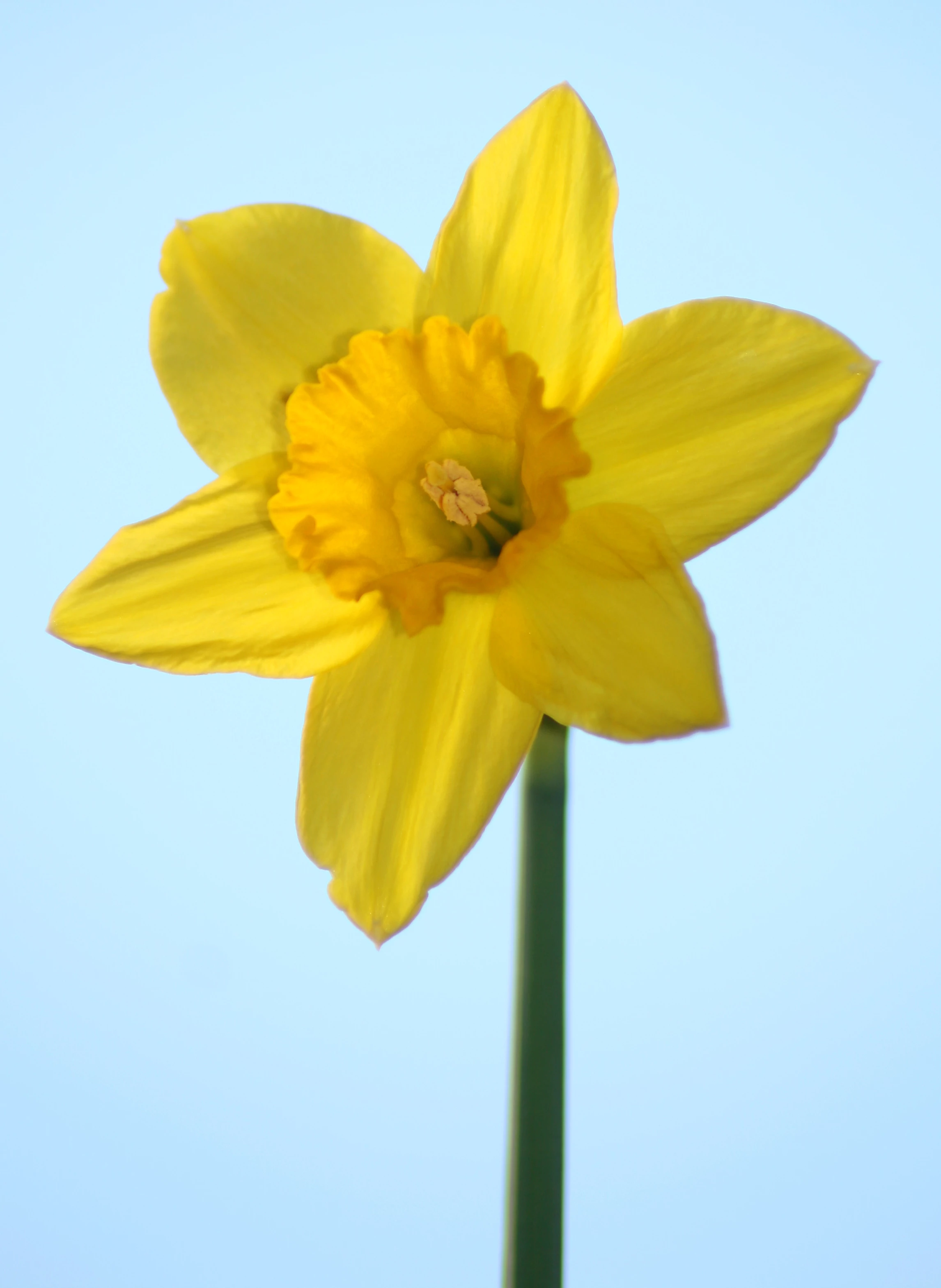
  2. Bydd y cennin Pedr yn troi ei ben i lawr ychydig cyn blodeuo. Fydd y blodyn ddim wedyn yn llenwi â d?r ar ôl agor.
  3. Rhaid i chi gyd anfon eich cofnodion blodau er mwyn ennill y Gystadleuaeth Gwyddonwyr Gwych!

Eich cwestiynau, fy atebion:

Your questions, my answers:

Ysgol Terrig: It snowed heavily on Monday morning and stopped about lunch time. Our bulbs are starting to grow :) Prof P: I’m glad your bulbs are growing, did you go out to play in the snow?

Raglan VC Primary: We missed Tuesday because it was raining cat's and dog's, and we had bike training. Prof P: I love that saying! Can you imagine what it would be like if it really did rain cats and dogs? How would we measure that in our rain gauge?

Chatelherault Primary School: Sorry we did not record information on Thursday because we were away all day at a school trip. We were excited to see little green shoots in some of the plants. Prof P: Thanks for letting me know Chatelherault, I hope you had fun on your school trip.

Greyfriars RC Primary School: The plants are growing well and it's wonderful seeing them grow up. The mystery bulbs are really a mystery. from A and A :) Prof P: I hope your mystery will soon be solved Greyfriars!

Arkholme CE Primary School: Unfortunately the plant pots are standing in water this week. Let's hope next week is drier. The mystery bulbs are growing better than the others. Flower buds just appearing. From H. Prof P: I am sure your plants will survive the rain Arkholme, keep watching those flower buds!

Diolch yn fawr

Athro'r Ardd

Museum records largest earthquake in UK since 2008!

Andrew Haycock, 25 Chwefror 2014

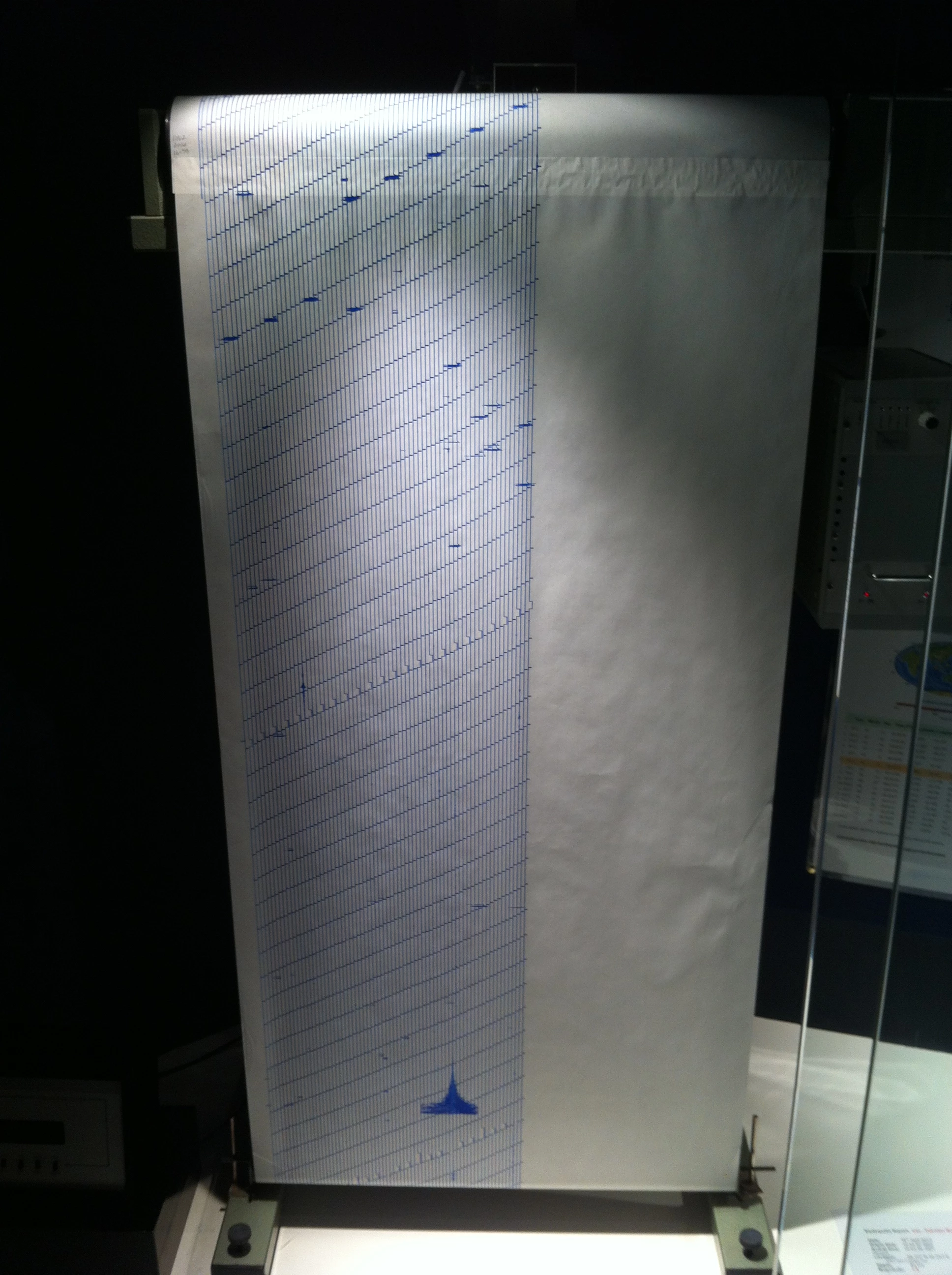
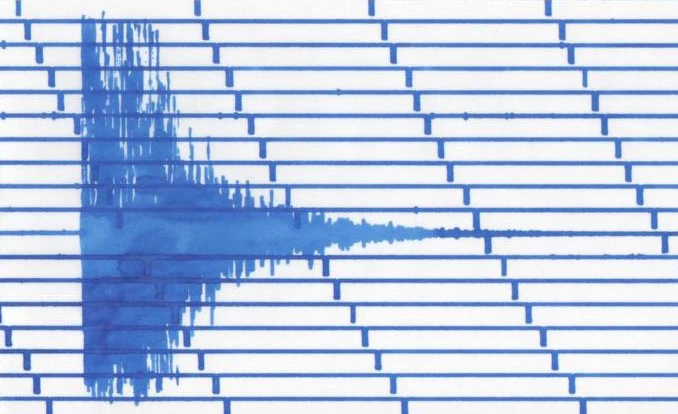
The British Geological Survey (BGS) reported a 4.1 magnitude earthquake in the Bristol Channel at 13:21 GMT on 20th February 2014. The event was also recorded on the Museum seismograph in the Evolution of Wales Gallery at National Museum Cardiff.

This is the largest earthquake in the UK since the 5.2 magnitude Market Rasen quake in February 2008.

The earthquake was felt widely across South Wales, Devon, Somerset and western Gloucestershire. Reports to the BGS described “felt like the vibration of a large vehicle passing the building”, “the whole house seemed to move/wobble back and forth a few times”.

The earthquake epicentre is estimated to be 18 km NNW of Ilfracombe at a depth of 3km.

Although the UK is not located on a plate margin, on average 200 – 300 earthquakes a year are recorded in Britain. Most earthquakes are so small they are not felt by people, and can only be picked up by the sensitivity of a seismometer.

The UK is located on the European plate. Tension is built up in the plate as new crust is created at the Mid Atlantic Ridge, and the plate is slowly pushed towards the north-east.

There are several long-active faults in the Bristol Channel which include the Bristol Channel – Bray fault. Once faults form, they create weak zones in the crust that can be reactivated time and time again. Movement occurred along one of these faults as tension in the crust was released.

On average an earthquakes of this size affects mainland Britain once every 2 years.

The largest recorded mainland event is the magnitude 5.4 earthquake on the Lleyn Peninsula in July 1984, where movement occurred along a long-active pre-existing fault.