: Hanes Naturiol

The Peregrines are back

Katie Mortimer-Jones, 26 Mawrth 2014

The Peregrines are back on the City Hall Clock Tower. One bird seems to be spending most of the day hidden in the recesses of the nest (on the right hand side of the ledge underneath the clock face), suggesting that she may have started incubating eggs. This would imply a laying date a little earlier than we have seen in previous years. However, we are aware of another local pair of peregrines that are incubating eggs, so perhaps it is an early season this year. Museum Curator Adrian Plant has taken over the duties of the Peregrine Web-cam, and will be keeping an eye on them for us.

 We will keep you posted on what happens.

Exploring Biodiversity in the Amazon

Katie Mortimer-Jones, 25 Mawrth 2014

Adrian Plant (Principal Curator of Entomology) is about to set off on a trip exploring biodiversity in the Brazilian Amazon. This will be the second of three planned trips hosted by the premier Amazon research institute - Instituto Nacional de Pesquisas da Amazônia (INPA) based in Manaus and funded by Brazil’s Conselho Nacional de Desenvolvimento Científico e Tecnológico. Adrian has been collaborating with fellow Diptera (fly) specialist Dr José Albertino Rafael and PhD student Josenir Camara in understanding more about Amazonian species of an aquatic fly genus called Hemerodromia. The project intends to describe all of the many new species of this group of flies found in the Amazon Basin and will look at their evolutionary relationships with other related forms around the world. It is anticipated that the researchers will be able to learn much about the reasons why certain insects occur where they do by relating the findings to ecological, biogeographical and climatic data. The team will be in the field for one month, surveying areas in the central Amazon around Manaus and also some of the upper tributaries of the river in Ecuador. Following completion of this phase of the Project, Josenir will spend six months based in Cardiff using the Museum’s extensive collections to help advance her work.

Dr Adrian Plant

National Science and Engineering Week

Katie Mortimer-Jones, 21 Mawrth 2014

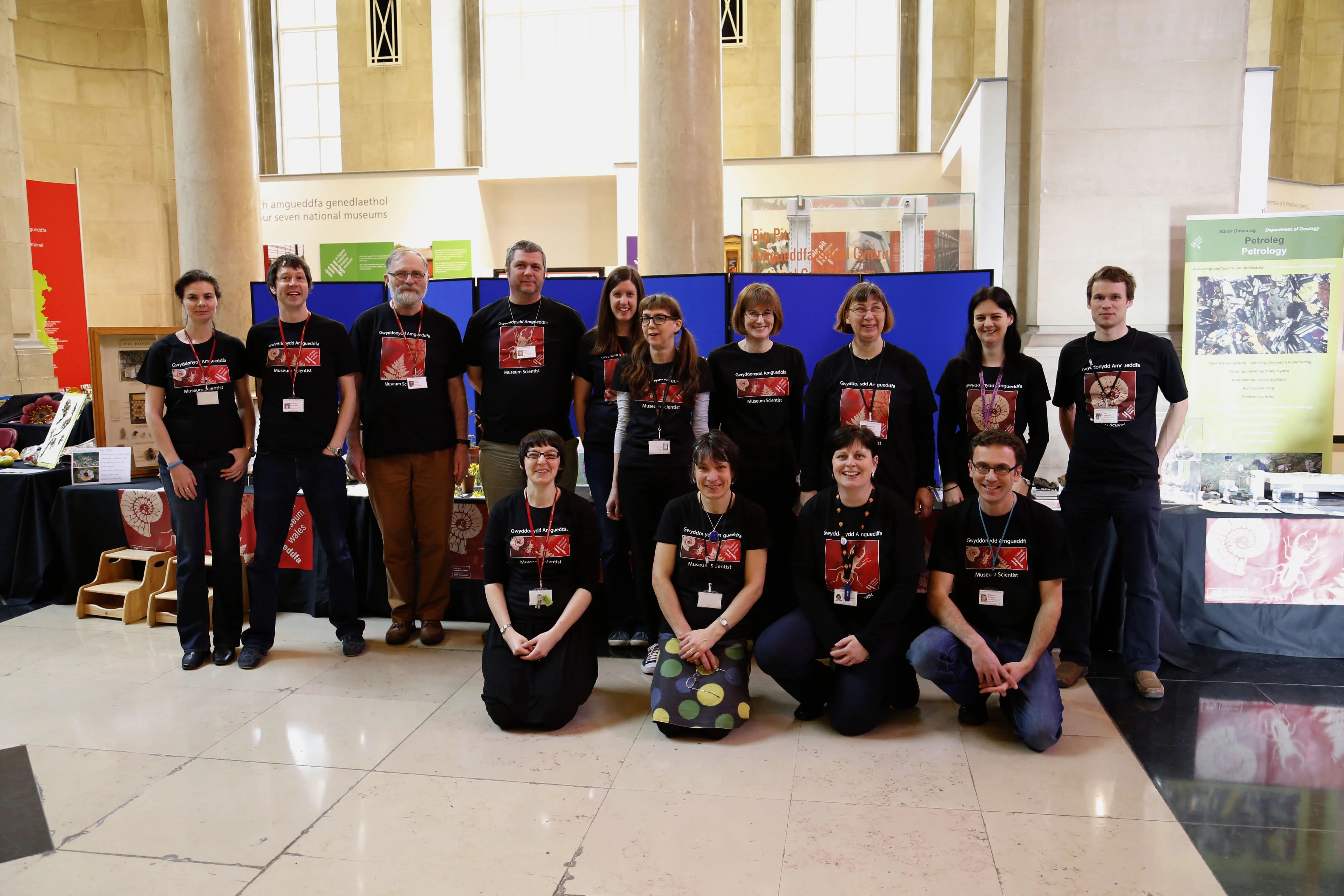
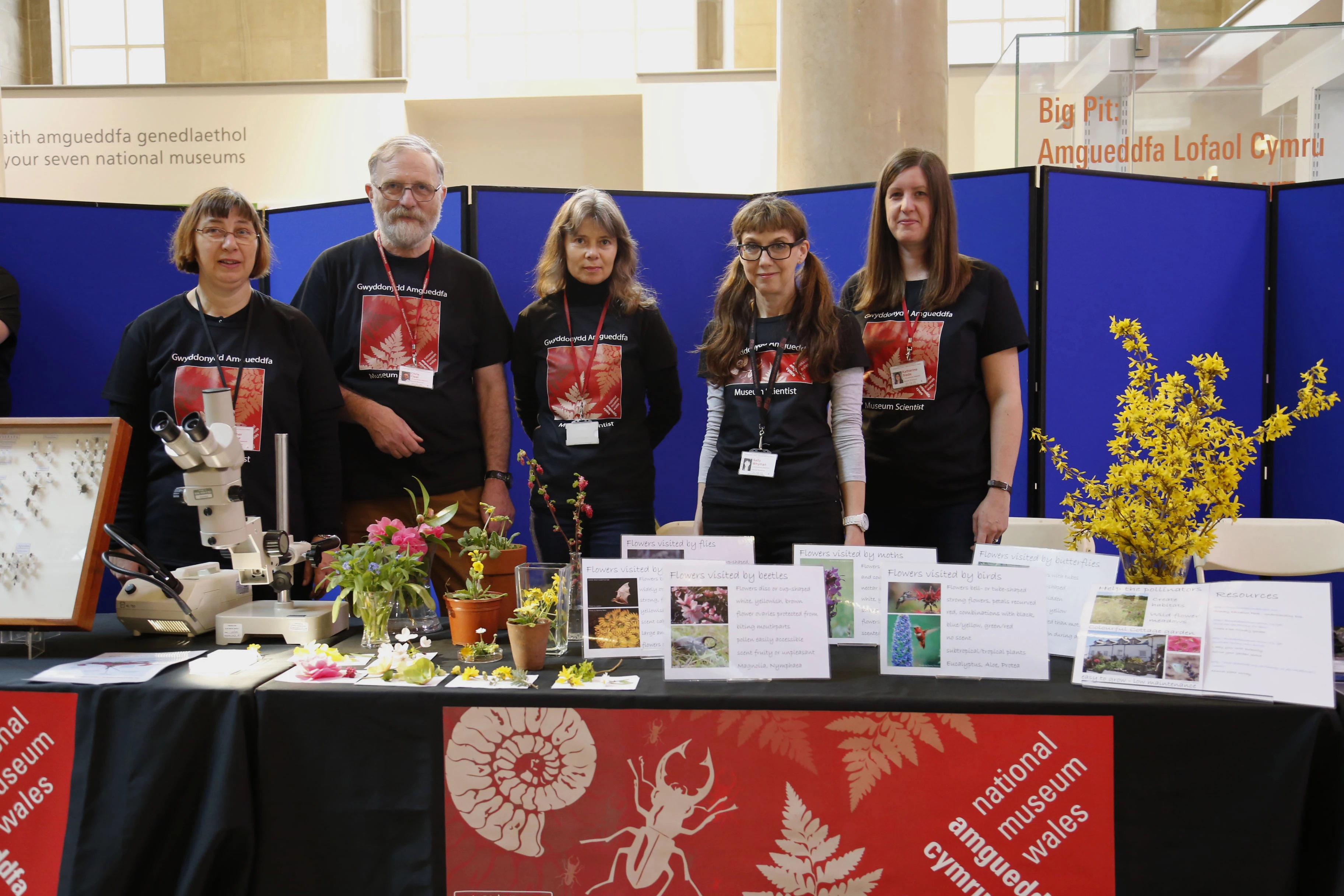
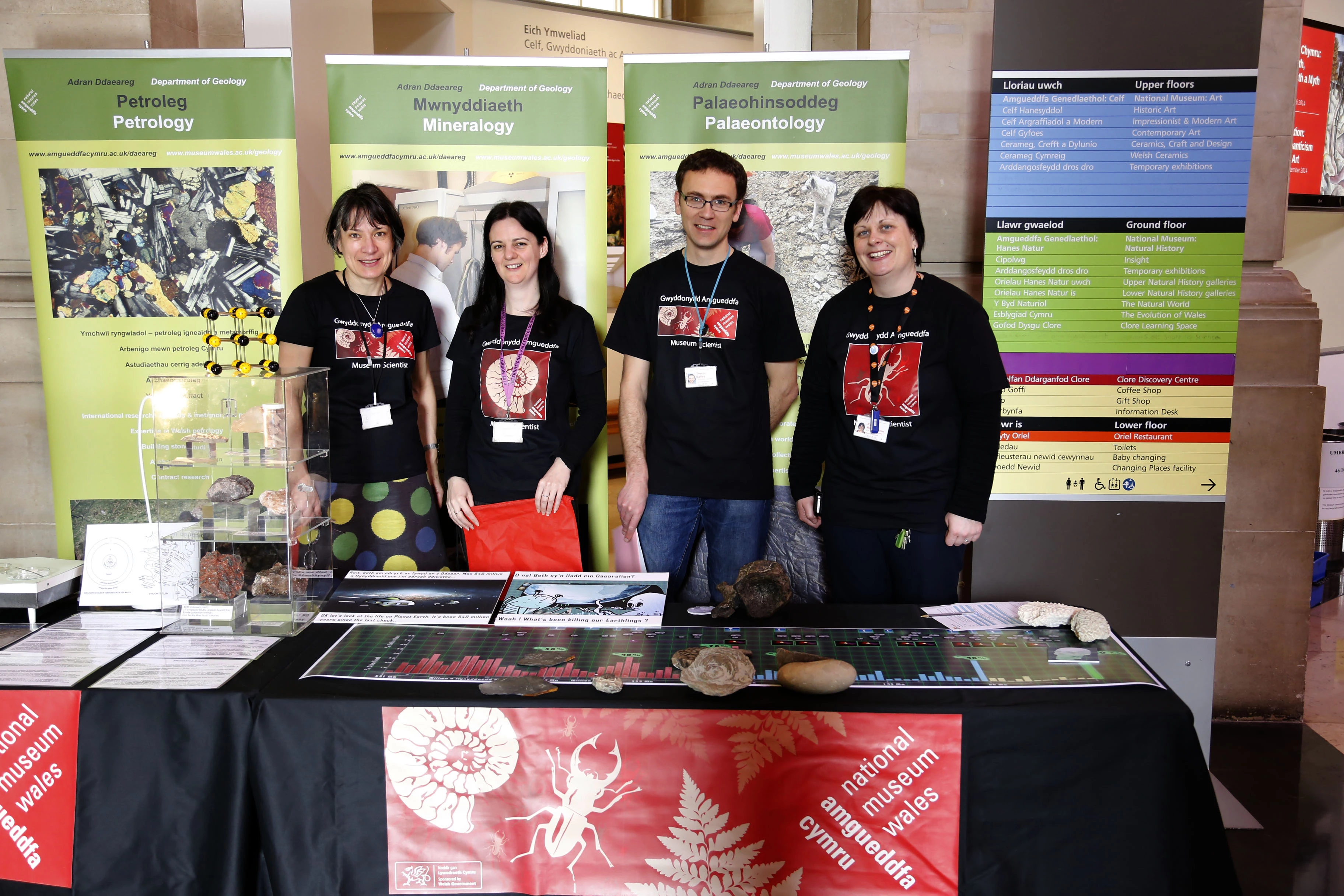
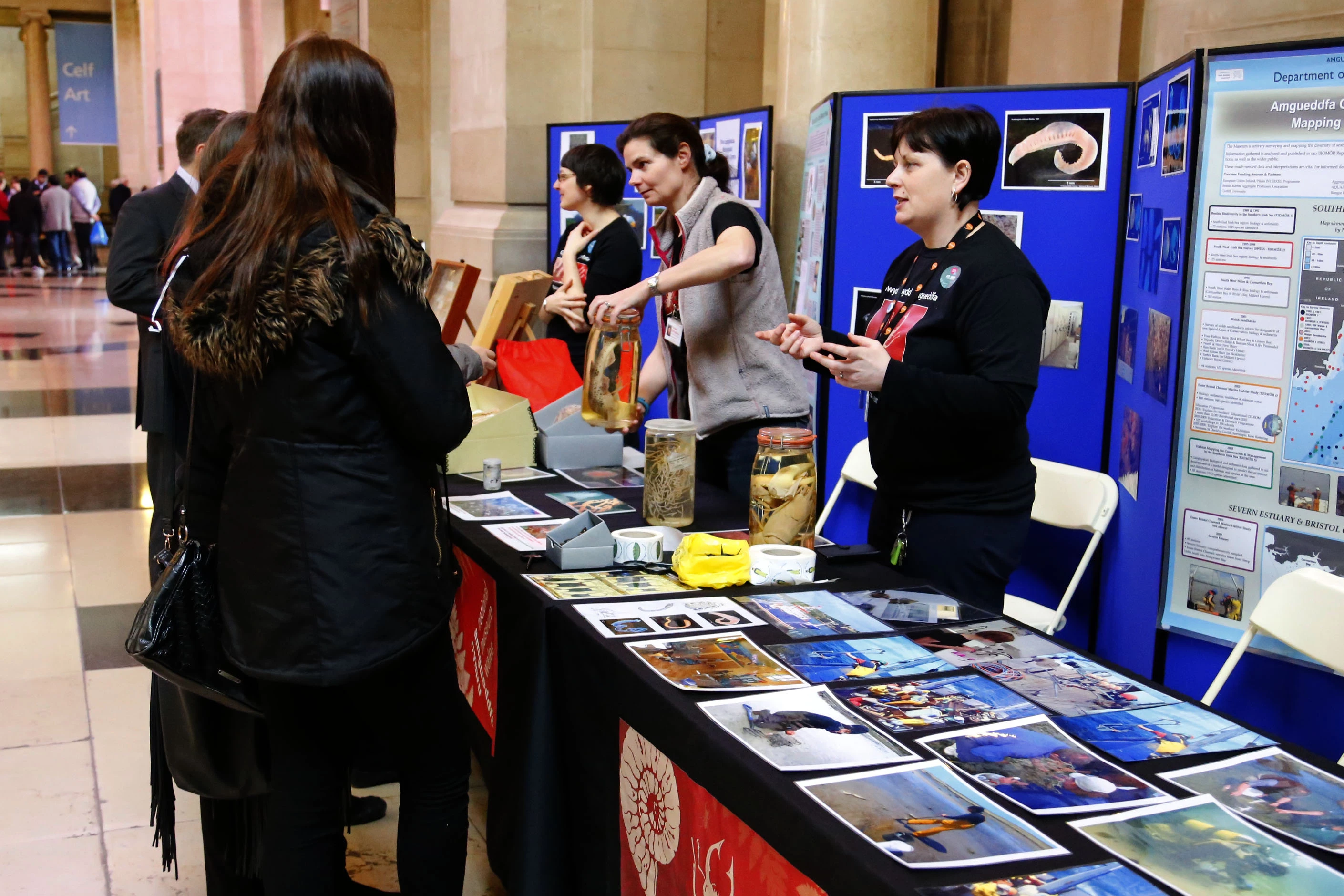
Yesterday, Natural Sciences Staff took part in the 'Meet the Pollinators' Event run by First Campus, a partnership between higher education institutions, further education colleges and schools in South East Wales. The event was part of National Science and Engineering Week and was attended by approximately 100 Year 9 pupils from six schools. The pupils had the opportunity to speak to the curators and find out about 'a day in the life of museum scientists'. 

'A day in the life' - a post for the Twitter event 'Museum Week UK'

Jennifer Evans, 21 Mawrth 2014

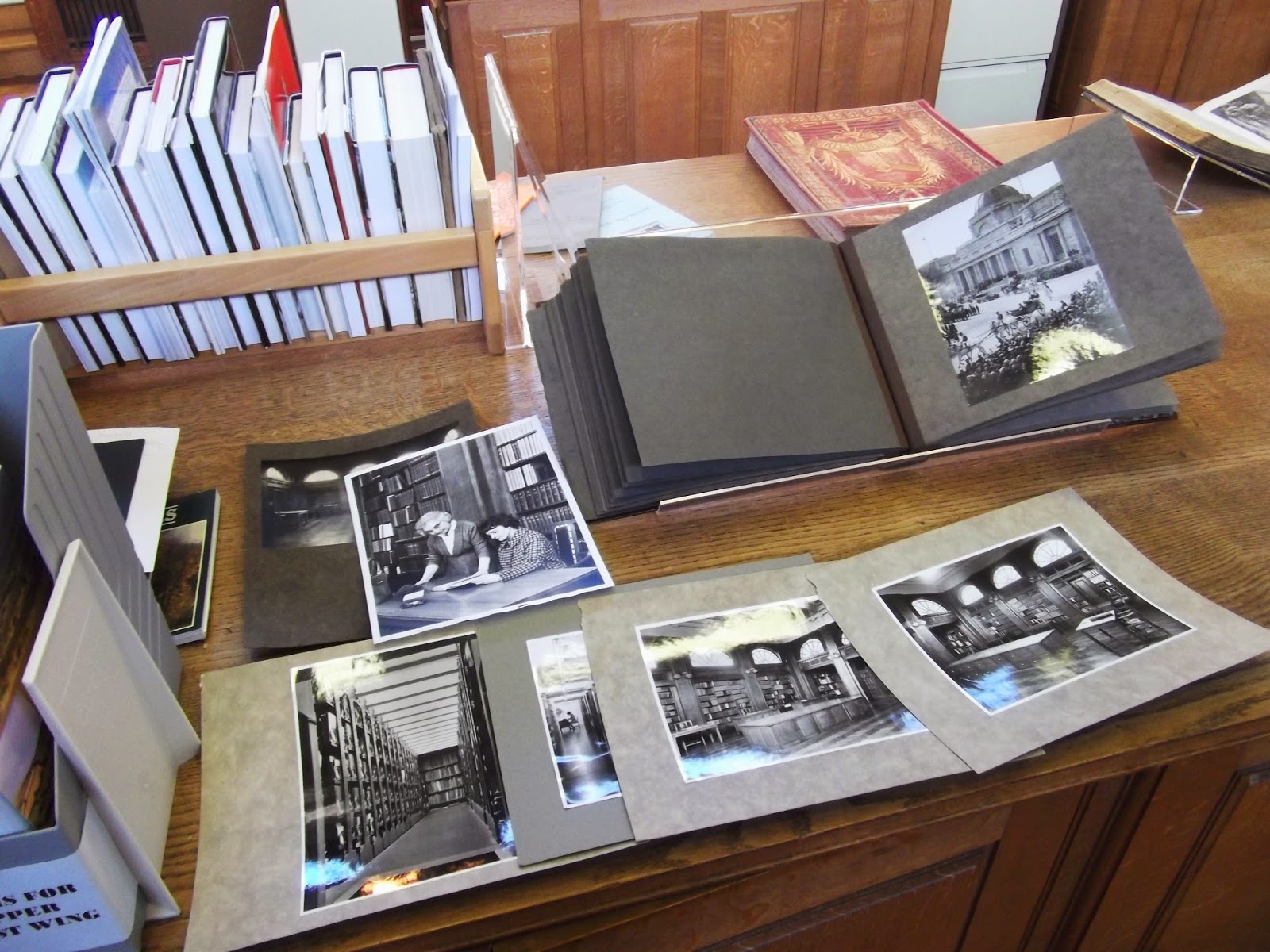
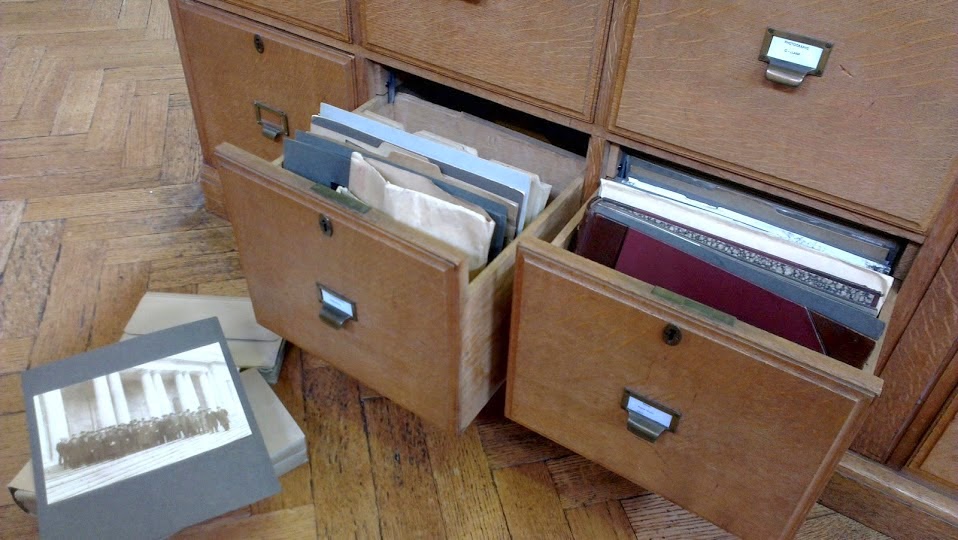
I begin my day by checking our general library inbox for any inquiries that we might have received over the weekend. This morning [as usual] there were quite a few but they were mercifully straight forward so didn’t take too long to answer. Next, I spent a very enjoyable hour squirreling away through our old photograph drawers for some interesting images to share with everyone during this Museum Week UK  on Twitter and what treasures I have found [but more of that to come via Tweets from @amgueddfa_lib during the week]! 

Vintage albums and photographs


Main Library photograph drawers

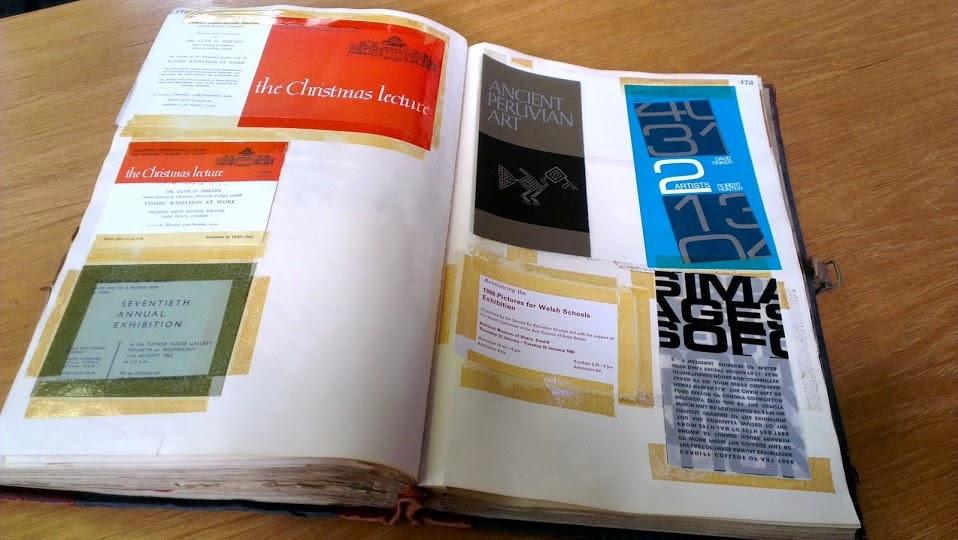
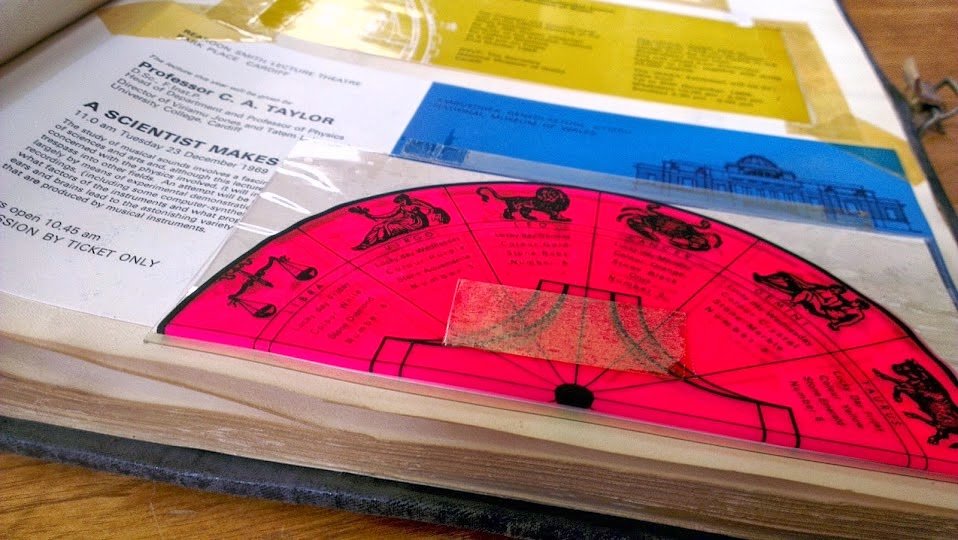
I also took some photographs of the pages of a giant old scrap book full of museum ephemera; it contains tickets, pamphlets, public announcement posters, order of services, lists of lectures and just about anything else you can stick down with heavy duty glue and sellotape…

However, my day begins in earnest with the post – as Assistant Librarian one of my main priorities is to manage the journal subscriptions. We maintain around 700 titles, a combination of paid subscriptions, exchanges and gifts. Therefore, after our Administration Assistant has opened and checked it, I weed out all the journals and record them onto our database. By doing this I am alerted to previous issues not received and will then chase them up with relevant suppliers. This time, there are no missing issues to chase but we have received a few duplicates, and [as always] these are from suppliers who categorically promised that no further duplicates would be sent out! Next, I count and measure the post so that at the end of the year I am able to supply our Principle Librarian with the total number of actual issues received and the meterage of space they will have covered. For instance, our statistics for 2013 were 1972 issues received that covered just over 11 metres of shelf space.

Next, I date stamp and separate them into departments. Our subscriptions naturally correspond with the curatorial departments, so we receive journals on the following disciplines: Art, Archaeology, Zoology, Botany, Geology and Industry and we also subscribe to more general subjects kept here in the Main Library. Once all this is done, it’s time to go and shelve them in the departmental libraries. These are dotted all around the museum so I wait until I have a little pile, normally a few days’ worth, before I go on my shelving travels.

My next task is to work through any invoices received in the post and this morning there quite a few. The way I process these has changed recently and whereas it has taken a little time to get used to the new system, it is much more straightforward and done in no time at all.

Walking into town for lunch, looking back over my shoulder...

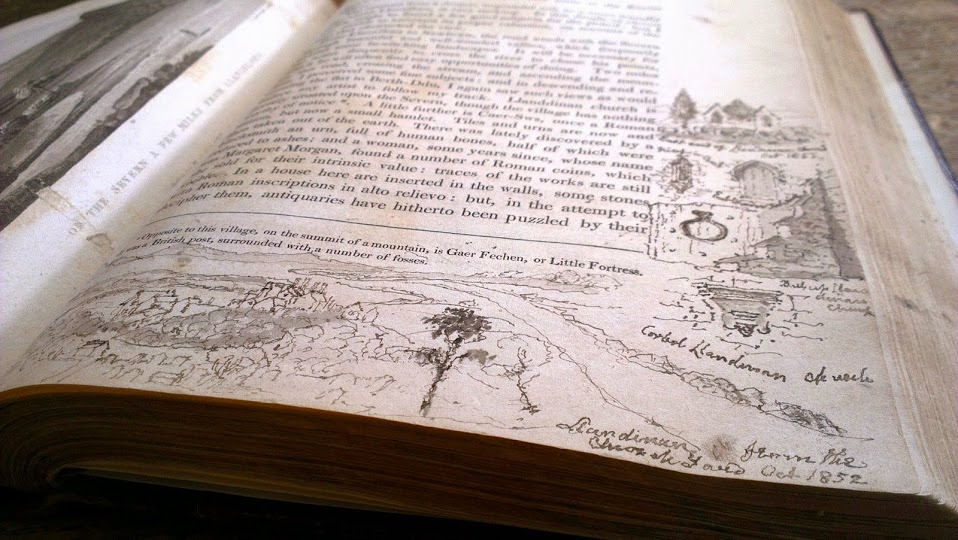
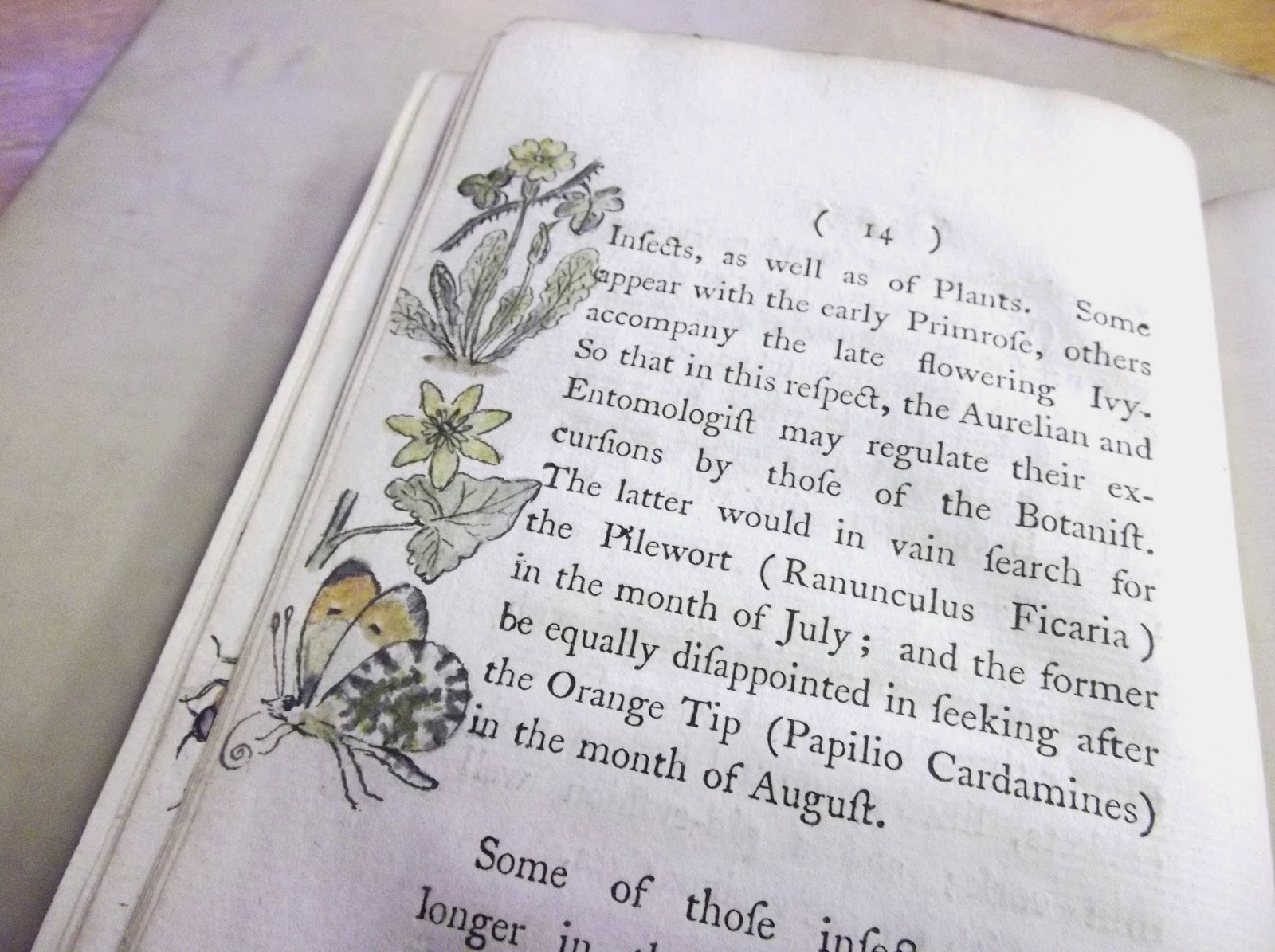
After lunch, it’s all about the special collections! I begin by photographing books for a new post on the Museum Blog; I have been posting articles for some time now and really enjoy it. This next post I’m working on concerns books with “marginalia” and we have some excellent examples so here is a little sneak peak… 

Cambria Depicta: a tour of North Wales by Edward Pugh [1816]


Instructions for collecting and preserving insects; particularly moths and butterflies by William Curtis [1771]

The last few hours of the afternoon are spent working on a talk I will be giving in April as part of the Museum’s Behind the scenes series where the curatorial departments allow groups of visitors in to show them what goes on behind the scenes. My working title is “Curios” and the talk will be based on a small selection of our more unique items, such  as fore-edge books, annotated books, and books made from unusual materials and bindings!

On my way out I leave via the art galleries, it does take a little longer to get out going this way but it gives me the chance to browse and see what's on display and today there were two things in particular I wished to see. First, the new exhibition Wales Visitation: Poetry, Romance and Myth in Art which includes works by  David Jones, Graham Sutherland and Richard Long. And also the new Constable painting [currently on loan from the Tate]; Salisbury Cathedral from the Meadows  is a stunning work and I particularly like the dark storm clouds brooding behind the rainbow.   

A selection of books on WWI all ready for the 1914-2014 Centenary 

This post has been produced as part of the Twitter event #Museum Week UK [24-30 March 2014]

All photographs in this post taken by the author


Mae blodau Athro’r Ardd wedi agor!

Catalena Angele, 21 Mawrth 2014

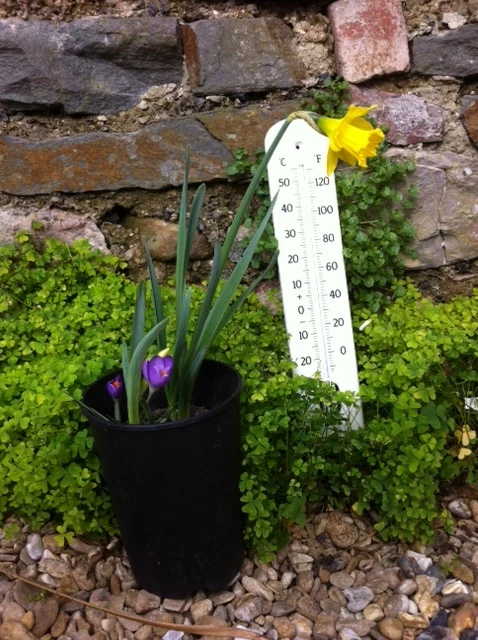
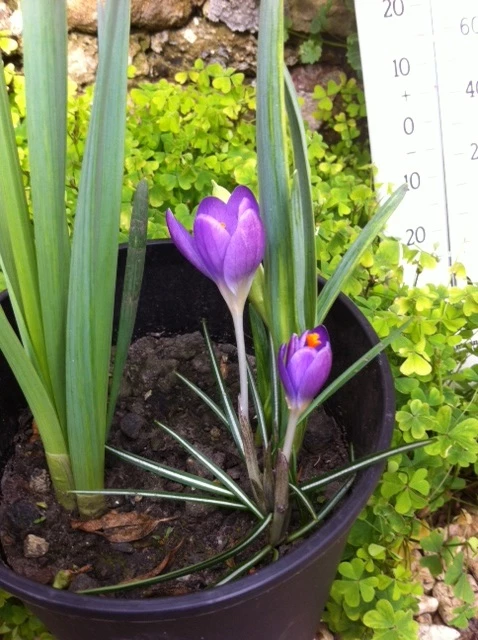
Dwi wedi cyffroi yn lân! Mae fy mlodau i wedi agor o’r diwedd, ac mae nhw mor brydferth alla i ddim peidio gwenu wrth edrych arnyn nhw. Blodeuodd y crocws ar 16 Mawrth ac roedd e’n 90mm o daldra. Blodeuodd y cennin Pedr y diwrnod wedyn ac roedd e’n 240mm o daldra. Dyma ffotograff o’r ddau.

Diolch yn fawr i Glwb Garddio Stanford o Ysgol Gynradd Stanford in the Vale CE yn Lloegr am eu ffotograff o’u cennin Pedr cyntaf! Oes unrhyw un arall am anfon ffotograffau o’u planhigion ata i, i fi gael eu rhoi nhw ar y wefan hefyd?

Pa ysgolion sydd wedi gweld eu blodau cyntaf yn agor?

Mae Abronhill Primary School, Culross Primary School, ac Glencairn Primary School yn yr Alban, ac Christchurch CP School, Coleg Meirion Dwyfor, Gladestry C.I.W. School, Rogiet Primary School, Ysgol Clocaenog, Ysgol Gynradd Cross Hands, Ysgol Deganwy ac Ysgol Santes Tudfulyng Nghymru i gyd wedi gweld eu blodau cyntaf. Yn Lloegr, mae ysgolion Arkholme CE Primary School, Burscough Bridge Methodist School, Coppull Parish Primary School, Hillside Specialist School, John Cross CE Primary School, Pinfold Primary School, Scotforth St. Paul's CE Primary School, SS Philip and James CE Primary School, St Laurence CE Primary School ac Woodplumpton St. Anne's Primary School i gyd wedi anfon eu cofnodion blodau cyntaf. Llongyfarchiadau i chi gyd!

Un wythnos ar ôl…

Dim ond un wythnos sydd ar ôl tan ddyddiad cau project Bylbiau’r Gwanwyn. Cofiwch anfon eich cofnodion ata i erbyn 28 Mawrth.

Beth i wneud os nad yw’r blodau wedi agor erbyn y dyddiad cau?

Daliwch ati i anfon eich data blodau! Os nag yw eich blodau wedi agor, mae croeso i chi barhau â’r ymchwiliad. Pan fydd y planhigion yn blodeuo byddwch chi’n dal i allu cofnodi y dyddiad a’r uchder ar ein gwefan.

Y rheswm am y dyddiad cau yw fy mod i’n ysgrifennu adroddiad arbennig bob blwyddyn yn crynhoi yr holl ddata fyddwch chi’n ei anfon. Rhaid i fi ysgrifennu’r adroddiad ym mis Ebrill. Bydd cofnodion fydd yn cyrraedd cyn y dyddiad cau yn cael eu cynnwys yn yr adroddiad eleni. Bydd cofnodion fydd yn cyrraedd ar ôl y dyddiad cau yn cael eu hychwanegu at y bas data ac yn cael eu cynnwys yn adroddiad y flwyddyn nesaf.

Mae eich cofnodion i gyd yn bwysig iawn. Rwy’n addo y bydd eich data i gyd yn cael ei gynnwys yn y project ac yn helpu i wneud yr ymchwiliad yn fwy cywir yn y dyfodol.

Ydych chi wedi gweld unrhyw arwyddion o’r gwanwyn wrth chwarae? Fe welais i gacynen flewog dros y penwythnos, buwch goch gota ac ŵyn bach! Dyma fi’n edrych mewn llyn ond welais i ddim grifft llyffaint. Ydych chi wedi gweld grifft llyffaint neu unrhyw arwyddion eraill o’r gwanwyn?

Hoffech chi fod yn Dditectif Natur? Mae Coed Cadw wedi paratoi gweithgareddau gwych y gwanwyn ar eich cyfer chi. Dysgwch sut i adnabod arwyddion cyntaf y gwanwyn yma ac am ragor o syniadau gwych y gwanwyn cliciwch yma.

Eich cwestiynau, fy atebion:

Ysgol Bro Eirwg: Roedd y mesurudd glaw yn llawn ar ddydd Llun gan ei fod wedi casglu'r holl law dros hanner tymor. Rydym ni yn gyffrous iawn bod rhai o'r bylbiau wedi dechrau agor. Rydym wedi sylwi bo'r bylbiau sy'n agor yn hwyrach llawer yn llai, oes rheswm am hyn? Athro’r Ardd: Rydw i’n falch iawn bod eich blodau chi yn agor Ysgol Bro Eirwg! Da iawn chi am arsylwi mor ofalus ar y planhigion a gofyn cwestiwn gwyddonol gwych. Yr ateb yw… dwi ddim yn siŵr!! Efallai bod rhai o’r bylbiau yn llai na’r lleill wrth gael eu plannu. Gallai hyn olygu eu bod nhw’n cymryd mwy o amser i flodeuo a’u bod nhw’n llai o faint. Oes gennych chi unrhyw syniadau i’w esbonio? Sut fyddech chi’n profi eich syniadau wrth dyfu rhagor o blanhigion y flwyddyn nesaf?

Raglan VC Primary: Our flowers are blooming now! The shoots are 85 cm tall! Prof P: Do you mean 85mm tall Raglan? An 85cm tall flower would be HUGE!

Glencairn Primary School: It was very foggy on Thursday night and Friday morning! Prof P: Great weather reporting. I love fog, it’s quite spooky isn’t it?

Hillside Specialist School: Our first flower opened. By K. Prof P: Well done K and everyone else at Hillside School.

Greyfriars RC Primary School: It was fun me and R. really enjoyed it. Prof P: Hooray!

SS Philip and James CE Primary: A lot of our crocus flowers had come out over the holidays! Prof P: Fantastic! A lot of people’s flowers opened during the holidays.

Pinfold Primary School: Mystery bulbs started opening on Monday. We think they're daffodils. Other bulbs are growing very well. Prof P: Great news Pinfold.

Ysgol Terrig: our bulbs are growing great they are now 7cm tall !!!!! Prof P: Fantastic news Ysgol Terrig!

Chatelherault Primary School: During the week it has been sunny and because of this our plants has started to blossom although the flowers are still closed. We have had a lot of spiders in our pots. Prof P: Oooh, how cool! I love spiders! Their webs are so beautiful and the way they make them is so clever.

Culross Primary School: We have been very busy in P5-7 recently with trips to Scottish Parliament and also the Foodbank with a collection we organised. Sorry for the lack of records for Tuesday and Thursday! Matt is the name of my daffodil and he was the first one to flower here at Culross PS. It has been quite warm here at Culross and we haven't had any snow, so the daffodils are now beginning to grow. O's crocus is called Coco and measures 50mm. Her’s is the first crocus to flower here at Culross. Well done to O.! Prof P: Wow you sound like you have had some really interesting school trips Culross Primary. Well done for collecting for the Foodbank. I love the names you have given to your plants!

Darran Park Primary: The first crocuses flowered on the 7th of march. Their colour is purple\violet. The bees have already started collecting the pollen and they are 6 cm tall. Some of the other crocus bulbs have only just started to sprout through the soil. Prof P: Great observations Darran Park, I like your description of the crocuses as purple/violet.

Arkholme CE Primary School: Sun shining at last it is doing the flowers a world of good they have come out to see it!!! Prof P: It is doing me the world of good too Arkholme!

Diolch yn fawr

Athro'r Ardd