Good things come in small packages Christian Baars, 6 Mai 2015 Why are we concerned with boxes whose lids don’t close properly?This is not just curators and conservators being pernickety; we really do have very good reasons to make sure that every closed box stays shut.Museum collections contain a lot of valuable things that are easily perishable. Swords are made to be tough, but - believe it or not - even swords are not indestructible.Iron rusts when it gets wet. Iron also rusts because of moisture in the atmosphere. Other metals can corrode in much the same way. If we are not careful we would end up with merely a bag of rust!Therefore, we store all manner of sensitive objects (including cannonballs!) in what we call “micro-environments”. While many of our stores and galleries are air-conditioned, the humidity in the air is often too high to prevent these delicate objects from rusting.Micro-environments are boxes or plastic pouches that contain one or several objects, plus a chemical that regulates the humidity within the box or pouch. This chemical is silica gel – if you have ever bought an electrical item the packaging probably contained a little sachet saying “Do not eat!”. The little granules in this sachet are silica gel. It is very widely used to keep things dry. Including in museums.Once we have packaged our objects with silica gel we do not want moisture from the atmosphere to get into the box; that’s why we make sure the box closes properly. Only then will the objects be safe and dry, and ready for display or study.To read more about our collections care work, go to our Preventive Conservation blog.
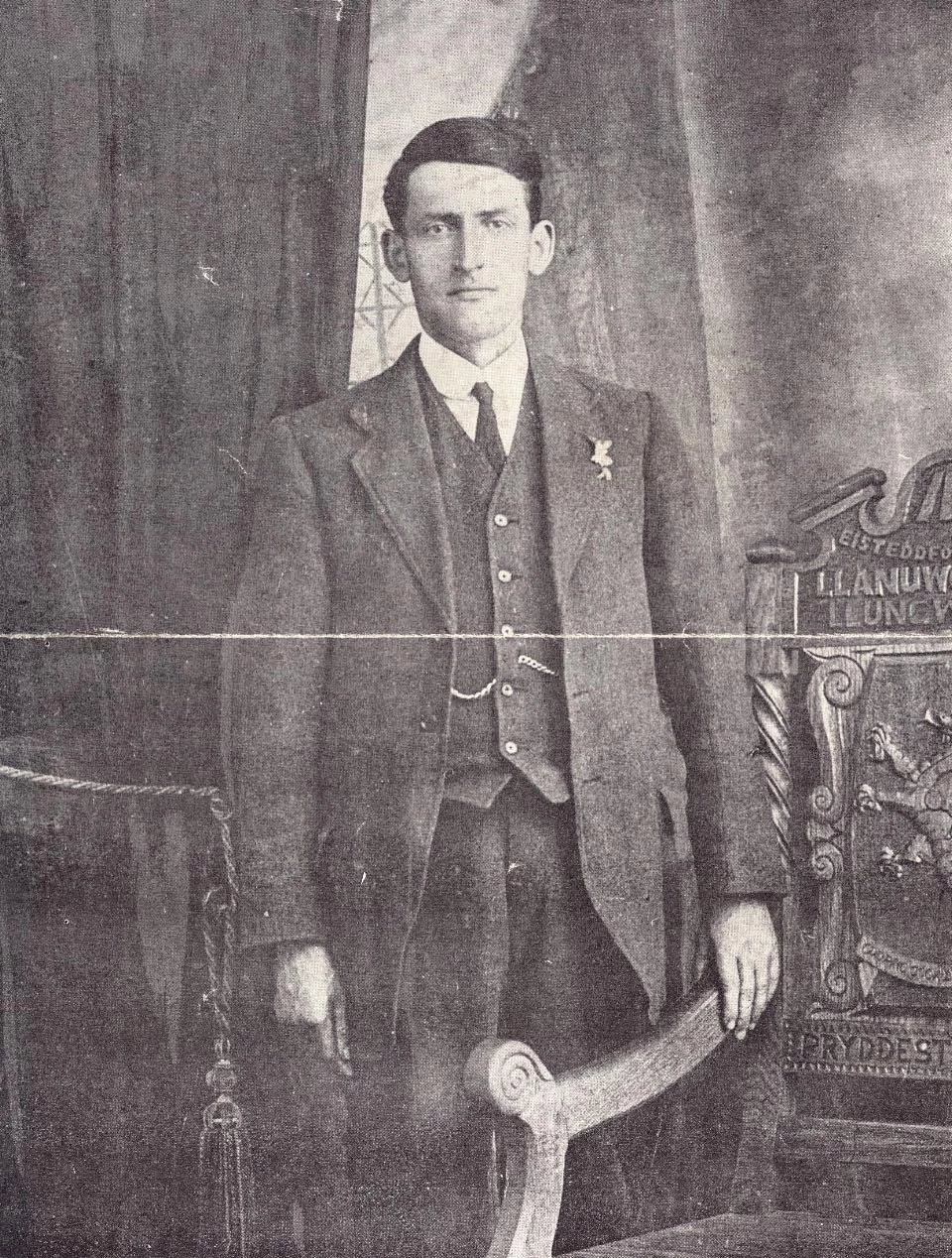
Owen Ladd – Cymro a fu farw ar fwrdd y Lusitania Richard Edwards, 5 Mai 2015 Gan mlynedd union yn ôl, ar 7 Mai 1915, cafodd y llong Brydeinig y Lusitania ei tharo gan dorpido Almaenig oddi ar arfordir Iwerddon, wrth iddi ddychwelyd o Efrog Newydd i Lerpwl. Fe suddodd mewn ugain munud. O’r 1,959 o deithwyr ar ei bwrdd – yn cynnwys plant a’r criw – bu farw 1,198. I nifer, roedd hon yn ‘drosedd yn erbyn dynoliaeth’ gan yr Almaenwyr, a chyhuddwyd y Kaiser Wilhelm II o ‘lofruddiaeth fwriadol ar raddfa eang’. Yn yr Almaen, cafodd medal ei chreu i gofio’r digwyddiad, ac mae gennym gopi ohoni yn y casgliad.Ymysg y cannoedd a fu farw roedd Cymro o’r enw Owen Ladd. Ganwyd Owen ym 1882, yn fab i William a Phoebe Ladd o Eglwyswrw yng ngogledd Sir Benfro. Aeth i Ysgol Fwrdd Llantwyd cyn mynd yn brentis i wneuthurwr watshys yn Aberteifi. Bu hefyd yn rhedeg siop yn Pentre, y Rhondda, am naw mlynedd.Ym 1911, gadawodd Gymru i ymuno â’i frawd, David, oedd yn gyfrifydd yn Winnipeg, Canada. Mewn dim o dro, daeth yn aelod amlwg o’r gymuned Gymraeg yno – roedd yn drysorydd Cymdeithas Dewi Sant, yn aelod blaenllaw o Eglwys Fedyddwyr Nassau Street, ac yn beirniadu mewn eisteddfodau lleol o bryd i’w gilydd.Ym 1915, penderfynodd Owen ddychwelyd i Gymru – roedd ei rieni’n oedrannus ac roedd yn ystyried ymuno â’r fyddin. Yn anffodus, bu farw ar fwrdd y Lusitania cyn cyrraedd adref.Ar 12 Mai 1915, roedd adroddiad ar suddo’r Lusitania yn The Haverfordwest and Milford Haven Telegraph yn crybwyll fod Owen Ladd ymysg y rhai oedd ar goll. Yna ar 20 Mai 1915 cafwyd adroddiad llygad-dyst ym mhapur wythnosol gogledd Penfro,The County Echo , yn sôn am farwolaeth Owen. Ym 1977 daeth rhai o ddyddiaduron a llythyrau perthnasau Owen i law’r Amgueddfa. Mae’r dogfennau yn cynnwys dau lythyr a yrrwyd gan Owen o Winnipeg ar 8 Mawrth a 15 Ebrill 1915.Mae’r casgliad hefyd yn cynnwys telegram, gafodd ei yrru gan ei frawd David o Winnipeg ar 8 Mai 1915 yn holi os oedd Owen yn iawn, ac ateb a yrrwyd yn hwyrach y diwrnod hwnnw gan Cunard’s yn Lerpwl, yn datgelu dim. Mae yma hefyd lythyr a yrrwyd ar 14 Mai 1915 i un o frodyr eraill Owen, Hugh Ladd o Eglwyswrw, gan ‘The Cunard Steam Ship Company Limited’, Queenstown .Mae casgliad Owen Ladd i’w weld arlein yng nghatalog Casgliadau’r Rhyfel Byd Cyntaf.
Adrian in the Amazon - final part Adrian Plant, 1 Mai 2015 Our expedition has now drawn to a successful close. Our collections of several thousand specimens have (mostly) been successfully exported from Ecuador and initial analysis of them has started. Entomological expeditions to remote areas are great fun of course. However the less glamorous but harder work comes later, involving months or years of detailed study during which new species are described, evolutionary trees constructed, and ecological or biogeographic conclusions etc. are developed.In the field there may be great excitement about finding a particular insect but to a scientist, the level of excitement can only grow as the real significance of the finding is revealed subsequently through painstaking study and reference to our already extensive collections. Already we have glimpses of results that might tell us more about how the insect fauna of the upper Amazon Basin came about. For example the unexpected presence of Cladodromia (a classic ‘Gondwanan’ genus) suggests there has been immigration from Patagonia whereas the high diversity of Neoplasta (which is essentially North American) hints at a south-bound migration along the Andes. On the other hand, an almost complete absence of Hemerodromia puzzles us as it is widespread in the lower Amazon so why didn’t we find it higher up? We suspect that the answer may be that it has only recently arrived in South America and is still spreading to Ecuador. Then again the unseasonal rains (due to a strong El Niño this year) may be a factor. Investigations continue.In the field, our successes were often hard-won; difficult slogging through trying terrain, inclement weather, frustrating officialdom and many other factors sometimes worked against us it seemed, and intermittent access to the internet made writing these blogs challenging at times. We have been very fortunate in that our expedition was entirely and well-funded by the Brazilian Government as a part of their noble and ambitious efforts to understand the biodiversity of the Amazon. Our own exertions will plug one significant hole in knowledge and contribute to greater appreciation of Amazon biodiversity.To read all of Adrian's entries, go to our Natural History Blog
Gwobrau Gwyddonwyr Gwych 2015 Penny Dacey, 1 Mai 2015 Bydd Amgueddfa Cymru yn dyfarnu Tystysgrifau Gwyddonwyr Gwych i cant o ysgolion ar draws y DU eleni, i gydnabod eu cyfraniad i Ymchwiliad Bylbiau’r Gwanwyn – Newid Hinsawdd.Llongyfarchiadau anferth i bob un o’r ysgolion!Diolch i bob un o’r 5,539 disgybl a helpodd eleni! Diolch am weithio mor galed yn plannu, arsylwi, mesur a chofnodi – rydych chi i gyd yn Wyddonwyr Gwych! Bydd pob un yn derbyn tystysgrif a phensel Gwyddonydd Gwych, ac fe fyddan nhw’n cyrraedd eich ysgol tua canol mis Mai.Diolch yn fawr i Ymddiriedolaeth Edina am eu nawdd ac am helpu i wireddu’r holl broject! Enillwyr 2015:Diolch i’r tri enillydd wnaeth anfon y nifer fwyaf o ddata tywydd. Bydd pob un yn derbyn trip ysgol llawn hwyl i atyniad natur.St. Brigid's School - WalesThe Blessed Sacrament Catholic Primary School - EnglandWinton Primary School - Scotland Yn ail:Betws Primary SchoolCarnforth North Road Primary SchoolCorsehill Primary SchoolSt. Laurence Primary SchoolSt. Michael's Primary SchoolSt. Paul's Primary SchoolWormit Primary School Clod uchel:Balcurvie Primary SchoolCarnegie NurseryColeg Meirion DwyforColeg PowysEastfield Primary SchoolFairlie Primary SchoolFreuchie NurseryGibshill Children's CentreGreenburn SchoolHowwood Primary SchoolKeir Hardie Memorial Primary SchoolKilmory Primary SchoolMaes-y-Coed PrimarySS Philip and James CE Primary SchoolSt. Ignatius Primary SchoolSt. Peter's CE Primary SchoolWildmill Youth ClubYsgol Bro EirwgCydnabyddiaeth arbennig:BancyfelinBickerstaffe CE Primary SchoolBinnie Street Children's CentreBrodick Primary SchoolCarstairs Primary SchoolCoppull Parish Primary SchoolDallas Road Primary SchoolDyffryn BanwEuxton Church of England Primary SchoolGarstang St. Thomas' CE Primary SchoolGuardbridge Primary SchoolHenllys CIW PrimaryKirkton Primary SchoolLlanharan Primary SchoolMorningside Primary SchoolNewport Primary SchoolOrchard Meadow Primary SchoolPittenweem Primary SchoolRhws Primary SchoolRivington Foundation Primary SchoolSacred Heart Primary and NurseriesSkelmorlie Primary SchoolStanford-in-the-Vale CE Primary School St Athan PrimarySt Mellons Church in Wales Primary SchoolTrellech Primary SchoolWoodlands Primary SchoolYnysddu Primary SchoolYsgol Bryn GarthYsgol DeganwyYsgol HiraddugYsgol Syr John RhysYsgol Clocaenog Ysgolion i dderbyn tystysgrifau:Abbey Primary SchoolAlbert Primary SchoolArkholme CE Primary SchoolBaird Memorial Primary SchoolBalshaw Lane Community Primary SchoolChapelgreen Primary SchoolChrist Church CP SchoolChryston Primary SchoolColinsburgh Primary SchoolDarran Park PrimaryFintry Primary SchoolGlencoats Primary SchoolHafodwenogKilmacolm Primary SchoolKings Oak Primary SchoolLlanishen Fach C.P SchoolMossend Primary SchoolOur Lady of Peace Primary SchoolPreston Grange Primary SchoolSaint Anthony's Primary SchoolSilverdale St. John's CE SchoolSt. Nicholas CE Primary SchoolSt. Philip Evans RC Primary SchoolSwiss Valley CP SchoolThorn Primary SchoolTongwynlais Primary SchoolTorbain Nursery SchoolTownhill Primary SchoolYsgol Bryn CochYsgol Glan ConwyYsgol Iau Hen GolwynYsgol Nant Y CoedYsgol PencaeYsgol Rhys PrichardYsgol Tal y BontYsgol TreferthyrYsgol Y PlasGlyncollen Primary SchoolRougemont Junior School Da iawn, rydych chi wedi gwneud gwaith ANHYGOEL.Athro'r Ardd
Adrian in the Amazon - part 9 Adrian Plant, 30 Ebrill 2015 Back to civilization again - the regional capital of Loja, a small town nestled under forested Andean slopes and home to the regional Ministry of Environment where we must go once again, to obtain permission to move the samples we have collected back to Quito.Unlike our previous brush with officialdom in Tena (our samples from there still have not been released!... but we have some local support to ensure that they eventually will be), the officials in Loja were helpful, polite and efficient! We had allowed 2 days to process the permissions in Loja, but in the event, we received our permits within 30 minutes, leaving us the best part of 2 days to explore the town and sample the local culture and cuisine.Meanwhile, here are some more photos from our time in the field.To read more about Adrian's travels, go to our Natural History blog page