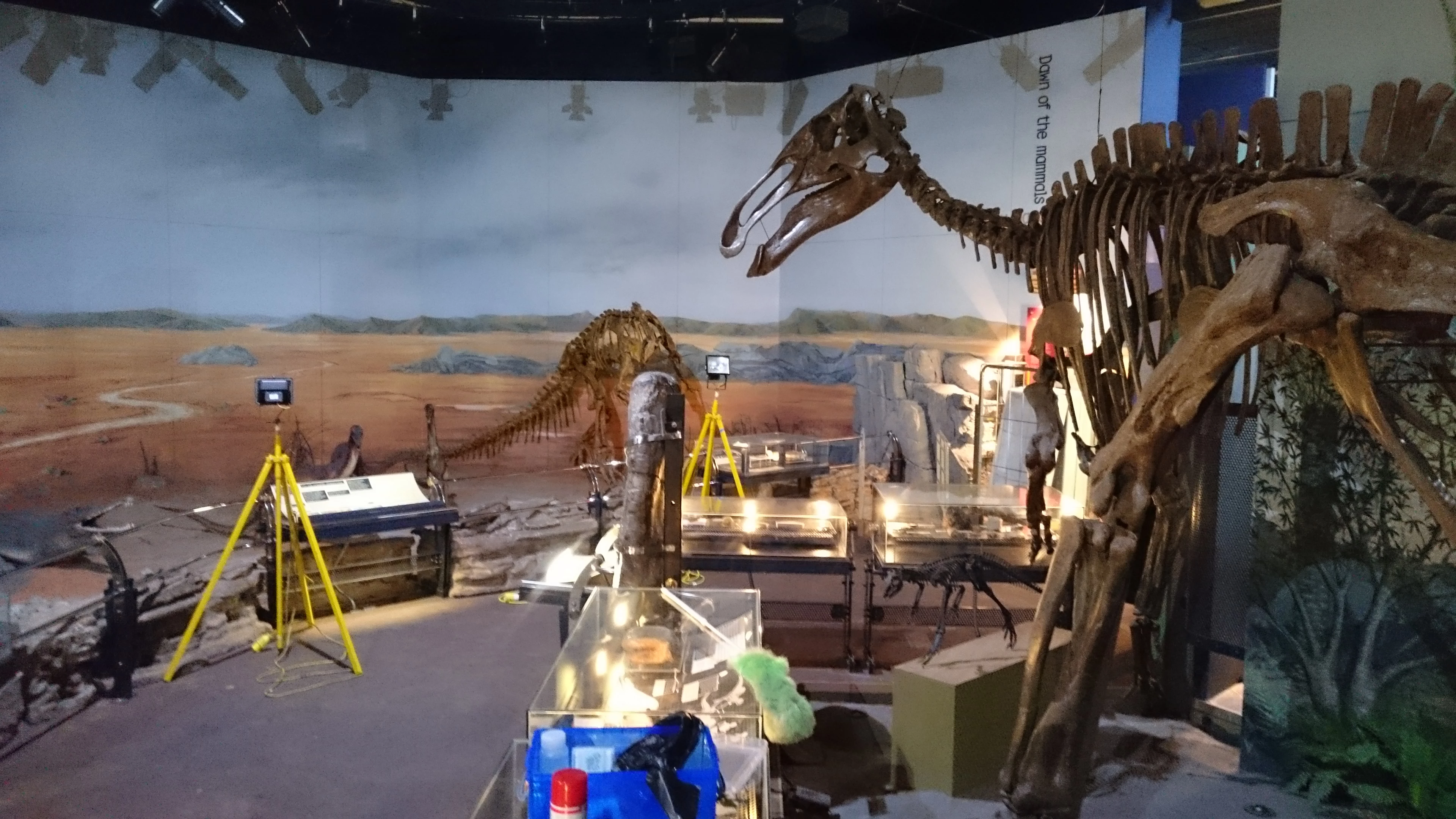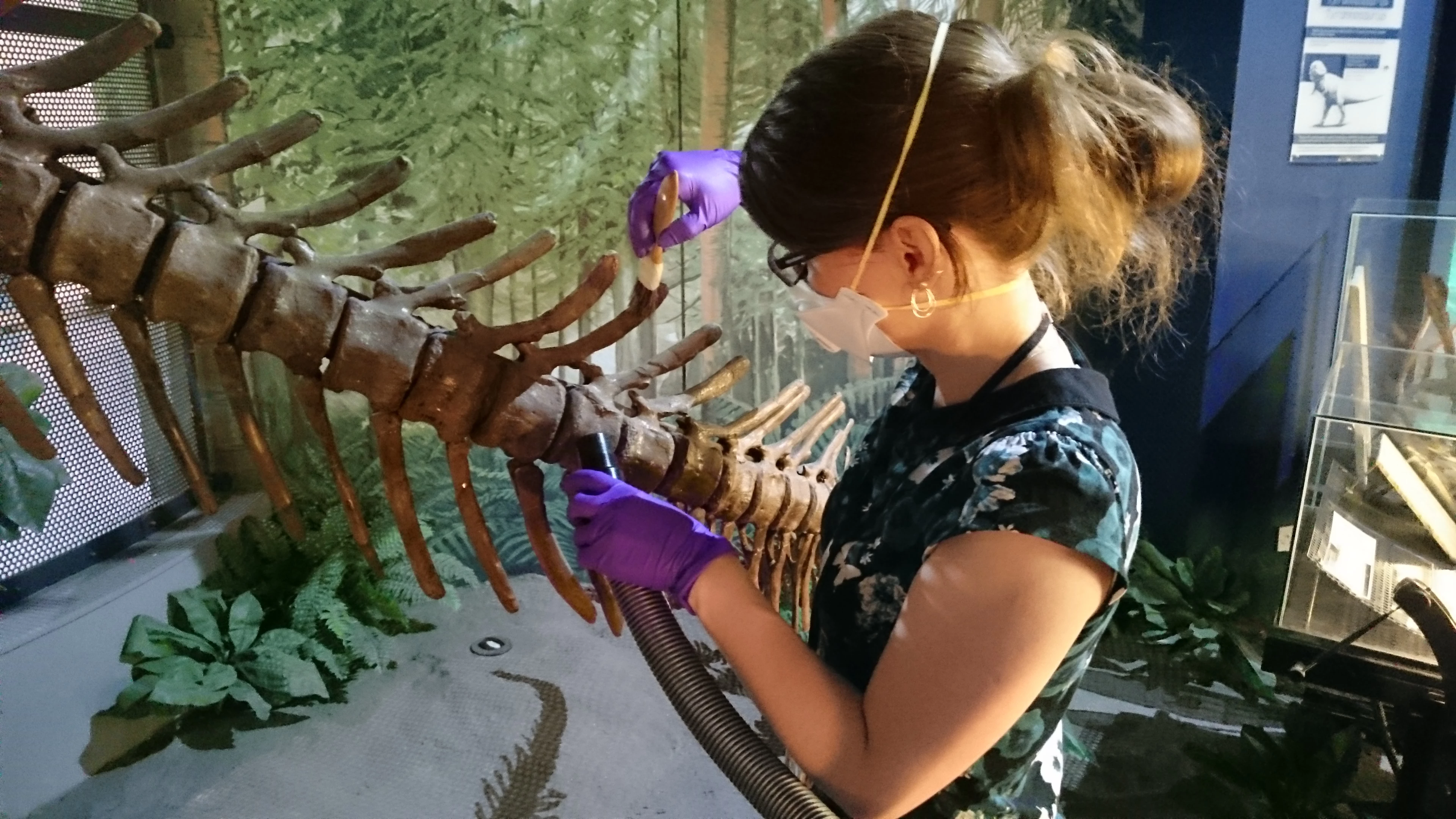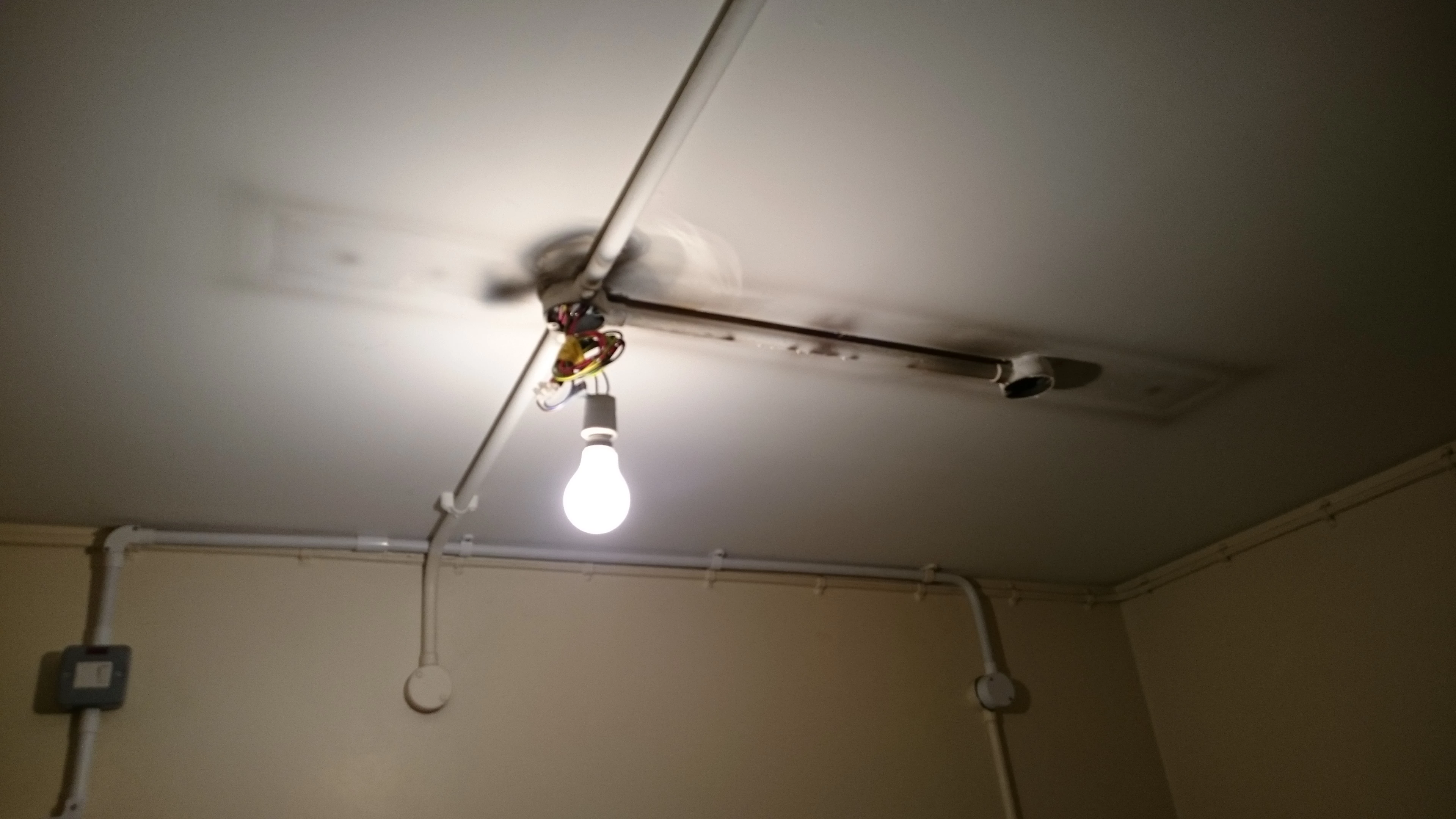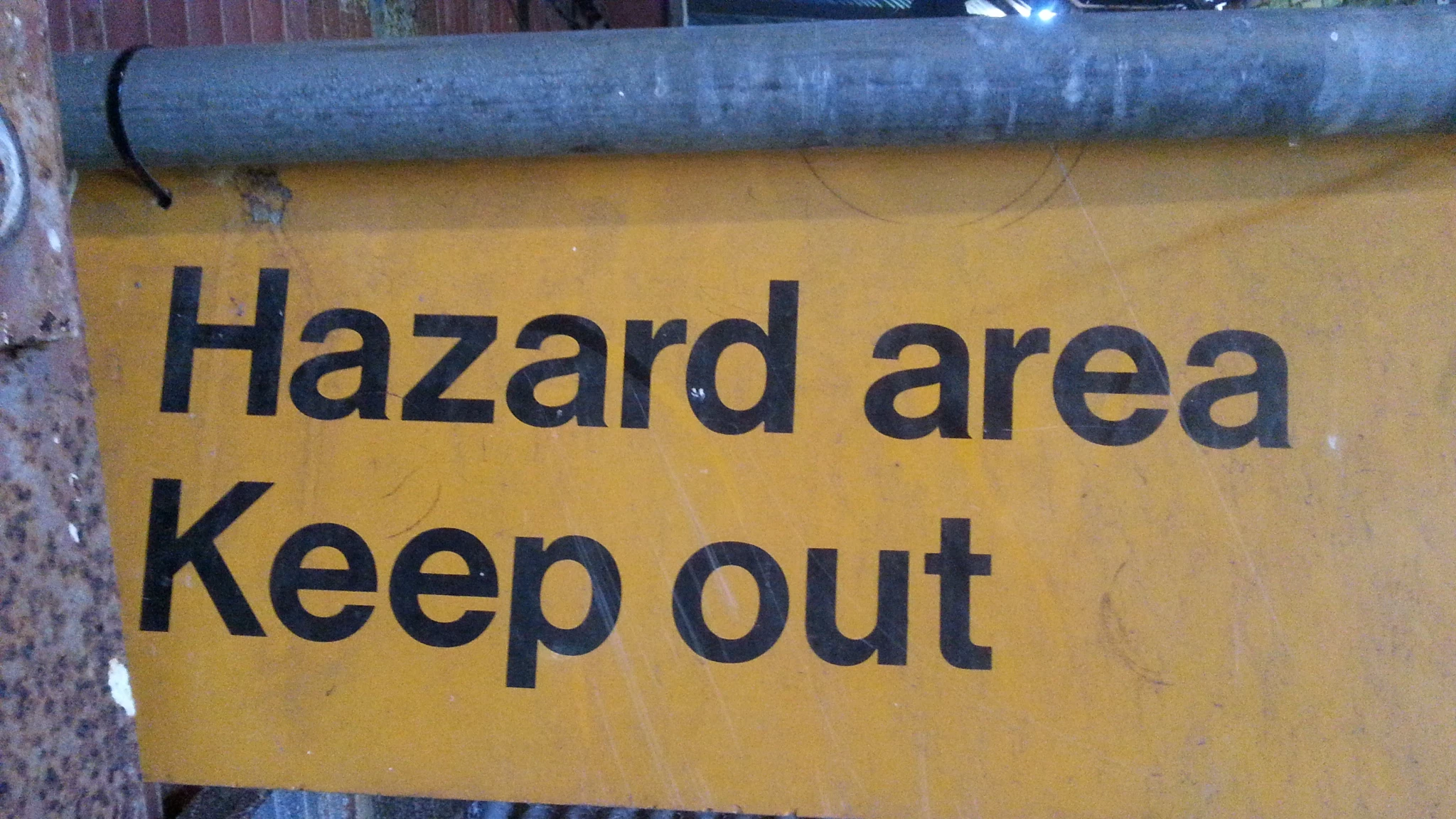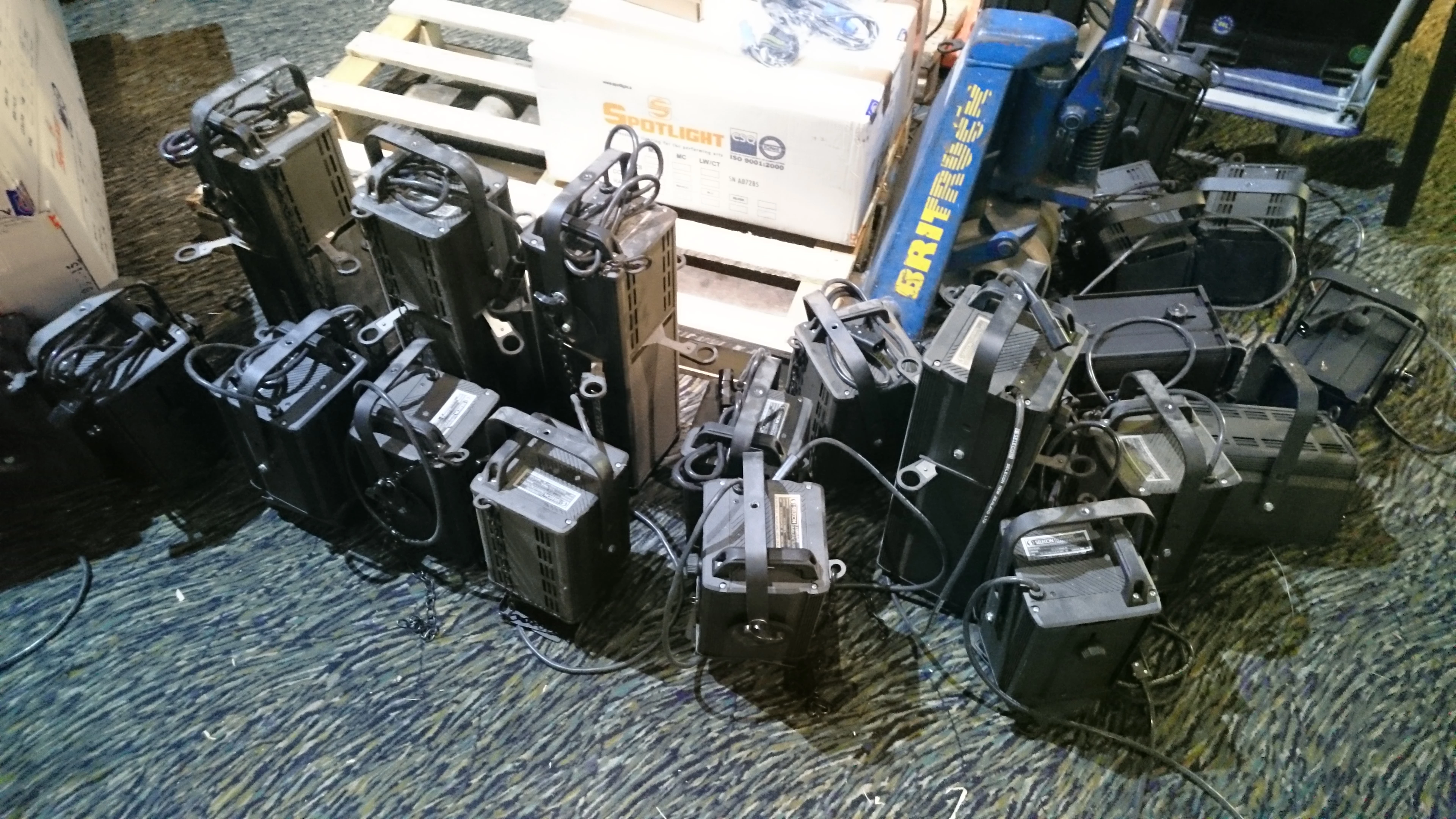
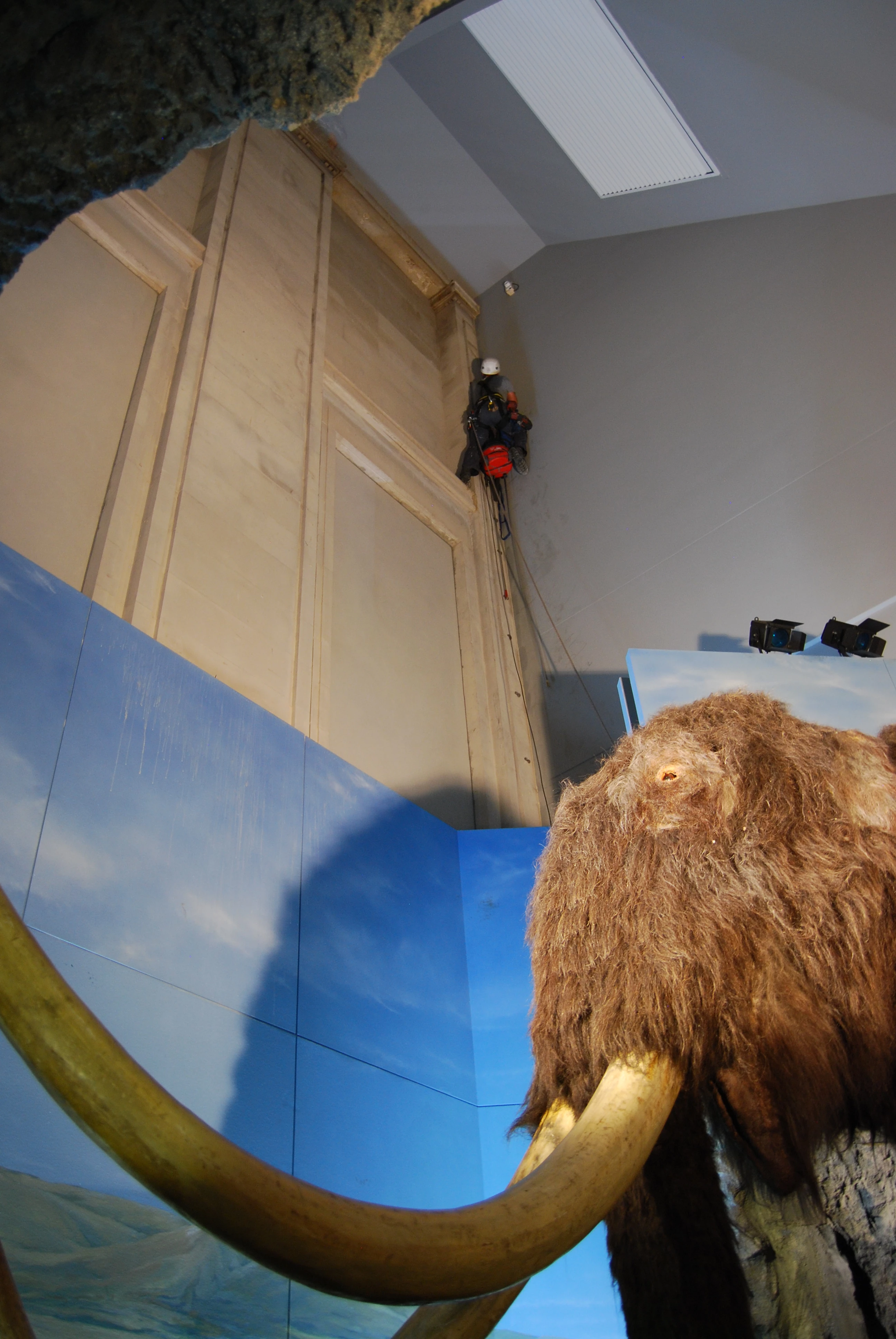
How many dinosaurs does it take to change a light bulb? Christian Baars, 14 Mehefin 2016 Next week our dinosaurs will go to sleep for two weeks. The Geology exhibition will close for “essential maintenance” – you will have seen similar signs in other places. In our case “essential maintenance” does not mean that the dinosaurs’ toilet is blocked (now we do have coprolites on display but they are well and truly fossilised). But if you thought all the light bulbs were blown and we have to fit new ones you wouldn’t be far off. Except that we never did have any black holes in our galleries – no need to bring miners’ lamps which are absolutely reserved for Big Pit. What we are going to do does indeed involve changing light bulbs. We need light in order to see, and without light we would not be able to appreciate most objects in museums. Light, however, can damage many types of objects. You may have noticed at home that old photographs fade, as do organic inks and pigments on prints and paintings. Leave a newspaper out on the window sill for a few days and it will have yellowed.In the museum, where we preserve objects for posterity, the damage done by light can be a major problem. Any such damage is irreversible and cannot be repaired by our best conservators. Ultraviolet (UV) radiation is particularly damaging. How long do you think museum objects should last? As part of our collections care, we plan lighting in galleries carefully to leave colours bright and vivid for as long as possible. The new lighting systems we are fitting this month at National Museum Cardiff will be more energy efficient. In addition, the new lights will be of better quality which means you will see objects more vibrantly yet safely, without causing unnecessary fading. Because the new lights also produce less heat they will make it easier and cheaper to air condition our galleries. Changing the lights is not all we are going to do – there are a myriad of additional jobs to be done while we have the opportunity. All this takes a little time – between the 20th June and 3rd July. It won’t really be the dinosaurs changing their own lights, of course – there will be technicians, curators and conservators busily climbing ladders and scaffolding. We do all we can to preserve our national collections and to improve our sustainability. So please bear with us when you see the signs and come back to see the Geology galleries in a new light in early July. Find out more about care of collections at Amgueddfa Cymru - National Museum Wales here.
Blaschka Glass Wriggling Away Teresa Darbyshire, 13 Mehefin 2016 On Friday Julian Carter, our Natural History conservator, and I travelled to Swansea to retrieve some Blaschka glass models from one of the cases there and replace them with a new display of marine animals and seaweeds you might find living in rocky areas. The Blaschka models had been on display there for several years and we needed some of them for the new Wriggle! exhibition opening at the end of this week (18th June).The first job was to actually work out how to get into the case itself as it was so long since anyone had opened it no-one was sure how to do so! It was soon worked out though and the models were carefully placed into their protective packaging for the journey back to Cardiff. This involved carefully pinning blocks of plastazote and bubble wrap around them in specially created boxes so that they were cushioned against any jolting during transport. They are so intricate when you look at them that it can be quite nerve-wracking when you are not used to handling them, particularly the worms whose long, delicate tentacles look like they might snap off at any moment. I was however assured that with careful handling most are actually very easy to move. They will be a wonderful addition to Wriggle!Once they were packed away, it was the turn of the new specimens to be arranged in their place. The specimens were a range of animals that represent rocky habitats both onshore and offshore including crabs, shells, seaweeds, a piece of honeycomb worm reef and even a cup coral, hopefully some species that people will recognize and some they won’t. Some had been specially prepared for use in this display. It’s always interesting putting something like this together, looking through the collections to see what is available and might be suitable and then preparing it for display.The display did not take long to finish and then we were done and on our way back to Cardiff after a successful day.For more information about the Blaschka glass models at National Museum Cardiff click hereWhy not pop along to the National Waterfront Museum to see the new display.
Pollution in store – can science help? Christian Baars, 9 Mehefin 2016 Dropping a rusty nail into a glass of Coca Cola will clean it in a matter of hours. We have all heard that one. Other drinks manufacturers are available, and alternative liquids will do the same job: lemon juice, vinegar, even salad dressings.What causes the nail to go rusty in the first place is corrosion. Rust is the product of the corrosion of iron, and I bet my favourite chemistry book that you will have seen rust somewhere. Many other metals can corrode, too: aluminium, zinc, lead, copper etc. Corrosion is electrochemical oxidation; it usually needs water and oxygen to corrode a metal. If you drop a clean nail into a salt solution (electrolyte) it will start rusting within hours – the iron loses electrons and gains oxygen. The acidic liquids in the first paragraph appear to have the opposite effect but, in fact, dissolve the rust rather than convert it back to the base metal.This blog is turning into a mixture of a cooking recipe and a heavy science article. What on Earth does all this have to do with museum collections? After all, we don’t allow food consumption in our galleries and stores so where does the vinegar come from?Well, believe it or not we do have vinegar in the air in the museum. You do, too, at home. Along with formic acid, acetic acid (the thing that gives vinegar its zingy taste) can be air borne in indoor environments. Both acids are considered indoor pollutants. Hardly detectable outside, in certain conditions they can accumulate inside buildings – and then cause corrosion. Indoor air pollution has recently been in the press, but we are talking here of risks to museum objects, not health risks to people.Where do these substances come from? Wood readily off gasses acetic and formic acids. Book cases, furniture, floor boards, the wooden boards your walls are made of – they all emit these substances. Normally, this is not a problem; we all ventilate our houses, and normally we don’t keep objects at home long enough for corrosion to be a problem. Or is it? My mother still polishes her silver regularly and keeps it safe – in a wooden cupboard. Make of that what you want. Perhaps she enjoys polishing.Your favourite museum has a lot of metal objects in its stores. And we are, of course, in the business of keeping objects safe not just for short periods of time, but for centuries. Over long periods of time we do notice corrosion on metal objects even if they merely sit on a shelf. We could go round cleaning these, like my Mum does, and give them a polish from time to time. Time consuming, I hear you cry. You lose a teeny tiny part of the surface each time you polish it, I hear you scream. And wouldn’t it be better to prevent corrosion in the first place, I hear you shout.Right you are, I respond. After all, this is Preventive Conservation. We can measure the concentrations of air borne acids with good accuracy. We also know the sources of these acids. So when we detect signs of corrosion all we need to do is some simple investigating and – hey presto – come up with a mitigation plan. In some cases this might mean replacing old, wooden storage furniture. In others, we might have to introduce ventilation to a store to prevent pollutants from accumulating to harmful levels. Either way, the collections will benefit.At National Museum Cardiff we have done both, and with good success. We have recently refurbished two stores with the sole aim of reducing indoor pollution. This was not cheap, but it is more cost effective than constantly polishing the silver ware - over and over and over again. It is because of these constant collection care improvements that we can say, hand on heart, your heritage is safe in the museum. And why we only eat fish and chips without vinegar in the museum. Only joking – food is still banned. Don’t let me catch you with any chips in the galleries!Find out more about care of collections at Amgueddfa Cymru - National Museum Wales here.
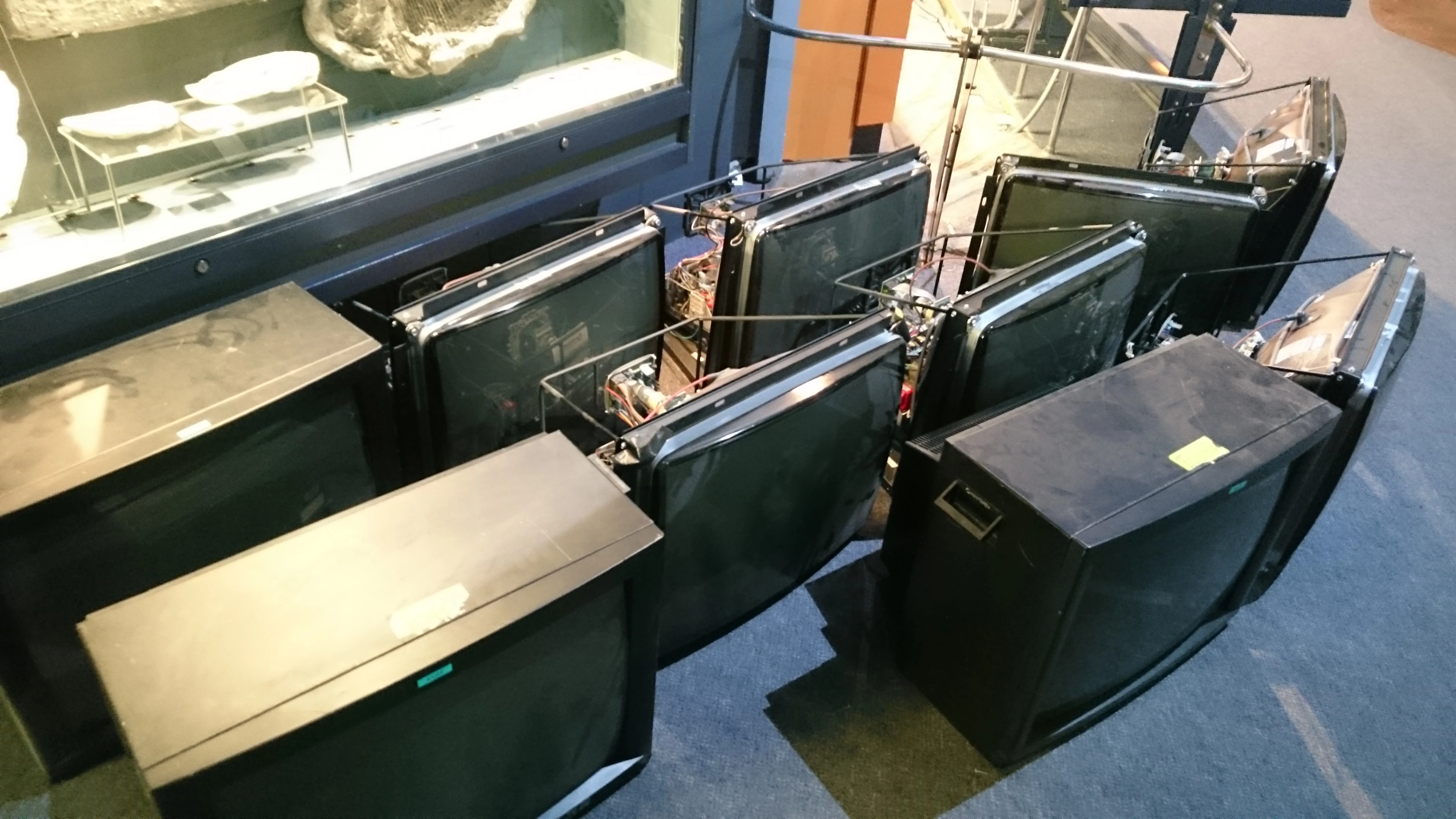
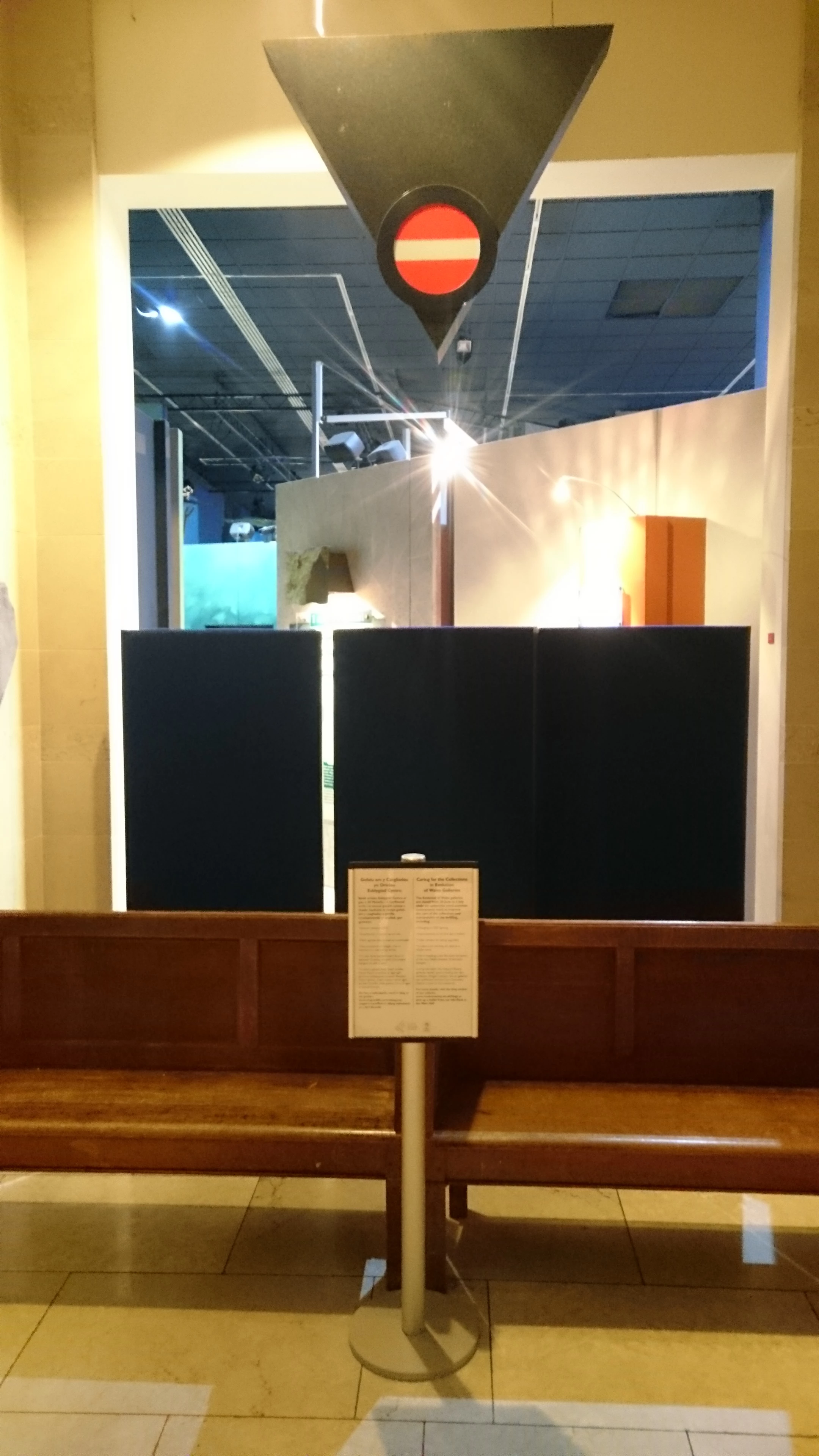
Caring for the Evolution of Wales galleries Claire Hamer, 6 Mehefin 2016 Between 20 June and 4 July, our popular Evolution of Wales galleries will be closed while we undertake some essential maintenance work.For these two weeks, visitors will not be able to access areas showing the introduction, Big Bang, Carboniferous forest, dinosaurs, mammoth or the Ice Age animals. Other galleries remain open during this time, including the Diversity of Life gallery (with lots of birds), the mineral collection and all the natural history galleries with the British woodland scene, basking shark, hump back whale skeleton and our new exhibition Wriggle! The art galleries upstairs are also open, unaffected by the maintenance work.The work covers improved care of the collections and sustainability of the building, including: Changing the gallery lighting to LED, to reduce electricity consumption, our carbon footprint and costs. LED lighting gives off less heat than conventional lighting so the air conditioning system will work better - it’s better for the items on display, because keeping a stable temperature helps maintain the condition of the objects. LED lighting also reduces future maintenance costs, and changes to the lighting will make the galleries brighter in some places. Improvements to the fire alarm system so it's better for the collections, the building, staff and visitors. Upgrading video screens from CRT to HD LCD with touch button interactive controls. This will improve video content delivery, reduce maintenance costs and provide a contemporary aesthetic to the gallery, making units more streamlined. While the galleries are closed curators will be able to secure some of the items that have become loose in the cases, thus improving their long-term care. They will also clean the displays thus reducing the risk of potential pest infestations – pest management is vital to the care of museum collections. Finally, installation of the new life-sized recreation of the new Welsh dinosaur, Dracoraptor hanigani as part of the dinosaur display.
Wythnos Gwirfoddolwyr - Elizabeth Radcliffe o Sain Ffagan Elen Phillips, 3 Mehefin 2016 Yr wythnos hon, mae amgueddfeydd ledled y wlad yn dathlu ac yn hyrwyddo cyfraniad arbennig eu gwirfoddolwyr. Yma yn Sain Ffagan, mae ‘cymuned’ o wirfoddolwyr yn chwarae rhan bwysig yng ngweithgarwch yr Amgueddfa. Gallwch weld eu gwaith ar draws y safle – o’r gerddi i’r adeiladau hanesyddol. Canrif yn ôl – yn ystod y Rhyfel Byd Cyntaf – roedd gwirfoddolwyr yn gadael eu hôl ar Sain Ffagan o dan amgylchiadau pur wahanol.Yn ystod y Rhyfel, sefydlwyd bron i 18,000 o elusennau newydd ym Mhrydain ac fe welwyd ymgyrchu gwirfoddol ar raddfa heb ei debyg o'r blaen. Ynghyd ag Urdd San Ioan, roedd y Groes Goch Brydeinig yn ganolog i'r ymgyrch hon. Yn 1909, daeth y ddwy elusen ynghyd i sefydlu cynllun y Voluntary Aid Detachment (VAD), gyda'r bwriad o roi hyfforddiant meddygol i wirfoddolwyr a'u paratoi i wasanaethu gartref a thramor mewn cyfnodau o ryfel. Yn ôl ystadegau'r Groes Goch, erbyn diwedd y Rhyfel Byd Cyntaf roedd 90,000 o bobl wedi cymryd rhan yn y cynllun - yn eu plith Elizabeth Radcliffe o bentref Sain Ffagan.Yn ferch i ofalwr capel y pentref, roedd Elizabeth a’i theulu yn denantiaid i’r Arglwydd Plymouth o Gastell Sain Ffagan. Ganwyd chwech o blant i William a Catherine Radcliffe – pedwar mab (William, Thomas, Robert a Taliesin) a dwy ferch (Elizabeth a Mary). Cyn y Rhyfel, bu Elizabeth yn gofalu am blant James Howell – un o berchnogion y siop enwog yng Nghaerdydd. Ond erbyn 1916, roedd hi nôl yn Sain Ffagan ac yn gwirfoddoli fel nyrs VAD yn yr ysbyty ategol a agorwyd ar dir y Castell ym Mawrth y flwyddyn honno. Ar y pryd, roedd hi’n ddi-briod ac yn 28 mlwydd oed.Roedd y rhan fwyaf o nyrsys Ysbyty Sain Ffagan yn wirfoddolwyr lleol – menywod o’r pentref, yn anad dim, a oedd wedi derbyn hyfforddiant sylfaenol gan y Groes Goch. Dim ond 70 o wlâu a dwy ward oedd yn yr ysbyty, felly milwyr ag anafiadau ysgafn oedd yn cael eu trin yno. Roedd gofyn i’r gwirfoddolwyr wisgo iwnifform swyddogol y mudiad, sef ffrog las a ffedog wen gyda chroes goch wedi ei phwytho ar y frest. Mae llyfrau cyfrifon Ystâd Plymouth yn cynnwys sawl cyfaniad ariannol at gostau prynu gwisgoedd i staff yr ysbyty. Mae’n debyg fod siop J. Howell & Co. ymhlith y cyflenwyr.Yn ffodus iawn, mae gwisg Elizabeth Radcliffe o’r cyfnod hwn wedi goroesi, ynghyd â llun ohoni yn ei lifrai. Rhoddwyd ei ffedog a'i llewys i gasgliad yr Amgueddfa yn 1978, ac yn ddiweddar cawsom ragor o wybodaeth amdani a’i brodyr gan aelodau’r teulu. O’r pedwar brawd aeth i’r ffrynt, dim ond un ohonynt – Taliesin – ddaeth adref i Sain Ffagan yn fyw. Mae enwau William, Thomas a Robert Radcliffe i’w canfod ar gofeb rhyfel y pentref, ynghyd ag Archer Windsor-Clive - mab ieuengaf yr Arglwydd Plymouth - a laddwyd ym Mrwydr Mons. Mae’n amhosibl i ni amgyffred â mawredd y golled i Elizabeth a’i rhieni – un teulu ymysg y miliynau a rwygwyd gan erchyllterau’r Rhyfel Mawr.Os hoffech ddarganfod mwy am waith y Groes Goch yn ystod y Rhyfel Byd Cyntaf, mae adnoddau gwych ar wefan y mudiad, gan gynnwys rhestr o'r holl ysbytai ymadfer a agorwyd ym Mhrydain. Mae llu o wrthrychau a delweddau perthnasol yn y casgliad yma yn Sain Ffagan hefyd. Ewch draw i'r catalog digidol i ddarganfod mwy.