Casgliadau ac Ymchwil

Lets do the Twist Again - Volunteer update

Penny Hill, 3 Tachwedd 2016

This week we managed to combine cleaning floors with a fitness routine and aroma therapy.  Who said housework can't be Fun!


Hannah Glasse, writing in her 18th century books ‘Servant’s Directory ‘ and ‘Housekeeper’s Companion’, advised using green herbs to clean wooden floors.
We couldn't resist having a go and it just happened that the floorboards in our 18th century Kennixton farmhouse required a bit of attention.

Like us today in the conservation team, wetting floors to clean them was considered to be a bad idea in the 18th century. It would introduce damp into the house and excess water could damage furniture and precious soft furnishings and carpets. 
Hannah recommended taking green leaves of Tansy, Lemon balm, Mint and Fennel, all of which we have growing in abundance in the cottage gardens. The herbs are then strewn across the floor and rubbed in with a broom.  The oils are released and nourish the wood, while the moisture activates the dirt, which is then taken up by the leaves.


We left the floor to dry overnight before sweeping up the debris the next day. Hannah then recommends polishing the floor with a dry rubbing brush, which should bring the wood up to a fine brown colour, just like mahogany. 


The herbs would also impart a sweet smell creating a natural air freshener. An added bonus for us is that the herbs Hannah recommended are also natural pest repellents that we normally dry and use throughout the cottages to protect our woollen textiles from moth or carpet beetle attack, so hopefully the lingering aroma will also deter pests from making a home.


It worked! All that Hannah promised came true. Our wooden floors appeared darker and shinier and the smell was amazing, we’ll definitely be doing this again.
 

Ennillwyr cystadleuaeth Trysorau!

Sara Huws, 27 Hydref 2016

Mae'r amser wedi dod i ddatgan pwy sydd wedi ennill ein cystadleuaeth 'sgrifennu creadigol...

Y gamp oedd i 'sgrifennu stori fer wedi ei hysbrydoli gan ein harddangosfa Trysorau: Anturiaethau Archaeolegol. Mi ysbrydolwyd ein hawduron gan fymi Eifftaidd hynafol, yn ogystal â'r gwpan brydferth, Crial Dolgellau. Cewch weld rhain, a mwy, tan 30 Hydref - felly brysiwch! Bachwch eich tocynnau fan hyn.

Llongyfarchiadau mawr i'r ennillwyr - cliciwch ar deitl y stori i'w lawrlwytho a dechre darllen!

Gwobr gyntaf:

The Falcon's Curse

, Eleanor Thorne

Ail wobr:

The Chalice of Dolgellau

, Theo Singh

Trydydd wobr:

A Mummy at Night, Amy Wintle

Diolch i bawb a anfonodd stori atom ni, neu sydd wedi galw heibio i gymryd rhan yn ein gweithgareddau celf a chrefft. 'Dyn ni wedi mwynhau eich straeon a'ch darluniau yn arw.

Unknown Wales event 2016

Katherine Slade, 25 Hydref 2016

The Department of Natural Sciences at Amgueddfa Cymru in collaboration with the Wildlife Trust for South and West Wales organised the sixth Unknown Wales for the 8th October. The day to celebrate Welsh wildlife was funded by a generous donation from a museum patron. This year, Dr Richard Bevins, head of the Natural Sciences Department, welcomed a record 240 members of the public to the Reardon Smith lecture theatre at National Museum Cardiff. Attendees came from across South and Mid-Wales as well as from over the Channel in Bristol.

We had overwhelming feedback this time - 88 people have responded. A third of respondents were new to the event, but many people return every year:

“As usual superb presentations by passionate presenters, many thanks”

“Gwych unwaith eto – dw i’n dod pob blwyddyn, diolch!"

We always aim for a broad range of natural history topics delivered in an accessible way:

“A really enjoyable day and very well pitched at all generations and interests”

“John Archer-Thomson – very engaging speaker, made a potentially dry subject [limpets] interesting and informative. Lovely films of Pine Martens.”

A-level and University students felt the topics were relevant to their studies.

“The enthusiasm of the speakers for their subjects, the beautiful location and applying real ecological issues to my studies (I am a student at Cardiff Uni studying biology)”

“Fungi and colliery spoils were especially interesting and the limpets talk gave information that’s very helpful for A-level biology”

Our special guest was Prof. Mike Benton from Bristol University. He spoke about how the discovery of Wales’s newest dinosaur, Dracoraptor hanigani, tells us more about the origins of the dinosaurs.

“Good to see Palaeontology within context of contemporary talk…Fab.”

People have given us many suggestions for topics for next time; “foraging”, “bats” or “urban greening” are just some of the ideas that could be appearing in the future.

We sacrificed question and answer time to enable speakers to finish their talks. However, feedback showed many people missed the interactive aspect. There was some chance for people to talk to speakers informally alongside the displays in the Oriel Suite at lunch, but we acknowledge this is not a substitute for audience participation at the time of the talks.

The Storify article shows how people followed the event live on the day via social media: https://storify.com/CardiffCurator/unknown-wales-2016

For first time we have created a display using the museum collections to link into topics covered at the event. We have just incorporated some of the feedback we received into it. The display is at the top for the restaurant stairs in National Museum Cardiff and runs until 30th October 2016.


Art and Visual Impairment - Looking at museums in a different way

Holly Morgan Davies, Youth Forum, National Museum Cardiff, 18 Hydref 2016

This week’s Youth Forum again made me think about museums and what they can do, and how they should be, in a different way.

While looking at art from the First World War had at times been a sensory overload, this time we were trying to understand what it would be like to come to a museum without one specific sense fully intact. How to make museum exhibits more accessible for the partially sighted?

Having always gone to museums with my sight in (near enough) tip top condition, I and probably others tended to presume it was a pretty necessary requirement. If I had trouble seeing the paintings/sculptures/artefacts, then I don’t think I’d want to go. Because if seeing is believing, and I couldn’t see what I was supposed to be learning about, then surely I wouldn’t learn very much and would end up feeling quite left out, even though this obviously shouldn’t be the case.

And it doesn’t have to be! The paintings and sculptures that we looked up were a bit of a mix, ones that more well-known and some that were completely new. Among the ideas that we came up with, for example, involved the painting Bad News, by James Tissot, incorporating the playing of military marching music alongside the painting to evoke the solemnity and sorrow of leaving your family to go off and fight in another corner of the world.

Similarly, for Entrance to Cardiff Docks by Lionel Walden, lighting effects could imitate the lights of the port and the surrounding buildings, with sound effects of ships coming into port, water slapping against the quay, sailors shouting to each other. We could have smells to add to the experience (although maybe not the fish!). Instead of rough sailors accompanying Manet’s San Maggiore by Twilight, it would be the gentle, joyful peel of Italian church bells.

In front of a painting of Sir Watkin Williams-Wynn, Thomas Apperly and Edward Hamilton by Pompeo Batoni there could be a table with the objects and chairs laid out exactly as they are in the picture, as if the subjects had just finished the sitting and left only a few moments ago. David Nash’s intriguing sculpture Multi-Cut Column could have smaller imitations made of it, that people could actually pass around and touch, something rarely allowed in any exhibit. 

I realise there would be some technical issues in making sure it wasn’t distracting or taking away from the other exhibits, and that maybe not all these ideas will actually become a finished product, but I hope that at least some of them do work out. Because who wouldn’t want to experience this? It might be a bit like theatre, the art being brought to life, stepping into the painting. While I’m definitely thankful I’m not visually impaired in any way, I’m also thankful I took the time to try and understand the experience of those who are. 
 

  • Our next Audio Description Tour will take place on 8 December and will be of our Natural History collections.

The Lost Treasures of Swansea Bay

Rhianydd Biebrach, 14 Hydref 2016

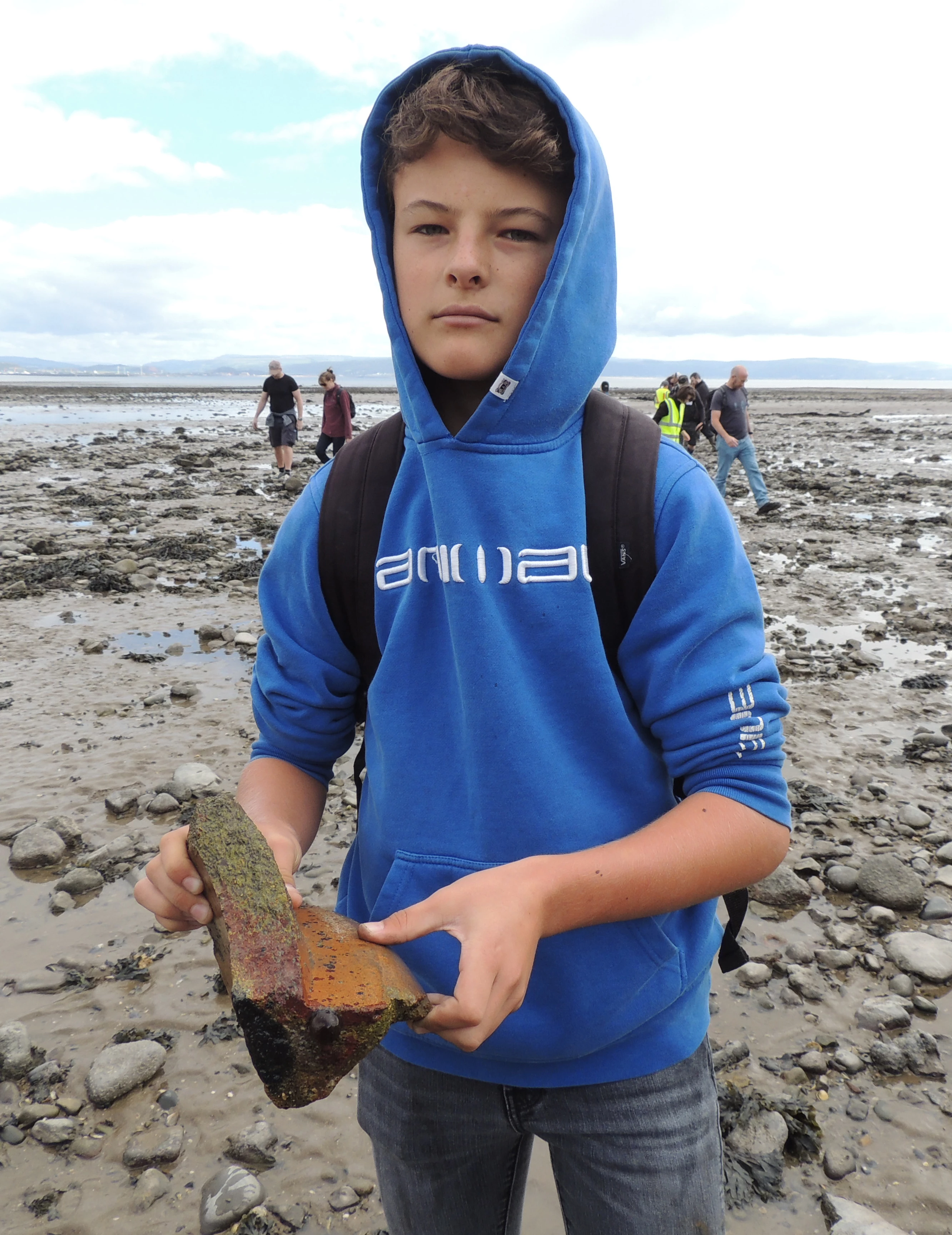
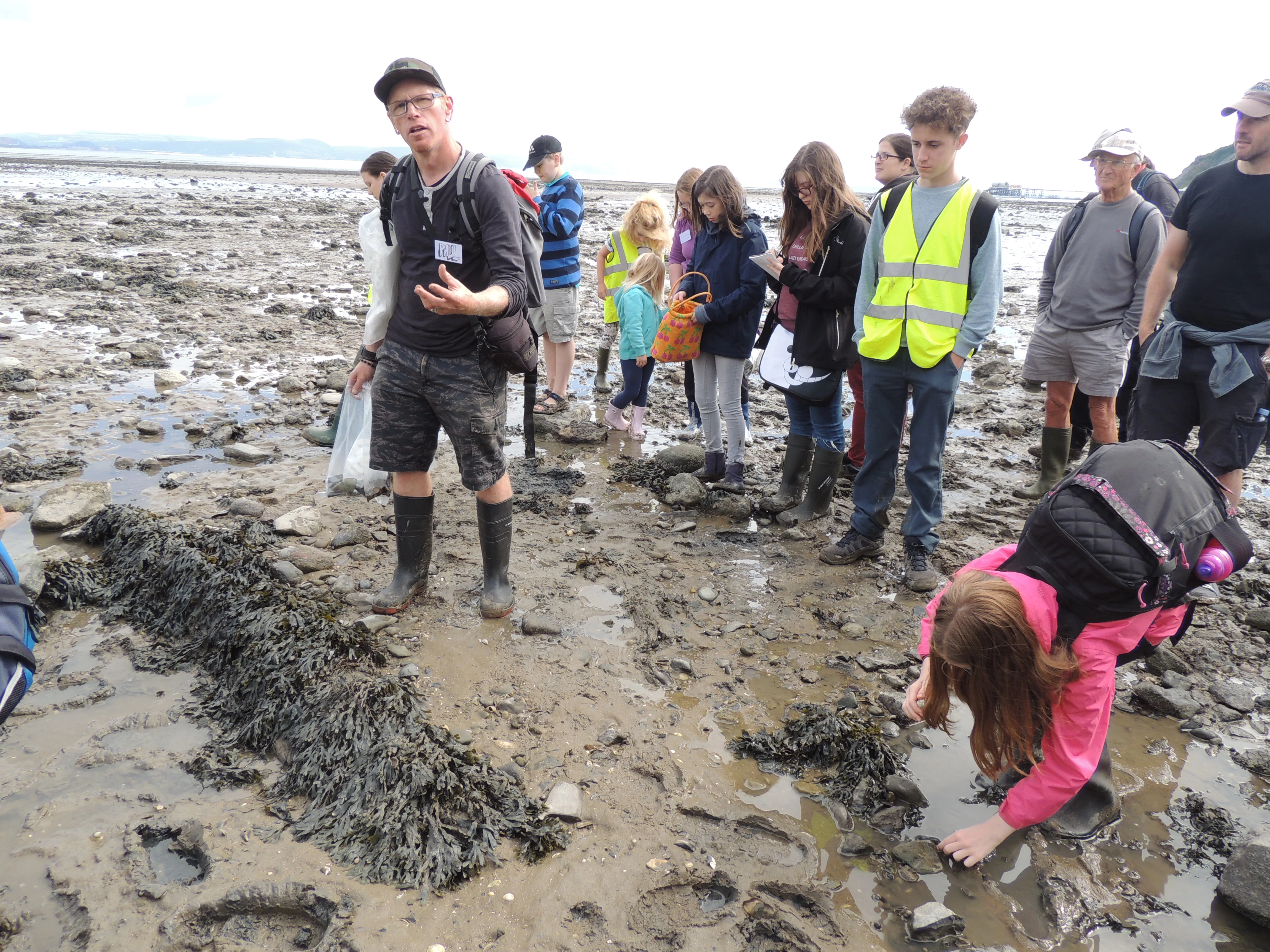
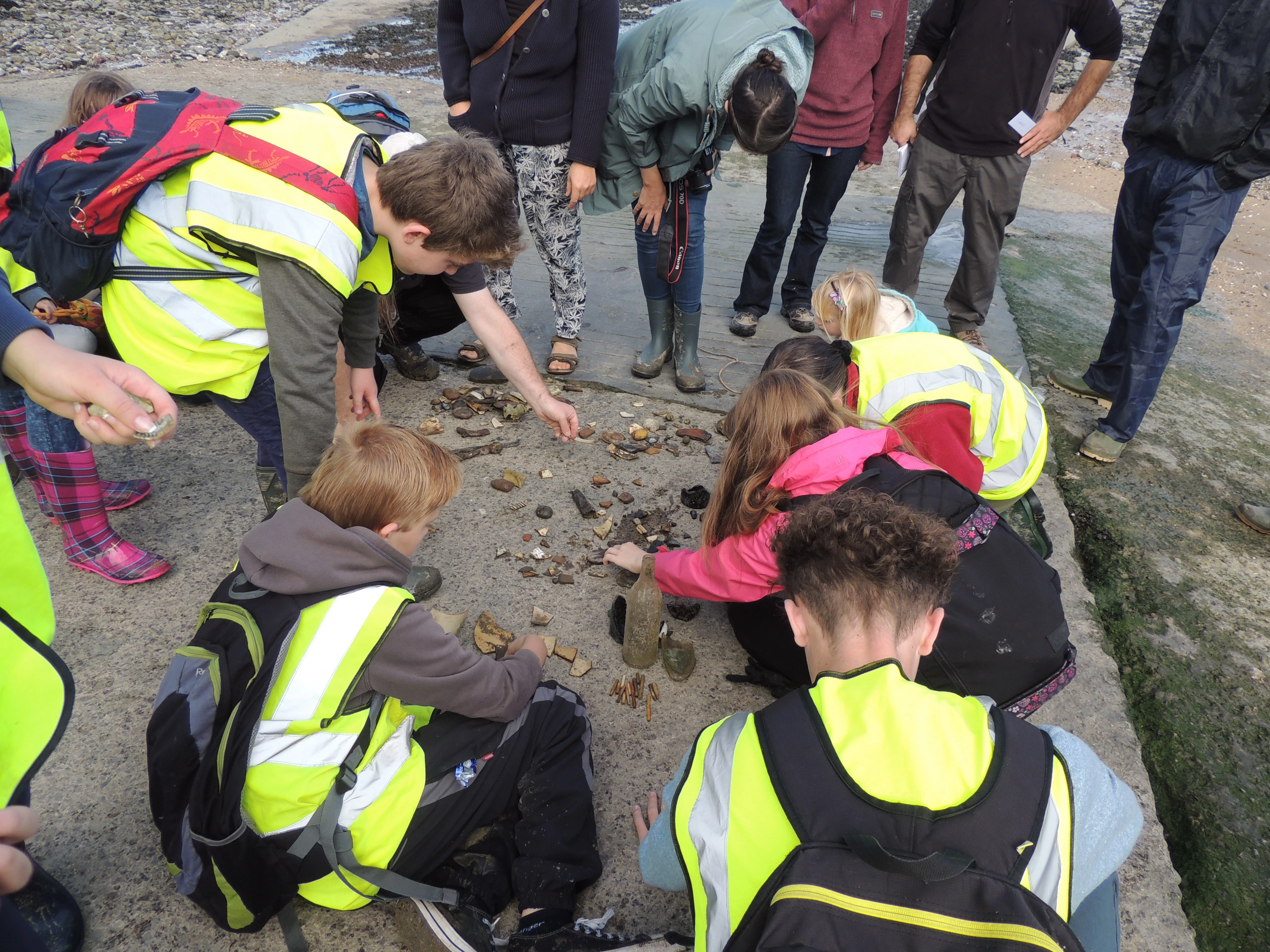
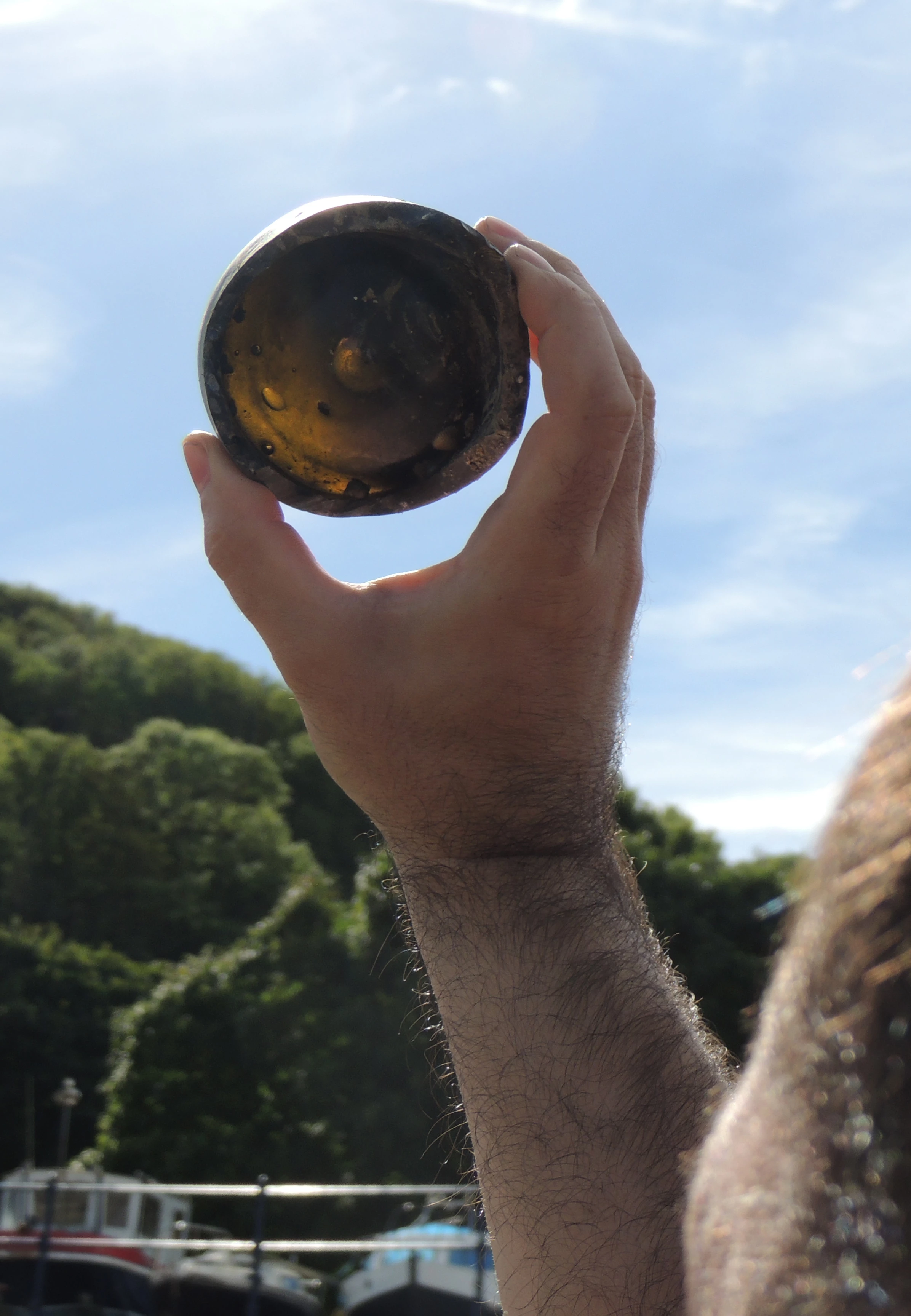
‘The Lost Treasures of Swansea Bay’ is the first Community Archaeology project funded by the HLF project Saving Treasures, Telling Stories. Run by Swansea Museum, the project is inspired by a collection of finds made by a local metal detectorist on Swansea Bay, which has also been acquired for the museum by Saving Treasures.

Blades and Badges

It includes some mysterious items, such as a Bronze Age tool with a curved blade which has had archaeologists scratching their heads. Ideas about its purpose range from opening shellfish to scraping seaweed off nets or rocks or carving bowls.

Among the other items found on the Bay are a number of medieval pilgrim badges, including one brought back from the important shrine of Thomas Becket at Canterbury. Pilgrim badges are usually made of lead or pewter and were often bought at shrines as a souvenir and worn on the pilgrim’s hat or cloak.

It is thought that those found in Swansea Bay were probably thrown into the sea by pilgrims returning to south Wales by boat as a thanks offering for their safe return. It seems like a curiously pagan thing for a medieval Christian to do, but it’s similar to the modern practice of throwing coins in wells, which is itself a survival of an ancient religious ritual.

The Archaeology of the Bay

The new collection is just a tiny fraction of the objects discovered on the Bay, which has a rich and varied – as well as sensitive – archaeology. This includes fragments of Bronze Age trackways and prehistoric forests, Roman brooches, ceramics, shipwrecks and the remains of World War Two bombs.

Community Involvement

Each one has a tale to tell and together they are helping archaeologists build the story of human activity in the Bay over thousands of years. Helping to interpret the finds, their significance for the history of Swansea Bay and for the people of modern Swansea are representatives from Swansea community groups, including the Red Café youth group, the Dylan Thomas Centre’s Young Writers Squad, Community First families and the Young Archaeologists Club.

The project’s first activity, a Big Beachcomb, took place on the Bay itself on Saturday 17 September, but to find out about that you will have to wait for the next blog in this series…